

Book of Silence
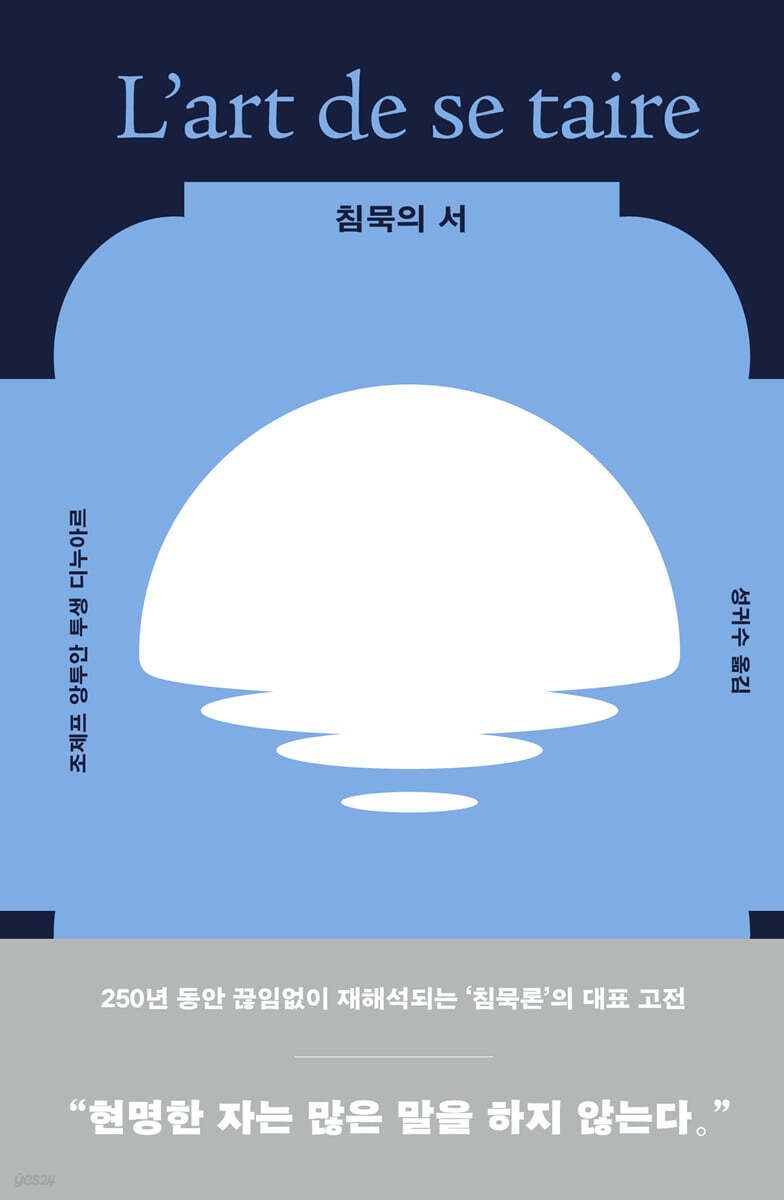 |
Description
Book Introduction
The first book to systematically organize silence!
A silent guide for modern people lost in the deluge of words and writing.
★ Highly recommended by Sister Lee Hae-in!
“A wise man never speaks much.”
A time of silence to reflect on the essential values of life, free from external stimuli and internal anxiety.
Silence is not simply the absence of speech.
Silence is one of the most powerful tools for organizing your thoughts, clearing your mind, and gaining a deeper understanding of the world.
This book, which contains profound insights on silence by the 18th-century French monk Joseph Antoine Toussaint Dinoire, awakens us to the true value of silence in a world full of noise.
In our modern society, overflowing with words and writing, we are constantly exposed to noise.
Noise confuses our thoughts and makes us anxious.
Finding your true self is becoming increasingly difficult.
Silence helps us escape from this noise and listen to our inner voice.
In silence, we can reflect on ourselves, reconceive the meaning of life, and move forward to find true happiness.
The Book of Silence contains the profound reflections and insights on silence left by 18th-century French intellectuals.
They emphasize the importance of silence and show how silence can help us gain wisdom for life, reflect on ourselves, and connect with the world.
Their wisdom remains relevant to us today, giving us a renewed appreciation for the value of silence.
Silence is not simply keeping your mouth shut.
It is training to say the right thing at the right time.
Sometimes, it is a form of communication that is more powerful than words.
The Book of Silence analyzes the various types and meanings of silence and suggests ways to utilize silence effectively.
Mastering the art of silence can help you achieve balance in your life and live a richer, more meaningful life.
In a world full of noise, silence gives us true rest and peace.
In silence, we can silence the noise of the world, listen to our inner voice, and discover the true meaning of life.
I hope that through this book, you will experience the power of silence and live a richer and wiser life.
A silent guide for modern people lost in the deluge of words and writing.
★ Highly recommended by Sister Lee Hae-in!
“A wise man never speaks much.”
A time of silence to reflect on the essential values of life, free from external stimuli and internal anxiety.
Silence is not simply the absence of speech.
Silence is one of the most powerful tools for organizing your thoughts, clearing your mind, and gaining a deeper understanding of the world.
This book, which contains profound insights on silence by the 18th-century French monk Joseph Antoine Toussaint Dinoire, awakens us to the true value of silence in a world full of noise.
In our modern society, overflowing with words and writing, we are constantly exposed to noise.
Noise confuses our thoughts and makes us anxious.
Finding your true self is becoming increasingly difficult.
Silence helps us escape from this noise and listen to our inner voice.
In silence, we can reflect on ourselves, reconceive the meaning of life, and move forward to find true happiness.
The Book of Silence contains the profound reflections and insights on silence left by 18th-century French intellectuals.
They emphasize the importance of silence and show how silence can help us gain wisdom for life, reflect on ourselves, and connect with the world.
Their wisdom remains relevant to us today, giving us a renewed appreciation for the value of silence.
Silence is not simply keeping your mouth shut.
It is training to say the right thing at the right time.
Sometimes, it is a form of communication that is more powerful than words.
The Book of Silence analyzes the various types and meanings of silence and suggests ways to utilize silence effectively.
Mastering the art of silence can help you achieve balance in your life and live a richer, more meaningful life.
In a world full of noise, silence gives us true rest and peace.
In silence, we can silence the noise of the world, listen to our inner voice, and discover the true meaning of life.
I hope that through this book, you will experience the power of silence and live a richer and wiser life.
- You can preview some of the book's contents.
Preview
index
Publishing the Korean Edition | The Art of Silence, the Paradox of Silence
Preface | For an Age That Requires Silence
Part 1 Words and Silence
-Thinking about silence
1.
Silence is a power
-The essential principle of silence
2.
About the Ten Silences
3.
How Silence Begins
4.
Two Paths to Practicing Speech and Silence
5.
Excessive talk and excessive silence
-About the attitude of young people
6.
The worse the words, the closer they are to the door.
-Advice for young people
7.
The shame of not being able to control your tongue
-About the attitude of older people
8.
Embrace the truth, no matter your age.
-Advice for older people
9.
The words and actions of a cowardly and indifferent person
-About the attitude of those in power
10.
Only you can keep your mouth shut
- Advice for those in power
11.
A nature that makes mistakes out of simplicity and ignorance
-About the attitude of the people
12.
It is less dangerous to keep your mouth shut than to speak.
- Advice for the common people
Part 2: Writing and Silence
-When expressing yourself through writing
1.
'Bad Writing' That Leads Readers to Hell
2.
Excessive writing, pouring out all your thoughts
3.
'Insufficient Writing': Escaping into Silence
4.
Silence is a way of life.
-The essential principle of silence when writing
5.
Be alert to your five senses
-The dangers of reading harmful texts
Preface | For an Age That Requires Silence
Part 1 Words and Silence
-Thinking about silence
1.
Silence is a power
-The essential principle of silence
2.
About the Ten Silences
3.
How Silence Begins
4.
Two Paths to Practicing Speech and Silence
5.
Excessive talk and excessive silence
-About the attitude of young people
6.
The worse the words, the closer they are to the door.
-Advice for young people
7.
The shame of not being able to control your tongue
-About the attitude of older people
8.
Embrace the truth, no matter your age.
-Advice for older people
9.
The words and actions of a cowardly and indifferent person
-About the attitude of those in power
10.
Only you can keep your mouth shut
- Advice for those in power
11.
A nature that makes mistakes out of simplicity and ignorance
-About the attitude of the people
12.
It is less dangerous to keep your mouth shut than to speak.
- Advice for the common people
Part 2: Writing and Silence
-When expressing yourself through writing
1.
'Bad Writing' That Leads Readers to Hell
2.
Excessive writing, pouring out all your thoughts
3.
'Insufficient Writing': Escaping into Silence
4.
Silence is a way of life.
-The essential principle of silence when writing
5.
Be alert to your five senses
-The dangers of reading harmful texts
Detailed image
.jpg)
Into the book
There are two ways to remain silent.
One is to hold one's tongue, the other is to hold one's pen.
That's why I've come to talk about specific ways in which writers should remain silent or express their thoughts through books.
Remember the wise advice: “There is a time to be silent and a time to speak.”
An anonymous author of the last century left a very short letter on the norms of speech.
I would like to point out that I have adopted the principles presented in that article and have now developed them in this book.
I hope this book will be useful in this age when the value of silence is desperately needed, and that it will serve as a reliable guide for many people to live as more sincere, serious, and virtuous citizens.
--- From "Foreword for an Age That Requires Silence"
I would like to argue that to be properly silent, it is not enough to simply keep your mouth shut and not speak.
If that were enough, what would be the difference between humans and beasts?
It is most important to know how to control your tongue in your mouth, to accurately sense when to hold it in and when to let it go free.
Identifying the crossroads in life where you must never break your silence.
Maintaining unwavering firmness in all matters where it is judged best to remain silent.
But all this is possible only through deep reflection and clear insight.
That is precisely why the wise men of old said:
--- From “Part 1: Words and Silence_Thoughts on Silence”
The caution necessary to maintain silence as much as possible in daily life is by no means to be underestimated compared to the talent or aptitude for oratory.
It is a greater advantage to know how to keep silent about what you do not know than to know how to speak about what you do know.
The silence of the wise is worth more than the arguments of the learned.
Therefore, the silence of the wise is in itself a lesson to the foolish and a discipline to the erring.
--- 「Part 1 Words and Silence_1.
From "Silence is a power"
There is a cautious silence,
There is a cunning silence.
There is a fatherly silence,
There is a mocking silence.
There is a sensual silence,
There is a dull silence.
There is a silence of sympathy,
There is a silence of disregard.
There is political silence.
There is a nervous and temperamental silence.
--- 「Part 1 Words and Silence_2.
From “On Ten Silences”
It is not enough to deal with words and silence by only thinking about yourself.
You must learn to use words and silence appropriately not only for yourself but also for others, especially those over whom you have authority.
For example, if your followers make absurd remarks about religion, you should not allow your silence to be interpreted as consent.
Your smile, your expression, can make them think that their nonsense is plausible, and can lead them further astray.
So, let your face speak actively, if not with your tongue.
Since ancient times, the silence of the wise has been a rich expression, a teaching to the insufficient and a punishment to the excessive.
--- 「Part 1 Words and Silence_10.
From "Only you can keep your mouth shut"
Wise and meticulous sages never allow into their homes works that only corrupt the mind and heart of man.
There are times when one's situation or occupation forces one to keep a collection of such books, but it is to point out the harmful effects of such books to the weak readers who might happen to open them, or to be prepared to refute each and every argument contained therein.
Of course, even in such cases, we are careful to keep such authors separate, like prisoners in separate prisons, and not to mix them with authors who have contributed to improving the quality of religion and customs.
--- 「Part 2 Writing and Silence_1.
From “Bad Writing That Leads Readers to Hell”
We are often reluctant to express ourselves for fear of being mistaken for ignorance.
Even things that I know, and even things that I don't know well, I often put into writing.
Both are presumptuous acts and are intended to show off one's talents.
In short, it is clear that holding the pen to what you don't know is a remarkable advantage.
--- 「Part 2 Writing and Silence_4.
From "Silence is a way of life"
Above all, let us be alert to our five senses.
Let us not allow our senses to hear or see anything that may harm faith or good customs.
Only then can we preserve our true nature, that is, our reliance on God as the center of all happiness and truth.
If someone offers us a novel*, let us resolutely reject it, displaying the holy indignation that Christians should naturally feel.
How many souls have fallen into the abyss of hell because of such vile works, leaving us sighing.
One is to hold one's tongue, the other is to hold one's pen.
That's why I've come to talk about specific ways in which writers should remain silent or express their thoughts through books.
Remember the wise advice: “There is a time to be silent and a time to speak.”
An anonymous author of the last century left a very short letter on the norms of speech.
I would like to point out that I have adopted the principles presented in that article and have now developed them in this book.
I hope this book will be useful in this age when the value of silence is desperately needed, and that it will serve as a reliable guide for many people to live as more sincere, serious, and virtuous citizens.
--- From "Foreword for an Age That Requires Silence"
I would like to argue that to be properly silent, it is not enough to simply keep your mouth shut and not speak.
If that were enough, what would be the difference between humans and beasts?
It is most important to know how to control your tongue in your mouth, to accurately sense when to hold it in and when to let it go free.
Identifying the crossroads in life where you must never break your silence.
Maintaining unwavering firmness in all matters where it is judged best to remain silent.
But all this is possible only through deep reflection and clear insight.
That is precisely why the wise men of old said:
--- From “Part 1: Words and Silence_Thoughts on Silence”
The caution necessary to maintain silence as much as possible in daily life is by no means to be underestimated compared to the talent or aptitude for oratory.
It is a greater advantage to know how to keep silent about what you do not know than to know how to speak about what you do know.
The silence of the wise is worth more than the arguments of the learned.
Therefore, the silence of the wise is in itself a lesson to the foolish and a discipline to the erring.
--- 「Part 1 Words and Silence_1.
From "Silence is a power"
There is a cautious silence,
There is a cunning silence.
There is a fatherly silence,
There is a mocking silence.
There is a sensual silence,
There is a dull silence.
There is a silence of sympathy,
There is a silence of disregard.
There is political silence.
There is a nervous and temperamental silence.
--- 「Part 1 Words and Silence_2.
From “On Ten Silences”
It is not enough to deal with words and silence by only thinking about yourself.
You must learn to use words and silence appropriately not only for yourself but also for others, especially those over whom you have authority.
For example, if your followers make absurd remarks about religion, you should not allow your silence to be interpreted as consent.
Your smile, your expression, can make them think that their nonsense is plausible, and can lead them further astray.
So, let your face speak actively, if not with your tongue.
Since ancient times, the silence of the wise has been a rich expression, a teaching to the insufficient and a punishment to the excessive.
--- 「Part 1 Words and Silence_10.
From "Only you can keep your mouth shut"
Wise and meticulous sages never allow into their homes works that only corrupt the mind and heart of man.
There are times when one's situation or occupation forces one to keep a collection of such books, but it is to point out the harmful effects of such books to the weak readers who might happen to open them, or to be prepared to refute each and every argument contained therein.
Of course, even in such cases, we are careful to keep such authors separate, like prisoners in separate prisons, and not to mix them with authors who have contributed to improving the quality of religion and customs.
--- 「Part 2 Writing and Silence_1.
From “Bad Writing That Leads Readers to Hell”
We are often reluctant to express ourselves for fear of being mistaken for ignorance.
Even things that I know, and even things that I don't know well, I often put into writing.
Both are presumptuous acts and are intended to show off one's talents.
In short, it is clear that holding the pen to what you don't know is a remarkable advantage.
--- 「Part 2 Writing and Silence_4.
From "Silence is a way of life"
Above all, let us be alert to our five senses.
Let us not allow our senses to hear or see anything that may harm faith or good customs.
Only then can we preserve our true nature, that is, our reliance on God as the center of all happiness and truth.
If someone offers us a novel*, let us resolutely reject it, displaying the holy indignation that Christians should naturally feel.
How many souls have fallen into the abyss of hell because of such vile works, leaving us sighing.
--- 「Part 2 Writing and Silence_5.
From “Beware of the Five Senses”
From “Beware of the Five Senses”
Publisher's Review
★ Joseph Antoine Toussaint Dinoire, a pioneer who awakened us to the importance of silence during the 18th century Age of Enlightenment!
★ A silent book for true self-reflection, social harmony, and deep spirituality!
“The Book of Silence is a very useful guide to life that I would recommend to anyone.
Especially in today's information-intensive age, where there is so much to see, hear, and say, there is no time to rest.
Take a step back once in a while and look back on your life with the utmost sincerity and calm.
It gives you a good desire to recharge and purify.
“More than anything, through the mirror of silence!” - Lee Hae-in (nun, poet)
The return of the theory of silence, a necessity in an age overflowing with words and writing.
"Silence" continues to be reinterpreted 250 years later.
18th-century France, an era that praised reason and rationality and was moving toward progress, was paradoxically filled with an enormous amount of speech, writing, and the noise that resulted from it.
In the midst of countless discourses, debates, and an influx of information, people were losing true wisdom.
In cafes and salons, heated debates raged without end, and advances in printing technology brought about a flood of books.
Everyone was free to express their opinions, and sometimes language was used as a means to belittle or criticize others.
In the light and shadow of the Enlightenment, the monk Joseph Antoine Toussaint Dinoire keenly perceived this paradox of the times.
Witnessing this reality, Dinoir emphasized the importance of silence in his book, The Book of Silence.
He believed that through silence, he could silence external noise and inner confusion and face his true self.
Only when we step away from the endless whirlwind of words and writing and dwell in quiet silence can we finally listen to our inner voice and reflect on the essential values of life.
He called silence the “mother of wisdom,” and emphasized that true wisdom can be gained through the process of contemplation and reflection in silence.
In today's information-overloaded age, Dinoir's message resonates even more deeply.
A world of constant notifications, a constant barrage of news and messages, and social media, where we peek into and compare our lives to others, leaving us gripped by anxiety.
Amidst this digital noise and the constant flood of words that spur us on, aren't we forgetting the value of silence? How much are we focusing on ourselves and pursuing true happiness?
The Book of Silence sharply points out the problems of modern society through the wisdom of 250 years ago, and guides us to find the true meaning of life through silence.
Through silence, Dinoir helps us to escape external stimuli and inner anxiety, focus on ourselves, and reflect on the essential values of life.
He says that silence is the first step toward wisdom, happiness, and a free life.
Through this book, readers will experience the power of silence and learn how to find peace and happiness even in a world full of noise.
“Silence is the art of speaking!”
The Power of Silence to Transform Relationships
The Book of Silence is not simply a book that praises silence.
Dinoir defines silence as a 'technique' and suggests ways to use silence effectively.
He says that silence is not simply limited to 'not speaking', but can take on various forms depending on the situation and purpose.
For example, he presents various types of silence, such as 'cautious silence', 'cunning silence', 'flattering silence', and 'mocking silence', and analyzes the characteristics and usage of each type.
Dinoir says that mastering the art of silence is the secret to forming good interpersonal relationships and achieving success in social life.
He emphasizes that silence allows one to listen to the other person, understand their intentions, and effectively convey one's opinion at the appropriate moment.
Silence can also be a means of preventing unnecessary arguments or conflicts and expressing respect and consideration for the other person, he says.
In particular, it emphasizes the importance of 'keeping your mouth shut when you should speak' and 'speaking when you should keep your mouth shut', and emphasizes the wisdom of striking a balance between silence and speaking.
He says that sometimes silence is an act of courage and can be a way to demonstrate true leadership.
It also emphasizes that silence allows us to look at ourselves objectively, regulate our emotions, and make better decisions.
Readers will find that the various silent techniques presented in this book will help them achieve self-reflection, improve interpersonal relationships, and achieve social harmony.
Silence is sometimes more powerful than words and can guide our lives in a positive direction.
Through The Book of Silence, Dinoir guides readers to learn the art of silence, gain wisdom in life, and live a better life.
“If you want to discern the truth and establish your own thoughts, remain silent.”
On the tool of silence that enables us to live a better life through self-reflection.
Dinoir criticizes a world filled with reckless and irresponsible words and writings, and emphasizes the importance of silence for true communication.
He says, "Silence sometimes replaces wisdom for the narrow-minded and power for the ignorant," showing that silence is the most effective way to reveal truth and gain wisdom.
He sharply criticizes the talkativeness and frivolous speech of his time, as well as the writings filled with exaggeration and falsehood rather than truth, pointing out that these trends corrupt society and degrade the souls of individuals.
Modern society is overflowing with excessive information and excessive words and writing.
Unverified information and irresponsible statements are constantly produced and consumed on social media, online communities, and elsewhere.
Content that is obsessed with the number of "likes" and "shares" and spews out provocative content, comments that rely on anonymity to slander others and incite hatred, and even fake news that chases views rather than the truth.
In this noise, it becomes increasingly difficult to discern the truth and establish our own thoughts.
The Book of Silence sounds an alarm about this reality, leading us to silence the noise of the world and find true wisdom.
Dinoir says that in silence we can detach ourselves from external influences, focus on our inner selves, and hear our true voice.
He emphasizes that silence can foster thinking and judgment, and lay the foundation for true communication.
Dinoir also emphasizes that silence plays an important role in achieving social harmony.
He says that through silence, we can avoid unnecessary arguments and conflicts, listen to others' opinions, and learn to respect and understand each other.
The Book of Silence offers hope that through the power of silence, we can achieve personal growth and create a better society.
★ A silent book for true self-reflection, social harmony, and deep spirituality!
“The Book of Silence is a very useful guide to life that I would recommend to anyone.
Especially in today's information-intensive age, where there is so much to see, hear, and say, there is no time to rest.
Take a step back once in a while and look back on your life with the utmost sincerity and calm.
It gives you a good desire to recharge and purify.
“More than anything, through the mirror of silence!” - Lee Hae-in (nun, poet)
The return of the theory of silence, a necessity in an age overflowing with words and writing.
"Silence" continues to be reinterpreted 250 years later.
18th-century France, an era that praised reason and rationality and was moving toward progress, was paradoxically filled with an enormous amount of speech, writing, and the noise that resulted from it.
In the midst of countless discourses, debates, and an influx of information, people were losing true wisdom.
In cafes and salons, heated debates raged without end, and advances in printing technology brought about a flood of books.
Everyone was free to express their opinions, and sometimes language was used as a means to belittle or criticize others.
In the light and shadow of the Enlightenment, the monk Joseph Antoine Toussaint Dinoire keenly perceived this paradox of the times.
Witnessing this reality, Dinoir emphasized the importance of silence in his book, The Book of Silence.
He believed that through silence, he could silence external noise and inner confusion and face his true self.
Only when we step away from the endless whirlwind of words and writing and dwell in quiet silence can we finally listen to our inner voice and reflect on the essential values of life.
He called silence the “mother of wisdom,” and emphasized that true wisdom can be gained through the process of contemplation and reflection in silence.
In today's information-overloaded age, Dinoir's message resonates even more deeply.
A world of constant notifications, a constant barrage of news and messages, and social media, where we peek into and compare our lives to others, leaving us gripped by anxiety.
Amidst this digital noise and the constant flood of words that spur us on, aren't we forgetting the value of silence? How much are we focusing on ourselves and pursuing true happiness?
The Book of Silence sharply points out the problems of modern society through the wisdom of 250 years ago, and guides us to find the true meaning of life through silence.
Through silence, Dinoir helps us to escape external stimuli and inner anxiety, focus on ourselves, and reflect on the essential values of life.
He says that silence is the first step toward wisdom, happiness, and a free life.
Through this book, readers will experience the power of silence and learn how to find peace and happiness even in a world full of noise.
“Silence is the art of speaking!”
The Power of Silence to Transform Relationships
The Book of Silence is not simply a book that praises silence.
Dinoir defines silence as a 'technique' and suggests ways to use silence effectively.
He says that silence is not simply limited to 'not speaking', but can take on various forms depending on the situation and purpose.
For example, he presents various types of silence, such as 'cautious silence', 'cunning silence', 'flattering silence', and 'mocking silence', and analyzes the characteristics and usage of each type.
Dinoir says that mastering the art of silence is the secret to forming good interpersonal relationships and achieving success in social life.
He emphasizes that silence allows one to listen to the other person, understand their intentions, and effectively convey one's opinion at the appropriate moment.
Silence can also be a means of preventing unnecessary arguments or conflicts and expressing respect and consideration for the other person, he says.
In particular, it emphasizes the importance of 'keeping your mouth shut when you should speak' and 'speaking when you should keep your mouth shut', and emphasizes the wisdom of striking a balance between silence and speaking.
He says that sometimes silence is an act of courage and can be a way to demonstrate true leadership.
It also emphasizes that silence allows us to look at ourselves objectively, regulate our emotions, and make better decisions.
Readers will find that the various silent techniques presented in this book will help them achieve self-reflection, improve interpersonal relationships, and achieve social harmony.
Silence is sometimes more powerful than words and can guide our lives in a positive direction.
Through The Book of Silence, Dinoir guides readers to learn the art of silence, gain wisdom in life, and live a better life.
“If you want to discern the truth and establish your own thoughts, remain silent.”
On the tool of silence that enables us to live a better life through self-reflection.
Dinoir criticizes a world filled with reckless and irresponsible words and writings, and emphasizes the importance of silence for true communication.
He says, "Silence sometimes replaces wisdom for the narrow-minded and power for the ignorant," showing that silence is the most effective way to reveal truth and gain wisdom.
He sharply criticizes the talkativeness and frivolous speech of his time, as well as the writings filled with exaggeration and falsehood rather than truth, pointing out that these trends corrupt society and degrade the souls of individuals.
Modern society is overflowing with excessive information and excessive words and writing.
Unverified information and irresponsible statements are constantly produced and consumed on social media, online communities, and elsewhere.
Content that is obsessed with the number of "likes" and "shares" and spews out provocative content, comments that rely on anonymity to slander others and incite hatred, and even fake news that chases views rather than the truth.
In this noise, it becomes increasingly difficult to discern the truth and establish our own thoughts.
The Book of Silence sounds an alarm about this reality, leading us to silence the noise of the world and find true wisdom.
Dinoir says that in silence we can detach ourselves from external influences, focus on our inner selves, and hear our true voice.
He emphasizes that silence can foster thinking and judgment, and lay the foundation for true communication.
Dinoir also emphasizes that silence plays an important role in achieving social harmony.
He says that through silence, we can avoid unnecessary arguments and conflicts, listen to others' opinions, and learn to respect and understand each other.
The Book of Silence offers hope that through the power of silence, we can achieve personal growth and create a better society.
GOODS SPECIFICS
- Date of issue: December 30, 2024
- Format: Hardcover book binding method guide
- Page count, weight, size: 232 pages | 132*204*20mm
- ISBN13: 9791171179497
- ISBN10: 1171179499
You may also like
카테고리
korean


korean

![GQ KOREA Mark (Monthly): December [2025]](http://librairie.coreenne.fr/cdn/shop/files/8ef265dbbfbf186523ed75ba7319009d.jpg?v=1765340328&width=3840)


