

Luther for All
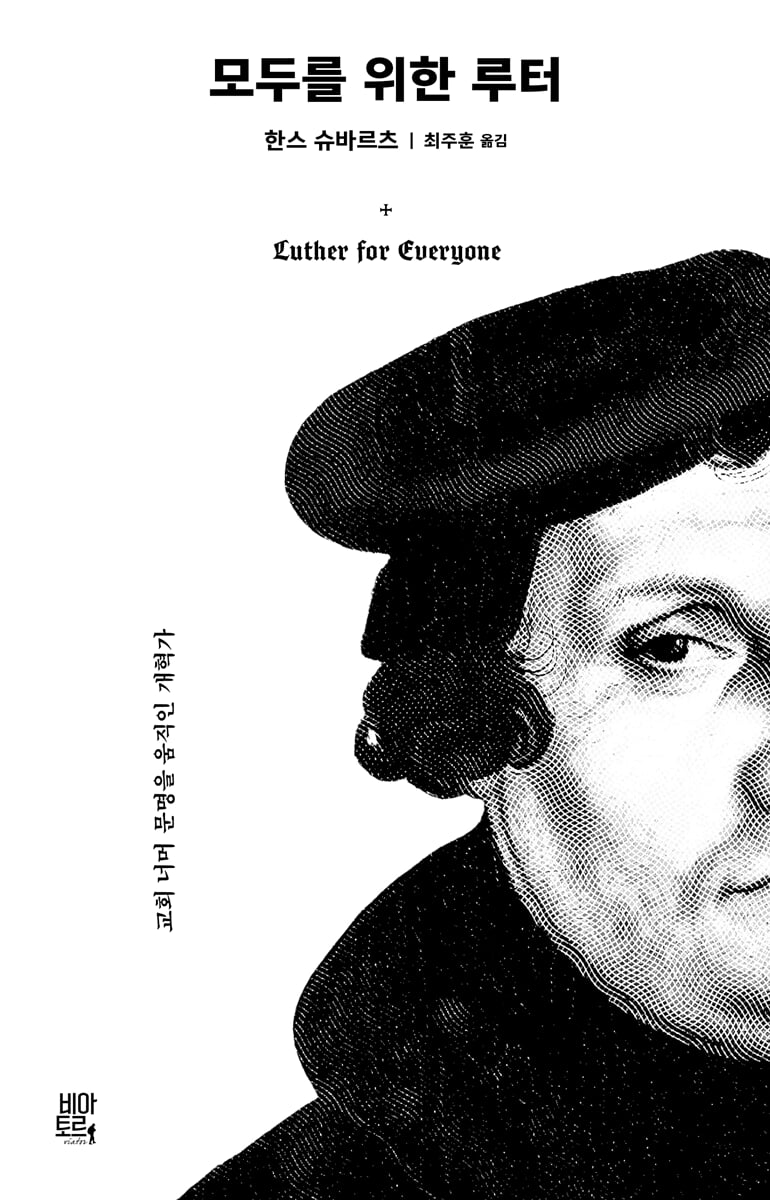 |
Description
Book Introduction
Martin Luther: Who Was He and Why Is He Still Important?
Martin Luther, who left a deep mark on Western civilization by calling for reform by saying, “Let’s return to the Bible!” toward the corrupt medieval church, restored the truth of “justification by faith” that humans are saved only by God’s grace, not by their own merits, and translated the Bible into German so that the public could directly access the source of faith.
This established a standard for modern German and promoted the universalization of education, especially for women.
The 'theory of vocation', which understands occupation as a calling from God, became the foundation of modern civic ethics and the Prussian spirit of public service.
Luther's reform also stimulated the Catholic Church, leading to reform within the church and the restoration of a Bible-centered faith through the Council of Trent and the Second Vatican Council.
Furthermore, his ideas strengthened freedom of religion, individual responsibility, and the dignity of the laity, forming one axis of the Western modern spirit.
Drawing on his extensive knowledge of history and the Reformation, the author presents an accessible narrative that illustrates the profound and far-reaching impact Luther had on the world.
Martin Luther, who left a deep mark on Western civilization by calling for reform by saying, “Let’s return to the Bible!” toward the corrupt medieval church, restored the truth of “justification by faith” that humans are saved only by God’s grace, not by their own merits, and translated the Bible into German so that the public could directly access the source of faith.
This established a standard for modern German and promoted the universalization of education, especially for women.
The 'theory of vocation', which understands occupation as a calling from God, became the foundation of modern civic ethics and the Prussian spirit of public service.
Luther's reform also stimulated the Catholic Church, leading to reform within the church and the restoration of a Bible-centered faith through the Council of Trent and the Second Vatican Council.
Furthermore, his ideas strengthened freedom of religion, individual responsibility, and the dignity of the laity, forming one axis of the Western modern spirit.
Drawing on his extensive knowledge of history and the Reformation, the author presents an accessible narrative that illustrates the profound and far-reaching impact Luther had on the world.
- You can preview some of the book's contents.
Preview
index
Preface to the Korean edition
introduction
Introduction
1. Basic Principles of Faith
2 Reforms toward the world
3 'By Grace Alone': Beyond Lutheranism
4 The innumerable God
5 The Gospel is not the Law
6 God's Two Reigns
7 Education for All
8. The calling is not just for priests.
9 The Basics of Communication
10 Against predatory capitalism
11. Christian Faith Open to Science
12 Astrology Doesn't Tell the Future
13 Christian Marriage
14 Happy Worship
15 Martin Luther: Heretic, Saint, or Reformer?
References
Abbreviation table
main
introduction
Introduction
1. Basic Principles of Faith
2 Reforms toward the world
3 'By Grace Alone': Beyond Lutheranism
4 The innumerable God
5 The Gospel is not the Law
6 God's Two Reigns
7 Education for All
8. The calling is not just for priests.
9 The Basics of Communication
10 Against predatory capitalism
11. Christian Faith Open to Science
12 Astrology Doesn't Tell the Future
13 Christian Marriage
14 Happy Worship
15 Martin Luther: Heretic, Saint, or Reformer?
References
Abbreviation table
main
Into the book
Most Korean Protestants are Presbyterians, so why should they be interested in Martin Luther? The reason is simple.
Because Presbyterianism has its roots in the Reformed tradition of the Reformation.
At the Marburg Dialogue of 1529, Luther and Huldrych Zwingli, a member of the Reformed Church, were so close theologically that they agreed on 14 of the 15 articles.
However, Luther's influence is more evident in John Calvin, who laid the foundation for Presbyterianism.
Although Calvin never met Luther in person, he deeply respected him and called him "the best shepherd of the church."
Calvin's introduction of the Psalms into Reformed worship also borrowed from Luther's idea.
--- p.24 From the “Korean edition preface (p.9)”
Every denomination has a slightly different perspective on the gospel.
The Roman Catholic Church and the Lutheran Church, both of which belong to the Western church tradition, have in common the importance of legal concepts, as they both originated in the Latin cultural sphere.
The Western Church has traditionally placed importance on church law, and the Lutheran Church also tends to emphasize the legal element in its doctrine of justification, making these similarities particularly striking.
But despite these superficial similarities, the values the two churches hold most dear are different.
While Roman Catholics follow church tradition and accept the Pope's judgment as the final authority, Lutherans place God's "grace", given independently of human effort, at the center of everything.
--- p.27 「1.
From “The Basic Principles of Faith”
Just as the philosopher Immanuel Kant exerted a great influence without leaving Königsberg, so too did Luther, though his activities were limited, spread widely.
There are many factors that contributed to this, but the most important one is that the University of Wittenberg, founded by Elector Frederick, quickly rose to become one of the most prestigious universities in the Holy Roman Empire.
During Luther's tenure as a professor, the University of Wittenberg developed into the most popular academic center in Germany.
As a professor, Luther wrote extensively and exchanged letters with leading figures of his time, influencing many.
--- p.43 「2.
From “Reforms for the World”
In contrast, Luther strictly distinguished between the law and the gospel, emphasizing that the two should not be mixed, but neither should they be separated.
He was well aware of the shortcomings of the late medieval spirit of duty and reward (meritocracy).
This is because he is a person who has clearly experienced the shortcomings of starting out as a pious layman and living as a monk.
His conclusion is that the gospel of God frees us from all legal obligations.
This freedom must never be turned into a new legalism.
Rather, we must approach God's word from a dual perspective: law and gospel.
--- p.151-152 「5.
From “The Gospel is not the Law (p.123)”
Luther introduces the revolutionary concept that 'all professions are of equal value'.
Of course, even Luther could not have imagined how far-reaching this idea would be.
At the time, there was a widespread belief that the work of priests and monks was more sacred than that of ordinary people, and his main goal was to dispel this notion.
“When a maid milks a cow or a worker plows a field, if they are believers, they can believe that even these everyday activities are pleasing to God.
“Ordinary workers who have this kind of conviction serve God better than monks and nuns who live without conviction.”
--- p.195 「8.
From “Calling is not just for priests (p.195)”
It was the late Renaissance, and so Martin Luther chose to go back to the sources.
For him, this means returning to the Bible.
Because he believed that one could not be a true Christian without knowing the Bible, he translated the Bible into a language that the general public could understand.
But because the illiteracy rate was high at the time, they had to teach how to read first.
This will lead to the expansion of urban educational institutions for both men and women.
It was a very innovative attempt, especially to include women who were excluded from education at the time.
To help people understand the Christian faith, Luther wrote the Shorter Catechism and the Larger Catechism, and also produced a prayer book and hymn book.
Because I thought that singing it would be remembered better than simply reading it.
Because Presbyterianism has its roots in the Reformed tradition of the Reformation.
At the Marburg Dialogue of 1529, Luther and Huldrych Zwingli, a member of the Reformed Church, were so close theologically that they agreed on 14 of the 15 articles.
However, Luther's influence is more evident in John Calvin, who laid the foundation for Presbyterianism.
Although Calvin never met Luther in person, he deeply respected him and called him "the best shepherd of the church."
Calvin's introduction of the Psalms into Reformed worship also borrowed from Luther's idea.
--- p.24 From the “Korean edition preface (p.9)”
Every denomination has a slightly different perspective on the gospel.
The Roman Catholic Church and the Lutheran Church, both of which belong to the Western church tradition, have in common the importance of legal concepts, as they both originated in the Latin cultural sphere.
The Western Church has traditionally placed importance on church law, and the Lutheran Church also tends to emphasize the legal element in its doctrine of justification, making these similarities particularly striking.
But despite these superficial similarities, the values the two churches hold most dear are different.
While Roman Catholics follow church tradition and accept the Pope's judgment as the final authority, Lutherans place God's "grace", given independently of human effort, at the center of everything.
--- p.27 「1.
From “The Basic Principles of Faith”
Just as the philosopher Immanuel Kant exerted a great influence without leaving Königsberg, so too did Luther, though his activities were limited, spread widely.
There are many factors that contributed to this, but the most important one is that the University of Wittenberg, founded by Elector Frederick, quickly rose to become one of the most prestigious universities in the Holy Roman Empire.
During Luther's tenure as a professor, the University of Wittenberg developed into the most popular academic center in Germany.
As a professor, Luther wrote extensively and exchanged letters with leading figures of his time, influencing many.
--- p.43 「2.
From “Reforms for the World”
In contrast, Luther strictly distinguished between the law and the gospel, emphasizing that the two should not be mixed, but neither should they be separated.
He was well aware of the shortcomings of the late medieval spirit of duty and reward (meritocracy).
This is because he is a person who has clearly experienced the shortcomings of starting out as a pious layman and living as a monk.
His conclusion is that the gospel of God frees us from all legal obligations.
This freedom must never be turned into a new legalism.
Rather, we must approach God's word from a dual perspective: law and gospel.
--- p.151-152 「5.
From “The Gospel is not the Law (p.123)”
Luther introduces the revolutionary concept that 'all professions are of equal value'.
Of course, even Luther could not have imagined how far-reaching this idea would be.
At the time, there was a widespread belief that the work of priests and monks was more sacred than that of ordinary people, and his main goal was to dispel this notion.
“When a maid milks a cow or a worker plows a field, if they are believers, they can believe that even these everyday activities are pleasing to God.
“Ordinary workers who have this kind of conviction serve God better than monks and nuns who live without conviction.”
--- p.195 「8.
From “Calling is not just for priests (p.195)”
It was the late Renaissance, and so Martin Luther chose to go back to the sources.
For him, this means returning to the Bible.
Because he believed that one could not be a true Christian without knowing the Bible, he translated the Bible into a language that the general public could understand.
But because the illiteracy rate was high at the time, they had to teach how to read first.
This will lead to the expansion of urban educational institutions for both men and women.
It was a very innovative attempt, especially to include women who were excluded from education at the time.
To help people understand the Christian faith, Luther wrote the Shorter Catechism and the Larger Catechism, and also produced a prayer book and hymn book.
Because I thought that singing it would be remembered better than simply reading it.
--- p.332 「15.
From "Martin Luther: Heretic, Saint, or Reformer?"
From "Martin Luther: Heretic, Saint, or Reformer?"
Publisher's Review
What did Martin Luther leave us?
This book illuminates the profound influence of Martin Luther, who has had a decisive influence on Western society and history over the past 500 years, transcending the realm of religion and encompassing the society, economy, and culture (education, music, printing, etc.) of Europe at the time.
Luther restored the truth of 'justification by faith alone,' that humans are saved not by their own merits but only by God's grace, and translated the Bible into German so that the public could directly access the source of faith.
This established a standard for modern German and promoted the universalization of education, especially for women.
The 'theory of vocation', which understands occupation as a calling from God, became the foundation of modern civic ethics and the Prussian spirit of public service.
Luther's reform also stimulated the Catholic Church, leading to reform within the church and the restoration of a Bible-centered faith through the Council of Trent and the Second Vatican Council.
Furthermore, his ideas strengthened freedom of religion, individual responsibility, and the dignity of the laity, forming one axis of the Western modern spirit.
Drawing on his extensive knowledge of history and the Reformation, the author presents an accessible narrative that illustrates the profound and far-reaching impact Luther had on the world.
On the other hand, the author is at pains to show that the Reformation connected the Christian church worldwide and symbolized unity and reconciliation.
If in the 16th century, the main focus was on dividing and distinguishing between doctrines and denominations, today, 500 years later, the church's interest is in overcoming doctrinal limitations and narrowing the gap between them.
This does not mean that we should simply dismiss history as a thing of the past or try to ignore it. Rather, we should look at the past objectively, considering the context of the times, and ask whether that history is still relevant and valid for us today.
A representative example is the “agreement on the fundamental truths of justification” reached through in-depth dialogue between the Roman Catholic Church and the Lutheran Church that lasted for several decades in the 20th century.
“Who was Luther, and why was he important even to non-Lutherans?” The author answers this question himself, saying that Martin Luther “was not a theologian of the same magnitude as Thomas Aquinas.
Rather, he is introduced as a Christian who stood in the tradition of Paul and Augustine, and within this tradition, he brought to light anew the free grace that God, the Creator of the universe, gave to humanity,” and ends the book with the words, “Martin Luther is, above all, an example for all Christians and for all who live together in service to others.”
This book illuminates the profound influence of Martin Luther, who has had a decisive influence on Western society and history over the past 500 years, transcending the realm of religion and encompassing the society, economy, and culture (education, music, printing, etc.) of Europe at the time.
Luther restored the truth of 'justification by faith alone,' that humans are saved not by their own merits but only by God's grace, and translated the Bible into German so that the public could directly access the source of faith.
This established a standard for modern German and promoted the universalization of education, especially for women.
The 'theory of vocation', which understands occupation as a calling from God, became the foundation of modern civic ethics and the Prussian spirit of public service.
Luther's reform also stimulated the Catholic Church, leading to reform within the church and the restoration of a Bible-centered faith through the Council of Trent and the Second Vatican Council.
Furthermore, his ideas strengthened freedom of religion, individual responsibility, and the dignity of the laity, forming one axis of the Western modern spirit.
Drawing on his extensive knowledge of history and the Reformation, the author presents an accessible narrative that illustrates the profound and far-reaching impact Luther had on the world.
On the other hand, the author is at pains to show that the Reformation connected the Christian church worldwide and symbolized unity and reconciliation.
If in the 16th century, the main focus was on dividing and distinguishing between doctrines and denominations, today, 500 years later, the church's interest is in overcoming doctrinal limitations and narrowing the gap between them.
This does not mean that we should simply dismiss history as a thing of the past or try to ignore it. Rather, we should look at the past objectively, considering the context of the times, and ask whether that history is still relevant and valid for us today.
A representative example is the “agreement on the fundamental truths of justification” reached through in-depth dialogue between the Roman Catholic Church and the Lutheran Church that lasted for several decades in the 20th century.
“Who was Luther, and why was he important even to non-Lutherans?” The author answers this question himself, saying that Martin Luther “was not a theologian of the same magnitude as Thomas Aquinas.
Rather, he is introduced as a Christian who stood in the tradition of Paul and Augustine, and within this tradition, he brought to light anew the free grace that God, the Creator of the universe, gave to humanity,” and ends the book with the words, “Martin Luther is, above all, an example for all Christians and for all who live together in service to others.”
GOODS SPECIFICS
- Date of issue: October 29, 2025
- Page count, weight, size: 372 pages | 398g | 136*210*19mm
- ISBN13: 9791194216278
- ISBN10: 1194216277
You may also like
카테고리
korean


korean

![GQ KOREA Mark (Monthly): December [2025]](http://librairie.coreenne.fr/cdn/shop/files/8ef265dbbfbf186523ed75ba7319009d.jpg?v=1765340328&width=3840)


