

creative act
 |
Description
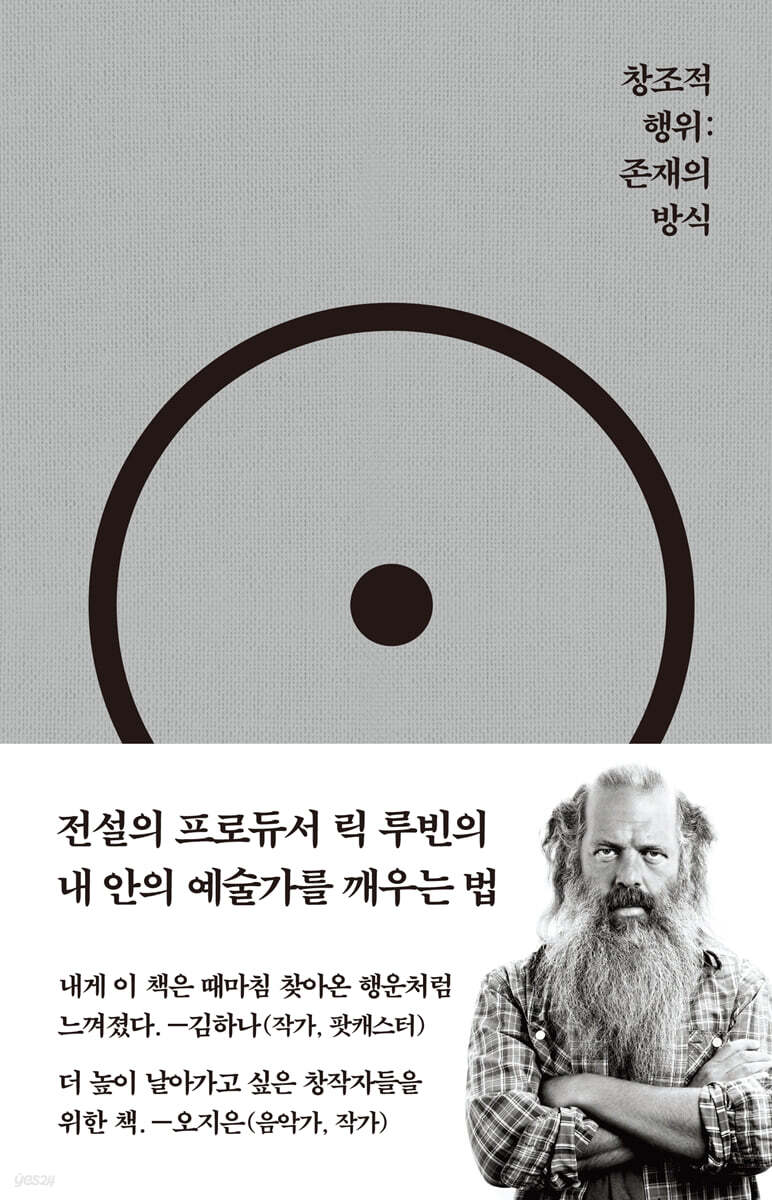
Book Introduction
#1 New York Times and Sunday Times bestseller Since its publication in January 2023, it has sold 300,000 copies in the US and 100,000 copies in the UK. Published in 28 countries worldwide Kim Ha-na, Oh Ji-eun, Seth Godin, Matt Haig, Jonathan Ive, JJ Abrams, etc. strongly recommended Nine-time Grammy Award winner and 18-time nominee, Rick Rubin, one of the greatest producers in American popular music history and a creative inspiration to countless musicians, has finally written a beautiful book sharing his wisdom to awaken the artist within us all! “I started writing a book about what it takes to create great art. But instead, the book that emerged was about how we ourselves can become great works of art.” ─Rick Rubin A beautiful exploration of the sources of creativity and its approaches. Where does creativity come from? How can we cultivate it? Many famous producers are known for a specific sound that represents their prime. Rick Rubin is famous for something else. His specialty is creating spaces where artists of various genres and traditions can be their true selves and express their truth. His studio Shangri-La, located on the Malibu beachfront, is just such a space. Many artists have hoped to work with Rubin at Shangri-La to overcome slumps and regain their creativity. Rubin created a practice that helps people transcend the expectations they place on themselves, reconnecting them to a pure state of wonder. He has spent many years thinking deeply about where creativity comes from and where it does not come from. Through this, I learned that being an artist is not about producing a specific result, but about how you relate to the world. Creativity has a place in everyone's life, and we can all expand that space. According to Rubin, there are few duties in life more important than this. "The Creative Act" is a beautiful and generous exploration of the artist's path, making it accessible to everyone. By distilling a lifetime of wisdom into luminous prose, Rubin empowers us all to create moments of joy and transcendence. |
- You can preview some of the book's contents.
Preview
index
78 zones of thought
Author's Note
Everyone creates
Like an antenna receiving a signal
Source of creativity
recognize
Bowl and filter
Invisible things
Find the clue
commitment
Immerse yourself in great works
Nature is a teacher
Nothing stands still
Look inside
Memory and the Subconscious
Always there
background
self-doubt
Make it
Distraction
cooperation
intention
laws
The opposite is also true
Listening means
patience
Beginner
inspiration
habit
Seed collection stage
Experimental stage
Test every idea
Crafting stage
Momentum
aspect
Change the same thing
Completion stage
Abundance Mindset
The one who experiments and the one who finishes
Temporary rules
largeness
success
Connected social distancing (possible)
ecstasy
reference
Art is not a competition
essence
Hero Side Story
(Voices that harm art) Don't listen
self-awareness
Right in front of your eyes
Whispers that transcend time
Expect the unexpected
Great expectations
openness
Surrounded by lightning
24 hours a day
Spontaneity (special moments)
How to choose
Shading and degree
Implied meaning (purpose)
freedom
Passion vs. Pain
The right way for me (faith)
adaptation
Art is translation
blank slate
context
Energy (in the work)
End for the Beginning (Play)
play
Art Habits (Sangha)
Prism of the Self
Let It Be
cooperation
The Authenticity Dilemma
gatekeeper
Why do we make art?
Harmony
What we tell ourselves
About the Author
Recommendation
Author's Note
Everyone creates
Like an antenna receiving a signal
Source of creativity
recognize
Bowl and filter
Invisible things
Find the clue
commitment
Immerse yourself in great works
Nature is a teacher
Nothing stands still
Look inside
Memory and the Subconscious
Always there
background
self-doubt
Make it
Distraction
cooperation
intention
laws
The opposite is also true
Listening means
patience
Beginner
inspiration
habit
Seed collection stage
Experimental stage
Test every idea
Crafting stage
Momentum
aspect
Change the same thing
Completion stage
Abundance Mindset
The one who experiments and the one who finishes
Temporary rules
largeness
success
Connected social distancing (possible)
ecstasy
reference
Art is not a competition
essence
Hero Side Story
(Voices that harm art) Don't listen
self-awareness
Right in front of your eyes
Whispers that transcend time
Expect the unexpected
Great expectations
openness
Surrounded by lightning
24 hours a day
Spontaneity (special moments)
How to choose
Shading and degree
Implied meaning (purpose)
freedom
Passion vs. Pain
The right way for me (faith)
adaptation
Art is translation
blank slate
context
Energy (in the work)
End for the Beginning (Play)
play
Art Habits (Sangha)
Prism of the Self
Let It Be
cooperation
The Authenticity Dilemma
gatekeeper
Why do we make art?
Harmony
What we tell ourselves
About the Author
Recommendation
Detailed image

Into the book
Living as an artist is a way of being in the world.
It is a way of awareness and a practice of paying attention.
It's about honing your senses to notice more subtle notes.
It's about finding what pulls me and pushes me away.
It's about noticing what emotions are rising and where they lead.
--- p.15, from “Everyone Creates”
Art is the circulation of thought energy.
The energy returns in a different way each time, so it seems new.
There are no two identical clouds in the world.
--- p.24, from “The Source of Creativity”
The information we seek is always out there, no matter how much we pay attention.
Knowing this fact can help you listen more attentively.
If you don't know, you'll miss it.
--- p.60, from “Always in That Place”
Humans are flawed beings, and the appeal of art lies in the humanity contained in the work.
If we were machines, the art we create would not resonate.
Because there will be no soul.
Life is full of pain, anxiety and fear.
--- p.64, from “Self-Doubt”
We don't know what makes a great work.
No one knows that.
Even the most plausible reasons for why a work is great are, at best, theoretical.
We will never understand why.
--- p.72, from "Make It"
When you create art, you are never alone.
It is in constant dialogue with the present as well as the past.
The more you listen carefully to the discussion, the more beneficial it is for your work.
--- p.80, from “Collaboration”
Our goal is not to blend in with others.
My goal is to further expand and develop my unique perspective on the world, my differences, and my unique way of looking at it.
--- p.86, from “The Laws”
Greatness cannot be forced.
All we can do is actively invite greatness and wait for it to arrive.
--- p.102, from "Patience"
Don't try to find the best idea in words.
Go beyond the realm of language.
To properly weigh the possible options, we need to take them into the physical realm, not just the verbal one.
Run it, play it, or model it.
Words do not convey ideas well.
--- p.139, from “Test Every Idea”
When creating a work of art, the audience is the last thing to be considered.
Until you have a finished piece you like, don't worry about how it will be received or how you should present it to the world.
--- p.176, from “Completion Stage”
The results are not the end.
Neither darkness nor light is the final destination.
Light and darkness exist in a constant cycle of mutual dependence.
Neither bad nor good.
It just exists.
--- p.201, from “Connected Distancing”
Art happens spontaneously, naturally.
You might wonder where the underlying idea came from and how each individual element came together to create that masterpiece.
But no one knows how or why such things happen.
Even the person who created the work may not know.
--- p.217, from "Hero Side Story"
How can we give art what it needs without blind faith? Only by believing in what doesn't exist can we make it exist.
--- p.241, from “Great Expectations”
The only way to know where inspiration will lead is to give your full attention to the work.
Inspiration alone without sincerity will not achieve much.
In some projects, inspiration is minimal and effort is paramount.
--- p.252, from “Surrounded by Lightning”
Creation is not only an act, but also a being.
It's how we navigate the world, every moment, every day.
--- p.254, from “24 Hours”
Talk about spontaneity can be misleading.
Because we don't see the time the artist spends preparing and practicing before an impromptu event can occur.
Every work contains a lifetime of experience.
--- p.258, from "Improvisation"
It takes an obsessive desire to create something great.
But the pursuit of art doesn't have to be painful.
It can even be lively.
It's up to you.
--- p.276, from "Passion vs. Pain"
Talent in art is more something that can be learned and developed than something that is innate.
We can always improve.
--- p.285, from “Art is Translation”
Creativity is contagious.
When we spend time with artistic people, we absorb and exchange ways of thinking and seeing the world.
--- p.307, from “Art Habits”
Perhaps our inability to understand the inner workings of the universe allows us to become more attuned to its infinity.
The magic is not in analysis or understanding.
Magic lies in the wonder of the unknown.
--- p.338, from “Harmony”
We have a story about ourselves, but it is not us.
We have a story about the work, but it is not the work.
It is a way of awareness and a practice of paying attention.
It's about honing your senses to notice more subtle notes.
It's about finding what pulls me and pushes me away.
It's about noticing what emotions are rising and where they lead.
--- p.15, from “Everyone Creates”
Art is the circulation of thought energy.
The energy returns in a different way each time, so it seems new.
There are no two identical clouds in the world.
--- p.24, from “The Source of Creativity”
The information we seek is always out there, no matter how much we pay attention.
Knowing this fact can help you listen more attentively.
If you don't know, you'll miss it.
--- p.60, from “Always in That Place”
Humans are flawed beings, and the appeal of art lies in the humanity contained in the work.
If we were machines, the art we create would not resonate.
Because there will be no soul.
Life is full of pain, anxiety and fear.
--- p.64, from “Self-Doubt”
We don't know what makes a great work.
No one knows that.
Even the most plausible reasons for why a work is great are, at best, theoretical.
We will never understand why.
--- p.72, from "Make It"
When you create art, you are never alone.
It is in constant dialogue with the present as well as the past.
The more you listen carefully to the discussion, the more beneficial it is for your work.
--- p.80, from “Collaboration”
Our goal is not to blend in with others.
My goal is to further expand and develop my unique perspective on the world, my differences, and my unique way of looking at it.
--- p.86, from “The Laws”
Greatness cannot be forced.
All we can do is actively invite greatness and wait for it to arrive.
--- p.102, from "Patience"
Don't try to find the best idea in words.
Go beyond the realm of language.
To properly weigh the possible options, we need to take them into the physical realm, not just the verbal one.
Run it, play it, or model it.
Words do not convey ideas well.
--- p.139, from “Test Every Idea”
When creating a work of art, the audience is the last thing to be considered.
Until you have a finished piece you like, don't worry about how it will be received or how you should present it to the world.
--- p.176, from “Completion Stage”
The results are not the end.
Neither darkness nor light is the final destination.
Light and darkness exist in a constant cycle of mutual dependence.
Neither bad nor good.
It just exists.
--- p.201, from “Connected Distancing”
Art happens spontaneously, naturally.
You might wonder where the underlying idea came from and how each individual element came together to create that masterpiece.
But no one knows how or why such things happen.
Even the person who created the work may not know.
--- p.217, from "Hero Side Story"
How can we give art what it needs without blind faith? Only by believing in what doesn't exist can we make it exist.
--- p.241, from “Great Expectations”
The only way to know where inspiration will lead is to give your full attention to the work.
Inspiration alone without sincerity will not achieve much.
In some projects, inspiration is minimal and effort is paramount.
--- p.252, from “Surrounded by Lightning”
Creation is not only an act, but also a being.
It's how we navigate the world, every moment, every day.
--- p.254, from “24 Hours”
Talk about spontaneity can be misleading.
Because we don't see the time the artist spends preparing and practicing before an impromptu event can occur.
Every work contains a lifetime of experience.
--- p.258, from "Improvisation"
It takes an obsessive desire to create something great.
But the pursuit of art doesn't have to be painful.
It can even be lively.
It's up to you.
--- p.276, from "Passion vs. Pain"
Talent in art is more something that can be learned and developed than something that is innate.
We can always improve.
--- p.285, from “Art is Translation”
Creativity is contagious.
When we spend time with artistic people, we absorb and exchange ways of thinking and seeing the world.
--- p.307, from “Art Habits”
Perhaps our inability to understand the inner workings of the universe allows us to become more attuned to its infinity.
The magic is not in analysis or understanding.
Magic lies in the wonder of the unknown.
--- p.338, from “Harmony”
We have a story about ourselves, but it is not us.
We have a story about the work, but it is not the work.
--- p.341, from “What We Tell Ourselves”
Publisher's Review
A beautiful exploration of the sources of creativity and its approaches.
Where does creativity come from? How can we cultivate it?
Many famous producers are known for a specific sound that represents their prime.
Rick Rubin is famous for something else.
His specialty is creating spaces where artists of various genres and traditions can be their true selves and express their truth.
His studio Shangri-La, located on the Malibu beachfront, is just such a space.
Many artists have hoped to work with Rubin at Shangri-La to overcome slumps and regain their creativity.
Rubin created a practice that helps people transcend the expectations they place on themselves, reconnecting them to a pure state of wonder.
He has spent many years thinking deeply about where creativity comes from and where it does not come from.
Through this, I learned that being an artist is not about producing a specific result, but about how you relate to the world.
Creativity has a place in everyone's life, and we can all expand that space.
According to Rubin, there are few duties in life more important than this.
"The Creative Act" is a beautiful and generous exploration of the artist's path, making it accessible to everyone.
By distilling a lifetime of wisdom into luminous prose, Rubin empowers us all to create moments of joy and transcendence.
The artist's way of being is finally revealed
Anyone who loves music has probably heard of Rick Rubin at least once.
Although it's limited to American music, no matter what genre I like, Rubin has produced an album that has made it into the Billboard Top 10 and has won or been nominated for a Grammy Award.
The list of musicians he has worked with so far covers almost the entire American music scene.
From hip-hop musicians like Eminem, JAY-Z, Beastie Boys, Run-D.M.C., ZZ Top, and LL Cool J, to metal and rock like Red Hot Chili Peppers, Slayer, Linkin Park, Metallica, Black Sabbath, Tom Petty, Aerosmith, AC/DC, System of a Down, and Green Day, to country and jazz like Johnny Cash, Dixie Chicks, and Neil Diamond, to pop like Adele, Justin Timberlake, Lana Del Rey, Lady Gaga, Ed Sheeran, and Damien Rice.
He is a producer who transcends genres and consistently produces incredibly high-quality results in all of his work.
To anyone interested in music, his name is a legend.
There are many great producers, but they tend to be limited to a genre or lose their luster over time.
Yet Rubin has been demonstrating undiminished genius across a wide range of genres for decades.
How can that be possible? What's the secret? I've always wondered.
That's how he wrote his first book.
A book with the wonderful title, 'The Creative Act: A Way of Being'.
Finally, the opportunity to satisfy your curiosity has arrived.
If you look at his pictures, he looks like a weirdo.
It also seems to resemble Yoda, the master of Star Wars.
In this book, he truly shows off the Master's force without reservation.
Beyond music, how creative acts occur in all fields.
How can we become inspired creators?
It is difficult to imagine a more valuable lesson about what it means to be an artist.
How to Awaken the Artist Within You
“You have to believe in something that doesn’t exist before you can make it exist.” As this book repeatedly emphasizes, creation is not science.
It's a bit like religion.
According to Rubin, the creative act is a series of rituals to believe in a being greater than oneself and to invite inspiration.
That is what makes our existence consistent.
There will be many who disagree with Rubin's views on art and his worldview.
That's a given.
Because we are all different.
But even if I don't fully agree with his perspective, Rubin's description of the "serious artist's attitude," or life, resonates deeply with me.
It awakens the artist within us.
As author Kim Ha-na writes, this book “covers almost everything about creativity: how to observe and wait, how to breathe with the seasons, how to trust, how to pay attention to the moment, how to become a conduit for creativity, how to deal with self-doubt, how to create productive rhythms, how to use equipment and form, how to follow energy, how to give feedback, how to make choices and get things done.” Anyone can embrace this advice as if it were a blessing.
It could be a gift.
You don't need to hold this book up like a holy book to create great art, to become a great writer, musician, artist, or artist.
Let's remember Rubin's advice:
“Not a single thing in this book has been proven to be true.
These are all things I have noticed and thought about.
So there will be some thoughts you can relate to and some you can't.
“Use what works for you and let the rest flow away.” Let me create my own art freely in a way that suits me.
Where does creativity come from? How can we cultivate it?
Many famous producers are known for a specific sound that represents their prime.
Rick Rubin is famous for something else.
His specialty is creating spaces where artists of various genres and traditions can be their true selves and express their truth.
His studio Shangri-La, located on the Malibu beachfront, is just such a space.
Many artists have hoped to work with Rubin at Shangri-La to overcome slumps and regain their creativity.
Rubin created a practice that helps people transcend the expectations they place on themselves, reconnecting them to a pure state of wonder.
He has spent many years thinking deeply about where creativity comes from and where it does not come from.
Through this, I learned that being an artist is not about producing a specific result, but about how you relate to the world.
Creativity has a place in everyone's life, and we can all expand that space.
According to Rubin, there are few duties in life more important than this.
"The Creative Act" is a beautiful and generous exploration of the artist's path, making it accessible to everyone.
By distilling a lifetime of wisdom into luminous prose, Rubin empowers us all to create moments of joy and transcendence.
The artist's way of being is finally revealed
Anyone who loves music has probably heard of Rick Rubin at least once.
Although it's limited to American music, no matter what genre I like, Rubin has produced an album that has made it into the Billboard Top 10 and has won or been nominated for a Grammy Award.
The list of musicians he has worked with so far covers almost the entire American music scene.
From hip-hop musicians like Eminem, JAY-Z, Beastie Boys, Run-D.M.C., ZZ Top, and LL Cool J, to metal and rock like Red Hot Chili Peppers, Slayer, Linkin Park, Metallica, Black Sabbath, Tom Petty, Aerosmith, AC/DC, System of a Down, and Green Day, to country and jazz like Johnny Cash, Dixie Chicks, and Neil Diamond, to pop like Adele, Justin Timberlake, Lana Del Rey, Lady Gaga, Ed Sheeran, and Damien Rice.
He is a producer who transcends genres and consistently produces incredibly high-quality results in all of his work.
To anyone interested in music, his name is a legend.
There are many great producers, but they tend to be limited to a genre or lose their luster over time.
Yet Rubin has been demonstrating undiminished genius across a wide range of genres for decades.
How can that be possible? What's the secret? I've always wondered.
That's how he wrote his first book.
A book with the wonderful title, 'The Creative Act: A Way of Being'.
Finally, the opportunity to satisfy your curiosity has arrived.
If you look at his pictures, he looks like a weirdo.
It also seems to resemble Yoda, the master of Star Wars.
In this book, he truly shows off the Master's force without reservation.
Beyond music, how creative acts occur in all fields.
How can we become inspired creators?
It is difficult to imagine a more valuable lesson about what it means to be an artist.
How to Awaken the Artist Within You
“You have to believe in something that doesn’t exist before you can make it exist.” As this book repeatedly emphasizes, creation is not science.
It's a bit like religion.
According to Rubin, the creative act is a series of rituals to believe in a being greater than oneself and to invite inspiration.
That is what makes our existence consistent.
There will be many who disagree with Rubin's views on art and his worldview.
That's a given.
Because we are all different.
But even if I don't fully agree with his perspective, Rubin's description of the "serious artist's attitude," or life, resonates deeply with me.
It awakens the artist within us.
As author Kim Ha-na writes, this book “covers almost everything about creativity: how to observe and wait, how to breathe with the seasons, how to trust, how to pay attention to the moment, how to become a conduit for creativity, how to deal with self-doubt, how to create productive rhythms, how to use equipment and form, how to follow energy, how to give feedback, how to make choices and get things done.” Anyone can embrace this advice as if it were a blessing.
It could be a gift.
You don't need to hold this book up like a holy book to create great art, to become a great writer, musician, artist, or artist.
Let's remember Rubin's advice:
“Not a single thing in this book has been proven to be true.
These are all things I have noticed and thought about.
So there will be some thoughts you can relate to and some you can't.
“Use what works for you and let the rest flow away.” Let me create my own art freely in a way that suits me.
GOODS SPECIFICS
- Date of issue: July 10, 2023
- Page count, weight, size: 352 pages | 480g | 135*210*22mm
- ISBN13: 9791197831744
- ISBN10: 1197831746
You may also like
카테고리
korean


korean

![GQ KOREA Mark (Monthly): December [2025]](http://librairie.coreenne.fr/cdn/shop/files/8ef265dbbfbf186523ed75ba7319009d.jpg?v=1765340328&width=3840)


