

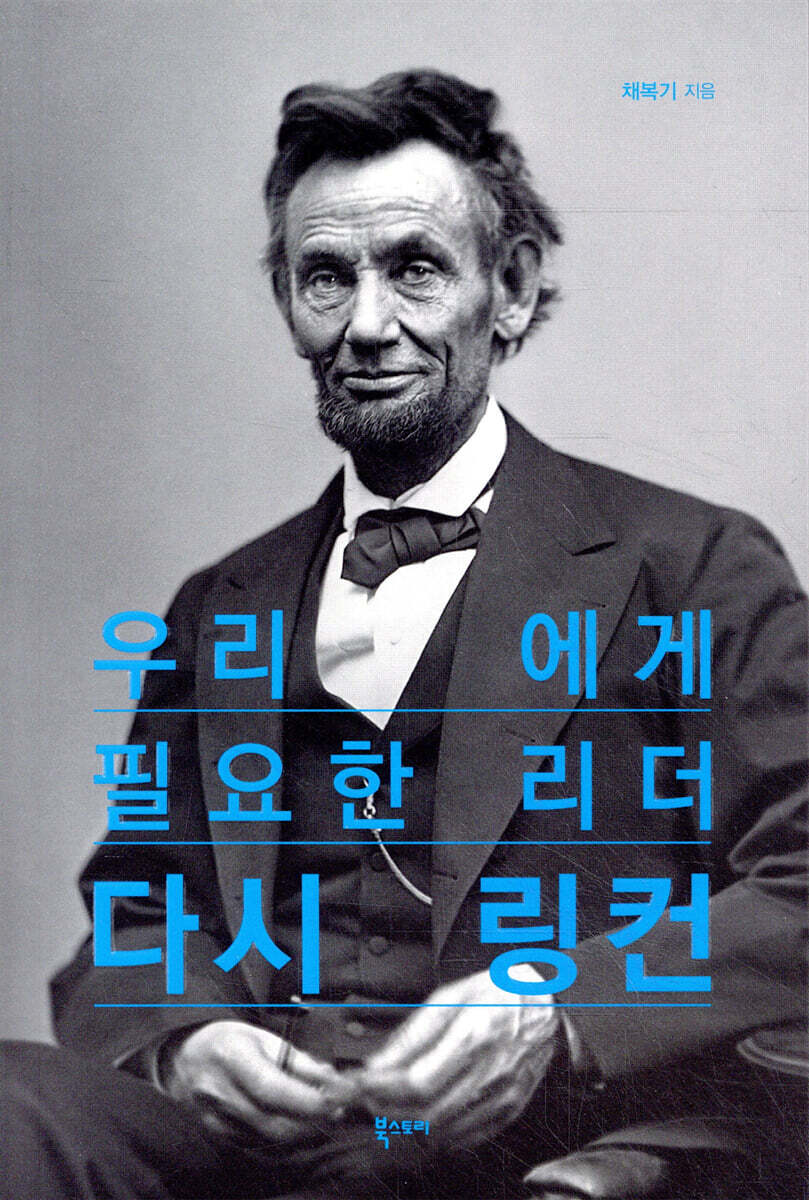
The leader we need again: Lincoln
 |
Description
Book Introduction
Why Lincoln again?
Why Lincoln now? Because in a country so deeply divided by political, regional, gender, and generational conflicts, we need a true leader like Lincoln.
South Korea has never had a president who achieved unity and harmony.
Even though there was a history of division between North and South Korea due to ideological conflict, why is it that we, who achieved the world's fastest economic growth, cannot avoid the appearance of such a backward country when it comes to politics?
How long will this division and ideological debate, this chaos and division both within and outside the country, continue?
Thus, the author, who was exploring what kind of leadership would be responsible for the future of the Republic of Korea, brought Lincoln back to us.
The author cites Lincoln's greatest strength as his unwavering commitment to his convictions, yet always focused on unity.
The unification of the nation was Lincoln's wish and task.
And finally, Lincoln achieved it.
In this book, the author concisely presents the things Lincoln devoted himself to in order to demonstrate such loyal leadership for the sake of his country.
Looking at Lincoln's character, virtues, habits, and communication skills, all clearly presented in this book, you can see at a glance why he was destined to become a great leader of a nation.
What makes this book so fascinating and informative is that it is not simply written as a biography, but rather transcends time and space, continually intersecting Lincoln and us.
The author continues to connect Lincoln with our political leaders, and Lincoln with our people, while examining the social landscape of Korea.
In this way, this book was written with the hope that Lincoln's leadership would not only be the ideal leader we should pursue, but also be reflected in the lives of each of our citizens.
Above all, if we want to nurture and meet leaders who, like Lincoln, will bring laughter, hope, and inspiration to the people and lead the Republic of Korea toward a bright future, we must revisit Lincoln through this book.
Why Lincoln now? Because in a country so deeply divided by political, regional, gender, and generational conflicts, we need a true leader like Lincoln.
South Korea has never had a president who achieved unity and harmony.
Even though there was a history of division between North and South Korea due to ideological conflict, why is it that we, who achieved the world's fastest economic growth, cannot avoid the appearance of such a backward country when it comes to politics?
How long will this division and ideological debate, this chaos and division both within and outside the country, continue?
Thus, the author, who was exploring what kind of leadership would be responsible for the future of the Republic of Korea, brought Lincoln back to us.
The author cites Lincoln's greatest strength as his unwavering commitment to his convictions, yet always focused on unity.
The unification of the nation was Lincoln's wish and task.
And finally, Lincoln achieved it.
In this book, the author concisely presents the things Lincoln devoted himself to in order to demonstrate such loyal leadership for the sake of his country.
Looking at Lincoln's character, virtues, habits, and communication skills, all clearly presented in this book, you can see at a glance why he was destined to become a great leader of a nation.
What makes this book so fascinating and informative is that it is not simply written as a biography, but rather transcends time and space, continually intersecting Lincoln and us.
The author continues to connect Lincoln with our political leaders, and Lincoln with our people, while examining the social landscape of Korea.
In this way, this book was written with the hope that Lincoln's leadership would not only be the ideal leader we should pursue, but also be reflected in the lives of each of our citizens.
Above all, if we want to nurture and meet leaders who, like Lincoln, will bring laughter, hope, and inspiration to the people and lead the Republic of Korea toward a bright future, we must revisit Lincoln through this book.
- You can preview some of the book's contents.
Preview
index
Prologue ┃ Why Lincoln Again?
Part 1 | Beginning with Adversity and Hardship
poor log cabin boy
Highest level of education: elementary school dropout
appearance complex
Eating failure like eating rice
Part 2 | The Road to the Presidency
Honest Abe
A diehard bookworm
Ambition lifts him up
Bringing Humor to America
Those who are grateful thrive
Unwavering, strong leadership
Part 3 | Dreams are made of people
The Core of Leadership: Communication and Inclusion
Find a mentor
The closest person
Good friends by your side
The ability to turn enemies into friends
Part 4 | A Virtuous and Dignified Leader
A leader is not arrogant
A leader must have a compassionate heart.
A leader must have a sense of mission.
Leaders must think three-dimensionally.
A leader must be able to manage anger.
Part 5 | Lincoln's Great Legacy
A lawyer who represents the pain of the weak
Leading the Civil War to victory
The Father of True Slaves
Excellent economic president
unite America
Big Rock Face
Part 6 | Become Successful Like Lincoln
It's okay if it's a little late
The power to overcome oneself
Opportunities are something you create yourself.
Trials are meant to be overcome
No faith, no success.
Epilogue ┃ Lincoln's Death
Lincoln's Life (Chronology)
Reference books
Lincoln Leadership Checklist
Part 1 | Beginning with Adversity and Hardship
poor log cabin boy
Highest level of education: elementary school dropout
appearance complex
Eating failure like eating rice
Part 2 | The Road to the Presidency
Honest Abe
A diehard bookworm
Ambition lifts him up
Bringing Humor to America
Those who are grateful thrive
Unwavering, strong leadership
Part 3 | Dreams are made of people
The Core of Leadership: Communication and Inclusion
Find a mentor
The closest person
Good friends by your side
The ability to turn enemies into friends
Part 4 | A Virtuous and Dignified Leader
A leader is not arrogant
A leader must have a compassionate heart.
A leader must have a sense of mission.
Leaders must think three-dimensionally.
A leader must be able to manage anger.
Part 5 | Lincoln's Great Legacy
A lawyer who represents the pain of the weak
Leading the Civil War to victory
The Father of True Slaves
Excellent economic president
unite America
Big Rock Face
Part 6 | Become Successful Like Lincoln
It's okay if it's a little late
The power to overcome oneself
Opportunities are something you create yourself.
Trials are meant to be overcome
No faith, no success.
Epilogue ┃ Lincoln's Death
Lincoln's Life (Chronology)
Reference books
Lincoln Leadership Checklist
Detailed image

Into the book
The years of division were enough.
Now is truly the time to move towards unity and harmony.
Isn't this the time when we really need to do that, as times are changing so drastically?
Wouldn't that also strengthen the people and the country?
Therefore, we desperately need a leader like Lincoln.
If we acknowledge that a country where the people are the masters is a liberal democracy, then the people themselves must understand Lincoln's leadership.
Then you have to become 'Lincoln', raise 'Lincoln', and support 'Lincoln'.
--- From "Prologue: Why Lincoln Again"
Abraham Lincoln experienced failure again and again.
The road ahead was truly bleak, a series of endless failures.
Failure followed him for 30 years.
And every night I always went to bed with him.
Although he experienced numerous failures, he did not become a failure.
There is only one reason: as always, he shook himself off and got back up again.
I was taking a proactive approach to letting go of my failures as quickly as possible and creating another space in my mind, an inner space.
For him, failure was not the end, but another new beginning.
Rather, it was the power of failure that led him to success.
In this way, Lincoln is a person who personally demonstrated that there is tremendous power in failure.
--- From "Part 1: Beginning with Adversity and Hardship"
So what is strong leadership? Is strong leadership simply about pushing forward? No, it's not.
Strong leadership requires a philosophy that cares about the country and its people.
Strong leadership shines when there is a political philosophy of forgiveness, love, tolerance, freedom, equality, honesty, communication, passion for purpose, and the goodness of human nature.
I hope that a president like Lincoln who sowed the seeds of truth will emerge in South Korea.
--- From "The Road to the Second President"
Even when he became president, Lincoln preferred to communicate with politicians and the public through discussions to build their trust, suggest appropriate solutions, and then, as much as possible, let them handle the work voluntarily.
He did not stop at just achieving harmony within the party, but also continued discussions with the opposition party and citizens.
Even when I had to make an important decision, I met with people regardless of their position or status to hear their opinions.
--- From "Part 3: Dreams Come True Through People"
Lack of compassion for one another is a heartbreaking reality of human history that everyone experiences and empathizes with.
Most of the miserable things that happen in the world are caused by people not showing pity for each other.
How wonderful it would be if we could live our not-so-short lives with more compassion.
How happy we would be if we gave with a joyful and happy heart and thought of it as a reward.
Compassion is not cheap sympathy.
It is a sound that spreads from deep within the heart.
And it is an expression of the faithfulness that only we humans possess.
Ultimately, compassion is beneficial to ourselves as well.
A life of compassion is a fragrance that should vibrate in each of our lives through our personalities and actions, and such compassion will become our very character and essence.
Now is truly the time to move towards unity and harmony.
Isn't this the time when we really need to do that, as times are changing so drastically?
Wouldn't that also strengthen the people and the country?
Therefore, we desperately need a leader like Lincoln.
If we acknowledge that a country where the people are the masters is a liberal democracy, then the people themselves must understand Lincoln's leadership.
Then you have to become 'Lincoln', raise 'Lincoln', and support 'Lincoln'.
--- From "Prologue: Why Lincoln Again"
Abraham Lincoln experienced failure again and again.
The road ahead was truly bleak, a series of endless failures.
Failure followed him for 30 years.
And every night I always went to bed with him.
Although he experienced numerous failures, he did not become a failure.
There is only one reason: as always, he shook himself off and got back up again.
I was taking a proactive approach to letting go of my failures as quickly as possible and creating another space in my mind, an inner space.
For him, failure was not the end, but another new beginning.
Rather, it was the power of failure that led him to success.
In this way, Lincoln is a person who personally demonstrated that there is tremendous power in failure.
--- From "Part 1: Beginning with Adversity and Hardship"
So what is strong leadership? Is strong leadership simply about pushing forward? No, it's not.
Strong leadership requires a philosophy that cares about the country and its people.
Strong leadership shines when there is a political philosophy of forgiveness, love, tolerance, freedom, equality, honesty, communication, passion for purpose, and the goodness of human nature.
I hope that a president like Lincoln who sowed the seeds of truth will emerge in South Korea.
--- From "The Road to the Second President"
Even when he became president, Lincoln preferred to communicate with politicians and the public through discussions to build their trust, suggest appropriate solutions, and then, as much as possible, let them handle the work voluntarily.
He did not stop at just achieving harmony within the party, but also continued discussions with the opposition party and citizens.
Even when I had to make an important decision, I met with people regardless of their position or status to hear their opinions.
--- From "Part 3: Dreams Come True Through People"
Lack of compassion for one another is a heartbreaking reality of human history that everyone experiences and empathizes with.
Most of the miserable things that happen in the world are caused by people not showing pity for each other.
How wonderful it would be if we could live our not-so-short lives with more compassion.
How happy we would be if we gave with a joyful and happy heart and thought of it as a reward.
Compassion is not cheap sympathy.
It is a sound that spreads from deep within the heart.
And it is an expression of the faithfulness that only we humans possess.
Ultimately, compassion is beneficial to ourselves as well.
A life of compassion is a fragrance that should vibrate in each of our lives through our personalities and actions, and such compassion will become our very character and essence.
--- From "Part 4: A Leader with Virtue and Dignity"
Publisher's Review
Lincoln, the president who brought about unity and ended extreme conflict
Korean politics, in a word, is a series of retaliations and a deepening lack of communication.
This is why we must take a closer look at Lincoln's persona again.
We desperately need leadership to overcome the extreme division and anxiety that has engulfed Korean society since the Candlelight Revolution.
But why Lincoln? The author focuses on two aspects of Lincoln.
“If you recommend me, you will be doing me a great favor, and I will humbly do my best to repay that favor.”
“You must eliminate from your heart the person you cannot forgive.
Enemies are not eliminated by killing them.
“Enemies are melted away with love.”
It is the spirit of humility and tolerance.
Lincoln always focused on this, so he listened to public opinion and the press, engaged in constant dialogue and debate, and chose forgiveness and reconciliation over revenge.
This is Lincoln leadership.
It was a great visionary leadership that brought the nation together in a time of crisis, ending the Civil War and achieving the emancipation of slaves.
This book closely follows the process by which Lincoln demonstrated such outstanding leadership.
It also shows in detail the numerous trials and failures Lincoln experienced, and how he became a master of communication and humor through them.
The more I read Lincoln's anecdotes, the more I realize how important communication and humor are for a leader.
Lincoln's outstanding leadership skills, which included not viewing events and issues in a flat way and thinking in a uniform way, but always thinking in a larger, broader, and three-dimensional way, are also described in detail.
“If there is one thing I wish for, it is to see with my own eyes that the world is a better place because of my presence.
And that ambition will surely make me great.”
This book is an attempt to find a true leader who, like Lincoln, harbors great dreams for his country and its people.
The author hopes that by presenting Lincoln's life wisdom, which he possessed as a human being before being a politician, along with key moments in his life, our leaders and citizens will develop sound judgment and discernment.
The book contains speeches and quotes that allow readers to understand Lincoln's philosophy, and at the end, the 'Lincoln Leadership Checklist' allows readers to check at once what virtues are necessary as a leader of the community and a leader in life.
Korean politics, in a word, is a series of retaliations and a deepening lack of communication.
This is why we must take a closer look at Lincoln's persona again.
We desperately need leadership to overcome the extreme division and anxiety that has engulfed Korean society since the Candlelight Revolution.
But why Lincoln? The author focuses on two aspects of Lincoln.
“If you recommend me, you will be doing me a great favor, and I will humbly do my best to repay that favor.”
“You must eliminate from your heart the person you cannot forgive.
Enemies are not eliminated by killing them.
“Enemies are melted away with love.”
It is the spirit of humility and tolerance.
Lincoln always focused on this, so he listened to public opinion and the press, engaged in constant dialogue and debate, and chose forgiveness and reconciliation over revenge.
This is Lincoln leadership.
It was a great visionary leadership that brought the nation together in a time of crisis, ending the Civil War and achieving the emancipation of slaves.
This book closely follows the process by which Lincoln demonstrated such outstanding leadership.
It also shows in detail the numerous trials and failures Lincoln experienced, and how he became a master of communication and humor through them.
The more I read Lincoln's anecdotes, the more I realize how important communication and humor are for a leader.
Lincoln's outstanding leadership skills, which included not viewing events and issues in a flat way and thinking in a uniform way, but always thinking in a larger, broader, and three-dimensional way, are also described in detail.
“If there is one thing I wish for, it is to see with my own eyes that the world is a better place because of my presence.
And that ambition will surely make me great.”
This book is an attempt to find a true leader who, like Lincoln, harbors great dreams for his country and its people.
The author hopes that by presenting Lincoln's life wisdom, which he possessed as a human being before being a politician, along with key moments in his life, our leaders and citizens will develop sound judgment and discernment.
The book contains speeches and quotes that allow readers to understand Lincoln's philosophy, and at the end, the 'Lincoln Leadership Checklist' allows readers to check at once what virtues are necessary as a leader of the community and a leader in life.
GOODS SPECIFICS
- Publication date: September 15, 2021
- Page count, weight, size: 288 pages | 450g | 140*210*20mm
- ISBN13: 9791155642474
- ISBN10: 1155642473
You may also like
카테고리
korean


korean

![GQ KOREA Mark (Monthly): December [2025]](http://librairie.coreenne.fr/cdn/shop/files/8ef265dbbfbf186523ed75ba7319009d.jpg?v=1765340328&width=3840)


