

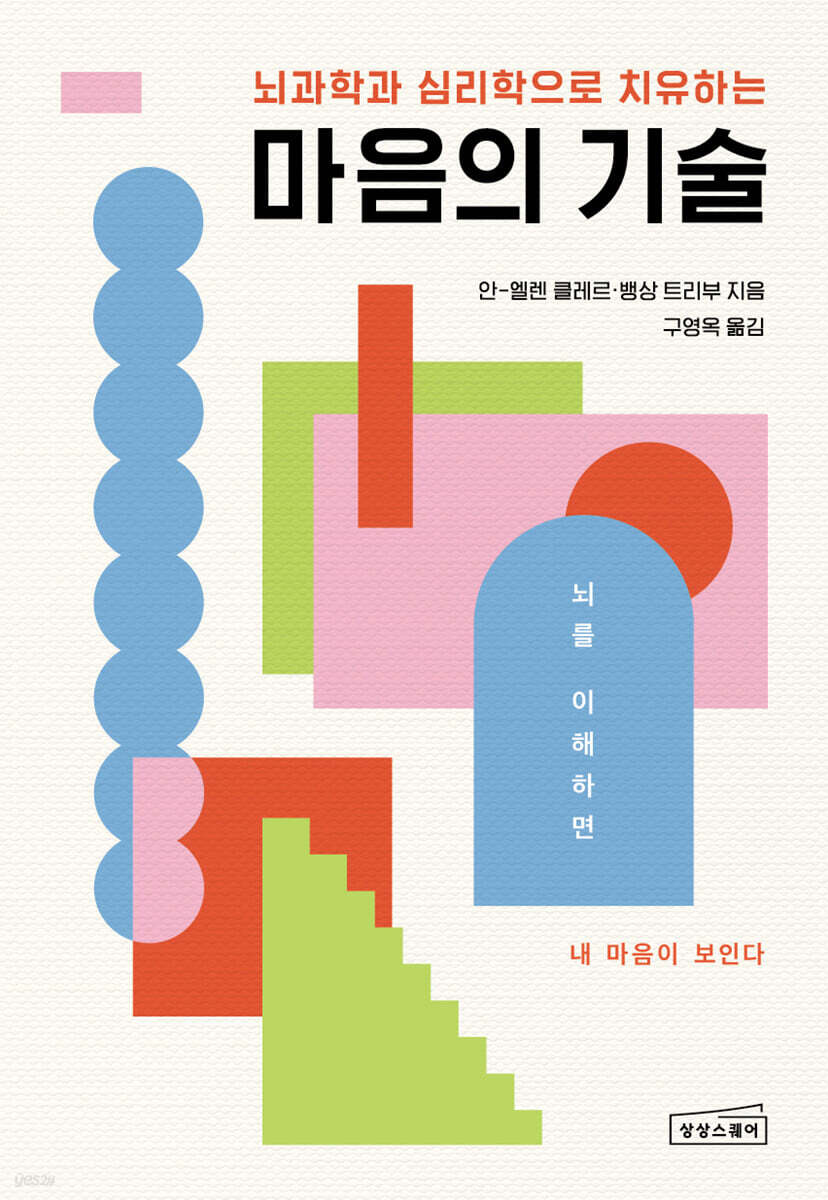
Skills of the Mind
 |
Description
Book Introduction
You have to understand the brain to see the heart. How to Effectively Use Your Brain to Erase Negative Emotions That Have Secretly Seen in Your Life Presenting emotions, behavioral patterns, and control methods through specific examples "The Art of the Mind" is a book that guides us on how to change the behaviors and thoughts that cause us pain and how to control strong emotions. And the method is based on basic neuroscience knowledge that anyone can easily understand and apply. Psychiatrist and neuroscientist Anne-Hélène Clerc and psychotherapist Vincent Triboud say the brain is educable, and that anyone can educate their own brain if they understand how it functions. The purpose of this book is for readers to become their own personal physicians by utilizing the knowledge and experience imparted by the two authors. This book teaches how to apply proven theories in psychiatry, such as neurobiological models, cognitive-behavioral models, acceptance and commitment therapy, mindfulness, schema therapy, and positive psychology, to various psychological problems. Using specific counseling cases as examples, it presents which theories to use, which theories to combine, and what to be careful of in doing so in a friendly and clear manner, tailored to the general reader's level. As this is a proven method that has proven effective in actual counseling, utilizing it will help you effectively deal with psychological issues in your daily life. Additionally, this book has the advantage of clearly explaining when it is necessary to consult with a professional. One of the concerns of people suffering from psychological problems is that it is difficult to know whether their mind can heal on its own or whether they need to seek professional help. This book guides readers to respond appropriately by informing them of situations in which professional help is needed based on symptoms and causes. Part 1, "Understanding the Brain," explains how our brain works and what role it plays in the creation and expression of certain emotions. It helps you understand how the brain works so you can understand how the various skills you will learn work. Part 2, “Means of Control,” teaches us various techniques for controlling our minds. These techniques are not difficult, can be practiced in everyday life, and can be applied to a variety of life issues, helping readers become their own "doctors of their own hearts." Part 3, “Practicing in Daily Life,” teaches you how to apply what you’ve learned to specific psychological situations. It provides specific examples of what techniques to use when anxiety is high, when sadness is overwhelming, or when burnout is on the rise. Happiness and peace are not given from somewhere, they are within my heart. So, if you can control your mind well, you will be able to escape suffering and approach a positive life. Let's open a new path in life by becoming the "doctor of my own heart" based on the brain training methods and emotional coping methods presented in "Mind Technology"! |
- You can preview some of the book's contents.
Preview
index
About the Author
Entering
Part 1: Understanding the Brain
Chapter 1 Brain Functions
Chapter 2: The Brain of Habit
Chapter 3: The Emotional Brain
Chapter 4 Brain Plasticity
Chapter 5 Learning
Chapter 6: Emotions useful for environmental adaptation
Chapter 7: Avoidance and Control
Chapter 8: The Importance of Expressing Emotions
Chapter 9: Thoughts and Emotions from the Top to the Extreme
Chapter 10: The Power of Cognitive Biases
Chapter 11: The Power of Moral Principles
Chapter 12: The Power of Psychological Schemas
Chapter 13 Why Don't We All Act the Same Way?
Part 2 Means of Control
Chapter 14: Psychoeducation: Understanding What Happened to Me
Chapter 15: Accepting Mental Pain
Chapter 16: Clear Goals in Life
Chapter 17: Rumination and Decentralization
Chapter 18 Parallax Techniques
Chapter 19: Self-Assertion
Chapter 20 Mindfulness
Chapter 21: Cognitive Restructuring
Chapter 22 Decision-Making Techniques
Chapter 23: Learning Methods
Chapter 24: Emptying Your Emotions with a Letter
25 exposures
Part 3: How Does Humility Change Our Lives?
Chapter 26: Anxiety
Chapter 27: Existential Anxiety
Chapter 28: Sorrow
Chapter 29 Self-Esteem and Confidence
Chapter 30 Stress
Chapter 31: Burnout Syndrome
Chapter 32 Perfectionism
Chapter 33: Motivation and Procrastination
Chapter 34: The Pursuit of Happiness
Chapter 35: Uncertainty in Everyday Life
Chapter 36 Depression
Chapter 37: Anger and Injustice
Chapter 38: Impulsivity
Chapter 39 Sleep
Chapter 40: Alcohol and Psychostimulants
Chapter 41 Physical Activity
Chapter 42: Diet
Chapter 43: Work Life
Chapter 44 Family
Chapter 45 Friendship
Chapter 46 Love
Chapter 47: Death and Parting
Chapter 48: Early Maladaptive Schema Therapy
Chapter 49: When Problems Are Not Solved Despite Effort
Conclusion: Now a new life begins.
annotation
References
Entering
Part 1: Understanding the Brain
Chapter 1 Brain Functions
Chapter 2: The Brain of Habit
Chapter 3: The Emotional Brain
Chapter 4 Brain Plasticity
Chapter 5 Learning
Chapter 6: Emotions useful for environmental adaptation
Chapter 7: Avoidance and Control
Chapter 8: The Importance of Expressing Emotions
Chapter 9: Thoughts and Emotions from the Top to the Extreme
Chapter 10: The Power of Cognitive Biases
Chapter 11: The Power of Moral Principles
Chapter 12: The Power of Psychological Schemas
Chapter 13 Why Don't We All Act the Same Way?
Part 2 Means of Control
Chapter 14: Psychoeducation: Understanding What Happened to Me
Chapter 15: Accepting Mental Pain
Chapter 16: Clear Goals in Life
Chapter 17: Rumination and Decentralization
Chapter 18 Parallax Techniques
Chapter 19: Self-Assertion
Chapter 20 Mindfulness
Chapter 21: Cognitive Restructuring
Chapter 22 Decision-Making Techniques
Chapter 23: Learning Methods
Chapter 24: Emptying Your Emotions with a Letter
25 exposures
Part 3: How Does Humility Change Our Lives?
Chapter 26: Anxiety
Chapter 27: Existential Anxiety
Chapter 28: Sorrow
Chapter 29 Self-Esteem and Confidence
Chapter 30 Stress
Chapter 31: Burnout Syndrome
Chapter 32 Perfectionism
Chapter 33: Motivation and Procrastination
Chapter 34: The Pursuit of Happiness
Chapter 35: Uncertainty in Everyday Life
Chapter 36 Depression
Chapter 37: Anger and Injustice
Chapter 38: Impulsivity
Chapter 39 Sleep
Chapter 40: Alcohol and Psychostimulants
Chapter 41 Physical Activity
Chapter 42: Diet
Chapter 43: Work Life
Chapter 44 Family
Chapter 45 Friendship
Chapter 46 Love
Chapter 47: Death and Parting
Chapter 48: Early Maladaptive Schema Therapy
Chapter 49: When Problems Are Not Solved Despite Effort
Conclusion: Now a new life begins.
annotation
References
Detailed image
.jpg)
Into the book
The goal of this book is to make fundamental neuroscience accessible and applicable to everyone, enabling them to modify behaviors and thoughts that cause them distress and to manage intense emotions.
To put it simply, it is about using the knowledge and experience of psychiatrists, psychologists, and neuroscientists to become the personal physician of one's own mind.
The brain is educable, and by understanding its functions, you can educate your own brain.
--- From "Entering"
We develop the ability to regulate our emotions as children.
By listening to our parents and other adults' comments and advice about our emotional reactions, we learn how to regulate our own emotions and manage them so as not to upset those around us.
If children are left without repeated advice or receive wrong advice during this period, they may become emotionally bound or go in the wrong direction.
Then, even as an adult, you will cause pain and hurt to those close to you.
But it's not too late to learn how to regulate your emotions as an adult.
--- From "Chapter 2, 'The Brain of Habit'"
What we know so far is that more neurons are born in the basal ganglia, which are involved in habits and routines, and in the limbic system, which is part of the hippocampus.
It is said that our brain continues to produce new neurons until we are 90 years old.
So don't lose hope! Even as we age, if we keep building roads, we can make a difference. It's never too late!
--- From "Chapter 4 'Brain Plasticity'"
Anything newly learned, whether good or bad, needs time to be integrated into our brain.
This time is also necessary for brain plasticity and memory.
Sleep and rest enhance learning ability.
If you want to eliminate inappropriate behavior or instill new habits in your brain (like talking out your anger), you need to take time for rest and patience.
--- From "Chapter 5 'Learning'"
Emotions provide useful guides for adapting to the environment.
We experience this in our daily lives from the time we are newborns.
In reality, we are driven by the need to fulfill our needs, especially relational and emotional needs.
For example, emotions may be a response to frustration at unmet needs.
--- From Chapter 6, “Emotions Useful for Environmental Adaptation”
Psychology focuses on how mental illness is maintained by avoidance or control behaviors.
People with bulimia choose to eat rather than face conflict, and people who self-harm hurt themselves to quietly drown out their grief.
People with obsessive-compulsive disorder may spend hours washing to get rid of feelings of dirtiness, while people with social phobia may avoid others to avoid feeling shame.
There are countless examples of discomfort that arise from avoidance and control.
So we have to learn another way.
--- From Chapter 7, 'Avoidance and Control'
To put it simply, when you experience an emotionally unpleasant situation as a child, your amygdala records it as a trauma.
Emotional memory is what acts like a filter.
It's something that you feel like you have something in your heart, even though you can't explain it clearly.
--- From Chapter 12, “The Power of Psychological Schemas”
If you delay your impulsive action for just a few minutes, you'll find that the feeling doesn't last long.
This exercise will be helpful when you're in conflict with someone, about to make a purchase, feeling anxious and unsure, craving sugar or alcohol, or wanting to send an insulting email.
--- From "Chapter 18 'Parallax Technique'"
To practice mindfulness, you need to let your thoughts flow rather than reinforcing them by talking them out.
Rather than avoiding or controlling the emotions that suddenly arise, we should embrace them as they are.
Here, we act on the strength of our emotions, almost like rumination.
At this moment, focus on your breathing and be aware of the part of your body that is touching the chair.
This is called 'anchoring', likening it to a ship dropping anchor.
Then you just have to wait until everything becomes quiet.
Rehabilitating your brain in this way forces it to reconsider negative thoughts and stop automating the process of immediate action based on the influence of emotions.
--- From "Chapter 20 'Mindfulness'"
Positive psychology, despite the addition of the word "positive," does not tell us to pursue eternal happiness.
Eternal happiness can be a trap that traps you.
There's no magic formula to improve your life, but there are daily activities that, if done consistently and consistently, can benefit your brain.
This is particularly effective in rewiring the brain.
--- From Chapter 34, "The Pursuit of Happiness"
Therefore, we need to lower the intensity of our emotions and get out of the rumination spiral.
It is true that there were events in the past that tormented me, but what torments me now is the act of continually ruminating on those events.
Since what we can change is the present, not the past, let's focus on breaking free from rumination.
--- From Chapter 37, “Anger and Injustice”
The possibilities of the brain are endless.
If time permits, you can learn languages and musical instruments.
It can reduce negative emotions, increase positive emotions, improve relationships, and free your brain.
“How do you plan to spend your time on this earth?”
To put it simply, it is about using the knowledge and experience of psychiatrists, psychologists, and neuroscientists to become the personal physician of one's own mind.
The brain is educable, and by understanding its functions, you can educate your own brain.
--- From "Entering"
We develop the ability to regulate our emotions as children.
By listening to our parents and other adults' comments and advice about our emotional reactions, we learn how to regulate our own emotions and manage them so as not to upset those around us.
If children are left without repeated advice or receive wrong advice during this period, they may become emotionally bound or go in the wrong direction.
Then, even as an adult, you will cause pain and hurt to those close to you.
But it's not too late to learn how to regulate your emotions as an adult.
--- From "Chapter 2, 'The Brain of Habit'"
What we know so far is that more neurons are born in the basal ganglia, which are involved in habits and routines, and in the limbic system, which is part of the hippocampus.
It is said that our brain continues to produce new neurons until we are 90 years old.
So don't lose hope! Even as we age, if we keep building roads, we can make a difference. It's never too late!
--- From "Chapter 4 'Brain Plasticity'"
Anything newly learned, whether good or bad, needs time to be integrated into our brain.
This time is also necessary for brain plasticity and memory.
Sleep and rest enhance learning ability.
If you want to eliminate inappropriate behavior or instill new habits in your brain (like talking out your anger), you need to take time for rest and patience.
--- From "Chapter 5 'Learning'"
Emotions provide useful guides for adapting to the environment.
We experience this in our daily lives from the time we are newborns.
In reality, we are driven by the need to fulfill our needs, especially relational and emotional needs.
For example, emotions may be a response to frustration at unmet needs.
--- From Chapter 6, “Emotions Useful for Environmental Adaptation”
Psychology focuses on how mental illness is maintained by avoidance or control behaviors.
People with bulimia choose to eat rather than face conflict, and people who self-harm hurt themselves to quietly drown out their grief.
People with obsessive-compulsive disorder may spend hours washing to get rid of feelings of dirtiness, while people with social phobia may avoid others to avoid feeling shame.
There are countless examples of discomfort that arise from avoidance and control.
So we have to learn another way.
--- From Chapter 7, 'Avoidance and Control'
To put it simply, when you experience an emotionally unpleasant situation as a child, your amygdala records it as a trauma.
Emotional memory is what acts like a filter.
It's something that you feel like you have something in your heart, even though you can't explain it clearly.
--- From Chapter 12, “The Power of Psychological Schemas”
If you delay your impulsive action for just a few minutes, you'll find that the feeling doesn't last long.
This exercise will be helpful when you're in conflict with someone, about to make a purchase, feeling anxious and unsure, craving sugar or alcohol, or wanting to send an insulting email.
--- From "Chapter 18 'Parallax Technique'"
To practice mindfulness, you need to let your thoughts flow rather than reinforcing them by talking them out.
Rather than avoiding or controlling the emotions that suddenly arise, we should embrace them as they are.
Here, we act on the strength of our emotions, almost like rumination.
At this moment, focus on your breathing and be aware of the part of your body that is touching the chair.
This is called 'anchoring', likening it to a ship dropping anchor.
Then you just have to wait until everything becomes quiet.
Rehabilitating your brain in this way forces it to reconsider negative thoughts and stop automating the process of immediate action based on the influence of emotions.
--- From "Chapter 20 'Mindfulness'"
Positive psychology, despite the addition of the word "positive," does not tell us to pursue eternal happiness.
Eternal happiness can be a trap that traps you.
There's no magic formula to improve your life, but there are daily activities that, if done consistently and consistently, can benefit your brain.
This is particularly effective in rewiring the brain.
--- From Chapter 34, "The Pursuit of Happiness"
Therefore, we need to lower the intensity of our emotions and get out of the rumination spiral.
It is true that there were events in the past that tormented me, but what torments me now is the act of continually ruminating on those events.
Since what we can change is the present, not the past, let's focus on breaking free from rumination.
--- From Chapter 37, “Anger and Injustice”
The possibilities of the brain are endless.
If time permits, you can learn languages and musical instruments.
It can reduce negative emotions, increase positive emotions, improve relationships, and free your brain.
“How do you plan to spend your time on this earth?”
--- From "Conclusion: 'Now a new life begins'"
Publisher's Review
When it seems like misfortune always happens to me,
When you feel alone because of your emotional pain,
The moment you encounter comfort that truly helps
Everyone experiences failure and frustration in life, and there are moments when they feel depressed or helpless.
This is perfectly natural.
The problem is that sometimes we can't escape from these negative emotions.
Moreover, these feelings create a vicious cycle.
It feels like misfortune only happens to me, and that there is no one in the world who can help me.
"The Art of the Mind" is a book I highly recommend to anyone suffering from this vicious cycle.
What do we need when our hearts are in deep pain? We often hear comforting words like, "Time heals all wounds," "Everything will be okay," and "Cheer up."
Sometimes, these words of comfort can give you strength and help you get back to your daily life, but sometimes, on the other hand, these words don't help at all.
What is needed at this time is the ‘skill of the mind.’
This book was born from a meeting between neuroscientist Anne-Hélène Clerc and psychotherapist Vincent Triboud.
And both authors say that to control negative thoughts, we must understand how the brain works.
We need to understand how our brains work so we can know how to cope properly.
For example, when we face life's challenges, we are often told to find logical and rational ways to solve them.
The idea is to not be swayed by emotions and to calmly assess the situation.
However, this method is not effective in all situations.
According to the book, this method may be effective for thoughts and feelings that originate in the prefrontal cortex and move toward the amygdala, but it is not so effective for thoughts and feelings that originate in the amygdala and move toward the prefrontal cortex.
So, we need to figure out what's causing the problem and what pathways it follows in the brain.
There is another worry that plagues us when we are suffering from mental pain.
The solution is to go to the hospital right away.
Although it is said that the prejudice against visiting a psychiatrist has decreased significantly in recent years, according to the '2024 National Mental Health Knowledge and Attitude Survey Report (National Center for Mental Health, Ministry of Health and Welfare)', the proportion of people who do not visit a hospital even though they are experiencing mental health problems is still as high as 73%.
In fact, it is inevitable that the parties involved will be concerned.
Because I can't tell if my symptoms are mild or severe.
Or, even if it's not serious, it may be a problem that you can't solve alone.
In such cases, you should consult a psychiatrist or psychotherapist.
"The Art of the Mind" tells you when you should consult a professional.
For example, if the problem you are experiencing now is related to childhood trauma stored in the amygdala, it is said that you cannot solve this problem alone.
Additionally, if emotions such as anxiety and sadness persist for a long time and cannot be resolved with the methods suggested in the book, we suggest consulting a professional.
This is a part where you can feel the author's sincere hope that the readers of this book will heal their hearts in the right direction.
So, does this book not appeal to those who don't suffer from emotional pain? No.
Even if you don't suffer from mental health issues yourself, there are probably people around you who do.
This book is worth reading, if only to understand them.
Besides, I might have that problem someday.
Even just to prepare for such a time, it is helpful to read 『The Art of the Mind』.
If you understand how your brain, thoughts, and emotions work, you can effectively and confidently address the mental health challenges you face in life.
I believe that good comfort should not be limited to empty words.
However, if you try to suggest solutions without even understanding the heart, it will be of no comfort at all.
It would be a good comfort to be able to understand the heart and further provide ways to truly help.
『The Art of the Mind』 is a book that provides us with such comfort.
I sincerely hope that through this book, readers can escape their emotional pain and move forward into a positive future.
When you feel alone because of your emotional pain,
The moment you encounter comfort that truly helps
Everyone experiences failure and frustration in life, and there are moments when they feel depressed or helpless.
This is perfectly natural.
The problem is that sometimes we can't escape from these negative emotions.
Moreover, these feelings create a vicious cycle.
It feels like misfortune only happens to me, and that there is no one in the world who can help me.
"The Art of the Mind" is a book I highly recommend to anyone suffering from this vicious cycle.
What do we need when our hearts are in deep pain? We often hear comforting words like, "Time heals all wounds," "Everything will be okay," and "Cheer up."
Sometimes, these words of comfort can give you strength and help you get back to your daily life, but sometimes, on the other hand, these words don't help at all.
What is needed at this time is the ‘skill of the mind.’
This book was born from a meeting between neuroscientist Anne-Hélène Clerc and psychotherapist Vincent Triboud.
And both authors say that to control negative thoughts, we must understand how the brain works.
We need to understand how our brains work so we can know how to cope properly.
For example, when we face life's challenges, we are often told to find logical and rational ways to solve them.
The idea is to not be swayed by emotions and to calmly assess the situation.
However, this method is not effective in all situations.
According to the book, this method may be effective for thoughts and feelings that originate in the prefrontal cortex and move toward the amygdala, but it is not so effective for thoughts and feelings that originate in the amygdala and move toward the prefrontal cortex.
So, we need to figure out what's causing the problem and what pathways it follows in the brain.
There is another worry that plagues us when we are suffering from mental pain.
The solution is to go to the hospital right away.
Although it is said that the prejudice against visiting a psychiatrist has decreased significantly in recent years, according to the '2024 National Mental Health Knowledge and Attitude Survey Report (National Center for Mental Health, Ministry of Health and Welfare)', the proportion of people who do not visit a hospital even though they are experiencing mental health problems is still as high as 73%.
In fact, it is inevitable that the parties involved will be concerned.
Because I can't tell if my symptoms are mild or severe.
Or, even if it's not serious, it may be a problem that you can't solve alone.
In such cases, you should consult a psychiatrist or psychotherapist.
"The Art of the Mind" tells you when you should consult a professional.
For example, if the problem you are experiencing now is related to childhood trauma stored in the amygdala, it is said that you cannot solve this problem alone.
Additionally, if emotions such as anxiety and sadness persist for a long time and cannot be resolved with the methods suggested in the book, we suggest consulting a professional.
This is a part where you can feel the author's sincere hope that the readers of this book will heal their hearts in the right direction.
So, does this book not appeal to those who don't suffer from emotional pain? No.
Even if you don't suffer from mental health issues yourself, there are probably people around you who do.
This book is worth reading, if only to understand them.
Besides, I might have that problem someday.
Even just to prepare for such a time, it is helpful to read 『The Art of the Mind』.
If you understand how your brain, thoughts, and emotions work, you can effectively and confidently address the mental health challenges you face in life.
I believe that good comfort should not be limited to empty words.
However, if you try to suggest solutions without even understanding the heart, it will be of no comfort at all.
It would be a good comfort to be able to understand the heart and further provide ways to truly help.
『The Art of the Mind』 is a book that provides us with such comfort.
I sincerely hope that through this book, readers can escape their emotional pain and move forward into a positive future.
GOODS SPECIFICS
- Date of issue: November 18, 2024
- Page count, weight, size: 364 pages | 468g | 145*210*20mm
- ISBN13: 9791192389233
- ISBN10: 1192389239
You may also like
카테고리
korean


korean

![GQ KOREA Mark (Monthly): December [2025]](http://librairie.coreenne.fr/cdn/shop/files/8ef265dbbfbf186523ed75ba7319009d.jpg?v=1765340328&width=3840)


