

The Brain Science of Leadership
 |
Description
Book Introduction
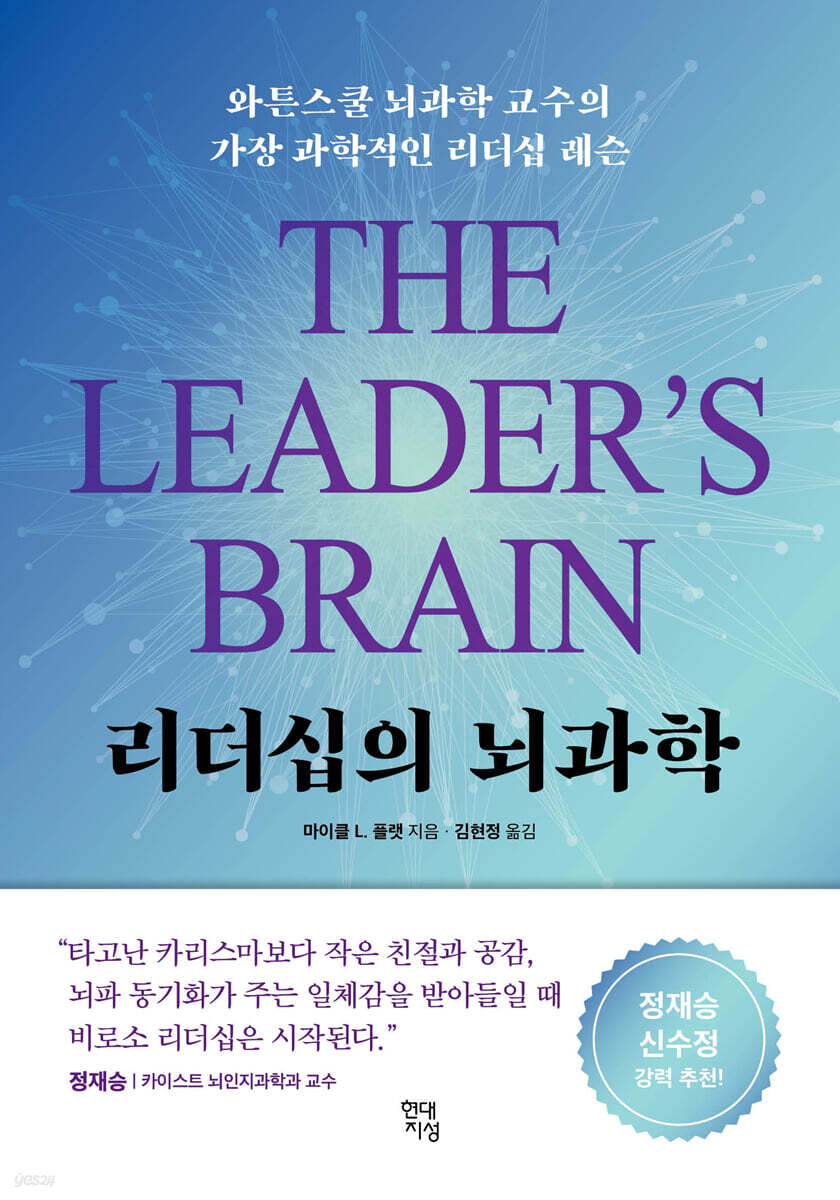
“Small kindness and empathy are more important than natural charisma,
When you accept the sense of unity that brainwave synchronization brings
“Only then does leadership begin.”
_ Jaeseung Jeong | Professor of Brain and Cognitive Sciences, KAIST
Leadership based on experience no longer works.
Equip yourself with the insights and practical skills proven by the latest science.
How do we make the best decisions? How do we strengthen teamwork? How do we achieve sustained performance? Every leader wants to demonstrate outstanding leadership.
However, most leadership books on the market today are based on the experiences of specific individuals.
It's difficult to directly apply the personal experiences and intuitions of someone in a different organization and position than me to my current situation.
To achieve sustained performance in a rapidly changing organizational environment, what's needed now are the "most proven" leadership principles that apply to everyone and can be practiced anytime, anywhere.
Author Michael Platt, a professor of neuroscience at the Wharton School, one of the world's top business schools, connects the latest neuroscience research to business practices to explore leadership in a whole new light.
Leadership, which used to rely on intuition and experience, is now based on scientific evidence, and the operating principles of the "social brain" explain why leaders should act in that way.
From interpersonal relationships and teamwork to communication, creativity, decision-making, and performance—every challenge a leader faces is interpreted through neuroscientific insights. This book offers concrete, immediately applicable strategies for engaging teams, resolving conflict, and fostering collective creativity.
Leadership is not an innate talent given only to special people, but a skill that anyone can develop through brain science.
From a new leader taking on his first team role to a CEO running a massive organization, this book will serve as the scientifically proven, most practical guide for leaders around the world.
When you accept the sense of unity that brainwave synchronization brings
“Only then does leadership begin.”
_ Jaeseung Jeong | Professor of Brain and Cognitive Sciences, KAIST
Leadership based on experience no longer works.
Equip yourself with the insights and practical skills proven by the latest science.
How do we make the best decisions? How do we strengthen teamwork? How do we achieve sustained performance? Every leader wants to demonstrate outstanding leadership.
However, most leadership books on the market today are based on the experiences of specific individuals.
It's difficult to directly apply the personal experiences and intuitions of someone in a different organization and position than me to my current situation.
To achieve sustained performance in a rapidly changing organizational environment, what's needed now are the "most proven" leadership principles that apply to everyone and can be practiced anytime, anywhere.
Author Michael Platt, a professor of neuroscience at the Wharton School, one of the world's top business schools, connects the latest neuroscience research to business practices to explore leadership in a whole new light.
Leadership, which used to rely on intuition and experience, is now based on scientific evidence, and the operating principles of the "social brain" explain why leaders should act in that way.
From interpersonal relationships and teamwork to communication, creativity, decision-making, and performance—every challenge a leader faces is interpreted through neuroscientific insights. This book offers concrete, immediately applicable strategies for engaging teams, resolving conflict, and fostering collective creativity.
Leadership is not an innate talent given only to special people, but a skill that anyone can develop through brain science.
From a new leader taking on his first team role to a CEO running a massive organization, this book will serve as the scientifically proven, most practical guide for leaders around the world.
- You can preview some of the book's contents.
Preview
index
Recommendation
Entering
Chapter 1: Leadership is about Human Relationships | Building Relationships Based on the Social Brain
Chapter 2: Brains Become Similar When They Work Together | The Secret to Great Teamwork
Chapter 3: Say What You Need to Say | The Secret to High-Resolution Communication
Chapter 4: Harnessing the Brain's Innovation Engine | How to Generate Creative Thinking
Chapter 5: Decision Making | How the Brain Makes Decisions
Chapter 6: Improving Performance | Small Achievements Lead to Amazing Results
Chapter 7: The Future of Business Neuroscience | Maximizing Brain Function
In conclusion
Acknowledgements
main
Entering
Chapter 1: Leadership is about Human Relationships | Building Relationships Based on the Social Brain
Chapter 2: Brains Become Similar When They Work Together | The Secret to Great Teamwork
Chapter 3: Say What You Need to Say | The Secret to High-Resolution Communication
Chapter 4: Harnessing the Brain's Innovation Engine | How to Generate Creative Thinking
Chapter 5: Decision Making | How the Brain Makes Decisions
Chapter 6: Improving Performance | Small Achievements Lead to Amazing Results
Chapter 7: The Future of Business Neuroscience | Maximizing Brain Function
In conclusion
Acknowledgements
main
Detailed image
.jpg)
Into the book
A leader's brain is a way of thinking.
A leadership approach that leverages insights from neuroscience to develop your capabilities as a manager or leader.
I hope that readers of this book will be able to apply these insights in their management roles and in presenting a broader vision as leaders.
I hope that this will help you grow as a leader in your community and create happier, healthier families.
--- p.17
Leadership is actually an ability that only a lucky few are born with.
Leaders are people with natural interpersonal skills, excellent negotiators, agile strategists, and explorers of new perspectives, ideas, and opinions.
But there is no need for those who are not born with leadership talent to be discouraged.
As Google discovered with Project Oxygen, these abilities can be honed.
--- p.27
When people have strong bonds with each other or collaborate on tasks, their brains become synchronized.
In other words, neural activity patterns are aligned.
When the brain is synchronized, other physiological functions, including heartbeat, also become synchronized.
Neuroscientists have found that when physiological processes are synchronized, feelings of liking, understanding, empathy, rapport, and cooperation are also enhanced.
Synchronization also serves to convey more information and enhance understanding.
All of these factors have a significant impact on team cohesion.
--- p.54
It's not necessary for a team to hear the exact same story in exactly the same way.
Rather, it is important to share a belief about what the story means.
The brain processes the same word very differently depending on how you think about it.
In other words, it is difficult to expect that all team members will participate with one mind or mind or that their brains will be synchronized simply by telling a story or delivering a message.
Everyone has their own experiences, biases, and obstacles that hinder them from thinking like others.
To synchronize the brains of team members, everyone needs to listen in a similar way.
--- p.82
At the heart of the brain's innovation engine is the default mode neural network.
It was named this way because it was discovered while taking pictures of the brains of people taking a break from performing various tasks.
About 20 years ago, neuroscientists began collecting data to analyze how the brain differs when performing a task versus when it's at rest.
The researchers found that specific parts of the brain become active when people rest.
This area becomes even more powerful when you relax or let your thoughts flow naturally.
But when we start performing simple everyday tasks again, the default mode neural network shuts down.
In fact, people who have a lot of daytime wandering thoughts have higher levels of basal activity in their default mode neural network than those who don't.
Default mode neural networks also appear to play a key role in exploratory activities, such as generating new ideas and imagining the future.
--- p.109
Numerous studies have shown that increasing the number of choices decreases the activity of neurons that indicate the value of each choice.
Because decision-making is ultimately a process of accumulating information, it takes a long time to reach a point where you can actually make a choice.
Of course, there are cases where you cannot choose.
Ultimately, the longer it takes to make a decision, the less confident you are in that choice and the more likely you are to want to change it.
The tyranny of choice, whereby choices become more difficult as the number of options increases, is not simply an irrational psychological product.
Rather, it was found that this phenomenon appears when physical constraints are placed on the process by which neurons operate to send information signals.
--- p.153
Part of the social brain network, located below the anterior cingulate cortex, sends signals about the rewards and punishments experienced by others.
These signals not only resonate with people, but also help them learn from the experiences of others.
A second part of the social brain network, which includes the temporo-parietal junction and the dorsomedial prefrontal cortex, influences our ability to think about what others want, believe, and know, allowing us to predict their behavior.
Scientists have found that activating this "mentalize" circuit during a sequential stock market task leads to herding and bubble formation.
--- p.185
Even with these caveats in mind, it's clear that neuroscience is making exciting advances in technologies for stimulating and manipulating brain function.
These advances are often focused on restoring lost or damaged functions rather than improving function in healthy people.
For example, transcranial magnetic stimulation (TMS) is a technique that uses strong magnetic fields to induce electric currents in the brain.
This current can activate or deactivate specific brain regions.
These alterations can propagate to lower brain regions, and the brain can respond to these treatments with permanent changes. Research is also underway on the effects of TMS on depression, migraines, pain management, and other neurological disorders.
A leadership approach that leverages insights from neuroscience to develop your capabilities as a manager or leader.
I hope that readers of this book will be able to apply these insights in their management roles and in presenting a broader vision as leaders.
I hope that this will help you grow as a leader in your community and create happier, healthier families.
--- p.17
Leadership is actually an ability that only a lucky few are born with.
Leaders are people with natural interpersonal skills, excellent negotiators, agile strategists, and explorers of new perspectives, ideas, and opinions.
But there is no need for those who are not born with leadership talent to be discouraged.
As Google discovered with Project Oxygen, these abilities can be honed.
--- p.27
When people have strong bonds with each other or collaborate on tasks, their brains become synchronized.
In other words, neural activity patterns are aligned.
When the brain is synchronized, other physiological functions, including heartbeat, also become synchronized.
Neuroscientists have found that when physiological processes are synchronized, feelings of liking, understanding, empathy, rapport, and cooperation are also enhanced.
Synchronization also serves to convey more information and enhance understanding.
All of these factors have a significant impact on team cohesion.
--- p.54
It's not necessary for a team to hear the exact same story in exactly the same way.
Rather, it is important to share a belief about what the story means.
The brain processes the same word very differently depending on how you think about it.
In other words, it is difficult to expect that all team members will participate with one mind or mind or that their brains will be synchronized simply by telling a story or delivering a message.
Everyone has their own experiences, biases, and obstacles that hinder them from thinking like others.
To synchronize the brains of team members, everyone needs to listen in a similar way.
--- p.82
At the heart of the brain's innovation engine is the default mode neural network.
It was named this way because it was discovered while taking pictures of the brains of people taking a break from performing various tasks.
About 20 years ago, neuroscientists began collecting data to analyze how the brain differs when performing a task versus when it's at rest.
The researchers found that specific parts of the brain become active when people rest.
This area becomes even more powerful when you relax or let your thoughts flow naturally.
But when we start performing simple everyday tasks again, the default mode neural network shuts down.
In fact, people who have a lot of daytime wandering thoughts have higher levels of basal activity in their default mode neural network than those who don't.
Default mode neural networks also appear to play a key role in exploratory activities, such as generating new ideas and imagining the future.
--- p.109
Numerous studies have shown that increasing the number of choices decreases the activity of neurons that indicate the value of each choice.
Because decision-making is ultimately a process of accumulating information, it takes a long time to reach a point where you can actually make a choice.
Of course, there are cases where you cannot choose.
Ultimately, the longer it takes to make a decision, the less confident you are in that choice and the more likely you are to want to change it.
The tyranny of choice, whereby choices become more difficult as the number of options increases, is not simply an irrational psychological product.
Rather, it was found that this phenomenon appears when physical constraints are placed on the process by which neurons operate to send information signals.
--- p.153
Part of the social brain network, located below the anterior cingulate cortex, sends signals about the rewards and punishments experienced by others.
These signals not only resonate with people, but also help them learn from the experiences of others.
A second part of the social brain network, which includes the temporo-parietal junction and the dorsomedial prefrontal cortex, influences our ability to think about what others want, believe, and know, allowing us to predict their behavior.
Scientists have found that activating this "mentalize" circuit during a sequential stock market task leads to herding and bubble formation.
--- p.185
Even with these caveats in mind, it's clear that neuroscience is making exciting advances in technologies for stimulating and manipulating brain function.
These advances are often focused on restoring lost or damaged functions rather than improving function in healthy people.
For example, transcranial magnetic stimulation (TMS) is a technique that uses strong magnetic fields to induce electric currents in the brain.
This current can activate or deactivate specific brain regions.
These alterations can propagate to lower brain regions, and the brain can respond to these treatments with permanent changes. Research is also underway on the effects of TMS on depression, migraines, pain management, and other neurological disorders.
--- p.203
Publisher's Review
Leadership that relies on experience,
Hitting the limit
How can we make better decisions, strengthen teamwork, and achieve sustainable results? These are questions that every leader ponders, yet until now, we have relied on our individual experiences and intuition.
If you open any of the numerous leadership books on the shelves today, you'll find that many are based on the author's personal experiences.
However, because leadership is required across a wide range of organizations and positions, from team leaders in small organizations to CEOs in large ones, it's difficult to directly apply one person's personal experience and intuition to all leaders.
As society rapidly evolves, we face a variety of challenges, including COVID-19, workplace stress, and a fading sense of solidarity.
To achieve better performance, continuously solve problems, and foster team harmony in these circumstances, we need the "most proven" leadership principles that apply to everyone and can be immediately implemented in any situation.
With brain science and neuroscience
Rewriting New Leadership
"The Brain Science of Leadership" is a book written by a neuroscience professor at the Wharton School, one of the world's top business schools, connecting the latest neuroscience research findings to business to provide a completely new perspective on leadership.
From basic communication techniques like eye contact to the brain's workings that enhance team members' capabilities, each and every one of a leader's actions is explained through the language of brain science.
By providing practical guidance leaders can immediately apply in the field—on topics such as communication methods that build trust, the conditions that spark creativity and innovation, more sophisticated decision-making methods, neuroscientific factors that enhance performance, and how neuroscience can revolutionize hiring and customer experiences—we elevate leadership from the realm of experience and intuition to the realm of scientific insight and practice.
No matter what organization you're in or what position you hold, you'll be able to immediately apply this book in your office, conference room, or collaborative environment.
Every leader should read
Scientific Manual
Leadership is not an innate talent given only to special people, but a skill that anyone can develop through brain science.
The author cites a variety of examples, including rhesus monkeys who began supporting each other after a hurricane, a hockey team that achieved a "miracle on ice," and a brand experiment that influenced customer loyalty, proving that leadership is not an innate trait but a social skill deeply ingrained in the brain.
This book goes beyond personal experience to present a variety of leadership strategies proven through numerous data and experiments.
He emphasizes that a well-designed brain is more important than charisma, and conveys the conviction that all leaders can become better leaders based on brain science.
From a new team leader to a CEO running a massive organization, this book will serve as a scientifically proven, yet practical, guide for all leaders.
Hitting the limit
How can we make better decisions, strengthen teamwork, and achieve sustainable results? These are questions that every leader ponders, yet until now, we have relied on our individual experiences and intuition.
If you open any of the numerous leadership books on the shelves today, you'll find that many are based on the author's personal experiences.
However, because leadership is required across a wide range of organizations and positions, from team leaders in small organizations to CEOs in large ones, it's difficult to directly apply one person's personal experience and intuition to all leaders.
As society rapidly evolves, we face a variety of challenges, including COVID-19, workplace stress, and a fading sense of solidarity.
To achieve better performance, continuously solve problems, and foster team harmony in these circumstances, we need the "most proven" leadership principles that apply to everyone and can be immediately implemented in any situation.
With brain science and neuroscience
Rewriting New Leadership
"The Brain Science of Leadership" is a book written by a neuroscience professor at the Wharton School, one of the world's top business schools, connecting the latest neuroscience research findings to business to provide a completely new perspective on leadership.
From basic communication techniques like eye contact to the brain's workings that enhance team members' capabilities, each and every one of a leader's actions is explained through the language of brain science.
By providing practical guidance leaders can immediately apply in the field—on topics such as communication methods that build trust, the conditions that spark creativity and innovation, more sophisticated decision-making methods, neuroscientific factors that enhance performance, and how neuroscience can revolutionize hiring and customer experiences—we elevate leadership from the realm of experience and intuition to the realm of scientific insight and practice.
No matter what organization you're in or what position you hold, you'll be able to immediately apply this book in your office, conference room, or collaborative environment.
Every leader should read
Scientific Manual
Leadership is not an innate talent given only to special people, but a skill that anyone can develop through brain science.
The author cites a variety of examples, including rhesus monkeys who began supporting each other after a hurricane, a hockey team that achieved a "miracle on ice," and a brand experiment that influenced customer loyalty, proving that leadership is not an innate trait but a social skill deeply ingrained in the brain.
This book goes beyond personal experience to present a variety of leadership strategies proven through numerous data and experiments.
He emphasizes that a well-designed brain is more important than charisma, and conveys the conviction that all leaders can become better leaders based on brain science.
From a new team leader to a CEO running a massive organization, this book will serve as a scientifically proven, yet practical, guide for all leaders.
GOODS SPECIFICS
- Date of issue: October 16, 2025
- Page count, weight, size: 264 pages | 338g | 140*200*17mm
- ISBN13: 9791139727999
- ISBN10: 1139727990
You may also like
카테고리
korean


korean

![ELLE 엘르 스페셜 에디션 A형 : 12월 [2025]](http://librairie.coreenne.fr/cdn/shop/files/b8e27a3de6c9538896439686c6b0e8fb.jpg?v=1766436872&width=3840)


