

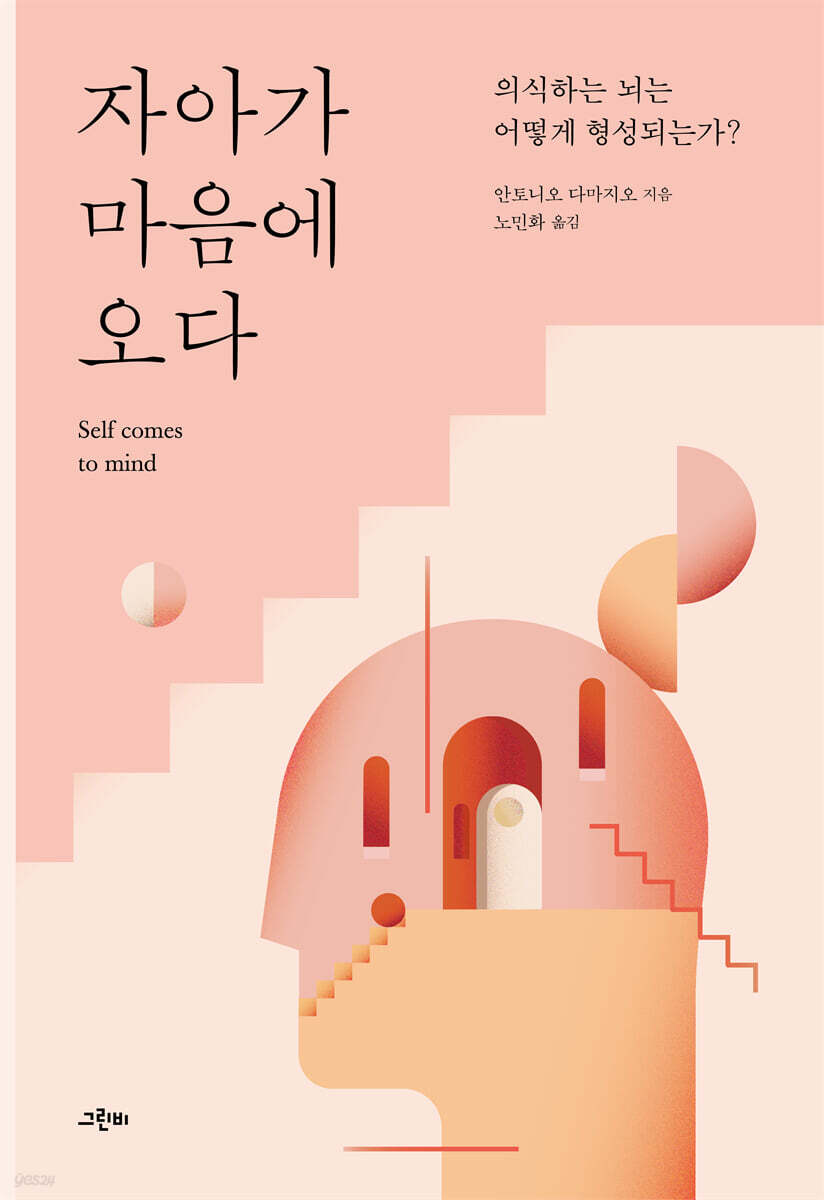
The self comes to mind
 |
Description
Book Introduction
I was completely captivated by this book.
Antonio Damasio interprets the remarkable achievements of neuroscience within the broader context of evolutionary biology and cultural development.
― Yo-Yo Ma (cellist, Grammy Award winner)
Where does consciousness come from?
World-renowned scholar Antonio Damasio's "The Self Comes to the Mind" answers this question in the language of life.
His attempt to elucidate human consciousness from the deepest levels of life is surprisingly concrete.
It traces how the 'self-sense of life' evolves into consciousness through the complex interactions of emotion, body, and reason revealed in the brainstem, thalamus, and cerebral cortex, and explores the origin of consciousness in the process by which life recognizes itself.
As neuroscientist Park Moon-ho commented, “This book, which adds depth to neuroanatomy, can be called Antonio Damasio’s masterpiece.”
As the way we understand life changes, the way we teach people also changes.
Damasio's view of the mind not as a function of thought but as a process by which life feels itself, an evolutionary mechanism by which beings become aware of themselves, makes us reflect on what we have lost in today's education.
Consciousness originated as an impulse to maintain the body's balance, but in humans it was transformed into a sense of empathy, responsibility, and ethics.
This book, which documents the process by which humans have progressed from being mere "beings that sustain life" to beings that "care for" each other's lives, records the moment when science reclaims the language of philosophy by weaving life, self, and consciousness into a single, continuous narrative.
Antonio Damasio interprets the remarkable achievements of neuroscience within the broader context of evolutionary biology and cultural development.
― Yo-Yo Ma (cellist, Grammy Award winner)
Where does consciousness come from?
World-renowned scholar Antonio Damasio's "The Self Comes to the Mind" answers this question in the language of life.
His attempt to elucidate human consciousness from the deepest levels of life is surprisingly concrete.
It traces how the 'self-sense of life' evolves into consciousness through the complex interactions of emotion, body, and reason revealed in the brainstem, thalamus, and cerebral cortex, and explores the origin of consciousness in the process by which life recognizes itself.
As neuroscientist Park Moon-ho commented, “This book, which adds depth to neuroanatomy, can be called Antonio Damasio’s masterpiece.”
As the way we understand life changes, the way we teach people also changes.
Damasio's view of the mind not as a function of thought but as a process by which life feels itself, an evolutionary mechanism by which beings become aware of themselves, makes us reflect on what we have lost in today's education.
Consciousness originated as an impulse to maintain the body's balance, but in humans it was transformed into a sense of empathy, responsibility, and ethics.
This book, which documents the process by which humans have progressed from being mere "beings that sustain life" to beings that "care for" each other's lives, records the moment when science reclaims the language of philosophy by weaving life, self, and consciousness into a single, continuous narrative.
- You can preview some of the book's contents.
Preview
index
Recommendation 5
Part 1: Starting Over
Chapter 1: Waking Up
Purpose and Reason 26
Approaching the Problem 28
The Self as Witness 38
Overcoming Guiding Intuition 40
Integrative Perspective 43
Earl 47
Key Idea Preview 51
Mind with Life and Consciousness 62
Chapter 2: From Life Sustaining to Biological Value
The Improbability of Consciousness 67
Natural Will 69
Keep Surviving 82
The Origin of Homeostasis 85
Cells, Multicellular Organisms, and Engineering Machinery 87
Biological value 89
Biological value of the whole organism 92
Success Stories of Our Early Ancestors 95
Incentive Development 99
The Link Between Homeostasis, Values, and Consciousness 102
Part 2: What is in the brain where the mind can exist?
Chapter 3 Map Making and Image Formation
Maps and Images 113
Digging Below the Surface 117
Map and Mind 123
Neurology of the Mind 128
The Beginning of the Mind 134
Are you one step closer to creating your mind? 148
Chapter 4: The Body in the Mind
Theme of the Heart 153
Body Mapping 157
From Body to Brain 163
Quantity represents, quality represents, 167
Primal Feeling 169
Body Condition Mapping and Simulation 170
The Origin of Ideas 176
Body-Mind-Brain 178
Chapter 5 Emotions and Feelings
Positioning Emotions and Feelings 181
Defining Emotions and Feelings 182
Emotional Triggering and Execution 186
The Curious Case of William James 190
Feeling of Emotion 193
How do we feel emotions? 198
Temporality of Emotions and Feelings 202
Emotional Diversity 203
Upper and Lower Limits of Emotions 206
Essay on Admiration and Compassion 208
Chapter 6: Structural Design of Memory
Somewhere, somehow 215
The Nature of Memory Storage 219
Temperament first, map later 220
How Memory Works 224
A Brief Note on the Types of Memory 228
Possible solutions to the problem 230
Convergence-divergence zone 232
Further Considerations on Convergence-Divergence Zones 236
Practical Application of the Model 238
The Mode and Location of Perception and Recall 246
Part 3: Conscious Beings
Chapter 7 Observed Consciousness
Definition of Consciousness 253
Dismantling Consciousness 256
The Ego Disappears, But the Mind Remains 262
267 Completing the practical definition
Types of Consciousness 269
Human and Nonhuman Consciousness 275
Misconceptions Surrounding Consciousness 276
Freud's Unconscious 283
Chapter 8: Building a Conscious Mind
Working Hypothesis 289
Access to the Conscious Brain 293
Conscious Mind Preview 295
The Material of the Conscious Mind 298
Atomic Number 304
Formation of the Core Self 319
Core Self State 325
Exploring the Brain That Makes Up the Conscious Mind 328
Chapter 9: The Autobiographical Self
Memory Becomes Consciousness 333
The Formation of the Autobiographical Self 335
Issue 337 of Coordination
Coordinators 339
Potential Role of the Posteromedial Cortex 342
How the Posteromedial Cortex Works 348
Additional Considerations on the Posteromedial Cortex 352
Conclusion on Pathological Phenomena of Consciousness 371
Chapter 10 Galmuri
Final inspection 377
Neurology of Consciousness 380
Anatomical Bottlenecks Behind the Conscious Mind 389
From the collaboration of anatomical compartments to the solo performance of neurons 392
395 When you feel your own perception
Sense I 396
Sense Quality II 400
Qualia and the Self 409
Remaining Questions 410
A long time has passed since the fourth part of the ceremony
Chapter 11: Living with Consciousness
Why Consciousness Survived 415
Self-Control Issue 418
Thoughts on the Unconscious 424
Addendum 432 on the Genetic Unconscious
Feeling of Conscious Will 435
Educating the Cognitive Unconscious 436
Brain and Justice 440
Nature and Culture 443
The Self Comes to Mind 448
The Consequences of the Reflective Self 452
Appendix 463
Acknowledgments 489
Translator's Note 493
Search 522
Part 1: Starting Over
Chapter 1: Waking Up
Purpose and Reason 26
Approaching the Problem 28
The Self as Witness 38
Overcoming Guiding Intuition 40
Integrative Perspective 43
Earl 47
Key Idea Preview 51
Mind with Life and Consciousness 62
Chapter 2: From Life Sustaining to Biological Value
The Improbability of Consciousness 67
Natural Will 69
Keep Surviving 82
The Origin of Homeostasis 85
Cells, Multicellular Organisms, and Engineering Machinery 87
Biological value 89
Biological value of the whole organism 92
Success Stories of Our Early Ancestors 95
Incentive Development 99
The Link Between Homeostasis, Values, and Consciousness 102
Part 2: What is in the brain where the mind can exist?
Chapter 3 Map Making and Image Formation
Maps and Images 113
Digging Below the Surface 117
Map and Mind 123
Neurology of the Mind 128
The Beginning of the Mind 134
Are you one step closer to creating your mind? 148
Chapter 4: The Body in the Mind
Theme of the Heart 153
Body Mapping 157
From Body to Brain 163
Quantity represents, quality represents, 167
Primal Feeling 169
Body Condition Mapping and Simulation 170
The Origin of Ideas 176
Body-Mind-Brain 178
Chapter 5 Emotions and Feelings
Positioning Emotions and Feelings 181
Defining Emotions and Feelings 182
Emotional Triggering and Execution 186
The Curious Case of William James 190
Feeling of Emotion 193
How do we feel emotions? 198
Temporality of Emotions and Feelings 202
Emotional Diversity 203
Upper and Lower Limits of Emotions 206
Essay on Admiration and Compassion 208
Chapter 6: Structural Design of Memory
Somewhere, somehow 215
The Nature of Memory Storage 219
Temperament first, map later 220
How Memory Works 224
A Brief Note on the Types of Memory 228
Possible solutions to the problem 230
Convergence-divergence zone 232
Further Considerations on Convergence-Divergence Zones 236
Practical Application of the Model 238
The Mode and Location of Perception and Recall 246
Part 3: Conscious Beings
Chapter 7 Observed Consciousness
Definition of Consciousness 253
Dismantling Consciousness 256
The Ego Disappears, But the Mind Remains 262
267 Completing the practical definition
Types of Consciousness 269
Human and Nonhuman Consciousness 275
Misconceptions Surrounding Consciousness 276
Freud's Unconscious 283
Chapter 8: Building a Conscious Mind
Working Hypothesis 289
Access to the Conscious Brain 293
Conscious Mind Preview 295
The Material of the Conscious Mind 298
Atomic Number 304
Formation of the Core Self 319
Core Self State 325
Exploring the Brain That Makes Up the Conscious Mind 328
Chapter 9: The Autobiographical Self
Memory Becomes Consciousness 333
The Formation of the Autobiographical Self 335
Issue 337 of Coordination
Coordinators 339
Potential Role of the Posteromedial Cortex 342
How the Posteromedial Cortex Works 348
Additional Considerations on the Posteromedial Cortex 352
Conclusion on Pathological Phenomena of Consciousness 371
Chapter 10 Galmuri
Final inspection 377
Neurology of Consciousness 380
Anatomical Bottlenecks Behind the Conscious Mind 389
From the collaboration of anatomical compartments to the solo performance of neurons 392
395 When you feel your own perception
Sense I 396
Sense Quality II 400
Qualia and the Self 409
Remaining Questions 410
A long time has passed since the fourth part of the ceremony
Chapter 11: Living with Consciousness
Why Consciousness Survived 415
Self-Control Issue 418
Thoughts on the Unconscious 424
Addendum 432 on the Genetic Unconscious
Feeling of Conscious Will 435
Educating the Cognitive Unconscious 436
Brain and Justice 440
Nature and Culture 443
The Self Comes to Mind 448
The Consequences of the Reflective Self 452
Appendix 463
Acknowledgments 489
Translator's Note 493
Search 522
Detailed image

Into the book
Consciousness is not simply an image in the mind.
Consciousness is about the contents of the mind, organized around the organism that produces and motivates those contents.
But consciousness is more than just the organized mind influenced by a living, active organism, in that it can be experienced by readers and authors alike whenever they want.
(…) The mind emerges simply by the presence and flow of organized images in the mental stream, but unless some supplementary process is added, the mind remains unconscious.
What is lacking in that unconscious mind is the self.
--- 「Part 1 Chapter 1.
From "Wake Up"
Behind the imperfect but wondrous structures that culture and civilization have built for humanity, the most fundamental debate we face remains the sustenance of life.
(…) Life and its essential conditions, that is, the unavoidable survival imperative and the complex management process to maintain the survival of one cell or trillions of cells, were the fundamental causes that led to the emergence and evolution of the brain, the most sophisticated management device created by evolution.
At the same time, this was also the root cause of a whole series of consequences, including the development of increasingly sophisticated brains as we lived in increasingly sophisticated bodies and in increasingly complex environments.
If we examine the full spectrum of brain function through the lens of the view that the brain exists to manage life within the body, the traditional categories of psychology—emotion, perception, memory, language, intelligence, and consciousness—will seem more natural and far less mysterious than they once did.
--- 「Part 1, Chapter 2.
From Life Sustaining to Biological Value, pp. 108-109)
Contrary to traditional views and common wisdom, I do not assume that the mind is formed solely in the cerebral cortex.
The first signs of the mind begin in the brainstem.
The idea that the mind's workings begin in the brainstem is so radical that it has yet to gain much public attention.
(…) The two nuclei in the brainstem, the nucleus accumbens and the nucleus accumbens, create the basic aspects of the mind that are expressed as the pain and pleasure we feel as we live.
--- 「Part 2, Chapter 3.
From “Map Making and Image Formation”
The fact that emotions are not learned but rather automated, predictable, and stable behavioral programs suggests that their origins lie in natural selection and the resulting genetic design.
These genetic instructions have been well preserved throughout evolution, leading the brain to be assembled in a specific and reliable way.
As a result, specific neural circuits process emotionally relevant stimuli, and emotionally triggering brain regions generate perfect emotional responses.
(…) We are able to regulate our emotional expressions to some extent based on the cultural influences and personal education we experience while growing up.
(…) it can be modulated, reveal distinct individual differences, and sometimes subtly reflect a particular social group to which one belongs.
--- 「Part 2, Chapter 5.
From “Emotions and Feelings”
The convergence-divergence zone theory framework posits two somewhat separate 'brain spaces' within the brain.
One is the space where an explicit map of objects and events is created when we perceive something, and where that map is reconstructed when we recall it.
(…) These two spaces refer to different periods of brain evolution.
One side is the early brain, which could elicit appropriate behavior based on inclinations alone, and the other side is the brain after the quality of behavior improved as maps evolved into images.
The two spaces are now seamlessly integrated.
--- 「Part 2, Chapter 6.
From “Structural Design of Memory”
The stage of consciousness is busy changing here and there, letting the imagination run wild.
Fragments of past lives flash through our memories, and even possibilities that may or may not happen in the future flow into our present experiences.
We live breathlessly, moving between the past and the future, between different times and places in life.
But amidst all that flow, the self, the central axis within me, never disappears from sight.
Even if we focus on a very distant event, our connection to the center is not lost.
The center of the self acts as an unshakable constant.
This is the essence of the expanded consciousness that represents the majestic achievement of the human brain and defines humanity.
For better or worse, the power of the brain that has brought humanity to its current level of civilization lies here.
This is the kind of consciousness that novels, films, and music express, and that philosophical thought praises.
--- 「Part 3, Chapter 7.
From “Observed Consciousness”
The process of building a conscious mind cannot be an easy task.
(…) The simplest level emerges from the part of the brain responsible for the organism (the ego).
In this early self, images representing relatively stable aspects of the body are gathered, resulting in a feeling of spontaneous emanation from the living body (primal feeling).
The second layer is formed by the relationship between the organism (represented by the ego) and specific parts of the brain that represent the object of perception.
As a result of these interactions, the core self emerges.
At the third level, various objects stored as past experiences or anticipated future appearances interact with the atomic self, generating various core self pulses.
The result formed in this way is the autobiographical self.
These three layers of self are created in separate workspaces, but they operate in a coordinated manner.
--- 「Part 3, Chapter 8.
From “Building a Conscious Mind”
The autobiographical self can be said to operate through two interlocking mechanisms.
The first mechanism is part of the core ego mechanism, which allows each electrical memory stack to be treated as an independent object and brought into consciousness within the pulse of the core ego.
The second mechanism is a brain-wide coordination that involves the following steps:
(1) Specific memory content is retrieved and unfolded in the form of images, (2) these images interact with the atomic self in an orderly manner, and (3) the result of the interaction remains consistent for a certain period of time.
The neural structures involved in the formation of the autobiographical self are distributed throughout the brainstem, thalamus, and cerebral cortex, similar to the structures that drive the core self.
--- 「Part 3, Chapter 9.
From "Autobiographical Self"
The process of organizing a show called consciousness is inevitably a large-scale collaborative effort, so singling out a specific production team alone is ineffective.
Given the autobiographical self aspect that characterizes human consciousness, consciousness could never have emerged without the robust development of convergent-divergent regions that drive the neuroanatomy and neurophysiology of the cerebral cortex.
Likewise, autobiographical features could never have arisen if the brainstem had not contributed to the atomic ego, if the brainstem had not been intrinsically connected to the body itself, or if there had been no recursive integration at the forebrain level via the thalamus.
--- 「Part 3, Chapter 10.
From "Galmuri"
In fact, any attempt to systematically understand how dramatic human existence is and what rewards can be offered within it would have been possible only after human consciousness fully blossomed.
In other words, only after one has developed a mind capable of self-reflection and an autobiographical self capable of gathering fragments of knowledge.
Given the intellectual capabilities of early humans at the time, they too must have wondered one day where their place in the universe would be.
They too must have posed questions that still haunt us thousands of years later: “Where did we come from, and where are we going?”
That is precisely when the rebellious self truly matures.
Along with this, myths were created to explain the human condition and the ways of the world, and social norms and rules were solidified.
Consciousness is about the contents of the mind, organized around the organism that produces and motivates those contents.
But consciousness is more than just the organized mind influenced by a living, active organism, in that it can be experienced by readers and authors alike whenever they want.
(…) The mind emerges simply by the presence and flow of organized images in the mental stream, but unless some supplementary process is added, the mind remains unconscious.
What is lacking in that unconscious mind is the self.
--- 「Part 1 Chapter 1.
From "Wake Up"
Behind the imperfect but wondrous structures that culture and civilization have built for humanity, the most fundamental debate we face remains the sustenance of life.
(…) Life and its essential conditions, that is, the unavoidable survival imperative and the complex management process to maintain the survival of one cell or trillions of cells, were the fundamental causes that led to the emergence and evolution of the brain, the most sophisticated management device created by evolution.
At the same time, this was also the root cause of a whole series of consequences, including the development of increasingly sophisticated brains as we lived in increasingly sophisticated bodies and in increasingly complex environments.
If we examine the full spectrum of brain function through the lens of the view that the brain exists to manage life within the body, the traditional categories of psychology—emotion, perception, memory, language, intelligence, and consciousness—will seem more natural and far less mysterious than they once did.
--- 「Part 1, Chapter 2.
From Life Sustaining to Biological Value, pp. 108-109)
Contrary to traditional views and common wisdom, I do not assume that the mind is formed solely in the cerebral cortex.
The first signs of the mind begin in the brainstem.
The idea that the mind's workings begin in the brainstem is so radical that it has yet to gain much public attention.
(…) The two nuclei in the brainstem, the nucleus accumbens and the nucleus accumbens, create the basic aspects of the mind that are expressed as the pain and pleasure we feel as we live.
--- 「Part 2, Chapter 3.
From “Map Making and Image Formation”
The fact that emotions are not learned but rather automated, predictable, and stable behavioral programs suggests that their origins lie in natural selection and the resulting genetic design.
These genetic instructions have been well preserved throughout evolution, leading the brain to be assembled in a specific and reliable way.
As a result, specific neural circuits process emotionally relevant stimuli, and emotionally triggering brain regions generate perfect emotional responses.
(…) We are able to regulate our emotional expressions to some extent based on the cultural influences and personal education we experience while growing up.
(…) it can be modulated, reveal distinct individual differences, and sometimes subtly reflect a particular social group to which one belongs.
--- 「Part 2, Chapter 5.
From “Emotions and Feelings”
The convergence-divergence zone theory framework posits two somewhat separate 'brain spaces' within the brain.
One is the space where an explicit map of objects and events is created when we perceive something, and where that map is reconstructed when we recall it.
(…) These two spaces refer to different periods of brain evolution.
One side is the early brain, which could elicit appropriate behavior based on inclinations alone, and the other side is the brain after the quality of behavior improved as maps evolved into images.
The two spaces are now seamlessly integrated.
--- 「Part 2, Chapter 6.
From “Structural Design of Memory”
The stage of consciousness is busy changing here and there, letting the imagination run wild.
Fragments of past lives flash through our memories, and even possibilities that may or may not happen in the future flow into our present experiences.
We live breathlessly, moving between the past and the future, between different times and places in life.
But amidst all that flow, the self, the central axis within me, never disappears from sight.
Even if we focus on a very distant event, our connection to the center is not lost.
The center of the self acts as an unshakable constant.
This is the essence of the expanded consciousness that represents the majestic achievement of the human brain and defines humanity.
For better or worse, the power of the brain that has brought humanity to its current level of civilization lies here.
This is the kind of consciousness that novels, films, and music express, and that philosophical thought praises.
--- 「Part 3, Chapter 7.
From “Observed Consciousness”
The process of building a conscious mind cannot be an easy task.
(…) The simplest level emerges from the part of the brain responsible for the organism (the ego).
In this early self, images representing relatively stable aspects of the body are gathered, resulting in a feeling of spontaneous emanation from the living body (primal feeling).
The second layer is formed by the relationship between the organism (represented by the ego) and specific parts of the brain that represent the object of perception.
As a result of these interactions, the core self emerges.
At the third level, various objects stored as past experiences or anticipated future appearances interact with the atomic self, generating various core self pulses.
The result formed in this way is the autobiographical self.
These three layers of self are created in separate workspaces, but they operate in a coordinated manner.
--- 「Part 3, Chapter 8.
From “Building a Conscious Mind”
The autobiographical self can be said to operate through two interlocking mechanisms.
The first mechanism is part of the core ego mechanism, which allows each electrical memory stack to be treated as an independent object and brought into consciousness within the pulse of the core ego.
The second mechanism is a brain-wide coordination that involves the following steps:
(1) Specific memory content is retrieved and unfolded in the form of images, (2) these images interact with the atomic self in an orderly manner, and (3) the result of the interaction remains consistent for a certain period of time.
The neural structures involved in the formation of the autobiographical self are distributed throughout the brainstem, thalamus, and cerebral cortex, similar to the structures that drive the core self.
--- 「Part 3, Chapter 9.
From "Autobiographical Self"
The process of organizing a show called consciousness is inevitably a large-scale collaborative effort, so singling out a specific production team alone is ineffective.
Given the autobiographical self aspect that characterizes human consciousness, consciousness could never have emerged without the robust development of convergent-divergent regions that drive the neuroanatomy and neurophysiology of the cerebral cortex.
Likewise, autobiographical features could never have arisen if the brainstem had not contributed to the atomic ego, if the brainstem had not been intrinsically connected to the body itself, or if there had been no recursive integration at the forebrain level via the thalamus.
--- 「Part 3, Chapter 10.
From "Galmuri"
In fact, any attempt to systematically understand how dramatic human existence is and what rewards can be offered within it would have been possible only after human consciousness fully blossomed.
In other words, only after one has developed a mind capable of self-reflection and an autobiographical self capable of gathering fragments of knowledge.
Given the intellectual capabilities of early humans at the time, they too must have wondered one day where their place in the universe would be.
They too must have posed questions that still haunt us thousands of years later: “Where did we come from, and where are we going?”
That is precisely when the rebellious self truly matures.
Along with this, myths were created to explain the human condition and the ways of the world, and social norms and rules were solidified.
--- 「Part 4, Chapter 11.
From “Living with Consciousness”
From “Living with Consciousness”
Publisher's Review
Highly recommended by neuroscientist Park Moon-ho
“This book, which adds depth to neuroanatomy, is Antonio Damasio’s masterpiece!”
Neuroscience Redraws the Map of Human Understanding
Only when the ego is added does the mind become conscious.
Where does consciousness come from?
This question originated in philosophy, but has now moved to the heart of neuroscience.
World-renowned scholar Antonio Damasio's "The Self Comes to the Mind" is a bold attempt to elucidate human consciousness from the deepest levels of life.
For him, the mind is not a mere instrument of thought, but is considered the operating principle of life itself, by which a living organism maintains itself and responds.
Homeostasis, which originates from the minute life activities of the cell, is an internal impulse to sustain existence, and Damasio finds the oldest origin of consciousness in that impulse.
Damasio's analysis in this book is remarkably specific.
Structures such as the brainstem, thalamus, and cerebral cortex simultaneously mediate the maintenance of life, emotions, and the emergence of consciousness, demonstrating that consciousness is a sense of life born at the intersection of physiological and cognitive processes.
Neuroscientist Park Moon-ho says the following in his “Recommendation”:
“Through this book, readers will come to a new understanding of where the core of humanity comes from and why the self is an essential condition of consciousness.” As he says, Damasio’s thinking weaves life, the self, and consciousness into a single, continuous narrative.
He describes, in the language of neuroanatomy, the path by which the self-sense of life expands into the self, and the self expands into consciousness, and records the moment when science reclaims the language of philosophy.
The Three Levels of the Self and the Birth of Self-Reference
When and how does the sense of 'I' arise?
Damasio argues that the self is born only at a certain moment when the mind becomes sufficiently complex, within the image of the world.
The self is formed in the process in which life activities expand into emotions, emotions into cognition, and cognition into narrative. Damasio divides this process into three levels.
These are the atomic self (the most fundamental sense that maintains physiological homeostasis), the core self (the moment when the awareness that “this experience is mine” arises in interaction with the outside world), and the autobiographical self (the higher level that weaves one’s own story through memory, language, and social relationships).
As these three levels intersect, the mind moves beyond being a mere reactive system and acquires the ability to reflect upon itself, a structure of self-reference.
Consciousness is the intertwining of emotion, memory, language, and imagination, the evolutionary result of life's drive to construct itself into a single story.
Damasio analyzes how this impulse blossoms in the subtle rhythms of nerve cells through neuroanatomy, scientifically proving that human consciousness is a self-awareness of life and a reflection on existence.
In his analysis, the mind is no longer a product of the brain, but rather a way in which life thinks for itself.
From physiological homeostasis to sociocultural homeostasis
The logic of sustaining life leaps to become the ethics of civilization.
Consciousness does not reside in one individual's brain.
It is another life force that supports society and civilization.
Damasio defines physiological homeostasis as a system that maintains the survival of an individual, while sociocultural homeostasis is an extended form of human culture that sustains the survival of the community.
Law and ethics, art and philosophy, religion and science are all products of this expanded homeostasis, demonstrating the leap of human consciousness from the physiological to the social.
“Organisms that have learned to consciously reflect (…) have developed behaviors that comfort the suffering, reward those who have helped, and sanction those who have harmed them” (Part 4, Chapter 11).
(From “Living with Consciousness”).
This short phrase condenses his entire thought.
Consciousness originated as an impulse to maintain the body's balance, but in humans it was transformed into a sense of empathy, responsibility, and ethics.
The regulating principles of life have expanded into the ethical system of society, and the rhythm of the nerves has evolved into the emotions of the community.
The trajectory of consciousness captured by Damasio contains the process by which humans have progressed beyond beings who simply ‘maintain life’ to beings who ‘care for’ each other’s lives.
The pinnacle of Damasio's thought, which re-educates human consciousness
As the way we understand life changes, so too does the way we teach people.
"The Self Comes to the Mind" is not just a book on brain science, but a book of philosophy that re-educates human consciousness.
While his previous works primarily explored the relationship between emotion and reason, this book goes a step further by comprehensively elucidating the biological origins and philosophical structure of consciousness.
His conclusion is that the mind is not a function of thought, but rather a process by which life senses itself, an evolutionary mechanism by which beings become aware of themselves.
This book, which transcends the separation of emotion, body, and reason and restores the entire human experience into a single, vital narrative, can be considered the culmination and pinnacle of Damasio's thinking.
As the way we understand life changes, the way we teach people also changes.
Damasio's insights also have profound resonance in education.
It reveals that knowledge and information-centered learning is not all there is to human existence, that emotional and physical experiences are the foundation of thought, and that learning is a function of consciousness that lives and moves within relationships.
Learning is not a function of the brain, but an extension of life driven by emotions, and true education should be built on knowledge that is understood with the body and resonates with the heart, not on knowledge known only with the head.
Damasio's thinking, which opens a new chapter in human understanding, makes us reflect on what has been lost in today's education.
Learning is ultimately another way life realizes itself.
“This book, which adds depth to neuroanatomy, is Antonio Damasio’s masterpiece!”
Neuroscience Redraws the Map of Human Understanding
Only when the ego is added does the mind become conscious.
Where does consciousness come from?
This question originated in philosophy, but has now moved to the heart of neuroscience.
World-renowned scholar Antonio Damasio's "The Self Comes to the Mind" is a bold attempt to elucidate human consciousness from the deepest levels of life.
For him, the mind is not a mere instrument of thought, but is considered the operating principle of life itself, by which a living organism maintains itself and responds.
Homeostasis, which originates from the minute life activities of the cell, is an internal impulse to sustain existence, and Damasio finds the oldest origin of consciousness in that impulse.
Damasio's analysis in this book is remarkably specific.
Structures such as the brainstem, thalamus, and cerebral cortex simultaneously mediate the maintenance of life, emotions, and the emergence of consciousness, demonstrating that consciousness is a sense of life born at the intersection of physiological and cognitive processes.
Neuroscientist Park Moon-ho says the following in his “Recommendation”:
“Through this book, readers will come to a new understanding of where the core of humanity comes from and why the self is an essential condition of consciousness.” As he says, Damasio’s thinking weaves life, the self, and consciousness into a single, continuous narrative.
He describes, in the language of neuroanatomy, the path by which the self-sense of life expands into the self, and the self expands into consciousness, and records the moment when science reclaims the language of philosophy.
The Three Levels of the Self and the Birth of Self-Reference
When and how does the sense of 'I' arise?
Damasio argues that the self is born only at a certain moment when the mind becomes sufficiently complex, within the image of the world.
The self is formed in the process in which life activities expand into emotions, emotions into cognition, and cognition into narrative. Damasio divides this process into three levels.
These are the atomic self (the most fundamental sense that maintains physiological homeostasis), the core self (the moment when the awareness that “this experience is mine” arises in interaction with the outside world), and the autobiographical self (the higher level that weaves one’s own story through memory, language, and social relationships).
As these three levels intersect, the mind moves beyond being a mere reactive system and acquires the ability to reflect upon itself, a structure of self-reference.
Consciousness is the intertwining of emotion, memory, language, and imagination, the evolutionary result of life's drive to construct itself into a single story.
Damasio analyzes how this impulse blossoms in the subtle rhythms of nerve cells through neuroanatomy, scientifically proving that human consciousness is a self-awareness of life and a reflection on existence.
In his analysis, the mind is no longer a product of the brain, but rather a way in which life thinks for itself.
From physiological homeostasis to sociocultural homeostasis
The logic of sustaining life leaps to become the ethics of civilization.
Consciousness does not reside in one individual's brain.
It is another life force that supports society and civilization.
Damasio defines physiological homeostasis as a system that maintains the survival of an individual, while sociocultural homeostasis is an extended form of human culture that sustains the survival of the community.
Law and ethics, art and philosophy, religion and science are all products of this expanded homeostasis, demonstrating the leap of human consciousness from the physiological to the social.
“Organisms that have learned to consciously reflect (…) have developed behaviors that comfort the suffering, reward those who have helped, and sanction those who have harmed them” (Part 4, Chapter 11).
(From “Living with Consciousness”).
This short phrase condenses his entire thought.
Consciousness originated as an impulse to maintain the body's balance, but in humans it was transformed into a sense of empathy, responsibility, and ethics.
The regulating principles of life have expanded into the ethical system of society, and the rhythm of the nerves has evolved into the emotions of the community.
The trajectory of consciousness captured by Damasio contains the process by which humans have progressed beyond beings who simply ‘maintain life’ to beings who ‘care for’ each other’s lives.
The pinnacle of Damasio's thought, which re-educates human consciousness
As the way we understand life changes, so too does the way we teach people.
"The Self Comes to the Mind" is not just a book on brain science, but a book of philosophy that re-educates human consciousness.
While his previous works primarily explored the relationship between emotion and reason, this book goes a step further by comprehensively elucidating the biological origins and philosophical structure of consciousness.
His conclusion is that the mind is not a function of thought, but rather a process by which life senses itself, an evolutionary mechanism by which beings become aware of themselves.
This book, which transcends the separation of emotion, body, and reason and restores the entire human experience into a single, vital narrative, can be considered the culmination and pinnacle of Damasio's thinking.
As the way we understand life changes, the way we teach people also changes.
Damasio's insights also have profound resonance in education.
It reveals that knowledge and information-centered learning is not all there is to human existence, that emotional and physical experiences are the foundation of thought, and that learning is a function of consciousness that lives and moves within relationships.
Learning is not a function of the brain, but an extension of life driven by emotions, and true education should be built on knowledge that is understood with the body and resonates with the heart, not on knowledge known only with the head.
Damasio's thinking, which opens a new chapter in human understanding, makes us reflect on what has been lost in today's education.
Learning is ultimately another way life realizes itself.
GOODS SPECIFICS
- Date of issue: October 10, 2025
- Page count, weight, size: 536 pages | 152*224*25mm
- ISBN13: 9791194513339
You may also like
카테고리
korean


korean

![ELLE 엘르 스페셜 에디션 A형 : 12월 [2025]](http://librairie.coreenne.fr/cdn/shop/files/b8e27a3de6c9538896439686c6b0e8fb.jpg?v=1766436872&width=3840)


