

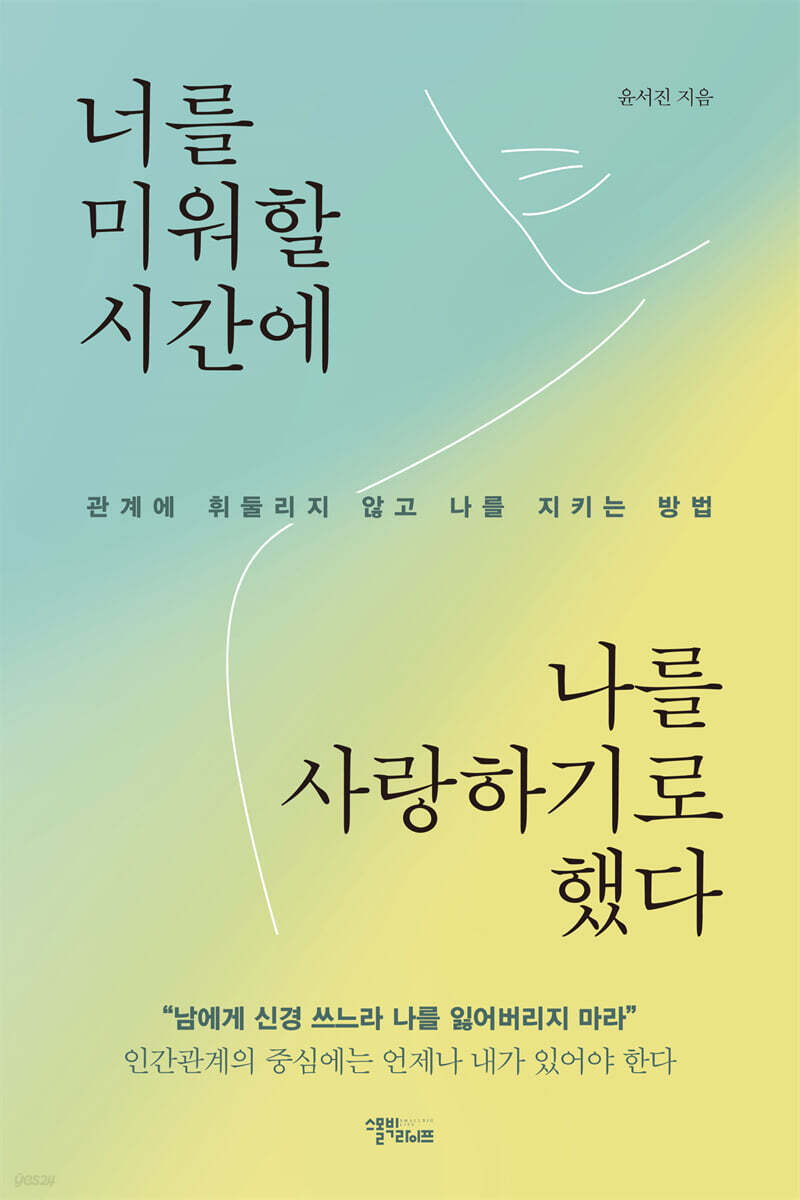
I decided to love myself when I was supposed to hate you
 |
Description
Book Introduction
I have lectured at Samsung, LG, Hyundai, SK, etc.
A relationship expert majoring in psychology at Seoul National University
A smart human relations class that takes care of your own heart first.
“To me, when I was younger and had a hard time with interpersonal relationships,
“I would give this book as a gift even if it meant time traveling” (from a reader review)
The author of this book majored in psychology at Seoul National University and has been actively providing coaching on human relationships and communication at large corporations such as Samsung, LG, Hyundai, and SK. In the process, he says he discovered a curious commonality.
That is, all the people who complain that “human relationships are the most difficult in life” are curious about the “hearts of others” who have hurt them, but are completely uninterested in “their own hearts.”
When relationships don't go as planned, we spend a lot of time and energy blaming others.
We waste time and emotions hating others who don't care about us, asking questions like, "Why did that person say that to me?" or "Why doesn't that person understand how I feel?"
But the author firmly tells us:
Your life is too precious to waste energy hating others.
Your precious life should be filled with 'love for yourself', not 'hatred for others'.
According to the author, we don't need to pray to heaven for someone to change their ways in order to get along with them, we don't need to resent them for not changing, and we don't need to force our tastes and personality to fit theirs.
I just need to study about myself.
Studying myself means first establishing my own standards for things like, 'What aspects of relationships am I particularly sensitive to?' and 'How much physical and psychological distance do I feel comfortable with?'
You must first understand what kind of relationship is comfortable for you, so you can demand it from the other person and weed out the person who is not a good fit for you.
Through this book, let's transform the energy we've been using to hate others into loving ourselves.
You will be able to create your own 'personalized relationship' with more positive energy.
A relationship expert majoring in psychology at Seoul National University
A smart human relations class that takes care of your own heart first.
“To me, when I was younger and had a hard time with interpersonal relationships,
“I would give this book as a gift even if it meant time traveling” (from a reader review)
The author of this book majored in psychology at Seoul National University and has been actively providing coaching on human relationships and communication at large corporations such as Samsung, LG, Hyundai, and SK. In the process, he says he discovered a curious commonality.
That is, all the people who complain that “human relationships are the most difficult in life” are curious about the “hearts of others” who have hurt them, but are completely uninterested in “their own hearts.”
When relationships don't go as planned, we spend a lot of time and energy blaming others.
We waste time and emotions hating others who don't care about us, asking questions like, "Why did that person say that to me?" or "Why doesn't that person understand how I feel?"
But the author firmly tells us:
Your life is too precious to waste energy hating others.
Your precious life should be filled with 'love for yourself', not 'hatred for others'.
According to the author, we don't need to pray to heaven for someone to change their ways in order to get along with them, we don't need to resent them for not changing, and we don't need to force our tastes and personality to fit theirs.
I just need to study about myself.
Studying myself means first establishing my own standards for things like, 'What aspects of relationships am I particularly sensitive to?' and 'How much physical and psychological distance do I feel comfortable with?'
You must first understand what kind of relationship is comfortable for you, so you can demand it from the other person and weed out the person who is not a good fit for you.
Through this book, let's transform the energy we've been using to hate others into loving ourselves.
You will be able to create your own 'personalized relationship' with more positive energy.
- You can preview some of the book's contents.
Preview
index
Preface - If I love myself, others will love me too.
Chapter 1: Meetings are fate, and relationships are effort.
Don't be alone and don't get hurt alone
A person who knows how to lean is stronger
Introverted Relationships vs. Extroverted Relationships
If you don't move, nothing changes.
A relationship that fights well lasts a long time.
There is no relationship where only one side is at fault.
Trust grows over time.
There is no moment when everything is perfect
Chapter 2: Don't Become an Easy Person in Your Quest to Be a Good Person
Don't try to please everyone
Feel confident and express yourself assertively.
Why I'm Especially Tired When I Meet 'That Person'
I'm done with relationships where I'm the only one struggling.
Don't put other people's trash in your pockets.
Being rude is evidence of insecurity.
The closer you are, the more you must draw the line.
Chapter 3: No Relationship Gets Better Through Enduring
Just because you've known each other for a long time doesn't mean you're destined for life.
Even relationships need a break
Rejection is just an opinion.
Sacrifice is not giving up, it's a choice.
A good relationship doesn't confuse you.
Hidden anger eventually surfaces.
Why we feel lonely even when we're together
Chapter 4: I Decided to Love You When I Was Hating You
There is no one I dislike without a reason.
Love yourself first before you hate others.
Don't hand over the reins of your life to someone else.
Why we always fight over the same issues
Good relationships come when you feel okay being alone.
Some irritations are created by my mind
Don't define yourself by the words of others.
I could be wrong, and often
Chapter 5: No one matures without getting hurt.
You have to cut off the tail of your thoughts to live today.
My only competitor is myself.
People grow through separation.
If you can see the end, do your best now.
People who deal wisely with guilt grow.
Live well, that is the best revenge.
You must be the kindest person to me.
Chapter 1: Meetings are fate, and relationships are effort.
Don't be alone and don't get hurt alone
A person who knows how to lean is stronger
Introverted Relationships vs. Extroverted Relationships
If you don't move, nothing changes.
A relationship that fights well lasts a long time.
There is no relationship where only one side is at fault.
Trust grows over time.
There is no moment when everything is perfect
Chapter 2: Don't Become an Easy Person in Your Quest to Be a Good Person
Don't try to please everyone
Feel confident and express yourself assertively.
Why I'm Especially Tired When I Meet 'That Person'
I'm done with relationships where I'm the only one struggling.
Don't put other people's trash in your pockets.
Being rude is evidence of insecurity.
The closer you are, the more you must draw the line.
Chapter 3: No Relationship Gets Better Through Enduring
Just because you've known each other for a long time doesn't mean you're destined for life.
Even relationships need a break
Rejection is just an opinion.
Sacrifice is not giving up, it's a choice.
A good relationship doesn't confuse you.
Hidden anger eventually surfaces.
Why we feel lonely even when we're together
Chapter 4: I Decided to Love You When I Was Hating You
There is no one I dislike without a reason.
Love yourself first before you hate others.
Don't hand over the reins of your life to someone else.
Why we always fight over the same issues
Good relationships come when you feel okay being alone.
Some irritations are created by my mind
Don't define yourself by the words of others.
I could be wrong, and often
Chapter 5: No one matures without getting hurt.
You have to cut off the tail of your thoughts to live today.
My only competitor is myself.
People grow through separation.
If you can see the end, do your best now.
People who deal wisely with guilt grow.
Live well, that is the best revenge.
You must be the kindest person to me.
Detailed image

Into the book
Before you complain about the frustration that comes from always feeling like you're the only one who cares about others, first check your priorities.
And then try to verbally convey that to the other person and make a request.
Perhaps, in practicing the virtues of consideration and compromise for others, we have not given others the opportunity to put us first.
--- p.22
Because we are anxious and anxious to resolve the issue quickly, we rush into a combat posture regardless of time or place.
However, since conversation is an interaction, it is a good idea to consider not only your own condition but also the other person's condition to coordinate the optimal time to talk.
If you tell someone you are upset about something that is bothering them when they are tired and sensitive due to schoolwork or work, they will likely react more sharply.
Also, if you accidentally fight in a public place or with acquaintances, the other person will feel embarrassed and ashamed, making it difficult to have a proper conversation.
--- p.50
Why do we want to change those we love to fit our expectations and standards? It's because we perceive the act of changing others as "helping."
A good example is parents who raise their children with stricter standards because they don't want their children to experience the same trials and errors they experienced.
I believe that by correcting my child's behavior in a way that I believe is desirable, I am helping my child's future.
--- p.54
People who try to please others feel responsible for other people's feelings and waste their energy trying to fix them.
If your boss seems upset, you might be busy checking to see if you've made a mistake, or you might want to break up but stay in the relationship because you're afraid of hurting the other person.
However, no one can take responsibility for the emotions that another person feels.
A person's emotions are entirely their own, and everything they do to feel and process those emotions is their own responsibility.
--- p.79
We must never forget the truth that no one can solve our personal life problems for us.
When someone we care about is struggling, the responsibility we can take on isn't to solve their problem, but to help them find the strength to solve it themselves.
--- p.98
When we become estranged from people we have been close to for a long time, we feel a great sense of alienation, and the more we do so, the more we try to protect the relationship.
I'm going to endure the discomfort alone because I feel it's a waste of time and memories we've shared.
But if you want to be free from alienation, you have to stop worrying about why you are being rejected and how you can get back on track.
And we should use this as an opportunity to reevaluate existing relationships.
Remember that feelings of alienation can be a signal that "this relationship is no longer right for me."
I need the wisdom to use that signal to my advantage.
--- p.182
We must be wary of the attitude that views fights in relationships as dichotomous fights where only winning and losing exist.
When our desire to beat others outweighs our willingness to work together to solve problems, we cowardly seek out and attack each other's Achilles' heels.
The closer you are to each other, the more you know each other's limitations and vulnerabilities, and those vulnerabilities become a frequent topic of conflict, causing deeper wounds to each other.
--- p.213
People become irritable when they don't get enough sleep, are hungry, or are tired from a lot of work.
So, we've all probably had the experience of unintentionally reacting harshly to people around us.
I find myself neglecting my family, friends, and loved ones, and I become increasingly irritated when I pour too much energy into other people.
Yet, we often look to others for answers to the question, "Why am I so irritated?"
I often end up saying that the person was annoying me.
In fact, it's an annoyance that started because my body was very tired and my mind was not at ease.
--- p.225
Don't feel bad about taking time for yourself.
No matter how close a relationship is, you can't stay together and live for the other person all the time.
Both parents raising children and caregivers of patients need time to take care of themselves.
This is by no means a selfish act, but rather a right that should be enjoyed naturally.
The same applies between lovers or couples.
Rather, we can have a better influence on each other with the energy we recharge through our individual hobbies and relaxation.
When you feel burned out, there's no need to feel bad about taking a break from your relationship and spending some time alone.
And then try to verbally convey that to the other person and make a request.
Perhaps, in practicing the virtues of consideration and compromise for others, we have not given others the opportunity to put us first.
--- p.22
Because we are anxious and anxious to resolve the issue quickly, we rush into a combat posture regardless of time or place.
However, since conversation is an interaction, it is a good idea to consider not only your own condition but also the other person's condition to coordinate the optimal time to talk.
If you tell someone you are upset about something that is bothering them when they are tired and sensitive due to schoolwork or work, they will likely react more sharply.
Also, if you accidentally fight in a public place or with acquaintances, the other person will feel embarrassed and ashamed, making it difficult to have a proper conversation.
--- p.50
Why do we want to change those we love to fit our expectations and standards? It's because we perceive the act of changing others as "helping."
A good example is parents who raise their children with stricter standards because they don't want their children to experience the same trials and errors they experienced.
I believe that by correcting my child's behavior in a way that I believe is desirable, I am helping my child's future.
--- p.54
People who try to please others feel responsible for other people's feelings and waste their energy trying to fix them.
If your boss seems upset, you might be busy checking to see if you've made a mistake, or you might want to break up but stay in the relationship because you're afraid of hurting the other person.
However, no one can take responsibility for the emotions that another person feels.
A person's emotions are entirely their own, and everything they do to feel and process those emotions is their own responsibility.
--- p.79
We must never forget the truth that no one can solve our personal life problems for us.
When someone we care about is struggling, the responsibility we can take on isn't to solve their problem, but to help them find the strength to solve it themselves.
--- p.98
When we become estranged from people we have been close to for a long time, we feel a great sense of alienation, and the more we do so, the more we try to protect the relationship.
I'm going to endure the discomfort alone because I feel it's a waste of time and memories we've shared.
But if you want to be free from alienation, you have to stop worrying about why you are being rejected and how you can get back on track.
And we should use this as an opportunity to reevaluate existing relationships.
Remember that feelings of alienation can be a signal that "this relationship is no longer right for me."
I need the wisdom to use that signal to my advantage.
--- p.182
We must be wary of the attitude that views fights in relationships as dichotomous fights where only winning and losing exist.
When our desire to beat others outweighs our willingness to work together to solve problems, we cowardly seek out and attack each other's Achilles' heels.
The closer you are to each other, the more you know each other's limitations and vulnerabilities, and those vulnerabilities become a frequent topic of conflict, causing deeper wounds to each other.
--- p.213
People become irritable when they don't get enough sleep, are hungry, or are tired from a lot of work.
So, we've all probably had the experience of unintentionally reacting harshly to people around us.
I find myself neglecting my family, friends, and loved ones, and I become increasingly irritated when I pour too much energy into other people.
Yet, we often look to others for answers to the question, "Why am I so irritated?"
I often end up saying that the person was annoying me.
In fact, it's an annoyance that started because my body was very tired and my mind was not at ease.
--- p.225
Don't feel bad about taking time for yourself.
No matter how close a relationship is, you can't stay together and live for the other person all the time.
Both parents raising children and caregivers of patients need time to take care of themselves.
This is by no means a selfish act, but rather a right that should be enjoyed naturally.
The same applies between lovers or couples.
Rather, we can have a better influence on each other with the energy we recharge through our individual hobbies and relaxation.
When you feel burned out, there's no need to feel bad about taking a break from your relationship and spending some time alone.
--- p.281
Publisher's Review
Relationships become easier when the subject is changed to 'I'.
Think back to a time when you came to hate someone.
At first, I tried to get along with him, but even the smallest words or actions left a lump in my heart.
I thought, 'That could be it,' and tried to get along again, but seeing him repeat the same behavior made me disappointed, and the things I didn't like about him started to increase one by one.
Soon, his every move begins to irritate you, and everything he says and does begins to seem unpleasant.
In severe cases, suspicions may even arise, such as, "Are they trying to harass me on purpose?" The author boldly draws a red line through this "chain of hatred" and recommends going back to the beginning.
And I suggest that you ask a new question.
Instead of asking, "Why did that person do something that hurt my feelings?", try asking, "Why was I offended by that person's actions?" by changing the subject of the question to "I."
The author says:
In order to avoid becoming the 'eul' in human relationships, you must set your own 'standards' for human relationships and directly inform the other person of them.
Of course, here, ‘my own standard’ does not mean ‘a selfish standard just for myself’, but rather a ‘minimum boundary’ that I do not want to be violated by the other person.
If we first understand our own 'sensitive and vulnerable parts' and then let the other person know about them, we can eliminate a significant amount of unnecessary conflict and friction that arises in interpersonal relationships.
Just by studying my mind and sharing what I have learned with others, something amazing happens where blocked relationships are unraveled.
Let's apply the author's magical prescription to our lives: we must love ourselves first, and then others will understand and care for us.
The stress levels in the relationships surrounding you will gradually begin to diminish.
If I love myself, good people will come to me.
Broadcaster Shin Dong-yup once said this about the 'standards of a good person' on his personal YouTube channel.
“People ask these questions when they want to meet someone good.
'What kind of person should I meet to be happy?' 'What kind of person is a good person?' But I think these questions are all wrong.
Because in a good relationship, what's important is not knowing the other person, but knowing yourself.
“If you want to have a good relationship, you have to first know what kind of person I am.”
We fall into the trap of believing that there must be a "universally good person," so we ask others for advice on what constitutes a good person and wander around looking for such a person.
But as Shin Dong-yup said, there is no universally valid standard for a 'good person'.
There is no rule that says that a person who is good to others is also good to me.
For some people, a good person may be someone who approaches you in a friendly manner from the first meeting, while for others, a good person may be someone who approaches you slowly while keeping an appropriate distance.
Just as you need to know your body type to buy clothes that fit you perfectly, you also need to understand your tastes, personality, and social sensibilities to develop the ability to choose the right person for you.
If you want to meet a good person, first study 'My Mind Type' through this book.
If you understand the shape of your heart and the direction it desires, you will not be easily swayed by people who do not fit with you, and you will be able to approach people who do fit with you more courageously.
Even people need pruning between themselves.
The final step to maintaining good interpersonal relationships is to 'boldly distance yourself from people who don't work out no matter how hard you try.'
We must acknowledge the following truths of life:
“There are people in this world who don’t get along with me, and sometimes there are people who are harmful to me.”
Even friends we've known since childhood for decades can drift apart over time, leading to estrangement. Of the countless connections we encounter in life, how many truly last a lifetime? Therefore, the author of this book argues that a good relationship isn't one that lasts a long time, but one that brings comfort and happiness to the present.
Just as we prune trees, we too need to make the decision to deliberately prune the branches of "rude people" who disrupt the balance of our lives.
Of course, when you cut off a thick branch, you will feel pain and a scar will remain for a while.
But as time passes and the wounds heal to some extent, you realize it.
The decision made at that time allowed nutrients to be distributed evenly to all branches, allowing the tree to grow into a wider and greener tree.
If you still find it difficult to distance yourself from someone or cut ties, refer to the 'distancing' technique the author includes in this book.
I can erase that person who has been bothering me from my life with Shinab.
Think back to a time when you came to hate someone.
At first, I tried to get along with him, but even the smallest words or actions left a lump in my heart.
I thought, 'That could be it,' and tried to get along again, but seeing him repeat the same behavior made me disappointed, and the things I didn't like about him started to increase one by one.
Soon, his every move begins to irritate you, and everything he says and does begins to seem unpleasant.
In severe cases, suspicions may even arise, such as, "Are they trying to harass me on purpose?" The author boldly draws a red line through this "chain of hatred" and recommends going back to the beginning.
And I suggest that you ask a new question.
Instead of asking, "Why did that person do something that hurt my feelings?", try asking, "Why was I offended by that person's actions?" by changing the subject of the question to "I."
The author says:
In order to avoid becoming the 'eul' in human relationships, you must set your own 'standards' for human relationships and directly inform the other person of them.
Of course, here, ‘my own standard’ does not mean ‘a selfish standard just for myself’, but rather a ‘minimum boundary’ that I do not want to be violated by the other person.
If we first understand our own 'sensitive and vulnerable parts' and then let the other person know about them, we can eliminate a significant amount of unnecessary conflict and friction that arises in interpersonal relationships.
Just by studying my mind and sharing what I have learned with others, something amazing happens where blocked relationships are unraveled.
Let's apply the author's magical prescription to our lives: we must love ourselves first, and then others will understand and care for us.
The stress levels in the relationships surrounding you will gradually begin to diminish.
If I love myself, good people will come to me.
Broadcaster Shin Dong-yup once said this about the 'standards of a good person' on his personal YouTube channel.
“People ask these questions when they want to meet someone good.
'What kind of person should I meet to be happy?' 'What kind of person is a good person?' But I think these questions are all wrong.
Because in a good relationship, what's important is not knowing the other person, but knowing yourself.
“If you want to have a good relationship, you have to first know what kind of person I am.”
We fall into the trap of believing that there must be a "universally good person," so we ask others for advice on what constitutes a good person and wander around looking for such a person.
But as Shin Dong-yup said, there is no universally valid standard for a 'good person'.
There is no rule that says that a person who is good to others is also good to me.
For some people, a good person may be someone who approaches you in a friendly manner from the first meeting, while for others, a good person may be someone who approaches you slowly while keeping an appropriate distance.
Just as you need to know your body type to buy clothes that fit you perfectly, you also need to understand your tastes, personality, and social sensibilities to develop the ability to choose the right person for you.
If you want to meet a good person, first study 'My Mind Type' through this book.
If you understand the shape of your heart and the direction it desires, you will not be easily swayed by people who do not fit with you, and you will be able to approach people who do fit with you more courageously.
Even people need pruning between themselves.
The final step to maintaining good interpersonal relationships is to 'boldly distance yourself from people who don't work out no matter how hard you try.'
We must acknowledge the following truths of life:
“There are people in this world who don’t get along with me, and sometimes there are people who are harmful to me.”
Even friends we've known since childhood for decades can drift apart over time, leading to estrangement. Of the countless connections we encounter in life, how many truly last a lifetime? Therefore, the author of this book argues that a good relationship isn't one that lasts a long time, but one that brings comfort and happiness to the present.
Just as we prune trees, we too need to make the decision to deliberately prune the branches of "rude people" who disrupt the balance of our lives.
Of course, when you cut off a thick branch, you will feel pain and a scar will remain for a while.
But as time passes and the wounds heal to some extent, you realize it.
The decision made at that time allowed nutrients to be distributed evenly to all branches, allowing the tree to grow into a wider and greener tree.
If you still find it difficult to distance yourself from someone or cut ties, refer to the 'distancing' technique the author includes in this book.
I can erase that person who has been bothering me from my life with Shinab.
GOODS SPECIFICS
- Date of issue: November 11, 2024
- Page count, weight, size: 296 pages | 388g | 140*210*19mm
- ISBN13: 9791191731712
You may also like
카테고리
korean


korean

![GQ KOREA Mark (Monthly): December [2025]](http://librairie.coreenne.fr/cdn/shop/files/8ef265dbbfbf186523ed75ba7319009d.jpg?v=1765340328&width=3840)


