

Comfortable Psychology
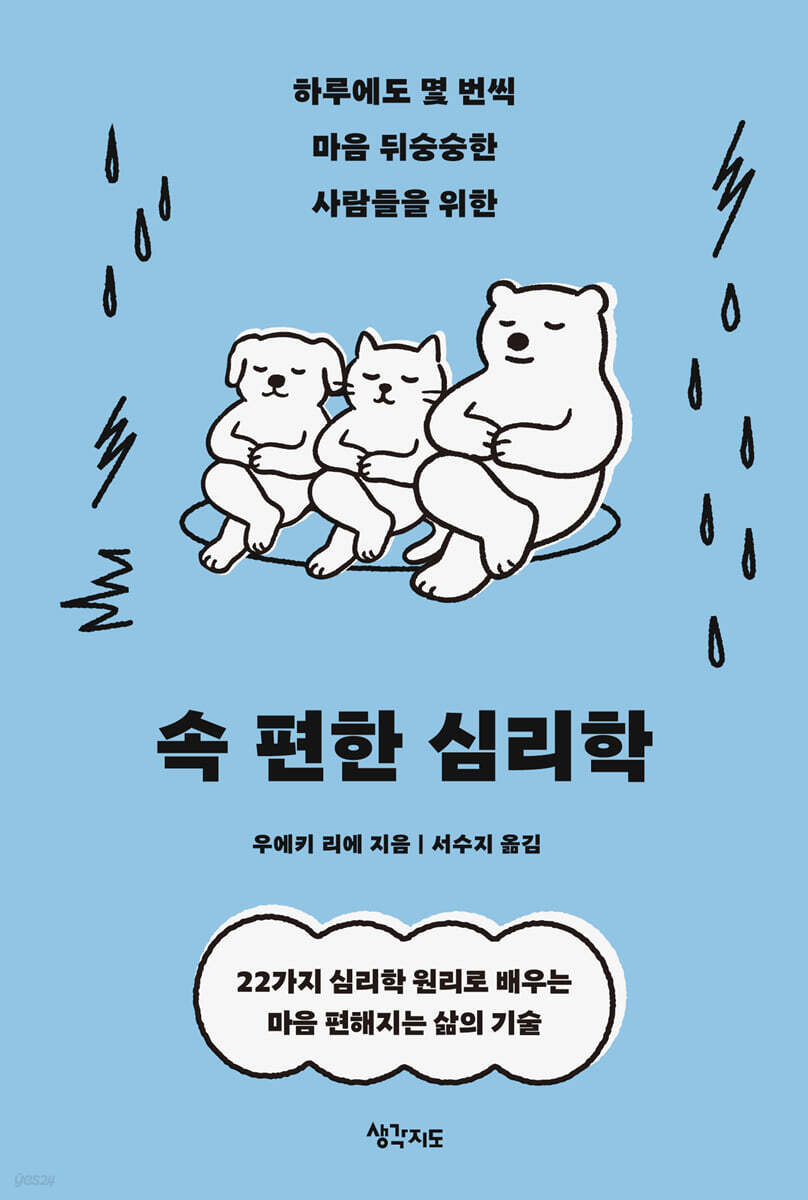 |
Description
Book Introduction
“If you just know psychology well, it will come.
“The moment when life flows smoothly!”
The youngest recipient of the Japanese Educational Psychology Society's 'Excellent Paper Award'
A psychologist who has suffered from anxiety disorder
Small but powerful practices of cognitive psychology that have proven effective.
We often feel frustrated because our minds are uncontrollable several times a day.
The recently published book, “Comfortable Psychology,” is for those people, and has only one purpose.
When your mind is troubled, guide readers away from useless self-censorship and excessive self-improvement and toward a more comfortable and light life! This book's author, Rie Ueki, is a psychologist who has garnered academic attention by becoming the youngest recipient of the Japan Educational Psychology Association's "Prayer Encouragement Award" and "Excellent Paper Award," two of the most difficult awards to receive. She is also a clinical psychologist who has met with tens of thousands of clients over 22 years and has brought about real-world change in their lives.
In this book, he scientifically and clearly explains how the complex human mind works using 22 principles of 'cognitive psychology' and 'memory psychology', thereby 'making the confused mind feel at ease'.
From the 'Polar Bear Experiment', where the harder you try to forget, the more difficult it is to forget, to the 'Emotional Mismatch Effect', where you deliberately listen to sad music to escape a depressed mood, to the 'Self-Perception Theory', where you become aware of sadness only after seeing yourself shed tears, the vast amount of data and abundant examples make it easy to understand how the brain and emotions work.
Above all, this book is also for the author himself, who suffered from anxiety disorder.
Having suffered panic attacks and even lost consciousness several times, he devoted himself to studying psychology to solve his problems, and in the process, he discovered the power of cognitive psychology and overcame his anxiety disorder.
For those who, "the more complex their minds become, the more desperately they yearn for clear conclusions," this book is a compilation of the author's own real-life experiences and research, filled with psychological principles and practical advice that can be applied in real life right now.
“The moment when life flows smoothly!”
The youngest recipient of the Japanese Educational Psychology Society's 'Excellent Paper Award'
A psychologist who has suffered from anxiety disorder
Small but powerful practices of cognitive psychology that have proven effective.
We often feel frustrated because our minds are uncontrollable several times a day.
The recently published book, “Comfortable Psychology,” is for those people, and has only one purpose.
When your mind is troubled, guide readers away from useless self-censorship and excessive self-improvement and toward a more comfortable and light life! This book's author, Rie Ueki, is a psychologist who has garnered academic attention by becoming the youngest recipient of the Japan Educational Psychology Association's "Prayer Encouragement Award" and "Excellent Paper Award," two of the most difficult awards to receive. She is also a clinical psychologist who has met with tens of thousands of clients over 22 years and has brought about real-world change in their lives.
In this book, he scientifically and clearly explains how the complex human mind works using 22 principles of 'cognitive psychology' and 'memory psychology', thereby 'making the confused mind feel at ease'.
From the 'Polar Bear Experiment', where the harder you try to forget, the more difficult it is to forget, to the 'Emotional Mismatch Effect', where you deliberately listen to sad music to escape a depressed mood, to the 'Self-Perception Theory', where you become aware of sadness only after seeing yourself shed tears, the vast amount of data and abundant examples make it easy to understand how the brain and emotions work.
Above all, this book is also for the author himself, who suffered from anxiety disorder.
Having suffered panic attacks and even lost consciousness several times, he devoted himself to studying psychology to solve his problems, and in the process, he discovered the power of cognitive psychology and overcame his anxiety disorder.
For those who, "the more complex their minds become, the more desperately they yearn for clear conclusions," this book is a compilation of the author's own real-life experiences and research, filled with psychological principles and practical advice that can be applied in real life right now.
- You can preview some of the book's contents.
Preview
index
preface.
If you want your life to be a little lighter
Chapter 1.
A psychological technique that puts your mind at ease without having to force yourself to forget.
The more you try not to think, the more active your thoughts become. The polar bear experiment and trauma.
How to Quickly Get Out of a Panic Situation When You're Feeling Restless and Breaking Avoidant Control
Listening to "Dancing Queen" on a heartbreak night is more depressing than "Gloomy Sunday" - the emotional mismatch effect
Why Don't You Buy Lottery Tickets Yourself? The Illusion of Control and the Law of Large Numbers
Happiness and anxiety always go hand in hand. Fear of falling.
Chapter 2.
Psychological techniques to avoid being fooled by the 'shy brain' and the 'grumpy brain'
Why do bosses only listen to their own gossip? The cocktail party effect.
Why First Dates Don't Last: False Memory Syndrome
When not, 'words' rise from the chimney, linguistic concealment
Why are there so many tough, weed-like second sons and daughters? - Modeling Learning
Why more people in a meeting can lead to fewer useful ideas: collective incompetence.
Chapter 3.
Psychological techniques to manipulate others as you wish without stress
There are only two things you need to raise a person properly: the carrot and the ignore strategy.
People who are liked without much charm: the carrot-and-stick strategy
The decisive factor in the success or failure of a meeting is the seating position. The Stinger effect.
Why Fortune Tellers' Words Sound So True to Their Own: The Barnum Effect
The surprising secret to a celebrity's waning popularity: the bandwagon effect and the underdog effect.
Chapter 4.
Psychological techniques to win people's hearts without effort
Praise is more important when given well than when given frequently: the "Jo-Harry's Window" theory.
Why Affair Couples Despise Each Other More: Psychological Resistance and Self-Efficacy
The reason why we strangely fall for eccentric 4-dimensional characters: cognitive dissonance
What's the Difference Between People Who Win People and Enjoy Opportunities? Self-Perception Theory
Acknowledgements
References
If you want your life to be a little lighter
Chapter 1.
A psychological technique that puts your mind at ease without having to force yourself to forget.
The more you try not to think, the more active your thoughts become. The polar bear experiment and trauma.
How to Quickly Get Out of a Panic Situation When You're Feeling Restless and Breaking Avoidant Control
Listening to "Dancing Queen" on a heartbreak night is more depressing than "Gloomy Sunday" - the emotional mismatch effect
Why Don't You Buy Lottery Tickets Yourself? The Illusion of Control and the Law of Large Numbers
Happiness and anxiety always go hand in hand. Fear of falling.
Chapter 2.
Psychological techniques to avoid being fooled by the 'shy brain' and the 'grumpy brain'
Why do bosses only listen to their own gossip? The cocktail party effect.
Why First Dates Don't Last: False Memory Syndrome
When not, 'words' rise from the chimney, linguistic concealment
Why are there so many tough, weed-like second sons and daughters? - Modeling Learning
Why more people in a meeting can lead to fewer useful ideas: collective incompetence.
Chapter 3.
Psychological techniques to manipulate others as you wish without stress
There are only two things you need to raise a person properly: the carrot and the ignore strategy.
People who are liked without much charm: the carrot-and-stick strategy
The decisive factor in the success or failure of a meeting is the seating position. The Stinger effect.
Why Fortune Tellers' Words Sound So True to Their Own: The Barnum Effect
The surprising secret to a celebrity's waning popularity: the bandwagon effect and the underdog effect.
Chapter 4.
Psychological techniques to win people's hearts without effort
Praise is more important when given well than when given frequently: the "Jo-Harry's Window" theory.
Why Affair Couples Despise Each Other More: Psychological Resistance and Self-Efficacy
The reason why we strangely fall for eccentric 4-dimensional characters: cognitive dissonance
What's the Difference Between People Who Win People and Enjoy Opportunities? Self-Perception Theory
Acknowledgements
References
Detailed image

Into the book
The human brain is really like a frog.
Things I want to remember just don't come to mind, and things I want to shake off just can't be forgotten.
Why are our brains so stubborn? Why did God create humans this way? As we live, we suddenly realize this.
The fact that people who are a little more generous to themselves and live moderately live much better lives than people who struggle to be happy.
Moreover, such people tend to eventually achieve unexpected happiness.
--- p.6
When a panic attack occurs, the way to calm excessive tension and anxiety is not to control your emotions by trying to 'manage it and overcome it somehow.'
You should never grit your teeth and resist your emotions.
When your physical condition worsens, it is important to accept the situation as it is and surrender to the suffering that arises.
Don't try to run away from pain, but endure it to the fullest.
This is the basic mindset for managing panic.
--- p.32
Cognitive psychology believes that events and outcomes are not directly connected, and that human perception of the situation, beliefs, interpretations, and feelings intervene between the two.
By changing this 'way of thinking', people can escape negative mental states.
--- p.37
Jealousy isn't the only reason I don't want to meet my friends who are working after failing to get a job.
It is the natural distancing that the heart desires.
In fact, even trying to cheer up a depressed person by taking them outside can make their condition worse.
For someone who is feeling down, it is better to let them sit quietly in the rain for a while rather than forcing them to be around happy people or creating a bright environment.
And being there to get wet in the rain together.
That is the greatest comfort.
--- p.43
The more we encounter unexpected good fortune or luck, the more we unconsciously feel anxious and anxious about misfortune that may not even happen.
This fear of falling is particularly pronounced in women.
--- p.58
We humans unconsciously avoid listening to stories that run counter to our beliefs or philosophies, and we even find it difficult to understand them.
At this point, it's more than just a 'tiny brain'; it's a 'grumpy brain'.
At the root of this phenomenon is the instinctive egoism of ‘not wanting to change my thoughts’ and ‘wanting to affirm my ego.’
It is precisely because of this narcissism that people become overly concerned with topics related to themselves, especially those that could threaten their narcissism, and conversely, they react indifferently or exclusively to irrelevant matters.
--- p.74
Human memory can be very easily distorted by 'language that elicits memories'.
In other words, when several people gather together and talk and recall someone, it is like walking into the swamp of 'distortion of memory'.
So, it is only natural that you end up choosing the wrong person as a result.
Illusions, overestimations, misplaced expectations… … .
To avoid these memory errors, we should at least avoid recalling memories while talking with multiple people.
--- p.85
There are many layers of folds in the human mind.
It takes time to look into its depths.
But if we hastily put words to describe and name the feelings of the moment, those feelings will only show a shallow surface and soon disappear.
Ultimately, it puts the brakes on further growth and reflection.
Therefore, it is ultimately detrimental to yourself to immediately express the emotions that cross your mind and think that you have understood them just by expressing them.
--- p.90
Most of the words we utter in moments of intense anger are the embodiment of verbal concealment.
Without properly understanding the true feelings, they just blurt out words driven by the feeling of not wanting to lose.
The same goes for the other person.
Words spoken out of anger and sadness are generally unrelated to one's true feelings.
Therefore, it is rude to say, “That was your true intention!” in the middle of an argument.
--- p.93
Why do fortune tellers' predictions always feel so right, and so moving that they bring tears to my eyes? There are two surprising secrets to this.
The first secret is this:
To begin with, the invited guests are moved to tears by the fortune teller's specific predictions (even if they are not exactly accurate).
The reason is simple.
Because everyone wants others to know what kind of person they are.
Humans always live their lives wandering in search of their own 'identity'.
This is a trait that is almost instinctive.
Therefore, when someone points out your personality or essence, your heart is bound to waver, whether it is right or wrong.
--- p.140
'Joe-Harry's Window' is a psychological theory that explains the structure of the self by comparing it to a 'window'.
Dr. Joseph and Dr. Harry believed that humans do not live with one self, but rather with four selves simultaneously.
① The self that one knows and that others know = an already open window
② The self that only you know = hidden window
③ A self known only to others = A window that can be opened
④ A self that no one knows about = a closed window
--- p.160
Not only humans, but also higher primates have an instinct to decide their own affairs.
Among primates, humans have a particularly strong sense of self-efficacy and have developed a creative culture through their own choices and autonomy.
In other words, it is no exaggeration to say that for humans, ‘maintaining self-efficacy = living like a human being.’
Therefore, being told "no" by others is an emergency situation that threatens self-efficacy and causes considerable psychological stress.
--- p.173
Dedicate yourself to love.
It may sound obvious, but modern psychology offers the exact opposite answer: self-perception theory.
That is, the act of ‘devotion’ comes first, and the emotion of ‘love’ is heightened as a result.
We realize 'sadness' when we shed 'tears', and we become aware of 'anger' when we get 'angry'.
Things I want to remember just don't come to mind, and things I want to shake off just can't be forgotten.
Why are our brains so stubborn? Why did God create humans this way? As we live, we suddenly realize this.
The fact that people who are a little more generous to themselves and live moderately live much better lives than people who struggle to be happy.
Moreover, such people tend to eventually achieve unexpected happiness.
--- p.6
When a panic attack occurs, the way to calm excessive tension and anxiety is not to control your emotions by trying to 'manage it and overcome it somehow.'
You should never grit your teeth and resist your emotions.
When your physical condition worsens, it is important to accept the situation as it is and surrender to the suffering that arises.
Don't try to run away from pain, but endure it to the fullest.
This is the basic mindset for managing panic.
--- p.32
Cognitive psychology believes that events and outcomes are not directly connected, and that human perception of the situation, beliefs, interpretations, and feelings intervene between the two.
By changing this 'way of thinking', people can escape negative mental states.
--- p.37
Jealousy isn't the only reason I don't want to meet my friends who are working after failing to get a job.
It is the natural distancing that the heart desires.
In fact, even trying to cheer up a depressed person by taking them outside can make their condition worse.
For someone who is feeling down, it is better to let them sit quietly in the rain for a while rather than forcing them to be around happy people or creating a bright environment.
And being there to get wet in the rain together.
That is the greatest comfort.
--- p.43
The more we encounter unexpected good fortune or luck, the more we unconsciously feel anxious and anxious about misfortune that may not even happen.
This fear of falling is particularly pronounced in women.
--- p.58
We humans unconsciously avoid listening to stories that run counter to our beliefs or philosophies, and we even find it difficult to understand them.
At this point, it's more than just a 'tiny brain'; it's a 'grumpy brain'.
At the root of this phenomenon is the instinctive egoism of ‘not wanting to change my thoughts’ and ‘wanting to affirm my ego.’
It is precisely because of this narcissism that people become overly concerned with topics related to themselves, especially those that could threaten their narcissism, and conversely, they react indifferently or exclusively to irrelevant matters.
--- p.74
Human memory can be very easily distorted by 'language that elicits memories'.
In other words, when several people gather together and talk and recall someone, it is like walking into the swamp of 'distortion of memory'.
So, it is only natural that you end up choosing the wrong person as a result.
Illusions, overestimations, misplaced expectations… … .
To avoid these memory errors, we should at least avoid recalling memories while talking with multiple people.
--- p.85
There are many layers of folds in the human mind.
It takes time to look into its depths.
But if we hastily put words to describe and name the feelings of the moment, those feelings will only show a shallow surface and soon disappear.
Ultimately, it puts the brakes on further growth and reflection.
Therefore, it is ultimately detrimental to yourself to immediately express the emotions that cross your mind and think that you have understood them just by expressing them.
--- p.90
Most of the words we utter in moments of intense anger are the embodiment of verbal concealment.
Without properly understanding the true feelings, they just blurt out words driven by the feeling of not wanting to lose.
The same goes for the other person.
Words spoken out of anger and sadness are generally unrelated to one's true feelings.
Therefore, it is rude to say, “That was your true intention!” in the middle of an argument.
--- p.93
Why do fortune tellers' predictions always feel so right, and so moving that they bring tears to my eyes? There are two surprising secrets to this.
The first secret is this:
To begin with, the invited guests are moved to tears by the fortune teller's specific predictions (even if they are not exactly accurate).
The reason is simple.
Because everyone wants others to know what kind of person they are.
Humans always live their lives wandering in search of their own 'identity'.
This is a trait that is almost instinctive.
Therefore, when someone points out your personality or essence, your heart is bound to waver, whether it is right or wrong.
--- p.140
'Joe-Harry's Window' is a psychological theory that explains the structure of the self by comparing it to a 'window'.
Dr. Joseph and Dr. Harry believed that humans do not live with one self, but rather with four selves simultaneously.
① The self that one knows and that others know = an already open window
② The self that only you know = hidden window
③ A self known only to others = A window that can be opened
④ A self that no one knows about = a closed window
--- p.160
Not only humans, but also higher primates have an instinct to decide their own affairs.
Among primates, humans have a particularly strong sense of self-efficacy and have developed a creative culture through their own choices and autonomy.
In other words, it is no exaggeration to say that for humans, ‘maintaining self-efficacy = living like a human being.’
Therefore, being told "no" by others is an emergency situation that threatens self-efficacy and causes considerable psychological stress.
--- p.173
Dedicate yourself to love.
It may sound obvious, but modern psychology offers the exact opposite answer: self-perception theory.
That is, the act of ‘devotion’ comes first, and the emotion of ‘love’ is heightened as a result.
We realize 'sadness' when we shed 'tears', and we become aware of 'anger' when we get 'angry'.
--- p.185
Publisher's Review
Rumination, anxiety, depression, lack of confidence, chronic stress…
Free from the oppression that weighs on your mind
A delightful mind design solution!
★★★ Keio University's popular liberal arts courses now available in book form
★★★ Amazon Japan's long-term bestseller in the cognitive psychology category
★★★ A psychologist who has consecutively won the Japan Educational Psychology Association's 'Prayer Encouragement Award' and 'Outstanding Paper Award'
★★★ The definitive introduction to psychology, compiling the fundamental theories that make up psychology into a single volume.
There is a field that can answer all these questions: how should I handle my heart, how should I interact with people so that we can be less tired, less hurt, and more comfortable with each other?
These are ‘cognitive psychology’ and ‘memory psychology.’
"Psychology of Comfort" is a book written by a recognized psychologist in Japan and a mental coaching expert at Tokyo Metropolitan General Hospital, offering a unique prescription to those who struggle with their own inner selves every day.
Psychology says that the human mind is not one but multiple egos, sometimes contradictory, just like a nine-headed monster, Hydra, coiled inside the mind.
This book introduces 22 psychological principles that penetrate the complexities of the human mind, and identifies the causes and solutions to the confusion we often find ourselves in.
Among these, the author points out ‘oppression’ as the biggest cause.
A famous example that clearly demonstrates this is the 'Polar Bear Experiment'.
Participants were divided into three groups and shown a video of a polar bear. Group A was instructed to “remember the polar bear,” Group B was instructed to “think about it or not,” and Group C was instructed to “never think about the polar bear.”
A year later, which group remembered the video most clearly? Surprisingly, it was Group C.
The more you try to suppress your thoughts, the more they become active.
The more you resist and confront your emotions, the more your mind works in the opposite way.
This is also why anxiety, depression, lethargy, obsessive-compulsive disorder, and panic disorder become worse.
《The Psychology of Comfort》 helps readers stop this struggle and break free from the oppression, thought control, and cognitive dissonance that weighs down our minds, leading to a lighter and more joyful life.
When you learn this surprisingly simple psychological truth, useless worries and anxieties melt away, and life becomes much simpler.
In particular, this book is a 'real psychology' book that focuses on psychological stories that are relevant to everyday life, rather than the rigid theories found in academic papers.
The author's liberal arts psychology course at Keio University closes early every year, and this book may help alleviate that disappointment.
22 Psychological Principles to Soothe Your Mind
If you want to know the minimal laws that penetrate the complex human psychology,
Start with this book!
The book is divided into four parts.
Chapter 1, “Psychological Techniques for Feeling at Peace Without Forcing Yourself to Forget,” covers the secrets of forgetting and overcoming trauma learned through the “White Bear Experiment,” how to quickly escape from a panicked situation when feeling restless, and why trying to cheer yourself up when you’re feeling down can backfire.
In particular, it examines the psychological error called the 'illusion of control' that we often fall into when making important life decisions such as college entrance, employment, marriage, and career changes, and how to solve it.
It also tells us that happiness and anxiety always come together, and that the secret to a stress-free life is to prepare multiple 'personas' (masks) that can be changed according to the situation, rather than sticking to just one identity.
Chapter 2, “Psychological Techniques to Avoid Being Fooled by the ‘Shy Brain’ and the ‘Grumpy Brain’,” examines the instinctive narcissism that all humans possess, and addresses the phenomenon of ‘verbal concealment,’ which causes us to miss out on our true feelings the moment we hastily define them with words.
It also shows how easily human memories and emotions can be distorted through 'false memory syndrome', which occurs when people force themselves to recall memories or relive painful experiences.
It also teaches you how to become the master of your own mind without being swayed by the 'tiny brain' and 'grumpy brain' that pop up when your self-esteem is threatened.
Chapter 3, “Psychological Techniques to Manipulate Your Opponents as You Want Without Stress,” introduces a super-simple psychological technique that brings out 100% of your opponent’s abilities using the “carrot and ignore” and “carrot removal” strategies.
It also covers the 'Stanger Effect', which states that where you sit has a decisive impact on performance in situations like business meetings or consultations; the 'Barnum Effect', which is often used by fortune tellers; and the 'Bandwagon Effect' and 'Underdog Effect', which are used by celebrities whose popularity has waned or people in a slump to get back on track.
Through this, you can learn specific ways to move the hearts of others without any great charm or special moves.
Chapter 4, “Psychological Techniques for Effortlessly Winning Over People’s Hearts,” introduces techniques for forming natural and comfortable human relationships without forced effort, based on the “Jo-Harry Window Theory” that humans live with four selves simultaneously, and in particular, “Psychological Resistance Theory” and “Self-Perception Theory” that help effectively reveal one’s strengths and charms.
Do you feel like your life doesn't change no matter how many resolutions you make? Do you feel frustrated every day because your mind is in turmoil several times a day? You can definitely change your perspective on yourself and the world.
And when this perspective changes, the color of life also changes.
A life that seemed gray can suddenly turn orange and become light and refreshing like the blue sky.
This book, “Comfortable Psychology,” will be the beginning of that change.
Free from the oppression that weighs on your mind
A delightful mind design solution!
★★★ Keio University's popular liberal arts courses now available in book form
★★★ Amazon Japan's long-term bestseller in the cognitive psychology category
★★★ A psychologist who has consecutively won the Japan Educational Psychology Association's 'Prayer Encouragement Award' and 'Outstanding Paper Award'
★★★ The definitive introduction to psychology, compiling the fundamental theories that make up psychology into a single volume.
There is a field that can answer all these questions: how should I handle my heart, how should I interact with people so that we can be less tired, less hurt, and more comfortable with each other?
These are ‘cognitive psychology’ and ‘memory psychology.’
"Psychology of Comfort" is a book written by a recognized psychologist in Japan and a mental coaching expert at Tokyo Metropolitan General Hospital, offering a unique prescription to those who struggle with their own inner selves every day.
Psychology says that the human mind is not one but multiple egos, sometimes contradictory, just like a nine-headed monster, Hydra, coiled inside the mind.
This book introduces 22 psychological principles that penetrate the complexities of the human mind, and identifies the causes and solutions to the confusion we often find ourselves in.
Among these, the author points out ‘oppression’ as the biggest cause.
A famous example that clearly demonstrates this is the 'Polar Bear Experiment'.
Participants were divided into three groups and shown a video of a polar bear. Group A was instructed to “remember the polar bear,” Group B was instructed to “think about it or not,” and Group C was instructed to “never think about the polar bear.”
A year later, which group remembered the video most clearly? Surprisingly, it was Group C.
The more you try to suppress your thoughts, the more they become active.
The more you resist and confront your emotions, the more your mind works in the opposite way.
This is also why anxiety, depression, lethargy, obsessive-compulsive disorder, and panic disorder become worse.
《The Psychology of Comfort》 helps readers stop this struggle and break free from the oppression, thought control, and cognitive dissonance that weighs down our minds, leading to a lighter and more joyful life.
When you learn this surprisingly simple psychological truth, useless worries and anxieties melt away, and life becomes much simpler.
In particular, this book is a 'real psychology' book that focuses on psychological stories that are relevant to everyday life, rather than the rigid theories found in academic papers.
The author's liberal arts psychology course at Keio University closes early every year, and this book may help alleviate that disappointment.
22 Psychological Principles to Soothe Your Mind
If you want to know the minimal laws that penetrate the complex human psychology,
Start with this book!
The book is divided into four parts.
Chapter 1, “Psychological Techniques for Feeling at Peace Without Forcing Yourself to Forget,” covers the secrets of forgetting and overcoming trauma learned through the “White Bear Experiment,” how to quickly escape from a panicked situation when feeling restless, and why trying to cheer yourself up when you’re feeling down can backfire.
In particular, it examines the psychological error called the 'illusion of control' that we often fall into when making important life decisions such as college entrance, employment, marriage, and career changes, and how to solve it.
It also tells us that happiness and anxiety always come together, and that the secret to a stress-free life is to prepare multiple 'personas' (masks) that can be changed according to the situation, rather than sticking to just one identity.
Chapter 2, “Psychological Techniques to Avoid Being Fooled by the ‘Shy Brain’ and the ‘Grumpy Brain’,” examines the instinctive narcissism that all humans possess, and addresses the phenomenon of ‘verbal concealment,’ which causes us to miss out on our true feelings the moment we hastily define them with words.
It also shows how easily human memories and emotions can be distorted through 'false memory syndrome', which occurs when people force themselves to recall memories or relive painful experiences.
It also teaches you how to become the master of your own mind without being swayed by the 'tiny brain' and 'grumpy brain' that pop up when your self-esteem is threatened.
Chapter 3, “Psychological Techniques to Manipulate Your Opponents as You Want Without Stress,” introduces a super-simple psychological technique that brings out 100% of your opponent’s abilities using the “carrot and ignore” and “carrot removal” strategies.
It also covers the 'Stanger Effect', which states that where you sit has a decisive impact on performance in situations like business meetings or consultations; the 'Barnum Effect', which is often used by fortune tellers; and the 'Bandwagon Effect' and 'Underdog Effect', which are used by celebrities whose popularity has waned or people in a slump to get back on track.
Through this, you can learn specific ways to move the hearts of others without any great charm or special moves.
Chapter 4, “Psychological Techniques for Effortlessly Winning Over People’s Hearts,” introduces techniques for forming natural and comfortable human relationships without forced effort, based on the “Jo-Harry Window Theory” that humans live with four selves simultaneously, and in particular, “Psychological Resistance Theory” and “Self-Perception Theory” that help effectively reveal one’s strengths and charms.
Do you feel like your life doesn't change no matter how many resolutions you make? Do you feel frustrated every day because your mind is in turmoil several times a day? You can definitely change your perspective on yourself and the world.
And when this perspective changes, the color of life also changes.
A life that seemed gray can suddenly turn orange and become light and refreshing like the blue sky.
This book, “Comfortable Psychology,” will be the beginning of that change.
GOODS SPECIFICS
- Date of issue: September 23, 2025
- Page count, weight, size: 204 pages | 232g | 128*190*13mm
- ISBN13: 9791187875499
- ISBN10: 118787549X
You may also like
카테고리
korean


korean

![GQ KOREA Mark (Monthly): December [2025]](http://librairie.coreenne.fr/cdn/shop/files/8ef265dbbfbf186523ed75ba7319009d.jpg?v=1765340328&width=3840)


