

Syngman Rhee, the leader who ran through time 2
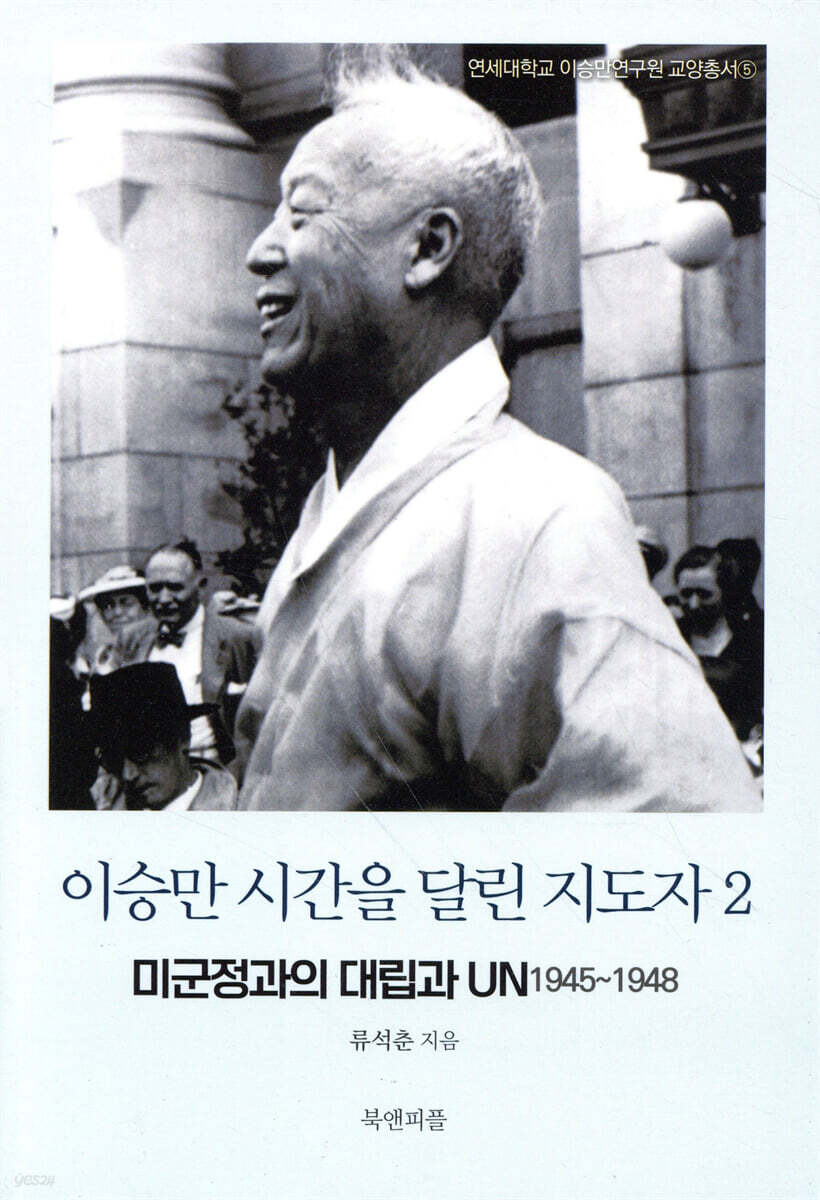 |
Description
Book Introduction
1948 Korean Peninsula, a free democratic state led by Syngman Rhee The founding of the Republic of Korea was a miracle The establishment of the Republic of Korea in the southern part of the Korean Peninsula in 1948 was a miracle in both time and space. The Republic of Korea was not a country built on modern values built through struggles from below over a historical period in the space called the Korean Peninsula. This is because, while most of the people were stuck in the Sinocentric ideology that valued social order, Syngman Rhee took the lead and founded the country by accepting the universal values of liberal democracy and a market economy. Fighting against the accumulated time of tradition, Syngman Rhee built a free Republic of Korea. At the same time, South Korea was not a country built on the values of spatial continuity within the same time zone. After the end of World War II, the Eurasian continent, from Eastern Europe to East Asia, was saturated with the red values of communism. At one corner of that vast and long space, Syngman Rhee established the Republic of Korea, a free democratic nation. It was a miracle created thanks to Syngman Rhee, who foresaw the problems of the communists, fought against them, and stopped them. If there had been no Syngman Rhee, there would have been no Republic of Korea. |
index
Preface: Syngman Rhee, the pinnacle of modern history
44.
Syngman Rhee's First Coming Home: "The Korean people must quickly become one."
45.
Kim Gu, upon returning to Korea, is torn between Syngman Rhee's "urging" and Park Heon-young's "insurgency."
46.
September 20, 1945: Stalin orders the establishment of a separate government north of the 38th parallel.
47.
December 28, 1945: Moscow Tripartite Conference decides on a five-year trusteeship
48.
February 14, 1946: Establishment of the South Korean National Assembly
49.
The collapse of the US-Soviet Joint Commission in March-May 1946 led to the emergence of a separate government as an alternative.
50.
After the collapse of the US-Soviet Joint Commission in May 1946, the US State Department initiated left-right cooperation.
51.
In the summer of 1946, Pak Hon-yong suggested violent struggle after an interview with Kim Il-sung and Stalin.
52.
Summer 1946: The unification of left-wing parties and the response of the right wing, including Syngman Rhee and Kim Gu.
53.
In the summer of 1946, Syngman Rhee operated the private intelligence agency KDRK (RIBK).
54.
The September 1946 general strike was suppressed jointly by the police, Syngman Rhee's Federation of Korean Trade Unions, and youth groups.
55.
Support for the Daegu Uprising and the Corpse Struggle of October 1946, funded and directed by Stykov
56.
The Korean Confederation of Trade Unions (KCTU) emerged from the KCTU's September strike and October riot, suppressing youth groups.
57.
The formation of the South Korean Workers' Party on November 23, 1946 was the work of Shtykov, Kim Il-sung, and Pak Hon-yong.
58.
The Syngman Rhee faction won a landslide victory in the transitional legislative elections in late October 1946.
59.
Legislative elections: Seoul and Gangwon Province hold by-elections due to issues such as pro-Japanese collaborators being elected
60.
December 1946: Syngman Rhee visits the United States to attend the UN General Assembly to seek approval for the Korean War.
61.
March 12, 1947, the Truman Doctrine was declared, marking the beginning of the Cold War.
62.
On April 21, 1947, four and a half months after his visit to the United States, Syngman Rhee returned to Korea with Ji Cheong-cheon.
63.
1947 Moscow Foreign Ministers' Conference: Marshall and Molotov agree to resume the US-Soviet Joint Commission
64.
The US-Soviet Joint Commission resumed on May 21, 1947, but Syngman Rhee and Kim Gu opposed it, led by Lee Cheol-seung.
65.
"Those who commit terrorism, assassination, and incitement are anti-American communist criminals."
66.
Signs of the collapse of the US-Soviet Joint Commission in July 1947… and the assassination of Yeo Un-hyeong.
67.
Conflict with the National Assembly and the National Representatives' Conference convened in July 1947
68.
In August 1947, 327 leftists were arrested, and in September, the United States transferred the issue of Korean independence to the UN.
69.
On September 23, 1947, three days after the UN transfer was confirmed, Shtykov proposed a simultaneous withdrawal of US and Soviet troops.
70.
October 1947: Kim Gu and Syngman Rhee at odds... Mapojang security guard attempts to assassinate Syngman Rhee.
71.
In October and November 1947, the "Outline of Current Situational Measures" controversy led to calls for the resignation of Minister of Civil Affairs Ahn Jae-hong.
72.
On November 14, 1947, the UN General Assembly passed a resolution on the "Korean Independence Question," calling for general elections to be held before March.
73.
Kim Gu appeared in court twice in March 1948 as a witness in the Jang Deok-su assassination case.
74.
In late 1947, the U.S. State Department's consideration of dismissing Hodge was rejected by the Army Department.
75.
In January 1948, the UN Temporary Commission on Korea faced difficulties due to the Soviet Union's refusal to allow entry.
76.
Mo Yun-suk and Menon first met at the UN Commission banquet on January 12, 1948.
77.
In February 1948, the UN General Assembly passed a resolution allowing elections in areas within the United States that could be monitored.
78.
South Korea's Kims proposed a North-South leaders' conference on February 16, 1948... North Korea's Kims responded on March 15.
79.
The May 10, 1948 elections proceeded smoothly despite resistance from Kim Gu, Kim Kyu-sik, and the left.
80.
Soviet-planned and directed, starring Kim Il-sung, political show = April 1948 North-South Joint Conference
81.
In the May 10, 1948 general election, Syngman Rhee's supporters won three-quarters of all seats.
82.
The Constitutional Assembly, which opened on May 31, 1948, promulgated the Constitution within 50 days.
83.
Kim Gu's hypocrisy revealed in the "Kim Gu-Yu Eo-man Dialogue Memoir" from July 1948
84.
President Syngman Rhee was elected on July 20th, and the personnel composition for the founding of the nation was finalized on August 5th.
85.
Syngman Rhee's insight in inviting MacArthur to the government establishment ceremony on August 15, 1948.
86.
The link between Syngman Rhee and MacArthur was Romulo of the Philippines, who shared an anti-Soviet ideology.
87.
The founding of the Republic of Korea, a free democratic nation led by Syngman Rhee on the Korean Peninsula in 1948, was a miracle.
Syngman Rhee's Chronology
Index
44.
Syngman Rhee's First Coming Home: "The Korean people must quickly become one."
45.
Kim Gu, upon returning to Korea, is torn between Syngman Rhee's "urging" and Park Heon-young's "insurgency."
46.
September 20, 1945: Stalin orders the establishment of a separate government north of the 38th parallel.
47.
December 28, 1945: Moscow Tripartite Conference decides on a five-year trusteeship
48.
February 14, 1946: Establishment of the South Korean National Assembly
49.
The collapse of the US-Soviet Joint Commission in March-May 1946 led to the emergence of a separate government as an alternative.
50.
After the collapse of the US-Soviet Joint Commission in May 1946, the US State Department initiated left-right cooperation.
51.
In the summer of 1946, Pak Hon-yong suggested violent struggle after an interview with Kim Il-sung and Stalin.
52.
Summer 1946: The unification of left-wing parties and the response of the right wing, including Syngman Rhee and Kim Gu.
53.
In the summer of 1946, Syngman Rhee operated the private intelligence agency KDRK (RIBK).
54.
The September 1946 general strike was suppressed jointly by the police, Syngman Rhee's Federation of Korean Trade Unions, and youth groups.
55.
Support for the Daegu Uprising and the Corpse Struggle of October 1946, funded and directed by Stykov
56.
The Korean Confederation of Trade Unions (KCTU) emerged from the KCTU's September strike and October riot, suppressing youth groups.
57.
The formation of the South Korean Workers' Party on November 23, 1946 was the work of Shtykov, Kim Il-sung, and Pak Hon-yong.
58.
The Syngman Rhee faction won a landslide victory in the transitional legislative elections in late October 1946.
59.
Legislative elections: Seoul and Gangwon Province hold by-elections due to issues such as pro-Japanese collaborators being elected
60.
December 1946: Syngman Rhee visits the United States to attend the UN General Assembly to seek approval for the Korean War.
61.
March 12, 1947, the Truman Doctrine was declared, marking the beginning of the Cold War.
62.
On April 21, 1947, four and a half months after his visit to the United States, Syngman Rhee returned to Korea with Ji Cheong-cheon.
63.
1947 Moscow Foreign Ministers' Conference: Marshall and Molotov agree to resume the US-Soviet Joint Commission
64.
The US-Soviet Joint Commission resumed on May 21, 1947, but Syngman Rhee and Kim Gu opposed it, led by Lee Cheol-seung.
65.
"Those who commit terrorism, assassination, and incitement are anti-American communist criminals."
66.
Signs of the collapse of the US-Soviet Joint Commission in July 1947… and the assassination of Yeo Un-hyeong.
67.
Conflict with the National Assembly and the National Representatives' Conference convened in July 1947
68.
In August 1947, 327 leftists were arrested, and in September, the United States transferred the issue of Korean independence to the UN.
69.
On September 23, 1947, three days after the UN transfer was confirmed, Shtykov proposed a simultaneous withdrawal of US and Soviet troops.
70.
October 1947: Kim Gu and Syngman Rhee at odds... Mapojang security guard attempts to assassinate Syngman Rhee.
71.
In October and November 1947, the "Outline of Current Situational Measures" controversy led to calls for the resignation of Minister of Civil Affairs Ahn Jae-hong.
72.
On November 14, 1947, the UN General Assembly passed a resolution on the "Korean Independence Question," calling for general elections to be held before March.
73.
Kim Gu appeared in court twice in March 1948 as a witness in the Jang Deok-su assassination case.
74.
In late 1947, the U.S. State Department's consideration of dismissing Hodge was rejected by the Army Department.
75.
In January 1948, the UN Temporary Commission on Korea faced difficulties due to the Soviet Union's refusal to allow entry.
76.
Mo Yun-suk and Menon first met at the UN Commission banquet on January 12, 1948.
77.
In February 1948, the UN General Assembly passed a resolution allowing elections in areas within the United States that could be monitored.
78.
South Korea's Kims proposed a North-South leaders' conference on February 16, 1948... North Korea's Kims responded on March 15.
79.
The May 10, 1948 elections proceeded smoothly despite resistance from Kim Gu, Kim Kyu-sik, and the left.
80.
Soviet-planned and directed, starring Kim Il-sung, political show = April 1948 North-South Joint Conference
81.
In the May 10, 1948 general election, Syngman Rhee's supporters won three-quarters of all seats.
82.
The Constitutional Assembly, which opened on May 31, 1948, promulgated the Constitution within 50 days.
83.
Kim Gu's hypocrisy revealed in the "Kim Gu-Yu Eo-man Dialogue Memoir" from July 1948
84.
President Syngman Rhee was elected on July 20th, and the personnel composition for the founding of the nation was finalized on August 5th.
85.
Syngman Rhee's insight in inviting MacArthur to the government establishment ceremony on August 15, 1948.
86.
The link between Syngman Rhee and MacArthur was Romulo of the Philippines, who shared an anti-Soviet ideology.
87.
The founding of the Republic of Korea, a free democratic nation led by Syngman Rhee on the Korean Peninsula in 1948, was a miracle.
Syngman Rhee's Chronology
Index
Into the book
The Jeongeup speech on June 3, 1946 was a decisive move by Syngman Rhee amidst this series of events.
“Now that the indefinitely adjourned US-Soviet Joint Commission shows no sign of resuming, and we long for a unified government but it is not happening, we must organize a provisional government or committee, at least in the South, and appeal to world opinion to have the Soviet Union withdraw from the area north of 380 degrees. You must also make up your mind (Son Se-il, Vol. 6, 540).” The country was in an uproar as if a hornet’s nest had been poked.
--- p.49
The riots that began in Daegu in October and spread nationwide were an extension of the general strike in September.
This was also part of the 'new tactics' violent struggle that Park Heon-yeong carried out under the direction and funding of Stykov.
The 'September General Strike' ended with a relatively minor bloodshed that claimed two lives, but the strike in Daegu brought about an incomparably enormous sacrifice.
In particular, this incident involved the left-wing practice of 'selling corpses', which is still repeated today.
--- p.77
The Truman Doctrine, announced in March 1947, was nothing more than a declaration that the United States would prevent the spread of Soviet-originated communism throughout the world.
It was a promise that the United States would abandon the tradition of 'isolationism' advocated by the fifth president of the United States in 1823 after over a century, and provide military and economic aid to countries seeking to protect their freedom and independence from the expansion of the Soviet Union in Europe and other parts of the world.
While the immediate benefits are limited to Greece and Turkey, the prospect that the new U.S. policy will also be applied to the Korean Peninsula has now become tangible.
--- p.121
The fact that Mo Yun-suk brought Menon was a miracle to Syngman Rhee.
Seeing Lee Seung-man rejoicing like a boy, Mo Yun-suk took a step further.
He called Secretary Haji, pretended to be Menon's secretary, and lied, saying, "I can't keep our appointment tonight because of an urgent matter."
Mo Yun-suk, whose face was red from telling a lie for the first time in her life, returned to Menon's side somewhat shyly.
And since we always meet, he said in a quiet but firm voice, 'I'd like to have dinner here tonight.'
Menon couldn't understand Mo Yun-suk's rude behavior.
Instead of apologizing to Menon, who was dumbfounded, Mo Yun-suk responded with a gaze like that of a child waiting for his mother's scolding.
Menon, who had fallen into Mo Yun-suk's trap, had dinner with Syngman Rhee that night.
Of course, Syngman Rhee's detailed explanation continued at the dinner table.
Menon's expression as he left late in the evening after finishing his meal was completely different from when he arrived.
It was a huge success.
--- p.217
As Lebedev's memoirs show, the conversations that took place here could not have been so special as to overturn the script prepared in advance through the joint conference.
The most notable thing in the conversation is the following remark made by Kim Gu to Kim Il-sung, who was concerned about his safety.
“If life gets really bad in South Korea, I will come back, so please give me an orchard then (Korean Workers’ Party Publishing House, 1979, “Kim Il-sung’s Collected Works,” Vol. 4, “A Conversation with Artists Participating in the 7th World Festival of Youth and Students,” July 1, 1959; Park Byeong-yeop’s oral history, 2010, “The Birth of the Democratic People’s Republic of Korea,” Seonin: 333).” Kim Gu’s statement was nothing but surrender.
--- p.238
At the end of the conversation, Kim Gu explains his motive for visiting North Korea and makes the following revealing remark.
“One of the reasons I went to the North-South Leaders’ Meeting was to find out what was actually happening in North Korea.
Even if the Communists halted the expansion of the North Korean army for the next three years and made every effort in South Korea during that time, it would be impossible to build up a force capable of countering the current level of the Communist army.
The Soviets would easily and imperceptibly send their troops into South Korea, establish a government here in an instant, and proclaim a People's Republic.”
That's a surprising statement.
This is because Kim Gu tells Yu-erman that after visiting North Korea, he became convinced that the North Korean army, supported by the Soviet Union, would invade South Korea and destroy it.
“Now that the indefinitely adjourned US-Soviet Joint Commission shows no sign of resuming, and we long for a unified government but it is not happening, we must organize a provisional government or committee, at least in the South, and appeal to world opinion to have the Soviet Union withdraw from the area north of 380 degrees. You must also make up your mind (Son Se-il, Vol. 6, 540).” The country was in an uproar as if a hornet’s nest had been poked.
--- p.49
The riots that began in Daegu in October and spread nationwide were an extension of the general strike in September.
This was also part of the 'new tactics' violent struggle that Park Heon-yeong carried out under the direction and funding of Stykov.
The 'September General Strike' ended with a relatively minor bloodshed that claimed two lives, but the strike in Daegu brought about an incomparably enormous sacrifice.
In particular, this incident involved the left-wing practice of 'selling corpses', which is still repeated today.
--- p.77
The Truman Doctrine, announced in March 1947, was nothing more than a declaration that the United States would prevent the spread of Soviet-originated communism throughout the world.
It was a promise that the United States would abandon the tradition of 'isolationism' advocated by the fifth president of the United States in 1823 after over a century, and provide military and economic aid to countries seeking to protect their freedom and independence from the expansion of the Soviet Union in Europe and other parts of the world.
While the immediate benefits are limited to Greece and Turkey, the prospect that the new U.S. policy will also be applied to the Korean Peninsula has now become tangible.
--- p.121
The fact that Mo Yun-suk brought Menon was a miracle to Syngman Rhee.
Seeing Lee Seung-man rejoicing like a boy, Mo Yun-suk took a step further.
He called Secretary Haji, pretended to be Menon's secretary, and lied, saying, "I can't keep our appointment tonight because of an urgent matter."
Mo Yun-suk, whose face was red from telling a lie for the first time in her life, returned to Menon's side somewhat shyly.
And since we always meet, he said in a quiet but firm voice, 'I'd like to have dinner here tonight.'
Menon couldn't understand Mo Yun-suk's rude behavior.
Instead of apologizing to Menon, who was dumbfounded, Mo Yun-suk responded with a gaze like that of a child waiting for his mother's scolding.
Menon, who had fallen into Mo Yun-suk's trap, had dinner with Syngman Rhee that night.
Of course, Syngman Rhee's detailed explanation continued at the dinner table.
Menon's expression as he left late in the evening after finishing his meal was completely different from when he arrived.
It was a huge success.
--- p.217
As Lebedev's memoirs show, the conversations that took place here could not have been so special as to overturn the script prepared in advance through the joint conference.
The most notable thing in the conversation is the following remark made by Kim Gu to Kim Il-sung, who was concerned about his safety.
“If life gets really bad in South Korea, I will come back, so please give me an orchard then (Korean Workers’ Party Publishing House, 1979, “Kim Il-sung’s Collected Works,” Vol. 4, “A Conversation with Artists Participating in the 7th World Festival of Youth and Students,” July 1, 1959; Park Byeong-yeop’s oral history, 2010, “The Birth of the Democratic People’s Republic of Korea,” Seonin: 333).” Kim Gu’s statement was nothing but surrender.
--- p.238
At the end of the conversation, Kim Gu explains his motive for visiting North Korea and makes the following revealing remark.
“One of the reasons I went to the North-South Leaders’ Meeting was to find out what was actually happening in North Korea.
Even if the Communists halted the expansion of the North Korean army for the next three years and made every effort in South Korea during that time, it would be impossible to build up a force capable of countering the current level of the Communist army.
The Soviets would easily and imperceptibly send their troops into South Korea, establish a government here in an instant, and proclaim a People's Republic.”
That's a surprising statement.
This is because Kim Gu tells Yu-erman that after visiting North Korea, he became convinced that the North Korean army, supported by the Soviet Union, would invade South Korea and destroy it.
--- p.255
Publisher's Review
1948 Korean Peninsula, a free democratic state led by Syngman Rhee
The founding of the Republic of Korea was a miracle
We have no objection to the assessment that the freedom and prosperity enjoyed by the Republic of Korea today ranks among the top ten in the world.
South Korea ranks among the world's top countries not only in terms of political standards such as democracy and economic standards such as capitalism, but also in terms of social standards such as welfare levels, and even cultural standards such as scientific and technological standards and lifestyles.
So, when and by whom was the foundation laid for this prosperity? Needless to say, it was with the founding of the Republic of Korea in 1948, led by Syngman Rhee.
It was not the era of the Korean Empire, when the traditional nation of Joseon only claimed to be an independent nation, nor was it the colonial period when the Korean Peninsula was part of the Japanese Empire, nor was it the era of the US military government, when Korea fought and won against Japan but pursued a trusteeship through collaboration with the Soviet Union.
It was in 1948 when Syngman Rhee, who put forward ‘liberal democracy’ and ‘market economy’ as the basic operating principles of the country, sequentially created the National Assembly, Constitution, and government, establishing a new country called the Republic of Korea.
In December of the same year, Syngman Rhee obtained international recognition of the sovereignty of the new nation, the Republic of Korea, through the UN.
Thanks to Syngman Rhee, who spearheaded this series of events, South Korea has become a proud member of the international community, enjoying freedom and prosperity and rising to become a top 10 nation today.
The Republic of Korea, a new nation that emerged in 1948 in the southern part of the Korean Peninsula, used three driving forces as the foundation for its development under the leadership of Syngman Rhee.
The first is the will to ‘modernize’, which aims to transform a traditional nation into a modern nation.
The second is the will to ‘resist Japan’, which sought independence from Japanese imperialism.
The third is the ‘anti-communist’ will to oppose Soviet communist totalitarianism.
If any one of these three driving forces had been missing, the prosperous Republic of Korea we see today could never have been established.
If there had been no will to modernize, the new country would have had to take the path of restoration, returning to a traditional dynastic state.
It is a choice that cannot but be anachronistic.
If independence from Japan had been a means to return to the Joseon Dynasty, the modern values of “liberal democracy” and “market economy” would not have been able to take root.
In addition, if there had been no anti-communism, South Korea today would have become a bizarre communist dynasty like North Korea.
This is why the combination of the driving forces of ‘modernization + anti-Japanese + anti-communism’ is important.
Let's go back in history for a moment.
As a result of the anti-Japanese movement, liberation came in 1945, and the specter of communism emerged on the Korean Peninsula.
Stalin of the Soviet Union, which occupied North Korea, was obsessed with the task of communizing not only North Korea but also South Korea, while manipulating Pak Hon-yong of the South Korean Workers' Party and Kim Il-sung of the North Korean Workers' Party from behind the scenes.
However, the US military government ruling South Korea at the time was completely unaware of the danger posed by the specter of communism.
The US military government, on the other hand, guaranteed freedom of thought and did not control them as long as they did not violate positive law.
While witnessing the process of creating a communist totalitarian state under Stalin's direction in Soviet-occupied North Korea, the US military government pursued trusteeship through left-right cooperation and kept Syngman Rhee in check, who criticized this.
Syngman Rhee had to endure criticism from the US military government, calling him a "stubborn old man."
However, Syngman Rhee was fully aware that the left-right cooperation in Eastern Europe was ultimately nothing more than a ploy to buy time for the construction of a Soviet communist satellite state.
So, in June 1946, he argued in Jeongeup that a separate government based on liberal democracy and a market economy should be established first in South Korea.
This was because North Korea launched a de facto government with the deceptive name of the "Provisional People's Committee" in February 1946, and began implementing land reform the following March, focusing on building a communist state.
Fortunately, the failure of Eastern Europe brought the United States to its senses.
Faced with the expansion of communism around the world after World War II, U.S. President Truman officially declared a Cold War with the Soviet Union in March 1947 to protect the free world.
As this declaration became concrete on the Korean Peninsula, the US military government's left-right cooperation lost momentum.
At the same time, Syngman Rhee's anti-communist policy followed the flow of the international order.
When the United States, having abandoned cooperation with the Soviet Union, handed the Korean issue over to the UN, the international community finally resolved to hold general elections on the Korean Peninsula in November 1947 based on population proportion.
Communist North Korea, of course, rejected this.
It wasn't just a simple rejection.
To disrupt the election scheduled for May 10, 1948, the Soviet Union and North Korea mobilized the South Korean Workers' Party and left-wing groups to commit murder, arson, strikes, and riots throughout South Korea, similar to the Jeju April 3 Incident.
At the same time, the Soviet Union and North Korea even used the deceptive tactic of “inter-Korean negotiations” to incite South Korean unification supremacists.
Some nationalists danced to the communists' tune.
Kim Gu and Kim Kyu-sik were representative examples.
Syngman Rhee's anti-communism was a choice made to anticipate and overcome these difficulties.
Therefore, putting aside the driving force of modernization, anti-communism was as important a driving force in the founding of the Republic of Korea as anti-Japanese resistance.
What would be the result if we erase anti-communism from the driving force of nation-building and instead prioritize only anti-Japanese sentiment? As is well known, Kim Won-bong led the anti-Japanese struggle of communist groups before liberation and was a key figure in the Provisional Government's left wing.
After liberation, he returned to South Korea and eventually went over to North Korea, where he became the Minister of Labor, thereby denying the free democratic state of the Republic of Korea.
He ultimately remained faithful to his role as an assistant to Kim Il-sung, who started the Korean War.
Kim Gu is also a figure who played a significant role in the resistance against Japan toward independence before liberation.
Kim Gu, who protected the declining provisional government until the end, also led the anti-trusteeship and anti-communist struggles together with Syngman Rhee until 1947 after liberation and return to Korea.
However, he ended up leaving the ranks of those who founded the Republic of Korea by rejecting the May 10 elections in 1948, the first step toward establishing a free Republic of Korea, and by compromising with the communist forces in the North.
The fact that we cannot protect and nurture a free Republic of Korea solely through anti-Japanese resistance without anti-communism is clearly revealed in the cases of Kim Gu and Kim Won-bong.
The establishment of the Republic of Korea in the southern part of the Korean Peninsula in 1948 was a miracle in both time and space.
The Republic of Korea was not a country built on modern values built through struggles from below over a historical period in the space called the Korean Peninsula.
This is because, while most of the people were stuck in the Sinocentric ideology that valued social order, Syngman Rhee took the lead and founded the country by accepting the universal values of liberal democracy and a market economy.
Fighting against the accumulated time of tradition, Syngman Rhee built a free Republic of Korea.
At the same time, South Korea was not a country built on the values of spatial continuity within the same time zone.
After the end of World War II, the Eurasian continent, from Eastern Europe to East Asia, was saturated with the red values of communism.
At one corner of that vast and long space, Syngman Rhee established the Republic of Korea, a free democratic nation.
It was a miracle created thanks to Syngman Rhee, who foresaw the problems of the communists, fought against them, and stopped them.
If there had been no Syngman Rhee, there would have been no Republic of Korea.
We should be grateful to Syngman Rhee.
-From the text
The founding of the Republic of Korea was a miracle
We have no objection to the assessment that the freedom and prosperity enjoyed by the Republic of Korea today ranks among the top ten in the world.
South Korea ranks among the world's top countries not only in terms of political standards such as democracy and economic standards such as capitalism, but also in terms of social standards such as welfare levels, and even cultural standards such as scientific and technological standards and lifestyles.
So, when and by whom was the foundation laid for this prosperity? Needless to say, it was with the founding of the Republic of Korea in 1948, led by Syngman Rhee.
It was not the era of the Korean Empire, when the traditional nation of Joseon only claimed to be an independent nation, nor was it the colonial period when the Korean Peninsula was part of the Japanese Empire, nor was it the era of the US military government, when Korea fought and won against Japan but pursued a trusteeship through collaboration with the Soviet Union.
It was in 1948 when Syngman Rhee, who put forward ‘liberal democracy’ and ‘market economy’ as the basic operating principles of the country, sequentially created the National Assembly, Constitution, and government, establishing a new country called the Republic of Korea.
In December of the same year, Syngman Rhee obtained international recognition of the sovereignty of the new nation, the Republic of Korea, through the UN.
Thanks to Syngman Rhee, who spearheaded this series of events, South Korea has become a proud member of the international community, enjoying freedom and prosperity and rising to become a top 10 nation today.
The Republic of Korea, a new nation that emerged in 1948 in the southern part of the Korean Peninsula, used three driving forces as the foundation for its development under the leadership of Syngman Rhee.
The first is the will to ‘modernize’, which aims to transform a traditional nation into a modern nation.
The second is the will to ‘resist Japan’, which sought independence from Japanese imperialism.
The third is the ‘anti-communist’ will to oppose Soviet communist totalitarianism.
If any one of these three driving forces had been missing, the prosperous Republic of Korea we see today could never have been established.
If there had been no will to modernize, the new country would have had to take the path of restoration, returning to a traditional dynastic state.
It is a choice that cannot but be anachronistic.
If independence from Japan had been a means to return to the Joseon Dynasty, the modern values of “liberal democracy” and “market economy” would not have been able to take root.
In addition, if there had been no anti-communism, South Korea today would have become a bizarre communist dynasty like North Korea.
This is why the combination of the driving forces of ‘modernization + anti-Japanese + anti-communism’ is important.
Let's go back in history for a moment.
As a result of the anti-Japanese movement, liberation came in 1945, and the specter of communism emerged on the Korean Peninsula.
Stalin of the Soviet Union, which occupied North Korea, was obsessed with the task of communizing not only North Korea but also South Korea, while manipulating Pak Hon-yong of the South Korean Workers' Party and Kim Il-sung of the North Korean Workers' Party from behind the scenes.
However, the US military government ruling South Korea at the time was completely unaware of the danger posed by the specter of communism.
The US military government, on the other hand, guaranteed freedom of thought and did not control them as long as they did not violate positive law.
While witnessing the process of creating a communist totalitarian state under Stalin's direction in Soviet-occupied North Korea, the US military government pursued trusteeship through left-right cooperation and kept Syngman Rhee in check, who criticized this.
Syngman Rhee had to endure criticism from the US military government, calling him a "stubborn old man."
However, Syngman Rhee was fully aware that the left-right cooperation in Eastern Europe was ultimately nothing more than a ploy to buy time for the construction of a Soviet communist satellite state.
So, in June 1946, he argued in Jeongeup that a separate government based on liberal democracy and a market economy should be established first in South Korea.
This was because North Korea launched a de facto government with the deceptive name of the "Provisional People's Committee" in February 1946, and began implementing land reform the following March, focusing on building a communist state.
Fortunately, the failure of Eastern Europe brought the United States to its senses.
Faced with the expansion of communism around the world after World War II, U.S. President Truman officially declared a Cold War with the Soviet Union in March 1947 to protect the free world.
As this declaration became concrete on the Korean Peninsula, the US military government's left-right cooperation lost momentum.
At the same time, Syngman Rhee's anti-communist policy followed the flow of the international order.
When the United States, having abandoned cooperation with the Soviet Union, handed the Korean issue over to the UN, the international community finally resolved to hold general elections on the Korean Peninsula in November 1947 based on population proportion.
Communist North Korea, of course, rejected this.
It wasn't just a simple rejection.
To disrupt the election scheduled for May 10, 1948, the Soviet Union and North Korea mobilized the South Korean Workers' Party and left-wing groups to commit murder, arson, strikes, and riots throughout South Korea, similar to the Jeju April 3 Incident.
At the same time, the Soviet Union and North Korea even used the deceptive tactic of “inter-Korean negotiations” to incite South Korean unification supremacists.
Some nationalists danced to the communists' tune.
Kim Gu and Kim Kyu-sik were representative examples.
Syngman Rhee's anti-communism was a choice made to anticipate and overcome these difficulties.
Therefore, putting aside the driving force of modernization, anti-communism was as important a driving force in the founding of the Republic of Korea as anti-Japanese resistance.
What would be the result if we erase anti-communism from the driving force of nation-building and instead prioritize only anti-Japanese sentiment? As is well known, Kim Won-bong led the anti-Japanese struggle of communist groups before liberation and was a key figure in the Provisional Government's left wing.
After liberation, he returned to South Korea and eventually went over to North Korea, where he became the Minister of Labor, thereby denying the free democratic state of the Republic of Korea.
He ultimately remained faithful to his role as an assistant to Kim Il-sung, who started the Korean War.
Kim Gu is also a figure who played a significant role in the resistance against Japan toward independence before liberation.
Kim Gu, who protected the declining provisional government until the end, also led the anti-trusteeship and anti-communist struggles together with Syngman Rhee until 1947 after liberation and return to Korea.
However, he ended up leaving the ranks of those who founded the Republic of Korea by rejecting the May 10 elections in 1948, the first step toward establishing a free Republic of Korea, and by compromising with the communist forces in the North.
The fact that we cannot protect and nurture a free Republic of Korea solely through anti-Japanese resistance without anti-communism is clearly revealed in the cases of Kim Gu and Kim Won-bong.
The establishment of the Republic of Korea in the southern part of the Korean Peninsula in 1948 was a miracle in both time and space.
The Republic of Korea was not a country built on modern values built through struggles from below over a historical period in the space called the Korean Peninsula.
This is because, while most of the people were stuck in the Sinocentric ideology that valued social order, Syngman Rhee took the lead and founded the country by accepting the universal values of liberal democracy and a market economy.
Fighting against the accumulated time of tradition, Syngman Rhee built a free Republic of Korea.
At the same time, South Korea was not a country built on the values of spatial continuity within the same time zone.
After the end of World War II, the Eurasian continent, from Eastern Europe to East Asia, was saturated with the red values of communism.
At one corner of that vast and long space, Syngman Rhee established the Republic of Korea, a free democratic nation.
It was a miracle created thanks to Syngman Rhee, who foresaw the problems of the communists, fought against them, and stopped them.
If there had been no Syngman Rhee, there would have been no Republic of Korea.
We should be grateful to Syngman Rhee.
-From the text
GOODS SPECIFICS
- Date of issue: April 30, 2024
- Page count, weight, size: 308 pages | 153*225*30mm
- ISBN13: 9788997871674
- ISBN10: 8997871676
You may also like
카테고리
korean


korean

![GQ KOREA Mark (Monthly): December [2025]](http://librairie.coreenne.fr/cdn/shop/files/8ef265dbbfbf186523ed75ba7319009d.jpg?v=1765340328&width=3840)


