

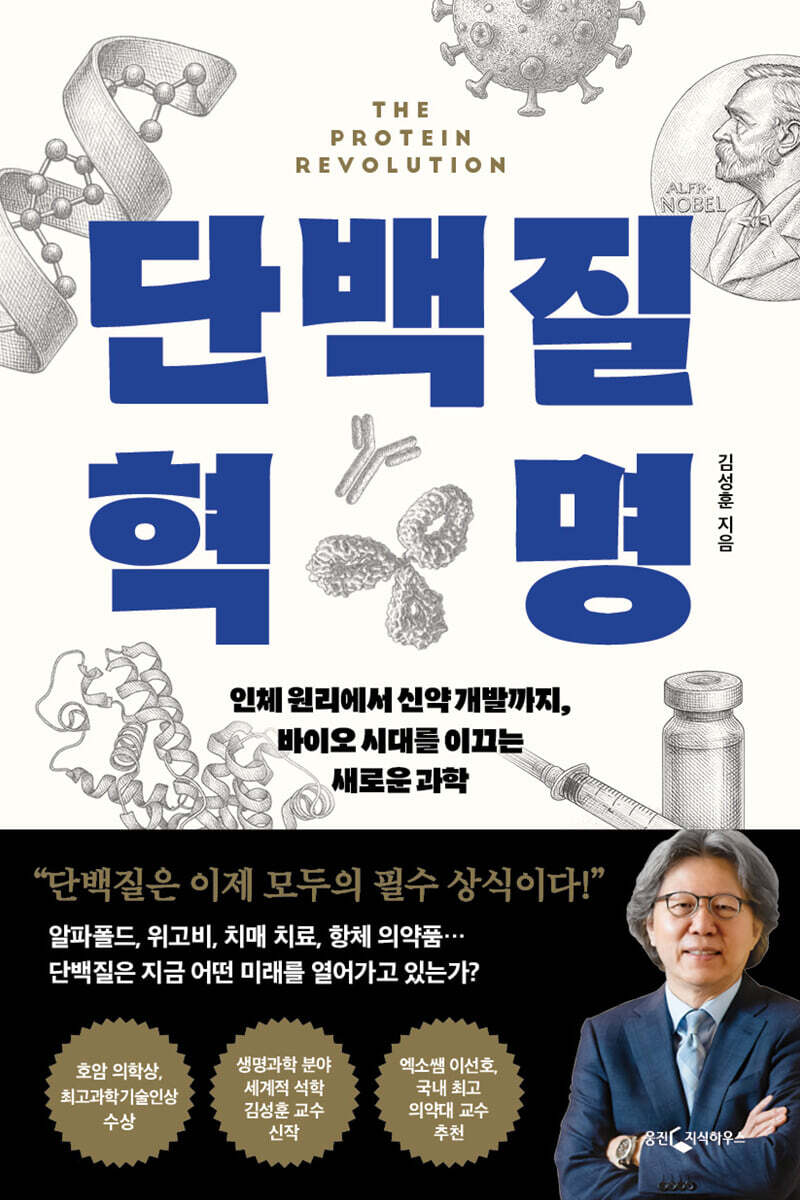
Protein Revolution
 |
Description
Book Introduction
“Protein is now essential common sense for everyone!”
AlphaFold, Wigobi, dementia treatment, antibody drugs…
What kind of future is protein opening up now?
Professor Kim Seong-hun's new work, winner of the Ho-Am Medical Prize and the Republic of Korea's Best Scientist and Engineer Award.
EXO Teacher (Lee Sun-ho) Recommended as Korea's Top Medical School Professor
“What comes to mind when you think of protein?” “Protein Revolution” begins with this question.
Most people's first thoughts would be meat, muscle, and protein drinks.
Our knowledge about protein is limited to the fact that it is a nutrient necessary for the body.
However, proteins are the most important biomolecules directly related to life and health.
Bones, skin, and muscles, as well as enzymes that help with various chemical reactions in the body, antibodies that fight disease in the immune system, and hormones that regulate the body, are all made of protein.
Currently, the scientific community is focusing on proteins as the key to unlocking the secrets of human birth, aging, illness, and death.
Over the past 25 years, approximately 40 percent of Nobel Prizes in Chemistry have been awarded for research related to proteins, and the 2024 Nobel Prize in Chemistry will go to researchers in the field of "artificial intelligence for protein structure analysis."
Moreover, protein is leading the way in disease treatment, including the so-called "miracle diet pills" Wegobi and Ozempic.
A small molecule called protein is changing the world.
This is why Professor Kim Seong-hun, a world-renowned scholar in the field of biotechnology, wrote “Protein Revolution.”
He discovered various new functional proteins involved in cancer, immunity, metabolic diseases, etc., and published over 270 papers in world-renowned scientific journals such as [Cell] and [Science].
Having dedicated his life to protein research, he explores in this book how proteins are changing the world and their limitless possibilities.
Understanding proteins is no longer just the domain of scientists.
This is knowledge that all of us living in this era must explore together, and it is a culture that we must share for a better future.
Through "Protein Revolution," readers will be able to learn about the amazing secrets of proteins as well as the present and future of the bio age.
AlphaFold, Wigobi, dementia treatment, antibody drugs…
What kind of future is protein opening up now?
Professor Kim Seong-hun's new work, winner of the Ho-Am Medical Prize and the Republic of Korea's Best Scientist and Engineer Award.
EXO Teacher (Lee Sun-ho) Recommended as Korea's Top Medical School Professor
“What comes to mind when you think of protein?” “Protein Revolution” begins with this question.
Most people's first thoughts would be meat, muscle, and protein drinks.
Our knowledge about protein is limited to the fact that it is a nutrient necessary for the body.
However, proteins are the most important biomolecules directly related to life and health.
Bones, skin, and muscles, as well as enzymes that help with various chemical reactions in the body, antibodies that fight disease in the immune system, and hormones that regulate the body, are all made of protein.
Currently, the scientific community is focusing on proteins as the key to unlocking the secrets of human birth, aging, illness, and death.
Over the past 25 years, approximately 40 percent of Nobel Prizes in Chemistry have been awarded for research related to proteins, and the 2024 Nobel Prize in Chemistry will go to researchers in the field of "artificial intelligence for protein structure analysis."
Moreover, protein is leading the way in disease treatment, including the so-called "miracle diet pills" Wegobi and Ozempic.
A small molecule called protein is changing the world.
This is why Professor Kim Seong-hun, a world-renowned scholar in the field of biotechnology, wrote “Protein Revolution.”
He discovered various new functional proteins involved in cancer, immunity, metabolic diseases, etc., and published over 270 papers in world-renowned scientific journals such as [Cell] and [Science].
Having dedicated his life to protein research, he explores in this book how proteins are changing the world and their limitless possibilities.
Understanding proteins is no longer just the domain of scientists.
This is knowledge that all of us living in this era must explore together, and it is a culture that we must share for a better future.
Through "Protein Revolution," readers will be able to learn about the amazing secrets of proteins as well as the present and future of the bio age.
- You can preview some of the book's contents.
Preview
index
Recommendation
Introduction: Seeing Proteins Through the Eyes of Science
Chapter 1: Protein, the Second Code of Life
Genes write the score, proteins play the music.
Are proteins faithful workers who follow the commands of genes?
Are genes destiny?
Completion of the Human Genome Project and Beyond
The Post-Genome Era: From Static Genes to Dynamic Proteins
Protein, the 3D Magician
Chapter 2: Unraveling the Mysteries of Birth, Aging, Illness, and Death
The 100-Year-Old Era Ushered in by Protein
Is aging a fate or a treatable disease?
A broken protein erases memories
Smelly feet, sweet smelling feet
In an age of information overload, prevent your brain from overloading.
If you want to live long, keep your muscles.
The relationship between anemia and malaria
Chapter 3: The Science of Protein in Food
The secret hidden in the savory taste
The identity of the scent that captivates people
A super sweetener 200 times sweeter than sugar
Plants' Survival Weapon: Spicy Taste
Why You Shouldn't Leave Your Cat in the Fish Shop
When there is low pressure, the meat moves forward
Can a carcinogen cure a hangover?
A solution to future food and environmental problems
Chapter 4: Medicine that Saves People, Medicine that Kills People
Medicine for some, poison for others: the duality of hormones
Ignorance is not bliss, knowledge is bliss.
From diabetes treatments to a diet revolution
Knowing protein makes money visible
The world's most dangerous and beautiful 'poison'
Why are protein drugs injected?
Albinism: A Blessing or a Curse?
Purple to catch the culprit
Chapter 5: Bio-Innovation and the Future of Life
What does lab-grown meat taste like?
The origin of life from space
Artificial intelligence becomes Nobel Prize winner in chemistry
Can the era of creation of life open?
Antibodies, the smart weapons that protect our bodies
Health Information from Amino Acids
Interpreters who translate genetic code into proteins
Outgoing Article: The Bio Era Drawn by Proteins
Acknowledgements
Image source
Introduction: Seeing Proteins Through the Eyes of Science
Chapter 1: Protein, the Second Code of Life
Genes write the score, proteins play the music.
Are proteins faithful workers who follow the commands of genes?
Are genes destiny?
Completion of the Human Genome Project and Beyond
The Post-Genome Era: From Static Genes to Dynamic Proteins
Protein, the 3D Magician
Chapter 2: Unraveling the Mysteries of Birth, Aging, Illness, and Death
The 100-Year-Old Era Ushered in by Protein
Is aging a fate or a treatable disease?
A broken protein erases memories
Smelly feet, sweet smelling feet
In an age of information overload, prevent your brain from overloading.
If you want to live long, keep your muscles.
The relationship between anemia and malaria
Chapter 3: The Science of Protein in Food
The secret hidden in the savory taste
The identity of the scent that captivates people
A super sweetener 200 times sweeter than sugar
Plants' Survival Weapon: Spicy Taste
Why You Shouldn't Leave Your Cat in the Fish Shop
When there is low pressure, the meat moves forward
Can a carcinogen cure a hangover?
A solution to future food and environmental problems
Chapter 4: Medicine that Saves People, Medicine that Kills People
Medicine for some, poison for others: the duality of hormones
Ignorance is not bliss, knowledge is bliss.
From diabetes treatments to a diet revolution
Knowing protein makes money visible
The world's most dangerous and beautiful 'poison'
Why are protein drugs injected?
Albinism: A Blessing or a Curse?
Purple to catch the culprit
Chapter 5: Bio-Innovation and the Future of Life
What does lab-grown meat taste like?
The origin of life from space
Artificial intelligence becomes Nobel Prize winner in chemistry
Can the era of creation of life open?
Antibodies, the smart weapons that protect our bodies
Health Information from Amino Acids
Interpreters who translate genetic code into proteins
Outgoing Article: The Bio Era Drawn by Proteins
Acknowledgements
Image source
Detailed image
Into the book
Until now, scientists have focused on uncovering the secrets of genes, the first code of life, and creating new genes or changing parts of genes to create life forms that did not previously exist.
And now the scientific community's attention is turned to proteins, the second code of life.
Why is the scientific community focusing on proteins? Because proteins are the most important biomolecules, directly related to our life and health.
--- "Introduction"
Even though we have the long-awaited human genome map in our hands, why are we still unable to unlock the secrets of birth, aging, illness, and death? The reason is simple.
This is because the life, aging, illness and death of the human body are not determined solely by the genetic sequence.
The sequence of genes is like the score of a symphony composed by Beethoven.
Depending on who conducts and plays the score, the music played each time has a different feel.
Even when the same conductor and musicians play the same piece, it is not exactly the same every time.
That is why, even if the same score is played tens of thousands or hundreds of thousands of times, we still receive new and fresh emotions from each performance.
--- "Chapter 1: Protein, the Second Code of Life"
Recently, scientists have suspected that when the structure of proteins is altered due to stress or other factors and accumulates in the body, this causes accelerated aging or disease.
Therefore, research is actively being conducted around the world to prevent this phenomenon and control aging.
Preventing the detrimental changes in key proteins in the body is now emerging as a crucial strategy for delaying aging and preventing disease.
--- "Chapter 2: Unraveling the Secrets of Birth, Aging, Illness, and Death"
Conversely, research into using dopamine as a treatment is also actively underway.
Recent research results show that administering levodopa, a precursor to dopamine, to mice with Alzheimer's disease reduced symptoms, including improved cognitive ability.
It has confirmed the possibility of treating Alzheimer's disease, for which there is still no clear cure.
This is an example showing that dopamine can be used positively.
--- "Chapter 2: Unraveling the Secrets of Birth, Aging, Illness, and Death"
But why are humans so drawn to this savory flavor, a taste that defies precise explanation? The secret lies in the fact that we've been experiencing it since we were very young, even in our mother's womb.
Studies have shown that glutamate, the anionic form of glutamic acid, is found in the highest concentration in the amniotic fluid where the fetus lives for 40 weeks.
In this way, we experience savory taste even before we are born.
In addition, breast milk, which is the first food a baby begins to drink after birth, is rich in various amino acids necessary for the baby's healthy growth, and among these, glutamate is contained in the highest concentration at 44.17%.
--- "Chapter 3: The Science of Protein in Food"
There is a neurotransmitter called serotonin that is produced in our body.
This serotonin is often called the 'happiness hormone', and research shows that it plays a role in alleviating symptoms of depression and anxiety.
The raw material for serotonin is an amino acid called tryptophan.
And representative foods that contain a lot of tryptophan are meat proteins such as pork and beef.
--- "Chapter 3: The Science of Protein in Food"
However, there was a fatal problem in that when GLP-1 was secreted into the body, it only worked for about 1 to 2 minutes and then broke down and disappeared.
So, scientists worked to create a protein that has a similar function to GLP-1 but is not broken down quickly and is maintained for a long time, and eventually created semaglutide, a GLP-1 analog that works in the body for 13 hours.
And in 2017, the U.S. FDA gave final approval for the use of Ozempic, a diabetes treatment drug made using semaglutide by the Danish pharmaceutical company Novo Nordisk.
--- "Chapter 4: The Medicine That Saves, the Medicine That Kills"
Aspirin and Tylenol, which we are all familiar with, are synthetic drugs made artificially using chemicals. They have a low molecular weight structure, so they can be administered orally, and they have the advantage of being easy to mass-produce and having low production costs.
However, in many cases, there is a limitation that it may bind to proteins other than the original target in the body, causing unwanted side effects or toxicity.
In contrast, biopharmaceuticals are made of high molecular weight substances such as proteins and nucleic acids, so they cannot be administered orally, are difficult to mass-produce, and are expensive to produce.
However, compared to small molecule compounds, they have the advantage of having a relatively clear mechanism of action and high binding specificity to the target, resulting in relatively low side effects and toxicity.
--- "Chapter 4: The Medicine That Saves, the Medicine That Kills"
Those who tasted the most expensive burger in history left comments such as, “The hamburger patty is a little weak in juice, but the texture is perfect,” and “It’s similar to meat.”
And this event became the starting point for changing the food production laws that humanity has maintained for so long.
That's because the patty in this burger was cultured meat made from 20,000 cow muscle fibers grown in a laboratory by Professor Mark Post of Maastricht University in the Netherlands over a period of about three months.
--- "Chapter 5: Bio-Innovation and the Future of Life"
Blood is composed of plasma, which contains cellular components such as red blood cells, white blood cells, and platelets, as well as dozens of proteins and electrolytes, such as albumin and globulins.
It contains oxygen, carbon dioxide, and various nutrients absorbed through digestion of ingested food.
Because dozens of components are so intricately intertwined, diagnosing various diseases with just a few drops of blood is a very difficult task even for modern science.
This is strongly supported by the fact that none of Theranos' investors, who received an astronomical investment of 1.6 trillion won, were from the medical field.
--- "Chapter 5: Bio-Innovation and the Future of Life"
Finally, proteins such as fibroin and keratin are used in the textile and clothing industries as materials such as silk and wool.
In addition, it is used as a material for cosmetics and even eco-friendly adhesives, and recently, protein materials with smart sensor functions have been developed by utilizing the structural characteristics of proteins that dynamically change depending on temperature or hydrogen ion index, and are being used in various fields such as clothing, cosmetics, and biosensors.
And now the scientific community's attention is turned to proteins, the second code of life.
Why is the scientific community focusing on proteins? Because proteins are the most important biomolecules, directly related to our life and health.
--- "Introduction"
Even though we have the long-awaited human genome map in our hands, why are we still unable to unlock the secrets of birth, aging, illness, and death? The reason is simple.
This is because the life, aging, illness and death of the human body are not determined solely by the genetic sequence.
The sequence of genes is like the score of a symphony composed by Beethoven.
Depending on who conducts and plays the score, the music played each time has a different feel.
Even when the same conductor and musicians play the same piece, it is not exactly the same every time.
That is why, even if the same score is played tens of thousands or hundreds of thousands of times, we still receive new and fresh emotions from each performance.
--- "Chapter 1: Protein, the Second Code of Life"
Recently, scientists have suspected that when the structure of proteins is altered due to stress or other factors and accumulates in the body, this causes accelerated aging or disease.
Therefore, research is actively being conducted around the world to prevent this phenomenon and control aging.
Preventing the detrimental changes in key proteins in the body is now emerging as a crucial strategy for delaying aging and preventing disease.
--- "Chapter 2: Unraveling the Secrets of Birth, Aging, Illness, and Death"
Conversely, research into using dopamine as a treatment is also actively underway.
Recent research results show that administering levodopa, a precursor to dopamine, to mice with Alzheimer's disease reduced symptoms, including improved cognitive ability.
It has confirmed the possibility of treating Alzheimer's disease, for which there is still no clear cure.
This is an example showing that dopamine can be used positively.
--- "Chapter 2: Unraveling the Secrets of Birth, Aging, Illness, and Death"
But why are humans so drawn to this savory flavor, a taste that defies precise explanation? The secret lies in the fact that we've been experiencing it since we were very young, even in our mother's womb.
Studies have shown that glutamate, the anionic form of glutamic acid, is found in the highest concentration in the amniotic fluid where the fetus lives for 40 weeks.
In this way, we experience savory taste even before we are born.
In addition, breast milk, which is the first food a baby begins to drink after birth, is rich in various amino acids necessary for the baby's healthy growth, and among these, glutamate is contained in the highest concentration at 44.17%.
--- "Chapter 3: The Science of Protein in Food"
There is a neurotransmitter called serotonin that is produced in our body.
This serotonin is often called the 'happiness hormone', and research shows that it plays a role in alleviating symptoms of depression and anxiety.
The raw material for serotonin is an amino acid called tryptophan.
And representative foods that contain a lot of tryptophan are meat proteins such as pork and beef.
--- "Chapter 3: The Science of Protein in Food"
However, there was a fatal problem in that when GLP-1 was secreted into the body, it only worked for about 1 to 2 minutes and then broke down and disappeared.
So, scientists worked to create a protein that has a similar function to GLP-1 but is not broken down quickly and is maintained for a long time, and eventually created semaglutide, a GLP-1 analog that works in the body for 13 hours.
And in 2017, the U.S. FDA gave final approval for the use of Ozempic, a diabetes treatment drug made using semaglutide by the Danish pharmaceutical company Novo Nordisk.
--- "Chapter 4: The Medicine That Saves, the Medicine That Kills"
Aspirin and Tylenol, which we are all familiar with, are synthetic drugs made artificially using chemicals. They have a low molecular weight structure, so they can be administered orally, and they have the advantage of being easy to mass-produce and having low production costs.
However, in many cases, there is a limitation that it may bind to proteins other than the original target in the body, causing unwanted side effects or toxicity.
In contrast, biopharmaceuticals are made of high molecular weight substances such as proteins and nucleic acids, so they cannot be administered orally, are difficult to mass-produce, and are expensive to produce.
However, compared to small molecule compounds, they have the advantage of having a relatively clear mechanism of action and high binding specificity to the target, resulting in relatively low side effects and toxicity.
--- "Chapter 4: The Medicine That Saves, the Medicine That Kills"
Those who tasted the most expensive burger in history left comments such as, “The hamburger patty is a little weak in juice, but the texture is perfect,” and “It’s similar to meat.”
And this event became the starting point for changing the food production laws that humanity has maintained for so long.
That's because the patty in this burger was cultured meat made from 20,000 cow muscle fibers grown in a laboratory by Professor Mark Post of Maastricht University in the Netherlands over a period of about three months.
--- "Chapter 5: Bio-Innovation and the Future of Life"
Blood is composed of plasma, which contains cellular components such as red blood cells, white blood cells, and platelets, as well as dozens of proteins and electrolytes, such as albumin and globulins.
It contains oxygen, carbon dioxide, and various nutrients absorbed through digestion of ingested food.
Because dozens of components are so intricately intertwined, diagnosing various diseases with just a few drops of blood is a very difficult task even for modern science.
This is strongly supported by the fact that none of Theranos' investors, who received an astronomical investment of 1.6 trillion won, were from the medical field.
--- "Chapter 5: Bio-Innovation and the Future of Life"
Finally, proteins such as fibroin and keratin are used in the textile and clothing industries as materials such as silk and wool.
In addition, it is used as a material for cosmetics and even eco-friendly adhesives, and recently, protein materials with smart sensor functions have been developed by utilizing the structural characteristics of proteins that dynamically change depending on temperature or hydrogen ion index, and are being used in various fields such as clothing, cosmetics, and biosensors.
--- From "Outgoing Writing"
Publisher's Review
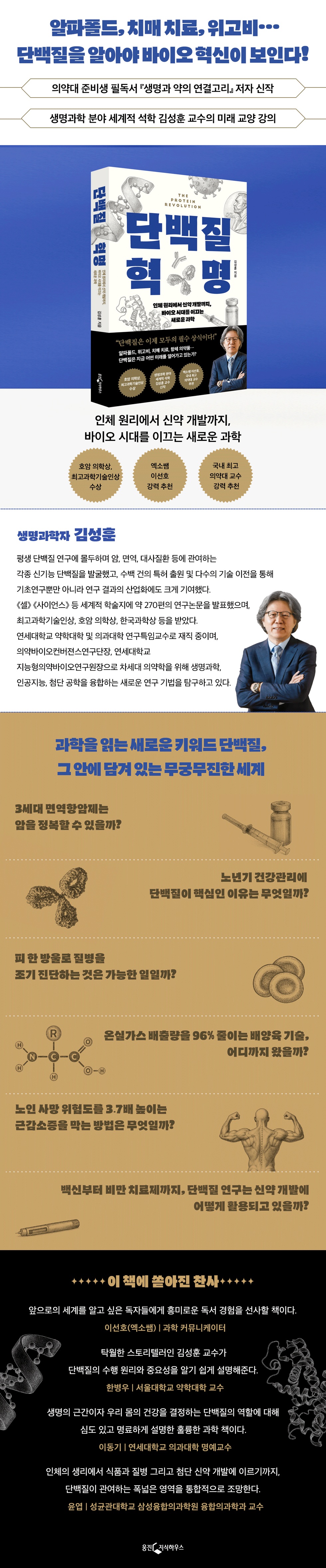
"Now the scientific community's attention is turned to proteins, the second code of life."
A must-read for medical and nursing school students, the author of "The Link Between Life and Medicine" has released a new book.
The 2024 Nobel Prize in Literature will be remembered by Koreans as the one given to author Han Kang.
Looking outside of Korea for a moment, there was another noteworthy event.
It's the Nobel Prize in Chemistry.
Researchers in the field of 'protein structure analysis artificial intelligence' received awards.
While it is surprising that research utilizing artificial intelligence won an award, it is noteworthy that the field of 'protein research' was the subject of the award.
In the past, scientists have focused on uncovering the secrets of genes, the first code of life, and creating new genes or changing parts of genes to create life forms that did not previously exist.
And through the 'Human Genome Project', we obtained the map of the human genome.
But the secret of birth, aging, illness, and death has not been solved.
The reason was none other than the complexity that occurs in proteins.
The scientific community's interest has shifted from genes to proteins, the 'second code of life.'
Not only the 2024 Nobel Prize in Chemistry, but also approximately 40 percent of the research that has won the Nobel Prize in Chemistry in the past 25 years has been related to proteins, and protein research shows the potential to solve long-standing human problems, from various diseases to aging and obesity.
A representative example is a study published in the scientific journal Cell in 2023. Injecting aged mice with a substance that activates DNA repair proteins resulted in their bodies becoming covered in thick black hair and their eyesight restored, suggesting a new approach to preventing aging.
We cannot leave out the obesity treatment drug Wigobi and the diabetes treatment drug Ozempic, which are causing a worldwide craze.
Botox, now a familiar cosmetic procedure, also uses a protein poison called botulinum toxin.
Additionally, third-generation immuno-oncology drugs that utilize antibody research are expected to be the future of cancer cures.
To live healthily, maintain the three-dimensional structure of proteins!
The Science of Proteins That Determine Birth, Aging, Illness, and Death
Protein is also the key to health.
According to Statistics Korea, as of 2022, the life expectancy of Koreans is 80.5 years for men and 86.5 years for women, which is very high even by global standards.
However, looking at the healthy life expectancy, it was found that men spend 71.3 years and women 74.7 years, meaning they spend more than 10 years in hospital beds.
It is no exaggeration to say that healthy lifespan depends on how well we maintain the three-dimensional structure of the proteins in our bodies.
For example, if normal proteins become crumpled and misfolded for various reasons, it can cause various diseases. For example, the main cause of Alzheimer's disease, which we fear the most, is also 'protein misfolding.'
Tau protein, which is responsible for stabilizing microtubules within cells, is misfolded due to stress or other causes, disrupting the function of microtubules and destroying the material transport system within nerve cells, leading to cell death.
Muscles are also key to health.
Muscle mass begins to decline in the 30s, and by the age of 70, more than 40 percent of major muscles are lost. As muscle mass decreases, free movement becomes difficult, which lowers the quality of life. In addition, the risk of diabetes more than doubles and the risk of cardiovascular disease increases by approximately 76 percent.
This is why protein intake, which is the raw material for muscles, is important.
Protein doesn't stop there; it also affects mental health.
Glutamic acid and GABA, nonessential amino acids that our bodies produce themselves, are among the most common neurotransmitters in the mammalian central nervous system.
A recent study revealed that the balance between the excitatory transmitter glutamate and the inhibitory transmitter GABA was disrupted in the brains of people with obsessive-compulsive disorder. Based on these research results, active research is being conducted to develop treatments for neurological and psychiatric diseases that target neurotransmitters.
In this way, protein is deeply involved in the health of our body and mind.
This book provides insight into life and health through stories about proteins that are directly related to human health.
From everyday changes to innovative technologies,
The world is connected by proteins!
In this way, proteins are closely linked not only to health management but also to disease treatment, diet, and environmental issues. The impact of bio-innovations, such as new drug development, on the economy and industry is immeasurable.
And the reason the author wrote "Protein Revolution" is to convey this "essential common sense" in an easy-to-understand way.
The book consists of five chapters in total.
An easy-to-understand explanation of how proteins are changing the world through real-world examples.
Chapter 1 highlights why protein research has become a hot topic in the scientific community today and its implications.
You can also understand the flow of life science research, which led from genetic research to protein research.
Chapter 2 focuses on the impact of proteins on health and disease.
Covers the relationship between dementia and protein, a new paradigm for approaching aging, and why muscle and protein are important for maintaining health.
Chapter 3 deals with the science of food, an area most closely related to our daily lives.
Behind the delicious dishes that stimulate the five senses and the savory taste that lingers in your mind, lies the science of protein.
Chapter 4 focuses on pharmaceuticals, a hot topic these days.
You can learn how protein research is utilized and applied to new drug development.
Through this, we can indirectly confirm what the current trends in the bio industry are.
The final five chapters explore the future of the bio-age.
We explore the present and future of bio-innovation driven by proteins, including the advent of the era of life creation and the technology to diagnose disease in advance using amino acids.
Protein has now become a core knowledge and essential subject matter that we must understand to properly understand the times we live in and to adapt to change.
"Protein Revolution" will not only reveal the amazing story behind the molecule called protein, but also provide insight into the future that the bio age is opening up.
A must-read for medical and nursing school students, the author of "The Link Between Life and Medicine" has released a new book.
The 2024 Nobel Prize in Literature will be remembered by Koreans as the one given to author Han Kang.
Looking outside of Korea for a moment, there was another noteworthy event.
It's the Nobel Prize in Chemistry.
Researchers in the field of 'protein structure analysis artificial intelligence' received awards.
While it is surprising that research utilizing artificial intelligence won an award, it is noteworthy that the field of 'protein research' was the subject of the award.
In the past, scientists have focused on uncovering the secrets of genes, the first code of life, and creating new genes or changing parts of genes to create life forms that did not previously exist.
And through the 'Human Genome Project', we obtained the map of the human genome.
But the secret of birth, aging, illness, and death has not been solved.
The reason was none other than the complexity that occurs in proteins.
The scientific community's interest has shifted from genes to proteins, the 'second code of life.'
Not only the 2024 Nobel Prize in Chemistry, but also approximately 40 percent of the research that has won the Nobel Prize in Chemistry in the past 25 years has been related to proteins, and protein research shows the potential to solve long-standing human problems, from various diseases to aging and obesity.
A representative example is a study published in the scientific journal Cell in 2023. Injecting aged mice with a substance that activates DNA repair proteins resulted in their bodies becoming covered in thick black hair and their eyesight restored, suggesting a new approach to preventing aging.
We cannot leave out the obesity treatment drug Wigobi and the diabetes treatment drug Ozempic, which are causing a worldwide craze.
Botox, now a familiar cosmetic procedure, also uses a protein poison called botulinum toxin.
Additionally, third-generation immuno-oncology drugs that utilize antibody research are expected to be the future of cancer cures.
To live healthily, maintain the three-dimensional structure of proteins!
The Science of Proteins That Determine Birth, Aging, Illness, and Death
Protein is also the key to health.
According to Statistics Korea, as of 2022, the life expectancy of Koreans is 80.5 years for men and 86.5 years for women, which is very high even by global standards.
However, looking at the healthy life expectancy, it was found that men spend 71.3 years and women 74.7 years, meaning they spend more than 10 years in hospital beds.
It is no exaggeration to say that healthy lifespan depends on how well we maintain the three-dimensional structure of the proteins in our bodies.
For example, if normal proteins become crumpled and misfolded for various reasons, it can cause various diseases. For example, the main cause of Alzheimer's disease, which we fear the most, is also 'protein misfolding.'
Tau protein, which is responsible for stabilizing microtubules within cells, is misfolded due to stress or other causes, disrupting the function of microtubules and destroying the material transport system within nerve cells, leading to cell death.
Muscles are also key to health.
Muscle mass begins to decline in the 30s, and by the age of 70, more than 40 percent of major muscles are lost. As muscle mass decreases, free movement becomes difficult, which lowers the quality of life. In addition, the risk of diabetes more than doubles and the risk of cardiovascular disease increases by approximately 76 percent.
This is why protein intake, which is the raw material for muscles, is important.
Protein doesn't stop there; it also affects mental health.
Glutamic acid and GABA, nonessential amino acids that our bodies produce themselves, are among the most common neurotransmitters in the mammalian central nervous system.
A recent study revealed that the balance between the excitatory transmitter glutamate and the inhibitory transmitter GABA was disrupted in the brains of people with obsessive-compulsive disorder. Based on these research results, active research is being conducted to develop treatments for neurological and psychiatric diseases that target neurotransmitters.
In this way, protein is deeply involved in the health of our body and mind.
This book provides insight into life and health through stories about proteins that are directly related to human health.
From everyday changes to innovative technologies,
The world is connected by proteins!
In this way, proteins are closely linked not only to health management but also to disease treatment, diet, and environmental issues. The impact of bio-innovations, such as new drug development, on the economy and industry is immeasurable.
And the reason the author wrote "Protein Revolution" is to convey this "essential common sense" in an easy-to-understand way.
The book consists of five chapters in total.
An easy-to-understand explanation of how proteins are changing the world through real-world examples.
Chapter 1 highlights why protein research has become a hot topic in the scientific community today and its implications.
You can also understand the flow of life science research, which led from genetic research to protein research.
Chapter 2 focuses on the impact of proteins on health and disease.
Covers the relationship between dementia and protein, a new paradigm for approaching aging, and why muscle and protein are important for maintaining health.
Chapter 3 deals with the science of food, an area most closely related to our daily lives.
Behind the delicious dishes that stimulate the five senses and the savory taste that lingers in your mind, lies the science of protein.
Chapter 4 focuses on pharmaceuticals, a hot topic these days.
You can learn how protein research is utilized and applied to new drug development.
Through this, we can indirectly confirm what the current trends in the bio industry are.
The final five chapters explore the future of the bio-age.
We explore the present and future of bio-innovation driven by proteins, including the advent of the era of life creation and the technology to diagnose disease in advance using amino acids.
Protein has now become a core knowledge and essential subject matter that we must understand to properly understand the times we live in and to adapt to change.
"Protein Revolution" will not only reveal the amazing story behind the molecule called protein, but also provide insight into the future that the bio age is opening up.
GOODS SPECIFICS
- Date of issue: July 25, 2025
- Page count, weight, size: 248 pages | 400g | 140*210*14mm
- ISBN13: 9788901295701
- ISBN10: 8901295709
You may also like
카테고리
korean


korean

![GQ KOREA Mark (Monthly): December [2025]](http://librairie.coreenne.fr/cdn/shop/files/8ef265dbbfbf186523ed75ba7319009d.jpg?v=1765340328&width=3840)


