

Biography of Erasmus
 |
Description
Book Introduction
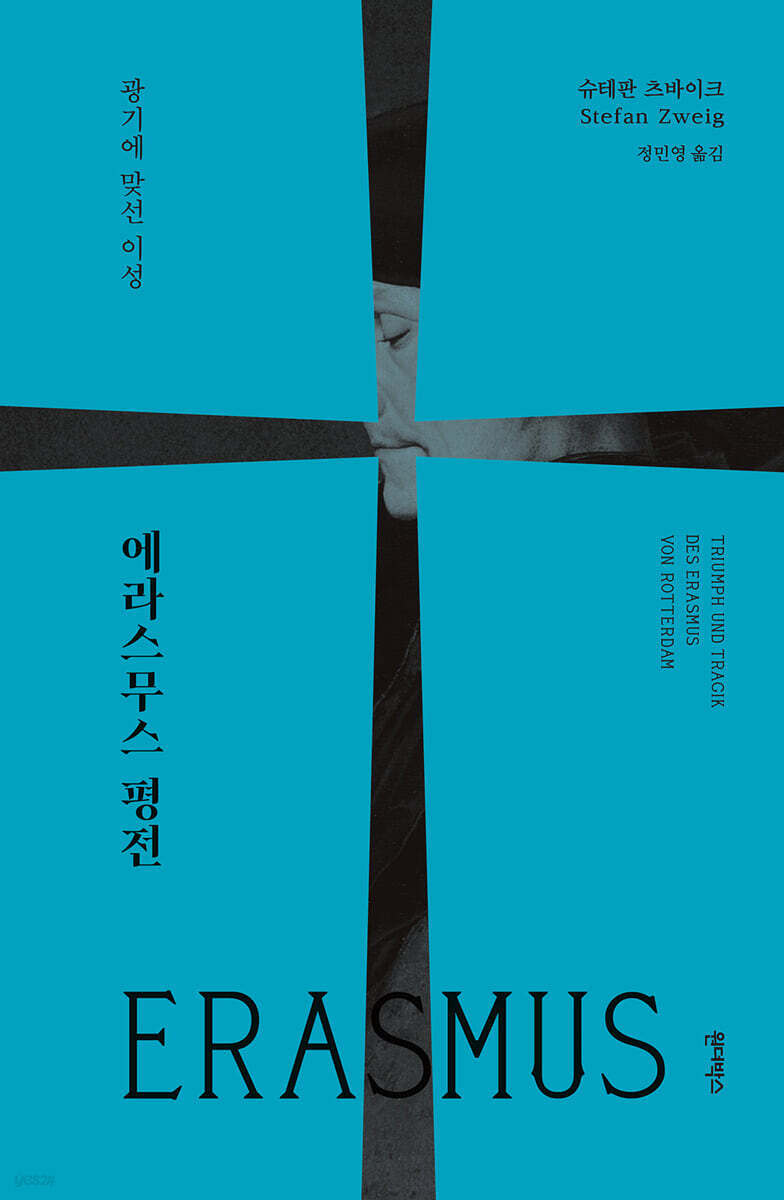
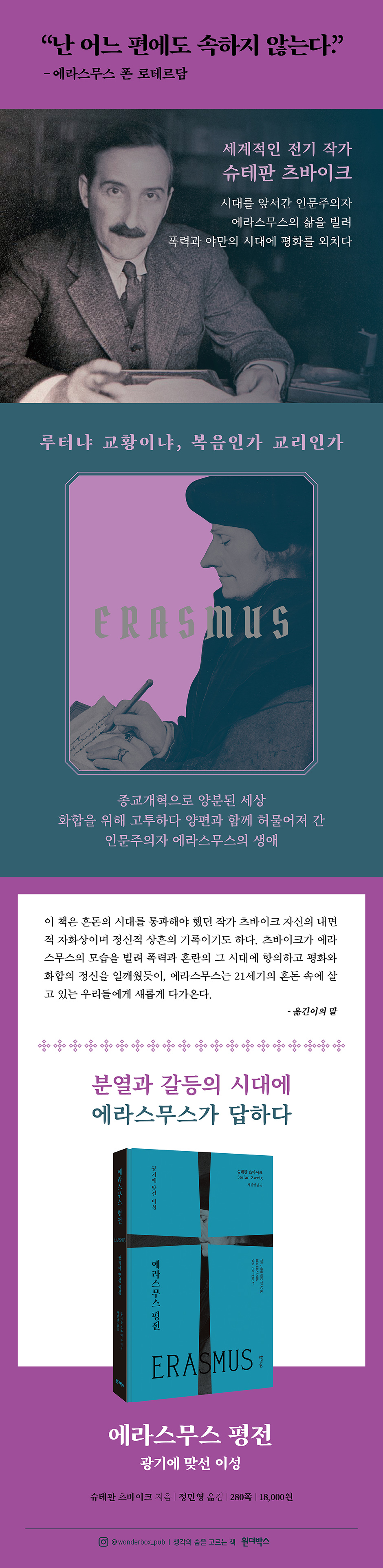
A masterpiece by world-renowned biographer Stefan Zweig
Borrowing from the life of Erasmus, a humanist ahead of his time
Asking the meaning of peace, harmony, and true freedom
This book is the representative work of Stefan Zweig, who also wrote several biographies, including 『Balzac Biography』, 『The Consoling Spirit』 (Montaigne), and 『The Right to a Different Opinion』 (Castelio), and is the most famous book among the many books about Erasmus.
This book, published just before Zweig fled the Nazis and went into exile, is a work that denounces the mad age and reveals his own beliefs by borrowing the life of Erasmus, a humanist who rejected all extremes and tried to protect peace and freedom amid the chaos of the religious war.
Zweig simultaneously shows Erasmus's noble spirit of striving for the unity of humanity through the power of reason and enlightenment, and his timidity in taking action, avoiding any risk and taking no sides.
Zweig's vivid and dynamic portrayal of Erasmus will prompt us to ponder how we should live in an age of confrontation, discord, conflict, and hatred.
Borrowing from the life of Erasmus, a humanist ahead of his time
Asking the meaning of peace, harmony, and true freedom
This book is the representative work of Stefan Zweig, who also wrote several biographies, including 『Balzac Biography』, 『The Consoling Spirit』 (Montaigne), and 『The Right to a Different Opinion』 (Castelio), and is the most famous book among the many books about Erasmus.
This book, published just before Zweig fled the Nazis and went into exile, is a work that denounces the mad age and reveals his own beliefs by borrowing the life of Erasmus, a humanist who rejected all extremes and tried to protect peace and freedom amid the chaos of the religious war.
Zweig simultaneously shows Erasmus's noble spirit of striving for the unity of humanity through the power of reason and enlightenment, and his timidity in taking action, avoiding any risk and taking no sides.
Zweig's vivid and dynamic portrayal of Erasmus will prompt us to ponder how we should live in an age of confrontation, discord, conflict, and hatred.
- You can preview some of the book's contents.
Preview
index
Mission and Meaning of Life
The times
Dark youth
portrait
The Age of the Master
The Greatness and Limitations of Humanism
Great competitor
The struggle to not be subordinated to anything
Great Debate
end
Erasmus's Legacy
Translator's Note
The times
Dark youth
portrait
The Age of the Master
The Greatness and Limitations of Humanism
Great competitor
The struggle to not be subordinated to anything
Great Debate
end
Erasmus's Legacy
Translator's Note
Detailed image
Into the book
Erasmus loved many of the things we love: literature and philosophy, books and works of art, languages and peoples.
And for the more noble task of education, he loved all humanity without distinction.
There was only one thing he hated, saying it was against reason, and that was fanaticism.
--- p.12
In this terrible moment of world division, individual will becomes powerless.
The mental man seeks to save himself in the isolated realm of observation, but in vain.
The times push him into confusion, telling him to go to the right or to the left, to join this group or that group, to make this or that argument or to take one side or the other.
--- p.21
Reason knows how to wait and endure.
When other things are excited and making a fuss, reason must remain silent and keep its mouth shut.
But the age of reason is coming.
Someday, and always, that time will come again.
--- p.27
Erasmus was the light of his time, and others were the forces of their time.
He lit the way and others knew how to walk it.
In the midst of all this, he himself always remained in the shadows, like a source of light.
But he who shows the way to newness is not less respected than he who first walks that path.
Those who work in secret also do their own work.
--- p.85
To build something new, you must first shake up what already exists.
In every revolution of the mind, the critic and the enlightener precede the creator and the reformer.
Only after the soil has been gently broken up is the ground ready to receive the seeds.
--- p.102
By the early 16th century, Erasmus's name had grown beyond mere literary fame to become a force of unparalleled power.
Had he been bold, he could have used that power to shake up world history.
But action is not his world.
Erasmus can only explain things, not visualize them; he can only prepare things, not carry them out.
The Reformation will not put his name in the forefront, and what he has sown, others will reap.
--- p.110
Humanism is different from imperialism; it does not know its enemies and does not want servants.
Anyone who does not wish to belong to this refined realm may simply remain outside.
No one forces him.
No one is forcing this new ideal upon us, and any narrow-mindedness born of misunderstanding is alien to this place where world harmony is the motto.
Meanwhile, no one who wishes to join this new spiritual union will be rejected.
Anyone with a desire for education and culture can become a humanist.
All persons of all ranks, men and women, knights and priests, kings and merchants, laymen and monks, may enter this free community, without regard to race or class.
It doesn't ask what language you speak or what nationality you are.
--- p.120~121
The concept of war can never be linked to legitimacy.
He asks again.
How can war be justified? For Erasmus, there is no absolute truth, no uniquely valid truth, in either theology or philosophy.
For him, truth always has various meanings and various colors.
The same goes for rights.
--- p.125
“I will maintain a neutral stance as much as I can to encourage the blossoming of scholarship.
I believe that more is accomplished through wise restraint than through violent intervention.”
--- p.168
He takes neither side, neither the Pope nor Luther.
Erasmus does not publicly declare which side he supports.
All he wants is peace, peace, peace.
There is only peace, not taking sides and standing aside.
I only want to protect all of humanity! "I want my peace.
Consulo quieti meae.”
--- p.196
History could not create a grand symbol for this neutral man, who was uneasy anywhere because he refused to join any faction.
Erasmus had to flee Löfven because it was too Catholic, and Basel because it had become a Protestant city.
This free spirit, which does not want to be associated with any dogma or make decisions for any faction, this spirit, which is not subject to anything, finds no home anywhere on earth.
--- p.239
It will be Erasmus's credit to have paved the way for the world to hear in writing the simple but at the same time eternal idea of humanitarianism, that it is humanity's highest task to love and be more spiritual and understanding.
Even though I was defeated in the real world.
And for the more noble task of education, he loved all humanity without distinction.
There was only one thing he hated, saying it was against reason, and that was fanaticism.
--- p.12
In this terrible moment of world division, individual will becomes powerless.
The mental man seeks to save himself in the isolated realm of observation, but in vain.
The times push him into confusion, telling him to go to the right or to the left, to join this group or that group, to make this or that argument or to take one side or the other.
--- p.21
Reason knows how to wait and endure.
When other things are excited and making a fuss, reason must remain silent and keep its mouth shut.
But the age of reason is coming.
Someday, and always, that time will come again.
--- p.27
Erasmus was the light of his time, and others were the forces of their time.
He lit the way and others knew how to walk it.
In the midst of all this, he himself always remained in the shadows, like a source of light.
But he who shows the way to newness is not less respected than he who first walks that path.
Those who work in secret also do their own work.
--- p.85
To build something new, you must first shake up what already exists.
In every revolution of the mind, the critic and the enlightener precede the creator and the reformer.
Only after the soil has been gently broken up is the ground ready to receive the seeds.
--- p.102
By the early 16th century, Erasmus's name had grown beyond mere literary fame to become a force of unparalleled power.
Had he been bold, he could have used that power to shake up world history.
But action is not his world.
Erasmus can only explain things, not visualize them; he can only prepare things, not carry them out.
The Reformation will not put his name in the forefront, and what he has sown, others will reap.
--- p.110
Humanism is different from imperialism; it does not know its enemies and does not want servants.
Anyone who does not wish to belong to this refined realm may simply remain outside.
No one forces him.
No one is forcing this new ideal upon us, and any narrow-mindedness born of misunderstanding is alien to this place where world harmony is the motto.
Meanwhile, no one who wishes to join this new spiritual union will be rejected.
Anyone with a desire for education and culture can become a humanist.
All persons of all ranks, men and women, knights and priests, kings and merchants, laymen and monks, may enter this free community, without regard to race or class.
It doesn't ask what language you speak or what nationality you are.
--- p.120~121
The concept of war can never be linked to legitimacy.
He asks again.
How can war be justified? For Erasmus, there is no absolute truth, no uniquely valid truth, in either theology or philosophy.
For him, truth always has various meanings and various colors.
The same goes for rights.
--- p.125
“I will maintain a neutral stance as much as I can to encourage the blossoming of scholarship.
I believe that more is accomplished through wise restraint than through violent intervention.”
--- p.168
He takes neither side, neither the Pope nor Luther.
Erasmus does not publicly declare which side he supports.
All he wants is peace, peace, peace.
There is only peace, not taking sides and standing aside.
I only want to protect all of humanity! "I want my peace.
Consulo quieti meae.”
--- p.196
History could not create a grand symbol for this neutral man, who was uneasy anywhere because he refused to join any faction.
Erasmus had to flee Löfven because it was too Catholic, and Basel because it had become a Protestant city.
This free spirit, which does not want to be associated with any dogma or make decisions for any faction, this spirit, which is not subject to anything, finds no home anywhere on earth.
--- p.239
It will be Erasmus's credit to have paved the way for the world to hear in writing the simple but at the same time eternal idea of humanitarianism, that it is humanity's highest task to love and be more spiritual and understanding.
Even though I was defeated in the real world.
--- p.269
Publisher's Review
“I don’t belong to any side.”
Erasmus's response to an age of violence and barbarism
Stefan Zweig, the greatest biographer of the 20th century, traces Erasmus's life with keen insight.
Zweig discovers the noble value of 'freedom' in the life of Erasmus, who was the son of a priest who was forbidden to marry, spent his childhood and youth in a monastery, dropped out of seminary at the age of twenty-six, and traveled to various countries including France, England, Switzerland, and Austria.
Erasmus was truly unwilling to be bound by anything or anyone.
He was the furthest thing from narrow-minded fanaticism, and he lived his life representing only himself, sticking to the saying, “I don’t belong to any side” until the very end.
『Erasmus's Biography』 was published in 1934, the year Hitler seized power in Germany, and the following year Zweig fled abroad to escape the Nazis.
In the midst of the chaos of religious wars, facing exile, he sought harmony, rejected all extremes, and championed the values of humanity. This book denounces the frenzied era stained with violence and reveals his own belief in peace.
Erasmus, the pioneer of the Reformation,
Reject the Reformation
Erasmus' masterpiece, "In Praise of Folly," is considered a precursor to the Enlightenment, as it satirized the church of the time, which was obsessed with luxury and pleasure, through the character of "Foolishness."
At the same time, the book scratched the itch of the people who were dissatisfied with the Catholic Church, and without the author's knowledge, planted a will for reform deep in the public consciousness.
Another important achievement of Erasmus was his independent translation of the Bible.
Until then, translating the Bible was an act symbolizing the authority of the Church, carried out with the permission of the Vatican.
Erasmus's Latin translation of the Bible, which preceded Luther's German translation by 15 years, criticized the church for moving away from the life of Christ and put into practice his own theory of 'excavating the roots of the Christian faith', and naturally became the foundation of the evangelical faith, although he did not intend it to be.
As is well known, the trumpet of the Reformation sounded on October 31, 1517, when Luther nailed his ninety-five theses to the door of the Wittenberg Church.
But it was Erasmus who prepared the work.
“As the Catholic theologians angrily say, ‘Erasmus laid the egg, and Luther hatched it.’” Luther himself pleaded with Erasmus to support him, saying, “Who is there who has not filled his mind with Erasmus’s thoughts? Who has not learned from him, who has not been governed by him?”
However, Erasmus does not take Luther's side even though he believes that his criticism of Catholicism is correct.
Because the harsh passions of Luther and the reformers and their hateful criticism of the Catholic Church were what he most shied away from.
After Luther rebelled against the Catholic Church, a writ of excommunication was issued against him in Rome, many reformers were handed over to the Inquisition, and flames of fire were set ablaze everywhere.
Meanwhile, faced with the people's strong will for revolution, the reformers, contrary to their original goal of rectifying the corrupt church, became increasingly violent, consumed by blind fanaticism.
In this way, Christianity and Europe were divided in two.
But Erasmus refuses to fall into such confusion and division.
“All Erasmus wants is peace, peace, peace.
“There is only peace, not taking sides and standing aside.”
A pioneer of pacifism or a fickle opportunist?
Stefan Zweig, a master of psychological description
Erasmus's secret inner self, written with delicate brushstrokes
Now the times ask with terrible hatred:
The Pope or Luther, will you side with Catholicism or walk the path of Protestantism, doctrine or the gospel?
For Erasmus, a humanist who pursued freedom of the mind and inner independence, both the corruption and decadence of Catholicism and the blind revolutionary will of Luther and Protestantism must have been difficult to endure.
Erasmus, who advocated humanism based on spirituality and a supreme love for humanity, tried to reconcile the two sides.
He sent a letter to the Vatican stating that excommunicating Luther was a harsh measure and that a synod should be held to discuss the errors and faults Luther had pointed out. He also advised Luther not to act hastily or harshly.
But the tragedy of Erasmus was that he was unable to take action at the crucial moment.
Erasmus, a man of the mind, can only mediate the conflict, not resolve it.
When Charles V, Holy Roman Emperor, convened a religious council in Worms and summoned Luther, he stayed in his study.
Even when the exiled Luther criticized the Pope and the Catholic Church for their deviations by putting the Gospel first and asked for advice, he escaped by saying that he had not read Luther's writings accurately.
At the same time, the Pope is asked to step forward for the German people who are being driven into religious war, but again, he only gives a vague answer.
Erasmus always avoids decisive words and maintains neutrality.
This is where the true value of the master of biographies, Zweig, is revealed.
Zweig does not glorify the character or highlight only his strengths, but describes his greatness and his limitations without filtering.
Thanks to this, a figure who had been dormant in history comes to life, and readers can examine his life in three dimensions.
In 『Erasmus's Biography』, the achievements of Erasmus and humanism, as well as their shortcomings, are revealed in detail.
It densely portrays Erasmus's inner conflict, his struggle for peace and harmony, and his situation of collapsing along with both sides.
In addition, it introduces Martin Luther, who was born with a completely different temperament from Erasmus, from his outward appearance to his innermost nerves.
The two distinct characters, the delicate psychological portrayal, and the exciting story based on history instantly transport readers to the 16th century.
In an age where people ask, "Which side are you on?"
Reading Erasmus
In our society, Dante's saying, "The hottest places in hell are reserved for those who maintain neutrality in times of moral crisis," is often popular.
Erasmus, who tries to persuade and engage with both sides of those who demand a clear position, would be a man who has reserved the hottest seat in hell.
But in a time when division is at its peak, when people are labeled as either "our" or "our" enemies, in a world rife with intense emotions, the life of Erasmus, who believed that reason could lead to mutual understanding, has much to offer.
Zweig, who became an anti-war activist after experiencing World War I, borrowed the figure of Erasmus to protest against Nazi violence and to awaken the spirit of peace and harmony.
Although Zweig, a 20th-century figure, wrote about Erasmus, a 16th-century figure, the circumstances in which the two men faced and the attitudes they displayed toward life transcend time and space and serve as a warning to our society, which is stained with confrontation, discord, conflict, and hatred.
The book, which was published by Birch Tree in 1997 and Arom Media in 2006, was republished, and the sentences were refined to fit the times, and various supplementary works were done, including corrections to mistranslations.
Erasmus's response to an age of violence and barbarism
Stefan Zweig, the greatest biographer of the 20th century, traces Erasmus's life with keen insight.
Zweig discovers the noble value of 'freedom' in the life of Erasmus, who was the son of a priest who was forbidden to marry, spent his childhood and youth in a monastery, dropped out of seminary at the age of twenty-six, and traveled to various countries including France, England, Switzerland, and Austria.
Erasmus was truly unwilling to be bound by anything or anyone.
He was the furthest thing from narrow-minded fanaticism, and he lived his life representing only himself, sticking to the saying, “I don’t belong to any side” until the very end.
『Erasmus's Biography』 was published in 1934, the year Hitler seized power in Germany, and the following year Zweig fled abroad to escape the Nazis.
In the midst of the chaos of religious wars, facing exile, he sought harmony, rejected all extremes, and championed the values of humanity. This book denounces the frenzied era stained with violence and reveals his own belief in peace.
Erasmus, the pioneer of the Reformation,
Reject the Reformation
Erasmus' masterpiece, "In Praise of Folly," is considered a precursor to the Enlightenment, as it satirized the church of the time, which was obsessed with luxury and pleasure, through the character of "Foolishness."
At the same time, the book scratched the itch of the people who were dissatisfied with the Catholic Church, and without the author's knowledge, planted a will for reform deep in the public consciousness.
Another important achievement of Erasmus was his independent translation of the Bible.
Until then, translating the Bible was an act symbolizing the authority of the Church, carried out with the permission of the Vatican.
Erasmus's Latin translation of the Bible, which preceded Luther's German translation by 15 years, criticized the church for moving away from the life of Christ and put into practice his own theory of 'excavating the roots of the Christian faith', and naturally became the foundation of the evangelical faith, although he did not intend it to be.
As is well known, the trumpet of the Reformation sounded on October 31, 1517, when Luther nailed his ninety-five theses to the door of the Wittenberg Church.
But it was Erasmus who prepared the work.
“As the Catholic theologians angrily say, ‘Erasmus laid the egg, and Luther hatched it.’” Luther himself pleaded with Erasmus to support him, saying, “Who is there who has not filled his mind with Erasmus’s thoughts? Who has not learned from him, who has not been governed by him?”
However, Erasmus does not take Luther's side even though he believes that his criticism of Catholicism is correct.
Because the harsh passions of Luther and the reformers and their hateful criticism of the Catholic Church were what he most shied away from.
After Luther rebelled against the Catholic Church, a writ of excommunication was issued against him in Rome, many reformers were handed over to the Inquisition, and flames of fire were set ablaze everywhere.
Meanwhile, faced with the people's strong will for revolution, the reformers, contrary to their original goal of rectifying the corrupt church, became increasingly violent, consumed by blind fanaticism.
In this way, Christianity and Europe were divided in two.
But Erasmus refuses to fall into such confusion and division.
“All Erasmus wants is peace, peace, peace.
“There is only peace, not taking sides and standing aside.”
A pioneer of pacifism or a fickle opportunist?
Stefan Zweig, a master of psychological description
Erasmus's secret inner self, written with delicate brushstrokes
Now the times ask with terrible hatred:
The Pope or Luther, will you side with Catholicism or walk the path of Protestantism, doctrine or the gospel?
For Erasmus, a humanist who pursued freedom of the mind and inner independence, both the corruption and decadence of Catholicism and the blind revolutionary will of Luther and Protestantism must have been difficult to endure.
Erasmus, who advocated humanism based on spirituality and a supreme love for humanity, tried to reconcile the two sides.
He sent a letter to the Vatican stating that excommunicating Luther was a harsh measure and that a synod should be held to discuss the errors and faults Luther had pointed out. He also advised Luther not to act hastily or harshly.
But the tragedy of Erasmus was that he was unable to take action at the crucial moment.
Erasmus, a man of the mind, can only mediate the conflict, not resolve it.
When Charles V, Holy Roman Emperor, convened a religious council in Worms and summoned Luther, he stayed in his study.
Even when the exiled Luther criticized the Pope and the Catholic Church for their deviations by putting the Gospel first and asked for advice, he escaped by saying that he had not read Luther's writings accurately.
At the same time, the Pope is asked to step forward for the German people who are being driven into religious war, but again, he only gives a vague answer.
Erasmus always avoids decisive words and maintains neutrality.
This is where the true value of the master of biographies, Zweig, is revealed.
Zweig does not glorify the character or highlight only his strengths, but describes his greatness and his limitations without filtering.
Thanks to this, a figure who had been dormant in history comes to life, and readers can examine his life in three dimensions.
In 『Erasmus's Biography』, the achievements of Erasmus and humanism, as well as their shortcomings, are revealed in detail.
It densely portrays Erasmus's inner conflict, his struggle for peace and harmony, and his situation of collapsing along with both sides.
In addition, it introduces Martin Luther, who was born with a completely different temperament from Erasmus, from his outward appearance to his innermost nerves.
The two distinct characters, the delicate psychological portrayal, and the exciting story based on history instantly transport readers to the 16th century.
In an age where people ask, "Which side are you on?"
Reading Erasmus
In our society, Dante's saying, "The hottest places in hell are reserved for those who maintain neutrality in times of moral crisis," is often popular.
Erasmus, who tries to persuade and engage with both sides of those who demand a clear position, would be a man who has reserved the hottest seat in hell.
But in a time when division is at its peak, when people are labeled as either "our" or "our" enemies, in a world rife with intense emotions, the life of Erasmus, who believed that reason could lead to mutual understanding, has much to offer.
Zweig, who became an anti-war activist after experiencing World War I, borrowed the figure of Erasmus to protest against Nazi violence and to awaken the spirit of peace and harmony.
Although Zweig, a 20th-century figure, wrote about Erasmus, a 16th-century figure, the circumstances in which the two men faced and the attitudes they displayed toward life transcend time and space and serve as a warning to our society, which is stained with confrontation, discord, conflict, and hatred.
The book, which was published by Birch Tree in 1997 and Arom Media in 2006, was republished, and the sentences were refined to fit the times, and various supplementary works were done, including corrections to mistranslations.
GOODS SPECIFICS
- Publication date: October 12, 2022
- Format: Hardcover book binding method guide
- Page count, weight, size: 280 pages | 482g | 138*210*22mm
- ISBN13: 9791190136860
- ISBN10: 1190136864
You may also like
카테고리
korean


korean

![GQ KOREA Mark (Monthly): December [2025]](http://librairie.coreenne.fr/cdn/shop/files/8ef265dbbfbf186523ed75ba7319009d.jpg?v=1765340328&width=3840)


