

Libertarianism
 |
Description
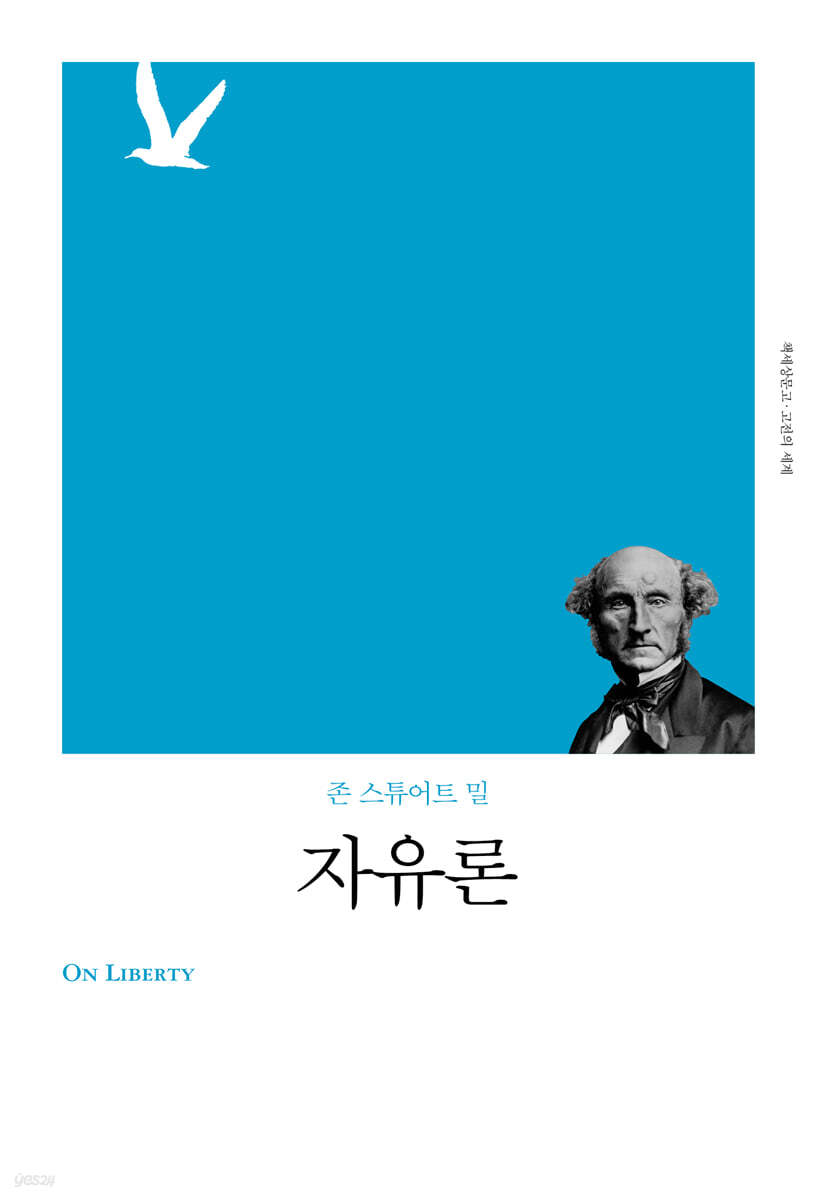
Book Introduction
A new translation of On Liberty, as close to the original text as possible, has been published!
Deep insights into democracy and freedom, individual rights and their limitations!
Examining the relationship between individual freedom and social power.
John Stuart Mill, author of On Liberty, was a British philosopher, economist, and social reformer who laid the important theoretical foundations of liberalism and individualism.
His most representative book, On Liberty, presents important theories that form the basis of modern democracy and liberalism, and is considered a must-read even today, transcending the times.
This book was translated by Professor Kim Man-kwon, a political philosopher who has studied liberalism for many years. It is a Korean translation that is most faithful to the original text and accurate. Through abundant annotations, it not only explains On Liberty but also Mill's background, political activities, and major works, allowing for a deeper understanding of Mill's theory of liberty.
In "On Liberty," John Stuart Mill emphasized the importance of individual freedom and rights and argued that government power should be limited so as not to infringe upon individual freedom.
It also had a significant influence on the foundations of modern constitutions with its profound insights into individual liberty and state power, the Harm Principle, freedom of expression, individual autonomy, democracy, and majority rule.
In particular, his claim that individuals have the right to act freely as long as they do not harm others, known as the 'harm principle', has become one of the core concepts of modern liberalism.
He also believed that a society where diverse opinions and ideas coexist could be a healthier and more progressive society.
This is because the truth is revealed through free discussion and debate.
Therefore, members of the nation have the right to freely express all thoughts and opinions.
Mill can also be said to be one of the early feminist thinkers who advocated for women's rights and equality.
In this book, he explicitly stated that women should enjoy the same legal rights and freedoms as men, which was a very revolutionary claim at the time.
In addition, he emphasized that in a democratic society, the will of the majority must be handled carefully so as not to suppress the freedom of the minority.
"On Liberty" will provide an opportunity to reconsider the true meaning of freedom in a modern world where people are still busy imposing their own views on others and often ignore minority opinions because they run counter to the majority's arguments.
Deep insights into democracy and freedom, individual rights and their limitations!
Examining the relationship between individual freedom and social power.
John Stuart Mill, author of On Liberty, was a British philosopher, economist, and social reformer who laid the important theoretical foundations of liberalism and individualism.
His most representative book, On Liberty, presents important theories that form the basis of modern democracy and liberalism, and is considered a must-read even today, transcending the times.
This book was translated by Professor Kim Man-kwon, a political philosopher who has studied liberalism for many years. It is a Korean translation that is most faithful to the original text and accurate. Through abundant annotations, it not only explains On Liberty but also Mill's background, political activities, and major works, allowing for a deeper understanding of Mill's theory of liberty.
In "On Liberty," John Stuart Mill emphasized the importance of individual freedom and rights and argued that government power should be limited so as not to infringe upon individual freedom.
It also had a significant influence on the foundations of modern constitutions with its profound insights into individual liberty and state power, the Harm Principle, freedom of expression, individual autonomy, democracy, and majority rule.
In particular, his claim that individuals have the right to act freely as long as they do not harm others, known as the 'harm principle', has become one of the core concepts of modern liberalism.
He also believed that a society where diverse opinions and ideas coexist could be a healthier and more progressive society.
This is because the truth is revealed through free discussion and debate.
Therefore, members of the nation have the right to freely express all thoughts and opinions.
Mill can also be said to be one of the early feminist thinkers who advocated for women's rights and equality.
In this book, he explicitly stated that women should enjoy the same legal rights and freedoms as men, which was a very revolutionary claim at the time.
In addition, he emphasized that in a democratic society, the will of the majority must be handled carefully so as not to suppress the freedom of the minority.
"On Liberty" will provide an opportunity to reconsider the true meaning of freedom in a modern world where people are still busy imposing their own views on others and often ignore minority opinions because they run counter to the majority's arguments.
- You can preview some of the book's contents.
Preview
index
Introduction | Kim Man-kwon
Chapter 1: Preface
Chapter 2 Freedom of Thought and Discussion
Chapter 3: Individuality - Individuality as an Element of Happiness
Chapter 4: On the limits of the authority that society can exercise over individuals
Chapter 5: Real-World Applications
Unpacking - Why Read "On Liberty" in the 21st Century? | Kim Man-kwon
main
Further reading material
About the Translator
Chapter 1: Preface
Chapter 2 Freedom of Thought and Discussion
Chapter 3: Individuality - Individuality as an Element of Happiness
Chapter 4: On the limits of the authority that society can exercise over individuals
Chapter 5: Real-World Applications
Unpacking - Why Read "On Liberty" in the 21st Century? | Kim Man-kwon
main
Further reading material
About the Translator
Detailed image

Into the book
Looking back through history, freedom and authority have been engaged in a power struggle since ancient times.
We are already familiar with this.
This was especially true in Greece, Rome, and Britain.
But in ancient times, such competition took place between the subjects or a section of the subjects and the government.
At this time, freedom meant protection against the tyranny of political rulers.
(Except for some Greek democracies) rulers were inevitably hostile to the ruled.
The ruler was usually a governing One, or a ruling tribe or class.
The authority they wield comes from inheritance and conquest.
In no case did the ruler maintain his authority for the happiness of the ruled.
--- From "Chapter 1, Preface"
So, is it too much to demand that the public, comprised of a few wise people and a majority of fools, follow this process that the wisest of humanity—those most qualified to trust their own judgment—consider essential to trusting their own judgment? No.
Even the Roman Catholic Church, considered the most intolerant church, accepts the "devil's advocate" and listens patiently to his arguments when canonizing a saint.
Even the most holy person cannot receive posthumous honors unless he examines and evaluates every claim the devil can make against him.
--- From Chapter 2, Freedom of Thought and Discussion
Nowadays, the individual is disappearing from the crowd.
It is now a cliché to say that public opinion rules the world in politics.
The only power worthy of a name is the power of the people, and the power enjoyed by governments while representing the inclinations and instincts of the people.
This is true not only in the public sphere, but also in our moral, social, and personal lives.
People whose opinions are called public opinion do not always mean the same kind of public.
In the US it refers to the entire white population, and in the UK it refers primarily to the middle class.
--- From “Chapter 3 Individuality - Individuality as an Element of Happiness”
I cannot but add, as another example of how lightly human freedom is taken, the blatant language of persecution that erupts in the press of this country whenever the astonishing phenomenon of Mormonism is mentioned.
(Omitted) Here we must note that this religion, like other more recognized religions, has had martyrs.
Their prophet and founder was killed by a mob because of his teachings, and other believers also lost their lives in unlawful violence.
They were forcibly expelled from the country where Mormonism first grew and are now relegated to a remote area in the middle of a barren desert.
Yet there are many in this country who openly advocate sending in expeditions to force these Mormons to conform to the opinions of others.
--- From “Chapter 4: On the Limits of the Authority That Society Can Exercise Over Individuals”
For this reason, it is inevitable that the government will impose taxes on some consumer goods, which are almost prohibitive for some people.
Therefore, when a government imposes taxes, it must consider which products consumers can most easily save on.
Furthermore, it is advisable to give priority to items that are clearly considered harmful when used in excess of the appropriate amount.
Therefore, taxation of stimulants to the point where it generates maximum revenue (assuming the country needs all of it) is not only permissible but should be encouraged.
--- From "Chapter 5: Application to Reality"
In short, liberty is the act of limiting the power that the government can exercise, and Mill focuses on these limitations in On Liberty.
Mill consistently argues that individuals should be allowed to exercise their abilities to the fullest, but the subject of this book is not the full exercise of individual abilities, but the public conditions that allow them to exercise those abilities to the fullest.
That public condition is the limitation of power, liberty.
We are already familiar with this.
This was especially true in Greece, Rome, and Britain.
But in ancient times, such competition took place between the subjects or a section of the subjects and the government.
At this time, freedom meant protection against the tyranny of political rulers.
(Except for some Greek democracies) rulers were inevitably hostile to the ruled.
The ruler was usually a governing One, or a ruling tribe or class.
The authority they wield comes from inheritance and conquest.
In no case did the ruler maintain his authority for the happiness of the ruled.
--- From "Chapter 1, Preface"
So, is it too much to demand that the public, comprised of a few wise people and a majority of fools, follow this process that the wisest of humanity—those most qualified to trust their own judgment—consider essential to trusting their own judgment? No.
Even the Roman Catholic Church, considered the most intolerant church, accepts the "devil's advocate" and listens patiently to his arguments when canonizing a saint.
Even the most holy person cannot receive posthumous honors unless he examines and evaluates every claim the devil can make against him.
--- From Chapter 2, Freedom of Thought and Discussion
Nowadays, the individual is disappearing from the crowd.
It is now a cliché to say that public opinion rules the world in politics.
The only power worthy of a name is the power of the people, and the power enjoyed by governments while representing the inclinations and instincts of the people.
This is true not only in the public sphere, but also in our moral, social, and personal lives.
People whose opinions are called public opinion do not always mean the same kind of public.
In the US it refers to the entire white population, and in the UK it refers primarily to the middle class.
--- From “Chapter 3 Individuality - Individuality as an Element of Happiness”
I cannot but add, as another example of how lightly human freedom is taken, the blatant language of persecution that erupts in the press of this country whenever the astonishing phenomenon of Mormonism is mentioned.
(Omitted) Here we must note that this religion, like other more recognized religions, has had martyrs.
Their prophet and founder was killed by a mob because of his teachings, and other believers also lost their lives in unlawful violence.
They were forcibly expelled from the country where Mormonism first grew and are now relegated to a remote area in the middle of a barren desert.
Yet there are many in this country who openly advocate sending in expeditions to force these Mormons to conform to the opinions of others.
--- From “Chapter 4: On the Limits of the Authority That Society Can Exercise Over Individuals”
For this reason, it is inevitable that the government will impose taxes on some consumer goods, which are almost prohibitive for some people.
Therefore, when a government imposes taxes, it must consider which products consumers can most easily save on.
Furthermore, it is advisable to give priority to items that are clearly considered harmful when used in excess of the appropriate amount.
Therefore, taxation of stimulants to the point where it generates maximum revenue (assuming the country needs all of it) is not only permissible but should be encouraged.
--- From "Chapter 5: Application to Reality"
In short, liberty is the act of limiting the power that the government can exercise, and Mill focuses on these limitations in On Liberty.
Mill consistently argues that individuals should be allowed to exercise their abilities to the fullest, but the subject of this book is not the full exercise of individual abilities, but the public conditions that allow them to exercise those abilities to the fullest.
That public condition is the limitation of power, liberty.
--- From "Release"
Publisher's Review
“Freedom presupposing direction”
A 160-year-old classic offers solutions for the modern age.
'To resonate with the soul of the reader beyond time and space'—isn't this the fundamental virtue that a classic must possess?
John Stuart Mill's "On Liberty" was published about 160 years ago.
Although it was written for readers in Europe, including England, France, and Germany, where he lived, the more you read it, the more you will notice various aspects of our society.
It feels as if Mill prepared this book for modern Korean society, Koreans, and especially Korean intellectuals.
Mill's 『On Liberty』 is full of admonitions for us living in this era.
Today, Korean society is suffering from the contradictory dual structure of 'self-confidence and distrust in democracy.'
In traditional societies, it was difficult to assert oneself.
But now it's different.
Anyone can freely express their thoughts.
The development of the Internet is acting as a catalyst for this phenomenon.
Opening one's eyes to one's political self and valuing one's own thoughts and beliefs is undoubtedly a precious soil essential for the germination of democracy.
But democracy demands one more thing.
It means that I should cherish others as much as I cherish myself.
I have to admit that I could be wrong.
We must respect the rights of others to live differently from us.
Democracy cannot develop healthily unless these conditions are met.
But the reality of our society is not like that.
As society becomes more chaotic, articles criticizing those who are self-righteous begin to appear.
But even such writings often seem to hover between stubbornness and subjectivity.
Democracy cannot take root properly in a situation where self-righteousness blames self-righteousness.
This is why everyone is dissatisfied even though we live in an era of democracy that we so desperately long for.
Since 『On Liberty』 presents a solution to this contradiction, it would be good for Koreans living in this era to read it and reflect on it carefully.
A 160-year-old classic offers solutions for the modern age.
'To resonate with the soul of the reader beyond time and space'—isn't this the fundamental virtue that a classic must possess?
John Stuart Mill's "On Liberty" was published about 160 years ago.
Although it was written for readers in Europe, including England, France, and Germany, where he lived, the more you read it, the more you will notice various aspects of our society.
It feels as if Mill prepared this book for modern Korean society, Koreans, and especially Korean intellectuals.
Mill's 『On Liberty』 is full of admonitions for us living in this era.
Today, Korean society is suffering from the contradictory dual structure of 'self-confidence and distrust in democracy.'
In traditional societies, it was difficult to assert oneself.
But now it's different.
Anyone can freely express their thoughts.
The development of the Internet is acting as a catalyst for this phenomenon.
Opening one's eyes to one's political self and valuing one's own thoughts and beliefs is undoubtedly a precious soil essential for the germination of democracy.
But democracy demands one more thing.
It means that I should cherish others as much as I cherish myself.
I have to admit that I could be wrong.
We must respect the rights of others to live differently from us.
Democracy cannot develop healthily unless these conditions are met.
But the reality of our society is not like that.
As society becomes more chaotic, articles criticizing those who are self-righteous begin to appear.
But even such writings often seem to hover between stubbornness and subjectivity.
Democracy cannot take root properly in a situation where self-righteousness blames self-righteousness.
This is why everyone is dissatisfied even though we live in an era of democracy that we so desperately long for.
Since 『On Liberty』 presents a solution to this contradiction, it would be good for Koreans living in this era to read it and reflect on it carefully.
GOODS SPECIFICS
- Date of issue: March 10, 2025
- Page count, weight, size: 284 pages | 300g | 128*188*17mm
- ISBN13: 9791171311606
- ISBN10: 1171311605
You may also like
카테고리
korean


korean

![GQ KOREA Mark (Monthly): December [2025]](http://librairie.coreenne.fr/cdn/shop/files/8ef265dbbfbf186523ed75ba7319009d.jpg?v=1765340328&width=3840)


