

Self-esteem class
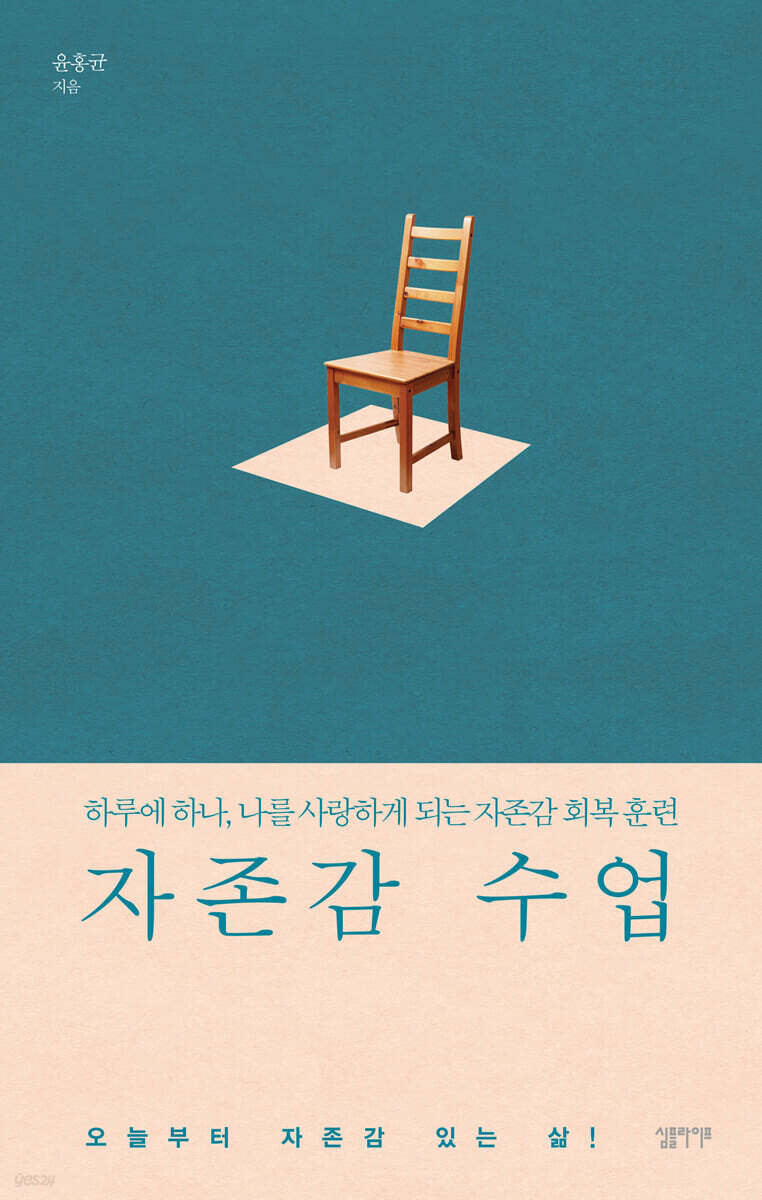 |
Description
Book Introduction
A book recommended to people who still have low self-esteem no matter how many psychology books they read!
Psychiatrist Yoon Dap-jang's self-esteem self-coaching method
This book, written over two years by Dr. Hong-Kyun Yoon, a self-esteem expert and psychiatrist, kindly explains the impact self-esteem has on our lives and offers practical methods for raising self-esteem.
We help people who want to have high self-esteem but don't know how, and who are experiencing inner discord and conflict due to low self-esteem, to restore healthy self-esteem.
This book will be of great help to those who are always struggling with a sense of deficiency despite being eager to learn something whenever they have time, those who are overflowing with humility and consideration and have low self-esteem, those who are easily hurt by small words, those who are afraid of the other person's reaction and are wary of what others think, those who find the process of love and breakup especially difficult, those who are confused about what they really want and pour their energy into the wrong places, those who easily run out of energy fighting their emotions, and those who ultimately live their lives unable to love themselves because they hate this kind of appearance.
The author, who is famous as the ‘Yoondapjang’ teacher through various columns and broadcasts, confessed, “I too have been seized by the feeling of falling behind, the desire to give up, and the impulse to lose hope by becoming addicted.” He published this book with the hope that more people, like him, will regain their self-esteem and live healthy lives.
The author likens the process of restoring self-esteem to riding a bicycle.
“We are destined to live centered on our self-esteem, but self-esteem moves like a bicycle without rest.
This book teaches you how to ride the bicycle of self-esteem, how to ride for a long time without falling, how to fall safely, and what protective gear to wear.” “While riding a bicycle, we will definitely fall once or twice.
It's the same principle that even people who have been learning to ride a bike for over 30 years still fall and break things sometimes.
But those who know how to get back on the bike and heal their wounds are no longer afraid of the bike.
Rather, you will want to ride it often, use it fondly, and enjoy it.”
Psychiatrist Yoon Dap-jang's self-esteem self-coaching method
This book, written over two years by Dr. Hong-Kyun Yoon, a self-esteem expert and psychiatrist, kindly explains the impact self-esteem has on our lives and offers practical methods for raising self-esteem.
We help people who want to have high self-esteem but don't know how, and who are experiencing inner discord and conflict due to low self-esteem, to restore healthy self-esteem.
This book will be of great help to those who are always struggling with a sense of deficiency despite being eager to learn something whenever they have time, those who are overflowing with humility and consideration and have low self-esteem, those who are easily hurt by small words, those who are afraid of the other person's reaction and are wary of what others think, those who find the process of love and breakup especially difficult, those who are confused about what they really want and pour their energy into the wrong places, those who easily run out of energy fighting their emotions, and those who ultimately live their lives unable to love themselves because they hate this kind of appearance.
The author, who is famous as the ‘Yoondapjang’ teacher through various columns and broadcasts, confessed, “I too have been seized by the feeling of falling behind, the desire to give up, and the impulse to lose hope by becoming addicted.” He published this book with the hope that more people, like him, will regain their self-esteem and live healthy lives.
The author likens the process of restoring self-esteem to riding a bicycle.
“We are destined to live centered on our self-esteem, but self-esteem moves like a bicycle without rest.
This book teaches you how to ride the bicycle of self-esteem, how to ride for a long time without falling, how to fall safely, and what protective gear to wear.” “While riding a bicycle, we will definitely fall once or twice.
It's the same principle that even people who have been learning to ride a bike for over 30 years still fall and break things sometimes.
But those who know how to get back on the bike and heal their wounds are no longer afraid of the bike.
Rather, you will want to ride it often, use it fondly, and enjoy it.”
- You can preview some of the book's contents.
Preview
index
Prologue The problem is self-esteem
Part 1: Why Self-Esteem Matters
1. The Three Axes of Self-Esteem
2 Misconceptions and Prejudices About Self-Esteem
3 Why Self-Esteem Matters Now
Part 2: Self-Esteem Revealed in Love Patterns
1 People who doubt their worthiness to be loved
2. A person who denies his own worth
3. Love that constantly asks and confirms
4 Relationships that can't be broken even when fighting
5 A love that cannot leave because it is afraid of separation
6. A person who covers himself up for fear of being hated
Chapter 2: It's Not Love's Fault, It's Not My Fault
Part 3: Self-esteem influences interpersonal relationships.
1 How much recognition do I receive?
2 There are jobs that lower your self-esteem.
3 How Useful Am I?
4 People with decision paralysis
5 Reasons Why Your Self-Esteem Remains the Same No Matter How Many Psychology Books You Read
6 I am a person who thinks I am special
7 The psychology of a person who is observant
8 People who are overly dependent
Chapter 3: A Good Distance Protects Me
Part 4: Emotions that interfere with self-esteem
1 Why are emotions so difficult to control?
2 Things to Distinguish for Emotion Regulation
3. Dealing with Difficult Emotions: Embarrassment, Emptiness, and Ambivalence
4. Dealing with Hot Emotions: Self-Loathing, Guilt, Self-Pity, Narcissism
5 Dealing with Cold Emotions: Disappointment, Disregard, Cynicality, and Indifference
Concluding Chapter 4: Harnessing the Energy of Emotions
Part 5: Mental Habits to Let Go of to Restore Self-Esteem
1. The habit of getting frustrated in advance
2. Lethargy
3 Inferiority complex
4 Procrastination and Avoidance
5 Sensitivity
Concluding Chapter 5: Accept, Desire, and Persevere
Part 6: Things to Overcome to Restore Self-Esteem
1 Overcoming the Wound
2 Overcoming Resistance
3 Overcoming Blame
4 Overcoming the Vicious Cycle
Part 7 Five Practices to Boost Self-Esteem
1. Decide to love yourself blindly
2. Love yourself
3 Choose and decide for yourself
4 Focus on the 'here and now'
5. Breaking Through Defeatism and Moving Forward
Epilogue You are the king of the jungle
Part 1: Why Self-Esteem Matters
1. The Three Axes of Self-Esteem
2 Misconceptions and Prejudices About Self-Esteem
3 Why Self-Esteem Matters Now
Part 2: Self-Esteem Revealed in Love Patterns
1 People who doubt their worthiness to be loved
2. A person who denies his own worth
3. Love that constantly asks and confirms
4 Relationships that can't be broken even when fighting
5 A love that cannot leave because it is afraid of separation
6. A person who covers himself up for fear of being hated
Chapter 2: It's Not Love's Fault, It's Not My Fault
Part 3: Self-esteem influences interpersonal relationships.
1 How much recognition do I receive?
2 There are jobs that lower your self-esteem.
3 How Useful Am I?
4 People with decision paralysis
5 Reasons Why Your Self-Esteem Remains the Same No Matter How Many Psychology Books You Read
6 I am a person who thinks I am special
7 The psychology of a person who is observant
8 People who are overly dependent
Chapter 3: A Good Distance Protects Me
Part 4: Emotions that interfere with self-esteem
1 Why are emotions so difficult to control?
2 Things to Distinguish for Emotion Regulation
3. Dealing with Difficult Emotions: Embarrassment, Emptiness, and Ambivalence
4. Dealing with Hot Emotions: Self-Loathing, Guilt, Self-Pity, Narcissism
5 Dealing with Cold Emotions: Disappointment, Disregard, Cynicality, and Indifference
Concluding Chapter 4: Harnessing the Energy of Emotions
Part 5: Mental Habits to Let Go of to Restore Self-Esteem
1. The habit of getting frustrated in advance
2. Lethargy
3 Inferiority complex
4 Procrastination and Avoidance
5 Sensitivity
Concluding Chapter 5: Accept, Desire, and Persevere
Part 6: Things to Overcome to Restore Self-Esteem
1 Overcoming the Wound
2 Overcoming Resistance
3 Overcoming Blame
4 Overcoming the Vicious Cycle
Part 7 Five Practices to Boost Self-Esteem
1. Decide to love yourself blindly
2. Love yourself
3 Choose and decide for yourself
4 Focus on the 'here and now'
5. Breaking Through Defeatism and Moving Forward
Epilogue You are the king of the jungle
Detailed image

Into the book
Many professions have their self-esteem affected by their circumstances at work.
The situation is even more dire for people working in occupations where self-esteem is vulnerable.
One thing you should never forget at this time is that the workplace is not a romantic place.
Work is a tough place.
So they give you a salary.
It is also given regularly on a set date.
Otherwise, there would be no one left.
(Omitted) To put it bluntly, our workplaces take advantage of us, make us suffer, and make us angry.
So the workplace feels sorry for us.
They say they did something wrong and give you a settlement amount once a month.
A salary is a consolation money that means, "I'll pay you this much, so please bear with me" or "I used up this much of your time, so take this in return."
Dreams, growth, self-actualization, and a family-like atmosphere are all illusions created by the bosses.
Work is just a place where you are constantly ordered to do work, given a pittance in return, and put on a show.
So please don't let your self-esteem be tested at work.
--- From the text
I wish Korean workers would more clearly distinguish between work, career, and dreams.
You may be satisfied with your job but dissatisfied with the place you work.
Conversely, your current job may be good, but your job may not be that great.
But work and life must be separated.
Work is not our whole life.
Just because you don't like your job doesn't mean you should be dissatisfied with your current life.
We live not for going to work, but for life after work.
Life after work is also a life, and weekends are important too.
Work is work.
We attach too much meaning to our jobs.
Sometimes you just need to get away from work and completely clear your head.
The situation is even more dire for people working in occupations where self-esteem is vulnerable.
One thing you should never forget at this time is that the workplace is not a romantic place.
Work is a tough place.
So they give you a salary.
It is also given regularly on a set date.
Otherwise, there would be no one left.
(Omitted) To put it bluntly, our workplaces take advantage of us, make us suffer, and make us angry.
So the workplace feels sorry for us.
They say they did something wrong and give you a settlement amount once a month.
A salary is a consolation money that means, "I'll pay you this much, so please bear with me" or "I used up this much of your time, so take this in return."
Dreams, growth, self-actualization, and a family-like atmosphere are all illusions created by the bosses.
Work is just a place where you are constantly ordered to do work, given a pittance in return, and put on a show.
So please don't let your self-esteem be tested at work.
--- From the text
I wish Korean workers would more clearly distinguish between work, career, and dreams.
You may be satisfied with your job but dissatisfied with the place you work.
Conversely, your current job may be good, but your job may not be that great.
But work and life must be separated.
Work is not our whole life.
Just because you don't like your job doesn't mean you should be dissatisfied with your current life.
We live not for going to work, but for life after work.
Life after work is also a life, and weekends are important too.
Work is work.
We attach too much meaning to our jobs.
Sometimes you just need to get away from work and completely clear your head.
--- From the text
Publisher's Review
Self-Esteem Class
Is your self-esteem safe now?
If you keep feeling anxious and small, it's time to check your self-esteem.
If you are now
If you are easily tired, lethargic, and repeatedly depressed over small things...
If you frequently fight with your loved one, get hurt, and feel regret and self-reproach...
If you keep seeing someone you shouldn't be seeing because you're afraid of breaking up...
If you have a habit of giving up and avoiding things before you even start...
If you feel wronged for living honestly and honestly...
If you often hold back your inner thoughts out of concern for others' opinions, and then regret it later...
If you're wasting time worrying about even the smallest decisions...
Right now is the time to check your self-esteem.
Self-esteem is not a panacea.
However, to live a satisfying life, above-average self-esteem is absolutely necessary.
Especially, if you are someone who thinks, ‘I want to love myself,’ ‘I want to be confident,’ and ‘I want to live as the master of my life,’ you should definitely check your self-esteem at least once.
A book recommended to people who still have low self-esteem no matter how many psychology books they read!
Psychiatrist Yoon Dap-jang's self-esteem self-coaching method
This book, written over two years by Dr. Hong-Kyun Yoon, a self-esteem expert and psychiatrist, kindly explains the impact self-esteem has on our lives and provides practical methods to improve self-esteem.
We help people who want to have high self-esteem but don't know how, and who are experiencing inner discord and conflict due to low self-esteem, to restore healthy self-esteem.
The author's honest experience and counseling cases of wandering due to low self-esteem are combined with a delicate yet cool-headed interpretation, earning the reputation of being "highly dense content that combines popularity and expertise."
The author, who is already a doctor recognized through various columns and broadcasts and is famous as a kind ‘Yoon Dap Jang’ teacher, said, “There was a time when my self-esteem hit rock bottom.
“I often felt like I was falling behind, wanted to give up, and was overcome by the urge to give up hope by becoming addicted,” he confesses.
And he published this book with the hope that more people, like himself, would regain their self-esteem and live healthy lives.
Everyone knows that self-esteem is important, but when asked how to actually increase it, few books provide a clear answer.
In that respect, this book is noteworthy in that it presents step-by-step 'practices and actions that actually increase self-esteem.'
For those who worry that their self-esteem will not change no matter how many psychology books they read, what they need most is a practical method to raise their self-esteem.
In the same vein, it's easy to say things like "love yourself," "have confidence," and "believe in yourself," but repeating "love yourself" hundreds of times doesn't automatically lead to self-love.
Because our gaze, mind, emotions, and actions toward ourselves are closely connected to our self-esteem.
Therefore, when self-esteem increases, it affects emotions, thoughts, and behaviors, which naturally leads to increased confidence, self-love, and life satisfaction.
A self-esteem class that restores self-esteem damaged by work, people, love, and relationships.
A book that teaches you how to protect and love yourself
This book actively helps people with low self-esteem break free from the oppression, anxiety, and emotional contradictions they often experience.
It also asks the question, 'How much effort have I put into loving myself?' to those of us who spend a lot of time and energy trying to understand others but are stingy when it comes to understanding and loving ourselves.
The author first covers work (work life), people, love, and relationships, which are directly affected by self-esteem, in two to three chapters.
It analyzes the relationship between love patterns and self-esteem, such as ‘a person who doubts their eligibility to be loved’, ‘a love that constantly asks and confirms’, ‘a love that cannot leave because it is afraid of separation’, and ‘a love that packages itself for fear of being hated’, and also examines the influence and ways in which self-esteem affects human relationships.
The sharp analysis and case studies that make you nod your head are impressive, but the underlined words that pour out on every page and the psychiatrist's characteristically cool and decisive tone resonate deeply.
In particular, the author spares no effort in offering advice to those whose self-esteem is damaged in vulnerable environments, such as contract/non-regular workers, working moms, stay-at-home moms, emotional laborers, office workers who are watching their colleagues resign, and students/job seekers.
For those who cannot change their reality, it offers practical ways to maintain and restore self-esteem in their current circumstances.
For example, if you are an office worker, I recommend that you protect your self-esteem by clearly distinguishing between job satisfaction, career satisfaction, and self-satisfaction.
The book calmly comforts and soothes hearts that have been hurt and broken by love and people at work and at home, and encourages people to build their own self-esteem.
A unique training method created by experts
A self-esteem user manual that will naturally boost your self-esteem if you follow it.
To the question, “Can self-esteem really increase?” this book answers, “It definitely does.”
The author likens the process of restoring self-esteem to riding a bicycle.
“We are destined to live centered on our self-esteem, but self-esteem moves like a bicycle without rest.
This book teaches you how to ride the bicycle of self-esteem, how to ride for a long time without falling, how to fall safely, and what protective gear to wear.” “While riding a bicycle, we will definitely fall once or twice.
It's the same principle that even people who have been learning to ride a bike for over 30 years still fall and break things sometimes.
But those who know how to get back on the bike and heal their wounds are no longer afraid of the bike.
Rather, you will want to ride it often, use it often, and enjoy it,” he says.
This self-esteem training method, born from these thoughts and long considerations, is simple enough for anyone to follow, but by no means light, and is surprisingly effective.
For example, for those who are feeling listless, there is a command to “close the book right now and start walking,” and for sensitive people, there is a command to “recite the ‘What is that!’ spell,” and for those who are sensitive, there is a method to “write a diary that says it’s okay,” “choose a gift for yourself,” “write an ‘emotional diary’ that ends with an exclamation,” “pray to ‘fall in love’ with a loved one,” “make a plan to break up with bad habits,” “apologize to yourself,” “stop thinking about work after work,” “find out behaviors that affect your emotional temperature,” “say, “What I’m afraid of is…”,” “with the spirit of ‘that’s just how life is’,” and “think about my core emotions.” These exciting methods are introduced step by step throughout the book.
What's really impressive about this training is that the author is able to see into the normal psychological state of people with low self-esteem and even understand and persuade them of the resistance and discomfort they feel.
For example, when suggesting “Choosing a Gift for Myself,” the author anticipates that people with low self-esteem will feel, “What qualifies me to receive a gift?” and “Will this really make me love myself?” By empathizing with and touching upon this, the author leads the reader to let go of their psychological resistance and take action.
This is one of the reasons why I feel so much trust and comfort while reading books.
By following the 24 training exercises presented at each stage in this way, readers will naturally be able to free themselves from the judgments and gaze of others and focus entirely on their own will, judgment, and actions.
If you stay with us until the last class, you'll find yourself armed with a completely different perspective and self-esteem than before you started reading the book.
Is low self-esteem due to parents? Do children who receive a lot of praise have high self-esteem?
Misplaced praise only fosters emptiness, and self-esteem doesn't come from parents.
Misconceptions and biases about self-esteem that we often misunderstand
The author points out that as the importance of self-esteem has been highlighted, misunderstandings and prejudices about self-esteem have also increased, and that the meaning and value of self-esteem should not be minimized or exaggerated beyond necessity.
The most widespread error among them is the idea that “I have low self-esteem because I received less love from my parents.”
The author argues that this is not true, and even if it were true, he worries that obsessing over parents will only increase discord within the family, rather than help recovery.
Also, the ideas that “If you don’t get enough praise, your self-esteem will drop,” “If you just restore your self-esteem, you’ll be happy,” and “If you have strong self-esteem, you become a narcissist” are errors caused by information overload and generalization, and are refuted and corrected point by point.
For example, incorrect praise can actually increase feelings of emptiness and stimulate feelings of inferiority by creating fantasies and cravings for praise.
On the other hand, it is argued that people who have successfully restored their self-esteem are not narcissists, but rather people who acknowledge and accept their flaws.
Self-loathing, guilt, helplessness, inferiority complex, shame, anger, sadness, depression, anxiety, etc.
An "Emotions User Manual" that helps you manage the core emotions you frequently experience.
Another strength of this book is that it teaches you how to understand and use your emotions by focusing on the emotions that people with low self-esteem often feel.
There are other emotions that people with low self-esteem often fall into, such as self-loathing, guilt, helplessness, inferiority complex, regret, anxiety, depression, emptiness, and ambivalence.
The author shows us how to not be overwhelmed by these emotions when they arise, but rather how to use our emotional energy to benefit others and ourselves.
In particular, it helps you find the 'core emotions' you feel most often and break out of the vicious cycle of emotions.
In short, it can be said to be an 'emotional instruction manual' that people with low self-esteem can keep by their side and use.
The author narrates this entire process with a cool yet warm attitude, encouraging the reader to not reject or avoid their emotions.
This emotional training will help you feel more relaxed, more positive, and more able to draw clear lines between yourself and others.
Balanced self-love and confidence are a bonus.
In an age of anxiety and anger, competition and comparison,
How can I protect my vulnerable self-esteem?
We live in the most stressful conditions, with horrific, major accidents occurring every day, and the entire country divided into factions fighting over hatred and anger.
Even on social media, where I have sought solace, I feel a surge of criticism, and although I share my every move in real time and call myself a neighbor, I also feel a sense of deprivation and loneliness, knowing that no one is truly on my side.
This kind of environment is dangerous because it can even cause a healthy self-esteem to drop.
Not only that.
Ironically, the work life that constantly exhausts the individual, the social structure that makes it impossible to find a job, and the social network that does not guarantee safety all stimulate guilt in those who want to live good and honest lives, lowering their self-esteem.
Even people with healthy self-esteem are exposed to an environment that inevitably takes a toll.
It is no exaggeration to say that the entire Republic of Korea is now facing a total 'self-esteem crisis'.
The author says that in these times of loneliness, isolation, and danger, it is important for each person to arm themselves with high self-esteem.
Even if someone attacks me, or I make mistakes or fail, I need to have a solid foundation of self-esteem to remain unshaken and not lose hope and will to live.
High self-esteem can be a minimal safety net and weapon, especially in these precarious times.
Start living with self-esteem today!
A cheering song for kind and honest people, a powerful bandage for the heart.
High self-esteem doesn't solve all your problems.
However, for those who want to improve their self-esteem and quality of life, this book offers a refreshing feeling, as if solving an old problem.
Another great attraction is that the balanced perspective and engaging sentences make you read it all in one sitting.
This book is for people who are always learning and working hard whenever they have time, but always suffer from a sense of deficiency, people who are so humble and considerate that their self-esteem has dropped, people who are easily hurt by small words, people who are afraid of the other person's reaction and cannot be honest and regret it later, people who find the process of love and breakup especially difficult, people who are confused about what they really want and pour their energy into the wrong places, people who easily run out of energy fighting their emotions, and people who live their lives unable to love themselves because they hate themselves like this.
Nevertheless, it is a passionate encouragement song and practical guide for those who do not give in to the situation and try to move forward.
It will also serve as a powerful bandage for those who want to live as the masters of their own lives, free from the gaze of others.
It's like a band-aid that slowly heals wounds and forms calluses that never grow back.
It is also recommended reading for parents and educators who are curious about how self-esteem affects the fate of individuals, families, and children.
Self-esteem, it's not too late to start now.
Is your self-esteem safe now?
If you keep feeling anxious and small, it's time to check your self-esteem.
If you are now
If you are easily tired, lethargic, and repeatedly depressed over small things...
If you frequently fight with your loved one, get hurt, and feel regret and self-reproach...
If you keep seeing someone you shouldn't be seeing because you're afraid of breaking up...
If you have a habit of giving up and avoiding things before you even start...
If you feel wronged for living honestly and honestly...
If you often hold back your inner thoughts out of concern for others' opinions, and then regret it later...
If you're wasting time worrying about even the smallest decisions...
Right now is the time to check your self-esteem.
Self-esteem is not a panacea.
However, to live a satisfying life, above-average self-esteem is absolutely necessary.
Especially, if you are someone who thinks, ‘I want to love myself,’ ‘I want to be confident,’ and ‘I want to live as the master of my life,’ you should definitely check your self-esteem at least once.
A book recommended to people who still have low self-esteem no matter how many psychology books they read!
Psychiatrist Yoon Dap-jang's self-esteem self-coaching method
This book, written over two years by Dr. Hong-Kyun Yoon, a self-esteem expert and psychiatrist, kindly explains the impact self-esteem has on our lives and provides practical methods to improve self-esteem.
We help people who want to have high self-esteem but don't know how, and who are experiencing inner discord and conflict due to low self-esteem, to restore healthy self-esteem.
The author's honest experience and counseling cases of wandering due to low self-esteem are combined with a delicate yet cool-headed interpretation, earning the reputation of being "highly dense content that combines popularity and expertise."
The author, who is already a doctor recognized through various columns and broadcasts and is famous as a kind ‘Yoon Dap Jang’ teacher, said, “There was a time when my self-esteem hit rock bottom.
“I often felt like I was falling behind, wanted to give up, and was overcome by the urge to give up hope by becoming addicted,” he confesses.
And he published this book with the hope that more people, like himself, would regain their self-esteem and live healthy lives.
Everyone knows that self-esteem is important, but when asked how to actually increase it, few books provide a clear answer.
In that respect, this book is noteworthy in that it presents step-by-step 'practices and actions that actually increase self-esteem.'
For those who worry that their self-esteem will not change no matter how many psychology books they read, what they need most is a practical method to raise their self-esteem.
In the same vein, it's easy to say things like "love yourself," "have confidence," and "believe in yourself," but repeating "love yourself" hundreds of times doesn't automatically lead to self-love.
Because our gaze, mind, emotions, and actions toward ourselves are closely connected to our self-esteem.
Therefore, when self-esteem increases, it affects emotions, thoughts, and behaviors, which naturally leads to increased confidence, self-love, and life satisfaction.
A self-esteem class that restores self-esteem damaged by work, people, love, and relationships.
A book that teaches you how to protect and love yourself
This book actively helps people with low self-esteem break free from the oppression, anxiety, and emotional contradictions they often experience.
It also asks the question, 'How much effort have I put into loving myself?' to those of us who spend a lot of time and energy trying to understand others but are stingy when it comes to understanding and loving ourselves.
The author first covers work (work life), people, love, and relationships, which are directly affected by self-esteem, in two to three chapters.
It analyzes the relationship between love patterns and self-esteem, such as ‘a person who doubts their eligibility to be loved’, ‘a love that constantly asks and confirms’, ‘a love that cannot leave because it is afraid of separation’, and ‘a love that packages itself for fear of being hated’, and also examines the influence and ways in which self-esteem affects human relationships.
The sharp analysis and case studies that make you nod your head are impressive, but the underlined words that pour out on every page and the psychiatrist's characteristically cool and decisive tone resonate deeply.
In particular, the author spares no effort in offering advice to those whose self-esteem is damaged in vulnerable environments, such as contract/non-regular workers, working moms, stay-at-home moms, emotional laborers, office workers who are watching their colleagues resign, and students/job seekers.
For those who cannot change their reality, it offers practical ways to maintain and restore self-esteem in their current circumstances.
For example, if you are an office worker, I recommend that you protect your self-esteem by clearly distinguishing between job satisfaction, career satisfaction, and self-satisfaction.
The book calmly comforts and soothes hearts that have been hurt and broken by love and people at work and at home, and encourages people to build their own self-esteem.
A unique training method created by experts
A self-esteem user manual that will naturally boost your self-esteem if you follow it.
To the question, “Can self-esteem really increase?” this book answers, “It definitely does.”
The author likens the process of restoring self-esteem to riding a bicycle.
“We are destined to live centered on our self-esteem, but self-esteem moves like a bicycle without rest.
This book teaches you how to ride the bicycle of self-esteem, how to ride for a long time without falling, how to fall safely, and what protective gear to wear.” “While riding a bicycle, we will definitely fall once or twice.
It's the same principle that even people who have been learning to ride a bike for over 30 years still fall and break things sometimes.
But those who know how to get back on the bike and heal their wounds are no longer afraid of the bike.
Rather, you will want to ride it often, use it often, and enjoy it,” he says.
This self-esteem training method, born from these thoughts and long considerations, is simple enough for anyone to follow, but by no means light, and is surprisingly effective.
For example, for those who are feeling listless, there is a command to “close the book right now and start walking,” and for sensitive people, there is a command to “recite the ‘What is that!’ spell,” and for those who are sensitive, there is a method to “write a diary that says it’s okay,” “choose a gift for yourself,” “write an ‘emotional diary’ that ends with an exclamation,” “pray to ‘fall in love’ with a loved one,” “make a plan to break up with bad habits,” “apologize to yourself,” “stop thinking about work after work,” “find out behaviors that affect your emotional temperature,” “say, “What I’m afraid of is…”,” “with the spirit of ‘that’s just how life is’,” and “think about my core emotions.” These exciting methods are introduced step by step throughout the book.
What's really impressive about this training is that the author is able to see into the normal psychological state of people with low self-esteem and even understand and persuade them of the resistance and discomfort they feel.
For example, when suggesting “Choosing a Gift for Myself,” the author anticipates that people with low self-esteem will feel, “What qualifies me to receive a gift?” and “Will this really make me love myself?” By empathizing with and touching upon this, the author leads the reader to let go of their psychological resistance and take action.
This is one of the reasons why I feel so much trust and comfort while reading books.
By following the 24 training exercises presented at each stage in this way, readers will naturally be able to free themselves from the judgments and gaze of others and focus entirely on their own will, judgment, and actions.
If you stay with us until the last class, you'll find yourself armed with a completely different perspective and self-esteem than before you started reading the book.
Is low self-esteem due to parents? Do children who receive a lot of praise have high self-esteem?
Misplaced praise only fosters emptiness, and self-esteem doesn't come from parents.
Misconceptions and biases about self-esteem that we often misunderstand
The author points out that as the importance of self-esteem has been highlighted, misunderstandings and prejudices about self-esteem have also increased, and that the meaning and value of self-esteem should not be minimized or exaggerated beyond necessity.
The most widespread error among them is the idea that “I have low self-esteem because I received less love from my parents.”
The author argues that this is not true, and even if it were true, he worries that obsessing over parents will only increase discord within the family, rather than help recovery.
Also, the ideas that “If you don’t get enough praise, your self-esteem will drop,” “If you just restore your self-esteem, you’ll be happy,” and “If you have strong self-esteem, you become a narcissist” are errors caused by information overload and generalization, and are refuted and corrected point by point.
For example, incorrect praise can actually increase feelings of emptiness and stimulate feelings of inferiority by creating fantasies and cravings for praise.
On the other hand, it is argued that people who have successfully restored their self-esteem are not narcissists, but rather people who acknowledge and accept their flaws.
Self-loathing, guilt, helplessness, inferiority complex, shame, anger, sadness, depression, anxiety, etc.
An "Emotions User Manual" that helps you manage the core emotions you frequently experience.
Another strength of this book is that it teaches you how to understand and use your emotions by focusing on the emotions that people with low self-esteem often feel.
There are other emotions that people with low self-esteem often fall into, such as self-loathing, guilt, helplessness, inferiority complex, regret, anxiety, depression, emptiness, and ambivalence.
The author shows us how to not be overwhelmed by these emotions when they arise, but rather how to use our emotional energy to benefit others and ourselves.
In particular, it helps you find the 'core emotions' you feel most often and break out of the vicious cycle of emotions.
In short, it can be said to be an 'emotional instruction manual' that people with low self-esteem can keep by their side and use.
The author narrates this entire process with a cool yet warm attitude, encouraging the reader to not reject or avoid their emotions.
This emotional training will help you feel more relaxed, more positive, and more able to draw clear lines between yourself and others.
Balanced self-love and confidence are a bonus.
In an age of anxiety and anger, competition and comparison,
How can I protect my vulnerable self-esteem?
We live in the most stressful conditions, with horrific, major accidents occurring every day, and the entire country divided into factions fighting over hatred and anger.
Even on social media, where I have sought solace, I feel a surge of criticism, and although I share my every move in real time and call myself a neighbor, I also feel a sense of deprivation and loneliness, knowing that no one is truly on my side.
This kind of environment is dangerous because it can even cause a healthy self-esteem to drop.
Not only that.
Ironically, the work life that constantly exhausts the individual, the social structure that makes it impossible to find a job, and the social network that does not guarantee safety all stimulate guilt in those who want to live good and honest lives, lowering their self-esteem.
Even people with healthy self-esteem are exposed to an environment that inevitably takes a toll.
It is no exaggeration to say that the entire Republic of Korea is now facing a total 'self-esteem crisis'.
The author says that in these times of loneliness, isolation, and danger, it is important for each person to arm themselves with high self-esteem.
Even if someone attacks me, or I make mistakes or fail, I need to have a solid foundation of self-esteem to remain unshaken and not lose hope and will to live.
High self-esteem can be a minimal safety net and weapon, especially in these precarious times.
Start living with self-esteem today!
A cheering song for kind and honest people, a powerful bandage for the heart.
High self-esteem doesn't solve all your problems.
However, for those who want to improve their self-esteem and quality of life, this book offers a refreshing feeling, as if solving an old problem.
Another great attraction is that the balanced perspective and engaging sentences make you read it all in one sitting.
This book is for people who are always learning and working hard whenever they have time, but always suffer from a sense of deficiency, people who are so humble and considerate that their self-esteem has dropped, people who are easily hurt by small words, people who are afraid of the other person's reaction and cannot be honest and regret it later, people who find the process of love and breakup especially difficult, people who are confused about what they really want and pour their energy into the wrong places, people who easily run out of energy fighting their emotions, and people who live their lives unable to love themselves because they hate themselves like this.
Nevertheless, it is a passionate encouragement song and practical guide for those who do not give in to the situation and try to move forward.
It will also serve as a powerful bandage for those who want to live as the masters of their own lives, free from the gaze of others.
It's like a band-aid that slowly heals wounds and forms calluses that never grow back.
It is also recommended reading for parents and educators who are curious about how self-esteem affects the fate of individuals, families, and children.
Self-esteem, it's not too late to start now.
GOODS SPECIFICS
- Date of issue: August 25, 2016
- Page count, weight, size: 304 pages | 506g | 143*225*30mm
- ISBN13: 9791186757093
- ISBN10: 1186757094
You may also like
카테고리
korean


korean

![GQ KOREA Mark (Monthly): December [2025]](http://librairie.coreenne.fr/cdn/shop/files/8ef265dbbfbf186523ed75ba7319009d.jpg?v=1765340328&width=3840)


