

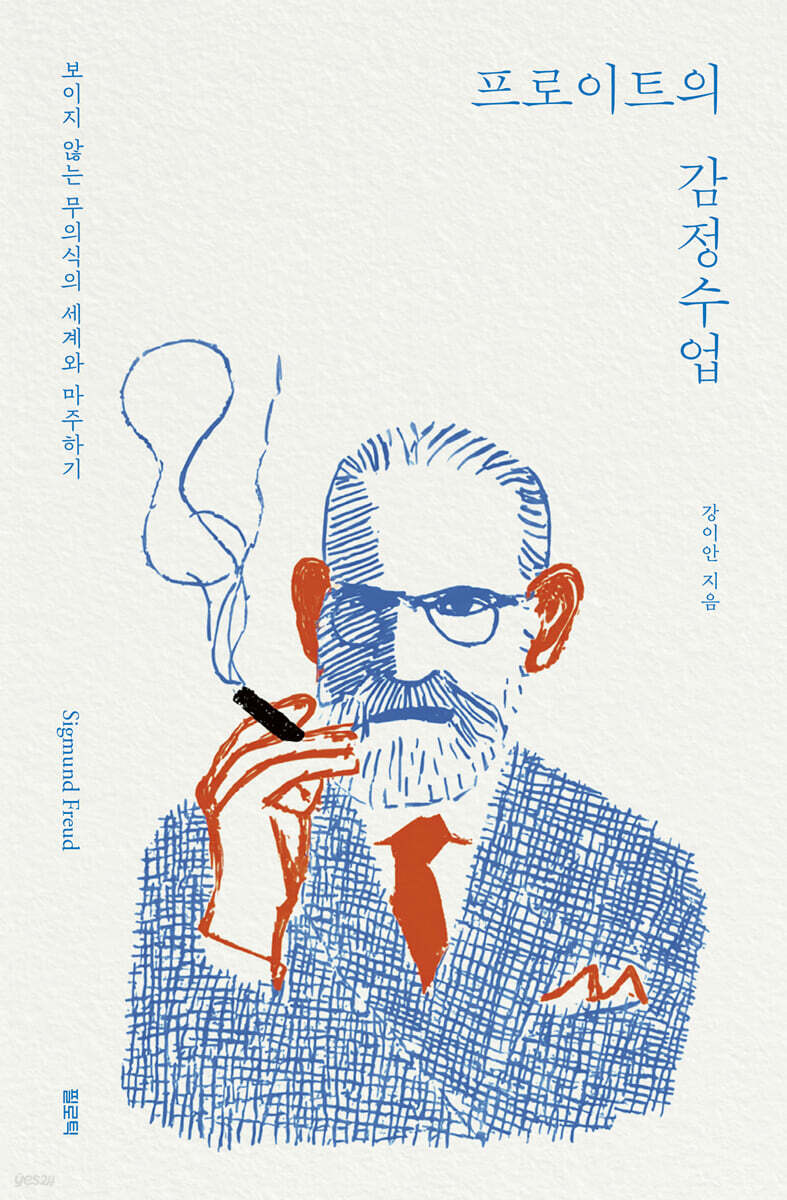
Freud's Emotional Education
 |
Description
Book Introduction
★★★ Essential liberal arts taught for 100 years at Harvard, Oxford, and Seoul National University ★★★
★★★ The easiest-to-read book on Freud's psychological philosophy ★★★
We are often swept up in a storm of emotions.
We get angry and regret, we love and get hurt, and we run away in anxiety.
Freud says:
“All emotions are created by the unconscious, not the conscious.” Freud’s Emotions Lessons reveals the unconscious laws that drive emotions in 54 everyday scenes we encounter.
Why does wounded self-esteem turn into anger, deficient love into obsession, and hidden guilt into anxiety? The invisible structure of the mind determines all these currents.
Part 2 depicts the moments in which Freud's life and ideas were born in a novel-like, captivating way.
Following the dramatic journey of how a genius and eccentric man discovered the revolutionary concept of the "unconscious," we will go beyond understanding emotions and gain a new perspective on the history of the human mind.
The moment you realize the root of your emotions, your life changes.
Emotions are no longer storms, but winds that I can direct.
“Are you someone who is swayed by your emotions, or are you someone who directs your emotions?”
★★★ The easiest-to-read book on Freud's psychological philosophy ★★★
We are often swept up in a storm of emotions.
We get angry and regret, we love and get hurt, and we run away in anxiety.
Freud says:
“All emotions are created by the unconscious, not the conscious.” Freud’s Emotions Lessons reveals the unconscious laws that drive emotions in 54 everyday scenes we encounter.
Why does wounded self-esteem turn into anger, deficient love into obsession, and hidden guilt into anxiety? The invisible structure of the mind determines all these currents.
Part 2 depicts the moments in which Freud's life and ideas were born in a novel-like, captivating way.
Following the dramatic journey of how a genius and eccentric man discovered the revolutionary concept of the "unconscious," we will go beyond understanding emotions and gain a new perspective on the history of the human mind.
The moment you realize the root of your emotions, your life changes.
Emotions are no longer storms, but winds that I can direct.
“Are you someone who is swayed by your emotions, or are you someone who directs your emotions?”
- You can preview some of the book's contents.
Preview
index
Prologue: Time to meet the stranger within me
Introduction: The most honest journey to understand myself
Part 1.
Freud's Emotions Class
Chapter 1 | The Invisible Hand That Controls Me: The Unconscious and the Structure of the Mind
1 / The Invisible Master of My Mind | The Unconscious
2 / Where Trauma Hides | Repression
3 / The Real Meaning of Last Night's Dream | Dream
4 / A sincere remark that came out without thinking | A slip of the tongue
5 / What Things We Keep Forgetting Have in Common | Oblivion
6 / Characteristics of a person with a weak ego | Ego
7 / The Wild Animal Within Me | The Primal Child
8 / The Inner Voice That Demands Perfection | The Superego
9 / Why Do I Have Strong Desires? | Libido
10 / Danger Signs | Anxiety
11 / Secret Passage to the Unconscious | Free Association
12 / The Door Between Consciousness and Unconsciousness | Preconsciousness
Chapter 2 | What I'll Do to Avoid Getting Hurt: Defense Mechanisms
13 / When you want to turn away from reality | Denial
14 / Blaming Others for My Problems | Projection
15 / Making a Plausible Excuse | Rationalization
16 / The Psychology of Living Crookedly Like a Tree Frog | Reactionary Formation
17 / The Psychology of Regression | Regression
18 / Why We Take Our Anger Out on Easygoing People | Substitution
19 / How to Overcome Fear | Identifying with the Attacker
20 / The Illusion of Being Sad but Not Being Sad | Separation
21 / A person who tries to solve the mind with mathematical formulas | Ji Seong-hwa
22 / Erasing Guilt with Action | Cancel
23 / Actions speak louder than words | Action
24 / The Magic of Transforming Impulse into Creation | Sublimation
25 / How to Laugh While Grabbing the Collar of Despair | Humor
26 / How Past Relationships Affect the Present | Transfer
27 / Why Familiarity is Comfortable Even When You're Unhappy | Resistance
Chapter 3 | It All Begins in Childhood: The Birth of Personality
28 / Where Does My Personality Come From? | Childhood 104
29 / The Tragedy of First Love | Oedipus Complex 107
30 / The Roots of Possessiveness | Jealousy
31 / The Hidden Meaning of Chewing, Sucking, and Swallowing | Oral Stage
32 / The Secret of People Who Get Anxious When Plans Go Wrong | Anal
33 / The Birth of Competition and Jealousy | Nam Geun-gi
34 / The Roots of Inferiority and Confidence | Incubation Period
35 / The Beginning of Mature Love | Genitals
36 / A Child's Mind Trapped in an Adult's Body | Fixation
37 / Escape from Your Parents' Shadow | Identification
38 / The Inner Voice That Controls You | Introspection
39 / The Source of My Sexual Identity | Sexual Identity
40 / Children Carrying Their Parents' Unfinished Homework | A Mental Legacy
Chapter 4 | The Abyss Beyond the Unconscious: Life, Death, and True Freedom
41 / The Instinct to Die | Thanatos
42 / Why We Repeat Misfortunes | Repetition Compulsion
43 / Love and Hate | Ambivalence
44 / Marriage and Family | Unconscious Relationships
45 / Two Ways to Deal with Loss | Mourning and Melancholy
46 / The Tragedy of Being Special to Survive | Narcissism
47 / Why We Remember Small Things More Clearly | Camouflage Memory
48 / Are primitive people who have achieved civilization happy? | Civilization
49 / Delusions of Projected Hostility | Paranoia
50 / People Who Cry Instead of Their Body | Somatization Disorder
51 / Distorted Sexual Development | Sexual Perversion and Fetishism
52 / How to Clear Your Mind's Chimney | Catharsis
53 / From the Unconscious to the Conscious | The Journey to Self-Knowledge
54 / The Path to True Freedom | Freedom
Part 2.
The Story of Sigmund Freud, the Third Insult to Humanity
Scene #1 How a Boy Became a Psychologist (1856-1880)
Scene #2 Why Does the Mind Create a Sick Body? (1881-1896)
Scene #3: Where Do Love and Hate Begin? (1897-1919)
Scene #4 Why Do Humans Seek Death? (1920-1929)
Scene #5 Why Does Civilization Make Us Unhappy? (1930-1938)
Scene #6 Where Is Human Dignity? (1938-1939)
Part 3.
Freud's theories and ideas
Insight #1: Who is the Master of My Mind?: The Concept of the Unconscious and an Approach Through Dreams
Insight #2: Why I'm Torn Between What I Want and What I Should Do: The Role of the Id, Ego, and Superego
Insight #3: Do Childhood Habits Shape Your Life?: Theory of Sexuality and Psychosexual Development
Insight #4: How Love and Hate Coexist in the Same Heart: The Oedipus Complex and Ambivalence
Insight #5 Am I Lying to Myself: Defense Mechanisms and Ego Protection Strategies
Insight #6 What These Odd Behaviors Tell Us: Personality Types and Clinical Cases
Epilogue: Seeing the World Through Freud's Lens
References
Introduction: The most honest journey to understand myself
Part 1.
Freud's Emotions Class
Chapter 1 | The Invisible Hand That Controls Me: The Unconscious and the Structure of the Mind
1 / The Invisible Master of My Mind | The Unconscious
2 / Where Trauma Hides | Repression
3 / The Real Meaning of Last Night's Dream | Dream
4 / A sincere remark that came out without thinking | A slip of the tongue
5 / What Things We Keep Forgetting Have in Common | Oblivion
6 / Characteristics of a person with a weak ego | Ego
7 / The Wild Animal Within Me | The Primal Child
8 / The Inner Voice That Demands Perfection | The Superego
9 / Why Do I Have Strong Desires? | Libido
10 / Danger Signs | Anxiety
11 / Secret Passage to the Unconscious | Free Association
12 / The Door Between Consciousness and Unconsciousness | Preconsciousness
Chapter 2 | What I'll Do to Avoid Getting Hurt: Defense Mechanisms
13 / When you want to turn away from reality | Denial
14 / Blaming Others for My Problems | Projection
15 / Making a Plausible Excuse | Rationalization
16 / The Psychology of Living Crookedly Like a Tree Frog | Reactionary Formation
17 / The Psychology of Regression | Regression
18 / Why We Take Our Anger Out on Easygoing People | Substitution
19 / How to Overcome Fear | Identifying with the Attacker
20 / The Illusion of Being Sad but Not Being Sad | Separation
21 / A person who tries to solve the mind with mathematical formulas | Ji Seong-hwa
22 / Erasing Guilt with Action | Cancel
23 / Actions speak louder than words | Action
24 / The Magic of Transforming Impulse into Creation | Sublimation
25 / How to Laugh While Grabbing the Collar of Despair | Humor
26 / How Past Relationships Affect the Present | Transfer
27 / Why Familiarity is Comfortable Even When You're Unhappy | Resistance
Chapter 3 | It All Begins in Childhood: The Birth of Personality
28 / Where Does My Personality Come From? | Childhood 104
29 / The Tragedy of First Love | Oedipus Complex 107
30 / The Roots of Possessiveness | Jealousy
31 / The Hidden Meaning of Chewing, Sucking, and Swallowing | Oral Stage
32 / The Secret of People Who Get Anxious When Plans Go Wrong | Anal
33 / The Birth of Competition and Jealousy | Nam Geun-gi
34 / The Roots of Inferiority and Confidence | Incubation Period
35 / The Beginning of Mature Love | Genitals
36 / A Child's Mind Trapped in an Adult's Body | Fixation
37 / Escape from Your Parents' Shadow | Identification
38 / The Inner Voice That Controls You | Introspection
39 / The Source of My Sexual Identity | Sexual Identity
40 / Children Carrying Their Parents' Unfinished Homework | A Mental Legacy
Chapter 4 | The Abyss Beyond the Unconscious: Life, Death, and True Freedom
41 / The Instinct to Die | Thanatos
42 / Why We Repeat Misfortunes | Repetition Compulsion
43 / Love and Hate | Ambivalence
44 / Marriage and Family | Unconscious Relationships
45 / Two Ways to Deal with Loss | Mourning and Melancholy
46 / The Tragedy of Being Special to Survive | Narcissism
47 / Why We Remember Small Things More Clearly | Camouflage Memory
48 / Are primitive people who have achieved civilization happy? | Civilization
49 / Delusions of Projected Hostility | Paranoia
50 / People Who Cry Instead of Their Body | Somatization Disorder
51 / Distorted Sexual Development | Sexual Perversion and Fetishism
52 / How to Clear Your Mind's Chimney | Catharsis
53 / From the Unconscious to the Conscious | The Journey to Self-Knowledge
54 / The Path to True Freedom | Freedom
Part 2.
The Story of Sigmund Freud, the Third Insult to Humanity
Scene #1 How a Boy Became a Psychologist (1856-1880)
Scene #2 Why Does the Mind Create a Sick Body? (1881-1896)
Scene #3: Where Do Love and Hate Begin? (1897-1919)
Scene #4 Why Do Humans Seek Death? (1920-1929)
Scene #5 Why Does Civilization Make Us Unhappy? (1930-1938)
Scene #6 Where Is Human Dignity? (1938-1939)
Part 3.
Freud's theories and ideas
Insight #1: Who is the Master of My Mind?: The Concept of the Unconscious and an Approach Through Dreams
Insight #2: Why I'm Torn Between What I Want and What I Should Do: The Role of the Id, Ego, and Superego
Insight #3: Do Childhood Habits Shape Your Life?: Theory of Sexuality and Psychosexual Development
Insight #4: How Love and Hate Coexist in the Same Heart: The Oedipus Complex and Ambivalence
Insight #5 Am I Lying to Myself: Defense Mechanisms and Ego Protection Strategies
Insight #6 What These Odd Behaviors Tell Us: Personality Types and Clinical Cases
Epilogue: Seeing the World Through Freud's Lens
References
Detailed image

Into the book
Understanding the unconscious is accepting my true self.
It's about embracing all of me, including my imperfections, my irrational self, and my difficult childhood.
Only then will a strong self be created that is not swayed by emotions.
--- From "Prologue: Time to Meet the Stranger Within Me"
Have you ever heard a voice in your head whispering, "You shouldn't do this," "It needs to be perfect," or "What will others say?" You sometimes lose sleep over even the smallest mistakes, and find yourself overly concerned about what others think.
The owner of that voice is the superego.
--- From "8 / The Inner Voice That Demands Perfection | The Superego"
What's the most profound way to understand yourself? Surprisingly, it's to stop trying to think.
When we say 'think', we usually think of the process of logically analyzing and organizing.
But we must not 'think' thoughts, but 'let' thoughts arise.
--- From "11 / Secret Passage to the Unconscious | Free Association"
A man looks at a rich man and says:
“That guy must have made money by doing bad things.
“I won’t live my life obsessed with money like that.” But as it turns out, he’s the kind of person who complains every month, hoping for a pay raise.
When we ignore our own desires or obsessions and only seek to find negative emotions in others, we call this 'projection.'
Why do we project? There are three reasons.
--- From "14 / Blaming Others for My Problems | Projection"
May 6, 1856, Freiberg, a small town in the Austrian Empire.
A baby was born with the amniotic sac turned inside out.
The amniotic sac is the amniotic fluid sac that surrounds the baby. It usually ruptures during childbirth, but in rare cases, it is still present when the baby is born.
The midwife took this as an ominous sign, but the grandmother thought otherwise.
He prophesied, “This child will become a great person who will change the world.”
--- From "Scene #1 How a Boy Became a Psychologist (1856-1880)"
By the 1920s, Freud's interests had expanded beyond the individual to encompass entire civilizations.
Having experienced the horrors and personal loss of World War II, he reflected more deeply on the relationship between humanity and civilization.
The perspective has broadened from individual psychoanalysis to the psychoanalysis of society as a whole.
"Are individual psychological problems the individual's fault? Or is it society that influences the individual?"
--- From "Scene #4 Why Do Humans Seek Death? (1920-1929)"
Hysterical patients exhibited strange symptoms.
There is nothing wrong with your body, but you suddenly can't move your legs or lose your voice.
Doctors dismissed it as a "uterine problem," but Freud developed a new hypothesis: "Mental conflict manifests itself as physical symptoms."
It's about embracing all of me, including my imperfections, my irrational self, and my difficult childhood.
Only then will a strong self be created that is not swayed by emotions.
--- From "Prologue: Time to Meet the Stranger Within Me"
Have you ever heard a voice in your head whispering, "You shouldn't do this," "It needs to be perfect," or "What will others say?" You sometimes lose sleep over even the smallest mistakes, and find yourself overly concerned about what others think.
The owner of that voice is the superego.
--- From "8 / The Inner Voice That Demands Perfection | The Superego"
What's the most profound way to understand yourself? Surprisingly, it's to stop trying to think.
When we say 'think', we usually think of the process of logically analyzing and organizing.
But we must not 'think' thoughts, but 'let' thoughts arise.
--- From "11 / Secret Passage to the Unconscious | Free Association"
A man looks at a rich man and says:
“That guy must have made money by doing bad things.
“I won’t live my life obsessed with money like that.” But as it turns out, he’s the kind of person who complains every month, hoping for a pay raise.
When we ignore our own desires or obsessions and only seek to find negative emotions in others, we call this 'projection.'
Why do we project? There are three reasons.
--- From "14 / Blaming Others for My Problems | Projection"
May 6, 1856, Freiberg, a small town in the Austrian Empire.
A baby was born with the amniotic sac turned inside out.
The amniotic sac is the amniotic fluid sac that surrounds the baby. It usually ruptures during childbirth, but in rare cases, it is still present when the baby is born.
The midwife took this as an ominous sign, but the grandmother thought otherwise.
He prophesied, “This child will become a great person who will change the world.”
--- From "Scene #1 How a Boy Became a Psychologist (1856-1880)"
By the 1920s, Freud's interests had expanded beyond the individual to encompass entire civilizations.
Having experienced the horrors and personal loss of World War II, he reflected more deeply on the relationship between humanity and civilization.
The perspective has broadened from individual psychoanalysis to the psychoanalysis of society as a whole.
"Are individual psychological problems the individual's fault? Or is it society that influences the individual?"
--- From "Scene #4 Why Do Humans Seek Death? (1920-1929)"
Hysterical patients exhibited strange symptoms.
There is nothing wrong with your body, but you suddenly can't move your legs or lose your voice.
Doctors dismissed it as a "uterine problem," but Freud developed a new hypothesis: "Mental conflict manifests itself as physical symptoms."
--- From "Insight #1 Who is the Master of My Heart"
Publisher's Review
“Why do I keep making the same mistakes?”
“Why am I always drawn to people who make things difficult for me?”
“Why do I feel anxious when I’m happy?”
Questions we've all asked ourselves at least once in our lives.
But it is not easy to answer the question, “Why am I doing this?”
Our minds are like icebergs.
Only 10 percent of our consciousness is visible above the surface.
Beneath it all lies a vast, invisible world that drives our emotions and choices.
125 years ago, a doctor in Vienna, Austria, uncovered this hidden world.
A person who overturned the belief that 'humans are rational beings' and discovered the psychological laws hidden within us - the unconscious.
His name was Sigmund Freud.
Freud's Emotional Education revives that revolutionary insight in today's language.
Instead of complex theories, it reveals the unconscious patterns that repeat in our emotions, relationships, and habits.
You will begin to see, one by one, the roots of your feelings toward that person who has made you uncomfortable all your life, the reasons why you repeat similar failures, and the excuses and avoidances you make without thinking.
And at some point, you realize this.
“I lived without knowing myself well.”
Emotion Reader vs.
A person who is swayed by emotions
Whether we are angry, in love, or anxious, we think the reason for those feelings is 'because of the other person.'
But Freud says:
“All the emotions you feel are directed towards yourself, not towards others.” This means that the emotions we feel towards others are actually signals from the ‘me within me.’
Wounded self-esteem turns into anger, lack of love turns into obsession, and hidden guilt turns into anxiety.
Some emotions are particularly strong, and some people particularly move our hearts.
Not because they were special, but because they touched an unresolved emotion within me.
If you don't understand this flow of the mind, you will be dragged along by your emotions and repeat the same patterns.
We get angry and regret, we love and get hurt, and we run away again in anxiety.
But once you understand the structure, everything changes.
Emotions are no longer waves I can't control, but winds I can direct.
Before you get angry, you can see 'what I feel threatened by right now', and when you feel anxious, you can notice 'what deficiency within me is reacting'.
The moment we understand that flow, we become the 'masters of our emotions.'
Freudian Psychology in 54 Everyday Stories
This book explains difficult psychoanalytic theory through 54 everyday stories that anyone can understand.
Why do we keep forgetting things, having nightmares, struggling with perfectionism, or taking our anger out on the easygoing—there are unconscious messages hidden in our ordinary days.
Part 1 explores the unconscious, defense mechanisms, and the roots of personality shaped by childhood.
Part 2 unfolds, in a novel-like manner, Freud's eventful life and how he discovered the theory of the unconscious.
Part 3 summarizes key concepts and applications, and presents ways to put theory into practice in life.
Understanding defense mechanisms like repression, projection, and rationalization can help us see our own and others' behavior in a new light.
If you know the personality patterns formed through the oral, anal, and phallic stages, you can face the past that made you who you are today.
Concepts such as the Oedipus complex, Thanatos, and ambivalence explain the complexity of human beings, where love and hate, life and death coexist.
“Where the id was, there must also be the ego.” This sentence by Freud means that true freedom is achieved only when the unconscious is raised to consciousness.
Understanding yourself is the path to loving yourself, and it is the starting point for understanding others.
This book asks:
"Are you living your life now, making your own choices? Or are you being dragged along by the shadows within you?" True freedom begins with knowing yourself.
“Freud’s Emotional Education” takes the first step.
The moment you close the book, you will be a reader of emotions, not a person who is swayed by them.
“Why am I always drawn to people who make things difficult for me?”
“Why do I feel anxious when I’m happy?”
Questions we've all asked ourselves at least once in our lives.
But it is not easy to answer the question, “Why am I doing this?”
Our minds are like icebergs.
Only 10 percent of our consciousness is visible above the surface.
Beneath it all lies a vast, invisible world that drives our emotions and choices.
125 years ago, a doctor in Vienna, Austria, uncovered this hidden world.
A person who overturned the belief that 'humans are rational beings' and discovered the psychological laws hidden within us - the unconscious.
His name was Sigmund Freud.
Freud's Emotional Education revives that revolutionary insight in today's language.
Instead of complex theories, it reveals the unconscious patterns that repeat in our emotions, relationships, and habits.
You will begin to see, one by one, the roots of your feelings toward that person who has made you uncomfortable all your life, the reasons why you repeat similar failures, and the excuses and avoidances you make without thinking.
And at some point, you realize this.
“I lived without knowing myself well.”
Emotion Reader vs.
A person who is swayed by emotions
Whether we are angry, in love, or anxious, we think the reason for those feelings is 'because of the other person.'
But Freud says:
“All the emotions you feel are directed towards yourself, not towards others.” This means that the emotions we feel towards others are actually signals from the ‘me within me.’
Wounded self-esteem turns into anger, lack of love turns into obsession, and hidden guilt turns into anxiety.
Some emotions are particularly strong, and some people particularly move our hearts.
Not because they were special, but because they touched an unresolved emotion within me.
If you don't understand this flow of the mind, you will be dragged along by your emotions and repeat the same patterns.
We get angry and regret, we love and get hurt, and we run away again in anxiety.
But once you understand the structure, everything changes.
Emotions are no longer waves I can't control, but winds I can direct.
Before you get angry, you can see 'what I feel threatened by right now', and when you feel anxious, you can notice 'what deficiency within me is reacting'.
The moment we understand that flow, we become the 'masters of our emotions.'
Freudian Psychology in 54 Everyday Stories
This book explains difficult psychoanalytic theory through 54 everyday stories that anyone can understand.
Why do we keep forgetting things, having nightmares, struggling with perfectionism, or taking our anger out on the easygoing—there are unconscious messages hidden in our ordinary days.
Part 1 explores the unconscious, defense mechanisms, and the roots of personality shaped by childhood.
Part 2 unfolds, in a novel-like manner, Freud's eventful life and how he discovered the theory of the unconscious.
Part 3 summarizes key concepts and applications, and presents ways to put theory into practice in life.
Understanding defense mechanisms like repression, projection, and rationalization can help us see our own and others' behavior in a new light.
If you know the personality patterns formed through the oral, anal, and phallic stages, you can face the past that made you who you are today.
Concepts such as the Oedipus complex, Thanatos, and ambivalence explain the complexity of human beings, where love and hate, life and death coexist.
“Where the id was, there must also be the ego.” This sentence by Freud means that true freedom is achieved only when the unconscious is raised to consciousness.
Understanding yourself is the path to loving yourself, and it is the starting point for understanding others.
This book asks:
"Are you living your life now, making your own choices? Or are you being dragged along by the shadows within you?" True freedom begins with knowing yourself.
“Freud’s Emotional Education” takes the first step.
The moment you close the book, you will be a reader of emotions, not a person who is swayed by them.
GOODS SPECIFICS
- Date of issue: November 5, 2025
- Page count, weight, size: 304 pages | 352g | 130*198*19mm
- ISBN13: 9791199383012
- ISBN10: 1199383015
You may also like
카테고리
korean


korean

![GQ KOREA Mark (Monthly): December [2025]](http://librairie.coreenne.fr/cdn/shop/files/8ef265dbbfbf186523ed75ba7319009d.jpg?v=1765340328&width=3840)


