

Korean Gardens Near You
 |
Description
Book Introduction
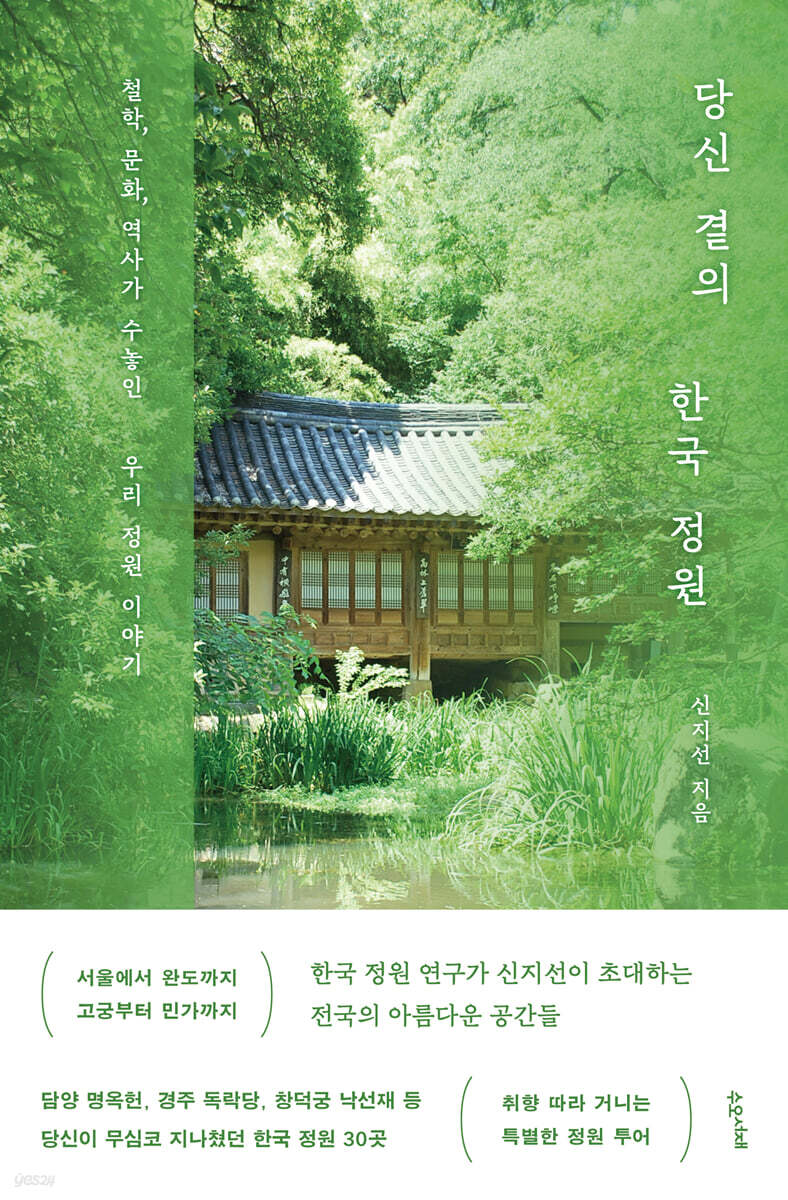
If you thought of a garden as a place filled with colorful flowers or a place lined with well-trimmed trees, the appearance of a Korean garden will be unfamiliar.
Shin Ji-seon, a Korean garden researcher, says that when we break away from the stereotype that a garden is a place beautifully decorated with plants, we can encounter the diverse aspects of Korean gardens.
All the elements that make up the entire space, such as the stone wall hidden behind the pine trees, the carelessly placed stone bridge, and the small pond, become a garden.
The author tells the story behind the seemingly ordinary landscape created by stones, trees, and water.
I suggest that you experience firsthand the intentions, vision, and attitude toward life of those who enjoyed real space in the past.
The book introduces 30 places that we may have passed by without even thinking of them as gardens.
It is rich in explanations of each garden's historical background, unique characteristics, and specific creation techniques.
If you've ever wondered what to see beyond the architecture when visiting palaces, local pavilions, or traditional Korean houses, "Korean Gardens Near You" will broaden your perspective on space.
Shin Ji-seon, a Korean garden researcher, says that when we break away from the stereotype that a garden is a place beautifully decorated with plants, we can encounter the diverse aspects of Korean gardens.
All the elements that make up the entire space, such as the stone wall hidden behind the pine trees, the carelessly placed stone bridge, and the small pond, become a garden.
The author tells the story behind the seemingly ordinary landscape created by stones, trees, and water.
I suggest that you experience firsthand the intentions, vision, and attitude toward life of those who enjoyed real space in the past.
The book introduces 30 places that we may have passed by without even thinking of them as gardens.
It is rich in explanations of each garden's historical background, unique characteristics, and specific creation techniques.
If you've ever wondered what to see beyond the architecture when visiting palaces, local pavilions, or traditional Korean houses, "Korean Gardens Near You" will broaden your perspective on space.
- You can preview some of the book's contents.
Preview
index
Introduction_Finding traces of the heart
Chapter 1.
Language that fills the garden
Joseon's real estate magnate Yun Seon-do and his ultra-luxurious garden - Bogildo Seyeonjeong
A work of abstract art completed by a thousand-year-old stone_Bu Seok Sa Temple in Yeongju
Living in a quiet place_ Nakseonjae, Changdeokgung Palace
The fact that Silla and Baekje also had gardens_ Donggung Palace and Wolji Pond in Gyeongju
Across a small hill_ Okryucheon Stream and Jondeokji Pond in Changdeokgung Palace
Damyang Soswaewon, a place that is not worth seeing but that you want to stay with for a long time
Scenes not to be missed besides Gyeonghoeru_ Gyeongbokgung Palace
White stone with light_ Yeongyang Seoseokji
A small retreat that will serve as a guide for life_ Gyeongju Dokrakdang
Chapter 2.
Hearts left in the garden
King Jeongjo's plan to make the country prosperous_ Buyongji Pond in Changdeokgung Palace
Not forgetting myself in exile at the end of the earth_Dasan Chodang, Gangjin
Between the clouds rising indifferently_ Gurye Unjoru
Lost in thought_ Damyang Myeongokheon
A story told by flowing water and small piles of stones_Daejeon Namganjeongsa Temple and Nonsan Myeongjae House
The role of an inconspicuous supporting actor_ Bonghwa Cheongamjeong
A Garden of Extreme Filial Piety_ Hamyang Ildu House
Strategy to raise a family_ Haman Mugyeongdang
How to capture what you want to protect in your eyes_Mongsimjae, Namwon
Andong Dosan Seodang, resembling a mountain that thinks silently
Chapter 3.
Landscape with a garden
Gardens of the Poor Country_ Between Beautification and Debasement
Our culture's attitude toward nature_ Hwagye of Daejojeon Hall in Changdeokgung Palace
Questioning the formula "garden = plants"_ Fences in Korean gardens
Jeong Yeong-seon, the one who soothes the heart that wants to cry_ Seoul Asan Medical Center
Things I Didn't Know Before I Left: The Reality of Garden Heritage
The garden is a living cultural heritage that cannot be stuffed_Gunpo Dongrae Jeong Clan Dongrae Gunpa Jongtaek
How about a Seoul garden tour?_ Baekseokdongcheon Stream, Seokpajeong Pavilion, Seongbuk-dong Byeolseo, Okhojeong Pavilion
My own garden_Yeonggyeongdang, Changdeokgung Palace
References
Chapter 1.
Language that fills the garden
Joseon's real estate magnate Yun Seon-do and his ultra-luxurious garden - Bogildo Seyeonjeong
A work of abstract art completed by a thousand-year-old stone_Bu Seok Sa Temple in Yeongju
Living in a quiet place_ Nakseonjae, Changdeokgung Palace
The fact that Silla and Baekje also had gardens_ Donggung Palace and Wolji Pond in Gyeongju
Across a small hill_ Okryucheon Stream and Jondeokji Pond in Changdeokgung Palace
Damyang Soswaewon, a place that is not worth seeing but that you want to stay with for a long time
Scenes not to be missed besides Gyeonghoeru_ Gyeongbokgung Palace
White stone with light_ Yeongyang Seoseokji
A small retreat that will serve as a guide for life_ Gyeongju Dokrakdang
Chapter 2.
Hearts left in the garden
King Jeongjo's plan to make the country prosperous_ Buyongji Pond in Changdeokgung Palace
Not forgetting myself in exile at the end of the earth_Dasan Chodang, Gangjin
Between the clouds rising indifferently_ Gurye Unjoru
Lost in thought_ Damyang Myeongokheon
A story told by flowing water and small piles of stones_Daejeon Namganjeongsa Temple and Nonsan Myeongjae House
The role of an inconspicuous supporting actor_ Bonghwa Cheongamjeong
A Garden of Extreme Filial Piety_ Hamyang Ildu House
Strategy to raise a family_ Haman Mugyeongdang
How to capture what you want to protect in your eyes_Mongsimjae, Namwon
Andong Dosan Seodang, resembling a mountain that thinks silently
Chapter 3.
Landscape with a garden
Gardens of the Poor Country_ Between Beautification and Debasement
Our culture's attitude toward nature_ Hwagye of Daejojeon Hall in Changdeokgung Palace
Questioning the formula "garden = plants"_ Fences in Korean gardens
Jeong Yeong-seon, the one who soothes the heart that wants to cry_ Seoul Asan Medical Center
Things I Didn't Know Before I Left: The Reality of Garden Heritage
The garden is a living cultural heritage that cannot be stuffed_Gunpo Dongrae Jeong Clan Dongrae Gunpa Jongtaek
How about a Seoul garden tour?_ Baekseokdongcheon Stream, Seokpajeong Pavilion, Seongbuk-dong Byeolseo, Okhojeong Pavilion
My own garden_Yeonggyeongdang, Changdeokgung Palace
References
Detailed image
.jpg)
Into the book
He was a brilliant artist and wealthy enough to create gardens more extravagant than those of a king, but his gardens reveal a sense of anger and frustration toward the world.
I used the best technology to create a garden and spent a lot of money to put on a show, but the emptiness in my heart remained unfilled.
Although he was excellent in many ways, Yun Seon-do had a hard time enduring the world that did not recognize him.
Life in Bogildo, where he could only sleep if he experienced every single day as if he were the king of the world he had created.
It was rich and splendid, but it was like an empty echo reverberating across the island.
--- From "Joseon's Real Estate Tycoon Yun Seon-do and His Ultra-Luxurious Garden"
There are generally two ways to build a stone wall.
It is a method of stacking stones that have been cut into squares or rectangles one after another, or to reduce the effort of cutting them, placing larger stones at the bottom and stacking smaller stones as you go up.
The stone walls of Bulguksa Temple pursued originality that did not fall into either of the two styles.
Rather than using the natural stone as is or trimming it to create a consistent shape, it is trimmed into the unique shape needed.
Smaller stones forming elaborate lines are placed between large, free-form stones, generally over 60 centimeters in size.
The harmony between large, heavy stones and the small stones that fill the gaps with beautiful lines makes one feel as if one is looking at a piece of abstract art.
--- From "A Piece of Abstract Art Completed by a Thousand Year Stone"
Normally, when we think of gardens, we would think of them as being decorated with the utmost luxury by those of considerable wealth and power, but Joseon Dynasty villas, including Soswaewon, were not intended to be like that from the beginning.
It's just a place to hang out with friends and have fun, not to show off how great my garden is.
So the longer I stay and look at it, the more I feel the sincerity with which the owner, Yangsanbo, created the garden.
The more you get to know Soswaewon, the more moving it becomes.
--- From "I'm not good looking, but I want to stay with you for a long time"
The owner's gaze is fixed on a corner of the western wall.
The owner, sitting on the veranda with minimal presence, looks out over the garden at the corner of the western wall and seems to be reading the minds of those coming into other people's houses to get rice.
Unlike other numaru that watch who comes and goes, Unjoru's numaru looks elsewhere as if it allows people to come in without hesitation.
The owner's gaze is directed towards the surrounding garden.
--- From "Among the Clouds That Rise Without a Care"
The garden of Yun Jeung, a master of the times and respected by all, was this simple.
Even though there was a wide space, it seemed like he meant that since he had a paradise on Mount Seokga, he should use the rest for you.
While standing on the pedestal of Sarangchae, I could see the torches of children coming and going to the Hyanggyo next to Myeongjae House and greeting each other, residents gathering to seek advice when a problem arose in the village, and scholars from all over the country gathering to speak out when important matters arose in the country.
The old house's love yard became a square for many people.
--- From "The Story Told by Crossing Water and Small Stone Piles"
The gardens of poor countries have replaced the insatiable splendor with something else.
The lack actually gave me freedom.
Since it's not a garden to show off, I'm free from the burden of how it should look.
I created a garden with what I had within my limited resources.
If you were being greedy, you would have chosen a place from the beginning that had plenty of potential for use among the existing nature.
The lack was filled with private language.
The garden is filled with free words without any set rules.
The 'consideration' of Unjoru, the 'contemplation' of Myeongokheon, the 'humility' of Dosan Seodang, and the 'waiting' of Soswaewon are design languages that were possible in freedom.
--- From "The Garden of the Poor Country"
There are things as important as repairing a building when it is leaning or old.
The water flow in the pond must be restored, and the lotus flowers must be managed so that they do not spread too much and cover the entire pond.
Parking lots should be built at some distance from the building so that visitors can slowly enjoy the surrounding scenery while entering, and stones from the surrounding mountains should be used when building the stone walls of the flowerbeds and grounds.
Everything we consider insignificant has an impact on elevating the quality of a space.
I hope that the garden heritage will be managed with a view to viewing the space as a whole rather than just the buildings.
I used the best technology to create a garden and spent a lot of money to put on a show, but the emptiness in my heart remained unfilled.
Although he was excellent in many ways, Yun Seon-do had a hard time enduring the world that did not recognize him.
Life in Bogildo, where he could only sleep if he experienced every single day as if he were the king of the world he had created.
It was rich and splendid, but it was like an empty echo reverberating across the island.
--- From "Joseon's Real Estate Tycoon Yun Seon-do and His Ultra-Luxurious Garden"
There are generally two ways to build a stone wall.
It is a method of stacking stones that have been cut into squares or rectangles one after another, or to reduce the effort of cutting them, placing larger stones at the bottom and stacking smaller stones as you go up.
The stone walls of Bulguksa Temple pursued originality that did not fall into either of the two styles.
Rather than using the natural stone as is or trimming it to create a consistent shape, it is trimmed into the unique shape needed.
Smaller stones forming elaborate lines are placed between large, free-form stones, generally over 60 centimeters in size.
The harmony between large, heavy stones and the small stones that fill the gaps with beautiful lines makes one feel as if one is looking at a piece of abstract art.
--- From "A Piece of Abstract Art Completed by a Thousand Year Stone"
Normally, when we think of gardens, we would think of them as being decorated with the utmost luxury by those of considerable wealth and power, but Joseon Dynasty villas, including Soswaewon, were not intended to be like that from the beginning.
It's just a place to hang out with friends and have fun, not to show off how great my garden is.
So the longer I stay and look at it, the more I feel the sincerity with which the owner, Yangsanbo, created the garden.
The more you get to know Soswaewon, the more moving it becomes.
--- From "I'm not good looking, but I want to stay with you for a long time"
The owner's gaze is fixed on a corner of the western wall.
The owner, sitting on the veranda with minimal presence, looks out over the garden at the corner of the western wall and seems to be reading the minds of those coming into other people's houses to get rice.
Unlike other numaru that watch who comes and goes, Unjoru's numaru looks elsewhere as if it allows people to come in without hesitation.
The owner's gaze is directed towards the surrounding garden.
--- From "Among the Clouds That Rise Without a Care"
The garden of Yun Jeung, a master of the times and respected by all, was this simple.
Even though there was a wide space, it seemed like he meant that since he had a paradise on Mount Seokga, he should use the rest for you.
While standing on the pedestal of Sarangchae, I could see the torches of children coming and going to the Hyanggyo next to Myeongjae House and greeting each other, residents gathering to seek advice when a problem arose in the village, and scholars from all over the country gathering to speak out when important matters arose in the country.
The old house's love yard became a square for many people.
--- From "The Story Told by Crossing Water and Small Stone Piles"
The gardens of poor countries have replaced the insatiable splendor with something else.
The lack actually gave me freedom.
Since it's not a garden to show off, I'm free from the burden of how it should look.
I created a garden with what I had within my limited resources.
If you were being greedy, you would have chosen a place from the beginning that had plenty of potential for use among the existing nature.
The lack was filled with private language.
The garden is filled with free words without any set rules.
The 'consideration' of Unjoru, the 'contemplation' of Myeongokheon, the 'humility' of Dosan Seodang, and the 'waiting' of Soswaewon are design languages that were possible in freedom.
--- From "The Garden of the Poor Country"
There are things as important as repairing a building when it is leaning or old.
The water flow in the pond must be restored, and the lotus flowers must be managed so that they do not spread too much and cover the entire pond.
Parking lots should be built at some distance from the building so that visitors can slowly enjoy the surrounding scenery while entering, and stones from the surrounding mountains should be used when building the stone walls of the flowerbeds and grounds.
Everything we consider insignificant has an impact on elevating the quality of a space.
I hope that the garden heritage will be managed with a view to viewing the space as a whole rather than just the buildings.
--- From "Things I Didn't Know Before Leaving"
Publisher's Review
“In a garden, there are traces of the heart that go beyond mere scenery.”
A time to discover the 'intention' and 'perspective' embedded in our garden.
If you thought of a garden as a place filled with colorful flowers or a place lined with well-trimmed trees, the appearance of a Korean garden will be unfamiliar.
There are no proper fences or entrances, and it is difficult to find neatly maintained flowers or trees.
There are few places specifically named as "gardens" like Damyang's famous "Soswaewon," so most people are unaware that they even have gardens.
Shin Ji-seon, a researcher of Korean gardens, says that when we break away from the stereotype that a garden is a place beautifully decorated with plants, we can encounter the diverse aspects of Korean gardens.
All the elements that make up the entire space, such as the stone wall hidden behind the pine trees, the carelessly placed stone bridge, and the small pond, become a garden.
The author tells the story behind the seemingly ordinary landscape created by stones, trees, and water.
I suggest that you experience firsthand the intentions, vision, and attitude toward life of those who enjoyed real space in the past.
The book introduces 30 places that we may have passed by without even thinking of them as gardens.
It is rich in explanations of each garden's historical background, unique characteristics, and specific creation techniques.
If you've ever wondered what to see beyond the architecture when visiting palaces, local pavilions, or traditional Korean houses, "Korean Gardens Near You" will broaden your perspective on space.
Damyang Myeongokheon, Gyeongju Dokrakdang, Changdeokgung Nakseonjae, etc.
A special garden tour tailored to your taste
Compared to gardens in nearby Japan, China, or Europe, Korean gardens appear simple and even shabby in scale.
Most of the garden ruins that have been well preserved to this day are from the Joseon Dynasty, so they are bound to be far from extravagant.
But the gardens of poor countries could be freer.
It wasn't a garden I had to show off to anyone, so it was enough for me to have a place where I could be comfortable, or where visitors could rest comfortably.
Instead of gorgeous decorations to be seen and enjoyed, the garden was filled with private language, and author Shin Ji-seon interpreted these 'languages' left in the garden and put them into a book.
It tells the stories of gardens across the country, from the royal palaces of Gyeongbokgung and Changdeokgung in Seoul to villas and private houses such as Myeongokheon in Damyang, Dokrakdang in Gyeongju, and Unjoru in Gurye.
It also allows us to step back from our focus solely on the building and focus on elements that we have not paid much attention to before.
At Donggung Palace and Wolji Pond in Gyeongju, you can see a thousand stones, and at Buseoksa Temple in Yeongju, you can pay attention to the stone walls that contain a thousand years of history.
At Changdeokgung Palace, you can see the hidden door above the flower wall of Daejojeon Hall, and at Gyeongbokgung Palace, you can discover the beauty of the flower wall of Jagyeongjeon Hall.
This book encourages readers to slowly stroll through the space together, allowing them to appreciate the charm of Korean gardens without overlooking it.
A landscape created by stones, trees, and water,
The life and voice flowing beneath it
The garden ultimately shows what kind of life you want to live in.
The intention behind creating a garden is more important than how you decorate it.
As you follow the intention behind the garden's creation, you will find yourself deeply immersed in a person's life and times.
Through the reason why Seyeonjeong in Bogildo is so extravagant, we can understand Yun Seondo's mind, and by looking at the small gate and cozy pond of Dosan Seodang in Andong, we can feel the philosophy of Toegye Yi Hwang.
Our garden is filled with simple yet sincere emotions, and just staying there for a moment brings comfort.
Because the intensity, discouragement, and hope of the old people, which are not so different from today, remain.
Gardens are not a legacy that remains in the past, but rather a living, breathing legacy that is close to us today.
It is now our turn to discover and enjoy Korean gardens, steeped in philosophy, culture, and history.
“The changing weather, seasons, and time in the garden are the garden’s wardrobe.
Even the same garden can be appreciated differently depending on when you visit.
There is no best time to visit the garden, as it presents different charms with each season and weather, just like changing clothes.
“It is the visitor’s job to discover and enjoy the charm of the garden that day.” - From the text
A time to discover the 'intention' and 'perspective' embedded in our garden.
If you thought of a garden as a place filled with colorful flowers or a place lined with well-trimmed trees, the appearance of a Korean garden will be unfamiliar.
There are no proper fences or entrances, and it is difficult to find neatly maintained flowers or trees.
There are few places specifically named as "gardens" like Damyang's famous "Soswaewon," so most people are unaware that they even have gardens.
Shin Ji-seon, a researcher of Korean gardens, says that when we break away from the stereotype that a garden is a place beautifully decorated with plants, we can encounter the diverse aspects of Korean gardens.
All the elements that make up the entire space, such as the stone wall hidden behind the pine trees, the carelessly placed stone bridge, and the small pond, become a garden.
The author tells the story behind the seemingly ordinary landscape created by stones, trees, and water.
I suggest that you experience firsthand the intentions, vision, and attitude toward life of those who enjoyed real space in the past.
The book introduces 30 places that we may have passed by without even thinking of them as gardens.
It is rich in explanations of each garden's historical background, unique characteristics, and specific creation techniques.
If you've ever wondered what to see beyond the architecture when visiting palaces, local pavilions, or traditional Korean houses, "Korean Gardens Near You" will broaden your perspective on space.
Damyang Myeongokheon, Gyeongju Dokrakdang, Changdeokgung Nakseonjae, etc.
A special garden tour tailored to your taste
Compared to gardens in nearby Japan, China, or Europe, Korean gardens appear simple and even shabby in scale.
Most of the garden ruins that have been well preserved to this day are from the Joseon Dynasty, so they are bound to be far from extravagant.
But the gardens of poor countries could be freer.
It wasn't a garden I had to show off to anyone, so it was enough for me to have a place where I could be comfortable, or where visitors could rest comfortably.
Instead of gorgeous decorations to be seen and enjoyed, the garden was filled with private language, and author Shin Ji-seon interpreted these 'languages' left in the garden and put them into a book.
It tells the stories of gardens across the country, from the royal palaces of Gyeongbokgung and Changdeokgung in Seoul to villas and private houses such as Myeongokheon in Damyang, Dokrakdang in Gyeongju, and Unjoru in Gurye.
It also allows us to step back from our focus solely on the building and focus on elements that we have not paid much attention to before.
At Donggung Palace and Wolji Pond in Gyeongju, you can see a thousand stones, and at Buseoksa Temple in Yeongju, you can pay attention to the stone walls that contain a thousand years of history.
At Changdeokgung Palace, you can see the hidden door above the flower wall of Daejojeon Hall, and at Gyeongbokgung Palace, you can discover the beauty of the flower wall of Jagyeongjeon Hall.
This book encourages readers to slowly stroll through the space together, allowing them to appreciate the charm of Korean gardens without overlooking it.
A landscape created by stones, trees, and water,
The life and voice flowing beneath it
The garden ultimately shows what kind of life you want to live in.
The intention behind creating a garden is more important than how you decorate it.
As you follow the intention behind the garden's creation, you will find yourself deeply immersed in a person's life and times.
Through the reason why Seyeonjeong in Bogildo is so extravagant, we can understand Yun Seondo's mind, and by looking at the small gate and cozy pond of Dosan Seodang in Andong, we can feel the philosophy of Toegye Yi Hwang.
Our garden is filled with simple yet sincere emotions, and just staying there for a moment brings comfort.
Because the intensity, discouragement, and hope of the old people, which are not so different from today, remain.
Gardens are not a legacy that remains in the past, but rather a living, breathing legacy that is close to us today.
It is now our turn to discover and enjoy Korean gardens, steeped in philosophy, culture, and history.
“The changing weather, seasons, and time in the garden are the garden’s wardrobe.
Even the same garden can be appreciated differently depending on when you visit.
There is no best time to visit the garden, as it presents different charms with each season and weather, just like changing clothes.
“It is the visitor’s job to discover and enjoy the charm of the garden that day.” - From the text
GOODS SPECIFICS
- Date of issue: October 1, 2025
- Page count, weight, size: 204 pages | 286g | 138*210*14mm
- ISBN13: 9791193238790
- ISBN10: 119323879X
You may also like
카테고리
korean


korean

![ELLE 엘르 스페셜 에디션 A형 : 12월 [2025]](http://librairie.coreenne.fr/cdn/shop/files/b8e27a3de6c9538896439686c6b0e8fb.jpg?v=1766436872&width=3840)


