

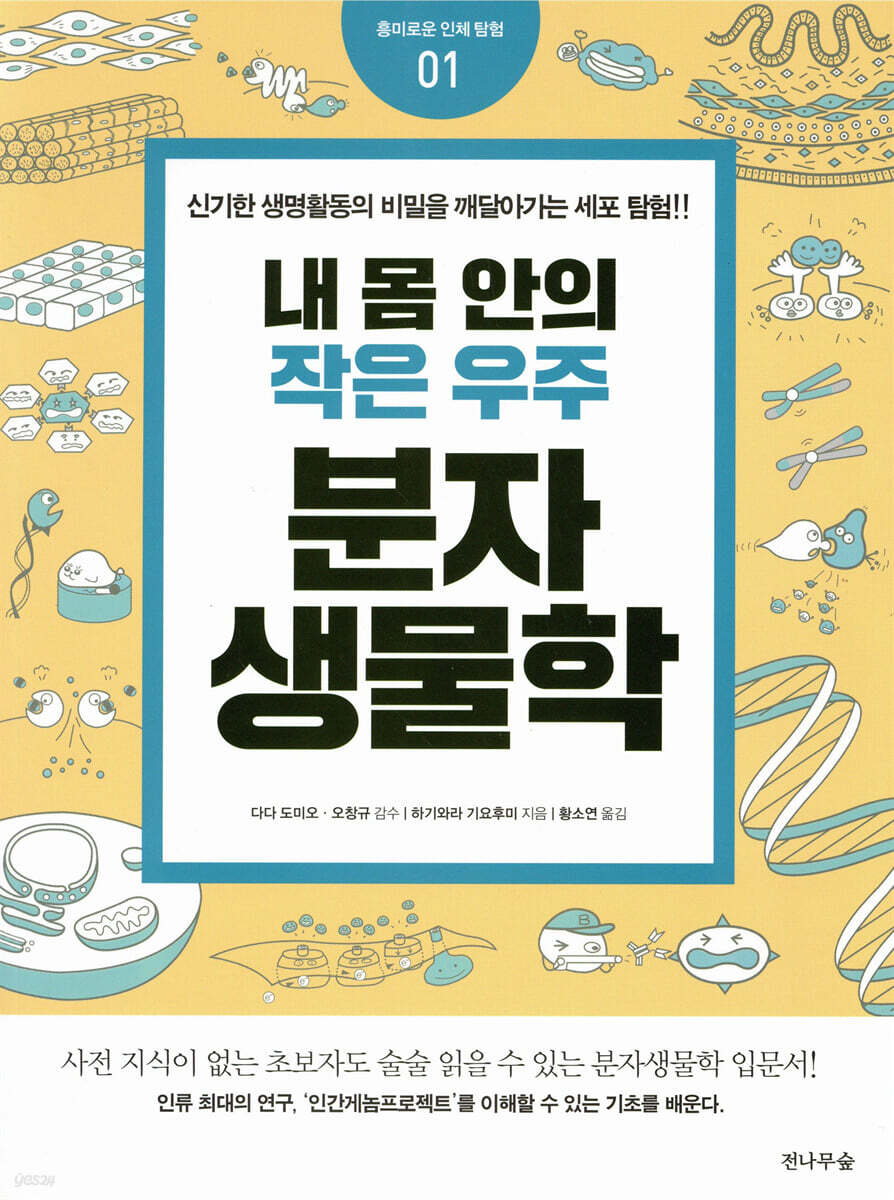
Molecular Biology: A Small Universe Inside My Body
 |
Description
Book Introduction
From the 'structure of cells', the foundation of molecular biology, to the 'gene decoding process'
This is a comprehensive introduction to molecular biology.
Molecular biology is a field that analyzes human genes to help identify diseases that may develop in the future.
This book is an introductory book on molecular biology that even beginners with no prior knowledge can read, written by an author who has been praised in Japan for "raising the public's medical and scientific knowledge to the next level." It is structured to make molecular biology, which is considered a difficult and tedious subject, easy and fun to learn.
Using illustrations, we approach difficult terminology in a fun way, and explain the content in a way that is easy for the general public to understand.
However, just because it is an easy-to-understand introductory book does not mean that its content is narrow or limited.
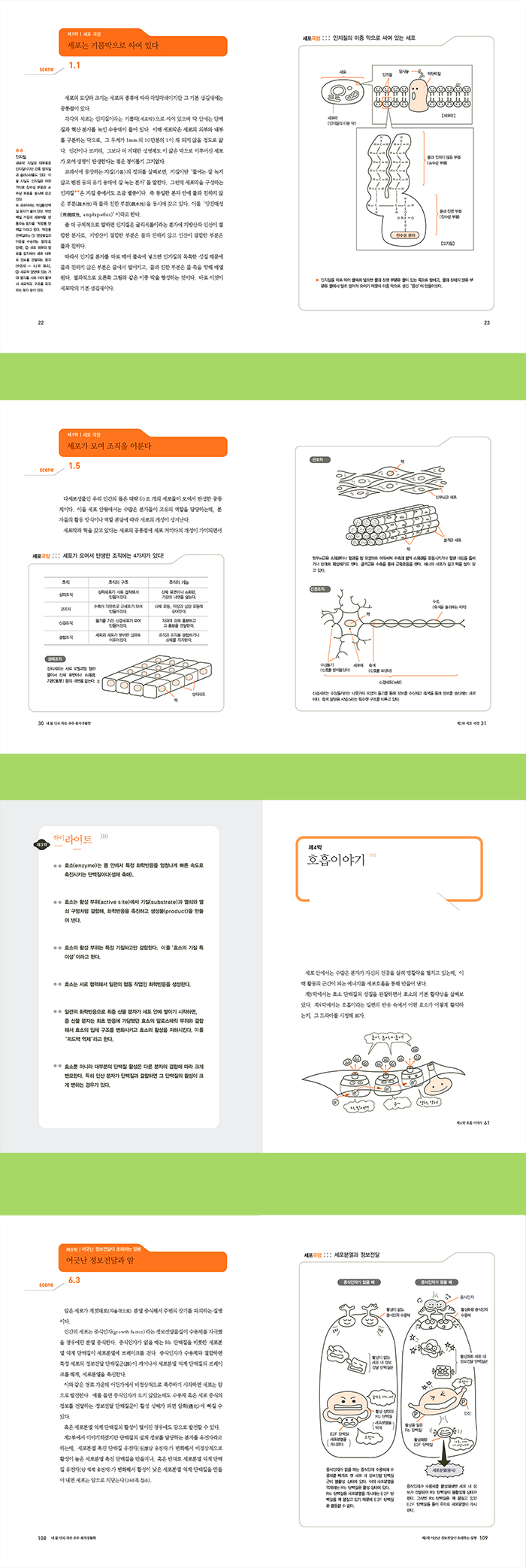
It comprehensively covers most of the topics covered in molecular biology, from the most basic cell structure to protein activity, the role of enzymes, information exchange between cells, an in-depth understanding of the structure of DNA and its replication system, gene decoding, and gene therapy.
It also provides a solid foundation for understanding the 'Human Genome Project', which has been frequently featured in the media.
In addition, it touches on scientific common sense that the general public has misconceptions about, as well as confusing parts.
It provides a clear explanation of the differences and similarities between 'DNA, genes, and genome', and also scientifically explains whether cancer is hereditary.
This is a comprehensive introduction to molecular biology.
Molecular biology is a field that analyzes human genes to help identify diseases that may develop in the future.
This book is an introductory book on molecular biology that even beginners with no prior knowledge can read, written by an author who has been praised in Japan for "raising the public's medical and scientific knowledge to the next level." It is structured to make molecular biology, which is considered a difficult and tedious subject, easy and fun to learn.
Using illustrations, we approach difficult terminology in a fun way, and explain the content in a way that is easy for the general public to understand.
However, just because it is an easy-to-understand introductory book does not mean that its content is narrow or limited.
It comprehensively covers most of the topics covered in molecular biology, from the most basic cell structure to protein activity, the role of enzymes, information exchange between cells, an in-depth understanding of the structure of DNA and its replication system, gene decoding, and gene therapy.
It also provides a solid foundation for understanding the 'Human Genome Project', which has been frequently featured in the media.
In addition, it touches on scientific common sense that the general public has misconceptions about, as well as confusing parts.
It provides a clear explanation of the differences and similarities between 'DNA, genes, and genome', and also scientifically explains whether cancer is hereditary.
- You can preview some of the book's contents.
Preview
index
Reviewer's Note 1: An Opportunity to Experience the Mysterious Activities of Life with Your Five Senses
Molecular Biology: A Study of Deep Observation and Independent Thought
Prelude: Sketching Life Through the Eyes of a Molecule
Part 1 Proteins and Molecular Biology
Act 1 Cell Theater
scene 1.1 Cells are surrounded by an oil film
scene 1.2 Cell molecules active on the cellular stage
scene 1.3 Where cellular molecules are active
scene 1.4 Society Created by Cell Molecules
scene 1.5 Cells come together to form tissues
scene 1.6 Organizations come together to form an institution
Scene 1.7 'Society' within our bodies
The face of membrane 2 proteins
scene 2.1 When you unravel a protein, you see that it is a single string.
scene 2.2 Until a chain forms a three-dimensional shape
Activity of third membrane proteins
scene 3.1 The mysterious power of enzyme proteins
scene 3.2 Enzyme proteins are exclusive
scene 3.3 The collaborative work of enzymes
scene 3.4 Enzymes move with exquisite timing
scene 3.5 protein switch story
Act 4: Breathing Story
scene 4.1 Two forms of breathing
scene 4.2 Rechargeable battery, ATP
scene 4.3 The three stages of cellular respiration
scene 4.4 splitting firewood, the corresponding system
scene 4.5 dismantling, citric acid cycle
scene 4.6 Electronic Transmission Theater
Act 5: The Story of Information Transmission
scene 5.1 How cells exchange information
scene 5.2 Three types of information carriers
scene 5.3 Cells resemble televisions
scene 5.4 intracellular information transfer drama
scene 5.5 Information transfer for cell suicide
Act 6: Diseases Caused by Miscommunication
scene 6.1 Miscommunication and obesity
scene 6.2 Miscommunication and diabetes
scene 6.3 Miscommunication and cancer
scene 6.4 Medicine that corrects information transmission
Part 2: Genes and Molecular Biology
Act 7: The Face of DNA
scene 7.1 What's inside the nucleus?
scene 7.2 The Four 'Faces' of Nucleotides
scene 7.3 DNA chains stuck together
Scene 7.4 How long is DNA? 126
scene 7.5 What are the differences between DNA, genes, and genomes?
Act 8: Replicating DNA
scene 8.1 DNA replication system
scene 8.2 Direction of DNA replication
Act 9 From Genes to Proteins
scene 9.1 What is a gene?
scene 9.2 The code for designing proteins
scene 9.3 A two-part drama about making proteins
Scene 9.4 The Stage of the Protein Birth Drama
Scene 9.5 Protein Birth Drama - Warrior
Scene 9.6: The Birth of Protein Drama - Translation
Scene 9.7 Collaborators involved in translation ① - Transport RNA
Scene 9.8 Collaborators in Translation ② - Aminoacyl tRNA Synthetase
Scene 9.9 Collaborators involved in translation ③ - Ribosomes
Scene 9.10 3rd step of translation
Act 10: Editing the Gene
scene 10.1 Rearrangement of antibody genes - structural changes in DNA
scene 10.2 Rearrangement of messenger RNA
scene 10.3 The reappearance of antibodies
Act 11: Regulating Genetic Decoding
scene 11.1 Synthesize only the necessary proteins
scene 11.2 E. coli's taste
Scene 11.3: The Idea of the Century, Born from Frustration - Refresher Protein
scene 11.4 Active action wave, activator protein
scene 11.5 Cyclic AMP signaling a crisis
Chapter 12 Development and Molecular Biology
scene 12.1 Creating the intestines first
scene 12.2 Cells begin to develop individuality
scene 12.3 Mysterious lips, circular shape
Scene 12.4 The Magical Eye Cup - A Chain Reaction of Induction
scene 12.5 What is the true nature of the formation?
scene 12.6 The Biology of 'Process'
Act 13: Genetics, Molecular Biology, and Medicine
scene 13.1 What is a genetic disease?
scene 13.2 Multifactorial diseases involving genetic and environmental factors
scene 13.3 Has the high blood pressure gene really been 'discovered'?
scene 13.4 Cases where a person gets the disease even without a disease susceptibility gene polymorphism
Scene 13.5 'Genetic Diagnosis' and 'Polymorphism Diagnosis'
Scene 13.6 What is 'personalized medicine'?
Chapter 14: Cancer and Molecular Biology
scene 14.1 Is cancer hereditary?
scene 14.2 Cancer and Gene Therapy
scene 14.3 How far can gene therapy go?
scene 14.4 Cancer and Genetic Diagnosis
Review: “So that everyone can experience the profound fascination of molecular biology.”
Molecular Biology: A Study of Deep Observation and Independent Thought
Prelude: Sketching Life Through the Eyes of a Molecule
Part 1 Proteins and Molecular Biology
Act 1 Cell Theater
scene 1.1 Cells are surrounded by an oil film
scene 1.2 Cell molecules active on the cellular stage
scene 1.3 Where cellular molecules are active
scene 1.4 Society Created by Cell Molecules
scene 1.5 Cells come together to form tissues
scene 1.6 Organizations come together to form an institution
Scene 1.7 'Society' within our bodies
The face of membrane 2 proteins
scene 2.1 When you unravel a protein, you see that it is a single string.
scene 2.2 Until a chain forms a three-dimensional shape
Activity of third membrane proteins
scene 3.1 The mysterious power of enzyme proteins
scene 3.2 Enzyme proteins are exclusive
scene 3.3 The collaborative work of enzymes
scene 3.4 Enzymes move with exquisite timing
scene 3.5 protein switch story
Act 4: Breathing Story
scene 4.1 Two forms of breathing
scene 4.2 Rechargeable battery, ATP
scene 4.3 The three stages of cellular respiration
scene 4.4 splitting firewood, the corresponding system
scene 4.5 dismantling, citric acid cycle
scene 4.6 Electronic Transmission Theater
Act 5: The Story of Information Transmission
scene 5.1 How cells exchange information
scene 5.2 Three types of information carriers
scene 5.3 Cells resemble televisions
scene 5.4 intracellular information transfer drama
scene 5.5 Information transfer for cell suicide
Act 6: Diseases Caused by Miscommunication
scene 6.1 Miscommunication and obesity
scene 6.2 Miscommunication and diabetes
scene 6.3 Miscommunication and cancer
scene 6.4 Medicine that corrects information transmission
Part 2: Genes and Molecular Biology
Act 7: The Face of DNA
scene 7.1 What's inside the nucleus?
scene 7.2 The Four 'Faces' of Nucleotides
scene 7.3 DNA chains stuck together
Scene 7.4 How long is DNA? 126
scene 7.5 What are the differences between DNA, genes, and genomes?
Act 8: Replicating DNA
scene 8.1 DNA replication system
scene 8.2 Direction of DNA replication
Act 9 From Genes to Proteins
scene 9.1 What is a gene?
scene 9.2 The code for designing proteins
scene 9.3 A two-part drama about making proteins
Scene 9.4 The Stage of the Protein Birth Drama
Scene 9.5 Protein Birth Drama - Warrior
Scene 9.6: The Birth of Protein Drama - Translation
Scene 9.7 Collaborators involved in translation ① - Transport RNA
Scene 9.8 Collaborators in Translation ② - Aminoacyl tRNA Synthetase
Scene 9.9 Collaborators involved in translation ③ - Ribosomes
Scene 9.10 3rd step of translation
Act 10: Editing the Gene
scene 10.1 Rearrangement of antibody genes - structural changes in DNA
scene 10.2 Rearrangement of messenger RNA
scene 10.3 The reappearance of antibodies
Act 11: Regulating Genetic Decoding
scene 11.1 Synthesize only the necessary proteins
scene 11.2 E. coli's taste
Scene 11.3: The Idea of the Century, Born from Frustration - Refresher Protein
scene 11.4 Active action wave, activator protein
scene 11.5 Cyclic AMP signaling a crisis
Chapter 12 Development and Molecular Biology
scene 12.1 Creating the intestines first
scene 12.2 Cells begin to develop individuality
scene 12.3 Mysterious lips, circular shape
Scene 12.4 The Magical Eye Cup - A Chain Reaction of Induction
scene 12.5 What is the true nature of the formation?
scene 12.6 The Biology of 'Process'
Act 13: Genetics, Molecular Biology, and Medicine
scene 13.1 What is a genetic disease?
scene 13.2 Multifactorial diseases involving genetic and environmental factors
scene 13.3 Has the high blood pressure gene really been 'discovered'?
scene 13.4 Cases where a person gets the disease even without a disease susceptibility gene polymorphism
Scene 13.5 'Genetic Diagnosis' and 'Polymorphism Diagnosis'
Scene 13.6 What is 'personalized medicine'?
Chapter 14: Cancer and Molecular Biology
scene 14.1 Is cancer hereditary?
scene 14.2 Cancer and Gene Therapy
scene 14.3 How far can gene therapy go?
scene 14.4 Cancer and Genetic Diagnosis
Review: “So that everyone can experience the profound fascination of molecular biology.”
Detailed image
Into the book
The smallest unit of life is a very small sac called a 'cell'.
If we break this cell down further, it becomes a 'molecule' unit.
All living things, like inanimate inorganic substances like concrete or glass, are made of molecules.
Of course, molecules themselves have no life.
Living and non-living molecules (biomolecules) follow the same laws of physics and chemistry.
So what's the difference between living and non-living molecules? The biggest difference between living and non-living molecules boils down to whether or not the molecule performs a specific role (function).
---From the "Prologue"
When cells receive information transmitters such as hormones or cytokines through receptor proteins, they process the information within the cell and ultimately produce a response.
Just as a television detects radio waves with an antenna, processes the information, and displays the results such as sound or images, cells also process the information received from receptor proteins within the cell and respond to the information in some form, such as division, differentiation, contraction, or suicide.
---From "Scene 5.3 Cells resemble televisions"
Nucleic acids are string-like molecules made up of molecules called nucleotides.
If nucleotides are like beads, then nucleic acids can be likened to a necklace made by stringing beads.
A nucleotide is a molecule made up of a phosphate, a sugar, and a base. If we compare its shape to that of a dog, the phosphate would be the tail, the sugar would be the body, and the base would be the face.
There are two types of sugars that form the body of nucleotides: ribose and deoxyribose, and they are divided into RNA and DNA based on the difference.
---From "Scene 7.1 What's Inside the Nucleus?"
The double chain (double helix) of DNA does not exist as a single, continuous string.
For example, in human cell nuclei, it is cut into 46 pieces, and in chimpanzee cells, it is cut into 48 pieces.
This broken DNA is wrapped around and condensed into a protein called histone, which looks like a screw.
At this time, the condensed DNA is easily stained with basic dyes and can be easily observed under a microscope, so it is called a 'chromosome'.
If we compare two strands of DNA to tape, the chromosome is the tightly wrapped and protected piece of tape, which corresponds to a cassette tape.
If we break this cell down further, it becomes a 'molecule' unit.
All living things, like inanimate inorganic substances like concrete or glass, are made of molecules.
Of course, molecules themselves have no life.
Living and non-living molecules (biomolecules) follow the same laws of physics and chemistry.
So what's the difference between living and non-living molecules? The biggest difference between living and non-living molecules boils down to whether or not the molecule performs a specific role (function).
---From the "Prologue"
When cells receive information transmitters such as hormones or cytokines through receptor proteins, they process the information within the cell and ultimately produce a response.
Just as a television detects radio waves with an antenna, processes the information, and displays the results such as sound or images, cells also process the information received from receptor proteins within the cell and respond to the information in some form, such as division, differentiation, contraction, or suicide.
---From "Scene 5.3 Cells resemble televisions"
Nucleic acids are string-like molecules made up of molecules called nucleotides.
If nucleotides are like beads, then nucleic acids can be likened to a necklace made by stringing beads.
A nucleotide is a molecule made up of a phosphate, a sugar, and a base. If we compare its shape to that of a dog, the phosphate would be the tail, the sugar would be the body, and the base would be the face.
There are two types of sugars that form the body of nucleotides: ribose and deoxyribose, and they are divided into RNA and DNA based on the difference.
---From "Scene 7.1 What's Inside the Nucleus?"
The double chain (double helix) of DNA does not exist as a single, continuous string.
For example, in human cell nuclei, it is cut into 46 pieces, and in chimpanzee cells, it is cut into 48 pieces.
This broken DNA is wrapped around and condensed into a protein called histone, which looks like a screw.
At this time, the condensed DNA is easily stained with basic dyes and can be easily observed under a microscope, so it is called a 'chromosome'.
If we compare two strands of DNA to tape, the chromosome is the tightly wrapped and protected piece of tape, which corresponds to a cassette tape.
---From "Scene 7.4 What is the length of DNA?"
Publisher's Review
Molecular biology is a field in our ‘everyday life’.
It is a discipline that has been involved in elucidating the 'origin of mankind'.
When we hear the term 'molecular biology', we often think of it as a difficult discipline that has nothing to do with our daily lives.
However, molecular biology is surprisingly close to our daily lives.
The various pharmaceutical preparations taken when sick would have been impossible to manufacture without the help of molecular biology.
New drugs that can help human health are also based on molecular biology.
Analyzing human genes to identify diseases that may develop in the future and continuously studying cancer cells to conquer cancer are also precisely the domain of molecular biology.
In particular, the most important thing in 'immunity' is the healthy generation, circulation, and suicide of cells, and studying immunity without a molecular biological foundation is like building a sand castle.
In that respect, molecular biology lays the foundation for understanding immunity and shows that molecular biology is not so far from our lives.
However, molecular biology is not something that can only be encountered in everyday life.
Molecular biology is also something that inevitably comes up in the debate over evolution and creationism.
In this way, molecular biology is widely involved in everything from everyday life to elucidating the origins of mankind, and plays an indispensable role like a 'licorice'.
It is a discipline that has been involved in elucidating the 'origin of mankind'.
When we hear the term 'molecular biology', we often think of it as a difficult discipline that has nothing to do with our daily lives.
However, molecular biology is surprisingly close to our daily lives.
The various pharmaceutical preparations taken when sick would have been impossible to manufacture without the help of molecular biology.
New drugs that can help human health are also based on molecular biology.
Analyzing human genes to identify diseases that may develop in the future and continuously studying cancer cells to conquer cancer are also precisely the domain of molecular biology.
In particular, the most important thing in 'immunity' is the healthy generation, circulation, and suicide of cells, and studying immunity without a molecular biological foundation is like building a sand castle.
In that respect, molecular biology lays the foundation for understanding immunity and shows that molecular biology is not so far from our lives.
However, molecular biology is not something that can only be encountered in everyday life.
Molecular biology is also something that inevitably comes up in the debate over evolution and creationism.
In this way, molecular biology is widely involved in everything from everyday life to elucidating the origins of mankind, and plays an indispensable role like a 'licorice'.
GOODS SPECIFICS
- Date of issue: June 17, 2019
- Page count, weight, size: 276 pages | 540g | 186*245*20mm
- ISBN13: 9791188544325
- ISBN10: 1188544322
You may also like
카테고리
korean


korean

![ELLE 엘르 스페셜 에디션 A형 : 12월 [2025]](http://librairie.coreenne.fr/cdn/shop/files/b8e27a3de6c9538896439686c6b0e8fb.jpg?v=1766436872&width=3840)


