

Physicists see science in movies
 |
Description
Book Introduction
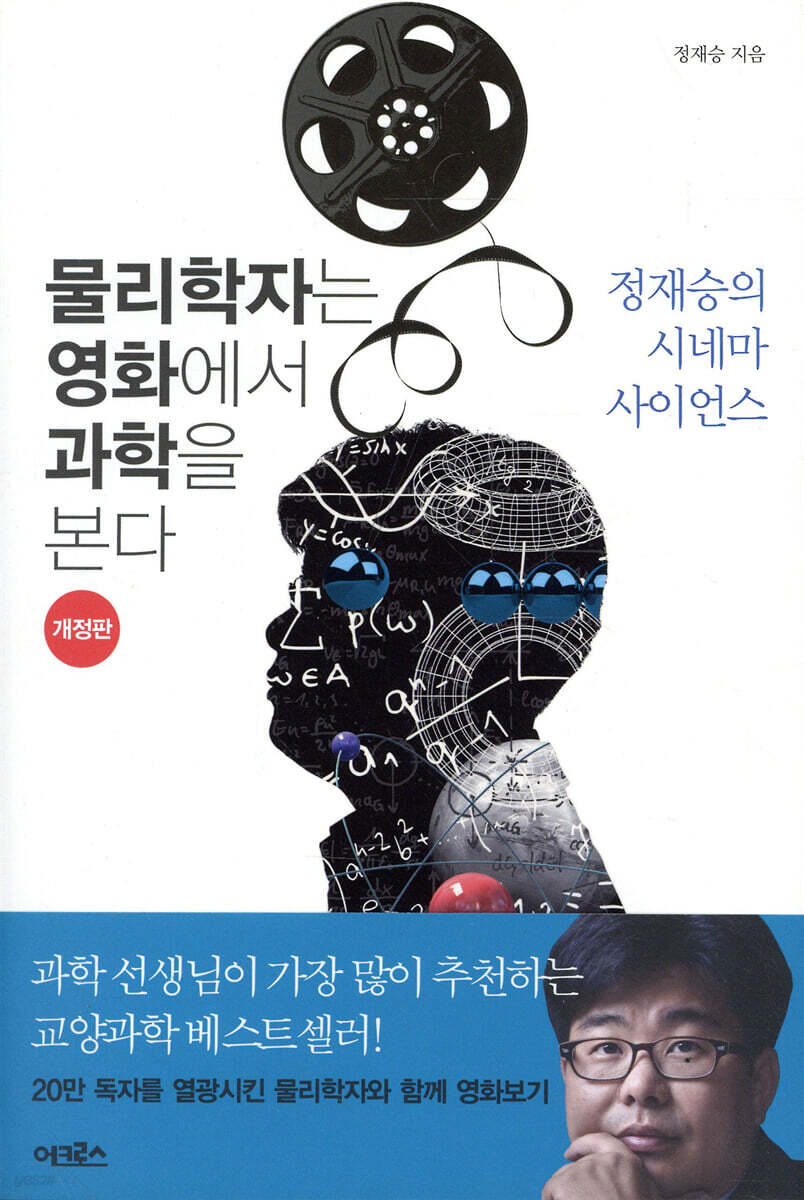
A revised edition of the popular science bestseller, "Physicists See Science in Films (published in 1999, revised and expanded edition published in 2002)", most recommended by science teachers.
This is Jeong Jae-seung's first book, and it is a new attempt to learn science through movies and enjoy movies through science, which sparked a boom in popular science books.
This time, we are back with a new look, publishing 『Brain Scientists See Humans in Film』, which is a kind of 'brain science edition'.
The biggest reason this book is so well-received is because it provides the fun of discovering scientific misconceptions in blockbuster movies with flashy visuals.
This is not only a new way to enjoy watching movies, but also an opportunity to easily understand scientific knowledge that was previously considered difficult through movies.
The book not only sharply analyzes the imagination in the film through the eyes of a scientist, but also shows the struggles of science today to make that imagination a reality.
It also questions the future of science and the impact of scientific overreach on humanity through films that question the future direction of science.
The film presents a correct picture of the times through the protagonists who resemble modern people wandering between freedom and indulgence in the web age, and warns against the technological imperialist desire to dominate the world through science and technology through the mad scientist that Batman must confront.
This is Jeong Jae-seung's first book, and it is a new attempt to learn science through movies and enjoy movies through science, which sparked a boom in popular science books.
This time, we are back with a new look, publishing 『Brain Scientists See Humans in Film』, which is a kind of 'brain science edition'.
The biggest reason this book is so well-received is because it provides the fun of discovering scientific misconceptions in blockbuster movies with flashy visuals.
This is not only a new way to enjoy watching movies, but also an opportunity to easily understand scientific knowledge that was previously considered difficult through movies.
The book not only sharply analyzes the imagination in the film through the eyes of a scientist, but also shows the struggles of science today to make that imagination a reality.
It also questions the future of science and the impact of scientific overreach on humanity through films that question the future direction of science.
The film presents a correct picture of the times through the protagonists who resemble modern people wandering between freedom and indulgence in the web age, and warns against the technological imperialist desire to dominate the world through science and technology through the mad scientist that Batman must confront.
- You can preview some of the book's contents.
Preview
index
Preface to the 2nd Revised Edition (2012) | Finding Hidden Science in Film
Preface to the First Edition (1999) | Dinner with a Physicist
Preface to the Revised and Expanded Edition (2002) | A Happy Encounter of Film and Science
PART 01
A Flaw in the Jade: Science Discovers a Film Flaw
Cinema 1.
Hollow Man | The Tragedy of a Transparent, and Thus Empty, Scientist
Cinema 2.
Contact | Jodie Foster is unable to contact aliens for 18 hours.
Cinema 3.
Shiri | Han Seok-kyu, wearing night vision goggles and shining a flashlight
Cinema 4.
Armageddon | Excavator Operators Fly NASA Spacecraft to Save Earth
Cinema 5.
Jurassic Park | There are no Jurassic dinosaurs in Jurassic Park?
Cinema 6.
Demolition Man | Is Sylvester Stallone a goldfish?
Cinema 7.
Godzilla | Godzilla's pregnancy cannot be confirmed with a self-diagnosis kit.
Cinema 8.
Popeye | If you eat spinach, you become an olive, not Popeye.
Cinema 9.
Face Off | Skin Grafts Don't Change Your Face
[Simultaneous Screening] Why Do the Protagonists Always Win in Movies?
Cinema 10.
Jaws | The Misconceptions About Great White Sharks That Jaws Sparked
[Simultaneous Screening] Finding Nemo: Escape from the Whale's Belly?
Cinema 11.
Galaxy Express 999 | Will Tetsuro be able to reach Andromeda?
Cinema 12.
Star Wars | The Facts and Fiction of the "Space Wars" in the Movies
Cinema 13.
Blue Thunder | Helicopters can't rotate 360 degrees?
PART 02
This scene is a must-have, science meets science in sci-fi movie formulas.
Cinema 14.
2001: A Space Odyssey | HAL Computer and Artificial Intelligence
[Simultaneous Screening] Terminator 2: The Copy Machine, Copy the Robot
Cinema 15.
Apollo 13 | Humanity's dream of space never ends.
[Simultaneous Screening] The Fifth Element: The Fifth Element That Completes the Universe
Cinema 16.
Lost in Space | The A to Z of Space Life
[Simultaneous Screening] Space is not weightless.
Cinema 17.
Total Recall | Let's Build Mars into a Second Earth
[Simultaneous Screening] Core: A Journey to the Earth's Outer Core?
Cinema 18.
ET | UFO, dreaming of encounters with aliens
Cinema 19.
Spear | A Manual for Time Travelers
Cinema 20.
The Fly | Is a teleportation device feasible?
Cinema 21.
Stargate | The Origins of Ancient Civilizations and the Mysteries of Archaeology
[Simultaneous Screening] Sign: Mystery Circle
Cinema 22.
The 007 Series | Cutting-Edge Biometric Security Systems Featured in the Movies
Cinema 23.
Predator | A World of Infrared Vision: Seeing the Invisible
Cinema 24.
Chain Reaction | Cutting-Edge Physics Theory Appears in Film
Cinema 25.
Twister | Knowing Chaos Shows Nature
[Simultaneous Screening] Avengers: Manipulate the Weather?
Cinema 26.
The Lost World | Explaining the Dinosaur Extinction with the 'Science of Complexity'
PART 03
Movies Ask Science
Cinema 27.
Bicentennial Man | A Robot Who Wants to Be Human
[Simultaneous Screening] Astro Boy's Birthday
Cinema 28.
Japanese children suffer seizures while watching Pokémon TV cartoons
[Simultaneous Screening] Harrison Bergeron: A Castrated Future Society Seduced by 'Equality'
Cinema 29.
Blade Runner | Cyberpunk, a rebel of the computer age
[Simultaneous Screening] Code Name J: Virtual Reality and a Paperless World
Cinema 30.
The Matrix | The Emergence of a World That Erased Cultural Boundaries
Cinema 31.
Last Action Hero | What Will We Do for Fun in 2050?
Cinema 32.
Ed TV | The desire to reveal one's private life
Cinema 33.
Toy Story 2 | Will Woody Replace Tom Hanks?
Chapter 34.
Spider-Man | Mutants Born from a Fear of Radiation
Chapter 35.
Batman | A Dystopia Created by a Mad Scientist
[Simultaneous Screening] The Unebomber and the Neo-Luddite Movement: Opposing Science and Technology
Preface to the First Edition (1999) | Dinner with a Physicist
Preface to the Revised and Expanded Edition (2002) | A Happy Encounter of Film and Science
PART 01
A Flaw in the Jade: Science Discovers a Film Flaw
Cinema 1.
Hollow Man | The Tragedy of a Transparent, and Thus Empty, Scientist
Cinema 2.
Contact | Jodie Foster is unable to contact aliens for 18 hours.
Cinema 3.
Shiri | Han Seok-kyu, wearing night vision goggles and shining a flashlight
Cinema 4.
Armageddon | Excavator Operators Fly NASA Spacecraft to Save Earth
Cinema 5.
Jurassic Park | There are no Jurassic dinosaurs in Jurassic Park?
Cinema 6.
Demolition Man | Is Sylvester Stallone a goldfish?
Cinema 7.
Godzilla | Godzilla's pregnancy cannot be confirmed with a self-diagnosis kit.
Cinema 8.
Popeye | If you eat spinach, you become an olive, not Popeye.
Cinema 9.
Face Off | Skin Grafts Don't Change Your Face
[Simultaneous Screening] Why Do the Protagonists Always Win in Movies?
Cinema 10.
Jaws | The Misconceptions About Great White Sharks That Jaws Sparked
[Simultaneous Screening] Finding Nemo: Escape from the Whale's Belly?
Cinema 11.
Galaxy Express 999 | Will Tetsuro be able to reach Andromeda?
Cinema 12.
Star Wars | The Facts and Fiction of the "Space Wars" in the Movies
Cinema 13.
Blue Thunder | Helicopters can't rotate 360 degrees?
PART 02
This scene is a must-have, science meets science in sci-fi movie formulas.
Cinema 14.
2001: A Space Odyssey | HAL Computer and Artificial Intelligence
[Simultaneous Screening] Terminator 2: The Copy Machine, Copy the Robot
Cinema 15.
Apollo 13 | Humanity's dream of space never ends.
[Simultaneous Screening] The Fifth Element: The Fifth Element That Completes the Universe
Cinema 16.
Lost in Space | The A to Z of Space Life
[Simultaneous Screening] Space is not weightless.
Cinema 17.
Total Recall | Let's Build Mars into a Second Earth
[Simultaneous Screening] Core: A Journey to the Earth's Outer Core?
Cinema 18.
ET | UFO, dreaming of encounters with aliens
Cinema 19.
Spear | A Manual for Time Travelers
Cinema 20.
The Fly | Is a teleportation device feasible?
Cinema 21.
Stargate | The Origins of Ancient Civilizations and the Mysteries of Archaeology
[Simultaneous Screening] Sign: Mystery Circle
Cinema 22.
The 007 Series | Cutting-Edge Biometric Security Systems Featured in the Movies
Cinema 23.
Predator | A World of Infrared Vision: Seeing the Invisible
Cinema 24.
Chain Reaction | Cutting-Edge Physics Theory Appears in Film
Cinema 25.
Twister | Knowing Chaos Shows Nature
[Simultaneous Screening] Avengers: Manipulate the Weather?
Cinema 26.
The Lost World | Explaining the Dinosaur Extinction with the 'Science of Complexity'
PART 03
Movies Ask Science
Cinema 27.
Bicentennial Man | A Robot Who Wants to Be Human
[Simultaneous Screening] Astro Boy's Birthday
Cinema 28.
Japanese children suffer seizures while watching Pokémon TV cartoons
[Simultaneous Screening] Harrison Bergeron: A Castrated Future Society Seduced by 'Equality'
Cinema 29.
Blade Runner | Cyberpunk, a rebel of the computer age
[Simultaneous Screening] Code Name J: Virtual Reality and a Paperless World
Cinema 30.
The Matrix | The Emergence of a World That Erased Cultural Boundaries
Cinema 31.
Last Action Hero | What Will We Do for Fun in 2050?
Cinema 32.
Ed TV | The desire to reveal one's private life
Cinema 33.
Toy Story 2 | Will Woody Replace Tom Hanks?
Chapter 34.
Spider-Man | Mutants Born from a Fear of Radiation
Chapter 35.
Batman | A Dystopia Created by a Mad Scientist
[Simultaneous Screening] The Unebomber and the Neo-Luddite Movement: Opposing Science and Technology
Detailed image
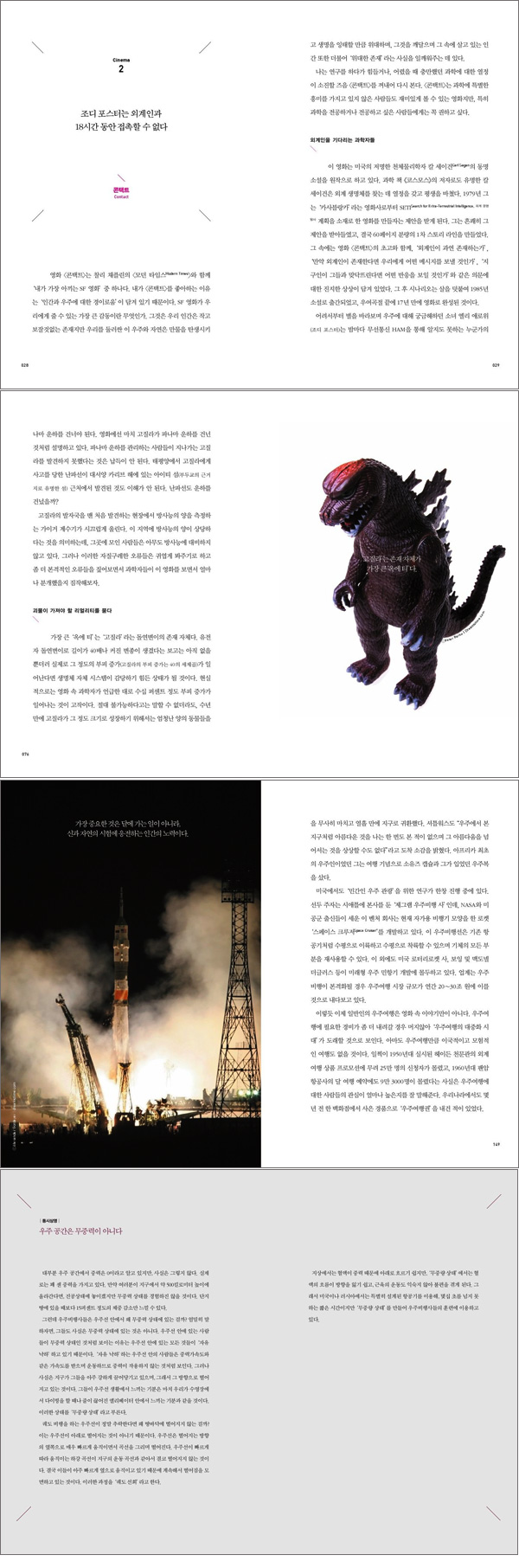
Into the book
Even going down stairs is dangerous for an invisible man.
Sometimes we walk down the stairs while talking or reading a book, but in the meantime, our brain accurately identifies the position of our feet and the position of the stairs at every moment, and calculates the muscle movements and joint bending for the next step.
… … However, since the invisible man cannot see his own feet, he has no sense of distance between his feet and the stairs, so he is likely to fall down the stairs every time.
-From 'The Tragedy of the Transparent, and therefore Empty Scientist: Hollow Man'
If an asteroid were actually coming, scientists would not try to blow up the comet or asteroid with a nuclear bomb.
Not only can it not be detonated, but even if it is detonated, it is impossible to predict how the fragments will spread, so it could end up being a scratch.
The most plausible countermeasure would be to modify the orbit of the incoming asteroid or comet.
The central coma of a comet is made up of a mass of ice and gas.
If the forward part of the surface of a moving comet is pierced with a super-powerful laser, the gas inside will be ejected, slowing the comet's speed and changing its orbit depending on the direction of the gas ejection.
-From 'Excavator Operators Fly NASA Spaceship to Save Earth: Armageddon'
Six experimental physicists at the University of Innsbruck in Austria have succeeded in teleporting photons.
Light has both particle-like and wave-like properties, but in the microscopic world it exists in the form of particles called 'photons'.
This means that we have succeeded in moving this photon instantaneously.
Although the device they designed is limited to photons, which obey the laws of quantum physics, many were excited to see that the science fiction story wasn't so impossible.
-'Is a Teleportation Device Realizable?: From The Fly'
Even in this very scientific film, there are bound to be scientific errors hidden.
Graduate student Eddie is shown to be tired from his research and taking a break from typing on an electronic keyboard when he accidentally discovers the phenomenon of sonoluminescence.
When a specific frequency is struck, a chain reaction of sonoluminescence occurs suddenly.
However, in reality, you will never see sonic emission even if you shoot sound waves at an electronic keyboard.
To produce sonoluminescence, sound waves must be precisely injected into air bubbles within a liquid tube, but this cannot be done from a distance using an electronic keyboard.
-From 'Cutting-edge physics theory appears in the movie: Chain Reaction'
Science fiction writers and directors are concerned that technology might inherit the role that capital has enjoyed as an abnormal tool of domination.
The belief that scientific and technological advancements will enrich people's lives is attractive, but sometimes it seems like a naive delusion.
Behind the convenient life brought about by technological advancement, there is the danger of destruction of things outside of technology due to the considerations of that technology, the monopolization of daily life by those with technology, and the danger of codification for social control.
We can infer the extreme contradictions that the logic of such technological dominance will bring about through science fiction films.
-From 'Dystopia Created by a Mad Scientist: Batman Forever'
Sometimes we walk down the stairs while talking or reading a book, but in the meantime, our brain accurately identifies the position of our feet and the position of the stairs at every moment, and calculates the muscle movements and joint bending for the next step.
… … However, since the invisible man cannot see his own feet, he has no sense of distance between his feet and the stairs, so he is likely to fall down the stairs every time.
-From 'The Tragedy of the Transparent, and therefore Empty Scientist: Hollow Man'
If an asteroid were actually coming, scientists would not try to blow up the comet or asteroid with a nuclear bomb.
Not only can it not be detonated, but even if it is detonated, it is impossible to predict how the fragments will spread, so it could end up being a scratch.
The most plausible countermeasure would be to modify the orbit of the incoming asteroid or comet.
The central coma of a comet is made up of a mass of ice and gas.
If the forward part of the surface of a moving comet is pierced with a super-powerful laser, the gas inside will be ejected, slowing the comet's speed and changing its orbit depending on the direction of the gas ejection.
-From 'Excavator Operators Fly NASA Spaceship to Save Earth: Armageddon'
Six experimental physicists at the University of Innsbruck in Austria have succeeded in teleporting photons.
Light has both particle-like and wave-like properties, but in the microscopic world it exists in the form of particles called 'photons'.
This means that we have succeeded in moving this photon instantaneously.
Although the device they designed is limited to photons, which obey the laws of quantum physics, many were excited to see that the science fiction story wasn't so impossible.
-'Is a Teleportation Device Realizable?: From The Fly'
Even in this very scientific film, there are bound to be scientific errors hidden.
Graduate student Eddie is shown to be tired from his research and taking a break from typing on an electronic keyboard when he accidentally discovers the phenomenon of sonoluminescence.
When a specific frequency is struck, a chain reaction of sonoluminescence occurs suddenly.
However, in reality, you will never see sonic emission even if you shoot sound waves at an electronic keyboard.
To produce sonoluminescence, sound waves must be precisely injected into air bubbles within a liquid tube, but this cannot be done from a distance using an electronic keyboard.
-From 'Cutting-edge physics theory appears in the movie: Chain Reaction'
Science fiction writers and directors are concerned that technology might inherit the role that capital has enjoyed as an abnormal tool of domination.
The belief that scientific and technological advancements will enrich people's lives is attractive, but sometimes it seems like a naive delusion.
Behind the convenient life brought about by technological advancement, there is the danger of destruction of things outside of technology due to the considerations of that technology, the monopolization of daily life by those with technology, and the danger of codification for social control.
We can infer the extreme contradictions that the logic of such technological dominance will bring about through science fiction films.
-From 'Dystopia Created by a Mad Scientist: Batman Forever'
---From the text
Publisher's Review
A must-read summer vacation book that captivated 200,000 readers!
Science is easier to learn through movies, and movies are more fun to enjoy through science.
Excellent Science Book Certified by the Ministry of Science and Technology (1999)
Recommended Books by the Korean Publication Ethics Committee (1999)
Recommended Books by the Korean Publishers Association (1999)
The revised edition of the popular science bestseller, "Physicists See Science in Films (published in 1999, revised and expanded edition published in 2002)", which is most recommended by science teachers, has been released after 10 years.
This is Jeong Jae-seung's first book, and it is a new attempt to learn science through movies and enjoy movies through science, which sparked a boom in popular science books.
This time, we are back with a new look, publishing 『Brain Scientists See Humans in Film』, which is a kind of 'brain science' edition.
This is a chance to experience the joy of watching movies with a physicist who has captivated 200,000 readers, and to enjoy something new.
Why did the physicist go to the cinema?
Jeong Jae-seung's abilities have already been proven in this book.
So, it is worth having these expectations for him.
Wouldn't it be possible for a first-class author like Borders of 『E=MC2』 and Bernard Werber of 『Ants』 to be born in our country as well?
-JoongAng Ilbo
Jaeseung Jeong, a science kid who dreamed of becoming a physicist after reading Heisenberg's "The Part and the Whole," was also a cinema kid fascinated by the world unfolding on the screen.
From his childhood days when he would frequent movie theaters without even knowing how to read the lines, to his high school days when he would watch French films without subtitles at the French Cultural Center, movies have been a window to him that allows him to see the world differently.
For scientist Jeong Jae-seung, who always presents new attempts in popular science writing, movies are both a starting point and a treasure trove of his imagination.
This book, which sparked a boom in popular science books, is also, in that sense, a story of the author's own growth.
Watching 'Contact', which waits for an alien signal, we meet a boy who dreams of another existence beyond the universe, and a young scientist who is amazed at how scientific the artificial intelligence robot in '2001: A Space Odyssey' is.
Learning Science Through the "Flaws in the Jade" in Movies
-A lightsaber can never be a weapon?
-What is the scientific reason why the life of an invisible person is not as fun as expected?
It expands scientific thinking and knowledge by carefully examining how scientific facts presented in movies are distorted or trapped in the shackles of incorrect common sense.
-Segye Ilbo
The biggest reason this book is so well-received is because it provides the fun of discovering scientific misconceptions in blockbuster movies with flashy visuals.
For example, we learn that the lightsaber in 'Star Wars' is actually useless no matter how much you swing it due to the nature of light passing through each other, and that the invisible man in many movies would not be able to see himself because if his retina were transparent, images would not be formed.
Also, since most of the dinosaurs in 'Jurassic Park' are from the Cretaceous period, it should be called 'Cretaceous Park'.
In this way, the author meticulously verifies 'how scientifically realistic' the film's setting is.
This is not only a new way to enjoy watching movies, but also an opportunity to easily understand scientific knowledge that was previously considered difficult through movies.
A film that questions the science of making cinematic imagination a reality and the future direction of science.
This is an entertaining essay that allows readers to view movies in a different way, and it is also an educational book that easily explains various scientific stories through movies. - Chosun Ilbo
Scientists have proven that time travel and teleportation, staples of science fiction movies, are theoretically feasible, and have discovered a way to create an atmosphere on Mars, which is often called the second Earth.
In this way, the book not only sharply diagnoses the imagination in the film through the eyes of a scientist, but also shows the struggles of science today to make that imagination a reality.
It also questions the future of science and the impact of scientific overreach on humanity through films that question the future direction of science.
The film presents a correct picture of the times through the protagonists who resemble modern people wandering between freedom and indulgence in the web age, and warns against the technological imperialist desire to dominate the world through science and technology through the mad scientist that Batman must confront.
Science is easier to learn through movies, and movies are more fun to enjoy through science.
Excellent Science Book Certified by the Ministry of Science and Technology (1999)
Recommended Books by the Korean Publication Ethics Committee (1999)
Recommended Books by the Korean Publishers Association (1999)
The revised edition of the popular science bestseller, "Physicists See Science in Films (published in 1999, revised and expanded edition published in 2002)", which is most recommended by science teachers, has been released after 10 years.
This is Jeong Jae-seung's first book, and it is a new attempt to learn science through movies and enjoy movies through science, which sparked a boom in popular science books.
This time, we are back with a new look, publishing 『Brain Scientists See Humans in Film』, which is a kind of 'brain science' edition.
This is a chance to experience the joy of watching movies with a physicist who has captivated 200,000 readers, and to enjoy something new.
Why did the physicist go to the cinema?
Jeong Jae-seung's abilities have already been proven in this book.
So, it is worth having these expectations for him.
Wouldn't it be possible for a first-class author like Borders of 『E=MC2』 and Bernard Werber of 『Ants』 to be born in our country as well?
-JoongAng Ilbo
Jaeseung Jeong, a science kid who dreamed of becoming a physicist after reading Heisenberg's "The Part and the Whole," was also a cinema kid fascinated by the world unfolding on the screen.
From his childhood days when he would frequent movie theaters without even knowing how to read the lines, to his high school days when he would watch French films without subtitles at the French Cultural Center, movies have been a window to him that allows him to see the world differently.
For scientist Jeong Jae-seung, who always presents new attempts in popular science writing, movies are both a starting point and a treasure trove of his imagination.
This book, which sparked a boom in popular science books, is also, in that sense, a story of the author's own growth.
Watching 'Contact', which waits for an alien signal, we meet a boy who dreams of another existence beyond the universe, and a young scientist who is amazed at how scientific the artificial intelligence robot in '2001: A Space Odyssey' is.
Learning Science Through the "Flaws in the Jade" in Movies
-A lightsaber can never be a weapon?
-What is the scientific reason why the life of an invisible person is not as fun as expected?
It expands scientific thinking and knowledge by carefully examining how scientific facts presented in movies are distorted or trapped in the shackles of incorrect common sense.
-Segye Ilbo
The biggest reason this book is so well-received is because it provides the fun of discovering scientific misconceptions in blockbuster movies with flashy visuals.
For example, we learn that the lightsaber in 'Star Wars' is actually useless no matter how much you swing it due to the nature of light passing through each other, and that the invisible man in many movies would not be able to see himself because if his retina were transparent, images would not be formed.
Also, since most of the dinosaurs in 'Jurassic Park' are from the Cretaceous period, it should be called 'Cretaceous Park'.
In this way, the author meticulously verifies 'how scientifically realistic' the film's setting is.
This is not only a new way to enjoy watching movies, but also an opportunity to easily understand scientific knowledge that was previously considered difficult through movies.
A film that questions the science of making cinematic imagination a reality and the future direction of science.
This is an entertaining essay that allows readers to view movies in a different way, and it is also an educational book that easily explains various scientific stories through movies. - Chosun Ilbo
Scientists have proven that time travel and teleportation, staples of science fiction movies, are theoretically feasible, and have discovered a way to create an atmosphere on Mars, which is often called the second Earth.
In this way, the book not only sharply diagnoses the imagination in the film through the eyes of a scientist, but also shows the struggles of science today to make that imagination a reality.
It also questions the future of science and the impact of scientific overreach on humanity through films that question the future direction of science.
The film presents a correct picture of the times through the protagonists who resemble modern people wandering between freedom and indulgence in the web age, and warns against the technological imperialist desire to dominate the world through science and technology through the mad scientist that Batman must confront.
GOODS SPECIFICS
- Date of publication: July 18, 2012
- Page count, weight, size: 320 pages | 505g | 153*224*30mm
- ISBN13: 9788997379057
- ISBN10: 8997379054
You may also like
카테고리
korean


korean

![ELLE 엘르 스페셜 에디션 A형 : 12월 [2025]](http://librairie.coreenne.fr/cdn/shop/files/b8e27a3de6c9538896439686c6b0e8fb.jpg?v=1766436872&width=3840)


