

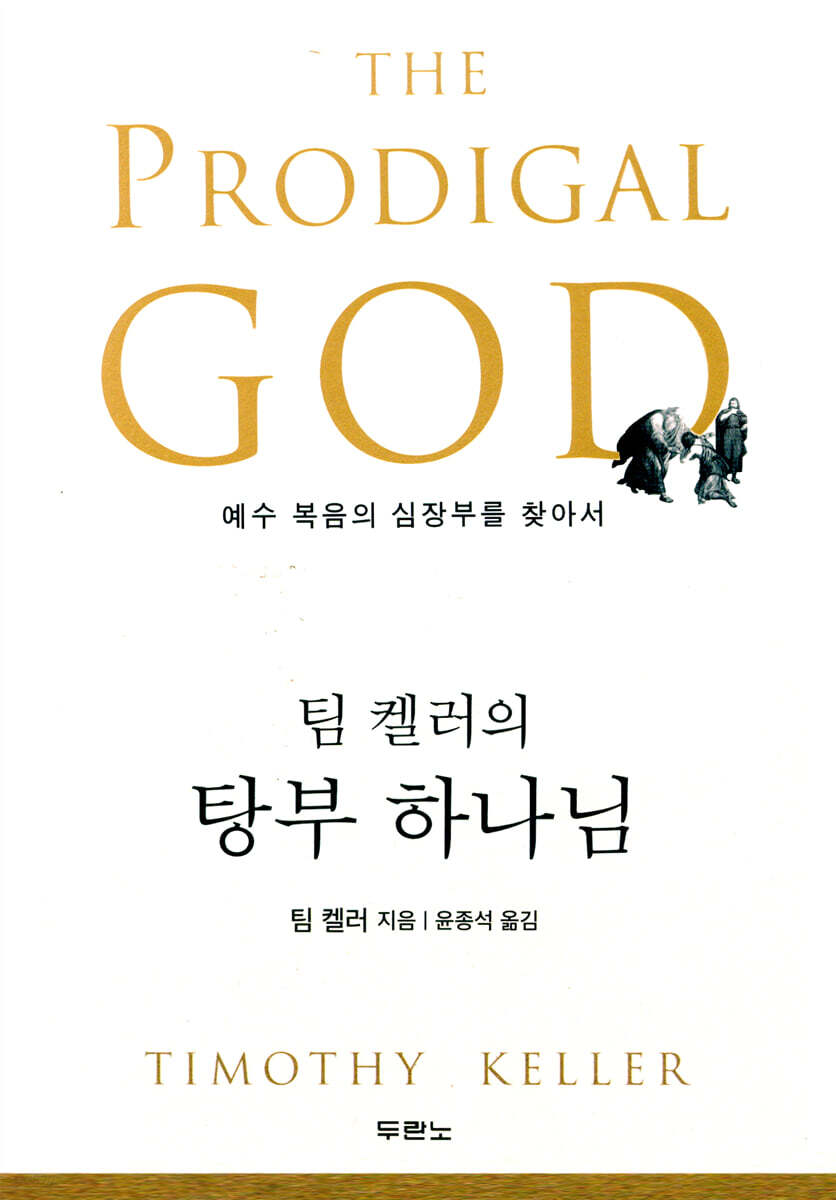
Tim Keller's Prodigal God
 |
Description
Book Introduction
There is nothing new anymore, it is considered trivial A sharp challenge to the gospel About sin, grace, salvation, and the kingdom of God Tim Keller, who has shown a new blueprint for urban ministry and church planting through his ministry in the spiritually barren heart of New York City, is widely known for his renowned writings that delve into a wide range of topics. A book that can be read with a relatively light heart not only by avid readers who love Tim Keller as a writer, but also by those who have hesitated to open his books because they vaguely thought they would be difficult. “C of the 21st century. 《The Prodigal Son God》, which delves into the essential message of the 'Parable of the Prodigal Son' in the author's characteristic intellectual style, living up to the nickname "S. S. Lewis." It has captured the essence of the gospel without a doubt, and has approached the familiar story in the Bible, which we all pride ourselves on knowing, in a way that is as provocative as the title, “The Prodigal God.” A message that every Christian must read at least once and keep in mind! |
- You can preview some of the book's contents.
Preview
index
Introductory remarks.
God who wastes his love for his sons
The Parable of the Two Lost Sons
1.
Why do I come before Jesus?
Even today, two groups surround Jesus.
2.
We too run like the 'Lost Sons'
Am I the eldest son or the second son?
A deeper understanding of 'sin'
3.
If you play God yourself, even if you were loyal, it is a sin.
Sin is more than simply breaking a norm.
A Deeper Understanding of 'Lost'
4.
Blind obedience based on fear is as dangerous as disobedience.
The eldest son is just as much a "lost being" as the second.
A Deeper Understanding of 'Atonement'
5.
My 'true brother' came to this land to find me.
My brother has to find it, and my brother has to pay the price.
A deeper understanding of 'hope'
6.
This world is a journey home to the Father's house.
On that day we will participate in the eternal banquet at our Father's house.
A Deeper Understanding of 'Salvation'
7.
Father's feast has already begun, come in and enjoy.
The Gospel of Jesus changes lives here and now.
Acknowledgements
main
God who wastes his love for his sons
The Parable of the Two Lost Sons
1.
Why do I come before Jesus?
Even today, two groups surround Jesus.
2.
We too run like the 'Lost Sons'
Am I the eldest son or the second son?
A deeper understanding of 'sin'
3.
If you play God yourself, even if you were loyal, it is a sin.
Sin is more than simply breaking a norm.
A Deeper Understanding of 'Lost'
4.
Blind obedience based on fear is as dangerous as disobedience.
The eldest son is just as much a "lost being" as the second.
A Deeper Understanding of 'Atonement'
5.
My 'true brother' came to this land to find me.
My brother has to find it, and my brother has to pay the price.
A deeper understanding of 'hope'
6.
This world is a journey home to the Father's house.
On that day we will participate in the eternal banquet at our Father's house.
A Deeper Understanding of 'Salvation'
7.
Father's feast has already begun, come in and enjoy.
The Gospel of Jesus changes lives here and now.
Acknowledgements
main
Detailed image
Into the book
The best clothes in the house would have been the father's, a sure sign that the son's status had been restored.
This is what my father meant.
'I won't wait until you pay off all your debts.
I won't wait until you've worked yourself to the bone.
You don't get to come back into this house by earning the qualifications through your own strength.
I just accept you.
I will cover your nakedness, poverty, and rags with the garments of my position and honor.' --- p.50
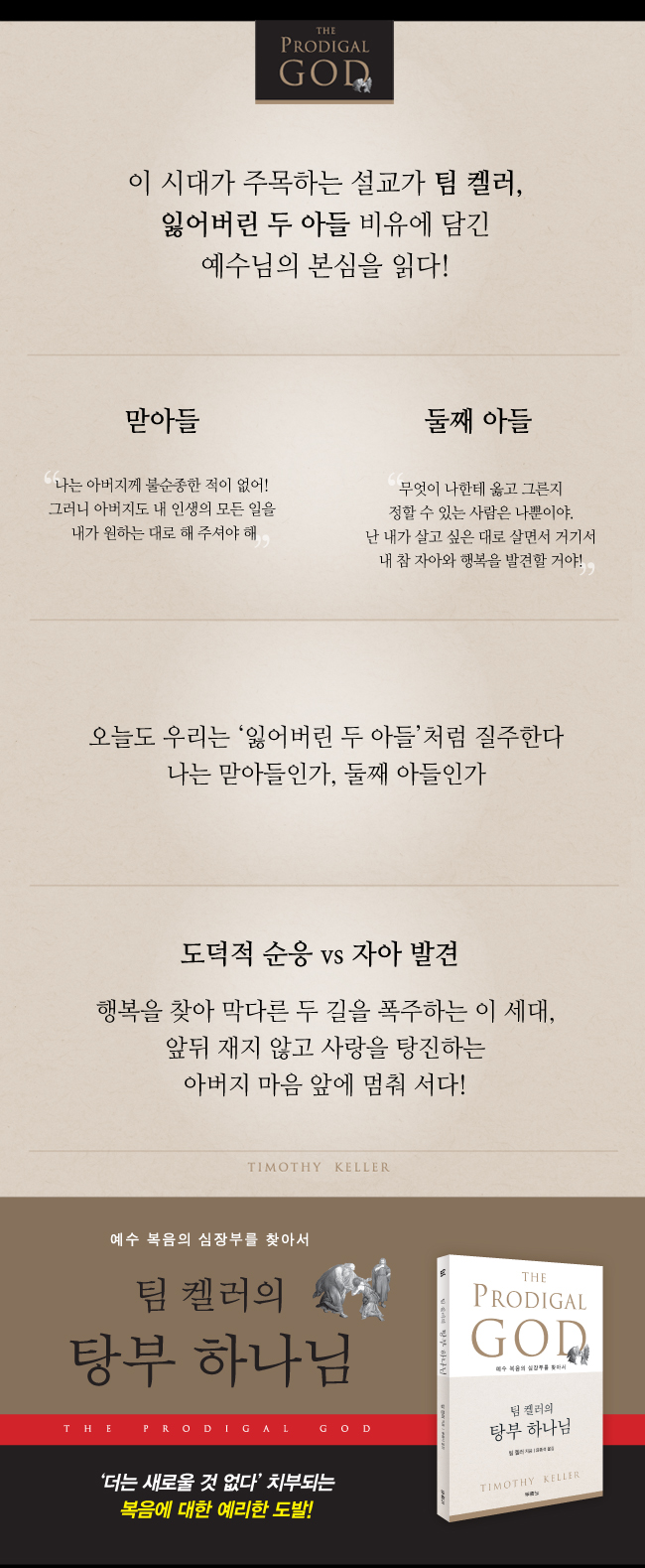
Through the brothers in the parable, Jesus shows us two basic ways people seek happiness and satisfaction.
One is the path of moral conformity, the other is the path of self-discovery.
Both are lenses that color our outlook on life and frames that shape our worldview.
Both are paths to finding one's own meaning and value, to solving the world's evils, and to distinguish between right and wrong.
--- p.60
The two brothers had the same thoughts.
Both resented their father's authority and sought to escape it.
Both of them wanted to be in a position where they could influence their father.
In other words, both sons rebelled.
In terms of method, one was very bad and the other was extremely kind.
Both were lost sons who had strayed far from their father's heart.
Do you see now what Jesus was teaching? Neither of the two sons loved their father.
Both of them were only using their father to achieve selfish goals, not because they loved him and served him happily.
It means that there are two ways to rebel against God and turn away from Him.
One is to break His rules, and the other is to diligently keep all His rules.
It's a shocking message.
How striving to obey God's laws can actually be a strategy of rebellion against Him.
--- pp.67~68
My brothers believe that if they live a good life, their lives will be happy.
I believe that if you work hard to meet the standards, God has a duty to provide a smooth path.
So what if you're the older brother and your life is going awry? If you think you've lived up to your moral standards, you'll be furious with God.
For someone who has worked so hard to be a good person, such a thing would feel unfair! Conversely, what if life went wrong, when you clearly fell short of your standards? You'd be furious with yourself, drowning in self-loathing and internal pain.
If adversity strikes and you are unsure whether your life is good enough, you will oscillate miserably between two extremes: hating God and hating yourself.
--- pp.85~86
Whether as older or younger brothers, we all rebelled against our father.
They deserve to be alienated, excluded, and rejected.
The point of the parable is that forgiveness always comes with a price.
Someone has to pay the price.
There was no way for the younger brother to be reunited with the family unless the older brother made a sacrifice.
Our true brother paid our debt on the cross in our place.
There, His garments and dignity were stripped away so that we can clothe ourselves with dignity and status that we do not deserve.
Because Jesus was forsaken on the cross, we can be freely accepted into God's house by grace.
Because He drank the cup of eternal punishment there, we can share in the cup of the Father's joy.
Without this true brother's sacrifice, there is no other way for our Heavenly Father to accept us.
--- pp.125~126
Jesus came not simply to liberate a nation from political oppression, but to save us all from sin, evil, and death itself.
To bring humanity back to its original home.
So he did not come in strength, but in weakness.
The wanderings he went through when he came were ours to endure.
He was driven out of the Father's presence and was cast into the extreme despair and darkness of spiritual alienation in our place.
He personally bore all the curses and cosmic displacement of mankind for their rebellion.
To welcome us into our true home.
--- p.146
Jesus hates suffering, injustice, evil, and death.
So He came in person and overcame it all, and one day He will completely wipe it out from the world.
Knowing all this, Christians cannot be passive about hunger, disease, and injustice.
People including Karl Marx have criticized religion as “the opium of the people.”
The sedative called religion makes people passive in the face of injustice and only hope for “heaven after death.”
This might apply to other religions that teach that the material world is unimportant or illusory.
However, the God taught in Christianity hated the suffering and oppression of this material world so much that he willingly entered into it and fought against it.
If properly understood, Christianity is not the opium of the people, but rather a soothing elixir.
This is what my father meant.
'I won't wait until you pay off all your debts.
I won't wait until you've worked yourself to the bone.
You don't get to come back into this house by earning the qualifications through your own strength.
I just accept you.
I will cover your nakedness, poverty, and rags with the garments of my position and honor.' --- p.50
Through the brothers in the parable, Jesus shows us two basic ways people seek happiness and satisfaction.
One is the path of moral conformity, the other is the path of self-discovery.
Both are lenses that color our outlook on life and frames that shape our worldview.
Both are paths to finding one's own meaning and value, to solving the world's evils, and to distinguish between right and wrong.
--- p.60
The two brothers had the same thoughts.
Both resented their father's authority and sought to escape it.
Both of them wanted to be in a position where they could influence their father.
In other words, both sons rebelled.
In terms of method, one was very bad and the other was extremely kind.
Both were lost sons who had strayed far from their father's heart.
Do you see now what Jesus was teaching? Neither of the two sons loved their father.
Both of them were only using their father to achieve selfish goals, not because they loved him and served him happily.
It means that there are two ways to rebel against God and turn away from Him.
One is to break His rules, and the other is to diligently keep all His rules.
It's a shocking message.
How striving to obey God's laws can actually be a strategy of rebellion against Him.
--- pp.67~68
My brothers believe that if they live a good life, their lives will be happy.
I believe that if you work hard to meet the standards, God has a duty to provide a smooth path.
So what if you're the older brother and your life is going awry? If you think you've lived up to your moral standards, you'll be furious with God.
For someone who has worked so hard to be a good person, such a thing would feel unfair! Conversely, what if life went wrong, when you clearly fell short of your standards? You'd be furious with yourself, drowning in self-loathing and internal pain.
If adversity strikes and you are unsure whether your life is good enough, you will oscillate miserably between two extremes: hating God and hating yourself.
--- pp.85~86
Whether as older or younger brothers, we all rebelled against our father.
They deserve to be alienated, excluded, and rejected.
The point of the parable is that forgiveness always comes with a price.
Someone has to pay the price.
There was no way for the younger brother to be reunited with the family unless the older brother made a sacrifice.
Our true brother paid our debt on the cross in our place.
There, His garments and dignity were stripped away so that we can clothe ourselves with dignity and status that we do not deserve.
Because Jesus was forsaken on the cross, we can be freely accepted into God's house by grace.
Because He drank the cup of eternal punishment there, we can share in the cup of the Father's joy.
Without this true brother's sacrifice, there is no other way for our Heavenly Father to accept us.
--- pp.125~126
Jesus came not simply to liberate a nation from political oppression, but to save us all from sin, evil, and death itself.
To bring humanity back to its original home.
So he did not come in strength, but in weakness.
The wanderings he went through when he came were ours to endure.
He was driven out of the Father's presence and was cast into the extreme despair and darkness of spiritual alienation in our place.
He personally bore all the curses and cosmic displacement of mankind for their rebellion.
To welcome us into our true home.
--- p.146
Jesus hates suffering, injustice, evil, and death.
So He came in person and overcame it all, and one day He will completely wipe it out from the world.
Knowing all this, Christians cannot be passive about hunger, disease, and injustice.
People including Karl Marx have criticized religion as “the opium of the people.”
The sedative called religion makes people passive in the face of injustice and only hope for “heaven after death.”
This might apply to other religions that teach that the material world is unimportant or illusory.
However, the God taught in Christianity hated the suffering and oppression of this material world so much that he willingly entered into it and fought against it.
If properly understood, Christianity is not the opium of the people, but rather a soothing elixir.
--- pp.161-162
Publisher's Review
Why is he called 'The Prodigal God'?
prodigal [Prodigal]
1.
Reckless spending
2.
Use it all up without leaving anything behind
This book closely traces the actions and hidden intentions of the brothers in the parable, exposing the current state of affairs in which people rush down two dead-end paths to achieve their own happiness.
In particular, it reveals that the older brother is also a 'lost son', just like the younger brother, who has been branded a 'prodigal son' by all of humanity.
Tim Keller unflinchingly points out that both sons are wrong, yet stops us in our tracks before the father's heart, which "squanders its love" to such an extent and depth that it is impossible to fathom the magnitude and depth of his efforts to win them both back.
The author boldly used the word 'prodigal', which is used in the 'prodigal son', to describe God the Father who pours everything out on his children without hesitation and recklessly.
The message of this book is that groundbreaking.
It will serve as a guide to break down the rigid framework of religion and reveal the raw gospel to 'sincere existing believers who firmly believe in their piety', and to non-believers and new believers, it will serve as a guide to correctly inform them of the Christian faith.
This book introduces Jesus, the true brother who came to this earth to find us, to those who are 'strict religious moralists', 'skeptics who pursue sensual pleasures', and those who wander between the two, and clearly shows the true meaning of the gospel that rescues us from a dead end and lets us walk the path of life called 'Jesus'.
Today, begin your journey back to your father's house.
And live every day enjoying the gospel of Jesus.
On the last day, we will finally enter the Father's house and participate in the eternal banquet.
Recommendation
“Pastor Keller is a brilliant speaker, a widely heard preacher, a podcasting star, and a church planter in New York.
Among intellectuals, there are those who respect him, and among the city's conscious new generation, there are many young people who follow him.
For professionals, artists, and cultural creators of all walks of life who seek to connect their faith with their careers, Keller and the Redeemer movement are deeply inspiring and transforming lives.
His interpretation of Jesus' Parable of the Prodigal Son is clear, balanced, provocative, sweet… … thoughtful, concise, and excellent.
Keller redefines sin, lostness, grace, and salvation while elegantly explaining God's goodness.”
HeartsandMinds.com
“A thought-provoking and enlightening masterpiece.”
New York Examiner
“Tim Keller’s insights into the two characters in the parable and the heart of God who loves them both were a revelation to me.
“This is worth hearing for everyone in the world.”
Bill Hybels, founder and senior pastor of Willow Creek Church
“With the parable of the prodigal son, Jesus explains, refutes, exposes, and explores.
As Tim Keller shows in his book, this parable reveals God's heart, and if we read it carefully, it reveals our own hearts as well.
It's brief and powerful, but it moves our hearts and surprisingly fulfills us.
You see familiar things, like your home or your self, with new eyes.
Enjoy and benefit from it.”
Mark Dever, Senior Pastor, Capitol Hill Baptist Church, Washington, D.C.
“Through Tim Keller’s ministry, a generation of seekers and skeptics are believing in God.”
Billy Graham
“His appeal is easy to understand.”
The New York Times
prodigal [Prodigal]
1.
Reckless spending
2.
Use it all up without leaving anything behind
This book closely traces the actions and hidden intentions of the brothers in the parable, exposing the current state of affairs in which people rush down two dead-end paths to achieve their own happiness.
In particular, it reveals that the older brother is also a 'lost son', just like the younger brother, who has been branded a 'prodigal son' by all of humanity.
Tim Keller unflinchingly points out that both sons are wrong, yet stops us in our tracks before the father's heart, which "squanders its love" to such an extent and depth that it is impossible to fathom the magnitude and depth of his efforts to win them both back.
The author boldly used the word 'prodigal', which is used in the 'prodigal son', to describe God the Father who pours everything out on his children without hesitation and recklessly.
The message of this book is that groundbreaking.
It will serve as a guide to break down the rigid framework of religion and reveal the raw gospel to 'sincere existing believers who firmly believe in their piety', and to non-believers and new believers, it will serve as a guide to correctly inform them of the Christian faith.
This book introduces Jesus, the true brother who came to this earth to find us, to those who are 'strict religious moralists', 'skeptics who pursue sensual pleasures', and those who wander between the two, and clearly shows the true meaning of the gospel that rescues us from a dead end and lets us walk the path of life called 'Jesus'.
Today, begin your journey back to your father's house.
And live every day enjoying the gospel of Jesus.
On the last day, we will finally enter the Father's house and participate in the eternal banquet.
Recommendation
“Pastor Keller is a brilliant speaker, a widely heard preacher, a podcasting star, and a church planter in New York.
Among intellectuals, there are those who respect him, and among the city's conscious new generation, there are many young people who follow him.
For professionals, artists, and cultural creators of all walks of life who seek to connect their faith with their careers, Keller and the Redeemer movement are deeply inspiring and transforming lives.
His interpretation of Jesus' Parable of the Prodigal Son is clear, balanced, provocative, sweet… … thoughtful, concise, and excellent.
Keller redefines sin, lostness, grace, and salvation while elegantly explaining God's goodness.”
HeartsandMinds.com
“A thought-provoking and enlightening masterpiece.”
New York Examiner
“Tim Keller’s insights into the two characters in the parable and the heart of God who loves them both were a revelation to me.
“This is worth hearing for everyone in the world.”
Bill Hybels, founder and senior pastor of Willow Creek Church
“With the parable of the prodigal son, Jesus explains, refutes, exposes, and explores.
As Tim Keller shows in his book, this parable reveals God's heart, and if we read it carefully, it reveals our own hearts as well.
It's brief and powerful, but it moves our hearts and surprisingly fulfills us.
You see familiar things, like your home or your self, with new eyes.
Enjoy and benefit from it.”
Mark Dever, Senior Pastor, Capitol Hill Baptist Church, Washington, D.C.
“Through Tim Keller’s ministry, a generation of seekers and skeptics are believing in God.”
Billy Graham
“His appeal is easy to understand.”
The New York Times
GOODS SPECIFICS
- Date of issue: July 11, 2016
- Page count, weight, size: 192 pages | 212g | 125*180*20mm
- ISBN13: 9788953125780
- ISBN10: 8953125782
You may also like
카테고리
korean


korean

![GQ KOREA Mark (Monthly): December [2025]](http://librairie.coreenne.fr/cdn/shop/files/8ef265dbbfbf186523ed75ba7319009d.jpg?v=1765340328&width=3840)


