

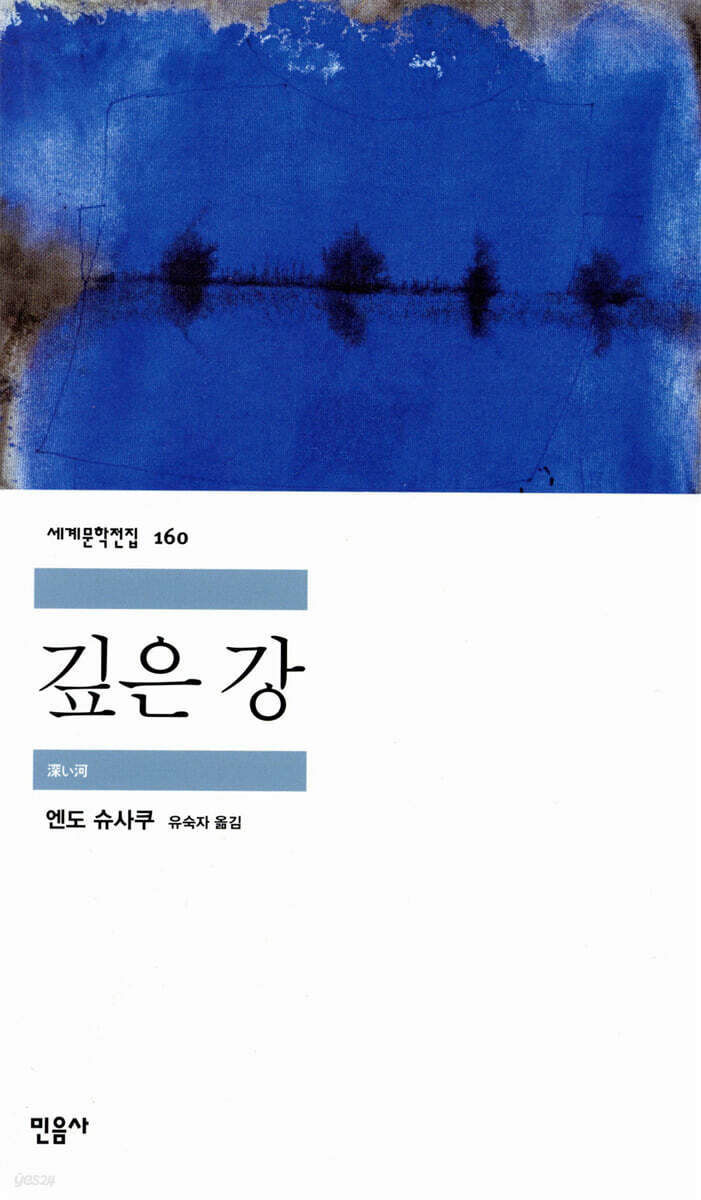
deep river
 |
Description
Book Introduction
"Deep River" is Shusaku Endo's last full-length novel, completed in 1993.
At this time, he was battling illness and underwent several surgeries, and this work can be said to be the culmination of his nearly 50-year literary career.
Shusaku Endo even left a will asking that this book be placed in his coffin along with Silence, which brought him great fame.
In this work, Shusaku Endo depicts all the themes he has pursued so far through various characters.
The characters in 'Deep River' all live with an indelible sadness in their hearts.
The shadow of death hangs deeply over the lives of the characters, and indeed over the entire work.
They question the meaning of life due to the death of their most precious and closest person.
They are deeply impressed by the Ganges River, which embraces everyone regardless of their caste, from the untouchables to former Prime Minister Indira Gandhi, and by the people who find true peace there.
At this time, he was battling illness and underwent several surgeries, and this work can be said to be the culmination of his nearly 50-year literary career.
Shusaku Endo even left a will asking that this book be placed in his coffin along with Silence, which brought him great fame.
In this work, Shusaku Endo depicts all the themes he has pursued so far through various characters.
The characters in 'Deep River' all live with an indelible sadness in their hearts.
The shadow of death hangs deeply over the lives of the characters, and indeed over the entire work.
They question the meaning of life due to the death of their most precious and closest person.
They are deeply impressed by the Ganges River, which embraces everyone regardless of their caste, from the untouchables to former Prime Minister Indira Gandhi, and by the people who find true peace there.
index
Chapter 1: The Case of Isobe
Chapter 2 Briefing Session
Chapter 3: Mitsuko's Case
Chapter 4: Numada's Case
Chapter 5 In the case of the device
Chapter 6: Riverside Village
Chapter 7 Goddess
Chapter 8: In Search of What Was Lost
Chapter 9 River
Chapter 10: The Case of Otsu
Chapter 11 Truly he has borne our infirmities,
Chapter 12 Reincarnation
Chapter 13 He is neither beautiful nor majestic.
Commentary on the work | Yoo Suk-ja
Author's chronology
Chapter 2 Briefing Session
Chapter 3: Mitsuko's Case
Chapter 4: Numada's Case
Chapter 5 In the case of the device
Chapter 6: Riverside Village
Chapter 7 Goddess
Chapter 8: In Search of What Was Lost
Chapter 9 River
Chapter 10: The Case of Otsu
Chapter 11 Truly he has borne our infirmities,
Chapter 12 Reincarnation
Chapter 13 He is neither beautiful nor majestic.
Commentary on the work | Yoo Suk-ja
Author's chronology
Publisher's Review
The image of the river leading to salvation, the image of God existing within humans
"Deep River" begins with the following black spiritual, from which Shusaku Endo derived the title of the work.
Deep river, God, I cross the river,
I want to go to the land of gathering.
The 'river' that appears in black spirituals signifies a god-like being who fulfills their fervent dream of a new world, a world of salvation, freeing them from their painful memories and suffering.
The 'river' mentioned in the novel ??Deep River?? can be seen as representing the sacred Ganges River, where Hindus come to face death, and further, as a deep and large river like a mother that leads them to the world of salvation and escapes all the suffering of life.
Additionally, through the Hindu goddess Chamunda who appears in the work, it symbolically depicts the suffering of humans, and further shows the existence of a god who shares in their suffering and continuously bestows love.
This can also be seen as an extension of the river's symbolic image.
The goddess, who bore the long-standing illnesses of people and breastfeeds them, appears as a contrasting image to the elegant and noble Virgin Mary.
Through Chamunda, Endo Shusaku wanted to portray a god who lives and breathes within humans, rather than a god who is above humans.
Her breasts are already wrinkled like an old woman's.
But she gives milk from her shrunken breasts to the children lined up.
Can you see that her right foot is ravaged by leprosy? Her stomach is hollowed out from hunger, and a scorpion is biting at it.
Even though she endures such illness and pain, she continues to breastfeed humans with her shrunken breasts.
Otsu, a person who has lived his entire life in pursuit of God, also represents the image of the 'river' that Endo Shusaku wants to talk about.
Otsu became a Catholic in his childhood without even realizing it, and spent his entire life searching for the true God.
He left the country where he was born and raised and went all the way to France, but after being rejected even by the seminary in search of a God who embraces all humanity, he came to India.
There, he is moved by the Ganges River, which extends a helping hand to everyone, regardless of the thick walls created by humans, such as class or gender.
Ultimately, the theme that Endo Shusaku speaks of through the image of the 'river' can be said to be the existence of a god who transcends religion and embraces all life, good and evil, that the human soul longs for.
"Deep River" begins with the following black spiritual, from which Shusaku Endo derived the title of the work.
Deep river, God, I cross the river,
I want to go to the land of gathering.
The 'river' that appears in black spirituals signifies a god-like being who fulfills their fervent dream of a new world, a world of salvation, freeing them from their painful memories and suffering.
The 'river' mentioned in the novel ??Deep River?? can be seen as representing the sacred Ganges River, where Hindus come to face death, and further, as a deep and large river like a mother that leads them to the world of salvation and escapes all the suffering of life.
Additionally, through the Hindu goddess Chamunda who appears in the work, it symbolically depicts the suffering of humans, and further shows the existence of a god who shares in their suffering and continuously bestows love.
This can also be seen as an extension of the river's symbolic image.
The goddess, who bore the long-standing illnesses of people and breastfeeds them, appears as a contrasting image to the elegant and noble Virgin Mary.
Through Chamunda, Endo Shusaku wanted to portray a god who lives and breathes within humans, rather than a god who is above humans.
Her breasts are already wrinkled like an old woman's.
But she gives milk from her shrunken breasts to the children lined up.
Can you see that her right foot is ravaged by leprosy? Her stomach is hollowed out from hunger, and a scorpion is biting at it.
Even though she endures such illness and pain, she continues to breastfeed humans with her shrunken breasts.
Otsu, a person who has lived his entire life in pursuit of God, also represents the image of the 'river' that Endo Shusaku wants to talk about.
Otsu became a Catholic in his childhood without even realizing it, and spent his entire life searching for the true God.
He left the country where he was born and raised and went all the way to France, but after being rejected even by the seminary in search of a God who embraces all humanity, he came to India.
There, he is moved by the Ganges River, which extends a helping hand to everyone, regardless of the thick walls created by humans, such as class or gender.
Ultimately, the theme that Endo Shusaku speaks of through the image of the 'river' can be said to be the existence of a god who transcends religion and embraces all life, good and evil, that the human soul longs for.
GOODS SPECIFICS
- Date of issue: October 30, 2007
- Page count, weight, size: 341 pages | 470g | 132*224*30mm
- ISBN13: 9788937461606
- ISBN10: 8937461609
You may also like
카테고리
korean


korean

![GQ KOREA Mark (Monthly): December [2025]](http://librairie.coreenne.fr/cdn/shop/files/8ef265dbbfbf186523ed75ba7319009d.jpg?v=1765340328&width=3840)


