![NewPhilosopher (Quarterly): Vol. 31 [2025]](http://librairie.coreenne.fr/cdn/shop/files/a30a0f20dfb7d906346558970aa4bc63.jpg?v=1765297442&width=3840)

NewPhilosopher (Quarterly): Vol. 31 [2025]
 |
Description
Book Introduction
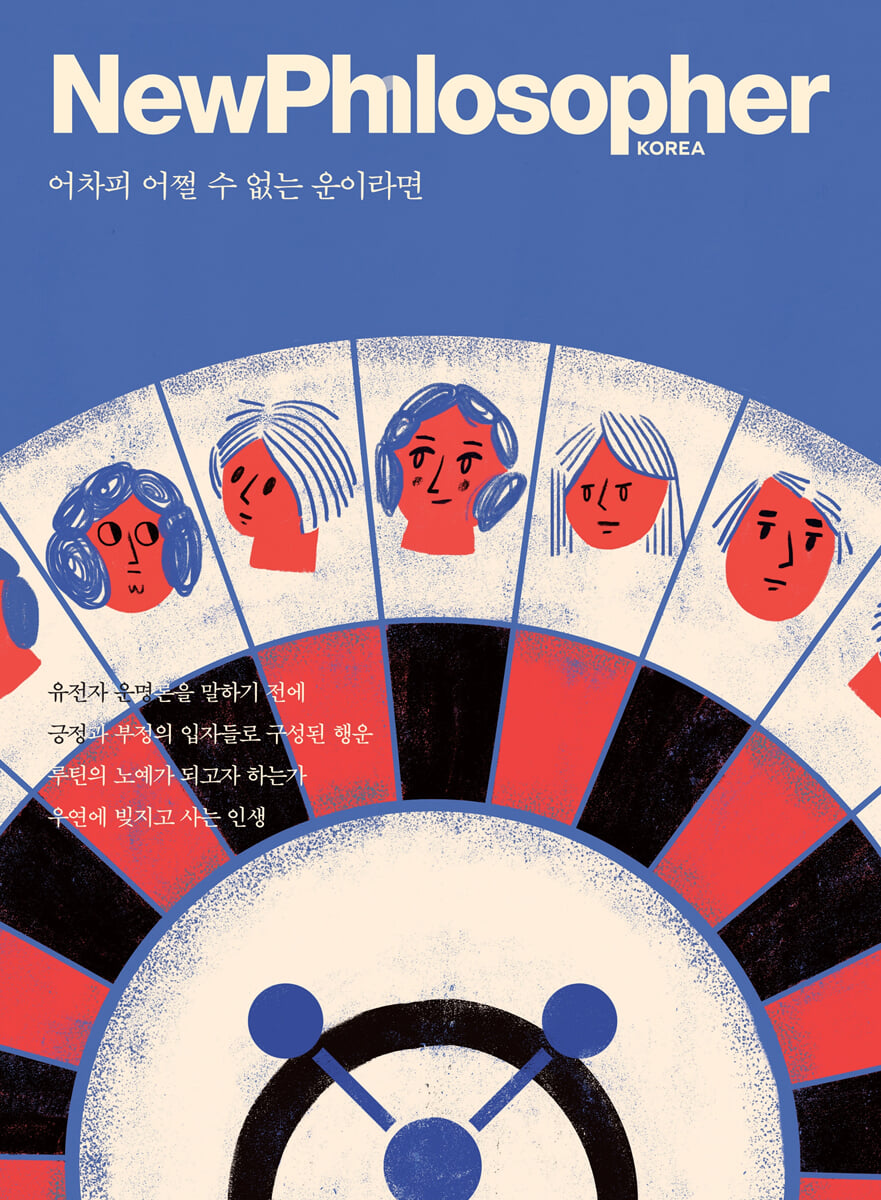
Life philosophy magazine 『New Philosopher』
vol.
31: If it's fate that can't be helped anyway
Many people nod their heads in agreement rather than disagree with this self-deprecating saying, “Those who work hard cannot keep up with those who are lucky.”
If the only rewards were based on effort, the world would probably be very different from what it is today.
While there are certainly results that are given according to someone's will, there are also disappointing results that constantly unfold, making that will meaningless.
Is that all?
We are bewildered by the random events that unfold before our eyes, such as unexpected good fortune or accidents that occur without a moment to defend ourselves. We live our lives facing numerous coincidences, big and small, every day.
If humans are nothing more than insignificant creatures before nature, and are inevitably swayed by the invisible force of "luck," wouldn't it be right to turn our attention to the question, "How should we accept the luck we will face not once but countless times?"
vol.
31: If it's fate that can't be helped anyway
Many people nod their heads in agreement rather than disagree with this self-deprecating saying, “Those who work hard cannot keep up with those who are lucky.”
If the only rewards were based on effort, the world would probably be very different from what it is today.
While there are certainly results that are given according to someone's will, there are also disappointing results that constantly unfold, making that will meaningless.
Is that all?
We are bewildered by the random events that unfold before our eyes, such as unexpected good fortune or accidents that occur without a moment to defend ourselves. We live our lives facing numerous coincidences, big and small, every day.
If humans are nothing more than insignificant creatures before nature, and are inevitably swayed by the invisible force of "luck," wouldn't it be right to turn our attention to the question, "How should we accept the luck we will face not once but countless times?"
- You can preview some of the book's contents.
Preview
index
10 _News from Nowhere
18 _ Intro _ Why Being Alive Is Exciting _ Jean Borg
20_ Luck _ Before Talking About Genetic Fatalism _ Antonia Case
28 _ Relationship _ A Life Owned by Chance _ Patrick Stokes
34 _ Comic _ The Philosophy of Poker _ Corey Moller
38 _ Illusion _ People Fascinated by the Randomness of the Universe _ Marina Benjamin
50 _ Equality _ If luck is uncontrollable anyway _ Tom Chatfield
56 _ Mentor _ Luck composed of positive and negative particles _ DBC Pierre
66 _ Opportunity _ Do you want to be a slave to routine _ Oliver Burkman
74 _ Philosophy _ The Black Swan That Laughs at the Truth _ André Dao
84 _ Psychology _ Was the tragedy of Oedipus inevitable? _ Damon Young
92 _ Thinking _ Luck is ultimately a product of habit _ Will Self
102 _ Morality _ True philosophy is not swayed by misfortune _ Nigel Warburton
116 _ Interview _ The Gambling Dilemma, Freedom and Paternalism _ Jonathan Wolff
126 _ Literature _ How novelists use 'chance' _ John Day
132 _ Fallacy _ Half Luck, Half Probability _ Sacrificial Gamble
140 _ Interview _ Loneliness is proof that you have become distant from yourself _ Jeong Woo-yeol
152 _ Space and _ Hiding anxiety and going to the library _ Im and
160 _ Thinking in pictures _ I sense, therefore I am joyfully _ Park Bona
166 _ Knowledge and Life _ Why We Must Accept Change _ Hwang Jin-gyu
174 _ Our Library
18 _ Intro _ Why Being Alive Is Exciting _ Jean Borg
20_ Luck _ Before Talking About Genetic Fatalism _ Antonia Case
28 _ Relationship _ A Life Owned by Chance _ Patrick Stokes
34 _ Comic _ The Philosophy of Poker _ Corey Moller
38 _ Illusion _ People Fascinated by the Randomness of the Universe _ Marina Benjamin
50 _ Equality _ If luck is uncontrollable anyway _ Tom Chatfield
56 _ Mentor _ Luck composed of positive and negative particles _ DBC Pierre
66 _ Opportunity _ Do you want to be a slave to routine _ Oliver Burkman
74 _ Philosophy _ The Black Swan That Laughs at the Truth _ André Dao
84 _ Psychology _ Was the tragedy of Oedipus inevitable? _ Damon Young
92 _ Thinking _ Luck is ultimately a product of habit _ Will Self
102 _ Morality _ True philosophy is not swayed by misfortune _ Nigel Warburton
116 _ Interview _ The Gambling Dilemma, Freedom and Paternalism _ Jonathan Wolff
126 _ Literature _ How novelists use 'chance' _ John Day
132 _ Fallacy _ Half Luck, Half Probability _ Sacrificial Gamble
140 _ Interview _ Loneliness is proof that you have become distant from yourself _ Jeong Woo-yeol
152 _ Space and _ Hiding anxiety and going to the library _ Im and
160 _ Thinking in pictures _ I sense, therefore I am joyfully _ Park Bona
166 _ Knowledge and Life _ Why We Must Accept Change _ Hwang Jin-gyu
174 _ Our Library
Detailed image
.jpg)
Into the book
“Everyone I met this time—doctors, nurses, specialists, and patients around me—told me I was the luckiest person in the world to have survived a penetrating wound to the neck.
But I didn't think so... ...I would have been luckier if I hadn't been shot."
--- p.15 "George Orwell"
In sociology, it is estimated that we generally know about 300 people by name.
In other words, just by meeting someone and having a conversation once, we can become close to 300 people that person knows.
To borrow Wiseman's expression, just two handshakes can open up 90,000 new opportunities.
Wiseman found that extroverts—those who chat with strangers, smile frequently, and use open body language—extremely expand their "lucky networks."
--- p.24 "Before Talking About Genetic Fatalism _ Antonia Case"
Think back to a time when you were lucky, and tell me about an experience where good and bad things mixed together like a pinball.
I'm talking about incidents that follow one another.
For example, a free vacation is lucky. A Titanic ride is bad luck. But surviving the sinking is even more fortunate. A thief trying to steal your Bugatti might fall off a cliff, or a lottery winner might ruin your life.
What I mean is that there are positive and negative particles around us colliding with each other and sending signals.
--- p.62 "Luck Composed of Positive and Negative Particles _ DBC Pierre"
If we shift our perspective this way, isn't it overly arrogant to believe we know what will make us happy and therefore can confidently judge whether certain events are fortunate or unfortunate? Looking back on our lives, we can all recall experiences that initially seemed unfortunate but turned out to be unexpected blessings, or seemingly wonderful experiences that ultimately proved disappointing.
When I think about what might have happened, this kind of memory is my attitude before I realized how lucky I am to live my life now.
Ultimately, the key to a lucky life may lie in letting go of the conviction that you know what such a life looks like.
--- p.70 "Do You Want to Become a Slave to Routine? _ Oliver Burkman"
Of course, being born with good parents or nationality is a matter of luck, but inherited privileges and the flow of capital and energy are not mere coincidences.
In other words, middle-class privilege is luck, but the process by which middle-class privilege is granted is not luck.
For example, the odds of being born wealthy and healthy white are low, but the odds of a wealthy and healthy white community lasting for a long time are very high.
A prime reason is that the middle class constantly reproduces the existing system.
--- p.89 "Was the Tragedy of Oedipus Inevitable? _ Damon Young"
“Loneliness itself is a ‘signal that I am distant from my heart.’
My perspective is constantly directed outward, not toward myself.
It's not that I meet people because I need them, but rather because I want to confirm that I have many people around me.
“Loneliness and emptiness are not emotions that arise from relationships with others, but rather from not trying to access my own emotions.”
But I didn't think so... ...I would have been luckier if I hadn't been shot."
--- p.15 "George Orwell"
In sociology, it is estimated that we generally know about 300 people by name.
In other words, just by meeting someone and having a conversation once, we can become close to 300 people that person knows.
To borrow Wiseman's expression, just two handshakes can open up 90,000 new opportunities.
Wiseman found that extroverts—those who chat with strangers, smile frequently, and use open body language—extremely expand their "lucky networks."
--- p.24 "Before Talking About Genetic Fatalism _ Antonia Case"
Think back to a time when you were lucky, and tell me about an experience where good and bad things mixed together like a pinball.
I'm talking about incidents that follow one another.
For example, a free vacation is lucky. A Titanic ride is bad luck. But surviving the sinking is even more fortunate. A thief trying to steal your Bugatti might fall off a cliff, or a lottery winner might ruin your life.
What I mean is that there are positive and negative particles around us colliding with each other and sending signals.
--- p.62 "Luck Composed of Positive and Negative Particles _ DBC Pierre"
If we shift our perspective this way, isn't it overly arrogant to believe we know what will make us happy and therefore can confidently judge whether certain events are fortunate or unfortunate? Looking back on our lives, we can all recall experiences that initially seemed unfortunate but turned out to be unexpected blessings, or seemingly wonderful experiences that ultimately proved disappointing.
When I think about what might have happened, this kind of memory is my attitude before I realized how lucky I am to live my life now.
Ultimately, the key to a lucky life may lie in letting go of the conviction that you know what such a life looks like.
--- p.70 "Do You Want to Become a Slave to Routine? _ Oliver Burkman"
Of course, being born with good parents or nationality is a matter of luck, but inherited privileges and the flow of capital and energy are not mere coincidences.
In other words, middle-class privilege is luck, but the process by which middle-class privilege is granted is not luck.
For example, the odds of being born wealthy and healthy white are low, but the odds of a wealthy and healthy white community lasting for a long time are very high.
A prime reason is that the middle class constantly reproduces the existing system.
--- p.89 "Was the Tragedy of Oedipus Inevitable? _ Damon Young"
“Loneliness itself is a ‘signal that I am distant from my heart.’
My perspective is constantly directed outward, not toward myself.
It's not that I meet people because I need them, but rather because I want to confirm that I have many people around me.
“Loneliness and emptiness are not emotions that arise from relationships with others, but rather from not trying to access my own emotions.”
--- p.151 "Loneliness is proof that you have become distant from yourself _ Interview with Woo-yeol Jeong"
Publisher's Review
In a world governed by randomness and chance,
_ How to deal with luck that comes as an irresistible force
In Korean, the word 'un' contains both good and bad luck, but in English, the word 'luck' contains both the general meaning of 'un' and the positive meaning of 'luck'.
Just as Koreans are curious about everything from their daily fortune to their entire lives, the curiosity and obsession with human fortune in the West seems to be no different.
According to Littlewood's Law, proposed by British mathematician John Edensor Littlewood, based on the daily activity hours he calculated, most people would experience an event with a probability of one in a million, which they would call a "miracle," about once every 35 days.
But there is one final caveat to this rule.
The point is, we don't know whether that amazing event is lucky, unlucky, or lucky for others but not lucky at all for us.
Reading the various perspectives on 'luck', the keyword for this issue of <New Philosopher>, I came to two major conclusions.
First, although it is an irresistible force beyond human power, good and bad luck can result in different outcomes for us to see now and realize later.
Another conclusion is the positive answer that, while there is no secret to getting lucky, you can expand the area of possibility in which you can receive luck.
Journalist Oliver Berkman points out that when we dream of good luck, we mean achieving what we want, and that the very act of trying to reach a set goal is a desire to control life.
He calls this situation the paradox of luck, and says that if you want to attract more luck into your life, you have to let go of the desire to control your life from the start.
“The only way you can have any real influence on your luck is to let go of your obsession with control and maximize chance.” If you meet more people, go to more places, and aren’t afraid to encounter different situations in life, the odds of you encountering that sudden gift of serendipity—that is, luck—will inevitably increase.
Of course, you have to calmly accept the small misfortunes you will encounter along the way to that good fortune.
We cannot directly influence individual events that bring us luck, but we can broaden the range of events within which luck occurs.
Roberts argues that luck in managing a career is “proportional to the passion you put into your work and the number of people you actually interact with.”
If expressed formally, it can be expressed as 'luck = action × notification'.
(Page 68)
When the paradigm of fortune and misfortune changes
_ Luck composed of positive and negative particles
Certainly, some aspects of life can be changed through individual will and action.
However, the family environment in which one is born and the economic power of the country in which one is born are entirely beyond the control of an individual.
But as we can see from the various news reports, unfortunate incidents and accidents happen to both rich and poor people.
If luck isn't innate or genetic, then what is it?
Richard Wiseman, a professor of psychology at the University of Hertfordshire in the UK, found that extroverts – people who chat with strangers, smile frequently, and use open body language – have vastly expanded “lucky networks.”
Moreover, we found striking differences in the 'good decision-making' processes of lucky and unlucky people.
The lucky ones are the ones who accept their innermost desires without reservation.
While they soon showed a tendency to rely heavily on intuition and gut feelings, another notable difference was that the unlucky ones often ignored the signals their inner selves were sending.
Novelist DBC Pierre once said, "A free vacation is lucky! A ride on the Titanic is bad luck! And surviving the sinking is even better!" He explained that the particles of positivity and negativity constantly generated in our lives collide, sending signals, and the foam of those crashing waves unfolds before our eyes in various situations.
Even if it seems like bad luck now, when you look back over time, you may realize that maybe that situation was the beginning of good luck.
The important thing is to wisely apply the signals sent by those negative and positive particles to my life.
Luck may be nothing more than an illusion.
Even though we create our own luck to some extent, how that luck unfolds—for better or worse—is largely a matter of judgment.
(Page 25)
"People are less than you think": An interview with psychiatrist Jeong Woo-yeol.
- People who try to hide the fact that they are emotional beings to the core.
The interviewee for this issue is Dr. Woo-Yeol Jeong, a psychiatrist who runs a YouTube channel called 'Psychiatrist Woo-Yeol Jeong' with 230,000 subscribers.
The reason I met a psychiatrist, not a philosopher, is because he is the person who emphasizes the value and importance of 'emotions' more than anyone else and is the one who spreads this message through books, videos, and lectures.
Sartre also defined 'emotions' as the essence of human existence, and even said, 'Man is his emotions.'
Although our society is centered on reason, prioritizing who lives more intelligently and rationally, the emotions that are the source of each individual's emotions are ignored and suppressed, and as a result, negative side effects and negative events continue to occur.
He criticizes our chronic educational atmosphere, which has created a frame where reason is superior and emotions are inferior, and which prioritizes rational development over emotional development, especially during childhood growth and education.
However, if we look into the causes of many crimes and social conflicts, the reasons are diverse, but the fundamental problem is ultimately a problem of emotions. In this day and age, where we do not know how to deal with emotions and live wearing a mask as if unconditionally suppressing them is a virtue, mental wounds and illnesses are bound to increase.
“There’s something I often say.
'People are not as good as you think.' Anyway, since humans are emotional beings, it's probably the same everywhere, but the social atmosphere is being created as if it's right to hide your emotions.
If that happens, the emotions that have accumulated inside will grow, you will lose your own healthy identity, and you will live only pretending to be healthy on the outside, focusing on what is visible.”
_ How to deal with luck that comes as an irresistible force
In Korean, the word 'un' contains both good and bad luck, but in English, the word 'luck' contains both the general meaning of 'un' and the positive meaning of 'luck'.
Just as Koreans are curious about everything from their daily fortune to their entire lives, the curiosity and obsession with human fortune in the West seems to be no different.
According to Littlewood's Law, proposed by British mathematician John Edensor Littlewood, based on the daily activity hours he calculated, most people would experience an event with a probability of one in a million, which they would call a "miracle," about once every 35 days.
But there is one final caveat to this rule.
The point is, we don't know whether that amazing event is lucky, unlucky, or lucky for others but not lucky at all for us.
Reading the various perspectives on 'luck', the keyword for this issue of <New Philosopher>, I came to two major conclusions.
First, although it is an irresistible force beyond human power, good and bad luck can result in different outcomes for us to see now and realize later.
Another conclusion is the positive answer that, while there is no secret to getting lucky, you can expand the area of possibility in which you can receive luck.
Journalist Oliver Berkman points out that when we dream of good luck, we mean achieving what we want, and that the very act of trying to reach a set goal is a desire to control life.
He calls this situation the paradox of luck, and says that if you want to attract more luck into your life, you have to let go of the desire to control your life from the start.
“The only way you can have any real influence on your luck is to let go of your obsession with control and maximize chance.” If you meet more people, go to more places, and aren’t afraid to encounter different situations in life, the odds of you encountering that sudden gift of serendipity—that is, luck—will inevitably increase.
Of course, you have to calmly accept the small misfortunes you will encounter along the way to that good fortune.
We cannot directly influence individual events that bring us luck, but we can broaden the range of events within which luck occurs.
Roberts argues that luck in managing a career is “proportional to the passion you put into your work and the number of people you actually interact with.”
If expressed formally, it can be expressed as 'luck = action × notification'.
(Page 68)
When the paradigm of fortune and misfortune changes
_ Luck composed of positive and negative particles
Certainly, some aspects of life can be changed through individual will and action.
However, the family environment in which one is born and the economic power of the country in which one is born are entirely beyond the control of an individual.
But as we can see from the various news reports, unfortunate incidents and accidents happen to both rich and poor people.
If luck isn't innate or genetic, then what is it?
Richard Wiseman, a professor of psychology at the University of Hertfordshire in the UK, found that extroverts – people who chat with strangers, smile frequently, and use open body language – have vastly expanded “lucky networks.”
Moreover, we found striking differences in the 'good decision-making' processes of lucky and unlucky people.
The lucky ones are the ones who accept their innermost desires without reservation.
While they soon showed a tendency to rely heavily on intuition and gut feelings, another notable difference was that the unlucky ones often ignored the signals their inner selves were sending.
Novelist DBC Pierre once said, "A free vacation is lucky! A ride on the Titanic is bad luck! And surviving the sinking is even better!" He explained that the particles of positivity and negativity constantly generated in our lives collide, sending signals, and the foam of those crashing waves unfolds before our eyes in various situations.
Even if it seems like bad luck now, when you look back over time, you may realize that maybe that situation was the beginning of good luck.
The important thing is to wisely apply the signals sent by those negative and positive particles to my life.
Luck may be nothing more than an illusion.
Even though we create our own luck to some extent, how that luck unfolds—for better or worse—is largely a matter of judgment.
(Page 25)
"People are less than you think": An interview with psychiatrist Jeong Woo-yeol.
- People who try to hide the fact that they are emotional beings to the core.
The interviewee for this issue is Dr. Woo-Yeol Jeong, a psychiatrist who runs a YouTube channel called 'Psychiatrist Woo-Yeol Jeong' with 230,000 subscribers.
The reason I met a psychiatrist, not a philosopher, is because he is the person who emphasizes the value and importance of 'emotions' more than anyone else and is the one who spreads this message through books, videos, and lectures.
Sartre also defined 'emotions' as the essence of human existence, and even said, 'Man is his emotions.'
Although our society is centered on reason, prioritizing who lives more intelligently and rationally, the emotions that are the source of each individual's emotions are ignored and suppressed, and as a result, negative side effects and negative events continue to occur.
He criticizes our chronic educational atmosphere, which has created a frame where reason is superior and emotions are inferior, and which prioritizes rational development over emotional development, especially during childhood growth and education.
However, if we look into the causes of many crimes and social conflicts, the reasons are diverse, but the fundamental problem is ultimately a problem of emotions. In this day and age, where we do not know how to deal with emotions and live wearing a mask as if unconditionally suppressing them is a virtue, mental wounds and illnesses are bound to increase.
“There’s something I often say.
'People are not as good as you think.' Anyway, since humans are emotional beings, it's probably the same everywhere, but the social atmosphere is being created as if it's right to hide your emotions.
If that happens, the emotions that have accumulated inside will grow, you will lose your own healthy identity, and you will live only pretending to be healthy on the outside, focusing on what is visible.”
GOODS SPECIFICS
- Date of issue: July 3, 2025
- Page count, weight, size: 176 pages | 496g | 180*245*12mm
- ISBN13: 9772586476005
- ISBN10: 25864769
You may also like
카테고리
korean


korean

![GQ KOREA Mark (Monthly): December [2025]](http://librairie.coreenne.fr/cdn/shop/files/8ef265dbbfbf186523ed75ba7319009d.jpg?v=1765340328&width=3840)


