

My Cultural Heritage Tour 9: Seoul Part 1
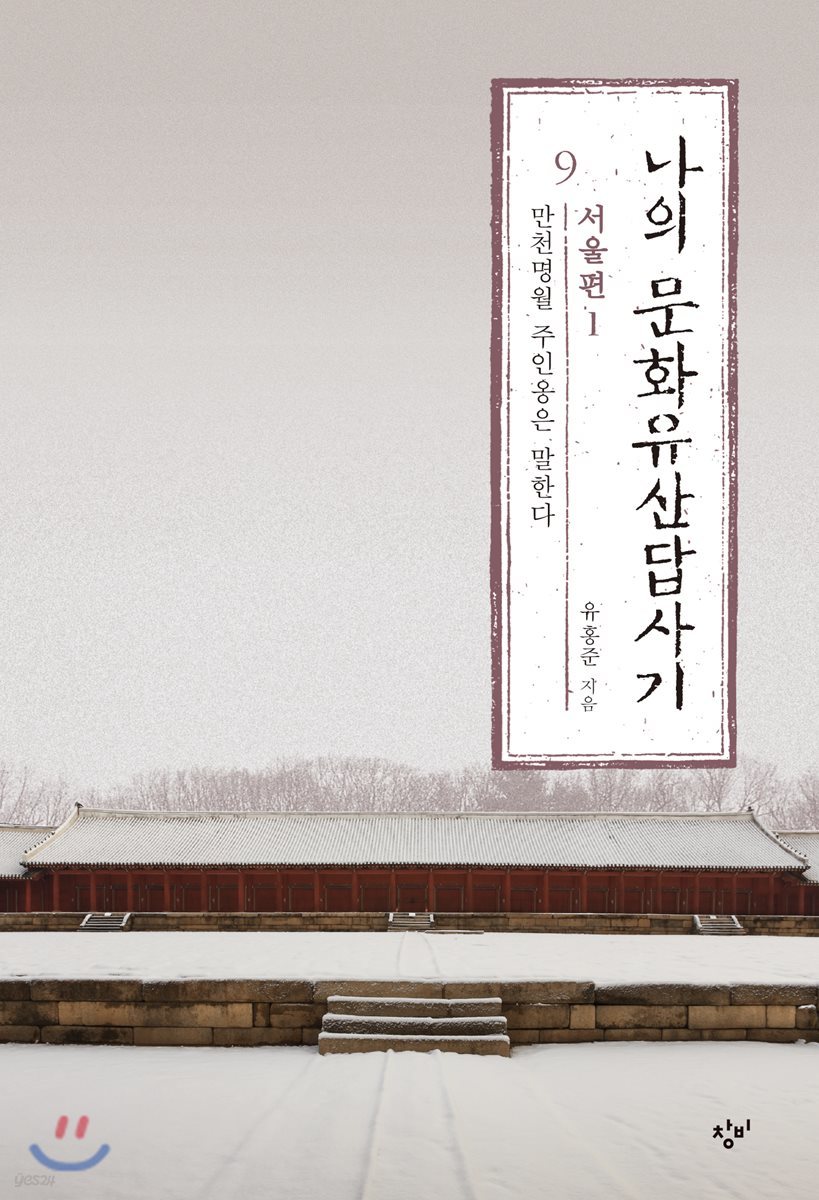 |
Description
Book Introduction
The best of the unrivaled best-selling series
Yoo Hong-jun finally speaks about Seoul!
"My Cultural Heritage Tour," a unique series representing Korean humanities books and beloved by 3.8 million readers, has returned.
The 'Dapsagi', which has been published in 8 domestic volumes and 4 Japanese volumes over the past 25 years, has finally arrived in the capital city of Seoul, and presents the first volume of the Seoul volume, 'Mancheonmyeongwol Juinong speaks' and the second volume, 'Yujuhakseon Mujuhakbul'.
The author examines the cultural heritage and history of Seoul, a vast city where past, present, and future coexist, with delicate and sharp insight, while unraveling the stories intertwined with it with his characteristically easygoing wit.
In particular, in the 'Seoul edition', it is noteworthy that the 'travelogue' has reached a higher level.
The author's skill in exquisitely weaving together and easily explaining vast amounts of information encompassing history, art, and culture has reached its peak, allowing us to see our history at a glance without having to study it separately.
The sentences, polished and refined over many years, vividly convey a sense of presence, bringing cultural heritage and the people and stories associated with it to the reader's eyes.
It is a wonderful balance of fun and knowledge, without being overly academic or critical, but not too light either.
Although 'Dapsagi' is already a high-level cultural and educational book and the pinnacle of travel literature, 'Seoul Edition' shows the efforts accumulated over the years shining through, reaching a new peak.
Today, Seoul is a metropolis that changes every day, embracing the contradictions of the best and the worst.
The author emphasizes that cultural heritage is what unites this complex city of Seoul, and writes about Seoul, his hometown, with pride and love.
The newly published Seoul edition will reveal a new side of Seoul, an ancient capital city with a unique character that is hard to find anywhere else in the world, and will enlighten you on the history and charm of Seoul that you thought you knew but actually didn't.
『My Cultural Heritage Tour 9: Seoul Part 1』 begins with Jongmyo Shrine, a symbolic cultural heritage of the Joseon Dynasty, and explores every nook and cranny of Changdeokgung Palace, Changdeokgung Palace Rear Garden, and Changgyeonggung Palace, deeply unraveling the beauty of Joseon architecture, the joys and sorrows of the royal family's lives, and the countless stories behind each building.
Here, the author's unique 'eye' for beauty, combined with the admiration of the world for our cultural heritage, has comprehensively summarized the charm of Seoul, the 'city of palaces' comparable to Kyoto, the 'city of temples', and Suzhou, the 'city of gardens'.
Yoo Hong-jun finally speaks about Seoul!
"My Cultural Heritage Tour," a unique series representing Korean humanities books and beloved by 3.8 million readers, has returned.
The 'Dapsagi', which has been published in 8 domestic volumes and 4 Japanese volumes over the past 25 years, has finally arrived in the capital city of Seoul, and presents the first volume of the Seoul volume, 'Mancheonmyeongwol Juinong speaks' and the second volume, 'Yujuhakseon Mujuhakbul'.
The author examines the cultural heritage and history of Seoul, a vast city where past, present, and future coexist, with delicate and sharp insight, while unraveling the stories intertwined with it with his characteristically easygoing wit.
In particular, in the 'Seoul edition', it is noteworthy that the 'travelogue' has reached a higher level.
The author's skill in exquisitely weaving together and easily explaining vast amounts of information encompassing history, art, and culture has reached its peak, allowing us to see our history at a glance without having to study it separately.
The sentences, polished and refined over many years, vividly convey a sense of presence, bringing cultural heritage and the people and stories associated with it to the reader's eyes.
It is a wonderful balance of fun and knowledge, without being overly academic or critical, but not too light either.
Although 'Dapsagi' is already a high-level cultural and educational book and the pinnacle of travel literature, 'Seoul Edition' shows the efforts accumulated over the years shining through, reaching a new peak.
Today, Seoul is a metropolis that changes every day, embracing the contradictions of the best and the worst.
The author emphasizes that cultural heritage is what unites this complex city of Seoul, and writes about Seoul, his hometown, with pride and love.
The newly published Seoul edition will reveal a new side of Seoul, an ancient capital city with a unique character that is hard to find anywhere else in the world, and will enlighten you on the history and charm of Seoul that you thought you knew but actually didn't.
『My Cultural Heritage Tour 9: Seoul Part 1』 begins with Jongmyo Shrine, a symbolic cultural heritage of the Joseon Dynasty, and explores every nook and cranny of Changdeokgung Palace, Changdeokgung Palace Rear Garden, and Changgyeonggung Palace, deeply unraveling the beauty of Joseon architecture, the joys and sorrows of the royal family's lives, and the countless stories behind each building.
Here, the author's unique 'eye' for beauty, combined with the admiration of the world for our cultural heritage, has comprehensively summarized the charm of Seoul, the 'city of palaces' comparable to Kyoto, the 'city of temples', and Suzhou, the 'city of gardens'.
- You can preview some of the book's contents.
Preview
index
Part 1: Seeds
Jongmyo Jongmyo Praise
UNESCO World Heritage Site / Architect Seung Hyo-sang's Confessions / Frank Gehry / Jongmyo Shrine and Sajik Shrine / Yeongnyeongjeon Hall / Chilsadang and Gongsindang
The Jongmyo rites, "Botaepyeong" and "Jeongdaeeop," will last forever.
『National Oryeui』 / 「Botaepyeong」 and 「Jeongdaeeop」 / King Sejong's Absolute Pitch / Jongmyo Jerye / Lee Gun-yong's 「Jeonpyehuimun」 / Hyangdaecheong and Jaegung / Jeonsacheong / Jeongjeon, Yeongnyeongjeon, Akgongcheong / Shindo
Part 2 Changdeokgung Palace
A palace where human touch lives on, from Donhwamun Gate to Injeongjeon Hall
Seoul, the City of Palaces / The Five Grand Palaces / Gyeongbokgung and Changdeokgung / "Donggwoldo" (Donggwoldo) / Donhwamun Gate / Nae Byeongjo and Chansu Gaehwa / Geumcheongyo Bridge / Injeongjeon Hall / "Geomibulru Hwaibulchi" (Geomibulru Hwaibulchi)
Seonjeongjeon and Huijeongdang, all of Joseon architecture, are found at Changdeokgung Palace.
The Structure of Changdeokgung Palace / The Facade of the Naejeon / Bincheong and Eochago / Seonjeongjeon Hall / Confucian Ideology and Gyeongyeon / Huijeongdang Hall / Seongiokhyeong and Haweolji Pond / The Great Fire of Changdeokgung Palace and Its Restoration / The Naejeon Mural Project
This is how the kings and princes of Joseon lived : Daejojeon and Seongjeonggak
Daejojeon Hall / Gyeonghungak Back Room / Daejojeon Flower Garden / Jungheedang / Seongjeonggak / Huiuru / Gwanmulheon / Seunghwaru West Tree
Nakseonjae , King Heonjong and the women of the Yi royal family
King Heonjong / Nakseonjae / 『Bosodang Injon and』 Nakseonjae's signboard / Heo Ryeon and Heonjong's meeting / Nakseonjae back room / Women of the Yi royal family / Lee Gu and Julia
Part 3: Rear Garden of Changdeokgung Palace
Buyongjeong, the pinnacle of Korean gardens that manage nature
Nature and Gardens / Changdeokgung Palace Tiger / Buyongji Pond Entrance / Sajeongbigak / Yeonghwadang / Buyongjeong Pavilion / Dasan Jeong Yak-yong
Gyujanggak Juhapnu, the rear garden of the palace where the king and his subjects became one
Eosu Gate / The fence of the drinking party / King Jeongjo and Gyujanggak / Seoho Lake and 『Gyujanggongmok』 / Chabi Daeryunghwawon / Danwon Kim Hong-do / Huiujeong, Cheonseokjeong, Seohyanggak / Pyoam Kang Se-hwang
If only I could enjoy the scenery of Aeryeonjeong and Yeongyeongdang, I would not take it.
Bullomun Gate / King Sukjong's Aeryeonjeong Gate / Uiduhap and Gioheon Gate / Crown Prince Hyomyeong and Uiduhap Ridge Inscription / Eosudang Hall / Yeongyeongdang Hall / Chun-Ang Hall
The owner of Jondeokjeong and Okryucheon Mancheonmyeongwol (萬川明月) says
Gwanramji / Gwanramjeong / Jondeokjeong / Mancheonmyeongwoljuinong / Appearance and characteristics of midnight / Okryucheon and Okryujeong / Joseon's last royal palace and a 7-year-old fragrant tree
Part 4 Changgyeonggung Palace
The palace where the dreams and regrets of King Yeongjo , the maternal and paternal grandfathers, are buried
View of Changgyeonggung Palace / Myeongjeongjeon Hall / History of Changgyeonggung Palace / Honghwamun Gate and King Yeongjo's Equalization Law / Okcheongyo Bridge and Jujaso / Munjeongjeon Hall and Sungmundang Hall / Crown Prince Sado and King Jeongjo
The many secret royal records stored in the inner palace
Ham In-jeong / Hwangyeongjeon / Crown Prince Sohyeon / Gyeongchunjeon and the inscriptions of King Jeongjo and King Sunjo / Tongmyeongjeon / Queen Inhyeon and Jang Hui-bin / Yanghwadang and the women of the Naemyeongbu / Yeongchunheon and Jibokheon
Mandarin ducks fly into the Chundangji Pond at Changgyeonggung Palace and Changgyeongwon Garden.
Jagyeongjeon Hall / Hyegyeonggung Palace and Hanjungnok / Punggi-dae / Angbuilgu / Seongjong's Birthplace / Ming Dynasty Stone Pagoda and Botanical Garden / Chundangdae Gwandeokjeong Pavilion
Jongmyo Jongmyo Praise
UNESCO World Heritage Site / Architect Seung Hyo-sang's Confessions / Frank Gehry / Jongmyo Shrine and Sajik Shrine / Yeongnyeongjeon Hall / Chilsadang and Gongsindang
The Jongmyo rites, "Botaepyeong" and "Jeongdaeeop," will last forever.
『National Oryeui』 / 「Botaepyeong」 and 「Jeongdaeeop」 / King Sejong's Absolute Pitch / Jongmyo Jerye / Lee Gun-yong's 「Jeonpyehuimun」 / Hyangdaecheong and Jaegung / Jeonsacheong / Jeongjeon, Yeongnyeongjeon, Akgongcheong / Shindo
Part 2 Changdeokgung Palace
A palace where human touch lives on, from Donhwamun Gate to Injeongjeon Hall
Seoul, the City of Palaces / The Five Grand Palaces / Gyeongbokgung and Changdeokgung / "Donggwoldo" (Donggwoldo) / Donhwamun Gate / Nae Byeongjo and Chansu Gaehwa / Geumcheongyo Bridge / Injeongjeon Hall / "Geomibulru Hwaibulchi" (Geomibulru Hwaibulchi)
Seonjeongjeon and Huijeongdang, all of Joseon architecture, are found at Changdeokgung Palace.
The Structure of Changdeokgung Palace / The Facade of the Naejeon / Bincheong and Eochago / Seonjeongjeon Hall / Confucian Ideology and Gyeongyeon / Huijeongdang Hall / Seongiokhyeong and Haweolji Pond / The Great Fire of Changdeokgung Palace and Its Restoration / The Naejeon Mural Project
This is how the kings and princes of Joseon lived : Daejojeon and Seongjeonggak
Daejojeon Hall / Gyeonghungak Back Room / Daejojeon Flower Garden / Jungheedang / Seongjeonggak / Huiuru / Gwanmulheon / Seunghwaru West Tree
Nakseonjae , King Heonjong and the women of the Yi royal family
King Heonjong / Nakseonjae / 『Bosodang Injon and』 Nakseonjae's signboard / Heo Ryeon and Heonjong's meeting / Nakseonjae back room / Women of the Yi royal family / Lee Gu and Julia
Part 3: Rear Garden of Changdeokgung Palace
Buyongjeong, the pinnacle of Korean gardens that manage nature
Nature and Gardens / Changdeokgung Palace Tiger / Buyongji Pond Entrance / Sajeongbigak / Yeonghwadang / Buyongjeong Pavilion / Dasan Jeong Yak-yong
Gyujanggak Juhapnu, the rear garden of the palace where the king and his subjects became one
Eosu Gate / The fence of the drinking party / King Jeongjo and Gyujanggak / Seoho Lake and 『Gyujanggongmok』 / Chabi Daeryunghwawon / Danwon Kim Hong-do / Huiujeong, Cheonseokjeong, Seohyanggak / Pyoam Kang Se-hwang
If only I could enjoy the scenery of Aeryeonjeong and Yeongyeongdang, I would not take it.
Bullomun Gate / King Sukjong's Aeryeonjeong Gate / Uiduhap and Gioheon Gate / Crown Prince Hyomyeong and Uiduhap Ridge Inscription / Eosudang Hall / Yeongyeongdang Hall / Chun-Ang Hall
The owner of Jondeokjeong and Okryucheon Mancheonmyeongwol (萬川明月) says
Gwanramji / Gwanramjeong / Jondeokjeong / Mancheonmyeongwoljuinong / Appearance and characteristics of midnight / Okryucheon and Okryujeong / Joseon's last royal palace and a 7-year-old fragrant tree
Part 4 Changgyeonggung Palace
The palace where the dreams and regrets of King Yeongjo , the maternal and paternal grandfathers, are buried
View of Changgyeonggung Palace / Myeongjeongjeon Hall / History of Changgyeonggung Palace / Honghwamun Gate and King Yeongjo's Equalization Law / Okcheongyo Bridge and Jujaso / Munjeongjeon Hall and Sungmundang Hall / Crown Prince Sado and King Jeongjo
The many secret royal records stored in the inner palace
Ham In-jeong / Hwangyeongjeon / Crown Prince Sohyeon / Gyeongchunjeon and the inscriptions of King Jeongjo and King Sunjo / Tongmyeongjeon / Queen Inhyeon and Jang Hui-bin / Yanghwadang and the women of the Naemyeongbu / Yeongchunheon and Jibokheon
Mandarin ducks fly into the Chundangji Pond at Changgyeonggung Palace and Changgyeongwon Garden.
Jagyeongjeon Hall / Hyegyeonggung Palace and Hanjungnok / Punggi-dae / Angbuilgu / Seongjong's Birthplace / Ming Dynasty Stone Pagoda and Botanical Garden / Chundangdae Gwandeokjeong Pavilion
Detailed image
.jpg)
Into the book
The Joseon-style characteristics and sophistication of Changdeokgung Palace's architecture stand out in the three-tiered arrangement.
The three dynasties refer to the Outer Dynasty, the Governing Dynasty, and the Yan Dynasty.
The main buildings of the Oejo are Injeongjeon, where ceremonies are held; the Chijo is Seonjeongjeon, where the king conducts state affairs; and the Yeonjo is Daejojeon, the king and queen's bedroom.
In Gyeongbokgung Palace, these three structures are aligned in a straight line from north to south, but in Changdeokgung Palace, they are arranged side by side, shoulder to shoulder, along the mountainside.
So, while Gyeongbokgung Palace has a Chinese-style ceremonial tension, Changdeokgung Palace is said to be a comfortable Korean space with a human touch.
The three dynasties refer to the Outer Dynasty, the Governing Dynasty, and the Yan Dynasty.
The main buildings of the Oejo are Injeongjeon, where ceremonies are held; the Chijo is Seonjeongjeon, where the king conducts state affairs; and the Yeonjo is Daejojeon, the king and queen's bedroom.
In Gyeongbokgung Palace, these three structures are aligned in a straight line from north to south, but in Changdeokgung Palace, they are arranged side by side, shoulder to shoulder, along the mountainside.
So, while Gyeongbokgung Palace has a Chinese-style ceremonial tension, Changdeokgung Palace is said to be a comfortable Korean space with a human touch.
--- p.
129
129
Publisher's Review
The best of the unrivaled best-selling series
Yoo Hong-jun finally speaks about Seoul!
Talking about the charm of Seoul, the "City of Palaces"
Seoul Edition Volume 1, 'Mancheonmyeongwol Juinong Speaks', begins with Jongmyo Shrine, a symbolic cultural heritage of the Joseon Dynasty, and explores every nook and cranny of Changdeokgung Palace, Changdeokgung Palace Rear Garden, and Changgyeonggung Palace, deeply unraveling the beauty of Joseon architecture, the joys and sorrows of the royal family's lives, and the countless stories behind each building.
Here, the author's unique 'eye' for beauty, combined with the admiration of the world for our cultural heritage, has comprehensively summarized the charm of Seoul, the 'city of palaces' comparable to Kyoto, the 'city of temples', and Suzhou, the 'city of gardens'.
The first destination of our Seoul tour is Jongmyo Shrine, a cultural heritage site representing the Joseon Dynasty's royal culture.
The author argues that our people do not properly understand the value of Jongmyo, a world-class cultural heritage comparable to the Parthenon in Greece, the Pantheon in Rome, and the Temple of Heaven in China, and adds the appreciation of world-renowned architects such as Frank Gehry and Seung Hyo-sang to the historical and symbolic meaning of Jongmyo, offering a fervent praise for Jongmyo.
In particular, in the part where he describes the majestic scene of the Jongmyo rites unfolding on the Jeongjeon Woldae, one can nod one's head in agreement as to why the author chose Jongmyo as the starting point for his tour of Seoul.
The joy of visiting Changdeokgung Palace lies in seeing the various buildings, each with its own unique shape and structure, reminiscent of a comprehensive exhibition hall of traditional Korean houses.
From Injeongjeon, the highlight of Changdeokgung Palace, to Seonjeongjeon, the only building with blue tiles, to Huijeongdang, which maximizes its splendor with its front canopy, and Nakseonjae, which was modeled after the sarangchae (men's quarters) of literati, everything about Joseon architecture is here.
Also, the lives and joys and sorrows of historical figures related to each building, such as Crown Prince Hyomyeong at Seunghwaru, Emperor Sunjong at Huijeongdang, and Princess Deokhye at Nakseonjae, are vividly depicted, allowing us to truly feel that Changdeokgung was the living space where the kings of Joseon and their families actually lived.
The author's keen eye for beauty shines in the 'Changdeokgung rear garden,' considered the crown jewel of Korean gardens.
The rear garden of Changdeokgung Palace, better known as Biwon (苑), is a unique Korean garden that was created by constructing buildings and pavilions throughout the four valleys, which cover an area of 100,000 pyeong.
The garden is divided into four areas by natural boundaries: Buyongjeong, Gyujanggak, Gwanramji, Jondeokjeong, Okryucheon, and Yeongyeongdang. Each area has different founders, periods, and building functions and forms, making it fun to follow their stories.
In particular, when we get to the part where the form and decoration of the 16 support pavilions are compared and analyzed in detail, we are naturally awakened to the aesthetics of our garden architecture.
The last one is Changgyeonggung Palace, a palace park in the city center that is always open to the public and where you can enjoy a leisurely stroll.
Although it does not have the status of a royal palace like Gyeongbokgung or Changdeokgung, nor does it have the distinction of Deoksugung, Changgyeonggung, reconstructed by the author, is more unique and attractive than any other palace.
While major historical stories such as the Jang Hui-bin affair and the death of Crown Prince Sado unfold in an exciting manner, the painful history of the Changgyeongwon days, when people enjoyed visiting the zoo and playing in boats on the pond, is also depicted in a calm manner.
The special charm of Changgyeonggung Palace, where past and present, solemnity and friendliness are exquisitely blended, is enough to captivate the hearts of readers.
The various aspects of Seoul, the planned city of the Joseon Dynasty
Volume 2 of the Seoul edition, 'Yujuhakseon Mujuhakbul', expands the scope of Volume 1, which focused on the palace, to cover cultural heritages left behind by the Joseon Dynasty, including the old border of Seoul, Hanyangdoseong, Jamunbak, Deoksugung Palace and its surroundings, Donggwanwangmyo Shrine, and Sungkyunkwan.
We explore popular and lesser-known spots, introducing the diverse aspects of Seoul, the capital city in the present.
In the process, we will also take a closer look at the history of Seoul, which was built as a planned city in the early Joseon Dynasty.
The tour begins at Hanyangdoseong, the old boundary of Seoul.
Symbolizing the new capital, Hanyang, the Hanyangdoseong Fortress, which preserves its turbulent history, including the Imjin War and the Japanese colonial period, surrounds Seoul along the mountain ranges of Naksan, Inwangsan, Namsan, and Bukaksan, making it an excellent sightseeing spot for viewing the entire city.
The author, who was the head of the Cultural Heritage Administration during the Roh Moo-hyun administration, also detailed the inside story of how Bukaksan Mountain, which had been off-limits to the public for decades under the pretext of protecting the Blue House, was opened to the public.
Hanyangdoseong's application for UNESCO World Heritage status was once withdrawn and is now being prepared again. The author proposes an opinion that goes one step further than simply preserving cultural heritage, arguing that Hanyangdoseong can only be registered as a World Heritage site if it is integrated into the lives of its citizens.
The field trip to 'Jahamunbak', which refers to the area outside Jahamun (Changui Gate), reveals the true nature of the Buam-dong area, which was not widely known as 'the site of Hanyang's best villa.'
In the beautiful valley outside the advisory, there were the Mugejeongsa Temple of Prince Anpyeong, the Seokpajeong Pavilion of Prince Heungseon Daewongun, the villa of Bangye Yun Woongnyeol, and the villa of Chusa Kim Jeonghui.
Thanks to the belated restoration and maintenance of forgotten or neglected villas, we can now catch a glimpse of the elegance of the upper class of the Joseon Dynasty and the beauty of Hanok.
Among them, the discovery and disclosure of the site of Chusa's Baekseokdongcheon villa, which had been shrouded in secrecy and tied to the Blue House security zone, makes us look forward to the day when Bukaksan Mountain will be fully opened to the public, allowing us to experience even more diverse cultural heritages of Seoul.
Deoksugung Palace, the last of the Joseon Dynasty's palaces to appear, is sometimes perceived as a symbol of the dwindling dynasty's lonely history, or as a palace park with a few Western-style buildings that have lost their original appearance.
In an effort to correct this perception of Deoksugung Palace, the author broadens our understanding of its history by examining how its location has changed since the early Joseon Dynasty.
The author also emphasizes that Deoksugung Palace was the palace of the Korean Empire and was a place where Emperor Gojong's wish to establish a modern independent nation was embodied.
For example, he emphasizes that we need to reconsider the negative perception of Deoksugung Palace and the Korean Empire, recalling the fact that King Gojong dispatched a special envoy to The Hague at Jungmyeongjeon, known as the place where the Eulsa Treaty was forced.
The fourth site of the survey, ‘Donggwanwangmyo’, is unique in that it is a military tomb dedicated to Guan Yu, who appears in ‘Romance of the Three Kingdoms’.
During the Imjin War, temples of Gwanwang, which came from China, were built throughout the country, and from the king to the common people, we can see an aspect of the religious beliefs of the Joseon Dynasty.
A recent comprehensive survey has revealed the vast number of relics buried in the Donggwanwangmyo Tomb. Thanks to the detailed explanations of the plaques, lotus flowers, sculptures, and paintings, you can feel as if you are being guided through the site.
Furthermore, the author's belief that we must preserve cultural heritage in our daily lives is revealed in the passage that urban regeneration can be achieved by renovating the surrounding cultural heritage sites, including Donggwanwangmyo.
The last site of the tour is ‘Sungkyunkwan’, which symbolizes the ideology of the Joseon Dynasty, which was a Confucian society.
The author explains the Joseon Dynasty's educational system and Confucian ancestral rites by taking a tour of Myeongnyundang, a lecture hall, and Daeseongjeon, a ancestral rite hall.
And based on the long poem “Banjungjapyeong” included in “Anonymous Collection,” it introduces the real daily lives of Confucian students studying at Sungkyunkwan.
The daily lives of Confucian students, who found time to catch their breath even under strict rules, are not much different from those of today's students, which is intriguing.
The author concludes his tour of Seoul, which began at Jongmyo Shrine, by looking at the Tangpyeongbi at the entrance to Sungkyunkwan and delivering a weighty message that a new literary renaissance, one that connects the eras of King Yeongjo and King Jeongjo, must be brought about today.
A Seoul travelogue written only by Yoo Hong-jun
The recently published Seoul edition of 'Trip Report' tells a different story about Seoul than previous books, thanks to the author's experience and unique perspective.
Drawing on his experience as head of the Cultural Heritage Administration, the author skillfully blends vast amounts of information and intimate details to help readers gain a three-dimensional view of cultural heritage.
So, we go beyond the typical tour of a building and guide you through a more in-depth exploration, including the history of the space and the stories of the people who stayed there.
The author's tour of Seoul does not aim to cover every nook and cranny of the city.
It encompasses both well-known and neglected areas, allowing readers to take pride in Seoul and gain a deeper understanding and enjoyment of the city as a living space.
The third volume of the Seoul series will cover old neighborhoods such as Insa-dong, Bukchon, Seochon, and Seongbuk-dong, and the fourth volume will feature stories about the Han River and Bukhansan Mountain.
On the day when the Seoul edition of 'Dapsagi' is fully published, people will finally be able to see the true face of Seoul, a capital city that is unparalleled in the world.
Yoo Hong-jun finally speaks about Seoul!
Talking about the charm of Seoul, the "City of Palaces"
Seoul Edition Volume 1, 'Mancheonmyeongwol Juinong Speaks', begins with Jongmyo Shrine, a symbolic cultural heritage of the Joseon Dynasty, and explores every nook and cranny of Changdeokgung Palace, Changdeokgung Palace Rear Garden, and Changgyeonggung Palace, deeply unraveling the beauty of Joseon architecture, the joys and sorrows of the royal family's lives, and the countless stories behind each building.
Here, the author's unique 'eye' for beauty, combined with the admiration of the world for our cultural heritage, has comprehensively summarized the charm of Seoul, the 'city of palaces' comparable to Kyoto, the 'city of temples', and Suzhou, the 'city of gardens'.
The first destination of our Seoul tour is Jongmyo Shrine, a cultural heritage site representing the Joseon Dynasty's royal culture.
The author argues that our people do not properly understand the value of Jongmyo, a world-class cultural heritage comparable to the Parthenon in Greece, the Pantheon in Rome, and the Temple of Heaven in China, and adds the appreciation of world-renowned architects such as Frank Gehry and Seung Hyo-sang to the historical and symbolic meaning of Jongmyo, offering a fervent praise for Jongmyo.
In particular, in the part where he describes the majestic scene of the Jongmyo rites unfolding on the Jeongjeon Woldae, one can nod one's head in agreement as to why the author chose Jongmyo as the starting point for his tour of Seoul.
The joy of visiting Changdeokgung Palace lies in seeing the various buildings, each with its own unique shape and structure, reminiscent of a comprehensive exhibition hall of traditional Korean houses.
From Injeongjeon, the highlight of Changdeokgung Palace, to Seonjeongjeon, the only building with blue tiles, to Huijeongdang, which maximizes its splendor with its front canopy, and Nakseonjae, which was modeled after the sarangchae (men's quarters) of literati, everything about Joseon architecture is here.
Also, the lives and joys and sorrows of historical figures related to each building, such as Crown Prince Hyomyeong at Seunghwaru, Emperor Sunjong at Huijeongdang, and Princess Deokhye at Nakseonjae, are vividly depicted, allowing us to truly feel that Changdeokgung was the living space where the kings of Joseon and their families actually lived.
The author's keen eye for beauty shines in the 'Changdeokgung rear garden,' considered the crown jewel of Korean gardens.
The rear garden of Changdeokgung Palace, better known as Biwon (苑), is a unique Korean garden that was created by constructing buildings and pavilions throughout the four valleys, which cover an area of 100,000 pyeong.
The garden is divided into four areas by natural boundaries: Buyongjeong, Gyujanggak, Gwanramji, Jondeokjeong, Okryucheon, and Yeongyeongdang. Each area has different founders, periods, and building functions and forms, making it fun to follow their stories.
In particular, when we get to the part where the form and decoration of the 16 support pavilions are compared and analyzed in detail, we are naturally awakened to the aesthetics of our garden architecture.
The last one is Changgyeonggung Palace, a palace park in the city center that is always open to the public and where you can enjoy a leisurely stroll.
Although it does not have the status of a royal palace like Gyeongbokgung or Changdeokgung, nor does it have the distinction of Deoksugung, Changgyeonggung, reconstructed by the author, is more unique and attractive than any other palace.
While major historical stories such as the Jang Hui-bin affair and the death of Crown Prince Sado unfold in an exciting manner, the painful history of the Changgyeongwon days, when people enjoyed visiting the zoo and playing in boats on the pond, is also depicted in a calm manner.
The special charm of Changgyeonggung Palace, where past and present, solemnity and friendliness are exquisitely blended, is enough to captivate the hearts of readers.
The various aspects of Seoul, the planned city of the Joseon Dynasty
Volume 2 of the Seoul edition, 'Yujuhakseon Mujuhakbul', expands the scope of Volume 1, which focused on the palace, to cover cultural heritages left behind by the Joseon Dynasty, including the old border of Seoul, Hanyangdoseong, Jamunbak, Deoksugung Palace and its surroundings, Donggwanwangmyo Shrine, and Sungkyunkwan.
We explore popular and lesser-known spots, introducing the diverse aspects of Seoul, the capital city in the present.
In the process, we will also take a closer look at the history of Seoul, which was built as a planned city in the early Joseon Dynasty.
The tour begins at Hanyangdoseong, the old boundary of Seoul.
Symbolizing the new capital, Hanyang, the Hanyangdoseong Fortress, which preserves its turbulent history, including the Imjin War and the Japanese colonial period, surrounds Seoul along the mountain ranges of Naksan, Inwangsan, Namsan, and Bukaksan, making it an excellent sightseeing spot for viewing the entire city.
The author, who was the head of the Cultural Heritage Administration during the Roh Moo-hyun administration, also detailed the inside story of how Bukaksan Mountain, which had been off-limits to the public for decades under the pretext of protecting the Blue House, was opened to the public.
Hanyangdoseong's application for UNESCO World Heritage status was once withdrawn and is now being prepared again. The author proposes an opinion that goes one step further than simply preserving cultural heritage, arguing that Hanyangdoseong can only be registered as a World Heritage site if it is integrated into the lives of its citizens.
The field trip to 'Jahamunbak', which refers to the area outside Jahamun (Changui Gate), reveals the true nature of the Buam-dong area, which was not widely known as 'the site of Hanyang's best villa.'
In the beautiful valley outside the advisory, there were the Mugejeongsa Temple of Prince Anpyeong, the Seokpajeong Pavilion of Prince Heungseon Daewongun, the villa of Bangye Yun Woongnyeol, and the villa of Chusa Kim Jeonghui.
Thanks to the belated restoration and maintenance of forgotten or neglected villas, we can now catch a glimpse of the elegance of the upper class of the Joseon Dynasty and the beauty of Hanok.
Among them, the discovery and disclosure of the site of Chusa's Baekseokdongcheon villa, which had been shrouded in secrecy and tied to the Blue House security zone, makes us look forward to the day when Bukaksan Mountain will be fully opened to the public, allowing us to experience even more diverse cultural heritages of Seoul.
Deoksugung Palace, the last of the Joseon Dynasty's palaces to appear, is sometimes perceived as a symbol of the dwindling dynasty's lonely history, or as a palace park with a few Western-style buildings that have lost their original appearance.
In an effort to correct this perception of Deoksugung Palace, the author broadens our understanding of its history by examining how its location has changed since the early Joseon Dynasty.
The author also emphasizes that Deoksugung Palace was the palace of the Korean Empire and was a place where Emperor Gojong's wish to establish a modern independent nation was embodied.
For example, he emphasizes that we need to reconsider the negative perception of Deoksugung Palace and the Korean Empire, recalling the fact that King Gojong dispatched a special envoy to The Hague at Jungmyeongjeon, known as the place where the Eulsa Treaty was forced.
The fourth site of the survey, ‘Donggwanwangmyo’, is unique in that it is a military tomb dedicated to Guan Yu, who appears in ‘Romance of the Three Kingdoms’.
During the Imjin War, temples of Gwanwang, which came from China, were built throughout the country, and from the king to the common people, we can see an aspect of the religious beliefs of the Joseon Dynasty.
A recent comprehensive survey has revealed the vast number of relics buried in the Donggwanwangmyo Tomb. Thanks to the detailed explanations of the plaques, lotus flowers, sculptures, and paintings, you can feel as if you are being guided through the site.
Furthermore, the author's belief that we must preserve cultural heritage in our daily lives is revealed in the passage that urban regeneration can be achieved by renovating the surrounding cultural heritage sites, including Donggwanwangmyo.
The last site of the tour is ‘Sungkyunkwan’, which symbolizes the ideology of the Joseon Dynasty, which was a Confucian society.
The author explains the Joseon Dynasty's educational system and Confucian ancestral rites by taking a tour of Myeongnyundang, a lecture hall, and Daeseongjeon, a ancestral rite hall.
And based on the long poem “Banjungjapyeong” included in “Anonymous Collection,” it introduces the real daily lives of Confucian students studying at Sungkyunkwan.
The daily lives of Confucian students, who found time to catch their breath even under strict rules, are not much different from those of today's students, which is intriguing.
The author concludes his tour of Seoul, which began at Jongmyo Shrine, by looking at the Tangpyeongbi at the entrance to Sungkyunkwan and delivering a weighty message that a new literary renaissance, one that connects the eras of King Yeongjo and King Jeongjo, must be brought about today.
A Seoul travelogue written only by Yoo Hong-jun
The recently published Seoul edition of 'Trip Report' tells a different story about Seoul than previous books, thanks to the author's experience and unique perspective.
Drawing on his experience as head of the Cultural Heritage Administration, the author skillfully blends vast amounts of information and intimate details to help readers gain a three-dimensional view of cultural heritage.
So, we go beyond the typical tour of a building and guide you through a more in-depth exploration, including the history of the space and the stories of the people who stayed there.
The author's tour of Seoul does not aim to cover every nook and cranny of the city.
It encompasses both well-known and neglected areas, allowing readers to take pride in Seoul and gain a deeper understanding and enjoyment of the city as a living space.
The third volume of the Seoul series will cover old neighborhoods such as Insa-dong, Bukchon, Seochon, and Seongbuk-dong, and the fourth volume will feature stories about the Han River and Bukhansan Mountain.
On the day when the Seoul edition of 'Dapsagi' is fully published, people will finally be able to see the true face of Seoul, a capital city that is unparalleled in the world.
GOODS SPECIFICS
- Date of publication: August 21, 2017
- Page count, weight, size: 420 pages | 720g | 153*224*30mm
- ISBN13: 9788936474393
- ISBN10: 8936474391
You may also like
카테고리
korean


korean

![GQ KOREA Mark (Monthly): December [2025]](http://librairie.coreenne.fr/cdn/shop/files/8ef265dbbfbf186523ed75ba7319009d.jpg?v=1765340328&width=3840)


