

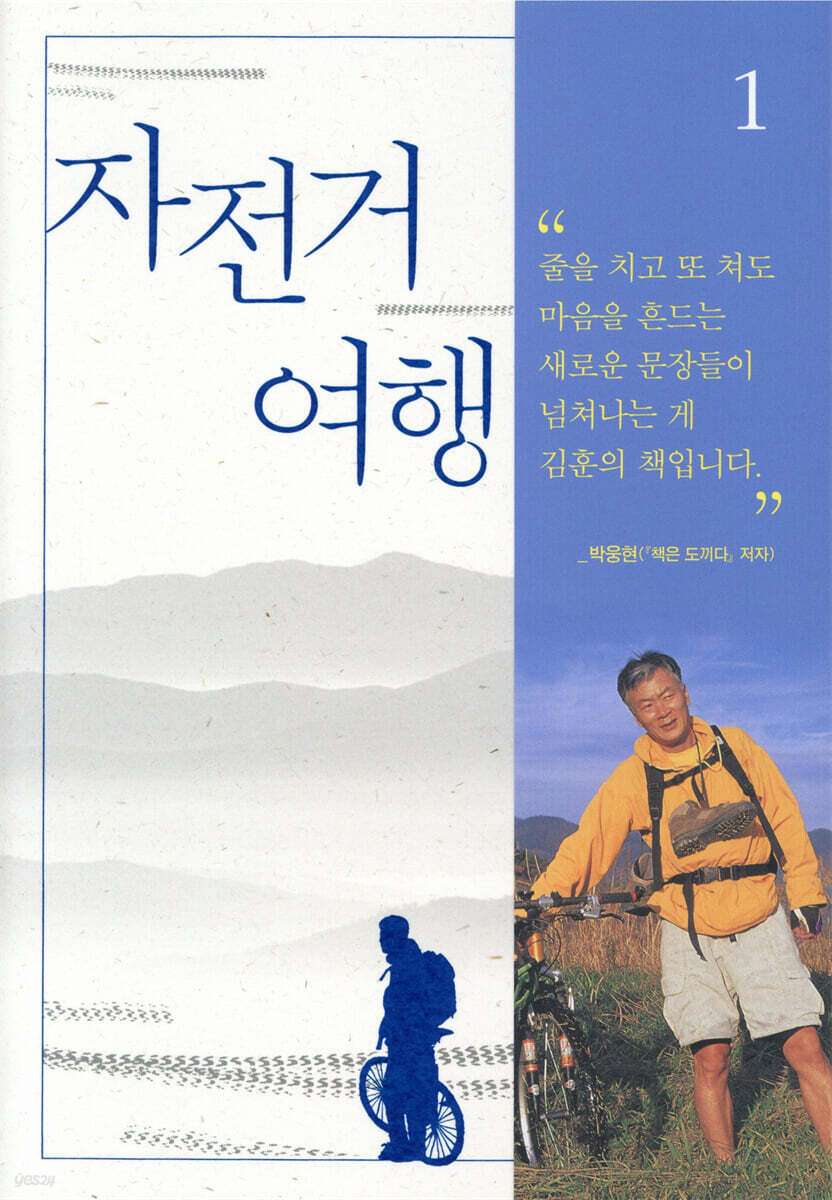
Bicycle Tour 1
 |
Description
Book Introduction
A feast of Kim Hoon's prose, born at the edge where body, mind, and landscape meet and separate!
Kim Hoon's prose, "Bicycle Travel," which can be considered the essence of his prose, is being republished.
He once said, “I like sentences that neatly organize only the facts.”
His language always strives to be as close to the truth as possible.
His language, which rewrites “the flowers bloomed” as “the flowers bloomed,” his language that distances itself from the world of opinions and emotions and attempts to objectively state physical facts, his language that indicates precise facts without flowery rhetoric, is infinitely beautiful.
His writings, which speak strictly of roads and landscapes, contain aspects of our lives more vividly than those of any other writer.
Let's take a look again at the landscape of Kim Hoon's words, created by the road, body, and mind becoming one.
Kim Hoon's prose, "Bicycle Travel," which can be considered the essence of his prose, is being republished.
He once said, “I like sentences that neatly organize only the facts.”
His language always strives to be as close to the truth as possible.
His language, which rewrites “the flowers bloomed” as “the flowers bloomed,” his language that distances itself from the world of opinions and emotions and attempts to objectively state physical facts, his language that indicates precise facts without flowery rhetoric, is infinitely beautiful.
His writings, which speak strictly of roads and landscapes, contain aspects of our lives more vividly than those of any other writer.
Let's take a look again at the landscape of Kim Hoon's words, created by the road, body, and mind becoming one.
- You can preview some of the book's contents.
Preview
index
prolog
Flower-blooming coastline and Hyangil-am on Dolsando Island in Yeosu
Listen to the Song of the Earth: Farmland on the Southern Coast
About being buried in the ground: the graves of Yeosu
Departure into the autumn colors: Yangyang Seonlimwonji
Report on the last autumn colors: Micheongol in the Taebaek Mountains
The blessed village of Sobaeksan, Uipung Village
The nearby forest is sacred. Anmyeondo
Back to the Forest: Gurye, Jeollanam-do
Paradise in a Teacup: Ssanggyesa Temple in Hwagae-myeon
The forest never dies. Gosung, Gangwon-do.
The forest hides, and it is a hidden forest. In the Gwangneung Forest
Naite and Bicycle, Gwangneung Arboretum Forest Museum
Lotus in the summer pond, what is this?ㆍIn the pond in the forest of Gwangneung
Han River, Life Continues: From Amsa-dong to Mongchon
From Bamseom Island and Jamsil to Yeouido, brought to life by the river
The freedom of the Han River is desolate. From Yeouido to Jogang.
That's how it flowsㆍIn the river
The Old Life of a Fishing Port: Gimpo Jeonryuri Port
Reflecting on Dasan and the elders of Catholicism in the river and Yangsuri flowing through a time of transition
IMF in the Noryeong Mountains and Yeouchi Village in the upper reaches of the Seomjin River
Time and River, Seomjin River Deokchi Village
Flowering ChildrenㆍMaam Branch School
Infinite space of light, Gimpo Plain
From Mangyeonggang River to Okgu Salt Farm and Simpo-ri
Dedicated to the ToyosaeㆍMangyeong River Estuary Tidal Flats
A bicycle heading towards the middle of the sea - Nanyang Bay tidal flats
The 'trapped water' flowing toward the time and space of extinction, the Jangdeok Channel of Nanyang Bay
The Power of Coolness, the Chorus of Labor, and the Seonjae Island Tidal Flats
A field nurtured by time: the salt farms of the West Coast that still remain
In publishing the book
Republishing
Flower-blooming coastline and Hyangil-am on Dolsando Island in Yeosu
Listen to the Song of the Earth: Farmland on the Southern Coast
About being buried in the ground: the graves of Yeosu
Departure into the autumn colors: Yangyang Seonlimwonji
Report on the last autumn colors: Micheongol in the Taebaek Mountains
The blessed village of Sobaeksan, Uipung Village
The nearby forest is sacred. Anmyeondo
Back to the Forest: Gurye, Jeollanam-do
Paradise in a Teacup: Ssanggyesa Temple in Hwagae-myeon
The forest never dies. Gosung, Gangwon-do.
The forest hides, and it is a hidden forest. In the Gwangneung Forest
Naite and Bicycle, Gwangneung Arboretum Forest Museum
Lotus in the summer pond, what is this?ㆍIn the pond in the forest of Gwangneung
Han River, Life Continues: From Amsa-dong to Mongchon
From Bamseom Island and Jamsil to Yeouido, brought to life by the river
The freedom of the Han River is desolate. From Yeouido to Jogang.
That's how it flowsㆍIn the river
The Old Life of a Fishing Port: Gimpo Jeonryuri Port
Reflecting on Dasan and the elders of Catholicism in the river and Yangsuri flowing through a time of transition
IMF in the Noryeong Mountains and Yeouchi Village in the upper reaches of the Seomjin River
Time and River, Seomjin River Deokchi Village
Flowering ChildrenㆍMaam Branch School
Infinite space of light, Gimpo Plain
From Mangyeonggang River to Okgu Salt Farm and Simpo-ri
Dedicated to the ToyosaeㆍMangyeong River Estuary Tidal Flats
A bicycle heading towards the middle of the sea - Nanyang Bay tidal flats
The 'trapped water' flowing toward the time and space of extinction, the Jangdeok Channel of Nanyang Bay
The Power of Coolness, the Chorus of Labor, and the Seonjae Island Tidal Flats
A field nurtured by time: the salt farms of the West Coast that still remain
In publishing the book
Republishing
Publisher's Review
A feast of Kim Hoon's prose, born at the edge where body, mind, and landscape meet and separate!
Kim Hoon's prose, "Bicycle Travel," which can be considered the essence of his prose, has been republished.
He once said, “I like sentences that neatly organize only the facts.”
His language always strives to be as close to the truth as possible.
His language, which rewrites “the flowers bloomed” as “the flowers bloomed,” his language that distances itself from the world of opinions and emotions and attempts to objectively state physical facts, his language that indicates precise facts without flowery rhetoric, is infinitely beautiful precisely because of that.
His writings, which speak strictly of roads and landscapes, contain aspects of our lives more vividly than those of any other writer.
In his sentences, the road, the landscape, and the image of our lives are not separate.
They meet, separate, become entangled again, become one, and then become their own again.
Spring neither comes to this mountain nor leaves it.
Spring is always there, it's just winter now.
Spring mercilessly reveals the hidden aspects of destiny, and those who are moved by it become pale and withered in the spring light.
The sadness of the body drying up in spring is Chunsoo.
(…) It seems that it takes time to realize that death is a natural process, just like the end of day and the beginning of night.
What goes uphill is going downhill.
Every ascent and every descent is exactly like the path on the ground.
As the ups and downs are equal, when you look back after going all the way, the road is ultimately flat.
When you ride a bicycle and row, the roads of the world flow into your body.
(…) On the path that flows and flows, the body opens infinitely, and the open body leads the body forward again.
On the rolling wheel, the body is not the body of old time, but the body of the present.
When you enter the light, the light recedes further away, so you cannot touch the light while in the light…
A place with no stitches or clean stitches is paradise.
If a stitch bursts, it's hell, and all stitches in this world will eventually burst, and they will inevitably burst.
He once said, “I am not clear-headed enough to deny in the name of logic what the body proves.”
Perhaps the reason his prose is so famous is because it is written with the body, not with thoughts.
In his writing, he talks about how to choose squid, how to choose flounder, and how to extract good salt.
It tells the story of the simple lives of children in Deokchi Village in Seomjin River, taught by poet Kim Yong-taek.
Insu grew up in his grandmother's arms.
Insu's grandmother passed away last year.
Insu cried a lot.
'My grandmother passed away.
My heart is sad.
'I am really sad,' Insu wrote in his diary that day.
Insu became a rather gloomy child after his grandmother passed away.
I eat alone even during lunch time.
(…)
Eunmi's grandmother's grave is on the hillside on the way to school.
When the mean boys at school tease and annoy Eun-mi, she stops by her grandmother's grave on the way home, tells her everything the bad guys did, and cries.
Eunmi's heart has opened up a bit these days.
The sadness has subsided somewhat, and she plays well with her friends, and the children no longer tease Eunmi.
Eunmi has really had a hard time.
After describing it as it is, without any evaluation or sentiment, he adds:
The story of Maam Branch School is endless and boundless.
In this small school with only 17 students, new stories spring up every day in everyday life.
Every day is a new day with a new story.
Stories are born endlessly in life.
What a beautiful and exciting thing this is.
In spring there are stories of spring, and in the morning there are stories of morning.
There is nothing that is not there, everything is there.
There is love and death, poverty and sorrow, hope and longing.
There is the agony of a young soul coming to understand the evils of the world, and the excitement of growth reaching out to the world.
This is the world, this is the place of life, this is the place where life and learning intertwine.
When he talks about roads, landscapes, and seasons, our lives are all contained within them.
It is not a metaphor or a simile, but the sentence itself is our life.
The landscape and our lives correspond one-to-one in his sentences.
As humanist Park Woong-hyun said, not only is this book “overflowing with new sentences that shake the heart no matter how many times you read it,” but you can also see his sentences approaching you with a different meaning each time you open the book.
Kim Hoon's prose, "Bicycle Travel," which can be considered the essence of his prose, has been republished.
He once said, “I like sentences that neatly organize only the facts.”
His language always strives to be as close to the truth as possible.
His language, which rewrites “the flowers bloomed” as “the flowers bloomed,” his language that distances itself from the world of opinions and emotions and attempts to objectively state physical facts, his language that indicates precise facts without flowery rhetoric, is infinitely beautiful precisely because of that.
His writings, which speak strictly of roads and landscapes, contain aspects of our lives more vividly than those of any other writer.
In his sentences, the road, the landscape, and the image of our lives are not separate.
They meet, separate, become entangled again, become one, and then become their own again.
Spring neither comes to this mountain nor leaves it.
Spring is always there, it's just winter now.
Spring mercilessly reveals the hidden aspects of destiny, and those who are moved by it become pale and withered in the spring light.
The sadness of the body drying up in spring is Chunsoo.
(…) It seems that it takes time to realize that death is a natural process, just like the end of day and the beginning of night.
What goes uphill is going downhill.
Every ascent and every descent is exactly like the path on the ground.
As the ups and downs are equal, when you look back after going all the way, the road is ultimately flat.
When you ride a bicycle and row, the roads of the world flow into your body.
(…) On the path that flows and flows, the body opens infinitely, and the open body leads the body forward again.
On the rolling wheel, the body is not the body of old time, but the body of the present.
When you enter the light, the light recedes further away, so you cannot touch the light while in the light…
A place with no stitches or clean stitches is paradise.
If a stitch bursts, it's hell, and all stitches in this world will eventually burst, and they will inevitably burst.
He once said, “I am not clear-headed enough to deny in the name of logic what the body proves.”
Perhaps the reason his prose is so famous is because it is written with the body, not with thoughts.
In his writing, he talks about how to choose squid, how to choose flounder, and how to extract good salt.
It tells the story of the simple lives of children in Deokchi Village in Seomjin River, taught by poet Kim Yong-taek.
Insu grew up in his grandmother's arms.
Insu's grandmother passed away last year.
Insu cried a lot.
'My grandmother passed away.
My heart is sad.
'I am really sad,' Insu wrote in his diary that day.
Insu became a rather gloomy child after his grandmother passed away.
I eat alone even during lunch time.
(…)
Eunmi's grandmother's grave is on the hillside on the way to school.
When the mean boys at school tease and annoy Eun-mi, she stops by her grandmother's grave on the way home, tells her everything the bad guys did, and cries.
Eunmi's heart has opened up a bit these days.
The sadness has subsided somewhat, and she plays well with her friends, and the children no longer tease Eunmi.
Eunmi has really had a hard time.
After describing it as it is, without any evaluation or sentiment, he adds:
The story of Maam Branch School is endless and boundless.
In this small school with only 17 students, new stories spring up every day in everyday life.
Every day is a new day with a new story.
Stories are born endlessly in life.
What a beautiful and exciting thing this is.
In spring there are stories of spring, and in the morning there are stories of morning.
There is nothing that is not there, everything is there.
There is love and death, poverty and sorrow, hope and longing.
There is the agony of a young soul coming to understand the evils of the world, and the excitement of growth reaching out to the world.
This is the world, this is the place of life, this is the place where life and learning intertwine.
When he talks about roads, landscapes, and seasons, our lives are all contained within them.
It is not a metaphor or a simile, but the sentence itself is our life.
The landscape and our lives correspond one-to-one in his sentences.
As humanist Park Woong-hyun said, not only is this book “overflowing with new sentences that shake the heart no matter how many times you read it,” but you can also see his sentences approaching you with a different meaning each time you open the book.
GOODS SPECIFICS
- Date of publication: October 22, 2014
- Page count, weight, size: 260 pages | 443g | 145*210*20mm
- ISBN13: 9788954626200
- ISBN10: 8954626203
You may also like
카테고리
korean


korean

![GQ KOREA Mark (Monthly): December [2025]](http://librairie.coreenne.fr/cdn/shop/files/8ef265dbbfbf186523ed75ba7319009d.jpg?v=1765340328&width=3840)


