

Ho-Am's biography
 |
Description
Book Introduction
Reading Ho-Am, a Giant of Our Time
A sincere confession from a businessperson who dreamed of contributing to the nation through business.
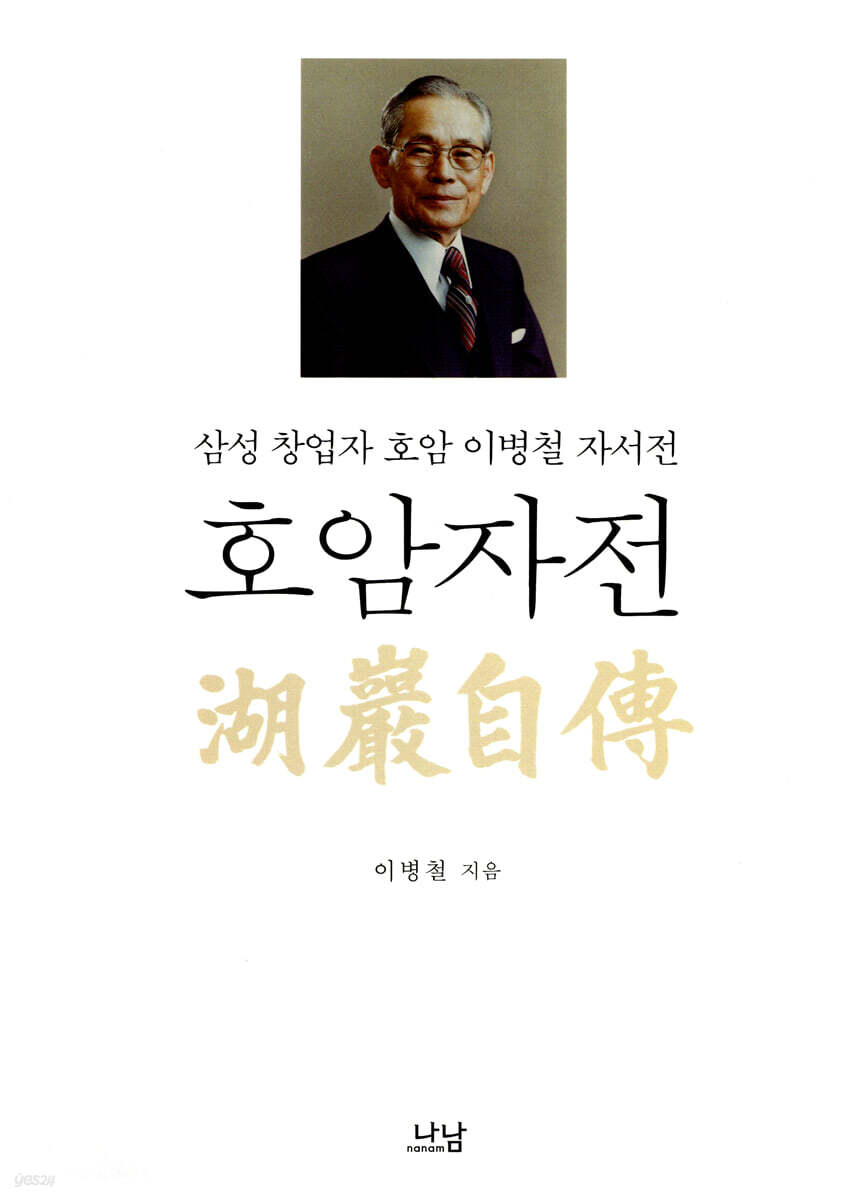
The biography of Samsung founder and former chairman Ho-Am Lee Byung-chul, titled “Ho-Am Autobiography,” has been published.
This is a revised edition of the 1986 edition, which adopted Chinese character writing and vertical writing, adapted to the 21st century.
Ho-Am personally wrote about the arduous journey Samsung underwent, from its beginnings as a trading company during the Japanese colonial period, when there was virtually no national capital, to its transformation into a first-class company in an advanced country ranked in the top 30 in OECD national competitiveness.
This memoir, told by one of Korea's first and foremost creative entrepreneurs, captures his unique management philosophy, summarized as "serving the country through business," along with the defining moments that shaped Samsung into what it is today.
However, the reason this autobiography was able to transcend the mere success story of a businessperson and become a vivid, three-dimensional record of the character's inner workings is because it honestly captures the joys and sorrows of being a leader who had to forge a future in the face of constantly turbulent times.
This book is a must-read for anyone curious about the true nature of a cool-headed manager who left a significant mark on the history of Korean economic development and an individual who never gave up on achieving his own goals despite the challenges of the times.
A sincere confession from a businessperson who dreamed of contributing to the nation through business.
The biography of Samsung founder and former chairman Ho-Am Lee Byung-chul, titled “Ho-Am Autobiography,” has been published.
This is a revised edition of the 1986 edition, which adopted Chinese character writing and vertical writing, adapted to the 21st century.
Ho-Am personally wrote about the arduous journey Samsung underwent, from its beginnings as a trading company during the Japanese colonial period, when there was virtually no national capital, to its transformation into a first-class company in an advanced country ranked in the top 30 in OECD national competitiveness.
This memoir, told by one of Korea's first and foremost creative entrepreneurs, captures his unique management philosophy, summarized as "serving the country through business," along with the defining moments that shaped Samsung into what it is today.
However, the reason this autobiography was able to transcend the mere success story of a businessperson and become a vivid, three-dimensional record of the character's inner workings is because it honestly captures the joys and sorrows of being a leader who had to forge a future in the face of constantly turbulent times.
This book is a must-read for anyone curious about the true nature of a cool-headed manager who left a significant mark on the history of Korean economic development and an individual who never gave up on achieving his own goals despite the challenges of the times.
- You can preview some of the book's contents.
Preview
index
Preface
Part 1: Adolescence
Chapter 1: Born in the Year of Japan's Annexation of Korea
Chapter 2 From Seodang to School
Chapter 3: Marriage and Studying Abroad in Tokyo
Chapter 4: College Years During the Great Depression
Chapter 5: Studies Completed Without a Diploma
Part 2: Dedication to Business
Chapter 1: Resolution to Commit to Business
Chapter 2: Starting out in the rice and transportation industry
Chapter 3: A large landowner with 2 million pyeong
Chapter 4: Establishment of Samsung Trading Company, the parent company of Samsung
Chapter 5 Liberation in the Homeland
Chapter 6: Strengthening the belief in patriotism through business
Chapter 7 Memories of Dr. Syngman Rhee
Chapter 8 Establishment of Samsung C&T Corporation
Chapter 9: First Visit to Japan after Liberation
Chapter 10: The Outbreak of the Korean War
Part 3 Import Substitution Industries
Chapter 1: Escape to Daegu Empty-Handed
Chapter 2 Manufacturing Resolution
Chapter 3: Establishment of Cheil Jedang
Chapter 4: Completing the Factory with Domestic Technology
Chapter 5 Establishment of Cheil Industries
Chapter 6 Everything in Our Hands
Chapter 7: The Taegeukgi on the Union Jack Hill
Chapter 8: Formation of Industrial Capital
Part 4: Social Turmoil
Chapter 1 As a major shareholder of Si-eun
Chapter 2: Promotion of the Construction of Korean Fertilizer
Chapter 3 Successful Negotiations for the Introduction of a Loan
Chapter 4 120% Detergent
Chapter 5 Letter to the Supreme Council of the May 16 Revolution
Chapter 6: First Meeting with Vice Chairman Park Chung-hee
Part 5: The Way We Live Well
Chapter 1 As the first president of the Economic Association
Chapter 2 Development of the Ulsan Industrial Complex
Chapter 3: Currency Reform and the Three-Party Movement
Chapter 4 [The Way We Live Well] Contribution
Chapter 5 Re-promoting the construction of a fertilizer plant
Chapter 6: Opposition from Yusom and Japanese Industry
Chapter 7: Negotiations with Mitsui & Co., Ltd. and the Loan Minister
Chapter 8: Behind-the-Scenes Support for the Korea-Japan Talks
Chapter 9: The World's Largest Single Fertilizer Plant
Chapter 10: The Han Fei Incident, Embroiled in Political Currents
Part 6 Cultural Projects
Chapter 1 Establishment of a Cultural Foundation
Chapter 2 Promotion of Education and Moral Culture
Chapter 3: Establishment of the Ho-Am Art Museum
Chapter 4 Management of Mass Media
Chapter 5: The video from Dongyang Broadcasting has disappeared.
Chapter 6: A Dream for Yongin Natural Farm
Chapter 7 After undergoing gastric cancer surgery
Part 7 Electronic Heavy Chemical Industry
Chapter 1: Electronics and the Heavy Chemical Industry Era
Chapter 2 Entering the Shipbuilding Industry
Chapter 3: Establishing a plant production system
Chapter 4: Petrochemical and Defense Industries
Chapter 5 Life Insurance and Department Store Management
Chapter 6: The Face of Korea, Hotel Shilla
Part 8: Samsung's Future
Chapter 1: In Search of New Management Techniques
Chapter 2: Resolution on Semiconductor Development
Chapter 3: Betting Tomorrow on Samsung Semiconductor
Chapter 4: Are Corporations Eternal?
Chapter 5: Entrepreneurship and Mercury
Chapter 6 Honorary Doctorate from Boston University
Part 9: Hobby Journey
Know your personality through collecting
Golf in Life
Cultivating the mind through traditional Korean music and calligraphy
Fascinated by the beauty of architecture
The Analects, the source of human formation
Reviews
Ho-Am Yeonbo
Part 1: Adolescence
Chapter 1: Born in the Year of Japan's Annexation of Korea
Chapter 2 From Seodang to School
Chapter 3: Marriage and Studying Abroad in Tokyo
Chapter 4: College Years During the Great Depression
Chapter 5: Studies Completed Without a Diploma
Part 2: Dedication to Business
Chapter 1: Resolution to Commit to Business
Chapter 2: Starting out in the rice and transportation industry
Chapter 3: A large landowner with 2 million pyeong
Chapter 4: Establishment of Samsung Trading Company, the parent company of Samsung
Chapter 5 Liberation in the Homeland
Chapter 6: Strengthening the belief in patriotism through business
Chapter 7 Memories of Dr. Syngman Rhee
Chapter 8 Establishment of Samsung C&T Corporation
Chapter 9: First Visit to Japan after Liberation
Chapter 10: The Outbreak of the Korean War
Part 3 Import Substitution Industries
Chapter 1: Escape to Daegu Empty-Handed
Chapter 2 Manufacturing Resolution
Chapter 3: Establishment of Cheil Jedang
Chapter 4: Completing the Factory with Domestic Technology
Chapter 5 Establishment of Cheil Industries
Chapter 6 Everything in Our Hands
Chapter 7: The Taegeukgi on the Union Jack Hill
Chapter 8: Formation of Industrial Capital
Part 4: Social Turmoil
Chapter 1 As a major shareholder of Si-eun
Chapter 2: Promotion of the Construction of Korean Fertilizer
Chapter 3 Successful Negotiations for the Introduction of a Loan
Chapter 4 120% Detergent
Chapter 5 Letter to the Supreme Council of the May 16 Revolution
Chapter 6: First Meeting with Vice Chairman Park Chung-hee
Part 5: The Way We Live Well
Chapter 1 As the first president of the Economic Association
Chapter 2 Development of the Ulsan Industrial Complex
Chapter 3: Currency Reform and the Three-Party Movement
Chapter 4 [The Way We Live Well] Contribution
Chapter 5 Re-promoting the construction of a fertilizer plant
Chapter 6: Opposition from Yusom and Japanese Industry
Chapter 7: Negotiations with Mitsui & Co., Ltd. and the Loan Minister
Chapter 8: Behind-the-Scenes Support for the Korea-Japan Talks
Chapter 9: The World's Largest Single Fertilizer Plant
Chapter 10: The Han Fei Incident, Embroiled in Political Currents
Part 6 Cultural Projects
Chapter 1 Establishment of a Cultural Foundation
Chapter 2 Promotion of Education and Moral Culture
Chapter 3: Establishment of the Ho-Am Art Museum
Chapter 4 Management of Mass Media
Chapter 5: The video from Dongyang Broadcasting has disappeared.
Chapter 6: A Dream for Yongin Natural Farm
Chapter 7 After undergoing gastric cancer surgery
Part 7 Electronic Heavy Chemical Industry
Chapter 1: Electronics and the Heavy Chemical Industry Era
Chapter 2 Entering the Shipbuilding Industry
Chapter 3: Establishing a plant production system
Chapter 4: Petrochemical and Defense Industries
Chapter 5 Life Insurance and Department Store Management
Chapter 6: The Face of Korea, Hotel Shilla
Part 8: Samsung's Future
Chapter 1: In Search of New Management Techniques
Chapter 2: Resolution on Semiconductor Development
Chapter 3: Betting Tomorrow on Samsung Semiconductor
Chapter 4: Are Corporations Eternal?
Chapter 5: Entrepreneurship and Mercury
Chapter 6 Honorary Doctorate from Boston University
Part 9: Hobby Journey
Know your personality through collecting
Golf in Life
Cultivating the mind through traditional Korean music and calligraphy
Fascinated by the beauty of architecture
The Analects, the source of human formation
Reviews
Ho-Am Yeonbo
Into the book
That day too, I returned home late at night after playing golf.
At that time, he was 26 years old and already a father of three children.
The moment I looked at the children sleeping peacefully in the moonlight, I suddenly felt as if I had woken up from a nightmare.
'It was such a waste of time.
You have to set your mind to it.'
--- p.44
Something must be done.
As urgent as it is to fight for independence, it is also urgent to save the people from poverty.
Finding a path in business that best suits your personality.
Let's throw ourselves into business.
Let me put my life on the line for business.
--- p.44
The 'sam' in 'Samseong' represents something big, something many, and something strong, and is the number that our people like the most.
'Seong' means something bright, high, and shining cleanly forever.
Be great, strong, and eternal.
I chose this name for my new business with this wish in mind.
--- p.66
I spent several days and nights hanging on to the machine.
It was the third day.
“I think they put too much sugar in at once and it got out of balance,” said a welder at the factory.
As I added the raw sugar while balancing it as he said, pure white refined sugar started to pour out.
It was finally successful.
On this day, November 5, 1953, I designated Cheil Jedang's founding anniversary.
--- p.119
A factory is built on a wasteland, and countless employees are busy working.
A mountain of products pouring out is loaded onto a freight truck and carried away.
For entrepreneurs, witnessing this vibrant scene of creativity and innovation is a precious moment that reaffirms their sense of being alive.
--- p.123
Becoming the best in the country or winning domestic competitions was not on my mind.
“By accumulating capital and establishing new enterprises one after another, we can stand tall against advanced foreign countries and win.
“That is the way forward for me,” he promised himself.
--- p.145
The name of the art museum is 'Ho-Am'.
My nickname is a name that means to be filled with clear water like a lake and to be unshakable like a large rock.
--- p.286
Hotels are the face of a city and also the face of a country.
However, at that time, there was no hotel in Seoul that could be called the 'face of Korea.'
I thought that if we were going to build it, it should be world-class, capable of hosting foreign dignitaries with peace of mind and hosting large-scale international conferences.
--- p.350
Samsung has always had clear criteria when choosing a new business.
These include what the national need is, what the public understands, and whether it can compete in the global market.
Based on this standard, the national task at the current stage is to develop semiconductors, the "rice of industry" and the core of industrial innovation that will pioneer the 21st century.
--- p.368
I emphasize again and again that the only way for our country, with a large population but no resources, to survive is through trade.
Samsung's motivation for entering the semiconductor business was that trade based on mass exports of cheap products had reached its limits, and the only way to overcome this and achieve a second leap forward was through the development of cutting-edge technology.
--- p.379
My routine has remained consistent for decades.
I wake up at 6 in the morning and go to bed at 10 in the evening.
When I'm awake, I don't waste a single moment, but once I go to bed, I forget everything and fall into a deep sleep.
--- p.390
Most of the things we collect are made by human hands.
If it's not made, it's written, drawn, or carved.
These handmade products are imbued with the sweat and sweat of the creators and writers.
There is a persistent obsession in pursuing something more beautiful and more excellent.
Thinking about these things, looking at them, touching them, comparing them, and enjoying the emptiness.
--- p.409
The book that has had the greatest influence on shaping humanity is the Analects of Confucius.
Even if my thoughts and life cannot escape the world of the Analects, I am satisfied.
The Analects contain internal norms.
Thoughts and experiences are condensed into concise words, and they teach us the mindset essential for living as a member of society.
At that time, he was 26 years old and already a father of three children.
The moment I looked at the children sleeping peacefully in the moonlight, I suddenly felt as if I had woken up from a nightmare.
'It was such a waste of time.
You have to set your mind to it.'
--- p.44
Something must be done.
As urgent as it is to fight for independence, it is also urgent to save the people from poverty.
Finding a path in business that best suits your personality.
Let's throw ourselves into business.
Let me put my life on the line for business.
--- p.44
The 'sam' in 'Samseong' represents something big, something many, and something strong, and is the number that our people like the most.
'Seong' means something bright, high, and shining cleanly forever.
Be great, strong, and eternal.
I chose this name for my new business with this wish in mind.
--- p.66
I spent several days and nights hanging on to the machine.
It was the third day.
“I think they put too much sugar in at once and it got out of balance,” said a welder at the factory.
As I added the raw sugar while balancing it as he said, pure white refined sugar started to pour out.
It was finally successful.
On this day, November 5, 1953, I designated Cheil Jedang's founding anniversary.
--- p.119
A factory is built on a wasteland, and countless employees are busy working.
A mountain of products pouring out is loaded onto a freight truck and carried away.
For entrepreneurs, witnessing this vibrant scene of creativity and innovation is a precious moment that reaffirms their sense of being alive.
--- p.123
Becoming the best in the country or winning domestic competitions was not on my mind.
“By accumulating capital and establishing new enterprises one after another, we can stand tall against advanced foreign countries and win.
“That is the way forward for me,” he promised himself.
--- p.145
The name of the art museum is 'Ho-Am'.
My nickname is a name that means to be filled with clear water like a lake and to be unshakable like a large rock.
--- p.286
Hotels are the face of a city and also the face of a country.
However, at that time, there was no hotel in Seoul that could be called the 'face of Korea.'
I thought that if we were going to build it, it should be world-class, capable of hosting foreign dignitaries with peace of mind and hosting large-scale international conferences.
--- p.350
Samsung has always had clear criteria when choosing a new business.
These include what the national need is, what the public understands, and whether it can compete in the global market.
Based on this standard, the national task at the current stage is to develop semiconductors, the "rice of industry" and the core of industrial innovation that will pioneer the 21st century.
--- p.368
I emphasize again and again that the only way for our country, with a large population but no resources, to survive is through trade.
Samsung's motivation for entering the semiconductor business was that trade based on mass exports of cheap products had reached its limits, and the only way to overcome this and achieve a second leap forward was through the development of cutting-edge technology.
--- p.379
My routine has remained consistent for decades.
I wake up at 6 in the morning and go to bed at 10 in the evening.
When I'm awake, I don't waste a single moment, but once I go to bed, I forget everything and fall into a deep sleep.
--- p.390
Most of the things we collect are made by human hands.
If it's not made, it's written, drawn, or carved.
These handmade products are imbued with the sweat and sweat of the creators and writers.
There is a persistent obsession in pursuing something more beautiful and more excellent.
Thinking about these things, looking at them, touching them, comparing them, and enjoying the emptiness.
--- p.409
The book that has had the greatest influence on shaping humanity is the Analects of Confucius.
Even if my thoughts and life cannot escape the world of the Analects, I am satisfied.
The Analects contain internal norms.
Thoughts and experiences are condensed into concise words, and they teach us the mindset essential for living as a member of society.
--- p.418
Publisher's Review
The reason we were able to weather the rough waves of the times: Serving the nation through business.
The beginning of Ho-Am's business career dates back to his youth, when he was a subject of a colonial era during the Japanese colonial period, bound by social restrictions and wandering.
Ho-Am recalls those days as a time when he grew up in comfort under the tutelage of his father, a Confucian scholar from Uiryeong, Gyeongnam, and even studied abroad in Japan. However, he was unable to establish a purpose in life and became addicted to gambling, often walking home late at night under the shadow of the moon.
The moment of “awakening” came suddenly to him, who had been wasting his time like that.
One day, while watching his children sleeping peacefully under the moonlight, the thought suddenly occurred to him that he had to do something.
At that moment of conversion, memories of being looked down upon as a Korean came flooding back, and he finally set a lifelong goal of 'starting a business and protecting the country.'
This spirit of serving the country through business later became established as Ho-Am's unique management philosophy.
Ho-Am, who decided to start a business, established Samsung C&T and jumped into entrepreneurship in earnest. He then achieved great success with companies such as Cheil Jedang and Cheil Industries, successfully establishing Korea's unique industrial capital.
But he didn't always have smooth sailing.
There were also many times when it was shaken by the political turmoil following the division of North and South Korea and the Korean War.
However, Ho-Am says that by recalling the original intention he had in mind—to "establish himself as a company and contribute to the welfare of the people"—he was able to find a way forward and draw a blueprint for the next step.
In other words, the great ship called Samsung was able to sail through a combination of cool insight to assess the situation and a passionate belief in contributing to society through business.
If you're curious about the defining moments that shaped Samsung and the thoughts of the leaders who led them, this is a must-read.
Management secrets from a creative entrepreneur who built something from nothing.
There are many adjectives that follow Ho-Am, but the one that best describes him, who repeatedly transformed the landscape of Korea's industrial structure, is none other than the assessment that he was a "creative strategist ahead of his time."
Readers will also pick up this book with the expectation that they will be able to glimpse the exceptional qualities hidden within the entrepreneur who started out as a trader during the Japanese colonial period, when there was no independent industrial base, and built a global company leading the IT industry.
Ho-Am reveals the process of honing his own management secrets over 50 years, and depicts the qualities of an entrepreneur ahead of his time.
In particular, the anecdote of how he took a cool-headed look at himself and singled out his shortcomings after his rice mill and land investment projects in his youth ended in failure was a significant event that laid the foundation for Ho-Am's management philosophy.
At this time, he gains a great awakening that will serve as a guide for the rest of his life.
When starting a business, I discovered the great principle that you must accurately perceive the timing and situation, and once you have made a decision, you must persevere until you achieve your initial goal.
Ho-Am's success story is very suggestive in that he introduced this fundamental principle, which is known to everyone but difficult to put into practice, into every corner of corporate management and achieved results that no one else could match.
The semiconductor business, which represents the Samsung Group today, is also a representative example of Ho-Am's unwavering management style bearing fruit.
In the 1970s, a time of unprecedented growth, Ho-Am predicted that the center of the Korean economy would gradually shift to the high value-added electronics industry. He rejected the dissuasion of numerous experts, entrepreneurs, and executives and embarked on a large-scale development of the semiconductor business.
The result, as everyone witnessed, was an unprecedented success.
By following the story of the man who created the "Samsung Myth" with such outstanding insight and the willpower to back it up, readers will witness the tenacity to realize their ideals in reality.
Ho-Am's private world hidden behind the "Samsung myth"
The greater a tree's fame, the more likely it is that its private world will be obscured.
The human side of Ho-Am, which had been hidden beneath the shadow of his reputation as the founder of Samsung, began to be gradually revealed to the public only after the publication of Ho-Am's Autobiography.
This is because it is a memoir that allows us to fully feel the character of Ho-Am, as it contains in detail his Confucian temperament that stemmed from his childhood studies of Chinese classics and his taste for first-class items even for the smallest of luxuries.
But more than anything, this book is even more special because it is a record that allows us to glimpse not only his hobbies but also the light and shadows that decorated his winding life.
Ho-Am honestly records both the bright history and the dark moments in his book, and in his own words, “tells the story of a human life, humbly and truthfully.”
Among them, in particular, in the 1970s, when he was running tirelessly toward the goal of establishing national capital, he was suddenly labeled as the "No. 1 person to accumulate wealth through illicit means" and was investigated by the prosecution. This incident was a life-changing turning point that left him with deep doubts for a long time to come.
However, just like his pen name, Hoam (湖巖), which means “fill the lake with clear water and have the unshakable dignity of a large rock,” he soon gathers his thoughts and gets up to work hard again towards the goal of building national infrastructure.
Ho-Am calmly states that the foundation of this unwavering mental management was a strong internal discipline cultivated through a long period of studying Chinese classics such as the Analects of Confucius, as well as a clear awareness of his own calling.
Ho-Am's belief that firm convictions must precede new technologies and cutting-edge knowledge is woven throughout the book, and it resonates deeply with us, who are wavering in the face of uncertainty.
Readers who opened this book expecting to read the management secrets of an entrepreneur who rose to become a giant in the business world may find themselves pondering, by the time they close the last page, what constitutes the right foundation for mental management, beyond just corporate management.
The beginning of Ho-Am's business career dates back to his youth, when he was a subject of a colonial era during the Japanese colonial period, bound by social restrictions and wandering.
Ho-Am recalls those days as a time when he grew up in comfort under the tutelage of his father, a Confucian scholar from Uiryeong, Gyeongnam, and even studied abroad in Japan. However, he was unable to establish a purpose in life and became addicted to gambling, often walking home late at night under the shadow of the moon.
The moment of “awakening” came suddenly to him, who had been wasting his time like that.
One day, while watching his children sleeping peacefully under the moonlight, the thought suddenly occurred to him that he had to do something.
At that moment of conversion, memories of being looked down upon as a Korean came flooding back, and he finally set a lifelong goal of 'starting a business and protecting the country.'
This spirit of serving the country through business later became established as Ho-Am's unique management philosophy.
Ho-Am, who decided to start a business, established Samsung C&T and jumped into entrepreneurship in earnest. He then achieved great success with companies such as Cheil Jedang and Cheil Industries, successfully establishing Korea's unique industrial capital.
But he didn't always have smooth sailing.
There were also many times when it was shaken by the political turmoil following the division of North and South Korea and the Korean War.
However, Ho-Am says that by recalling the original intention he had in mind—to "establish himself as a company and contribute to the welfare of the people"—he was able to find a way forward and draw a blueprint for the next step.
In other words, the great ship called Samsung was able to sail through a combination of cool insight to assess the situation and a passionate belief in contributing to society through business.
If you're curious about the defining moments that shaped Samsung and the thoughts of the leaders who led them, this is a must-read.
Management secrets from a creative entrepreneur who built something from nothing.
There are many adjectives that follow Ho-Am, but the one that best describes him, who repeatedly transformed the landscape of Korea's industrial structure, is none other than the assessment that he was a "creative strategist ahead of his time."
Readers will also pick up this book with the expectation that they will be able to glimpse the exceptional qualities hidden within the entrepreneur who started out as a trader during the Japanese colonial period, when there was no independent industrial base, and built a global company leading the IT industry.
Ho-Am reveals the process of honing his own management secrets over 50 years, and depicts the qualities of an entrepreneur ahead of his time.
In particular, the anecdote of how he took a cool-headed look at himself and singled out his shortcomings after his rice mill and land investment projects in his youth ended in failure was a significant event that laid the foundation for Ho-Am's management philosophy.
At this time, he gains a great awakening that will serve as a guide for the rest of his life.
When starting a business, I discovered the great principle that you must accurately perceive the timing and situation, and once you have made a decision, you must persevere until you achieve your initial goal.
Ho-Am's success story is very suggestive in that he introduced this fundamental principle, which is known to everyone but difficult to put into practice, into every corner of corporate management and achieved results that no one else could match.
The semiconductor business, which represents the Samsung Group today, is also a representative example of Ho-Am's unwavering management style bearing fruit.
In the 1970s, a time of unprecedented growth, Ho-Am predicted that the center of the Korean economy would gradually shift to the high value-added electronics industry. He rejected the dissuasion of numerous experts, entrepreneurs, and executives and embarked on a large-scale development of the semiconductor business.
The result, as everyone witnessed, was an unprecedented success.
By following the story of the man who created the "Samsung Myth" with such outstanding insight and the willpower to back it up, readers will witness the tenacity to realize their ideals in reality.
Ho-Am's private world hidden behind the "Samsung myth"
The greater a tree's fame, the more likely it is that its private world will be obscured.
The human side of Ho-Am, which had been hidden beneath the shadow of his reputation as the founder of Samsung, began to be gradually revealed to the public only after the publication of Ho-Am's Autobiography.
This is because it is a memoir that allows us to fully feel the character of Ho-Am, as it contains in detail his Confucian temperament that stemmed from his childhood studies of Chinese classics and his taste for first-class items even for the smallest of luxuries.
But more than anything, this book is even more special because it is a record that allows us to glimpse not only his hobbies but also the light and shadows that decorated his winding life.
Ho-Am honestly records both the bright history and the dark moments in his book, and in his own words, “tells the story of a human life, humbly and truthfully.”
Among them, in particular, in the 1970s, when he was running tirelessly toward the goal of establishing national capital, he was suddenly labeled as the "No. 1 person to accumulate wealth through illicit means" and was investigated by the prosecution. This incident was a life-changing turning point that left him with deep doubts for a long time to come.
However, just like his pen name, Hoam (湖巖), which means “fill the lake with clear water and have the unshakable dignity of a large rock,” he soon gathers his thoughts and gets up to work hard again towards the goal of building national infrastructure.
Ho-Am calmly states that the foundation of this unwavering mental management was a strong internal discipline cultivated through a long period of studying Chinese classics such as the Analects of Confucius, as well as a clear awareness of his own calling.
Ho-Am's belief that firm convictions must precede new technologies and cutting-edge knowledge is woven throughout the book, and it resonates deeply with us, who are wavering in the face of uncertainty.
Readers who opened this book expecting to read the management secrets of an entrepreneur who rose to become a giant in the business world may find themselves pondering, by the time they close the last page, what constitutes the right foundation for mental management, beyond just corporate management.
GOODS SPECIFICS
- Date of publication: April 23, 2014
- Format: Hardcover book binding method guide
- Page count, weight, size: 440 pages | 854g | 153*224*30mm
- ISBN13: 9788930087568
- ISBN10: 8930087566
You may also like
카테고리
korean


korean

![GQ KOREA Mark (Monthly): December [2025]](http://librairie.coreenne.fr/cdn/shop/files/8ef265dbbfbf186523ed75ba7319009d.jpg?v=1765340328&width=3840)


