

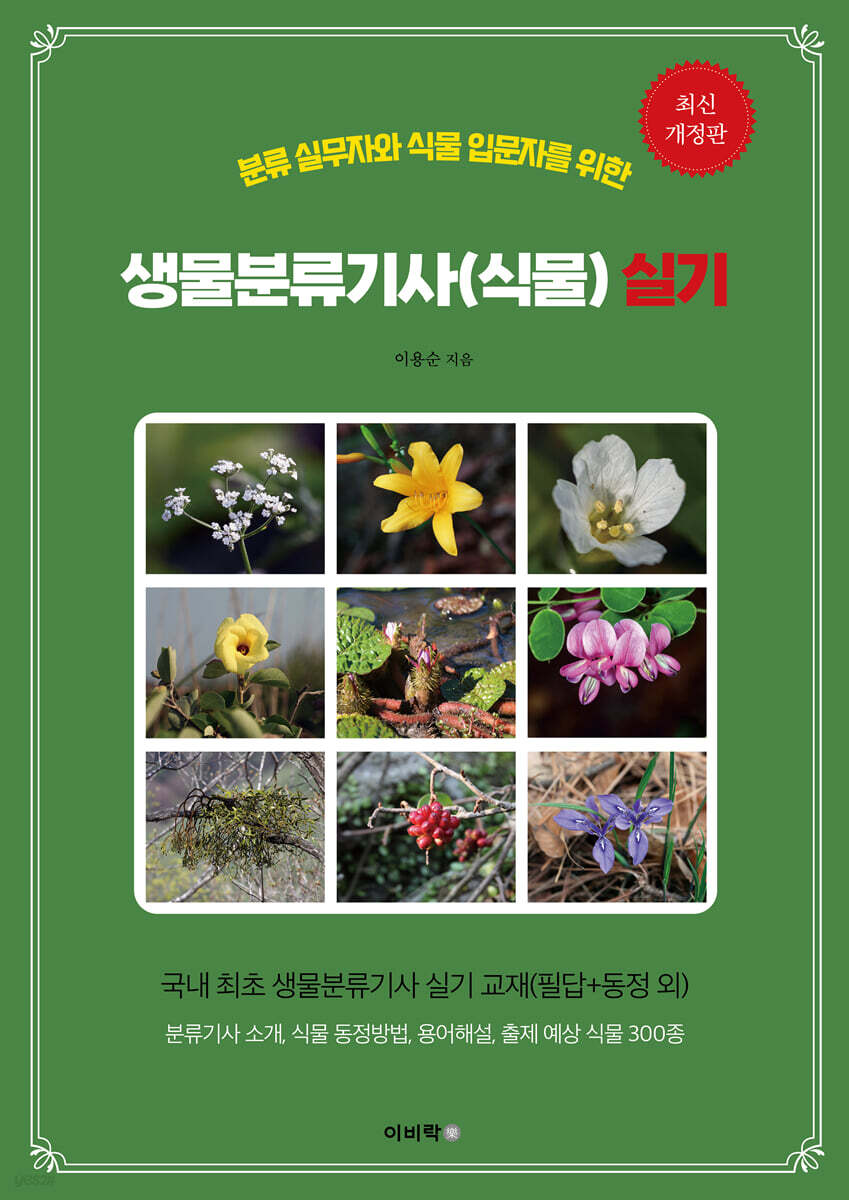
Biological Taxonomy Technician (Plants) Practical Test
 |
Description
Book Introduction
Basic knowledge of the plant part for biological taxonomists
Introduction to the expected plant species and related flora
A biological taxonomist is a professional who, based on specialized knowledge of biological taxonomy, engages in tasks such as assessing the usefulness and rarity of biological resources, such as creating biological specimens, collecting biological materials, and identifying and managing organisms through observation and collection of native plants and animals in Korea.
This book is a practical textbook for the plant part of the biological classification exam, and explains in detail the identification, external form, and description terms of plants, which are the basis of plant classification.
In addition, the 300 basic species expected to be tested and 290 related species essential for field plant identification were organized in an organized manner in the form of an illustrated guide.
To help you prepare for the exam, we have systematically categorized the list of endangered wild species, plants endemic to Korea, plants with special botanical characteristics, national red list species, climate change indicator species, naturalized plants, and ecosystem-disrupting organisms so that you can classify and identify plants in the field. In addition, we have included 3 years of previous exam questions for Biological Taxonomy Engineer (Plants) Type A and the past 5 years of practical exam questions (identification questions, written questions) as an appendix.
Introduction to the expected plant species and related flora
A biological taxonomist is a professional who, based on specialized knowledge of biological taxonomy, engages in tasks such as assessing the usefulness and rarity of biological resources, such as creating biological specimens, collecting biological materials, and identifying and managing organisms through observation and collection of native plants and animals in Korea.
This book is a practical textbook for the plant part of the biological classification exam, and explains in detail the identification, external form, and description terms of plants, which are the basis of plant classification.
In addition, the 300 basic species expected to be tested and 290 related species essential for field plant identification were organized in an organized manner in the form of an illustrated guide.
To help you prepare for the exam, we have systematically categorized the list of endangered wild species, plants endemic to Korea, plants with special botanical characteristics, national red list species, climate change indicator species, naturalized plants, and ecosystem-disrupting organisms so that you can classify and identify plants in the field. In addition, we have included 3 years of previous exam questions for Biological Taxonomy Engineer (Plants) Type A and the past 5 years of practical exam questions (identification questions, written questions) as an appendix.
- You can preview some of the book's contents.
Preview
index
Note
Chapter 1: About Biological Taxonomy (Plants)
1.
outline
2.
The process of change
3.
Job duties performed
4.
Career path and prospects
5.
Black status
6.
How to obtain
· Examination criteria (written)
· Examination criteria (practical)
Chapter 2 Identification of Plants
1.
Plant identification methods
1-1 Classification approach
1) Holistic approach 2) Analytical approach
1-2 Method using a lookup table
1) Secondary search table 2) Multi-level search table
Method using 1-3 description
- Principles for writing a report
Method using 1-4 samples
1) Type of specimen 2) Identification of plants using specimens
1-5 Method using video data
1-6 Expert Sympathy
2.
Plant naming and scientific names
2-1 Naming of plants
1) Definition of naming 2) Principles of naming 3) Type specimen
2-2 Scientific name
1) Definition of scientific names 2) Standards for proper publication 3) Principles of scientific name notation
2-3 Classification Class
2-4 Making a stone leaf specimen
1) Collection of plants 2) Pressing 3) Drying 4) Attaching specimens and labels 5) Handling of specimens
Chapter 3 External Form and Description of Plants
1.
General structure
1-1 Material
1-2 water
1-3 union
1-4 Stereoscopic structure
1-5 flat shape
1-6 Surface features
1-7 hairs/villi
- Short hair, long hair
1-8 posture
- Transverse posture, seed posture, twisting
2.
Nutritional institutions
2-1 root
2-2 stems
- Stem habits, stem types, stem parts, and stem composition
2-3 leaves
- Leaf veins, leaf arrangement, leaf division, apex, margin, base, leaf type, leaf deformation
3.
reproductive organs
3-1 Flower
- Composition of the flower, sex of the plant (flower), position of the ovary, union of the calyx
- Type of corolla: bilobed corolla (branched corolla), plywood corolla (tube corolla)
- Types of inflorescences: infinite inflorescences, finite inflorescences, secondary inflorescences, and specialized inflorescences
- Surgery, medicine, union of surgery, attachment of carpel/ovary
3-2 Fruit
- True and false
3-3 seeds
- Seeds
Chapter 4: 300 Plant Species Expected to Appear on the Test
Ferns (22 species including snakeroot)
Gymnosperms (10 species including fir)
Angiosperms (268 species including the genus Hamamatsuri)
[Appendix 1]
1.
List of Endangered Wildlife
2.
List of endemic plants
3.
List of Specific Plants in Botanical Fields
4.
National Red List of Species
5.
List of climate change bioindicator species
6.
List of naturalized plants
7.
List of ecosystem-disrupting organisms
[Appendix 2]
· 2018 Biological Taxonomy Engineer (Plants) Type A Past Exam Questions
· 2019 Biological Taxonomy Engineer (Plants) Type A Exam Questions
· 2020 Biological Taxonomy Engineer (Plants) Type A Past Exam Questions
· Practical exam questions from the past 5 years 1 (sympathetic questions)
· Practical exam questions from the past 5 years 2 (written questions)
References
Lookup (Term/Plant Name)
Chapter 1: About Biological Taxonomy (Plants)
1.
outline
2.
The process of change
3.
Job duties performed
4.
Career path and prospects
5.
Black status
6.
How to obtain
· Examination criteria (written)
· Examination criteria (practical)
Chapter 2 Identification of Plants
1.
Plant identification methods
1-1 Classification approach
1) Holistic approach 2) Analytical approach
1-2 Method using a lookup table
1) Secondary search table 2) Multi-level search table
Method using 1-3 description
- Principles for writing a report
Method using 1-4 samples
1) Type of specimen 2) Identification of plants using specimens
1-5 Method using video data
1-6 Expert Sympathy
2.
Plant naming and scientific names
2-1 Naming of plants
1) Definition of naming 2) Principles of naming 3) Type specimen
2-2 Scientific name
1) Definition of scientific names 2) Standards for proper publication 3) Principles of scientific name notation
2-3 Classification Class
2-4 Making a stone leaf specimen
1) Collection of plants 2) Pressing 3) Drying 4) Attaching specimens and labels 5) Handling of specimens
Chapter 3 External Form and Description of Plants
1.
General structure
1-1 Material
1-2 water
1-3 union
1-4 Stereoscopic structure
1-5 flat shape
1-6 Surface features
1-7 hairs/villi
- Short hair, long hair
1-8 posture
- Transverse posture, seed posture, twisting
2.
Nutritional institutions
2-1 root
2-2 stems
- Stem habits, stem types, stem parts, and stem composition
2-3 leaves
- Leaf veins, leaf arrangement, leaf division, apex, margin, base, leaf type, leaf deformation
3.
reproductive organs
3-1 Flower
- Composition of the flower, sex of the plant (flower), position of the ovary, union of the calyx
- Type of corolla: bilobed corolla (branched corolla), plywood corolla (tube corolla)
- Types of inflorescences: infinite inflorescences, finite inflorescences, secondary inflorescences, and specialized inflorescences
- Surgery, medicine, union of surgery, attachment of carpel/ovary
3-2 Fruit
- True and false
3-3 seeds
- Seeds
Chapter 4: 300 Plant Species Expected to Appear on the Test
Ferns (22 species including snakeroot)
Gymnosperms (10 species including fir)
Angiosperms (268 species including the genus Hamamatsuri)
[Appendix 1]
1.
List of Endangered Wildlife
2.
List of endemic plants
3.
List of Specific Plants in Botanical Fields
4.
National Red List of Species
5.
List of climate change bioindicator species
6.
List of naturalized plants
7.
List of ecosystem-disrupting organisms
[Appendix 2]
· 2018 Biological Taxonomy Engineer (Plants) Type A Past Exam Questions
· 2019 Biological Taxonomy Engineer (Plants) Type A Exam Questions
· 2020 Biological Taxonomy Engineer (Plants) Type A Past Exam Questions
· Practical exam questions from the past 5 years 1 (sympathetic questions)
· Practical exam questions from the past 5 years 2 (written questions)
References
Lookup (Term/Plant Name)
Detailed image
Publisher's Review
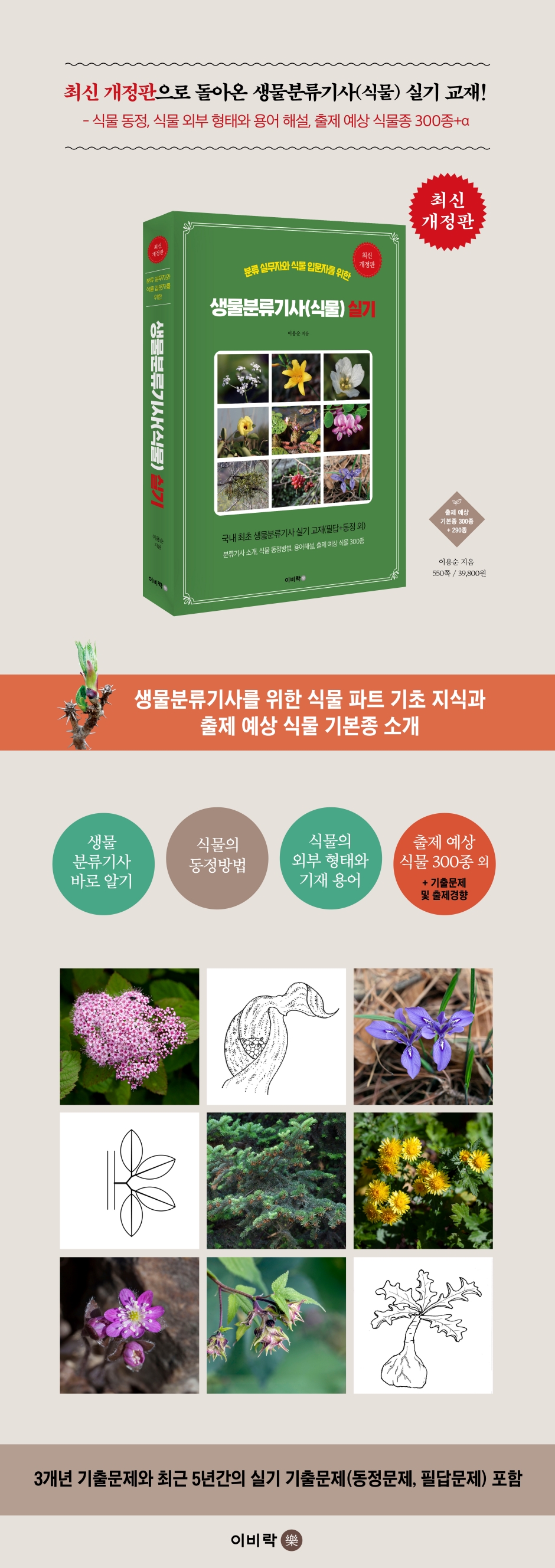
The latest revised edition of the Biological Taxonomy Technician (Plants) practical textbook is back!
- Plant identification, explanation of plant external morphology and terminology, 300 expected plant species + alpha
The National Certified Biological Taxonomy Engineer is a qualification equivalent to a technician level in the environmental field, and its role is more important than ever in the 21st century biotechnology (BT) era.
The Biological Taxonomy Technician (Plants) practical test is based on knowledge of systematics, environmental ecology, morphology, conservation and resource biology, and natural environment-related laws and regulations, and helps students advance as professionals to various research projects and biological and environmental administrative agencies, herbariums, botanical gardens, national parks, animal and plant quarantine stations, customs, and other biological facilities.
This book introduces the biological classification article (plants) and explains the identification method of plants based on newly changed plant names and replaced information, and provides detailed explanations of the external form and description terminology of plants with illustrations.
In addition, a plant guide of 300 species (a total of 590 species, including 290 related species) expected to appear in the biological classification exam is provided with photos and explanations of growth patterns to aid field study.
Appendix includes past exam questions from the past three years and past practical exam questions (sympathetic questions, written questions) from the past five years.
- Plant identification, explanation of plant external morphology and terminology, 300 expected plant species + alpha
The National Certified Biological Taxonomy Engineer is a qualification equivalent to a technician level in the environmental field, and its role is more important than ever in the 21st century biotechnology (BT) era.
The Biological Taxonomy Technician (Plants) practical test is based on knowledge of systematics, environmental ecology, morphology, conservation and resource biology, and natural environment-related laws and regulations, and helps students advance as professionals to various research projects and biological and environmental administrative agencies, herbariums, botanical gardens, national parks, animal and plant quarantine stations, customs, and other biological facilities.
This book introduces the biological classification article (plants) and explains the identification method of plants based on newly changed plant names and replaced information, and provides detailed explanations of the external form and description terminology of plants with illustrations.
In addition, a plant guide of 300 species (a total of 590 species, including 290 related species) expected to appear in the biological classification exam is provided with photos and explanations of growth patterns to aid field study.
Appendix includes past exam questions from the past three years and past practical exam questions (sympathetic questions, written questions) from the past five years.
GOODS SPECIFICS
- Date of issue: October 30, 2025
- Page count, weight, size: 550 pages | 182*257*35mm
- ISBN13: 9788962452426
- ISBN10: 8962452421
You may also like
카테고리
korean


korean

![GQ KOREA Mark (Monthly): December [2025]](http://librairie.coreenne.fr/cdn/shop/files/8ef265dbbfbf186523ed75ba7319009d.jpg?v=1765340328&width=3840)


