

Again! History Education: Korean History
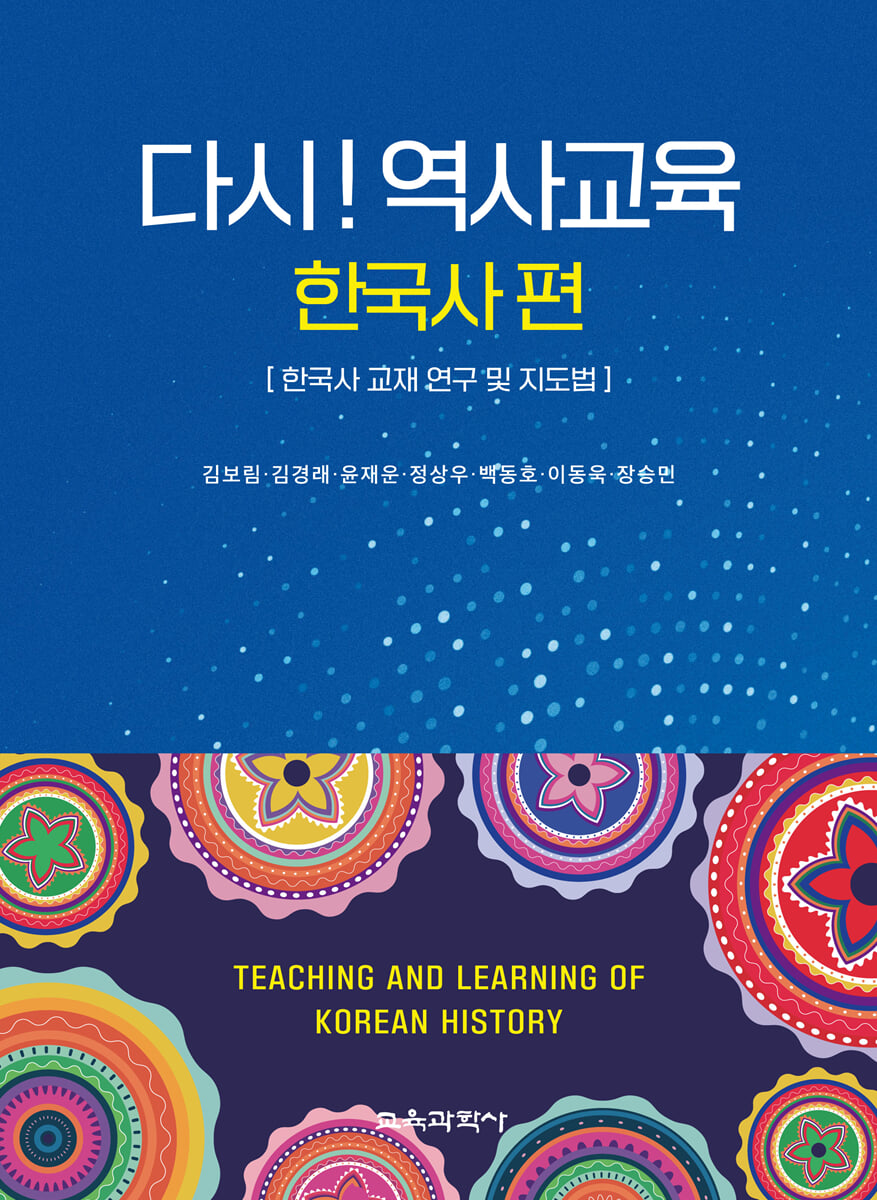 |
Description
Book Introduction
Written by a professor and a current teacher
A guidebook on the theory and practice of research and teaching methods for Korean history!
Korean history is the traces of time left by those who have lived on this land, and it is a window to understanding humanity through the choices, conflicts, cooperation, and changes contained within it.
Teaching history is a process of helping students understand human life and thought and reflect on their lives today and in the future.
This book was written with an eye on the essence of Korean history education, which is precisely 'understanding humanity.'
Today, the field of history education is no longer confined to the classroom, but has expanded to include smartphones, social media, museums, and memorial halls.
The title of this book, "History Education Again," reflects the authors' intention to shed new light on history education based on past research findings in a changing educational environment.
Above all, this book is the fruit of collaboration between professors specializing in Korean history and teachers in the field, and it holds great significance as a book that integrates the latest theories and practices in Korean history education.
Therefore, this book will be able to provide practical help and insight not only to prospective teachers, but also to teachers in the field, and even to a wide range of readers interested in Korean history education.
A guidebook on the theory and practice of research and teaching methods for Korean history!
Korean history is the traces of time left by those who have lived on this land, and it is a window to understanding humanity through the choices, conflicts, cooperation, and changes contained within it.
Teaching history is a process of helping students understand human life and thought and reflect on their lives today and in the future.
This book was written with an eye on the essence of Korean history education, which is precisely 'understanding humanity.'
Today, the field of history education is no longer confined to the classroom, but has expanded to include smartphones, social media, museums, and memorial halls.
The title of this book, "History Education Again," reflects the authors' intention to shed new light on history education based on past research findings in a changing educational environment.
Above all, this book is the fruit of collaboration between professors specializing in Korean history and teachers in the field, and it holds great significance as a book that integrates the latest theories and practices in Korean history education.
Therefore, this book will be able to provide practical help and insight not only to prospective teachers, but also to teachers in the field, and even to a wide range of readers interested in Korean history education.
index
Preface / 3
Part 1: Korean History Class Theory
CHAPTER 01 Designing Korean History Classes 19
1.
The Meaning of Lesson Design 19
1) Concept of lesson design 19
2) Lesson Design Process 20
3) Designing Korean History Lessons Using the ADDIE Model 26
4) Recent backward design theory and its application to Korean history classes 30
2.
The Meaning of Learner Assessment 38
1) Learner Characteristics 39
2) Learner's memory organization and pre-learning 43
3.
Level of content, materials, and methods 45
1) Learner Literacy 45
2) Meaning of easy or difficult content, materials, and teaching methods 46
CHAPTER 02: Goals of Korean History Classes 51
1.
National-level objectives 51
1) National Curriculum and the Purpose of History Education 51
2) 60 core competencies in the national curriculum
3) Achievement Standards in the National Curriculum 63
2.
Class Level Objective 67
1) Classification of lesson objectives 67
2) Composition and Use of Class Objectives: Knowledge, Understanding/Skills/Attitudes 68
3) Restructuring the class 70
4) Relationship between class objectives and assessment 73
3.
79. NEIS Dual-Purpose Classification Table and 'Subject-Specific Abilities and Special Skills' (Special Skills)
4.
81 Practical Use of Objectives in Class
1) Beginning of lesson plan 81
2) The final stage of the class 83
3) Course Objectives: Dance Theory and Its Limitations 85
CHAPTER 03 Textbooks for Korean History Classes 87
1.
What is the textbook for Korean history classes? 87
1) Concept of textbooks in Korean history classes 87
2) Considerations for Selecting Korean History Textbooks 88
2.
Types of Korean History Textbooks 91
1) Literature textbook 91
2) Audiovisual teaching materials 110
3) Web-based textbook 135
4) Experience textbook 150
5) Teacher-made textbook 156
CHAPTER 04: Teaching Korean History 165
1.
The Need for Teaching Methodology 165
2.
Different Classifications of Teaching Methodologies 165
3.
Traditional Teaching Methodology 168
1) Lecture-style class 168
2) History Class with Living Questions 175
3) Inquiry-style class 179
4) Historical Writing Class 181
5) History Drama Class 184
6) Discussion-style class 188
7) Discussion-style class 191
8) Cooperative Class 193
9) Production Class 198
4.
Recent Teaching Methods 200
1) Flipped Learning 200
2) Online Museum Education 203
3) AI-based classes 208
4) Culturally Sensitive Teaching Methods 216
5) Blended Learning 217
6) Project Class 220
7) Book Curation Class 223
8) Visual Thinking Class 224
9) Smart Classes Using Educational Apps 226
10) Social Media Utilization Class 229
5.
Writing a Lesson Plan 231
1) The Importance of Learning Guidelines 231
2) Use of the learning guide 232
3) Structure of the learning plan 233
6.
Effective Teaching Strategies for Teachers 237
CHAPTER 05 Theory and Practice of Korean History Evaluation 239
1.
Changes in the Educational Environment and the Direction of Evaluation 239
1) Changes in the Korean History Education Environment 239
2) The Role of Evaluation 241
3) Direction of Korean History Evaluation 243
2.
Evaluation Procedure 249
1) Establishment of an evaluation plan 249
2) Linking Assessment and Learning 274
3.
Process-Oriented Evaluation and Feedback 276
1) Characteristics of process-centered evaluation 276
2) Personalized Feedback and Student Growth 279
4.
Written Exam: Multiple Choice Exam 283
1) Advantages and Limitations of Multiple-Choice Assessments in Korean History 284
2) Special characteristics of Korean history question production 285
3) Principles for Creating Good Multiple Choice Questions 287
4) Educational significance of item review 290
5) The direction of Korean history multiple-choice assessment 293
5.
Descriptive and Essay-Based Assessments as Written and Performance-Based Assessments 294
1) Characteristics of descriptive and essay-type evaluations 294
2) Examples of descriptive questions and scoring criteria (rubric) 297
3) 300 examples of essay questions, grading criteria (rubric), and model answers
6.
Performance Evaluation Question 307
1) Concept and Direction of Performance Evaluation 307
2) Types of performance evaluation tasks 309
Part 2: The Reality of Korean History Classes
Teacher Essay: A New History Teacher's Struggles and Struggles in Her First Month of Korean History Classes 315
Part 2: Characteristics of the Structure 324
CHAPTER 01 Ancient and Medieval Korean History 327
1.
Overview of the Era 327
1) Ancient 327
2) Middle Ages 329
2.
Academic Research Trends 332
3.
Controversial Topic (Advanced) - The West-Eastern Juche Theory 339
1) The theory of the Western East as described in Korean history textbooks 339
2) Research History Summary 340
3) How to Teach the Western-Eastern Juche Theory 345
4.
Classroom Practice: Controversial Class (Advanced) - The Western Juche Theory - Discussion-Based Class Using Digital Historical Materials - 346
1) Curriculum Analysis and Class Objective Setting 346
2) Content selection 346
3) Learner Diagnosis 346
4) Textbook Research 347
5) Writing a lesson plan 347
6) Lesson 361
7) Performance Evaluation Implementation 361
8) Feedback and planning for the overall teaching and learning process 365
5.
Level-based class topics (basic, advanced) - The Western Capital Movement 366
1) The movement to move the capital to Seogyeong, described in Korean history textbooks, 366
2) Research History Summary 366
3) How to Teach the Movement to Move the Capital to the West 369
6.
Practice of Level-Based Classes: Basics - Seogyeong Cheondo Movement - Visual Thinking Class Using ChatGPT - 370
1) Curriculum Analysis and Class Objective Setting 370
2) Content selection 370
3) Learner Diagnosis 370
4) Textbook Research 371
5) Writing a lesson plan 371
6) Lesson 383
7) Performance Evaluation Implementation 384
8) Feedback and planning for the overall teaching and learning process 387
7.
The Reality of Level-Based Classes: In-Depth - The Capital Movement of the Western Capital - Historical Dramatization Classes Using Worksheets - 388
1) Curriculum Analysis and Class Objective Setting 388
2) Content selection 388
3) Learner Diagnosis 388
4) Textbook Research 389
5) Writing a lesson plan 389
6) Lesson 404
7) Performance Evaluation Implementation 404
8) Feedback and planning for the overall teaching and learning process 407
CHAPTER 02 Modern Korean History 409
1.
Overview of the Era 409
1) Early Joseon Dynasty 409
2) Mid-Joseon Dynasty 411
3) Late Joseon Dynasty 414
2.
Academic Research Trends 416
1) Post-Liberation to the 1980s: The General Theory of Joseon Dynasty History as an Antithesis of Colonial Historiography 416
2) 1990s-Present: Raising Questions about Conventional Theories and Seeking a New History of the Joseon Dynasty 418
3.
Controversial Topics (Advanced) - Silhak 425
1) Silhak 425 described in Korean history textbooks
2) Research History Summary 426
3) How to Teach Silhak 428
4.
Classroom Practice: Controversial Topics (Advanced) - Silhak - Discussion-Based Classes Using Historical Materials - 429
1) Curriculum Analysis and Class Objective Setting 429
2) Content selection 430
3) Learner Diagnosis 430
4) Textbook Research 430
5) Writing a lesson plan 431
6) Lesson 446
7) Performance evaluation implementation 447
8) Feedback and planning for the overall teaching and learning process 448
5.
Level-based class topics (basic, advanced) - Yangban 449
1) 449 Yangban described in Korean history textbooks
2) Research history summary 450
3) How to Teach the Yangban 451
6.
Real-life, level-based classes: Basic-Yangban-Life history materials (old documents, diaries, letters) are used to create lively questions in the class - 453
1) Curriculum Analysis and Class Objective Setting 453
2) Content selection 454
3) Learner Diagnosis 454
4) Textbook Research 454
5) Writing a lesson plan 455
6) Lesson 473
7) Performance evaluation implementation 473
8) Feedback and planning for the overall teaching and learning process 474
7.
Practice of Level-Based Classes: In-Depth - Yangban - Flipped Learning Using Historical Materials (Old Documents, Diaries, Letters) - 476
1) Curriculum Analysis and Class Objective Setting 476
2) Content selection 477
3) Learner Diagnosis 477
4) Textbook Research 477
5) Writing a lesson plan 478
6) Lesson 497
7) Performance evaluation implementation 498
8) Feedback and planning for the overall teaching and learning process 499
CHAPTER 03 Modern and Contemporary Korean History 501
1.
Overview of the Era 501
1) Modern 501
2) Hyundai 507
2.
Academic Research Trends 512
3.
Controversial Topic (Advanced) - When did the modern era begin in Korean history? 524
1) The starting point of modern times described in Korean history textbooks 524
2) Research History Summary 525
3) How to Teach the Beginning of Modernity in Korean History 531
4.
Classroom Practice: Controversial Class (Advanced) - When Did the Modern Era Begin in Korean History? - A Discussion-Based Class Based on Multimedia Materials and Historical Materials - 534
1) Curriculum Analysis and Class Objective Setting 534
2) Content selection 535
3) Learner Diagnosis 536
4) Textbook Research 537
5) Writing a lesson plan 538
6) Lesson 559
7) Performance evaluation implementation 559
8) Feedback and planning for the overall teaching and learning process 563
5.
Level-Based Course Topics (Basic, Advanced) - The Formation and Development of Modern Cities 567
1) The Formation and Development of Modern Cities Described in Korean History Textbooks 567
2) Research History Summary 567
3) How to Teach the Formation and Growth of Modern Cities 572
6.
Level-Based Classes in Practice: Fundamentals - The Formation and Development of Modern Cities - Book Curation Using Generative AI - 573
1) Curriculum Analysis and Class Objective Setting 573
2) Content selection 574
3) Learner Diagnosis 575
4) Textbook Research 576
5) Writing a lesson plan 578
6) Lesson 593
7) Performance evaluation implementation 593
8) Feedback and planning for the overall teaching and learning process 596
7.
Practice of Level-Based Classes: In-Depth - The Formation and Development of Modern Cities - Reading and Discussion Classes Using Educational Applications - 600
1) Curriculum Analysis and Class Objective Setting 600
2) Content selection 601
3) Learner Diagnosis 603
4) Textbook Research 605
5) Writing a lesson plan 607
6) Lesson 628
7) Performance evaluation implementation 628
8) Feedback and planning for the overall teaching and learning process 632
Reference 635
Americas 649
Search 663
Part 1: Korean History Class Theory
CHAPTER 01 Designing Korean History Classes 19
1.
The Meaning of Lesson Design 19
1) Concept of lesson design 19
2) Lesson Design Process 20
3) Designing Korean History Lessons Using the ADDIE Model 26
4) Recent backward design theory and its application to Korean history classes 30
2.
The Meaning of Learner Assessment 38
1) Learner Characteristics 39
2) Learner's memory organization and pre-learning 43
3.
Level of content, materials, and methods 45
1) Learner Literacy 45
2) Meaning of easy or difficult content, materials, and teaching methods 46
CHAPTER 02: Goals of Korean History Classes 51
1.
National-level objectives 51
1) National Curriculum and the Purpose of History Education 51
2) 60 core competencies in the national curriculum
3) Achievement Standards in the National Curriculum 63
2.
Class Level Objective 67
1) Classification of lesson objectives 67
2) Composition and Use of Class Objectives: Knowledge, Understanding/Skills/Attitudes 68
3) Restructuring the class 70
4) Relationship between class objectives and assessment 73
3.
79. NEIS Dual-Purpose Classification Table and 'Subject-Specific Abilities and Special Skills' (Special Skills)
4.
81 Practical Use of Objectives in Class
1) Beginning of lesson plan 81
2) The final stage of the class 83
3) Course Objectives: Dance Theory and Its Limitations 85
CHAPTER 03 Textbooks for Korean History Classes 87
1.
What is the textbook for Korean history classes? 87
1) Concept of textbooks in Korean history classes 87
2) Considerations for Selecting Korean History Textbooks 88
2.
Types of Korean History Textbooks 91
1) Literature textbook 91
2) Audiovisual teaching materials 110
3) Web-based textbook 135
4) Experience textbook 150
5) Teacher-made textbook 156
CHAPTER 04: Teaching Korean History 165
1.
The Need for Teaching Methodology 165
2.
Different Classifications of Teaching Methodologies 165
3.
Traditional Teaching Methodology 168
1) Lecture-style class 168
2) History Class with Living Questions 175
3) Inquiry-style class 179
4) Historical Writing Class 181
5) History Drama Class 184
6) Discussion-style class 188
7) Discussion-style class 191
8) Cooperative Class 193
9) Production Class 198
4.
Recent Teaching Methods 200
1) Flipped Learning 200
2) Online Museum Education 203
3) AI-based classes 208
4) Culturally Sensitive Teaching Methods 216
5) Blended Learning 217
6) Project Class 220
7) Book Curation Class 223
8) Visual Thinking Class 224
9) Smart Classes Using Educational Apps 226
10) Social Media Utilization Class 229
5.
Writing a Lesson Plan 231
1) The Importance of Learning Guidelines 231
2) Use of the learning guide 232
3) Structure of the learning plan 233
6.
Effective Teaching Strategies for Teachers 237
CHAPTER 05 Theory and Practice of Korean History Evaluation 239
1.
Changes in the Educational Environment and the Direction of Evaluation 239
1) Changes in the Korean History Education Environment 239
2) The Role of Evaluation 241
3) Direction of Korean History Evaluation 243
2.
Evaluation Procedure 249
1) Establishment of an evaluation plan 249
2) Linking Assessment and Learning 274
3.
Process-Oriented Evaluation and Feedback 276
1) Characteristics of process-centered evaluation 276
2) Personalized Feedback and Student Growth 279
4.
Written Exam: Multiple Choice Exam 283
1) Advantages and Limitations of Multiple-Choice Assessments in Korean History 284
2) Special characteristics of Korean history question production 285
3) Principles for Creating Good Multiple Choice Questions 287
4) Educational significance of item review 290
5) The direction of Korean history multiple-choice assessment 293
5.
Descriptive and Essay-Based Assessments as Written and Performance-Based Assessments 294
1) Characteristics of descriptive and essay-type evaluations 294
2) Examples of descriptive questions and scoring criteria (rubric) 297
3) 300 examples of essay questions, grading criteria (rubric), and model answers
6.
Performance Evaluation Question 307
1) Concept and Direction of Performance Evaluation 307
2) Types of performance evaluation tasks 309
Part 2: The Reality of Korean History Classes
Teacher Essay: A New History Teacher's Struggles and Struggles in Her First Month of Korean History Classes 315
Part 2: Characteristics of the Structure 324
CHAPTER 01 Ancient and Medieval Korean History 327
1.
Overview of the Era 327
1) Ancient 327
2) Middle Ages 329
2.
Academic Research Trends 332
3.
Controversial Topic (Advanced) - The West-Eastern Juche Theory 339
1) The theory of the Western East as described in Korean history textbooks 339
2) Research History Summary 340
3) How to Teach the Western-Eastern Juche Theory 345
4.
Classroom Practice: Controversial Class (Advanced) - The Western Juche Theory - Discussion-Based Class Using Digital Historical Materials - 346
1) Curriculum Analysis and Class Objective Setting 346
2) Content selection 346
3) Learner Diagnosis 346
4) Textbook Research 347
5) Writing a lesson plan 347
6) Lesson 361
7) Performance Evaluation Implementation 361
8) Feedback and planning for the overall teaching and learning process 365
5.
Level-based class topics (basic, advanced) - The Western Capital Movement 366
1) The movement to move the capital to Seogyeong, described in Korean history textbooks, 366
2) Research History Summary 366
3) How to Teach the Movement to Move the Capital to the West 369
6.
Practice of Level-Based Classes: Basics - Seogyeong Cheondo Movement - Visual Thinking Class Using ChatGPT - 370
1) Curriculum Analysis and Class Objective Setting 370
2) Content selection 370
3) Learner Diagnosis 370
4) Textbook Research 371
5) Writing a lesson plan 371
6) Lesson 383
7) Performance Evaluation Implementation 384
8) Feedback and planning for the overall teaching and learning process 387
7.
The Reality of Level-Based Classes: In-Depth - The Capital Movement of the Western Capital - Historical Dramatization Classes Using Worksheets - 388
1) Curriculum Analysis and Class Objective Setting 388
2) Content selection 388
3) Learner Diagnosis 388
4) Textbook Research 389
5) Writing a lesson plan 389
6) Lesson 404
7) Performance Evaluation Implementation 404
8) Feedback and planning for the overall teaching and learning process 407
CHAPTER 02 Modern Korean History 409
1.
Overview of the Era 409
1) Early Joseon Dynasty 409
2) Mid-Joseon Dynasty 411
3) Late Joseon Dynasty 414
2.
Academic Research Trends 416
1) Post-Liberation to the 1980s: The General Theory of Joseon Dynasty History as an Antithesis of Colonial Historiography 416
2) 1990s-Present: Raising Questions about Conventional Theories and Seeking a New History of the Joseon Dynasty 418
3.
Controversial Topics (Advanced) - Silhak 425
1) Silhak 425 described in Korean history textbooks
2) Research History Summary 426
3) How to Teach Silhak 428
4.
Classroom Practice: Controversial Topics (Advanced) - Silhak - Discussion-Based Classes Using Historical Materials - 429
1) Curriculum Analysis and Class Objective Setting 429
2) Content selection 430
3) Learner Diagnosis 430
4) Textbook Research 430
5) Writing a lesson plan 431
6) Lesson 446
7) Performance evaluation implementation 447
8) Feedback and planning for the overall teaching and learning process 448
5.
Level-based class topics (basic, advanced) - Yangban 449
1) 449 Yangban described in Korean history textbooks
2) Research history summary 450
3) How to Teach the Yangban 451
6.
Real-life, level-based classes: Basic-Yangban-Life history materials (old documents, diaries, letters) are used to create lively questions in the class - 453
1) Curriculum Analysis and Class Objective Setting 453
2) Content selection 454
3) Learner Diagnosis 454
4) Textbook Research 454
5) Writing a lesson plan 455
6) Lesson 473
7) Performance evaluation implementation 473
8) Feedback and planning for the overall teaching and learning process 474
7.
Practice of Level-Based Classes: In-Depth - Yangban - Flipped Learning Using Historical Materials (Old Documents, Diaries, Letters) - 476
1) Curriculum Analysis and Class Objective Setting 476
2) Content selection 477
3) Learner Diagnosis 477
4) Textbook Research 477
5) Writing a lesson plan 478
6) Lesson 497
7) Performance evaluation implementation 498
8) Feedback and planning for the overall teaching and learning process 499
CHAPTER 03 Modern and Contemporary Korean History 501
1.
Overview of the Era 501
1) Modern 501
2) Hyundai 507
2.
Academic Research Trends 512
3.
Controversial Topic (Advanced) - When did the modern era begin in Korean history? 524
1) The starting point of modern times described in Korean history textbooks 524
2) Research History Summary 525
3) How to Teach the Beginning of Modernity in Korean History 531
4.
Classroom Practice: Controversial Class (Advanced) - When Did the Modern Era Begin in Korean History? - A Discussion-Based Class Based on Multimedia Materials and Historical Materials - 534
1) Curriculum Analysis and Class Objective Setting 534
2) Content selection 535
3) Learner Diagnosis 536
4) Textbook Research 537
5) Writing a lesson plan 538
6) Lesson 559
7) Performance evaluation implementation 559
8) Feedback and planning for the overall teaching and learning process 563
5.
Level-Based Course Topics (Basic, Advanced) - The Formation and Development of Modern Cities 567
1) The Formation and Development of Modern Cities Described in Korean History Textbooks 567
2) Research History Summary 567
3) How to Teach the Formation and Growth of Modern Cities 572
6.
Level-Based Classes in Practice: Fundamentals - The Formation and Development of Modern Cities - Book Curation Using Generative AI - 573
1) Curriculum Analysis and Class Objective Setting 573
2) Content selection 574
3) Learner Diagnosis 575
4) Textbook Research 576
5) Writing a lesson plan 578
6) Lesson 593
7) Performance evaluation implementation 593
8) Feedback and planning for the overall teaching and learning process 596
7.
Practice of Level-Based Classes: In-Depth - The Formation and Development of Modern Cities - Reading and Discussion Classes Using Educational Applications - 600
1) Curriculum Analysis and Class Objective Setting 600
2) Content selection 601
3) Learner Diagnosis 603
4) Textbook Research 605
5) Writing a lesson plan 607
6) Lesson 628
7) Performance evaluation implementation 628
8) Feedback and planning for the overall teaching and learning process 632
Reference 635
Americas 649
Search 663
Publisher's Review
"In the AI and digital age, rethinking Korean history education."
Korean history goes beyond the records of the past and provides the power to understand the present.
As the Korean Wave gains global attention and AI and digital technologies open up a new educational landscape, Korean history education is not simply a study of the past; it is an essential window into understanding humanity and preparing for the future.
"Again! History Education, Korean History Edition" is a new guide to Korean history education, covering both textbook research and teaching methods within this context.
Combining the solid research of a specialist professor with the field experience of a practicing teacher, this book illuminates the present and future of Korean history education, extending beyond the classroom and into online and media spaces.
Moreover, it will provide practical teaching ideas and in-depth insights not only to prospective and current teachers, but also to anyone interested in teaching Korean history.
Korean history goes beyond the records of the past and provides the power to understand the present.
As the Korean Wave gains global attention and AI and digital technologies open up a new educational landscape, Korean history education is not simply a study of the past; it is an essential window into understanding humanity and preparing for the future.
"Again! History Education, Korean History Edition" is a new guide to Korean history education, covering both textbook research and teaching methods within this context.
Combining the solid research of a specialist professor with the field experience of a practicing teacher, this book illuminates the present and future of Korean history education, extending beyond the classroom and into online and media spaces.
Moreover, it will provide practical teaching ideas and in-depth insights not only to prospective and current teachers, but also to anyone interested in teaching Korean history.
GOODS SPECIFICS
- Date of issue: September 30, 2025
- Page count, weight, size: 672 pages | 188*257*35mm
- ISBN13: 9788925419442
- ISBN10: 8925419440
You may also like
카테고리
korean


korean

![ELLE 엘르 스페셜 에디션 A형 : 12월 [2025]](http://librairie.coreenne.fr/cdn/shop/files/b8e27a3de6c9538896439686c6b0e8fb.jpg?v=1766436872&width=3840)


