

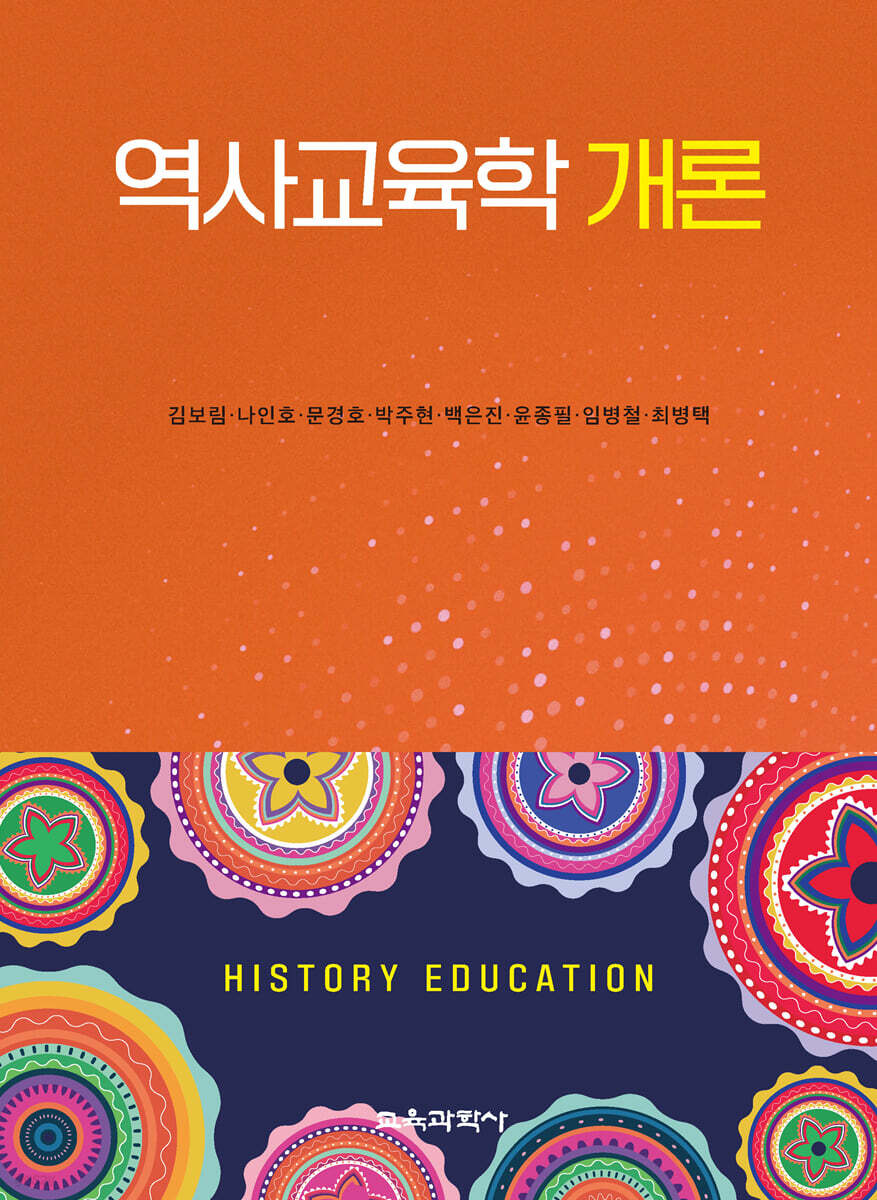
Introduction to History Education
 |
Description
Book Introduction
The first book in the field of historical education to bear the title 'Introduction'!
The purpose of history education is to 'understand humanity'.
This book is the result of a long period of brainstorming by eight experts in the field of history education, who planned and wrote an introduction.
The authors, with the academic mission of organizing the knowledge system in the field of history education within a certain framework and providing a foundation for theory and practice, have compiled the latest domestic and international history education theories that must be known and incorporated the latest history education methodologies into this book.
Amidst today's changes, such as the development of digital technology and the spread of artificial intelligence (AI), this book delves into "understanding humanity," the core value that history education should pursue and the essence that permeates its depths.
Teaching history means helping people understand humanity, and understanding humanity becomes a process of self-reflection and rediscovering relationships with others.
Through the process of understanding humanity through historical education, we can develop the ability to accept and embrace others who are different from us, the ability to listen to others, and the ability to tolerance and communication.
History education should be a guiding light on that journey.
I hope this book will serve as an academic milestone, connecting past and present research achievements and exploring future directions for history education.
By the time they close the book, readers will have flowed along the broad river of historical education and felt the countless thoughts and breaths contained within it.
The purpose of history education is to 'understand humanity'.
This book is the result of a long period of brainstorming by eight experts in the field of history education, who planned and wrote an introduction.
The authors, with the academic mission of organizing the knowledge system in the field of history education within a certain framework and providing a foundation for theory and practice, have compiled the latest domestic and international history education theories that must be known and incorporated the latest history education methodologies into this book.
Amidst today's changes, such as the development of digital technology and the spread of artificial intelligence (AI), this book delves into "understanding humanity," the core value that history education should pursue and the essence that permeates its depths.
Teaching history means helping people understand humanity, and understanding humanity becomes a process of self-reflection and rediscovering relationships with others.
Through the process of understanding humanity through historical education, we can develop the ability to accept and embrace others who are different from us, the ability to listen to others, and the ability to tolerance and communication.
History education should be a guiding light on that journey.
I hope this book will serve as an academic milestone, connecting past and present research achievements and exploring future directions for history education.
By the time they close the book, readers will have flowed along the broad river of historical education and felt the countless thoughts and breaths contained within it.
index
CHAPTER 01 What is Historical Education? 11
Ⅰ.
Concepts and Characteristics of Historical Education 12
1.
History Education as a Subject-Matter Pedagogy 12
2.
The Relationship Between History, Education, and Historical Education 18
3.
'State-Society-School' and History Education 21
4.
Teacher Expertise and Knowledge 37
5.
The Scientificity of History Debate 43
Ⅱ.
Issue 48 in the discussion on the independence of history and the integration of social studies
1.
The operation of the integrated curriculum "National Studies" during the late Japanese colonial period.
2.
Immediately after liberation, the issue of liquidating the "People's Department" and the introduction of the "Social Life Department" were discussed.
3.
Issue 54: The Appropriateness of Integrated Social Studies Subjects
Ⅲ.
Current Status of History Curriculum and History Education Around the World 57
1.
57 History Department Organization and Content Systems of Each Country in the World
2.
The Need for History as an Independent Subject 69
3.
72 Cases of History Education Around the World That Value the Unique Characteristics of History
CHAPTER 02 What is the purpose of history education? 81
Ⅰ.
The Purpose and Objectives of History Education 82
Ⅱ.
The Highest Purpose of History Education: Understanding Humanity 85
Ⅲ.
The Contributions and Limitations of Democratic Citizenship Education as a Historical Education Purpose 93
Ⅳ Historical Thinking as a Goal of History Education 100
CHAPTER 03 What is History? 107
Ⅰ.
History of History 108
1.
The Emergence of the Collective Singular "History" and the Birth of Historiography 108
2.
The Development of Historicism in the 19th Century 114
3.
The Challenges of Historical Relativism: Is History a Teacher of Life? 121
4.
Overview of 20th-Century History 125
Ⅱ.
History between Science and Literature 130
1.
Landscape of History 130
2.
History as a Social Science 132
3.
History as Narratology (Literature) 152
CHAPTER 04: What Philosophy and Historiography is History Education Research Based on? 163
Ⅰ.
Epistemology and Philosophy of History 164
1.
Epistemology Definition 164
2.
Philosophy of History and Postmodernism: The Challenge to Objectivity 165
Ⅱ.
Epistemology in History Education 175
1.
Typology of Epistemological Attitudes in History Education 175
2.
Discussion of historical thinking based on realist criterialism 179
3.
Academic-Centric Approaches to Historical Thinking 181
4.
An Empiricist Approach to Historical Thinking 212
CHAPTER 05 How do the issues of historical representation and acceptance relate to historical understanding? 225
Ⅰ.
A Sociocultural Approach to the Meaning Process of Historical Knowledge 226
1.
The Social and Cultural Context of Historical Understanding and Historical Culture 226
2.
Social Use and Meaning-Forming of History and Public History 232
3.
Distribution and Consumption of Historical Knowledge Outside of School and Directions for History Teaching and Learning 238
Ⅱ.
Cultural Mediation of Historical Representation and Understanding of History 239
1.
Exploring Various Forms of Historical Representation and Research on History Education 239
2.
Historical Film 241
3.
Museums and Memorials 248
CHAPTER 06 How to Select and Organize the Content of History Education 263
Ⅰ.
Principles of Selecting and Organizing Educational Content 264
1.
Selecting Content for History Education 264
2.
Organizational Principles and Methods of History Education Content 267
Ⅱ.
The Reality of Field History Education 275
1.
Political History Education 275
2.
Economic History Education 293
3.
Social History Education 309
4.
Cultural History Education 326
CHAPTER 07 How to Teach World History 343
Ⅰ.
Modern Historiography and the Tradition of World History 344
1.
The Rise of Modern Historiography and the Decline of World History 344
2.
Traditional World History and Its End Point 349
Ⅱ.
"World History Today": Rethinking the Meaning of World History in the Age of Globalization 358
1.
New Issues Raised by "World History Today" 358
2.
The Many Branches of 'World History Today' 364
3.
The Narrative Style of 'World History Today' 370
Ⅲ.
The Crisis and Alternatives in Our World History Education 376
1.
Challenges and Goals of World History Education 376
2.
Changes in Our World History Curriculum and Their Implications 383
3.
"World History Today" and the Changing Direction of World History Education 388
CHAPTER 08 How to Teach and What to Assess 395
Ⅰ.
Theory and Practice of Teaching and Learning Methods in History 396
1.
Theory of Teaching and Learning Methods in History 396
2.
Practical History Teaching and Learning Methods 405
Ⅱ.
Writing a Lesson Plan 426
1.
The Need for Lesson Plans 426
2.
Methods and Points to Consider When Writing Lesson Plans 427
3.
The Reality of Writing Lesson Plans 429
Ⅲ.
Writing evaluation questions 435
1.
Evaluation Concepts and Evaluation Factors 435
2.
Type 437 of Evaluation
3.
Written Exam 439
4.
Performance Evaluation 450
CHAPTER 09: How Korea's History Curriculum Has Changed (461)
Ⅰ.
Direction of History Curriculum Content Composition 462
1.
The Purpose of Education and the Purpose of History Education 462
2.
History Department Narrative 465
3.
Direction of Writing National Textbooks and "National History" 470
Ⅱ.
Changes in the History Curriculum 477
1.
History Education in the Syllabus 477
2.
History Education in the First and Second Curriculum Periods 482
3.
History Education in the 3rd to 6th Curriculum Periods 494
4.
The 7th Curriculum and the Trigger of Modern and Contemporary History Debate 505
5.
The 2007-2009 Revised Curriculum and the History Debate 509
6.
History Problem 512 in the 2015-2022 Revised Curriculum
CHAPTER 10 What are the basic concepts and issues you need to know to design a history curriculum? 523
Ⅰ.
The Place of History in the National and School Curriculum 524
1.
Three Dimensions of Curriculum and Design 524
2.
History, History Area, Social Studies (Group) 529
Ⅱ.
The Meaning and Issues of History Achievement Standards and Achievement Levels 534
1.
History as a Standard Achievement Standard 534
2.
History Achievement Level as a Criteria for Judgment 538
Ⅲ.
543 Issues in History Assessment to Consider in Curriculum Design
1.
543 Foundations of Assessment Design to Identify Evidence of Learning
2.
The possibility of reflecting the concepts and research methods of history in history department evaluations 546
Reference 552
Americas 589
Search 637
Ⅰ.
Concepts and Characteristics of Historical Education 12
1.
History Education as a Subject-Matter Pedagogy 12
2.
The Relationship Between History, Education, and Historical Education 18
3.
'State-Society-School' and History Education 21
4.
Teacher Expertise and Knowledge 37
5.
The Scientificity of History Debate 43
Ⅱ.
Issue 48 in the discussion on the independence of history and the integration of social studies
1.
The operation of the integrated curriculum "National Studies" during the late Japanese colonial period.
2.
Immediately after liberation, the issue of liquidating the "People's Department" and the introduction of the "Social Life Department" were discussed.
3.
Issue 54: The Appropriateness of Integrated Social Studies Subjects
Ⅲ.
Current Status of History Curriculum and History Education Around the World 57
1.
57 History Department Organization and Content Systems of Each Country in the World
2.
The Need for History as an Independent Subject 69
3.
72 Cases of History Education Around the World That Value the Unique Characteristics of History
CHAPTER 02 What is the purpose of history education? 81
Ⅰ.
The Purpose and Objectives of History Education 82
Ⅱ.
The Highest Purpose of History Education: Understanding Humanity 85
Ⅲ.
The Contributions and Limitations of Democratic Citizenship Education as a Historical Education Purpose 93
Ⅳ Historical Thinking as a Goal of History Education 100
CHAPTER 03 What is History? 107
Ⅰ.
History of History 108
1.
The Emergence of the Collective Singular "History" and the Birth of Historiography 108
2.
The Development of Historicism in the 19th Century 114
3.
The Challenges of Historical Relativism: Is History a Teacher of Life? 121
4.
Overview of 20th-Century History 125
Ⅱ.
History between Science and Literature 130
1.
Landscape of History 130
2.
History as a Social Science 132
3.
History as Narratology (Literature) 152
CHAPTER 04: What Philosophy and Historiography is History Education Research Based on? 163
Ⅰ.
Epistemology and Philosophy of History 164
1.
Epistemology Definition 164
2.
Philosophy of History and Postmodernism: The Challenge to Objectivity 165
Ⅱ.
Epistemology in History Education 175
1.
Typology of Epistemological Attitudes in History Education 175
2.
Discussion of historical thinking based on realist criterialism 179
3.
Academic-Centric Approaches to Historical Thinking 181
4.
An Empiricist Approach to Historical Thinking 212
CHAPTER 05 How do the issues of historical representation and acceptance relate to historical understanding? 225
Ⅰ.
A Sociocultural Approach to the Meaning Process of Historical Knowledge 226
1.
The Social and Cultural Context of Historical Understanding and Historical Culture 226
2.
Social Use and Meaning-Forming of History and Public History 232
3.
Distribution and Consumption of Historical Knowledge Outside of School and Directions for History Teaching and Learning 238
Ⅱ.
Cultural Mediation of Historical Representation and Understanding of History 239
1.
Exploring Various Forms of Historical Representation and Research on History Education 239
2.
Historical Film 241
3.
Museums and Memorials 248
CHAPTER 06 How to Select and Organize the Content of History Education 263
Ⅰ.
Principles of Selecting and Organizing Educational Content 264
1.
Selecting Content for History Education 264
2.
Organizational Principles and Methods of History Education Content 267
Ⅱ.
The Reality of Field History Education 275
1.
Political History Education 275
2.
Economic History Education 293
3.
Social History Education 309
4.
Cultural History Education 326
CHAPTER 07 How to Teach World History 343
Ⅰ.
Modern Historiography and the Tradition of World History 344
1.
The Rise of Modern Historiography and the Decline of World History 344
2.
Traditional World History and Its End Point 349
Ⅱ.
"World History Today": Rethinking the Meaning of World History in the Age of Globalization 358
1.
New Issues Raised by "World History Today" 358
2.
The Many Branches of 'World History Today' 364
3.
The Narrative Style of 'World History Today' 370
Ⅲ.
The Crisis and Alternatives in Our World History Education 376
1.
Challenges and Goals of World History Education 376
2.
Changes in Our World History Curriculum and Their Implications 383
3.
"World History Today" and the Changing Direction of World History Education 388
CHAPTER 08 How to Teach and What to Assess 395
Ⅰ.
Theory and Practice of Teaching and Learning Methods in History 396
1.
Theory of Teaching and Learning Methods in History 396
2.
Practical History Teaching and Learning Methods 405
Ⅱ.
Writing a Lesson Plan 426
1.
The Need for Lesson Plans 426
2.
Methods and Points to Consider When Writing Lesson Plans 427
3.
The Reality of Writing Lesson Plans 429
Ⅲ.
Writing evaluation questions 435
1.
Evaluation Concepts and Evaluation Factors 435
2.
Type 437 of Evaluation
3.
Written Exam 439
4.
Performance Evaluation 450
CHAPTER 09: How Korea's History Curriculum Has Changed (461)
Ⅰ.
Direction of History Curriculum Content Composition 462
1.
The Purpose of Education and the Purpose of History Education 462
2.
History Department Narrative 465
3.
Direction of Writing National Textbooks and "National History" 470
Ⅱ.
Changes in the History Curriculum 477
1.
History Education in the Syllabus 477
2.
History Education in the First and Second Curriculum Periods 482
3.
History Education in the 3rd to 6th Curriculum Periods 494
4.
The 7th Curriculum and the Trigger of Modern and Contemporary History Debate 505
5.
The 2007-2009 Revised Curriculum and the History Debate 509
6.
History Problem 512 in the 2015-2022 Revised Curriculum
CHAPTER 10 What are the basic concepts and issues you need to know to design a history curriculum? 523
Ⅰ.
The Place of History in the National and School Curriculum 524
1.
Three Dimensions of Curriculum and Design 524
2.
History, History Area, Social Studies (Group) 529
Ⅱ.
The Meaning and Issues of History Achievement Standards and Achievement Levels 534
1.
History as a Standard Achievement Standard 534
2.
History Achievement Level as a Criteria for Judgment 538
Ⅲ.
543 Issues in History Assessment to Consider in Curriculum Design
1.
543 Foundations of Assessment Design to Identify Evidence of Learning
2.
The possibility of reflecting the concepts and research methods of history in history department evaluations 546
Reference 552
Americas 589
Search 637
Publisher's Review
“History education, finally available in an ‘introduction’ format!”
The first basic history education textbook titled 'Introduction' has been published in Korea.
『Introduction to History Education』 is the result of long-term collaboration between eight experts.
This book aims to organize the previously scattered knowledge system of history education and broadly introduce major domestic and international theories and educational methods, thereby helping to connect academic understanding with practical application.
As a result, we were able to incorporate the core concepts of history education, the latest theories, and various teaching and learning methods into one volume.
In a rapidly changing digital environment and the proliferation of artificial intelligence (AI), this book presents "understanding humanity" as the central value that history education should pursue.
History is a process of human reflection, through which we can cultivate the power to accept and communicate with others.
"Introduction to Historical Education" connects past research achievements with current concerns, and will serve as a milestone in exploring the future direction of historical education.
The first basic history education textbook titled 'Introduction' has been published in Korea.
『Introduction to History Education』 is the result of long-term collaboration between eight experts.
This book aims to organize the previously scattered knowledge system of history education and broadly introduce major domestic and international theories and educational methods, thereby helping to connect academic understanding with practical application.
As a result, we were able to incorporate the core concepts of history education, the latest theories, and various teaching and learning methods into one volume.
In a rapidly changing digital environment and the proliferation of artificial intelligence (AI), this book presents "understanding humanity" as the central value that history education should pursue.
History is a process of human reflection, through which we can cultivate the power to accept and communicate with others.
"Introduction to Historical Education" connects past research achievements with current concerns, and will serve as a milestone in exploring the future direction of historical education.
GOODS SPECIFICS
- Date of issue: September 30, 2025
- Page count, weight, size: 652 pages | 188*257*35mm
- ISBN13: 9788925419435
- ISBN10: 8925419432
You may also like
카테고리
korean


korean

![GQ KOREA Mark (Monthly): December [2025]](http://librairie.coreenne.fr/cdn/shop/files/8ef265dbbfbf186523ed75ba7319009d.jpg?v=1765340328&width=3840)


