

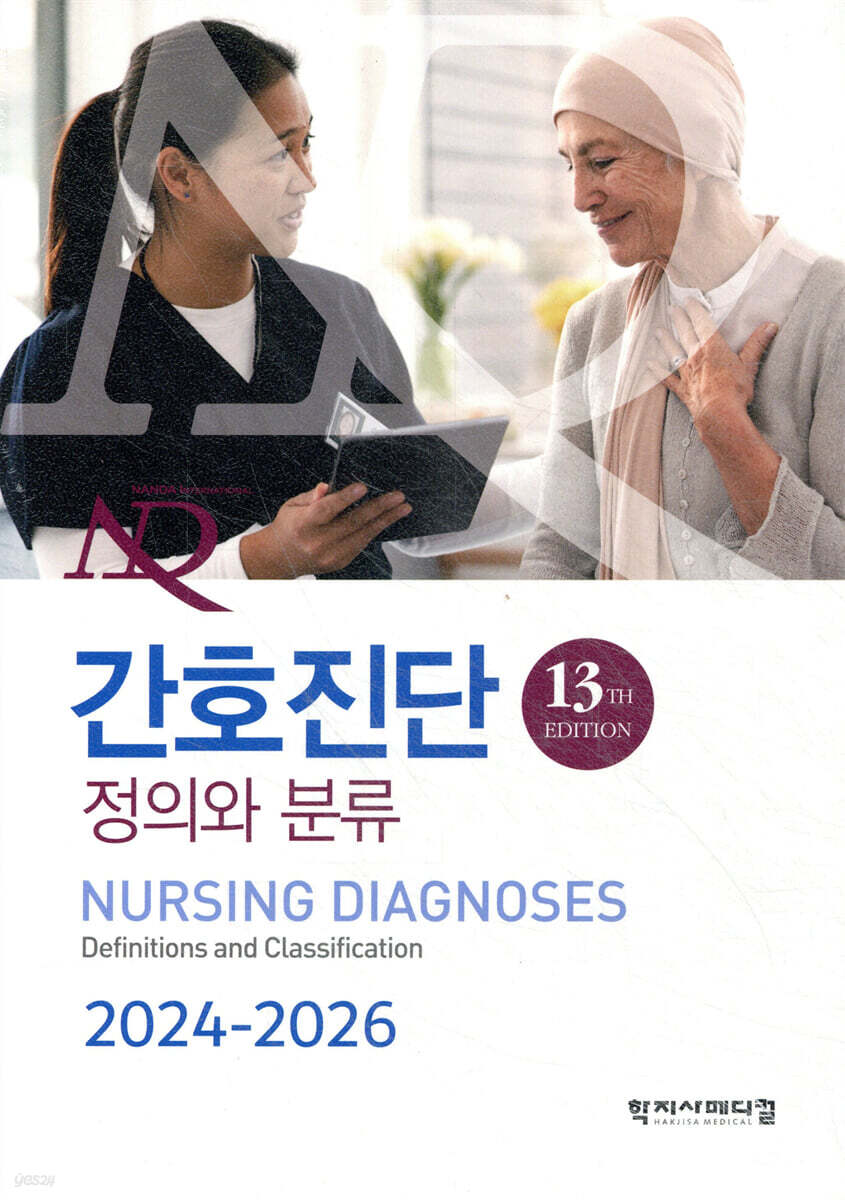
Definition and Classification of Nursing Diagnoses 2024-2026
 |
Description
Book Introduction
The 13th edition, version 2024-2026, provides 277 diagnoses, including 56 new ones.
Each nursing diagnosis is the result of the efforts of several NANDA International (NANDA-I) volunteers and has a defined level of evidence base.
Each new diagnosis was reviewed by the Diagnostic Development Committee (DDC) members as the primary reviewer, blindly reviewed by content experts, revised based on the review, and published after approval by the original submitters.
Additionally, the axes and axis-related terminology of NANDA-I have been revised.
Each nursing diagnosis is the result of the efforts of several NANDA International (NANDA-I) volunteers and has a defined level of evidence base.
Each new diagnosis was reviewed by the Diagnostic Development Committee (DDC) members as the primary reviewer, blindly reviewed by content experts, revised based on the review, and published after approval by the original submitters.
Additionally, the axes and axis-related terminology of NANDA-I have been revised.
index
PART 1 NANDA-I Classification: Assessment and Diagnosis
1.
Basics of Nursing Diagnosis
2.
From circumstances to diagnosis
PART 2 NANDA-I CLASSIFICATION: STRUCTURE AND DIAGNOSIS
3. NANDA-I Nursing Diagnosis Classification
4. Axial structure of NANDA-I
5.
Principles of diagnostic order in classification structures
PART 3 NANDA-I Classification: Recommendations for Present and Future
6. What's new in NANDA-I 2024-2026?
7. Directions for improving the NANDA-I classification
8.
Revised Level of Evidence Criteria for Diagnostic Submission
PART 4 NANDA-I Nursing Diagnosis
Area 1.
Health Promotion
Area 2.
antelope
Area 3.
excretion/exchange
Area 4.
Activity/Rest
Area 5.
perception/cognition
Area 6.
self-perception
Area 7.
Role relationships
Area 8.
castle
Area 9.
Coping/Stress Resilience
Area 10.
Principles of life
Area 11.
Safety/Protection
Area 12.
safety
Area 13.
Growth/Development
1.
Basics of Nursing Diagnosis
2.
From circumstances to diagnosis
PART 2 NANDA-I CLASSIFICATION: STRUCTURE AND DIAGNOSIS
3. NANDA-I Nursing Diagnosis Classification
4. Axial structure of NANDA-I
5.
Principles of diagnostic order in classification structures
PART 3 NANDA-I Classification: Recommendations for Present and Future
6. What's new in NANDA-I 2024-2026?
7. Directions for improving the NANDA-I classification
8.
Revised Level of Evidence Criteria for Diagnostic Submission
PART 4 NANDA-I Nursing Diagnosis
Area 1.
Health Promotion
Area 2.
antelope
Area 3.
excretion/exchange
Area 4.
Activity/Rest
Area 5.
perception/cognition
Area 6.
self-perception
Area 7.
Role relationships
Area 8.
castle
Area 9.
Coping/Stress Resilience
Area 10.
Principles of life
Area 11.
Safety/Protection
Area 12.
safety
Area 13.
Growth/Development
Publisher's Review
A total of 277 nursing diagnoses, including 123 revised and 56 new diagnoses
In recent years, we have witnessed many changes affecting nursing practice worldwide.
The availability of healthcare professionals and the cost of treatment remain major challenges, and the continued increase in demand for treatment following the COVID-19 pandemic is also a significant concern.
Technological advancements and specialization have increased the complexity of patient care, many of which cannot be fully explained by disease status alone.
Now that electronic health records are becoming more widespread, AI-related activity is booming.
These changes are making nurses more concerned than ever about developing and using standardized language in clinical practice, education, and research.
Indeed, we are at a point where we must critically examine how nursing assessment, intervention, and treatment outcomes are linked and documented to improve the quality and safety of nursing care.
We must also explore how to leverage these large data sets to clarify nursing's unique role and impact on health care.
Standardizing language will increase the visibility of nursing and improve communication within the healthcare team.
This 2024-2026 version, the 13th edition, provides 277 diagnoses, including 56 new ones.
Each nursing diagnosis is the result of the efforts of several NANDA International (NANDA-I) volunteers and has a defined level of evidence base.
Each new diagnosis was reviewed by the Diagnostic Development Committee (DDC) members as the primary reviewer, blindly reviewed by content experts, revised based on the review, and published after approval by the original submitters.
Additionally, the axes and axis-related terminology of NANDA-I have been revised.
We hope that these diagnoses will stimulate further validation studies in various regions around the world, achieving a higher level of evidence.
All students and researchers are strongly encouraged to submit research findings related to nursing diagnosis to NANDA-I to enhance the evidence base of the classification.
The NANDA-I classification has now been translated into more than 20 languages.
During this cycle, we integrated standardized terminology from the U.S. National Library of Medicine's Medical Subject Terms (MeSH) to facilitate translation and provide standardized definitions of diagnostic indicators.
This mapping supports a consistent understanding of diagnostic indicators and assists translators in their work.
We encourage ongoing revision and improvement of existing diagnoses to reflect the latest evidence and observations from practice.
In recent years, we have witnessed many changes affecting nursing practice worldwide.
The availability of healthcare professionals and the cost of treatment remain major challenges, and the continued increase in demand for treatment following the COVID-19 pandemic is also a significant concern.
Technological advancements and specialization have increased the complexity of patient care, many of which cannot be fully explained by disease status alone.
Now that electronic health records are becoming more widespread, AI-related activity is booming.
These changes are making nurses more concerned than ever about developing and using standardized language in clinical practice, education, and research.
Indeed, we are at a point where we must critically examine how nursing assessment, intervention, and treatment outcomes are linked and documented to improve the quality and safety of nursing care.
We must also explore how to leverage these large data sets to clarify nursing's unique role and impact on health care.
Standardizing language will increase the visibility of nursing and improve communication within the healthcare team.
This 2024-2026 version, the 13th edition, provides 277 diagnoses, including 56 new ones.
Each nursing diagnosis is the result of the efforts of several NANDA International (NANDA-I) volunteers and has a defined level of evidence base.
Each new diagnosis was reviewed by the Diagnostic Development Committee (DDC) members as the primary reviewer, blindly reviewed by content experts, revised based on the review, and published after approval by the original submitters.
Additionally, the axes and axis-related terminology of NANDA-I have been revised.
We hope that these diagnoses will stimulate further validation studies in various regions around the world, achieving a higher level of evidence.
All students and researchers are strongly encouraged to submit research findings related to nursing diagnosis to NANDA-I to enhance the evidence base of the classification.
The NANDA-I classification has now been translated into more than 20 languages.
During this cycle, we integrated standardized terminology from the U.S. National Library of Medicine's Medical Subject Terms (MeSH) to facilitate translation and provide standardized definitions of diagnostic indicators.
This mapping supports a consistent understanding of diagnostic indicators and assists translators in their work.
We encourage ongoing revision and improvement of existing diagnoses to reflect the latest evidence and observations from practice.
GOODS SPECIFICS
- Date of issue: April 30, 2025
- Format: Paperback book binding method guide
- Page count, weight, size: 592 pages | 188*257*24mm
- ISBN13: 9791194219873
You may also like
카테고리
korean


korean

![GQ KOREA Mark (Monthly): December [2025]](http://librairie.coreenne.fr/cdn/shop/files/8ef265dbbfbf186523ed75ba7319009d.jpg?v=1765340328&width=3840)


