

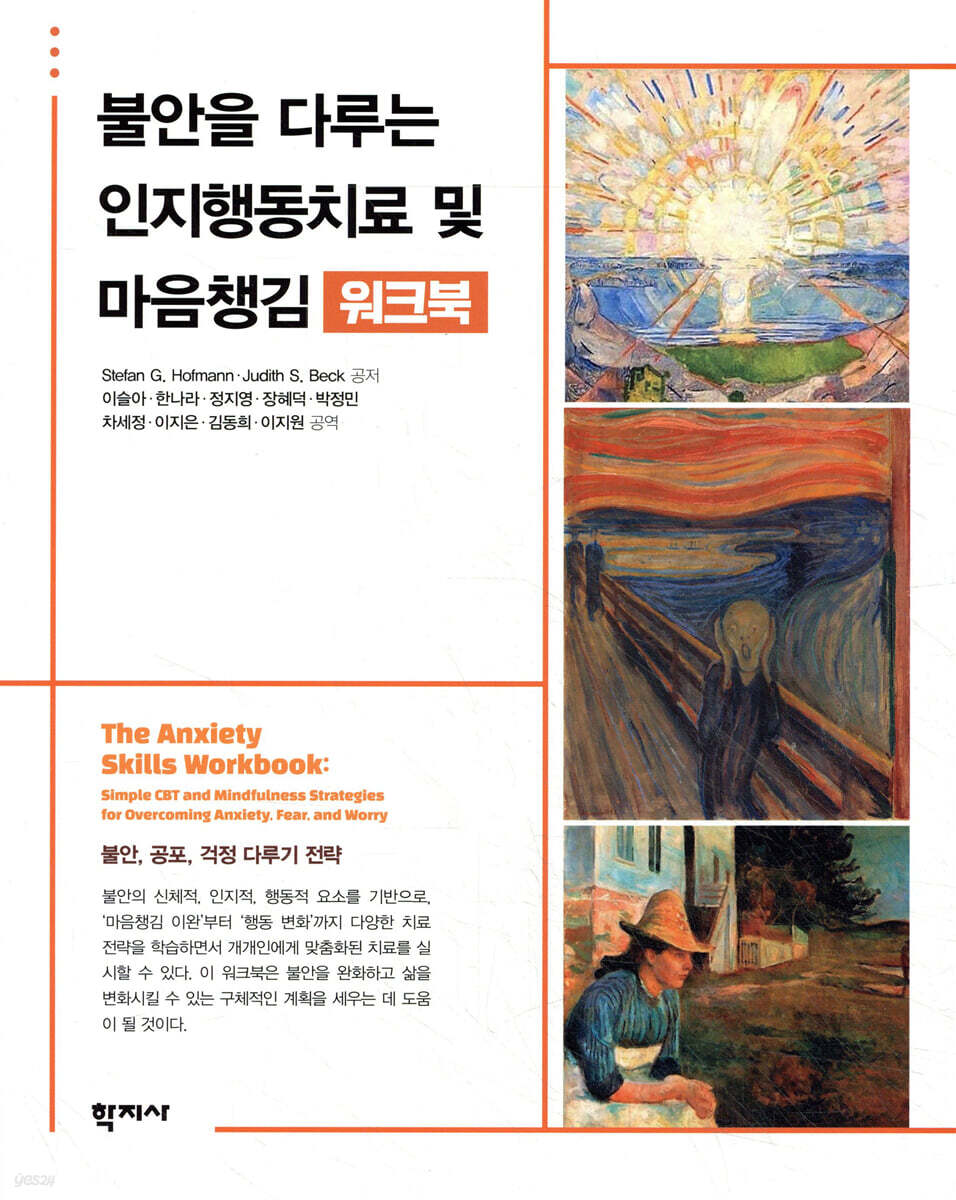
Cognitive Behavioral Therapy and Mindfulness Workbook for Anxiety
 |
Description
Book Introduction
"Cognitive Behavioral Therapy and Mindfulness Workbook for Anxiety" systematically introduces cognitive behavioral therapy techniques that can effectively treat anxiety disorders.
It is structured to be applicable to the various forms of anxiety experienced by individuals by introducing individual interventions that address cognitive, behavioral, and physical factors that contribute to the vicious cycle of anxiety.
We also use a chapter-by-chapter approach, allowing us to provide treatment tailored to each individual's situation.
It is structured to be applicable to the various forms of anxiety experienced by individuals by introducing individual interventions that address cognitive, behavioral, and physical factors that contribute to the vicious cycle of anxiety.
We also use a chapter-by-chapter approach, allowing us to provide treatment tailored to each individual's situation.
index
Translator's Preface
Author's Preface
prolog
Chapter 1: Planning Your Journey
Section 1 Goal Setting and Motivation
1.
Thinking about change
2.
Setting goals
Section 2: The Nature of Anxiety and Worry
1.
The purpose of anxiety
2.
How Anxiety Becomes a Problem
3.
Generalized Anxiety Disorder: What Is Generalized Anxiety Disorder?
4.
Why am I so anxious?
5.
Rethinking Worry: Worry vs.
Problem solving
6.
Self-monitoring
Section 3 How Anxiety Attacks Present
1.
cycle of anxiety
2.
evasion
3.
How the components of anxiety interact
Chapter 2 Mindfulness Relaxation
1.
Learn to Relax: Progressive Muscle Relaxation
2.
Shifting from Physical to Mindful Relaxation
Chapter 3 Cognitive Reconstruction
Section 1: Overestimating Probabilities
1.
Challenging probability overestimation
Section 2 Catastrophic Incidents
1.
Challenging catastrophic thinking
2.
The combination of probability overestimation and catastrophic thinking
Chapter 4: Worrying About Worries
Section 1: Awareness of the Premiere
1.
Belief in thoughts
2.
Attention and anxiety
3.
Regulate your attention through detached awareness
4.
Worry Management Experiment
Section 2 Postponing Worries
1.
Review the experiment
2.
How accurate are your worries?
3.
negative metacognition
4.
Disturbing worries
5.
Choose your worries
6.
Postponing worry
Chapter 5: Facing Fearful Scenarios and Images
1.
Why Should We Face Our Fears?
2.
Image exposure
3.
Creating an Image Exposure Script
4.
Steps for image exposure
5.
Review the exposure and move on to the next step.
Chapter 6: Changing Behavior
1.
Behavioral components of anxiety
2.
Lack of tolerance for uncertainty
3.
avoidance behavior
4.
Facing anxiety through behavior change and exposure
5.
Practice behavioral exposure
Chapter 7 Progress toward goals and prevention of recurrence
1.
Review the skills you've learned so far
2.
Review progress
3.
Maintain performance
4.
Identify high-risk error areas
5.
Areas requiring continuous improvement
6.
conclusion
References
Author's Preface
prolog
Chapter 1: Planning Your Journey
Section 1 Goal Setting and Motivation
1.
Thinking about change
2.
Setting goals
Section 2: The Nature of Anxiety and Worry
1.
The purpose of anxiety
2.
How Anxiety Becomes a Problem
3.
Generalized Anxiety Disorder: What Is Generalized Anxiety Disorder?
4.
Why am I so anxious?
5.
Rethinking Worry: Worry vs.
Problem solving
6.
Self-monitoring
Section 3 How Anxiety Attacks Present
1.
cycle of anxiety
2.
evasion
3.
How the components of anxiety interact
Chapter 2 Mindfulness Relaxation
1.
Learn to Relax: Progressive Muscle Relaxation
2.
Shifting from Physical to Mindful Relaxation
Chapter 3 Cognitive Reconstruction
Section 1: Overestimating Probabilities
1.
Challenging probability overestimation
Section 2 Catastrophic Incidents
1.
Challenging catastrophic thinking
2.
The combination of probability overestimation and catastrophic thinking
Chapter 4: Worrying About Worries
Section 1: Awareness of the Premiere
1.
Belief in thoughts
2.
Attention and anxiety
3.
Regulate your attention through detached awareness
4.
Worry Management Experiment
Section 2 Postponing Worries
1.
Review the experiment
2.
How accurate are your worries?
3.
negative metacognition
4.
Disturbing worries
5.
Choose your worries
6.
Postponing worry
Chapter 5: Facing Fearful Scenarios and Images
1.
Why Should We Face Our Fears?
2.
Image exposure
3.
Creating an Image Exposure Script
4.
Steps for image exposure
5.
Review the exposure and move on to the next step.
Chapter 6: Changing Behavior
1.
Behavioral components of anxiety
2.
Lack of tolerance for uncertainty
3.
avoidance behavior
4.
Facing anxiety through behavior change and exposure
5.
Practice behavioral exposure
Chapter 7 Progress toward goals and prevention of recurrence
1.
Review the skills you've learned so far
2.
Review progress
3.
Maintain performance
4.
Identify high-risk error areas
5.
Areas requiring continuous improvement
6.
conclusion
References
GOODS SPECIFICS
- Date of issue: January 20, 2025
- Format: Paperback book binding method guide
- Page count, weight, size: 200 pages | 401g | 188*235*20mm
- ISBN13: 9788999732744
- ISBN10: 8999732746
You may also like
카테고리
korean


korean

![ELLE 엘르 스페셜 에디션 A형 : 12월 [2025]](http://librairie.coreenne.fr/cdn/shop/files/b8e27a3de6c9538896439686c6b0e8fb.jpg?v=1766436872&width=3840)


