

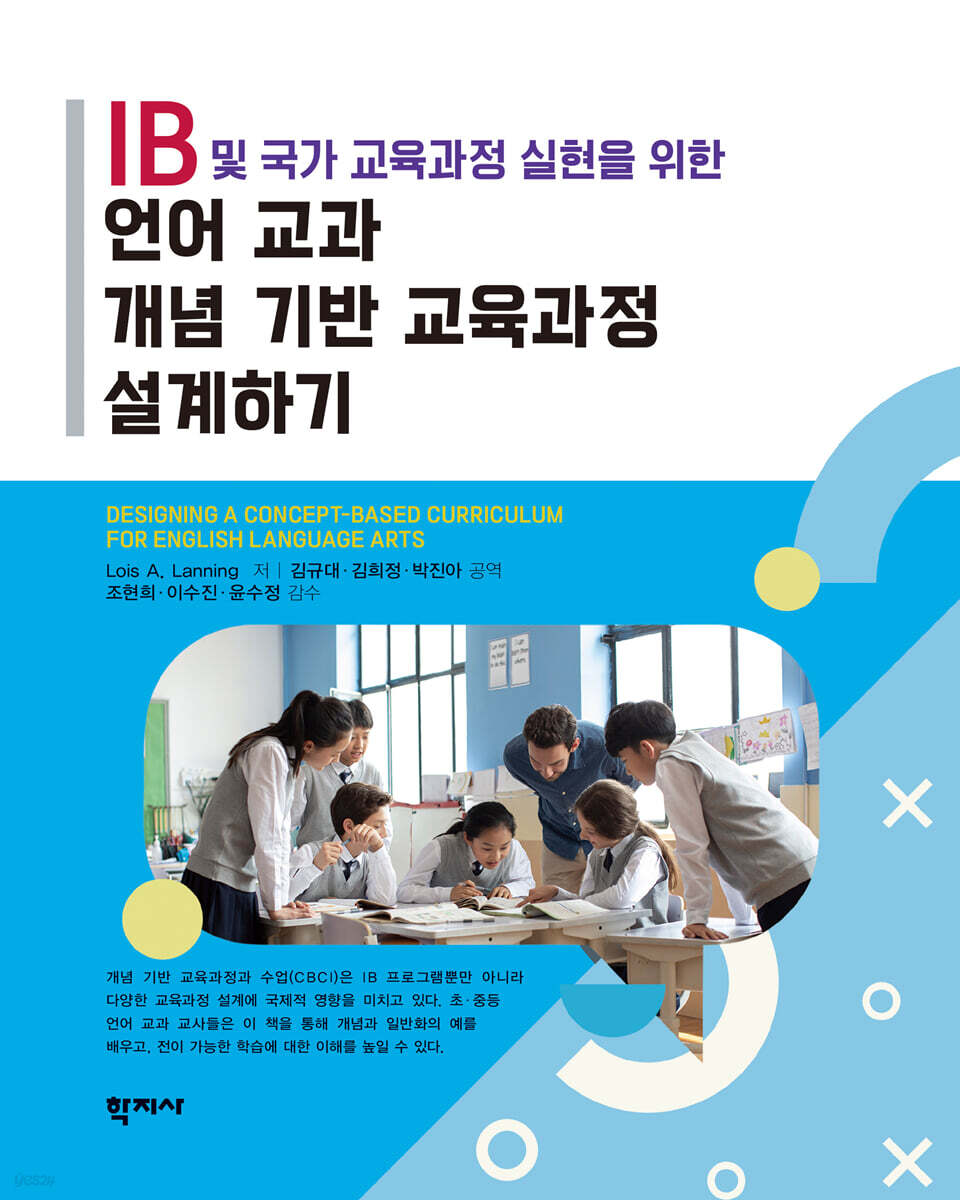
Designing a Concept-Based Curriculum for Language Arts
 |
Description
Book Introduction
Part 1 of this book, which consists of three parts, presents the theoretical basis for concept-based curriculum and the preliminary design work that leads to curriculum change.
Part 2 contains a step-by-step implementation plan for designing a concept-based curriculum for language teaching.
Part 3 is designed to present the concept-based curriculum in practice, with examples from elementary, middle, and high school language curriculum units and voices from the field.
If you are an education professional who dreams of tomorrow's thinking classroom, this book will be a welcome companion in your research and practice.
Part 2 contains a step-by-step implementation plan for designing a concept-based curriculum for language teaching.
Part 3 is designed to present the concept-based curriculum in practice, with examples from elementary, middle, and high school language curriculum units and voices from the field.
If you are an education professional who dreams of tomorrow's thinking classroom, this book will be a welcome companion in your research and practice.
index
Translator's Preface
Recommendation
introduction
preface
Acknowledgements
Part 1: Preparing to Design the Curriculum
Chapter 1: The Importance of Curriculum in Teaching and Learning
Curriculum as a Comprehensive Plan
What is a concept-based curriculum?
Chapter 2: Components of a Concept-Based Language Curriculum
Traditional curriculum and traditional teaching
From traditional curriculum design to concept-based curriculum design
The relationship between knowledge and process
Understanding the two structures
Structure of Knowledge
Structure of the process
The basis of this structure
Provide a roadmap for your classes
Chapter 3: Getting Started: Pre-Working
Leading Curriculum Change
Building a Curriculum Leadership Team
Clarify your vision
Determining the curriculum format
Developing Strong Unit Names
Mapping Learning Units for the New Curriculum
Concept-Based Curriculum Review
summation
Part 2: Introduction to the Design Process
Forming a curriculum writing team
The Role of the Leadership Team
Forms for Unit Planning
Chapter 4: Designing a Curriculum: Steps 1 and 2
Step 1: Create a Unit Name
Step 2: Identifying a Conceptual Lens
summation
Chapter 5: Designing a Curriculum: Step 3
Step 3: Creating a Unit Net
Structure of the unit net
How is each strand defined?
Why strands?
Subtopics and concepts
summation
Chapter 6: Designing a Curriculum: Steps 4 and 5
Thought and understanding
Step 4: Write a generalization
Assessing prior knowledge
Getting started writing generalizations
Aligning generalizations with the unit net
Setting the scaffold for generalization
Teaching with generalizations
Step 4 Summary
Step 5: Write a Guide Question
5-Step Summary
Chapter 7: Designing a Curriculum: Steps 6 and 7
Step 6: Determine What's Important
Step 7: Determine Core Features
Summary of Steps 6 and 7
Chapter 8: Designing a Curriculum: Steps 8, 9, and 10
Step 8: Designing the Final Evaluation
What you can learn from the final evaluation
Step 9: Propose a Learning Experience
Summary of Steps 8 and 9
Step 10: Write a Unit Outline
10-Step Summary
Part 3: Concept-Based Curriculum in Practice
Chapter 9: Concept-Based Language Curriculum and Unit Practice
Elementary school language curriculum unit examples
Middle School Language Arts Unit Case Study
High School Language Arts Unit Case Study
summation
Chapter 10: Voices from the Field
References
Search
Recommendation
introduction
preface
Acknowledgements
Part 1: Preparing to Design the Curriculum
Chapter 1: The Importance of Curriculum in Teaching and Learning
Curriculum as a Comprehensive Plan
What is a concept-based curriculum?
Chapter 2: Components of a Concept-Based Language Curriculum
Traditional curriculum and traditional teaching
From traditional curriculum design to concept-based curriculum design
The relationship between knowledge and process
Understanding the two structures
Structure of Knowledge
Structure of the process
The basis of this structure
Provide a roadmap for your classes
Chapter 3: Getting Started: Pre-Working
Leading Curriculum Change
Building a Curriculum Leadership Team
Clarify your vision
Determining the curriculum format
Developing Strong Unit Names
Mapping Learning Units for the New Curriculum
Concept-Based Curriculum Review
summation
Part 2: Introduction to the Design Process
Forming a curriculum writing team
The Role of the Leadership Team
Forms for Unit Planning
Chapter 4: Designing a Curriculum: Steps 1 and 2
Step 1: Create a Unit Name
Step 2: Identifying a Conceptual Lens
summation
Chapter 5: Designing a Curriculum: Step 3
Step 3: Creating a Unit Net
Structure of the unit net
How is each strand defined?
Why strands?
Subtopics and concepts
summation
Chapter 6: Designing a Curriculum: Steps 4 and 5
Thought and understanding
Step 4: Write a generalization
Assessing prior knowledge
Getting started writing generalizations
Aligning generalizations with the unit net
Setting the scaffold for generalization
Teaching with generalizations
Step 4 Summary
Step 5: Write a Guide Question
5-Step Summary
Chapter 7: Designing a Curriculum: Steps 6 and 7
Step 6: Determine What's Important
Step 7: Determine Core Features
Summary of Steps 6 and 7
Chapter 8: Designing a Curriculum: Steps 8, 9, and 10
Step 8: Designing the Final Evaluation
What you can learn from the final evaluation
Step 9: Propose a Learning Experience
Summary of Steps 8 and 9
Step 10: Write a Unit Outline
10-Step Summary
Part 3: Concept-Based Curriculum in Practice
Chapter 9: Concept-Based Language Curriculum and Unit Practice
Elementary school language curriculum unit examples
Middle School Language Arts Unit Case Study
High School Language Arts Unit Case Study
summation
Chapter 10: Voices from the Field
References
Search
Publisher's Review
A translated version has been published to help teachers and researchers teaching language subjects such as Korean, English, Chinese, and Japanese gain a solid understanding of the concept-based curriculum for language subjects.
The 2022 revised curriculum and the introduction of the International Baccalaureate (IB) are rapidly transforming classrooms in South Korea.
Accordingly, the need for a curriculum that elicits deep understanding from learners, inquiry-based learning, and inquiry-based education is gradually increasing.
In the transformative educational landscape, concept-based curricula support the realization of the IB and national curricula, encouraging educators to move beyond rote learning and establish a thought-provoking classroom culture.
The goals of the IB and national curricula will be more effectively achieved when educators develop a solid understanding of concept-based curriculum design and develop the skills to apply it.
In particular, this book presents a concept-based curriculum unit design plan and case studies for language arts, which has lacked practical research compared to other subjects such as social studies and science, and supports transferable learning in language arts.
All subjects have both a structure of knowledge and a structure of process, although the degree and weight of these differ. Subjects such as social studies and science focus on a structure of knowledge based on facts and materials, while language subjects such as Korean or English focus on a structure of process based on functions and strategies.
In an educational trend that increasingly emphasizes interdisciplinary education, educators need to develop a comprehensive understanding of the structure of the curriculum to ensure that language arts are not simply used as a tool for concept-based inquiry learning.
"Designing a Curriculum Based on Language Teaching Concepts" provides educators with practical guidance through examples of various concepts and generalizations that correspond to the structure of the course.
Part 1 of this book, which consists of three parts, presents the theoretical basis for concept-based curriculum and the preliminary design work that leads to curriculum change.
Part 2 contains a step-by-step implementation plan for designing a concept-based curriculum for language teaching.
Part 3 is designed to present the concept-based curriculum in practice, with examples from elementary, middle, and high school language curriculum units and voices from the field.
If you are an education professional who dreams of tomorrow's thinking classroom, this book will be a welcome companion in your research and practice.
The 2022 revised curriculum and the introduction of the International Baccalaureate (IB) are rapidly transforming classrooms in South Korea.
Accordingly, the need for a curriculum that elicits deep understanding from learners, inquiry-based learning, and inquiry-based education is gradually increasing.
In the transformative educational landscape, concept-based curricula support the realization of the IB and national curricula, encouraging educators to move beyond rote learning and establish a thought-provoking classroom culture.
The goals of the IB and national curricula will be more effectively achieved when educators develop a solid understanding of concept-based curriculum design and develop the skills to apply it.
In particular, this book presents a concept-based curriculum unit design plan and case studies for language arts, which has lacked practical research compared to other subjects such as social studies and science, and supports transferable learning in language arts.
All subjects have both a structure of knowledge and a structure of process, although the degree and weight of these differ. Subjects such as social studies and science focus on a structure of knowledge based on facts and materials, while language subjects such as Korean or English focus on a structure of process based on functions and strategies.
In an educational trend that increasingly emphasizes interdisciplinary education, educators need to develop a comprehensive understanding of the structure of the curriculum to ensure that language arts are not simply used as a tool for concept-based inquiry learning.
"Designing a Curriculum Based on Language Teaching Concepts" provides educators with practical guidance through examples of various concepts and generalizations that correspond to the structure of the course.
Part 1 of this book, which consists of three parts, presents the theoretical basis for concept-based curriculum and the preliminary design work that leads to curriculum change.
Part 2 contains a step-by-step implementation plan for designing a concept-based curriculum for language teaching.
Part 3 is designed to present the concept-based curriculum in practice, with examples from elementary, middle, and high school language curriculum units and voices from the field.
If you are an education professional who dreams of tomorrow's thinking classroom, this book will be a welcome companion in your research and practice.
GOODS SPECIFICS
- Date of issue: January 10, 2025
- Format: Paperback book binding method guide
- Page count, weight, size: 224 pages | 188*235*11mm
- ISBN13: 9788999732843
You may also like
카테고리
korean


korean

![ELLE 엘르 스페셜 에디션 A형 : 12월 [2025]](http://librairie.coreenne.fr/cdn/shop/files/b8e27a3de6c9538896439686c6b0e8fb.jpg?v=1766436872&width=3840)


