

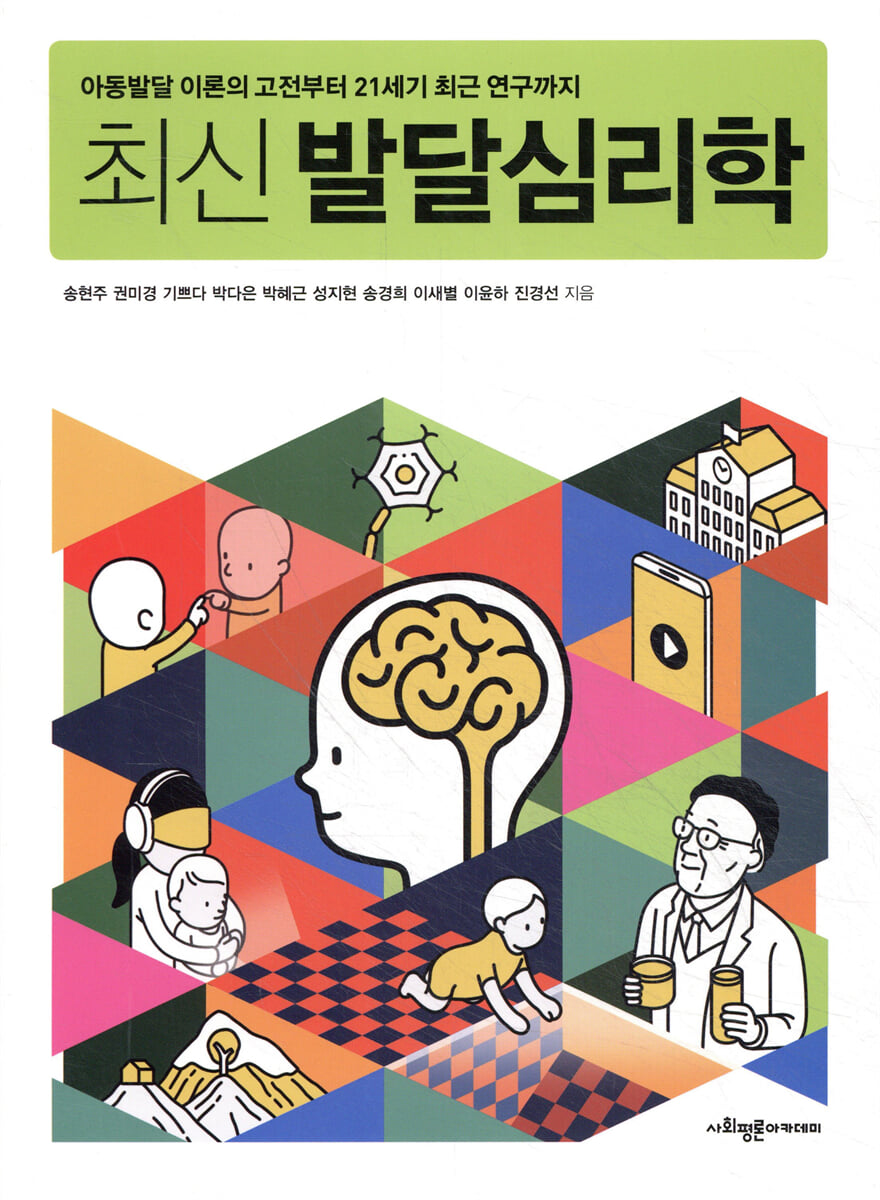
Latest developmental psychology
 |
Description
Book Introduction
Developmental psychology is a field that provides important information not only to specialists but also to researchers in almost all fields related to people.
In the study of human beings, knowledge of developmental processes provides important clues to the origins of human abilities and tendencies.
For example, to understand how human thought and language work, it is crucial to know how cognitive and language abilities develop during childhood.
The interpersonal relationships we form with others in adulthood may be deeply connected to the development of attachments we formed with our primary caregivers in childhood.
This scientific foundational knowledge of development provides a basic framework for research on abnormal development, suggests solutions to various issues arising in education and parenting settings, and can also contribute to the development of government policies.
This book provides a foundational understanding of developmental psychology as a scientific field of study.
In the study of human beings, knowledge of developmental processes provides important clues to the origins of human abilities and tendencies.
For example, to understand how human thought and language work, it is crucial to know how cognitive and language abilities develop during childhood.
The interpersonal relationships we form with others in adulthood may be deeply connected to the development of attachments we formed with our primary caregivers in childhood.
This scientific foundational knowledge of development provides a basic framework for research on abnormal development, suggests solutions to various issues arising in education and parenting settings, and can also contribute to the development of government policies.
This book provides a foundational understanding of developmental psychology as a scientific field of study.
- You can preview some of the book's contents.
Preview
index
Chapter 1: Overview of Developmental Research
Chapter 2 Brain Development
Chapter 3 Physical and Sensory Development
Chapter 4 Cognitive Development: Piaget and Vygotsky's Theories
Chapter 5 Cognitive Development: An Information Processing Perspective
Chapter 6 Language Development
Chapter 7 Intelligence
Chapter 8 Emotional Development
Chapter 9 Self and Sexual Development
Chapter 10 Moral Development
Chapter 11 Development and the Family
Chapter 12 Development and Social Environment
Chapter 13: Developmental Abnormalities
Chapter 2 Brain Development
Chapter 3 Physical and Sensory Development
Chapter 4 Cognitive Development: Piaget and Vygotsky's Theories
Chapter 5 Cognitive Development: An Information Processing Perspective
Chapter 6 Language Development
Chapter 7 Intelligence
Chapter 8 Emotional Development
Chapter 9 Self and Sexual Development
Chapter 10 Moral Development
Chapter 11 Development and the Family
Chapter 12 Development and Social Environment
Chapter 13: Developmental Abnormalities
Detailed image

Into the book
When conducting research on human subjects, researchers must pay attention to the physical and mental well-being of research participants, a practice known as research ethics.
In particular, child development research involving children who are not yet able to clearly express their thoughts and make decisions about research participation needs to adhere to more rigorous and meticulous research ethics.
In Korea, the revised Act on Bioethics and Safety came into effect in February 2013.
According to the provision of this Act, “Anyone who intends to conduct research on human subjects must prepare a research plan and obtain review by the institutional review board before conducting research on human subjects” (Article 15, Paragraph 1), all human subject research must pass the review of the Institutional Review Board (IRB), and children, in particular, are classified as vulnerable subjects and must undergo regular review by the Institutional Review Board.
--- p.44
The folded structure of the cerebral cortex is an important feature of the human brain.
Although the folds of the cerebral cortex themselves are found in other mammals, the complex structure of the cerebral cortex, consisting of numerous grooves and ridges, is found only in humans, with the exception of dolphins.
This folded structure allows the cerebral cortex to have a maximum surface area within the limited size of the skull, allowing it to receive oxygen more efficiently and for more neurons to be activated and send and receive signals.
The development of the folds of the human brain begins around the 20th week of pregnancy and continues until 1.5 years after birth.
The right side of Figure 2-4 (page 59) shows the formation of the brain's fold structure that occurs in the latter half of pregnancy, after the formation of the six cortical layers is complete.
--- p.65
While Kohlberg emphasized moral reasoning, Bandura emphasized self-regulatory mechanisms and placed importance on moral agency.
By the age of 3 or 4, humans already develop some level of knowledge about right and wrong in various social and moral situations (Bussey, 2020).
However, there are countless cases where people commit immoral acts even though they judge that they are wrong.
To understand this discrepancy between judgment and action, we must understand the mechanisms that justify action.
Moral disengagement is attracting attention as one of these justification processes.
In particular, child development research involving children who are not yet able to clearly express their thoughts and make decisions about research participation needs to adhere to more rigorous and meticulous research ethics.
In Korea, the revised Act on Bioethics and Safety came into effect in February 2013.
According to the provision of this Act, “Anyone who intends to conduct research on human subjects must prepare a research plan and obtain review by the institutional review board before conducting research on human subjects” (Article 15, Paragraph 1), all human subject research must pass the review of the Institutional Review Board (IRB), and children, in particular, are classified as vulnerable subjects and must undergo regular review by the Institutional Review Board.
--- p.44
The folded structure of the cerebral cortex is an important feature of the human brain.
Although the folds of the cerebral cortex themselves are found in other mammals, the complex structure of the cerebral cortex, consisting of numerous grooves and ridges, is found only in humans, with the exception of dolphins.
This folded structure allows the cerebral cortex to have a maximum surface area within the limited size of the skull, allowing it to receive oxygen more efficiently and for more neurons to be activated and send and receive signals.
The development of the folds of the human brain begins around the 20th week of pregnancy and continues until 1.5 years after birth.
The right side of Figure 2-4 (page 59) shows the formation of the brain's fold structure that occurs in the latter half of pregnancy, after the formation of the six cortical layers is complete.
--- p.65
While Kohlberg emphasized moral reasoning, Bandura emphasized self-regulatory mechanisms and placed importance on moral agency.
By the age of 3 or 4, humans already develop some level of knowledge about right and wrong in various social and moral situations (Bussey, 2020).
However, there are countless cases where people commit immoral acts even though they judge that they are wrong.
To understand this discrepancy between judgment and action, we must understand the mechanisms that justify action.
Moral disengagement is attracting attention as one of these justification processes.
--- p.369
Publisher's Review
As a textbook, this book has the following special features:
First, it can be used as an introductory book to development not only in psychology but also in fields such as child studies, education, nursing, and social welfare.
Drawing on my years of experience researching and teaching human development at universities, I have written this book to help beginners understand and engage with the key theories, research findings, and practical implications of developmental psychology.
Second, the chapters are organized according to the main topics of human development, and experts in developmental psychology, abnormal psychology, brain science, child studies, and family studies participated as authors for each topic, thereby increasing the accuracy and expertise of the explanations.
Fourth, we provide abundant pictures, tables, glossaries, chapter summaries, etc. to help you learn without getting bored.
Fifth, we have included concept check quizzes for each section and practice problems for each chapter to help you easily review and remember what you have studied, thereby increasing the learning effect.
Developmental psychology is a field of study that covers a very broad range of topics.
The 13 chapters in this book guide you through each area of development as follows:
Chapter 1: Overview of Developmental Research This chapter provides a general introduction to developmental psychology research, covering the reasons for studying development, the areas and periods of development, key issues and theoretical approaches, research methods, and research ethics.
Chapter 2 Brain Development This chapter introduces the process of brain development and the role of genetics and environment throughout infancy, childhood, and adolescence, starting with the development of nerve cells and the formation of the cerebral folds in the fetus.
Although it may feel unfamiliar and difficult because it contains a lot of unfamiliar content, it will be an opportunity to learn a little about the latest research results in the rapidly developing field of brain science.
Chapter 3 Physical and Sensory Development This chapter outlines the physical growth of infants and covers the development of sensory organs such as vision, hearing, and touch, as well as the child's perception.
Chapter 4 Cognitive Development: Piaget and Vygotsky's Theories This chapter explains the process and mechanisms of children's cognitive development as viewed by two leading scholars in developmental psychology, and describes the significance, contributions, and limitations of the two perspectives.
Chapter 5 Cognitive Development: Information Processing Perspective This chapter covers how cognitive functions are structured and change, focusing on information processing functions such as memory, attention, and executive function.
Chapter 6: Language Development This chapter discusses the language preferences and perceptions of fetuses and newborns, the developmental process from babbling to speaking words and sentences, and the characteristics of children's language learning.
Chapter 7 Intelligence discusses how to measure intelligence, how to interpret intelligence quotients, and the factors that influence intelligence.
Chapter 8 Emotional Development covers the development of children's ability to express, understand, and regulate emotions, and explains theories of attachment and temperament.
Chapter 9 Self-Concept and Gender Role Development This chapter deals with the development of children's identity, focusing on the formation of self-concept and gender identity, and explains related topics such as self-esteem, self-control, gender roles, and gender differences.
Chapter 10: Moral Development This chapter examines the process of moral development, dividing it into cognitive, emotional, and behavioral factors, and discusses children's moral emotions and judgments.
Chapter 11 Development and Family It begins with a theoretical examination of the family, an important environmental factor in development, and describes the influence of family relationships and the relationship between various family forms and development.
Chapter 12 Development and Social Environment explains the influence of peer relationships and schools, which are as important as the family, and examines the effects and implications of the media, which has recently become increasingly influential, on children's development.
Chapter 13: Developmental Abnormalities After discussing the key concepts related to the developmental trajectory, we introduce risk and protective factors for development and the major disorders that commonly appear in childhood.
First, it can be used as an introductory book to development not only in psychology but also in fields such as child studies, education, nursing, and social welfare.
Drawing on my years of experience researching and teaching human development at universities, I have written this book to help beginners understand and engage with the key theories, research findings, and practical implications of developmental psychology.
Second, the chapters are organized according to the main topics of human development, and experts in developmental psychology, abnormal psychology, brain science, child studies, and family studies participated as authors for each topic, thereby increasing the accuracy and expertise of the explanations.
Fourth, we provide abundant pictures, tables, glossaries, chapter summaries, etc. to help you learn without getting bored.
Fifth, we have included concept check quizzes for each section and practice problems for each chapter to help you easily review and remember what you have studied, thereby increasing the learning effect.
Developmental psychology is a field of study that covers a very broad range of topics.
The 13 chapters in this book guide you through each area of development as follows:
Chapter 1: Overview of Developmental Research This chapter provides a general introduction to developmental psychology research, covering the reasons for studying development, the areas and periods of development, key issues and theoretical approaches, research methods, and research ethics.
Chapter 2 Brain Development This chapter introduces the process of brain development and the role of genetics and environment throughout infancy, childhood, and adolescence, starting with the development of nerve cells and the formation of the cerebral folds in the fetus.
Although it may feel unfamiliar and difficult because it contains a lot of unfamiliar content, it will be an opportunity to learn a little about the latest research results in the rapidly developing field of brain science.
Chapter 3 Physical and Sensory Development This chapter outlines the physical growth of infants and covers the development of sensory organs such as vision, hearing, and touch, as well as the child's perception.
Chapter 4 Cognitive Development: Piaget and Vygotsky's Theories This chapter explains the process and mechanisms of children's cognitive development as viewed by two leading scholars in developmental psychology, and describes the significance, contributions, and limitations of the two perspectives.
Chapter 5 Cognitive Development: Information Processing Perspective This chapter covers how cognitive functions are structured and change, focusing on information processing functions such as memory, attention, and executive function.
Chapter 6: Language Development This chapter discusses the language preferences and perceptions of fetuses and newborns, the developmental process from babbling to speaking words and sentences, and the characteristics of children's language learning.
Chapter 7 Intelligence discusses how to measure intelligence, how to interpret intelligence quotients, and the factors that influence intelligence.
Chapter 8 Emotional Development covers the development of children's ability to express, understand, and regulate emotions, and explains theories of attachment and temperament.
Chapter 9 Self-Concept and Gender Role Development This chapter deals with the development of children's identity, focusing on the formation of self-concept and gender identity, and explains related topics such as self-esteem, self-control, gender roles, and gender differences.
Chapter 10: Moral Development This chapter examines the process of moral development, dividing it into cognitive, emotional, and behavioral factors, and discusses children's moral emotions and judgments.
Chapter 11 Development and Family It begins with a theoretical examination of the family, an important environmental factor in development, and describes the influence of family relationships and the relationship between various family forms and development.
Chapter 12 Development and Social Environment explains the influence of peer relationships and schools, which are as important as the family, and examines the effects and implications of the media, which has recently become increasingly influential, on children's development.
Chapter 13: Developmental Abnormalities After discussing the key concepts related to the developmental trajectory, we introduce risk and protective factors for development and the major disorders that commonly appear in childhood.
GOODS SPECIFICS
- Date of issue: January 4, 2021
- Page count, weight, size: 542 pages | 1,100g | 188*257*35mm
- ISBN13: 9791189946890
- ISBN10: 1189946890
You may also like
카테고리
korean


korean

![ELLE 엘르 스페셜 에디션 A형 : 12월 [2025]](http://librairie.coreenne.fr/cdn/shop/files/b8e27a3de6c9538896439686c6b0e8fb.jpg?v=1766436872&width=3840)


