

Psepmaum
 |
Description
Book Introduction
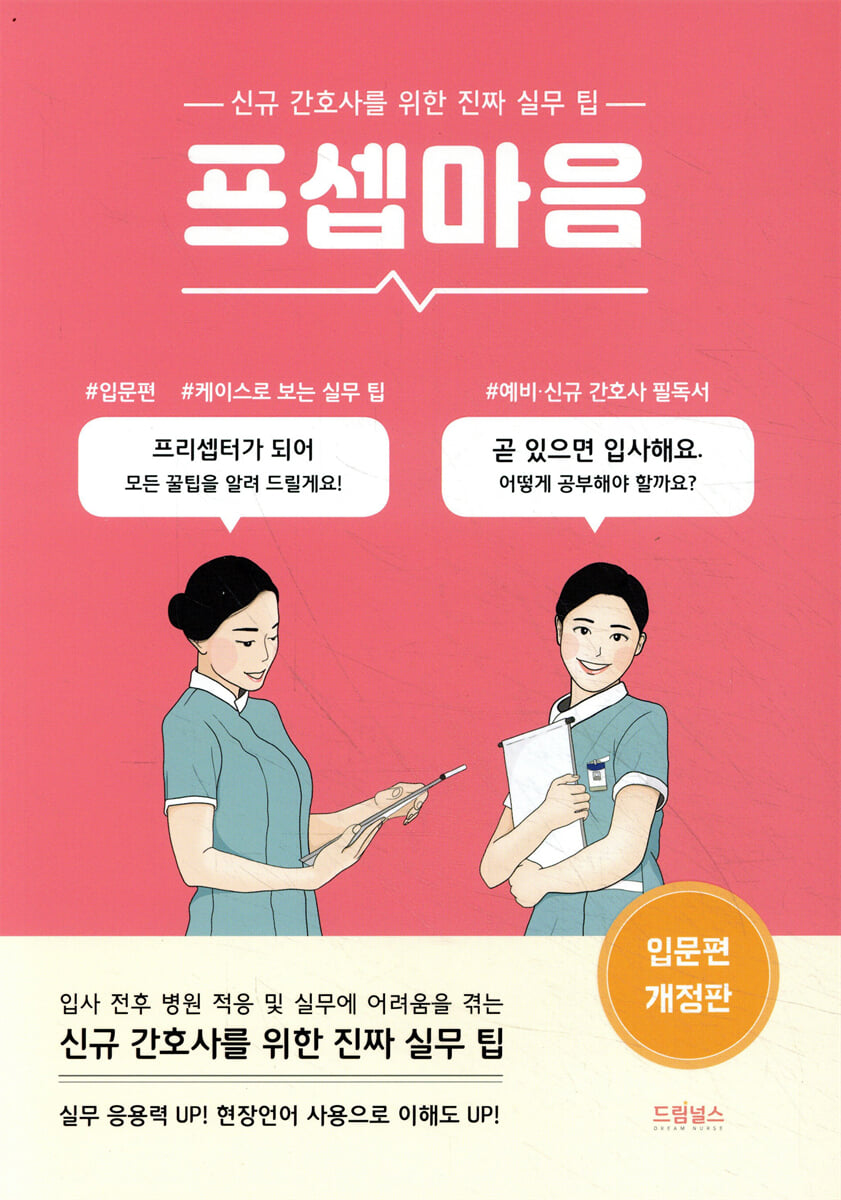
"Psepmaum" is a book written by a practical team for prospective nurses about to join the hospital and new nurses who are having difficulty adjusting to the hospital in their first to third year.
The book is organized around practical cases and priorities that can be applied directly in clinical settings, rather than just studying theory.
The content was explained in an easy-to-understand way through a conversation between a preceptor and a preceptee, using terms frequently used in clinical settings.
It was created by practicing nurses, specialists, and professors from over 10 hospitals, and contains clinical application tips such as how to identify patients, how to hand over patients, and how to notify patients.
The book is organized around practical cases and priorities that can be applied directly in clinical settings, rather than just studying theory.
The content was explained in an easy-to-understand way through a conversation between a preceptor and a preceptee, using terms frequently used in clinical settings.
It was created by practicing nurses, specialists, and professors from over 10 hospitals, and contains clinical application tips such as how to identify patients, how to hand over patients, and how to notify patients.
index
Part 1: Practical Tips from Case Studies
1.
Blood pressure (simple concept No No.
Low blood pressure and high blood pressure.
(Case-focused!)
2.
Bleeding (bleeding occurred)
How to notify and care for it?)
3.
Blood Transfusion (More than just core techniques: Real practice! Which transfusions are used in which cases?)
4.
Blood Sugar Management (Hypoglycemia Occurs! How is it Treated in the Hospital?)
5.
Types of Saps (Compare and Understand Saps Quickly!)
6.
Central venous catheters (Just look at them! Summary and comparison of central venous catheters used in practice)
7.
L-tube (nasogastric tube only for feeding? No, no in practice?)
8.
I/O (mental breakdown point.
(Catching the concept of Input Output check)
9.
Drainage Tubes (Confusing Drainage Tubes: Now Just Take a Look! Complete Guide to Drainage Tubes)
10.
Oxygen Therapy (ABGA and practical oxygen therapy concepts explained!)
11.
Consciousness and motor assessment (Consciousness assessment is basic. When and why should GCS be assessed?)
12.
Wound and Pressure Ulcer Management (Briefly and Straightforward)
13.
Infection control (because it is important.
Infections commonly seen in hospitals)
14.
IV kit and infusion pump (practical tips + easy medication calculation)
15.
Bloody and Melancholic Stools (Easily Distinguishing Between Bloody and Melancholic Stools)
16.
Hemoptysis and hematemesis (easily distinguishable between hemoptysis and hematemesis)
17.
Emergency nursing (CPR situation.
What should I do first?)
Part 2: Test-Related Tips
1.
Specimen Types and Tests (Don't panic! Get ready for the test in no time!)
2.
Radiology Tests (Useful Tests to Know)
Tip-oriented!)
3.
Blood Test Interpretation and Nursing (Level Up Your Nursing Care! A Shortcut to New Care)
(1) CBC
(2) Electrolyte
(3) BUN, Creatinine (kidney accessed by case)
(4) Liver (liver accessed through case)
(5) PT
(6) Minor electrolyte
(7) Viral marker
Part 3: Tips for New Nurses
1.
Understanding the Hospital Structure (First Day at Work! How to Understand the Hospital Structure?)
2.
Admission and Discharge Management (What should I check when a patient is admitted or discharged?)
3.
Work Organization (How should I organize work by duty?)
4.
Study Methods (What to Study and How to Study? Drug and Study Tips!)
5.
Dressing (dressing cart?)
6.
Handover (I want to do a good handover.)
7.
New Nurse Attitude and Mind Care (Pat Pat)
1.
Blood pressure (simple concept No No.
Low blood pressure and high blood pressure.
(Case-focused!)
2.
Bleeding (bleeding occurred)
How to notify and care for it?)
3.
Blood Transfusion (More than just core techniques: Real practice! Which transfusions are used in which cases?)
4.
Blood Sugar Management (Hypoglycemia Occurs! How is it Treated in the Hospital?)
5.
Types of Saps (Compare and Understand Saps Quickly!)
6.
Central venous catheters (Just look at them! Summary and comparison of central venous catheters used in practice)
7.
L-tube (nasogastric tube only for feeding? No, no in practice?)
8.
I/O (mental breakdown point.
(Catching the concept of Input Output check)
9.
Drainage Tubes (Confusing Drainage Tubes: Now Just Take a Look! Complete Guide to Drainage Tubes)
10.
Oxygen Therapy (ABGA and practical oxygen therapy concepts explained!)
11.
Consciousness and motor assessment (Consciousness assessment is basic. When and why should GCS be assessed?)
12.
Wound and Pressure Ulcer Management (Briefly and Straightforward)
13.
Infection control (because it is important.
Infections commonly seen in hospitals)
14.
IV kit and infusion pump (practical tips + easy medication calculation)
15.
Bloody and Melancholic Stools (Easily Distinguishing Between Bloody and Melancholic Stools)
16.
Hemoptysis and hematemesis (easily distinguishable between hemoptysis and hematemesis)
17.
Emergency nursing (CPR situation.
What should I do first?)
Part 2: Test-Related Tips
1.
Specimen Types and Tests (Don't panic! Get ready for the test in no time!)
2.
Radiology Tests (Useful Tests to Know)
Tip-oriented!)
3.
Blood Test Interpretation and Nursing (Level Up Your Nursing Care! A Shortcut to New Care)
(1) CBC
(2) Electrolyte
(3) BUN, Creatinine (kidney accessed by case)
(4) Liver (liver accessed through case)
(5) PT
(6) Minor electrolyte
(7) Viral marker
Part 3: Tips for New Nurses
1.
Understanding the Hospital Structure (First Day at Work! How to Understand the Hospital Structure?)
2.
Admission and Discharge Management (What should I check when a patient is admitted or discharged?)
3.
Work Organization (How should I organize work by duty?)
4.
Study Methods (What to Study and How to Study? Drug and Study Tips!)
5.
Dressing (dressing cart?)
6.
Handover (I want to do a good handover.)
7.
New Nurse Attitude and Mind Care (Pat Pat)
Detailed image
.jpg)
Publisher's Review
The Dreamnals editorial department has published a book for new nurses who are having difficulties adjusting to the hospital or working before or after joining the company.
One of the reasons why new nurses have a hard time after joining the company is the gap between theory and practice.
This book was lovingly created by 10 practicing nurses and the Dreamnals editorial team to help new nurses adapt by bridging the gap between theory and practice.
[Features of this book]
1.
It was created through the advice and review of 10 practicing nurses and the review, correction, and proofreading of faculty.
The extensive content is concisely presented in 26 tables of contents, and is structured in a conversational format between preceptors and preceptees to enhance comprehension.
Additionally, we have explained the concepts centered on cases to help you apply them to practical situations rather than just providing rigid explanations.
2.
In keeping with the theme of “Real Practical Tips for New Nurses,” we used clinical language rather than dictionary-style words.
ex: regurge (regurgitation), notify We would like to inform you that we have written it in an easy and convenient way using practical language rather than using rigid terms that are not actually used.
3.
For those who are unsure about what to study before joining a company, we provide a framework for studying methods and explain basic, common practical tips as simply as possible.
We reflected the systems of various hospitals and the opinions of current nurses to find common practices.
However, please keep in mind that each hospital may have different methods.
[Key contents of each part]
Part 1: Practical Tips through Cases covers clinical cases and the corresponding nursing interventions, evidence, and concepts.
Nursing interventions and predictable physician orders can help establish a framework for prioritizing new nurses, a challenge they often face.
We also compare and organize central venous catheters and drainage tubes, which are often confusing, to help you understand.
It also contains common mistakes made by new nurses and various practical tips.
Part 2: Examination-Related Tips contains simple and concise information on imaging and blood test interpretation and nursing that nurses should know.
Case studies can help you apply and understand the concepts in practice.
Part 3: Tips for New Nurses is a collection of tips written by twelve current nurses with the intention of helping new nurses, presented in a conversational format between preceptors and preceptees.
We've included helpful tips for new nurses to help them adjust to clinical practice and hospitals, including study methods, mindfulness, and handover tips.
Finally, I would like to express my gratitude to the publisher, Ponnals, for their generous support in both material and spiritual aspects that made the book possible, and to the current nurse proofreaders, designers, reviewers, and professors who lovingly helped with the writing of the book despite their busy three-shift work schedules.
One of the reasons why new nurses have a hard time after joining the company is the gap between theory and practice.
This book was lovingly created by 10 practicing nurses and the Dreamnals editorial team to help new nurses adapt by bridging the gap between theory and practice.
[Features of this book]
1.
It was created through the advice and review of 10 practicing nurses and the review, correction, and proofreading of faculty.
The extensive content is concisely presented in 26 tables of contents, and is structured in a conversational format between preceptors and preceptees to enhance comprehension.
Additionally, we have explained the concepts centered on cases to help you apply them to practical situations rather than just providing rigid explanations.
2.
In keeping with the theme of “Real Practical Tips for New Nurses,” we used clinical language rather than dictionary-style words.
ex: regurge (regurgitation), notify We would like to inform you that we have written it in an easy and convenient way using practical language rather than using rigid terms that are not actually used.
3.
For those who are unsure about what to study before joining a company, we provide a framework for studying methods and explain basic, common practical tips as simply as possible.
We reflected the systems of various hospitals and the opinions of current nurses to find common practices.
However, please keep in mind that each hospital may have different methods.
[Key contents of each part]
Part 1: Practical Tips through Cases covers clinical cases and the corresponding nursing interventions, evidence, and concepts.
Nursing interventions and predictable physician orders can help establish a framework for prioritizing new nurses, a challenge they often face.
We also compare and organize central venous catheters and drainage tubes, which are often confusing, to help you understand.
It also contains common mistakes made by new nurses and various practical tips.
Part 2: Examination-Related Tips contains simple and concise information on imaging and blood test interpretation and nursing that nurses should know.
Case studies can help you apply and understand the concepts in practice.
Part 3: Tips for New Nurses is a collection of tips written by twelve current nurses with the intention of helping new nurses, presented in a conversational format between preceptors and preceptees.
We've included helpful tips for new nurses to help them adjust to clinical practice and hospitals, including study methods, mindfulness, and handover tips.
Finally, I would like to express my gratitude to the publisher, Ponnals, for their generous support in both material and spiritual aspects that made the book possible, and to the current nurse proofreaders, designers, reviewers, and professors who lovingly helped with the writing of the book despite their busy three-shift work schedules.
GOODS SPECIFICS
- Date of issue: January 13, 2020
- Page count, weight, size: 272 pages | 517g | 176*250*20mm
- ISBN13: 9791196872540
- ISBN10: 1196872546
You may also like
카테고리
korean


korean

![GQ KOREA Mark (Monthly): December [2025]](http://librairie.coreenne.fr/cdn/shop/files/8ef265dbbfbf186523ed75ba7319009d.jpg?v=1765340328&width=3840)


