

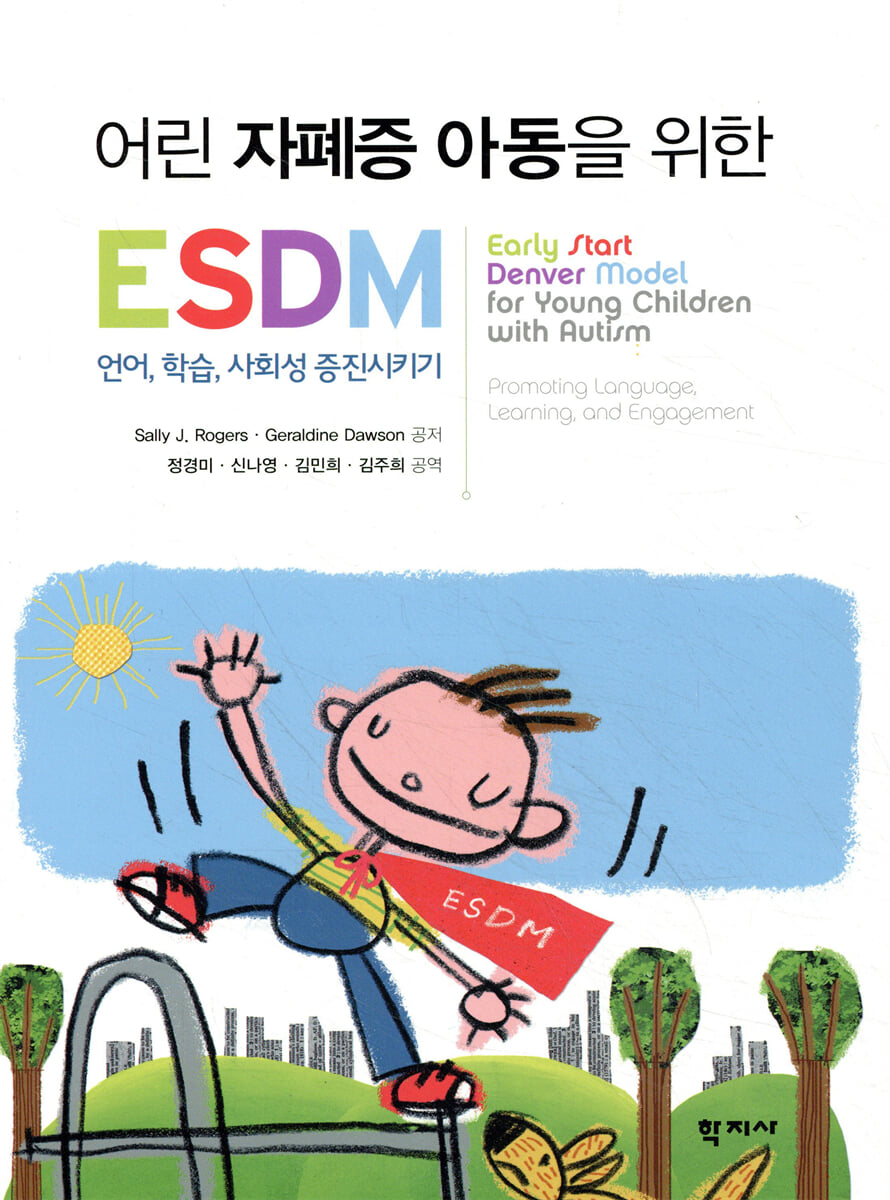
ESDM for young children with autism
 |
Description
Book Introduction
This book covers intervention methods for infants and toddlers with ASD.
In particular, this intervention is intended to increase children's tendency to approach others and interact with them (initiative) and their ability to participate in activities with others.
This intervention, called the Early Start Denver Model (ESDM), follows a child's interests and tendencies and then provides a "springboard" for the child's communication and interaction.
Although this book is written for professionals, it is written in an accessible and clear manner. DTT is much easier for parents to use at home than ESDM, and it also appears more natural.
Therefore, the authors of this book emphasize that it is appropriate treatment for parents to frequently use these techniques in their daily lives.
It is easy to misunderstand that parents who are busy taking care of their children, going to the treatment room, and taking care of other family members should also receive treatment, but that is not the case.
The point is not to treat them, but to learn this method in your daily life and change the way you treat your child.
It won't be easy, but it's not impossible.
Parents already invest a tremendous amount of energy and time into their children.
This book kindly teaches parents how to use that energy and time effectively.
In particular, this intervention is intended to increase children's tendency to approach others and interact with them (initiative) and their ability to participate in activities with others.
This intervention, called the Early Start Denver Model (ESDM), follows a child's interests and tendencies and then provides a "springboard" for the child's communication and interaction.
Although this book is written for professionals, it is written in an accessible and clear manner. DTT is much easier for parents to use at home than ESDM, and it also appears more natural.
Therefore, the authors of this book emphasize that it is appropriate treatment for parents to frequently use these techniques in their daily lives.
It is easy to misunderstand that parents who are busy taking care of their children, going to the treatment room, and taking care of other family members should also receive treatment, but that is not the case.
The point is not to treat them, but to learn this method in your daily life and change the way you treat your child.
It won't be easy, but it's not impossible.
Parents already invest a tremendous amount of energy and time into their children.
This book kindly teaches parents how to use that energy and time effectively.
index
Translator's Preface
Acknowledgements
Author's Preface
Chapter 1: Current Status of Early Childhood Learning and Autism
How do infants learn?
How Brain Development Helps Acquire Social Communication Skills
The Impact of Autism on Brain Development and Learning
Brain changes in early childhood and beyond
The Role of Early Intervention in Early Brain Development and Prognosis in Autism
Chapter 2: Overview of ESDM
Theoretical basis of ESDM
ESDM's curriculum
ESDM's educational procedures
Evidence of effectiveness
Similarities and Differences Between ESDM and Other Intervention Methods for Autism in Infants and Toddlers
conclusion
Chapter 3: Implementing ESDM
Implementation environment
Who is it implemented for?
Who will carry out the implementation?
ESDM procedure
Using the Generalist Model
multidisciplinary treatment team
Working with family
Moving towards the end of ESDM intervention
conclusion
Chapter 4: Setting Short-Term Learning Goals
Assessment using the ESDM Curriculum Checklist
Setting learning goals
Balancing goals across each area
How many goals do you set?
Select technical content
Components of a goal
Describe functional goals
Isaac's 12-Week Learning Goals
Chapter 5: Creating Daily Learning Goals and Tracking Your Treatment Progress
Planning learning steps for each goal
Progress tracking
summation
supplement
Chapter 6 Planning and Learning Framework
The process of becoming a play partner
Joint Activity Routine: A Framework for Learning
How to Deal with Inappropriate Behavior
Preparing and Planning for the Session
When a child's performance is not progressing: Decision Tree
conclusion
Chapter 7: Imitation and Play Development
Teaching imitation
Teaching play skills
conclusion
Chapter 8: Development of Nonverbal Communication
Attention coordination is the foundation of communication.
Development and understanding of natural gesture use
Teaching the use of conventional gestures
conclusion
Chapter 9: The Development of Verbal Communication
Stimulating the development of language production
receptive language
conclusion
Chapter 10: Using ESDM for Early Autism Treatment in Group Settings
Considering the characteristics of autism in classroom structure
Physical environment configuration
Planning your daily routine and schedule
Planning comprehensively
Staff Planning and Communication
Small and large group instructions
Classroom Behavior Management
Transition and individual scheduling system
Curriculum on peer relationships and self-help skills
kindergarten transition
conclusion
supplement
A. ESDM Curriculum Checklist and Item Descriptions
B. ESDM Faculty Fidelity Evaluation System
References
Search
Acknowledgements
Author's Preface
Chapter 1: Current Status of Early Childhood Learning and Autism
How do infants learn?
How Brain Development Helps Acquire Social Communication Skills
The Impact of Autism on Brain Development and Learning
Brain changes in early childhood and beyond
The Role of Early Intervention in Early Brain Development and Prognosis in Autism
Chapter 2: Overview of ESDM
Theoretical basis of ESDM
ESDM's curriculum
ESDM's educational procedures
Evidence of effectiveness
Similarities and Differences Between ESDM and Other Intervention Methods for Autism in Infants and Toddlers
conclusion
Chapter 3: Implementing ESDM
Implementation environment
Who is it implemented for?
Who will carry out the implementation?
ESDM procedure
Using the Generalist Model
multidisciplinary treatment team
Working with family
Moving towards the end of ESDM intervention
conclusion
Chapter 4: Setting Short-Term Learning Goals
Assessment using the ESDM Curriculum Checklist
Setting learning goals
Balancing goals across each area
How many goals do you set?
Select technical content
Components of a goal
Describe functional goals
Isaac's 12-Week Learning Goals
Chapter 5: Creating Daily Learning Goals and Tracking Your Treatment Progress
Planning learning steps for each goal
Progress tracking
summation
supplement
Chapter 6 Planning and Learning Framework
The process of becoming a play partner
Joint Activity Routine: A Framework for Learning
How to Deal with Inappropriate Behavior
Preparing and Planning for the Session
When a child's performance is not progressing: Decision Tree
conclusion
Chapter 7: Imitation and Play Development
Teaching imitation
Teaching play skills
conclusion
Chapter 8: Development of Nonverbal Communication
Attention coordination is the foundation of communication.
Development and understanding of natural gesture use
Teaching the use of conventional gestures
conclusion
Chapter 9: The Development of Verbal Communication
Stimulating the development of language production
receptive language
conclusion
Chapter 10: Using ESDM for Early Autism Treatment in Group Settings
Considering the characteristics of autism in classroom structure
Physical environment configuration
Planning your daily routine and schedule
Planning comprehensively
Staff Planning and Communication
Small and large group instructions
Classroom Behavior Management
Transition and individual scheduling system
Curriculum on peer relationships and self-help skills
kindergarten transition
conclusion
supplement
A. ESDM Curriculum Checklist and Item Descriptions
B. ESDM Faculty Fidelity Evaluation System
References
Search
GOODS SPECIFICS
- Date of issue: February 20, 2018
- Page count, weight, size: 456 pages | 938g | 188*257*30mm
- ISBN13: 9788999714788
- ISBN10: 8999714780
You may also like
카테고리
korean


korean

![GQ KOREA Mark (Monthly): December [2025]](http://librairie.coreenne.fr/cdn/shop/files/8ef265dbbfbf186523ed75ba7319009d.jpg?v=1765340328&width=3840)


