

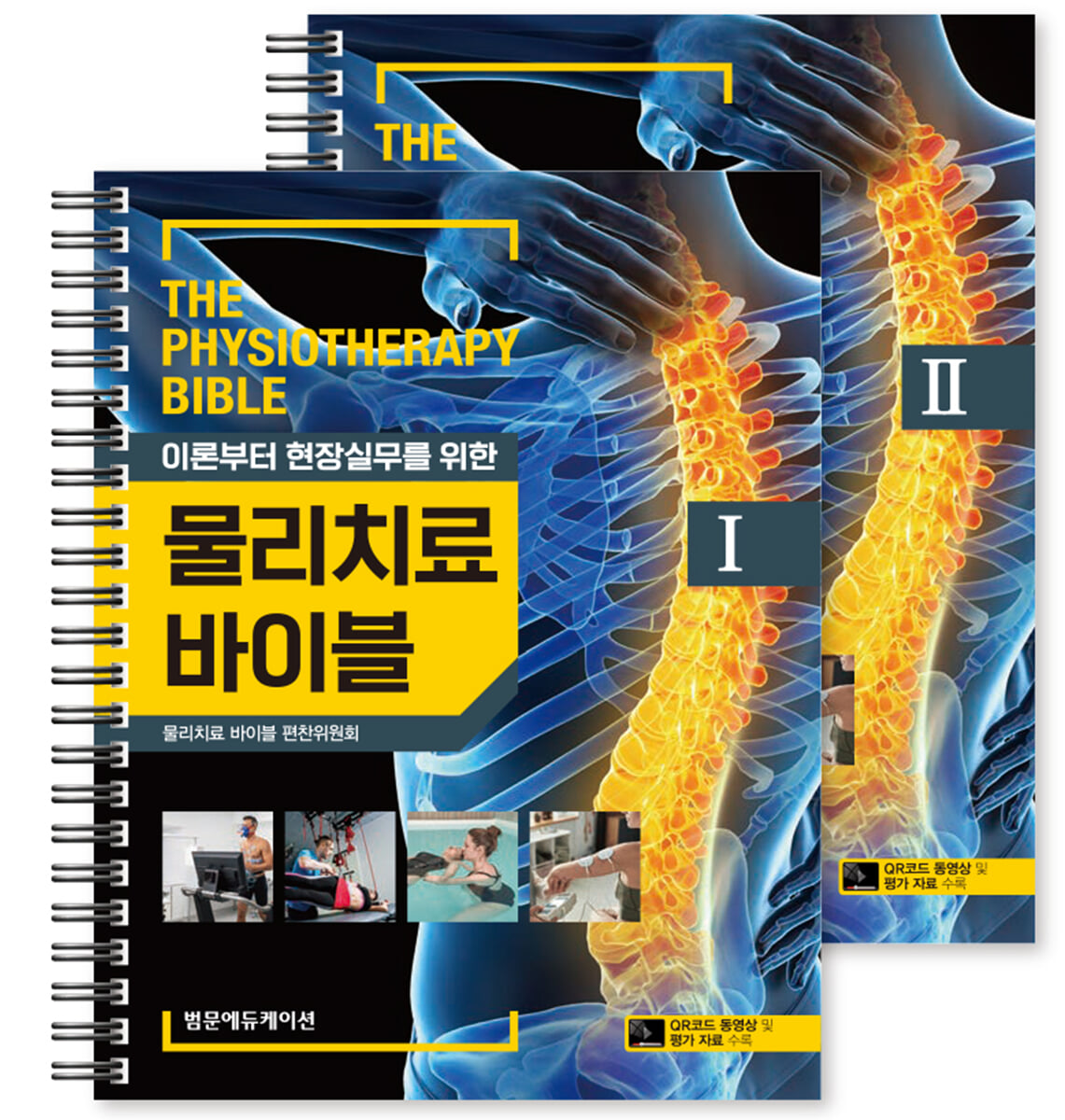
1-2 sets of physical therapy bibles
 |
Description
Book Introduction
“Everything about clinical physical therapy in one book!”
Accurate assessment, appropriate intervention, and patient change
A must-read for physical therapists who are redesigning their patients' movements.
A practical guide that covers the core theories and practical applications necessary to effectively perform physical therapy in clinical settings.
From the concept of physical therapy to the principles of human movement, system-specific assessment, and intervention methods, we have systematically organized knowledge that can be immediately applied in the treatment field.
It contains a wealth of patient interviews, SOAP and ICF documentation, standardized screening tools, and assessment and intervention methods for diverse patient populations, including musculoskeletal, neurological, and cardiopulmonary systems.
With helpful illustrations, practical guidance, and a structure that reflects the latest trends, it provides powerful insights not only to students just beginning clinical practice but also to therapists struggling with practical issues.
Accurate assessment, appropriate intervention, and patient change
A must-read for physical therapists who are redesigning their patients' movements.
A practical guide that covers the core theories and practical applications necessary to effectively perform physical therapy in clinical settings.
From the concept of physical therapy to the principles of human movement, system-specific assessment, and intervention methods, we have systematically organized knowledge that can be immediately applied in the treatment field.
It contains a wealth of patient interviews, SOAP and ICF documentation, standardized screening tools, and assessment and intervention methods for diverse patient populations, including musculoskeletal, neurological, and cardiopulmonary systems.
With helpful illustrations, practical guidance, and a structure that reflects the latest trends, it provides powerful insights not only to students just beginning clinical practice but also to therapists struggling with practical issues.
- You can preview some of the book's contents.
Preview
index
|Volume 1 |
Intro: Overview of Physical Therapy 1
1. Concept of Physical Therapy 2
2. Ethical Principles for Physical Therapists 4
Chapter 01 Human Movement 5
1.1 Elements for Human Movement 8
1) Nervous system 8
2) Musculoskeletal system 56
3) Cardiopulmonary system 82
4) Skin 98
5) Courtyard 104
1.2 Exercise Control 106
1.3 Motor Learning 108
1.4 Motor Development 110
1) Reflexive movements 120
2) Neuroplasticity 138
Chapter 02 Movement Testing and Evaluation 145
2.1 Clinical Decision Making 146
2.2 Therapeutic Relationship between Patient and Therapist 150
2.3 Evaluation Procedures for Patient Care 152
2.4 How to Write a SOAP Document 158
2.5 How to Write ICF Documents 162
2.6 Assessment of musculoskeletal patients 170
1) Observation and medical history 170
2) Shijin 170
3) Promotion 170
4) Action 171
5) Neurovascular screening 171
6) Special Inspection 171
7) Related areas and selection 171
8) Diagnostic imaging and hematological tests 171
9) Examination order by body part 172
10) Special examination by body part 190
2.7 Evaluation of Neurological Patients 230
2.8 Assessment of Cardiopulmonary Patients 242
1) Observation and medical history 242
2) Basic physical examination 244
3) Evaluation Procedure 246
2.9 Evaluation of Dermatological Patients 254
1) Evaluation Procedure 254
2.10 Evaluation of patients in the courtyard 260
1) Evaluation Procedure 260
2.11 Standardized Tests and Assessment Tools 264
1) Consciousness and Coma Scale 266
2) Perception Test 268
3) Cognitive Test 272
4) Sense 278
5) Exercise 282
6) Skin 398
7) Courtyard 406
8) Cardiopulmonary system 412
Chapter 03 Interventions for Movement Restoration 429
3.1 Physical Factor Treatment 430
1) Electrotherapy 430
2) Phototherapy 500
3) Hydrotherapy 510
3.2 Basic Exercise Therapy 546
1) Range of motion exercises 546
2) Stretching Exercise 556
3) Resistance Movement 560
4) Aerobic exercise 568
5) Exercises using small tools 572
3.3 Neurological Physical Therapy Interventions 578
1) Rude Approach 578
2) Brunström approach 582
3) Bobath Approach 590
4) Boyta Approach 596
5) Proprioceptive Facilitation Method 600
3.4 Orthopedic Manual Physical Therapy Intervention 606
1) Orthopedic Manual Physical Therapy Concepts and Key Theories 606
2) Orthopedic manual physical therapy techniques 608
3.5 Cardiopulmonary Physical Therapy Interventions 630
1) Cardiopulmonary stress test 630
2) Cardiac Rehabilitation Program 632
3) Cardiovascular disease intervention 634
4) Arterial disease intervention 636
5) Breathing Exercise 638
6) Cough training 642
7) Postural drainage method 644
8) Percussion, vibration and shaking 646
3.6 Dermatological Physical Therapy Interventions 648
1) Interventions for skin damage and healing processes 648
2) Skin care procedure 650
3.7 Courtyard Physical Therapy Intervention 654
1) Mechanisms contributing to the recovery of courtyard disorders 654
|Volume 2 |
Chapter 04 Understanding Physical Therapy for Different Conditions 663
4.1 Musculoskeletal Disorders 664
1) Fractures and dislocations 664
2) Cervical spine disease 690
3) Lumbar spine disease 696
4) Other spinal diseases 722
5) Scapular disease 732
6) Forearm and elbow disorders 748
7) Wrist and finger disorders 756
8) Diseases of the femur and hip 770
9) Knee and calf diseases 794
10) Ankle, sole, and toe diseases 810
11) Other diseases 824
4.2 Neurological diseases 850
1) Stroke 850
2) Parkinson's disease 860
3) Cerebellar ataxia 868
4) Traumatic brain injury 874
5) Spinal cord injury 884
6) Cerebral palsy 892
7) Syringomyelia 912
8) Spinal syphilis 916
9) Multiple sclerosis 924
10) Amyotrophic lateral sclerosis 930
11) Progressive muscular dystrophy 932
12) Spina bifida 936
13) Peripheral neuropathy 940
14) Dementia 946
15) Gi-Barré syndrome 954
16) Dance 958
17) Friedrich Schilling 960
18) Charcot-Marie-Tooth disease 962
19) Down syndrome 966
4.3 Cardiopulmonary Diseases 968
1) Angina 968
2) Myocardial infarction 970
3) Heart valve disease 972
4) Heart failure 974
5) Chronic obstructive pulmonary disease 976
6) Asthma 980
7) Cystic fibrosis 982
8) Pneumonia 984
9) Restrictive lung disease 986
4.4 Skin Diseases 990
1) Wound 990
2) Bedsores or pressure ulcers 992
3) Venous ulcer 994
4) Arterial ulcer 996
5) Diabetic ulcer 998
6) Burn 1000
7) Statue 1002
8) Photosensitivity disease 1004
9) Inflammatory skin disease 1006
10) Fibromyalgia Syndrome 1008
11) Lymphedema 1010
12) Skin cancer 1014
13) Obesity 1018
14) Psoriasis 1022
15) Shingles 1024
16) Vitiligo 1026
4.5 Atrium Disease 1028
1) Benign paroxysmal positional vertigo 1028
2) Atrium neuritis 1030
3) Meniere's disease 1032
|Appendix 1039
1. Nosocomial Infection Control in Physical Therapy 1040
2. How to move a patient 1046
1) Bedside mobility training 1046
2) Transfer training from bed to chair or wheelchair 1064
3) Transfer training from wheelchair to bed 1067
4) Cane walking training 1069
5) Stair walking training 1070
6) Walking with crutches 1072
3 Physical therapy medical benefits amount 1082
1) Medical insurance fee calculation formula 1082
2) Health insurance treatment cost 1084
3) Health Insurance Fee Details by Procedure 1093
4) Nursing care benefit application criteria and details 1097
4 Medical Terms 1108
5 Clinical Assistant 1116
1) Arm brace 1116
2) Leg brace 1119
3) Special assistive devices for children 1125
4) Spinal brace 1129
Intro: Overview of Physical Therapy 1
1. Concept of Physical Therapy 2
2. Ethical Principles for Physical Therapists 4
Chapter 01 Human Movement 5
1.1 Elements for Human Movement 8
1) Nervous system 8
2) Musculoskeletal system 56
3) Cardiopulmonary system 82
4) Skin 98
5) Courtyard 104
1.2 Exercise Control 106
1.3 Motor Learning 108
1.4 Motor Development 110
1) Reflexive movements 120
2) Neuroplasticity 138
Chapter 02 Movement Testing and Evaluation 145
2.1 Clinical Decision Making 146
2.2 Therapeutic Relationship between Patient and Therapist 150
2.3 Evaluation Procedures for Patient Care 152
2.4 How to Write a SOAP Document 158
2.5 How to Write ICF Documents 162
2.6 Assessment of musculoskeletal patients 170
1) Observation and medical history 170
2) Shijin 170
3) Promotion 170
4) Action 171
5) Neurovascular screening 171
6) Special Inspection 171
7) Related areas and selection 171
8) Diagnostic imaging and hematological tests 171
9) Examination order by body part 172
10) Special examination by body part 190
2.7 Evaluation of Neurological Patients 230
2.8 Assessment of Cardiopulmonary Patients 242
1) Observation and medical history 242
2) Basic physical examination 244
3) Evaluation Procedure 246
2.9 Evaluation of Dermatological Patients 254
1) Evaluation Procedure 254
2.10 Evaluation of patients in the courtyard 260
1) Evaluation Procedure 260
2.11 Standardized Tests and Assessment Tools 264
1) Consciousness and Coma Scale 266
2) Perception Test 268
3) Cognitive Test 272
4) Sense 278
5) Exercise 282
6) Skin 398
7) Courtyard 406
8) Cardiopulmonary system 412
Chapter 03 Interventions for Movement Restoration 429
3.1 Physical Factor Treatment 430
1) Electrotherapy 430
2) Phototherapy 500
3) Hydrotherapy 510
3.2 Basic Exercise Therapy 546
1) Range of motion exercises 546
2) Stretching Exercise 556
3) Resistance Movement 560
4) Aerobic exercise 568
5) Exercises using small tools 572
3.3 Neurological Physical Therapy Interventions 578
1) Rude Approach 578
2) Brunström approach 582
3) Bobath Approach 590
4) Boyta Approach 596
5) Proprioceptive Facilitation Method 600
3.4 Orthopedic Manual Physical Therapy Intervention 606
1) Orthopedic Manual Physical Therapy Concepts and Key Theories 606
2) Orthopedic manual physical therapy techniques 608
3.5 Cardiopulmonary Physical Therapy Interventions 630
1) Cardiopulmonary stress test 630
2) Cardiac Rehabilitation Program 632
3) Cardiovascular disease intervention 634
4) Arterial disease intervention 636
5) Breathing Exercise 638
6) Cough training 642
7) Postural drainage method 644
8) Percussion, vibration and shaking 646
3.6 Dermatological Physical Therapy Interventions 648
1) Interventions for skin damage and healing processes 648
2) Skin care procedure 650
3.7 Courtyard Physical Therapy Intervention 654
1) Mechanisms contributing to the recovery of courtyard disorders 654
|Volume 2 |
Chapter 04 Understanding Physical Therapy for Different Conditions 663
4.1 Musculoskeletal Disorders 664
1) Fractures and dislocations 664
2) Cervical spine disease 690
3) Lumbar spine disease 696
4) Other spinal diseases 722
5) Scapular disease 732
6) Forearm and elbow disorders 748
7) Wrist and finger disorders 756
8) Diseases of the femur and hip 770
9) Knee and calf diseases 794
10) Ankle, sole, and toe diseases 810
11) Other diseases 824
4.2 Neurological diseases 850
1) Stroke 850
2) Parkinson's disease 860
3) Cerebellar ataxia 868
4) Traumatic brain injury 874
5) Spinal cord injury 884
6) Cerebral palsy 892
7) Syringomyelia 912
8) Spinal syphilis 916
9) Multiple sclerosis 924
10) Amyotrophic lateral sclerosis 930
11) Progressive muscular dystrophy 932
12) Spina bifida 936
13) Peripheral neuropathy 940
14) Dementia 946
15) Gi-Barré syndrome 954
16) Dance 958
17) Friedrich Schilling 960
18) Charcot-Marie-Tooth disease 962
19) Down syndrome 966
4.3 Cardiopulmonary Diseases 968
1) Angina 968
2) Myocardial infarction 970
3) Heart valve disease 972
4) Heart failure 974
5) Chronic obstructive pulmonary disease 976
6) Asthma 980
7) Cystic fibrosis 982
8) Pneumonia 984
9) Restrictive lung disease 986
4.4 Skin Diseases 990
1) Wound 990
2) Bedsores or pressure ulcers 992
3) Venous ulcer 994
4) Arterial ulcer 996
5) Diabetic ulcer 998
6) Burn 1000
7) Statue 1002
8) Photosensitivity disease 1004
9) Inflammatory skin disease 1006
10) Fibromyalgia Syndrome 1008
11) Lymphedema 1010
12) Skin cancer 1014
13) Obesity 1018
14) Psoriasis 1022
15) Shingles 1024
16) Vitiligo 1026
4.5 Atrium Disease 1028
1) Benign paroxysmal positional vertigo 1028
2) Atrium neuritis 1030
3) Meniere's disease 1032
|Appendix 1039
1. Nosocomial Infection Control in Physical Therapy 1040
2. How to move a patient 1046
1) Bedside mobility training 1046
2) Transfer training from bed to chair or wheelchair 1064
3) Transfer training from wheelchair to bed 1067
4) Cane walking training 1069
5) Stair walking training 1070
6) Walking with crutches 1072
3 Physical therapy medical benefits amount 1082
1) Medical insurance fee calculation formula 1082
2) Health insurance treatment cost 1084
3) Health Insurance Fee Details by Procedure 1093
4) Nursing care benefit application criteria and details 1097
4 Medical Terms 1108
5 Clinical Assistant 1116
1) Arm brace 1116
2) Leg brace 1119
3) Special assistive devices for children 1125
4) Spinal brace 1129
Detailed image

Publisher's Review
preface
The most important thing when solving various problems encountered in clinical practice is to look at the problem from multiple angles and find creative and logical approaches to solve it.
These experiences further enhance problem-solving skills, which require deep reflection and a wealth of experience.
This book began several years ago with the goal of “creating the most essential book in clinical practice” through the writing process of several clinicians and professors.
Therefore, there was a need to facilitate a systematic problem-solving process and to comprehensively organize relevant information, such as patient assessment and intervention.
We aimed to provide consistent information to patients with limited movement in terms of their phylogenetic function, and also tried to include data that could help in more accurate evaluation and intervention in clinical practice based on the diverse field experience of clinicians and the wealth of knowledge of professors.
This textbook was written with the following structure.
First, it provides a baseline for a systematic approach to patients with limited mobility.
Second, we provide interviews with patients with limited mobility and a description of the most commonly used physical therapy tests and measurements in clinical practice.
Third, we understand the characteristics of diseases by system and provide evaluation and intervention methods accordingly.
Fourth, it provides information necessary for various clinical settings, such as hospital infection control in physical therapy, patient transfer methods, medical aid fees for physical therapy, medical terms frequently used in clinical practice, and clinical assistive devices.
Fifth, to make it easier to understand, explanations are placed on the left page, and related pictures and tables are placed on the right page. In addition, supplementary materials can be viewed on mobile devices using QR codes, maximizing the learning effect.
I hope that as you read this book, you'll feel as if you're in the company of many clinicians and excellent professors, and that it will provide much-needed advice and practical assistance to students and physical therapists just starting their clinical careers.
Additionally, based on our extensive clinical experience, we have sought to re-evaluate the role of physical therapists and provide knowledge that can be practically applied in clinical settings.
Above all, I hope that it will be widely used as practical material that can be easily and quickly accessed in clinical settings.
I believe that academically, constant questioning and exploration leads to greater growth.
This attitude will be the driving force for expanding and developing knowledge in various environments, including everyday life and clinical settings.
Finally, I would like to express my sincere gratitude to all the writers who, despite their busy schedules, put in their tireless efforts to complete this book.
I would also like to express my deepest gratitude to CEO Yoo Seong-kwon, Manager Kim Ho-cheol, and Manager Yoo Ji-in of Beommun Education Co., Ltd. for their full support during the writing process.
August 2025
All members of the textbook compilation committee
The most important thing when solving various problems encountered in clinical practice is to look at the problem from multiple angles and find creative and logical approaches to solve it.
These experiences further enhance problem-solving skills, which require deep reflection and a wealth of experience.
This book began several years ago with the goal of “creating the most essential book in clinical practice” through the writing process of several clinicians and professors.
Therefore, there was a need to facilitate a systematic problem-solving process and to comprehensively organize relevant information, such as patient assessment and intervention.
We aimed to provide consistent information to patients with limited movement in terms of their phylogenetic function, and also tried to include data that could help in more accurate evaluation and intervention in clinical practice based on the diverse field experience of clinicians and the wealth of knowledge of professors.
This textbook was written with the following structure.
First, it provides a baseline for a systematic approach to patients with limited mobility.
Second, we provide interviews with patients with limited mobility and a description of the most commonly used physical therapy tests and measurements in clinical practice.
Third, we understand the characteristics of diseases by system and provide evaluation and intervention methods accordingly.
Fourth, it provides information necessary for various clinical settings, such as hospital infection control in physical therapy, patient transfer methods, medical aid fees for physical therapy, medical terms frequently used in clinical practice, and clinical assistive devices.
Fifth, to make it easier to understand, explanations are placed on the left page, and related pictures and tables are placed on the right page. In addition, supplementary materials can be viewed on mobile devices using QR codes, maximizing the learning effect.
I hope that as you read this book, you'll feel as if you're in the company of many clinicians and excellent professors, and that it will provide much-needed advice and practical assistance to students and physical therapists just starting their clinical careers.
Additionally, based on our extensive clinical experience, we have sought to re-evaluate the role of physical therapists and provide knowledge that can be practically applied in clinical settings.
Above all, I hope that it will be widely used as practical material that can be easily and quickly accessed in clinical settings.
I believe that academically, constant questioning and exploration leads to greater growth.
This attitude will be the driving force for expanding and developing knowledge in various environments, including everyday life and clinical settings.
Finally, I would like to express my sincere gratitude to all the writers who, despite their busy schedules, put in their tireless efforts to complete this book.
I would also like to express my deepest gratitude to CEO Yoo Seong-kwon, Manager Kim Ho-cheol, and Manager Yoo Ji-in of Beommun Education Co., Ltd. for their full support during the writing process.
August 2025
All members of the textbook compilation committee
GOODS SPECIFICS
- Date of issue: October 20, 2025
- Format: Springbook book binding method guide
- Page count, weight, size: 1,180 pages | 170*230*60mm
- ISBN13: 9791159435218
- ISBN10: 1159435219
You may also like
카테고리
korean


korean

![GQ KOREA Mark (Monthly): December [2025]](http://librairie.coreenne.fr/cdn/shop/files/8ef265dbbfbf186523ed75ba7319009d.jpg?v=1765340328&width=3840)


