

Corporate Tax Act
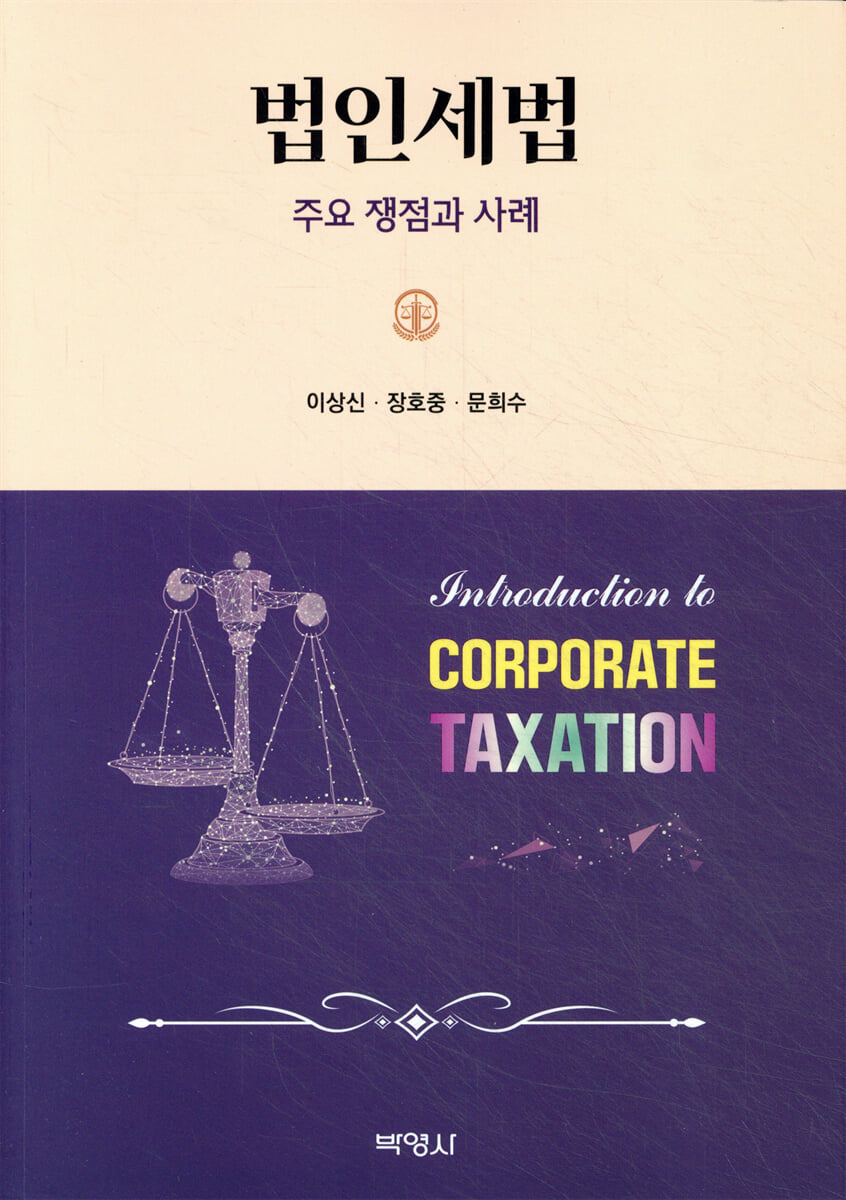 |
Description
Book Introduction
It is summarized in about 400 pages so that you can quickly see only the important points of the corporate tax law.
Sufficient examples were introduced to help understand the basic theory.
Considering the practical necessity, Supreme Court precedents were introduced as case problems, so that even non-law majors could easily understand the legal judgments.
By introducing the basic contents related to corporate restructuring and tax obligations of foreign corporations in a concise manner, we have ensured that no part of the corporate tax law is left out.
Sufficient examples were introduced to help understand the basic theory.
Considering the practical necessity, Supreme Court precedents were introduced as case problems, so that even non-law majors could easily understand the legal judgments.
By introducing the basic contents related to corporate restructuring and tax obligations of foreign corporations in a concise manner, we have ensured that no part of the corporate tax law is left out.
index
01
1-1 The meaning of corporate tax and the scope of taxable income 03
1-2 Corporate Tax and Double Taxation Adjustment 11
1-3 Structure of calculating income for each fiscal year under corporate tax 15
1-4 Tax Adjustment and Income Disposition 23
1-5 Fiscal Year and Tax Payment Place 30
02
2-1 Overview of Corporate Taxpayers 37
2-2 Collective Investment Scheme 43
03
3-1 Overview of Profits 49
3-2 Legal Nature and Profitability of Treasury Stock Trading 57
3-3 Agenda Allocation 62
04
4-1 Overview of Non-deduction of Profits 75
4-2 Non-deduction of dividend income from income 88
05
5-1 Overview of Hands 197
5-2 Whether to deduct collusion fees from expenses: Case Commentary 106
5-3 Labor costs 120
5-4 Depreciation expense 127
5-5 Immediate Depreciation Agenda 138
06
6-1 General Non-deductible expenses 143
6-2 Non-deductible donations 152
6-3 Non-deductible corporate business expenses (entertainment expenses) 158
6-4 Exclusion of Excessive and Unrelated Expenses from Deductions 167
6-5 Interest paid not deductible 175
07
7-1 Introduction to the Fiscal Year of Profit and Loss 183
7-2 Acquisition Cost of Assets and Valuation of Assets and Liabilities 191
7-3 Attribution Period by Transaction Type 203
08
8-1 Overview of Reserves and Reserve Funds 215
8-2 Example of Deductible Expenses for Government Subsidies, etc. 227
09
9-1 General Theory of Denial of Unfair Act Calculation 231
9-2 Specific Types of Denial of Unfair Act Calculation and Their Effects 241
10
10-1 Calculation of Tax Base and Tax Amount 257
10-2 Tax Deduction Overview 263
10-3 Foreign Tax Credit 270
10-4 Final Report and Interim Payment 279
11
11-1 Tax Determination, Correction, and Income Disposition 289
11-2 Collection and Refund 300
12
12-1 Other corporate taxes 307
12-2 Corporate Tax Trust Property 310
12-3 Overview of Trust Legal Relationships and Their Tax Obligations 315
13
13-1 Overview of Consolidated Tax Payments 329
13-2 Merger 336
13-3 Human division 350
13-4 Physical Division 361
13-5 In-kind contribution 366
13-6 Taxation of Goodwill 369
14
14-1 Overview of Taxation Issues for Foreign Corporations 385
14-2 Permanent Establishment 404
Index 410
1-1 The meaning of corporate tax and the scope of taxable income 03
1-2 Corporate Tax and Double Taxation Adjustment 11
1-3 Structure of calculating income for each fiscal year under corporate tax 15
1-4 Tax Adjustment and Income Disposition 23
1-5 Fiscal Year and Tax Payment Place 30
02
2-1 Overview of Corporate Taxpayers 37
2-2 Collective Investment Scheme 43
03
3-1 Overview of Profits 49
3-2 Legal Nature and Profitability of Treasury Stock Trading 57
3-3 Agenda Allocation 62
04
4-1 Overview of Non-deduction of Profits 75
4-2 Non-deduction of dividend income from income 88
05
5-1 Overview of Hands 197
5-2 Whether to deduct collusion fees from expenses: Case Commentary 106
5-3 Labor costs 120
5-4 Depreciation expense 127
5-5 Immediate Depreciation Agenda 138
06
6-1 General Non-deductible expenses 143
6-2 Non-deductible donations 152
6-3 Non-deductible corporate business expenses (entertainment expenses) 158
6-4 Exclusion of Excessive and Unrelated Expenses from Deductions 167
6-5 Interest paid not deductible 175
07
7-1 Introduction to the Fiscal Year of Profit and Loss 183
7-2 Acquisition Cost of Assets and Valuation of Assets and Liabilities 191
7-3 Attribution Period by Transaction Type 203
08
8-1 Overview of Reserves and Reserve Funds 215
8-2 Example of Deductible Expenses for Government Subsidies, etc. 227
09
9-1 General Theory of Denial of Unfair Act Calculation 231
9-2 Specific Types of Denial of Unfair Act Calculation and Their Effects 241
10
10-1 Calculation of Tax Base and Tax Amount 257
10-2 Tax Deduction Overview 263
10-3 Foreign Tax Credit 270
10-4 Final Report and Interim Payment 279
11
11-1 Tax Determination, Correction, and Income Disposition 289
11-2 Collection and Refund 300
12
12-1 Other corporate taxes 307
12-2 Corporate Tax Trust Property 310
12-3 Overview of Trust Legal Relationships and Their Tax Obligations 315
13
13-1 Overview of Consolidated Tax Payments 329
13-2 Merger 336
13-3 Human division 350
13-4 Physical Division 361
13-5 In-kind contribution 366
13-6 Taxation of Goodwill 369
14
14-1 Overview of Taxation Issues for Foreign Corporations 385
14-2 Permanent Establishment 404
Index 410
Publisher's Review
introduction
It's been more than ten years since I started teaching corporate tax law, but corporate tax law is still difficult and vast.
Fundamentally, the content of financial accounting has been revised and stipulated in tax laws, so it is difficult to understand the content, but it is also connected to the content of corporate law and contains a lot of content on various tax special provisions, so lecturers are always concerned about the scope of the lecture and the extent to which they should understand it.
Moreover, since it is revised every year, I could not even dare to think about writing a textbook on corporate tax law.
This is because there are excellent existing textbooks, and I was not confident about the effort required to revise them every year.
However, in response to requests from undergraduate and graduate students for a more concise textbook that could be skimmed through quickly, and the need to organize corporate tax law in an easy-to-understand style, I decided to publish this book, albeit somewhat inadequate.
The authors have focused on the following features of this book:
First, we have summarized the important points of the corporate tax law into about 400 pages so that you can quickly see them.
Therefore, in order to minimize the impact of the law revision, we faithfully introduced the basic theory while ensuring that important content was not omitted, so that it could be used as a study guide for various exams.
Second, sufficient examples were introduced to help understand the basic theory.
We have appropriately introduced interpretation theories from the United States and Japan in relevant sections, and have especially introduced tax accounting problems, such as previous tax accountant exam questions, to help readers better understand the content of the text.
Third, considering the necessity in practice, Supreme Court precedents were introduced as case studies, so that even non-law majors could easily understand the legal judgments.
Fourth, by introducing the basic contents related to corporate restructuring and tax obligations of foreign corporations in a concise manner, we have ensured that no part of the Corporate Tax Act is left out.
The writing of this textbook, which has these characteristics, was supported and encouraged by many people.
First of all, this book would not have been published without the help of attorney Jang Ho-jung of Hwahyun Law Firm, a former prosecutor, and tax accountant Moon Hee-soo, the representative of Jeongyoon Tax Firm, who participated as co-authors.
He has made significant contributions in many areas, including introducing and reviewing cases related to corporate tax law and writing comprehensive articles on tax accounting.
Although they are already shining in practice, I hope they will also succeed as researchers, and if any future revisions are needed, they will take the lead.
I would also like to express my gratitude to Sangjun Ahn, CEO of Park Youngsa, who permitted the publication of this book, to Director Seongho Cho, who provided much advice and encouragement from the planning stage, and to Gaon Park, who was in charge of editing.
I would like to express my gratitude to Professor Park Hoon, Vice President of Seoul Metropolitan University, and other professors who have supported the corporate tax law lectures at the undergraduate and graduate schools; to the students of the Department of Taxation and the Graduate School of Taxation at Seoul Metropolitan University who diligently attended the corporate tax law lectures despite their shortcomings and asked various questions to supplement the textbook's shortcomings; to CPA Kwak Song of the doctoral program at Seoul Metropolitan University's Graduate School of Taxation, CPA Son Jeong-bin of the same master's program, and CPA Song Tae-in and CPA Park Hyeong-tae of Jeongyoon Tax Law Firm, who provided various opinions through multiple revisions.
I would like to give the glory of publishing this book to my beloved family, who always support and wish me well, considering that all these results are due to their presence.
I conclude this article with the hope that this textbook will be of some help, however small, to those studying corporate tax law.
July 2025
Representative author Bae
It's been more than ten years since I started teaching corporate tax law, but corporate tax law is still difficult and vast.
Fundamentally, the content of financial accounting has been revised and stipulated in tax laws, so it is difficult to understand the content, but it is also connected to the content of corporate law and contains a lot of content on various tax special provisions, so lecturers are always concerned about the scope of the lecture and the extent to which they should understand it.
Moreover, since it is revised every year, I could not even dare to think about writing a textbook on corporate tax law.
This is because there are excellent existing textbooks, and I was not confident about the effort required to revise them every year.
However, in response to requests from undergraduate and graduate students for a more concise textbook that could be skimmed through quickly, and the need to organize corporate tax law in an easy-to-understand style, I decided to publish this book, albeit somewhat inadequate.
The authors have focused on the following features of this book:
First, we have summarized the important points of the corporate tax law into about 400 pages so that you can quickly see them.
Therefore, in order to minimize the impact of the law revision, we faithfully introduced the basic theory while ensuring that important content was not omitted, so that it could be used as a study guide for various exams.
Second, sufficient examples were introduced to help understand the basic theory.
We have appropriately introduced interpretation theories from the United States and Japan in relevant sections, and have especially introduced tax accounting problems, such as previous tax accountant exam questions, to help readers better understand the content of the text.
Third, considering the necessity in practice, Supreme Court precedents were introduced as case studies, so that even non-law majors could easily understand the legal judgments.
Fourth, by introducing the basic contents related to corporate restructuring and tax obligations of foreign corporations in a concise manner, we have ensured that no part of the Corporate Tax Act is left out.
The writing of this textbook, which has these characteristics, was supported and encouraged by many people.
First of all, this book would not have been published without the help of attorney Jang Ho-jung of Hwahyun Law Firm, a former prosecutor, and tax accountant Moon Hee-soo, the representative of Jeongyoon Tax Firm, who participated as co-authors.
He has made significant contributions in many areas, including introducing and reviewing cases related to corporate tax law and writing comprehensive articles on tax accounting.
Although they are already shining in practice, I hope they will also succeed as researchers, and if any future revisions are needed, they will take the lead.
I would also like to express my gratitude to Sangjun Ahn, CEO of Park Youngsa, who permitted the publication of this book, to Director Seongho Cho, who provided much advice and encouragement from the planning stage, and to Gaon Park, who was in charge of editing.
I would like to express my gratitude to Professor Park Hoon, Vice President of Seoul Metropolitan University, and other professors who have supported the corporate tax law lectures at the undergraduate and graduate schools; to the students of the Department of Taxation and the Graduate School of Taxation at Seoul Metropolitan University who diligently attended the corporate tax law lectures despite their shortcomings and asked various questions to supplement the textbook's shortcomings; to CPA Kwak Song of the doctoral program at Seoul Metropolitan University's Graduate School of Taxation, CPA Son Jeong-bin of the same master's program, and CPA Song Tae-in and CPA Park Hyeong-tae of Jeongyoon Tax Law Firm, who provided various opinions through multiple revisions.
I would like to give the glory of publishing this book to my beloved family, who always support and wish me well, considering that all these results are due to their presence.
I conclude this article with the hope that this textbook will be of some help, however small, to those studying corporate tax law.
July 2025
Representative author Bae
GOODS SPECIFICS
- Date of issue: August 25, 2025
- Page count, weight, size: 432 pages | 176*248*30mm
- ISBN13: 9791130324678
- ISBN10: 1130324672
You may also like
카테고리
korean


korean

![GQ KOREA Mark (Monthly): December [2025]](http://librairie.coreenne.fr/cdn/shop/files/8ef265dbbfbf186523ed75ba7319009d.jpg?v=1765340328&width=3840)


