

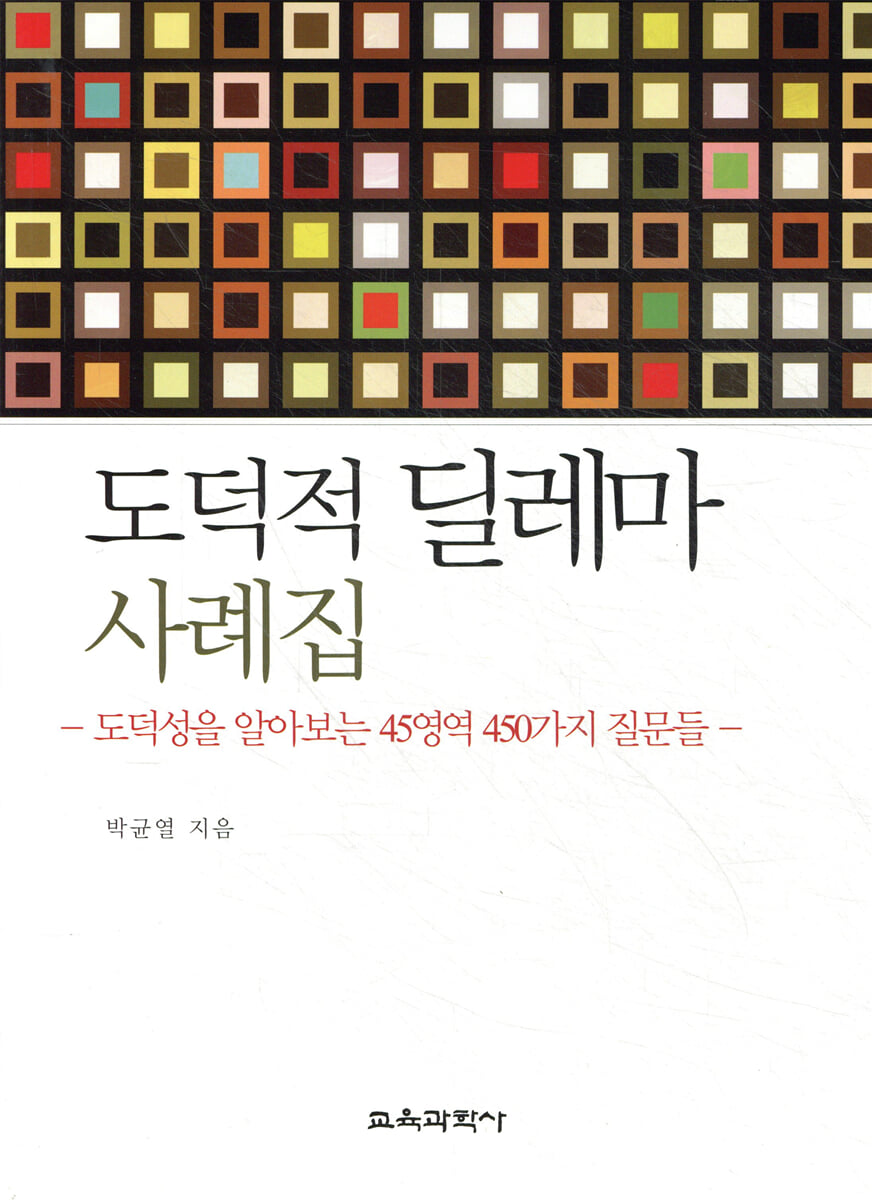
Moral Dilemma Case Study
 |
Description
Book Introduction
This booklet, "Moral Dilemma Casebook: 450 Questions in 45 Areas to Examine Morality," is a "mirror" and a "map" designed to help students examine their own internal hierarchy of values and advance to higher levels of moral maturity.
To this end, this book synthesizes the opinions of various scholars who have advocated the existing stages of moral development as basic data for analyzing 225 specific moral dilemma cases in 45 areas, and also proposes a new '6-stage value hierarchy model' by improving on the points where respondents' misunderstandings during the multi-year measurement process limited their ability to respond correctly.
To this end, this book synthesizes the opinions of various scholars who have advocated the existing stages of moral development as basic data for analyzing 225 specific moral dilemma cases in 45 areas, and also proposes a new '6-stage value hierarchy model' by improving on the points where respondents' misunderstandings during the multi-year measurement process limited their ability to respond correctly.
index
Towards an Education That Cultivates the Power of Reflection, Not the Right Answer 3
Part 1: Moral Dilemmas and Value Hierarchy Theory 7
Chapter 1 Moral Dilemma Theory 9
1.1.
Why Moral Dilemmas Again: Ethics as Knowledge and Morality as Life 9
1.2.
Beyond Kohlberg: An Integrative Approach to Cognition, Emotion, Relationships, and Transcendence 11
1.3.
Rediscovering the Dilemma Class: A Tool for Reflecting on Values, Not Finding the Right Answer 16
Chapter 2: Theory and Structure of the Six-Level Value Hierarchy Model 19
2.1.
Dilemmas and Value Hierarchies: Starting Points for Analysis 19
2.2.
The Structure of the Model: A Detailed Explanation of the Six-Step Value Hierarchy 22
2.3.
Reconstructing the Model: A Detailed Explanation of the New Six-Step Value Hierarchy 25
2.4.
Originality of the model through comparison with existing theories 28
Part 2: The Practice and Application of Moral Dilemma Classes 31
Chapter 1: Guide to Running a Successful Dilemma Discussion Class 33
1.1.
Pre-Class Preparation: Designing a Safe Discussion Space 33
1.2.
Lesson Introduction: Presenting Dilemmas Effectively 37
1.3.
40 Practical Examples of Presenting Dilemmas and Conducting Discussions
Chapter 2: Moral Dilemma Class Evaluation and Feedback 47
2.1.
What to Evaluate: From Outcomes to Process 47
2.2.
Process-Based Assessment in Practice: Portfolio and Reflection Journal 49
2.3.
51 Techniques for Feedback That Help You Grow
[Appendix] 55
[Appendix 1] Summary Table of the New Value Hierarchy's Six Levels 57
[Appendix 2] Student Reflection Activity Sheet (Dilemma Portfolio) 58
[Appendix 3] G.
Lind's KMDD Classroom Model (Precedent) 60
[Appendix 4] Guide to Understanding the KC-index Concept (Advanced Course) 65
[Appendix 5] Moral Dilemma-Based Teaching and Learning Plan (Example) 68
[Appendix 6] 45 Topic Areas of Moral Dilemmas 71
[Appendix 7] Status of 450 Questions for Moral Dilemmas 116
Part 1: Moral Dilemmas and Value Hierarchy Theory 7
Chapter 1 Moral Dilemma Theory 9
1.1.
Why Moral Dilemmas Again: Ethics as Knowledge and Morality as Life 9
1.2.
Beyond Kohlberg: An Integrative Approach to Cognition, Emotion, Relationships, and Transcendence 11
1.3.
Rediscovering the Dilemma Class: A Tool for Reflecting on Values, Not Finding the Right Answer 16
Chapter 2: Theory and Structure of the Six-Level Value Hierarchy Model 19
2.1.
Dilemmas and Value Hierarchies: Starting Points for Analysis 19
2.2.
The Structure of the Model: A Detailed Explanation of the Six-Step Value Hierarchy 22
2.3.
Reconstructing the Model: A Detailed Explanation of the New Six-Step Value Hierarchy 25
2.4.
Originality of the model through comparison with existing theories 28
Part 2: The Practice and Application of Moral Dilemma Classes 31
Chapter 1: Guide to Running a Successful Dilemma Discussion Class 33
1.1.
Pre-Class Preparation: Designing a Safe Discussion Space 33
1.2.
Lesson Introduction: Presenting Dilemmas Effectively 37
1.3.
40 Practical Examples of Presenting Dilemmas and Conducting Discussions
Chapter 2: Moral Dilemma Class Evaluation and Feedback 47
2.1.
What to Evaluate: From Outcomes to Process 47
2.2.
Process-Based Assessment in Practice: Portfolio and Reflection Journal 49
2.3.
51 Techniques for Feedback That Help You Grow
[Appendix] 55
[Appendix 1] Summary Table of the New Value Hierarchy's Six Levels 57
[Appendix 2] Student Reflection Activity Sheet (Dilemma Portfolio) 58
[Appendix 3] G.
Lind's KMDD Classroom Model (Precedent) 60
[Appendix 4] Guide to Understanding the KC-index Concept (Advanced Course) 65
[Appendix 5] Moral Dilemma-Based Teaching and Learning Plan (Example) 68
[Appendix 6] 45 Topic Areas of Moral Dilemmas 71
[Appendix 7] Status of 450 Questions for Moral Dilemmas 116
GOODS SPECIFICS
- Date of issue: August 30, 2025
- Page count, weight, size: 344 pages | 188*257*30mm
- ISBN13: 9788925419329
- ISBN10: 8925419327
You may also like
카테고리
korean


korean

![ELLE 엘르 스페셜 에디션 A형 : 12월 [2025]](http://librairie.coreenne.fr/cdn/shop/files/b8e27a3de6c9538896439686c6b0e8fb.jpg?v=1766436872&width=3840)


