

AI-based manufacturing quality control
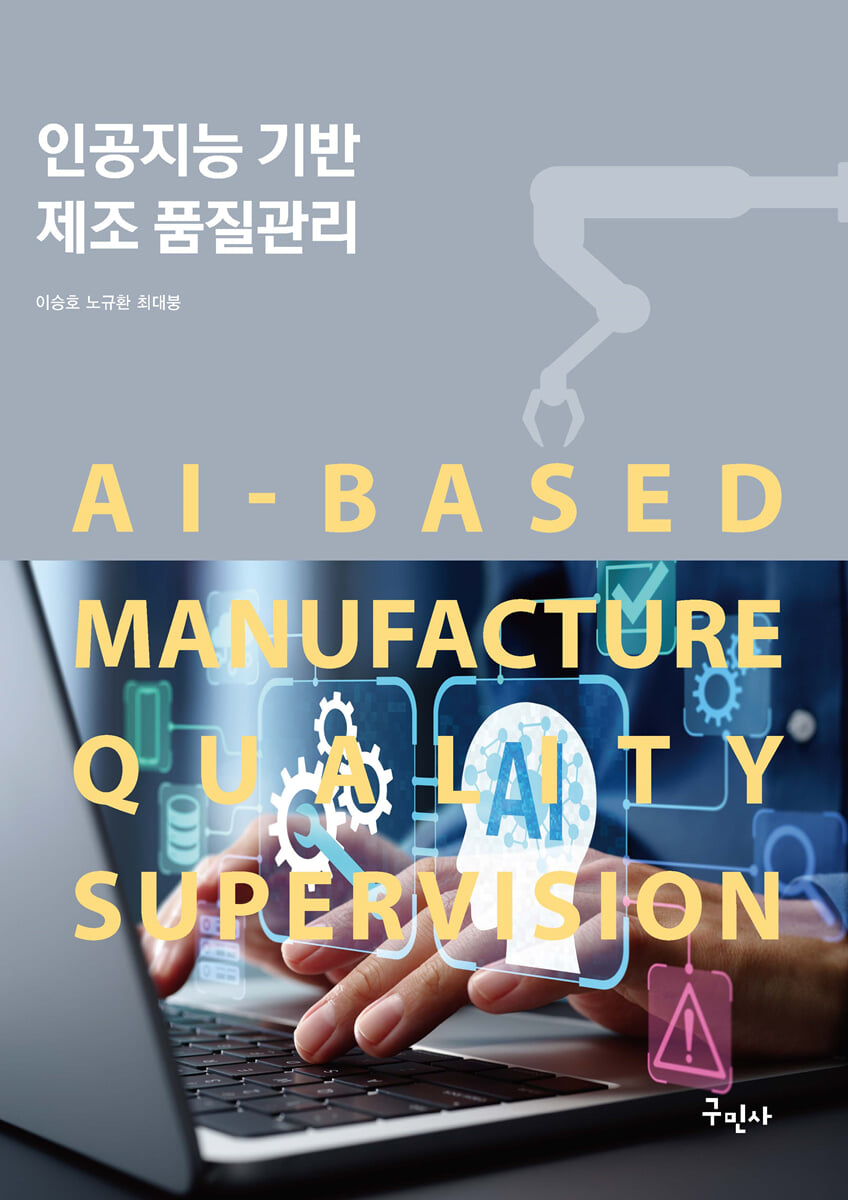 |
Description
Book Introduction
There are various ways and applications for AI learning in manufacturing to drive innovation and improve productivity. By learning vast amounts of manufacturing data, discovering patterns, and building predictive models, AI will contribute to transforming existing manufacturing methods and maximizing efficiency.
- You can preview some of the book's contents.
Preview
index
PART 01 Artificial Intelligence
01 Definition and Concept of Artificial Intelligence
02 Artificial intelligence's thinking ability
03 The Rise of Machine Learning
04 Advances in Deep Learning and ChatGPT
05 Use of Artificial Intelligence
06 Competencies in the Age of Artificial Intelligence
PART 02 Collaborative Robot Operation
01 Collaborative Robot Overview
02 Robot Control Program
03 Robot Operation and Settings
04 External equipment linkage
05 Process Automation and Collaborative Robots
PART 03 Smart Factory Software
01 Paradigm shifts and the current state of the domestic manufacturing industry
02 Smart Factory Operation Management
PART 04 Field Production Management
01 Understanding Production Management
02 On-site production operation and management
PART 05 Quality Improvement Management
01 Introduction to Quality Management
02 Idea generation for problem solving
03 On-site improvement management
04 Seven Tools for Field Improvement
05 On-site improvement activities
PART 06 ESG Basic Practice
01 ESG is not an option, it is a necessity
02 ESG Disclosure/Evaluation System
03 Carbon Emissions and Inventory
04 ESG Implementation in Manufacturing
05 Terminology / Cases
01 Definition and Concept of Artificial Intelligence
02 Artificial intelligence's thinking ability
03 The Rise of Machine Learning
04 Advances in Deep Learning and ChatGPT
05 Use of Artificial Intelligence
06 Competencies in the Age of Artificial Intelligence
PART 02 Collaborative Robot Operation
01 Collaborative Robot Overview
02 Robot Control Program
03 Robot Operation and Settings
04 External equipment linkage
05 Process Automation and Collaborative Robots
PART 03 Smart Factory Software
01 Paradigm shifts and the current state of the domestic manufacturing industry
02 Smart Factory Operation Management
PART 04 Field Production Management
01 Understanding Production Management
02 On-site production operation and management
PART 05 Quality Improvement Management
01 Introduction to Quality Management
02 Idea generation for problem solving
03 On-site improvement management
04 Seven Tools for Field Improvement
05 On-site improvement activities
PART 06 ESG Basic Practice
01 ESG is not an option, it is a necessity
02 ESG Disclosure/Evaluation System
03 Carbon Emissions and Inventory
04 ESG Implementation in Manufacturing
05 Terminology / Cases
Publisher's Review
As we enter the era of artificial intelligence..........
There are various ways and applications for AI learning in manufacturing to drive innovation and improve productivity. By learning vast amounts of manufacturing data, discovering patterns, and building predictive models, AI will contribute to transforming existing manufacturing methods and maximizing efficiency.
Quality management innovation is driven by the introduction of AI-based inspection systems. By leveraging image recognition and natural language processing technologies, these systems automate and improve the accuracy of product appearance inspection, defect prediction, and root cause analysis. Real-time quality prediction analyzes production process data to proactively detect and prevent potential quality issues, reducing defect rates.
Productivity can be improved through process optimization. AI modeling analyzes various variables in the manufacturing environment and finds optimal operating conditions to maximize production efficiency. Sensor data from equipment is analyzed to predict failure points and perform preemptive maintenance to minimize equipment downtime. AI-based collaborative robots can work safely alongside human workers, increasing productivity and work efficiency.
Additionally, by analyzing customer requirements data, AI can support customized product design and production, shorten product development times, and generate innovative ideas and reduce development costs by having AI automatically generate new product designs or process methods.
In terms of safety and environmental management, AI-based image analysis detects hazardous situations and alerts workers, preventing industrial accidents. Energy consumption data analysis reduces unnecessary energy waste and contributes to reducing carbon emissions.
A preprocessing process is performed to collect various manufacturing data, such as production equipment, quality inspection, sensors, and customer data, remove errors from the collected data, and process it into a form suitable for analysis. Then, based on the problem definition and goal setting, an appropriate AI algorithm (machine learning, deep learning, etc.) is selected, and the preprocessed data is used to train an AI model, and its performance can be evaluated and improved.
Securing sufficient, high-quality manufacturing data and establishing an infrastructure capable of systematically managing it are crucial. Securing specialized personnel for AI model development, system construction, and operation is essential. Active participation and cooperation from field workers are crucial during the introduction and implementation of AI systems.
Innovation through AI learning in the manufacturing industry can significantly contribute to increased production efficiency, improved quality, cost reduction, and new value creation. Companies should establish AI adoption strategies tailored to their specific characteristics and goals and accelerate the transition to smart factories through consistent investment and effort.
There are various ways and applications for AI learning in manufacturing to drive innovation and improve productivity. By learning vast amounts of manufacturing data, discovering patterns, and building predictive models, AI will contribute to transforming existing manufacturing methods and maximizing efficiency.
Quality management innovation is driven by the introduction of AI-based inspection systems. By leveraging image recognition and natural language processing technologies, these systems automate and improve the accuracy of product appearance inspection, defect prediction, and root cause analysis. Real-time quality prediction analyzes production process data to proactively detect and prevent potential quality issues, reducing defect rates.
Productivity can be improved through process optimization. AI modeling analyzes various variables in the manufacturing environment and finds optimal operating conditions to maximize production efficiency. Sensor data from equipment is analyzed to predict failure points and perform preemptive maintenance to minimize equipment downtime. AI-based collaborative robots can work safely alongside human workers, increasing productivity and work efficiency.
Additionally, by analyzing customer requirements data, AI can support customized product design and production, shorten product development times, and generate innovative ideas and reduce development costs by having AI automatically generate new product designs or process methods.
In terms of safety and environmental management, AI-based image analysis detects hazardous situations and alerts workers, preventing industrial accidents. Energy consumption data analysis reduces unnecessary energy waste and contributes to reducing carbon emissions.
A preprocessing process is performed to collect various manufacturing data, such as production equipment, quality inspection, sensors, and customer data, remove errors from the collected data, and process it into a form suitable for analysis. Then, based on the problem definition and goal setting, an appropriate AI algorithm (machine learning, deep learning, etc.) is selected, and the preprocessed data is used to train an AI model, and its performance can be evaluated and improved.
Securing sufficient, high-quality manufacturing data and establishing an infrastructure capable of systematically managing it are crucial. Securing specialized personnel for AI model development, system construction, and operation is essential. Active participation and cooperation from field workers are crucial during the introduction and implementation of AI systems.
Innovation through AI learning in the manufacturing industry can significantly contribute to increased production efficiency, improved quality, cost reduction, and new value creation. Companies should establish AI adoption strategies tailored to their specific characteristics and goals and accelerate the transition to smart factories through consistent investment and effort.
GOODS SPECIFICS
- Date of issue: June 15, 2025
- Page count, weight, size: 332 pages | 210*297*30mm
- ISBN13: 9791168755703
- ISBN10: 1168755700
You may also like
카테고리
korean


korean

![GQ KOREA Mark (Monthly): December [2025]](http://librairie.coreenne.fr/cdn/shop/files/8ef265dbbfbf186523ed75ba7319009d.jpg?v=1765340328&width=3840)


