

Teacher leadership
 |
Description
Book Introduction
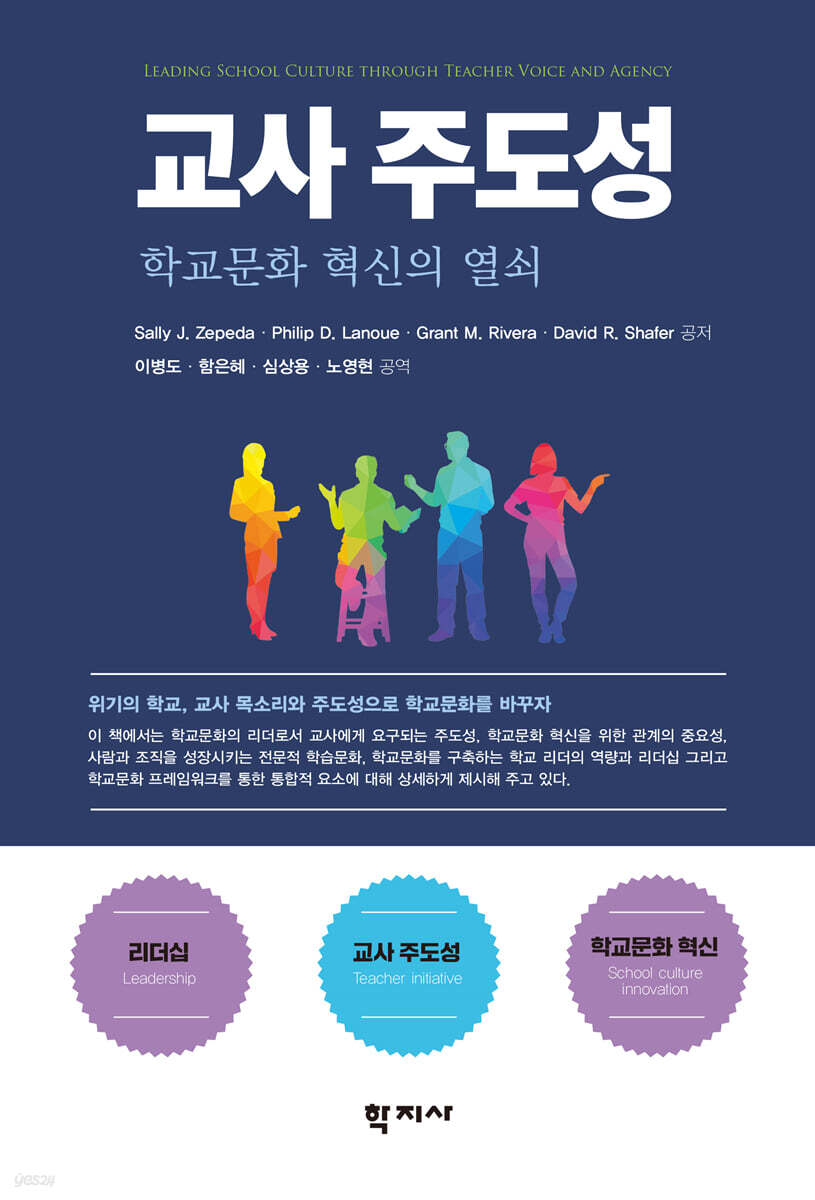
"Teacher Leadership: The Key to School Culture Innovation" interprets the true nature of school culture and, based on this, presents specific strategies for what teachers and school leaders can change and how to implement them.
This book will help teachers put their voices at the center of their education, leading to improved school success and student achievement.
Understand how invisible cultural factors, such as how members interact and the organizational climate, affect actual classes, collaboration, and student outcomes.
As a result, schools can transform into communities that pursue both stability and innovation based on teachers' autonomy and expertise rather than instructions and discipline.
This book will help teachers put their voices at the center of their education, leading to improved school success and student achievement.
Understand how invisible cultural factors, such as how members interact and the organizational climate, affect actual classes, collaboration, and student outcomes.
As a result, schools can transform into communities that pursue both stability and innovation based on teachers' autonomy and expertise rather than instructions and discipline.
index
Translator's Preface
Author's Preface
Chapter 1: Teacher Voice and Leadership
1.
A look at school culture
2.
Entering
3.
School Culture Framework
4.
Clarifying teacher voice and leadership
1) Definition of teacher voice
2) Definition of teacher leadership
5.
Teachers as School Culture Leaders
1) Creating a link to support teachers
2) Previous empowerment
3) Current empowerment
4) Definition of empowerment
5) Autonomy
6) Self-efficacy
7) Collective efficacy
6.
Exit: Summary
Chapter 2: Understanding and structuring school culture
1.
A look at school culture
2.
Entering
3.
Differences in culture and customs
1) Definition of culture
2) Definition of climate
4.
Internal factors influencing school culture
1) Teacher
2) Working environment
3) Teacher fraud
4) Teacher participation
5) Maintaining and reducing the number of teachers
6) Leader's transfer
5.
External factors influencing school culture
1) Economic poverty
2) Changing demographics
3) Student movement and decline
4) Divided political environment
6.
Conclusion: Summary
Chapter 3: Understanding Functional and Dysfunctional School Cultures
1.
A look at school culture
2.
Entering
3.
Leadership of Cultural Vision
1) Understanding the culture
2) Cultural Leader
3) Leadership through a cultural perspective
4.
Functional School Culture and Climate 19
1) Positive school culture and atmosphere
2) Interaction of positive school culture and atmosphere
3) Core norms of positive school culture and atmosphere
5.
Dysfunctional school culture and climate
1) The dynamics of dysfunction
2) Community and collaboration
6.
Changing cultural vision
1) Reculturalization
2) Leading 'good' chaos
3) Stabilization of school culture
7.
Exit: Summary
Chapter 4: School Culture Innovation and Our Efforts
1.
A look at school culture
2.
Entering
3.
The importance of relationships
1) Consideration and support
2) Normative behavior that sends a clear message
3) The lonely road of isolation
4) Solidarity and sense of belonging
4.
Collaborative structure
1) Share the progress
2) Teacher Leadership
3) Professional learning community
4) Online learning community
5) Collaborative planning
6) Mentoring and job placement programs
5.
Exit: Summary
Chapter 5: A Professional Learning Culture That Grows People and Organizations
1.
A look at school culture
2.
Entering
3.
cooperation
1) Be clear about collaboration
2) Leading a collaborative learning culture
3) Fostering a collaborative learning culture
4.
Professional learning
1) Analyzing professional learning
2) Focus on job-specific professional learning.
3) Encourage collaboration and mutual support.
5.
Exit: Summary
Chapter 6: Social Dynamics that Shape School Culture
1.
A look at school culture
2.
Entering
3.
School capacity
1) A sense of shared ownership
2) Shared responsibility
3) Consistency
4.
human capital
1) Employment program
2) Mentoring
3) Teacher Leadership
5.
social capital
1) Relationship with human capital
2) Social networks
6.
Conclusion: Summary
Chapter 7: School Stabilization through School Culture
1.
A look at school culture
2.
Entering
3.
Culture, Change, and Confusion
1) Change and conflict
2) External changes and conflicts
3) Internal changes and conflicts
4) Personal and professional conflicts
4.
Preparing for tomorrow with culture
1) Moving forward through cultural change and conflict
2) Stabilize with integrated elements
3) Influence of subculture
5.
New school culture
1) Expansion of school culture
2) Cultural tensions
3) New perspective
6.
Exit: Summary
Chapter 8: All About School Culture
1.
Entering
2.
Revisiting the School Culture Framework
3.
Integral elements of school culture
1) Empowerment
2) Autonomy
3) Collaboration
4) Support, consideration, and safety
5) Sense of belonging
6) Self-efficacy and collective efficacy
7) Teacher participation
8) Teacher voice and teacher leadership
4.
Why school culture now?
5.
School culture that supports teachers
1) Teacher expertise
2) Maintaining teachers' teaching positions
3) Professional learning
4) Working environment
5) Shared responsibility and sense of ownership
6) Human and social capital
6.
The core of school culture
1) Leadership through school culture
2) Creating a school culture
3) Collaboration centered on school culture
Search
Author's Preface
Chapter 1: Teacher Voice and Leadership
1.
A look at school culture
2.
Entering
3.
School Culture Framework
4.
Clarifying teacher voice and leadership
1) Definition of teacher voice
2) Definition of teacher leadership
5.
Teachers as School Culture Leaders
1) Creating a link to support teachers
2) Previous empowerment
3) Current empowerment
4) Definition of empowerment
5) Autonomy
6) Self-efficacy
7) Collective efficacy
6.
Exit: Summary
Chapter 2: Understanding and structuring school culture
1.
A look at school culture
2.
Entering
3.
Differences in culture and customs
1) Definition of culture
2) Definition of climate
4.
Internal factors influencing school culture
1) Teacher
2) Working environment
3) Teacher fraud
4) Teacher participation
5) Maintaining and reducing the number of teachers
6) Leader's transfer
5.
External factors influencing school culture
1) Economic poverty
2) Changing demographics
3) Student movement and decline
4) Divided political environment
6.
Conclusion: Summary
Chapter 3: Understanding Functional and Dysfunctional School Cultures
1.
A look at school culture
2.
Entering
3.
Leadership of Cultural Vision
1) Understanding the culture
2) Cultural Leader
3) Leadership through a cultural perspective
4.
Functional School Culture and Climate 19
1) Positive school culture and atmosphere
2) Interaction of positive school culture and atmosphere
3) Core norms of positive school culture and atmosphere
5.
Dysfunctional school culture and climate
1) The dynamics of dysfunction
2) Community and collaboration
6.
Changing cultural vision
1) Reculturalization
2) Leading 'good' chaos
3) Stabilization of school culture
7.
Exit: Summary
Chapter 4: School Culture Innovation and Our Efforts
1.
A look at school culture
2.
Entering
3.
The importance of relationships
1) Consideration and support
2) Normative behavior that sends a clear message
3) The lonely road of isolation
4) Solidarity and sense of belonging
4.
Collaborative structure
1) Share the progress
2) Teacher Leadership
3) Professional learning community
4) Online learning community
5) Collaborative planning
6) Mentoring and job placement programs
5.
Exit: Summary
Chapter 5: A Professional Learning Culture That Grows People and Organizations
1.
A look at school culture
2.
Entering
3.
cooperation
1) Be clear about collaboration
2) Leading a collaborative learning culture
3) Fostering a collaborative learning culture
4.
Professional learning
1) Analyzing professional learning
2) Focus on job-specific professional learning.
3) Encourage collaboration and mutual support.
5.
Exit: Summary
Chapter 6: Social Dynamics that Shape School Culture
1.
A look at school culture
2.
Entering
3.
School capacity
1) A sense of shared ownership
2) Shared responsibility
3) Consistency
4.
human capital
1) Employment program
2) Mentoring
3) Teacher Leadership
5.
social capital
1) Relationship with human capital
2) Social networks
6.
Conclusion: Summary
Chapter 7: School Stabilization through School Culture
1.
A look at school culture
2.
Entering
3.
Culture, Change, and Confusion
1) Change and conflict
2) External changes and conflicts
3) Internal changes and conflicts
4) Personal and professional conflicts
4.
Preparing for tomorrow with culture
1) Moving forward through cultural change and conflict
2) Stabilize with integrated elements
3) Influence of subculture
5.
New school culture
1) Expansion of school culture
2) Cultural tensions
3) New perspective
6.
Exit: Summary
Chapter 8: All About School Culture
1.
Entering
2.
Revisiting the School Culture Framework
3.
Integral elements of school culture
1) Empowerment
2) Autonomy
3) Collaboration
4) Support, consideration, and safety
5) Sense of belonging
6) Self-efficacy and collective efficacy
7) Teacher participation
8) Teacher voice and teacher leadership
4.
Why school culture now?
5.
School culture that supports teachers
1) Teacher expertise
2) Maintaining teachers' teaching positions
3) Professional learning
4) Working environment
5) Shared responsibility and sense of ownership
6) Human and social capital
6.
The core of school culture
1) Leadership through school culture
2) Creating a school culture
3) Collaboration centered on school culture
Search
Publisher's Review
An era of chaos, with teachers losing their authority and leaving the profession.
The collapse of school culture through the teacher's voice
A practical strategy book that sets things straight
"Teacher Leadership: The Key to School Culture Innovation" interprets the true nature of school culture and, based on this, presents specific strategies for what teachers and school leaders can change and how to implement them.
This book will help teachers put their voices at the center of their education, leading to improved school success and student achievement.
Understand how invisible cultural factors, such as how members interact and the organizational climate, affect actual classes, collaboration, and student outcomes.
As a result, schools can transform into communities that pursue both stability and innovation based on teachers' autonomy and expertise rather than instructions and discipline.
But recently, the authority of the church has been continuously declining.
Amid the COVID-19 pandemic and repeated educational reforms, schools remain in turmoil.
The extreme choice of a second-year teacher at Seoul's Seo-i Elementary School and the death of a teacher who had been suffering from malicious complaints have not only caused grief but also anger among teachers across the country.
In reality, current teachers are leaving the classroom, the number of new teachers is decreasing, and school culture is deteriorating.
Education reforms are repeated, but there is no significant change in student achievement or teacher recovery.
The reason is clear.
This is because there was a lack of awareness of the essence of school culture and a lack of practical strategies.
This book tries to solve the problem so far.
Through eight chapters, it presents an integrated framework for school culture innovation, covering everything from the definition of school culture to its components, implementation strategies, leadership, collaborative structures, and professional learning communities.
In particular, each chapter presents a real-world dilemma and is structured to connect with "leading culture" and "leading practice" activities, making it a practical guidebook that can be applied directly to educational settings.
Translators Lee Byeong-do, Ham Eun-hye, Sim Sang-yong, and Noh Young-hyun are all educators and researchers who have dedicated themselves to improving teaching, assessment, and organizational culture at the heart of educational settings, including education offices, schools, and universities.
This book faithfully reflects the voices of the field, clearly showing how relationships among teachers, leadership attitudes, interactions, and shared responsibility can transform schools.
I hope that this book will create an environment where teachers can clearly voice their opinions and take the initiative in teaching.
The collapse of school culture through the teacher's voice
A practical strategy book that sets things straight
"Teacher Leadership: The Key to School Culture Innovation" interprets the true nature of school culture and, based on this, presents specific strategies for what teachers and school leaders can change and how to implement them.
This book will help teachers put their voices at the center of their education, leading to improved school success and student achievement.
Understand how invisible cultural factors, such as how members interact and the organizational climate, affect actual classes, collaboration, and student outcomes.
As a result, schools can transform into communities that pursue both stability and innovation based on teachers' autonomy and expertise rather than instructions and discipline.
But recently, the authority of the church has been continuously declining.
Amid the COVID-19 pandemic and repeated educational reforms, schools remain in turmoil.
The extreme choice of a second-year teacher at Seoul's Seo-i Elementary School and the death of a teacher who had been suffering from malicious complaints have not only caused grief but also anger among teachers across the country.
In reality, current teachers are leaving the classroom, the number of new teachers is decreasing, and school culture is deteriorating.
Education reforms are repeated, but there is no significant change in student achievement or teacher recovery.
The reason is clear.
This is because there was a lack of awareness of the essence of school culture and a lack of practical strategies.
This book tries to solve the problem so far.
Through eight chapters, it presents an integrated framework for school culture innovation, covering everything from the definition of school culture to its components, implementation strategies, leadership, collaborative structures, and professional learning communities.
In particular, each chapter presents a real-world dilemma and is structured to connect with "leading culture" and "leading practice" activities, making it a practical guidebook that can be applied directly to educational settings.
Translators Lee Byeong-do, Ham Eun-hye, Sim Sang-yong, and Noh Young-hyun are all educators and researchers who have dedicated themselves to improving teaching, assessment, and organizational culture at the heart of educational settings, including education offices, schools, and universities.
This book faithfully reflects the voices of the field, clearly showing how relationships among teachers, leadership attitudes, interactions, and shared responsibility can transform schools.
I hope that this book will create an environment where teachers can clearly voice their opinions and take the initiative in teaching.
GOODS SPECIFICS
- Date of issue: September 10, 2024
- Page count, weight, size: 288 pages | 451g | 173*235*20mm
- ISBN13: 9788999731969
- ISBN10: 8999731960
You may also like
카테고리
korean


korean

![GQ KOREA Mark (Monthly): December [2025]](http://librairie.coreenne.fr/cdn/shop/files/8ef265dbbfbf186523ed75ba7319009d.jpg?v=1765340328&width=3840)


