

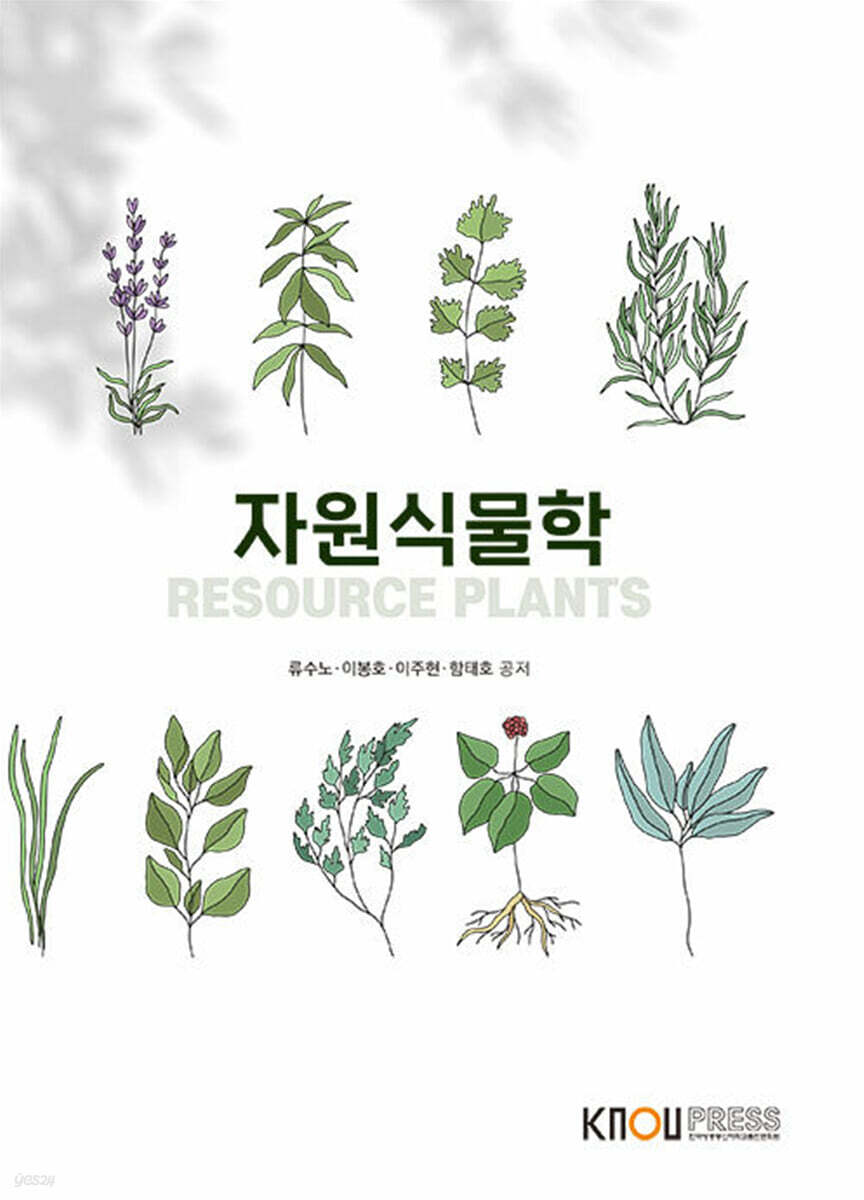
Resource Plant Science
 |
Description
Book Introduction
There are approximately 340,000 species of higher plants on Earth, and there are approximately 5,000 species of plants distributed in Korea alone.
However, the expansion of human activities and population growth are resulting in environmental destruction and extinction of plant species.
Humans have domesticated only a very small number of wild plant species and improved them into plants with traits suitable for their intended use.
Therefore, as agriculture developed, a wide variety of native species were replaced by a small number of superior breeds, resulting in a further decrease in the diversity of cultivated plants.
Plants that were previously considered useless are often recognized as having new utility as a result of scientific and technological advancements. Therefore, systematic collection, preservation, evaluation, and utilization of resource plants are essential for securing plant diversity.
Resource plants are considered to have not only their current utility value but also their potential utility value in the future.
It has been revealed that various resource plants are not only used to purify water pollution and prevent air pollution, but also play a major role in preserving the ecological environment and protecting the natural environment.
Therefore, the value of resource plants will be further emphasized in the future.
Recently, research on the development of new drugs from natural products, including resource plants, is being actively conducted.
In addition, many academic and industrial achievements are being made through research and investigation on securing and applying resources for the development of new pharmaceuticals, the use of new varieties and physiologically active substances, and biotechnological approaches such as callus culture, organ culture, and genetic manipulation.
The composition of this textbook is as follows.
First, it contains explanations necessary for basic understanding of resource plants and information on the importance, classification, distribution, use, and quality evaluation of resource plants.
Second, the characteristics, ingredients, uses, cultivation techniques, etc. of resource plants that have already been developed and their characteristics have been revealed according to their intended use are described in general terms.
However, the expansion of human activities and population growth are resulting in environmental destruction and extinction of plant species.
Humans have domesticated only a very small number of wild plant species and improved them into plants with traits suitable for their intended use.
Therefore, as agriculture developed, a wide variety of native species were replaced by a small number of superior breeds, resulting in a further decrease in the diversity of cultivated plants.
Plants that were previously considered useless are often recognized as having new utility as a result of scientific and technological advancements. Therefore, systematic collection, preservation, evaluation, and utilization of resource plants are essential for securing plant diversity.
Resource plants are considered to have not only their current utility value but also their potential utility value in the future.
It has been revealed that various resource plants are not only used to purify water pollution and prevent air pollution, but also play a major role in preserving the ecological environment and protecting the natural environment.
Therefore, the value of resource plants will be further emphasized in the future.
Recently, research on the development of new drugs from natural products, including resource plants, is being actively conducted.
In addition, many academic and industrial achievements are being made through research and investigation on securing and applying resources for the development of new pharmaceuticals, the use of new varieties and physiologically active substances, and biotechnological approaches such as callus culture, organ culture, and genetic manipulation.
The composition of this textbook is as follows.
First, it contains explanations necessary for basic understanding of resource plants and information on the importance, classification, distribution, use, and quality evaluation of resource plants.
Second, the characteristics, ingredients, uses, cultivation techniques, etc. of resource plants that have already been developed and their characteristics have been revealed according to their intended use are described in general terms.
index
Part 1 | Understanding Resource Plants
Chapter 1: Diversity and Importance of Resource Plants 3
1.1 Meaning and characteristics of resource plants 5
1.2 Origin and Differentiation of Cultivated Plants 8
1.3 The need to preserve resource plants 11
1.4 Diversity of Resource Plants and Endangered Plants 14
Chapter 2: Securing and Utilizing Resource Plants 27
2.1 Concept and Importance of Resource Plants and Genetic Resources 29
2.2 Collection and preservation of genetic resources 31
2.3 Evaluation and Use of Resource Plants 35
2.4 Current Status and Trends in Agricultural Genetic Resources Management in Korea and Abroad 39
2.5 Industrial Use of Resource Plants 59
Chapter 3 Classification of Resource Plants 69
3.1 Biodiversity and Plant Taxonomy 71
3.2 Reference data for plant taxonomy 74
Chapter 4 Quality Evaluation of Resource Plants 85
4.1 Quality Concept and Evaluation Objects 87
4.2 Component Analysis Method 93
4.3 Effective ingredients and indicator components of resource plants 96
Part 2 | Production of Resource Plants
Chapter 5: Maintenance Plants 105
5.1 General Theory 107
5.2 Sesame 123
5.3 Perilla 142
5.4 Rapeseed 161
5.5 peanuts 172
5.6 Sunflower 187
5.7 Ajukkari 189
5.8 maybe 191
5.9 Honghwa (Safflower) 194
Chapter 6 Medicinal Plants 199
6.1 General Theory 201
6.2 Licorice 215
6.3 Thistle 218
6.4 Gugija 220
6.5 Angelica 223
6.6 Duzhong 226
6.7 Ma (San Yak) 228
6.8 Ophiopogon japonicus 234
6.9 Baek Su-o 236
6.10 Bokbunja 239
6.11 Cornus officinalis 241
6.12 Shovel 243
6.13 Siho 245
6.14 Food and Beverage Disposal 248
6.15 Omija 251
6.16 Yulmu 254
6.17 Ginseng 257
6.18 Peony 270
6.19 Jihwang 273
6.20 Heavenly Palace 275
6.21 Cheonma 278
6.22 Gold 280
6.23 Hwanggi 282
Chapter 7: Symbolic Resource Plants 289
7.1 General 291
7.2nd 294th
7.3 Coffee 300
7.4 Cocoa 304
7.5 Hope 305
7.6 Chicory 309
7.7 Cigarettes 313
Chapter 8 Wild Vegetable Resource Plants 321
8.1 General Theory 323
8.2 Gobi 325
8.3 Bracken 327
8.4 Owl 329
8.5 Gondre (Korean thistle) 331
8.6 Bear's Chrysanthemum 333
8.7 Deodeok 335
8.8 Doraji 338
8.9 Chamchwi 340
8.10 Chambireum 342
8.11 Sedum 343
8.12 Wild Garlic 344
Chapter 9 Herbal Resource Plants 351
9.1 General Theory 353
9.2 Mint 357
9.3 Basil scent 361
9.4 Jaso 365
9.5 Island thyme 368
9.6 Flower Oil 370
9.7 Gamguk 371
9.8 Lavender 373
Chapter 10: Starch/Sugar Resource Plants 379
10.1 General Theory 381
10.2 Old Testament Potato 387
10.3 Cassava 390
10.4 Kudzu (Kudzu root) 391
10.5 Dokpul 392
10.6 Amaranth 394
10.7 Sugar beet 396
10.8 Sugarcane 399
10.9 Single-digit 401
10.10 Stevia 404
10.11 reduction 408
10.12 Yacon 410
Chapter 11: Spices and Pigment Source Plants 415
11.1 General Theory 417
11.2 Turmeric (Curcumin) 421
11.3 Mustard 425
11.4 Mustard 427
11.5 Horseradish 429
11.6 Pepper 434
11.7 seconds 436 seconds
11.8 Page 439
11.9 Hit 441
Chapter 12 Fiber/Paint Resource Plants 447
12.1 General Theory 449
12.2 Cotton 456
12.3 Hemp 463
12.4 Mosipul 471
12.5 mulberry 472
12.6 Wanggol 474
12.7 Golpul 476
12.8 478 sheep
12.9 Cheongma 480
12.10 Lacquer Tree 481
12.11 Hwangchilnamu 487
Chapter 1: Diversity and Importance of Resource Plants 3
1.1 Meaning and characteristics of resource plants 5
1.2 Origin and Differentiation of Cultivated Plants 8
1.3 The need to preserve resource plants 11
1.4 Diversity of Resource Plants and Endangered Plants 14
Chapter 2: Securing and Utilizing Resource Plants 27
2.1 Concept and Importance of Resource Plants and Genetic Resources 29
2.2 Collection and preservation of genetic resources 31
2.3 Evaluation and Use of Resource Plants 35
2.4 Current Status and Trends in Agricultural Genetic Resources Management in Korea and Abroad 39
2.5 Industrial Use of Resource Plants 59
Chapter 3 Classification of Resource Plants 69
3.1 Biodiversity and Plant Taxonomy 71
3.2 Reference data for plant taxonomy 74
Chapter 4 Quality Evaluation of Resource Plants 85
4.1 Quality Concept and Evaluation Objects 87
4.2 Component Analysis Method 93
4.3 Effective ingredients and indicator components of resource plants 96
Part 2 | Production of Resource Plants
Chapter 5: Maintenance Plants 105
5.1 General Theory 107
5.2 Sesame 123
5.3 Perilla 142
5.4 Rapeseed 161
5.5 peanuts 172
5.6 Sunflower 187
5.7 Ajukkari 189
5.8 maybe 191
5.9 Honghwa (Safflower) 194
Chapter 6 Medicinal Plants 199
6.1 General Theory 201
6.2 Licorice 215
6.3 Thistle 218
6.4 Gugija 220
6.5 Angelica 223
6.6 Duzhong 226
6.7 Ma (San Yak) 228
6.8 Ophiopogon japonicus 234
6.9 Baek Su-o 236
6.10 Bokbunja 239
6.11 Cornus officinalis 241
6.12 Shovel 243
6.13 Siho 245
6.14 Food and Beverage Disposal 248
6.15 Omija 251
6.16 Yulmu 254
6.17 Ginseng 257
6.18 Peony 270
6.19 Jihwang 273
6.20 Heavenly Palace 275
6.21 Cheonma 278
6.22 Gold 280
6.23 Hwanggi 282
Chapter 7: Symbolic Resource Plants 289
7.1 General 291
7.2nd 294th
7.3 Coffee 300
7.4 Cocoa 304
7.5 Hope 305
7.6 Chicory 309
7.7 Cigarettes 313
Chapter 8 Wild Vegetable Resource Plants 321
8.1 General Theory 323
8.2 Gobi 325
8.3 Bracken 327
8.4 Owl 329
8.5 Gondre (Korean thistle) 331
8.6 Bear's Chrysanthemum 333
8.7 Deodeok 335
8.8 Doraji 338
8.9 Chamchwi 340
8.10 Chambireum 342
8.11 Sedum 343
8.12 Wild Garlic 344
Chapter 9 Herbal Resource Plants 351
9.1 General Theory 353
9.2 Mint 357
9.3 Basil scent 361
9.4 Jaso 365
9.5 Island thyme 368
9.6 Flower Oil 370
9.7 Gamguk 371
9.8 Lavender 373
Chapter 10: Starch/Sugar Resource Plants 379
10.1 General Theory 381
10.2 Old Testament Potato 387
10.3 Cassava 390
10.4 Kudzu (Kudzu root) 391
10.5 Dokpul 392
10.6 Amaranth 394
10.7 Sugar beet 396
10.8 Sugarcane 399
10.9 Single-digit 401
10.10 Stevia 404
10.11 reduction 408
10.12 Yacon 410
Chapter 11: Spices and Pigment Source Plants 415
11.1 General Theory 417
11.2 Turmeric (Curcumin) 421
11.3 Mustard 425
11.4 Mustard 427
11.5 Horseradish 429
11.6 Pepper 434
11.7 seconds 436 seconds
11.8 Page 439
11.9 Hit 441
Chapter 12 Fiber/Paint Resource Plants 447
12.1 General Theory 449
12.2 Cotton 456
12.3 Hemp 463
12.4 Mosipul 471
12.5 mulberry 472
12.6 Wanggol 474
12.7 Golpul 476
12.8 478 sheep
12.9 Cheongma 480
12.10 Lacquer Tree 481
12.11 Hwangchilnamu 487
GOODS SPECIFICS
- Date of issue: January 25, 2024
- Page count, weight, size: 532 pages | 172*248*35mm
- ISBN13: 9788920047329
- ISBN10: 8920047324
You may also like
카테고리
korean


korean

![ELLE 엘르 스페셜 에디션 A형 : 12월 [2025]](http://librairie.coreenne.fr/cdn/shop/files/b8e27a3de6c9538896439686c6b0e8fb.jpg?v=1766436872&width=3840)


