

Assessment as a learning process
 |
Description
Book Introduction
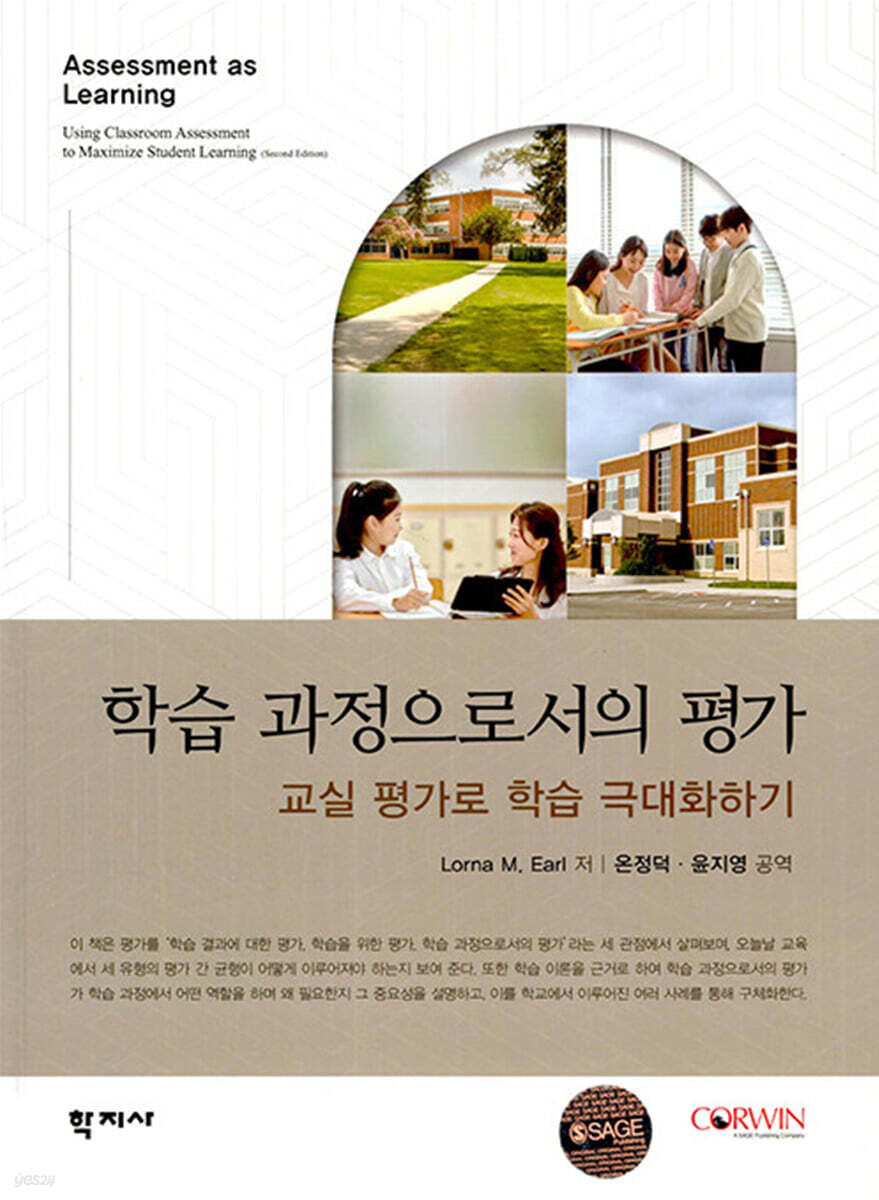
"Assessment as a Learning Process" confronts the essential questions facing education today by viewing assessment not as a tool for ranking students, but as a process that promotes learning.
This book suggests the need for a paradigm shift in education, where assessment should be viewed as a "part of learning" rather than a "measurement," and goes beyond a simple list of techniques or tools to fundamentally re-ask the question of what role assessment should play in teaching and learning.
The author, Canadian educator Lorna Earl, has been working with teachers in and out of the classroom to understand assessment practices for over 20 years.
She emphasizes that the transformation of teachers' evaluation perspectives through 'evaluation as learning outcomes, evaluation for learning, and evaluation as a learning process' is the core of educational innovation.
This book suggests the need for a paradigm shift in education, where assessment should be viewed as a "part of learning" rather than a "measurement," and goes beyond a simple list of techniques or tools to fundamentally re-ask the question of what role assessment should play in teaching and learning.
The author, Canadian educator Lorna Earl, has been working with teachers in and out of the classroom to understand assessment practices for over 20 years.
She emphasizes that the transformation of teachers' evaluation perspectives through 'evaluation as learning outcomes, evaluation for learning, and evaluation as a learning process' is the core of educational innovation.
index
Translator's Preface
Author's Preface
Chapter 1: Prospects and Challenges for Classroom Assessment
The education world has changed
The Power of Classroom Assessment
How the second edition came to be
Case studies to understand the learning and assessment of mathematics
When using this book
Think more
Chapter 2: Trends in Evaluation
Overview of the History of Evaluation
Finding change in unexpected places
Rethinking Evaluation for Real Change
Purpose is the most important thing
Classroom Assessment and Large-Scale Reform
Accept the challenge
Think more
Chapter 3: Assessment for Learning Outcomes, Assessment for Learning, and Assessment as a Learning Process
Assessment for Learning
Assessment as a learning process
Evaluation of learning outcomes
Finding the right balance
Think about it
Chapter 4: Focusing on Learning
Learning is what makes us human.
How do multi-personalities learn?
Learning for Understanding
Learning is a difficult activity
Learning happens in context
Think more
Chapter 5: Evaluation and Learning
How Classroom Assessments Help Learning
Assessment as an essential part of teaching and learning
Realizing the power of assessment to optimize learning
Think more
Chapter 6: Using Assessment to Determine What Students Believe to Be True
Pocket Billiards Table Case
Start with what students believe to be true.
Wetland case
Think more
Chapter 7: Using Assessment to Motivate Learning
Motivating Assessment
The case of Othello
Evaluation that changes old customs
Think more
Chapter 8: Connecting Learning Using Assessment
Curriculum as a visible goal for learning
Learning plans, assessment plans, and anticipating the unexpected
Literacy Learning Design Case Studies
Assessment for Personalized Learning
Think more
Chapter 9: Using Assessments to Extend Learning
Feedback for learning
Rubrics and Examples as Tools
Brass Band Case
Ideas, Connections and Expansion
Think more
Chapter 10: Using Assessments for Reflection and Self-Regulation
Cao Cao's case
Students as the best evaluators
Developing Self-Regulation Habits: Selected Case Studies
Think more
Chapter 11: Approaching Assessment for Optimal Learning
Now is the time to start evaluating as a learning process.
A conceptual shift is needed in assessment for learning.
Think about what you believe to be true.
Learning about learning
Be well-versed in your subject
Become a professional teacher
Research together in a community of inquiry
Don't give up, but be kind to yourself.
Teachers also need self-regulation habits.
Seek the help you need
Make a meaningful difference
References
Search
Author's Preface
Chapter 1: Prospects and Challenges for Classroom Assessment
The education world has changed
The Power of Classroom Assessment
How the second edition came to be
Case studies to understand the learning and assessment of mathematics
When using this book
Think more
Chapter 2: Trends in Evaluation
Overview of the History of Evaluation
Finding change in unexpected places
Rethinking Evaluation for Real Change
Purpose is the most important thing
Classroom Assessment and Large-Scale Reform
Accept the challenge
Think more
Chapter 3: Assessment for Learning Outcomes, Assessment for Learning, and Assessment as a Learning Process
Assessment for Learning
Assessment as a learning process
Evaluation of learning outcomes
Finding the right balance
Think about it
Chapter 4: Focusing on Learning
Learning is what makes us human.
How do multi-personalities learn?
Learning for Understanding
Learning is a difficult activity
Learning happens in context
Think more
Chapter 5: Evaluation and Learning
How Classroom Assessments Help Learning
Assessment as an essential part of teaching and learning
Realizing the power of assessment to optimize learning
Think more
Chapter 6: Using Assessment to Determine What Students Believe to Be True
Pocket Billiards Table Case
Start with what students believe to be true.
Wetland case
Think more
Chapter 7: Using Assessment to Motivate Learning
Motivating Assessment
The case of Othello
Evaluation that changes old customs
Think more
Chapter 8: Connecting Learning Using Assessment
Curriculum as a visible goal for learning
Learning plans, assessment plans, and anticipating the unexpected
Literacy Learning Design Case Studies
Assessment for Personalized Learning
Think more
Chapter 9: Using Assessments to Extend Learning
Feedback for learning
Rubrics and Examples as Tools
Brass Band Case
Ideas, Connections and Expansion
Think more
Chapter 10: Using Assessments for Reflection and Self-Regulation
Cao Cao's case
Students as the best evaluators
Developing Self-Regulation Habits: Selected Case Studies
Think more
Chapter 11: Approaching Assessment for Optimal Learning
Now is the time to start evaluating as a learning process.
A conceptual shift is needed in assessment for learning.
Think about what you believe to be true.
Learning about learning
Be well-versed in your subject
Become a professional teacher
Research together in a community of inquiry
Don't give up, but be kind to yourself.
Teachers also need self-regulation habits.
Seek the help you need
Make a meaningful difference
References
Search
Publisher's Review
Evaluation is not a score, it's a learning strategy!
A teacher's practical philosophy for reconnecting teaching and learning
"Assessment as a Learning Process" confronts the essential questions facing education today by viewing assessment not as a tool for ranking students, but as a process that promotes learning.
This book suggests the need for a paradigm shift in education, where assessment should be viewed as a "part of learning" rather than a "measurement," and goes beyond a simple list of techniques or tools to fundamentally re-ask the question of what role assessment should play in teaching and learning.
The author, Canadian educator Lorna Earl, has been working with teachers in and out of the classroom to understand assessment practices for over 20 years.
She emphasizes that the transformation of teachers' evaluation perspectives through 'evaluation as learning outcomes, evaluation for learning, and evaluation as a learning process' is the core of educational innovation.
Among these, ‘assessment as a learning process’ is not simply a technical extension of formative assessment.
It is an assessment-centered learning practice that helps students become their own evaluators and learning designers, leading self-regulated learning, metacognition, and motivation formation.
This provides specific guidance on how teachers should view students and how they should approach assessment to help students learn.
The book consists of 11 chapters, and covers a wide range of cases and theories with both practicality and philosophical depth, including the history and institutional changes of assessment, the gap between classroom assessment and educational reform, strategies for identifying misconceptions and inducing motivation, and reflection and self-assessment.
While various methods such as performance assessment, process-centered assessment, and self-assessment have been emphasized recently, this book presents a philosophy and direction for such practices to take root, reminding us that no assessment can truly lead to educational change without a shift in perspective, not just formality.
“Assessment as a Learning Process” is not simply a book on educational theory.
Amidst the confusion and dilemma surrounding assessment, this book provides teachers who are concerned about whether their classes are truly connected to student learning with clear criteria for redesigning their classes through assessment.
Because schools can only change when educators' beliefs change before the system itself, this book will serve as an essential tool for thought and a practical guide for teachers today.
A teacher's practical philosophy for reconnecting teaching and learning
"Assessment as a Learning Process" confronts the essential questions facing education today by viewing assessment not as a tool for ranking students, but as a process that promotes learning.
This book suggests the need for a paradigm shift in education, where assessment should be viewed as a "part of learning" rather than a "measurement," and goes beyond a simple list of techniques or tools to fundamentally re-ask the question of what role assessment should play in teaching and learning.
The author, Canadian educator Lorna Earl, has been working with teachers in and out of the classroom to understand assessment practices for over 20 years.
She emphasizes that the transformation of teachers' evaluation perspectives through 'evaluation as learning outcomes, evaluation for learning, and evaluation as a learning process' is the core of educational innovation.
Among these, ‘assessment as a learning process’ is not simply a technical extension of formative assessment.
It is an assessment-centered learning practice that helps students become their own evaluators and learning designers, leading self-regulated learning, metacognition, and motivation formation.
This provides specific guidance on how teachers should view students and how they should approach assessment to help students learn.
The book consists of 11 chapters, and covers a wide range of cases and theories with both practicality and philosophical depth, including the history and institutional changes of assessment, the gap between classroom assessment and educational reform, strategies for identifying misconceptions and inducing motivation, and reflection and self-assessment.
While various methods such as performance assessment, process-centered assessment, and self-assessment have been emphasized recently, this book presents a philosophy and direction for such practices to take root, reminding us that no assessment can truly lead to educational change without a shift in perspective, not just formality.
“Assessment as a Learning Process” is not simply a book on educational theory.
Amidst the confusion and dilemma surrounding assessment, this book provides teachers who are concerned about whether their classes are truly connected to student learning with clear criteria for redesigning their classes through assessment.
Because schools can only change when educators' beliefs change before the system itself, this book will serve as an essential tool for thought and a practical guide for teachers today.
GOODS SPECIFICS
- Publication date: June 20, 2022
- Page count, weight, size: 216 pages | 404g | 174*235*20mm
- ISBN13: 9788999726712
- ISBN10: 8999726711
You may also like
카테고리
korean


korean

![GQ KOREA Mark (Monthly): December [2025]](http://librairie.coreenne.fr/cdn/shop/files/8ef265dbbfbf186523ed75ba7319009d.jpg?v=1765340328&width=3840)


