

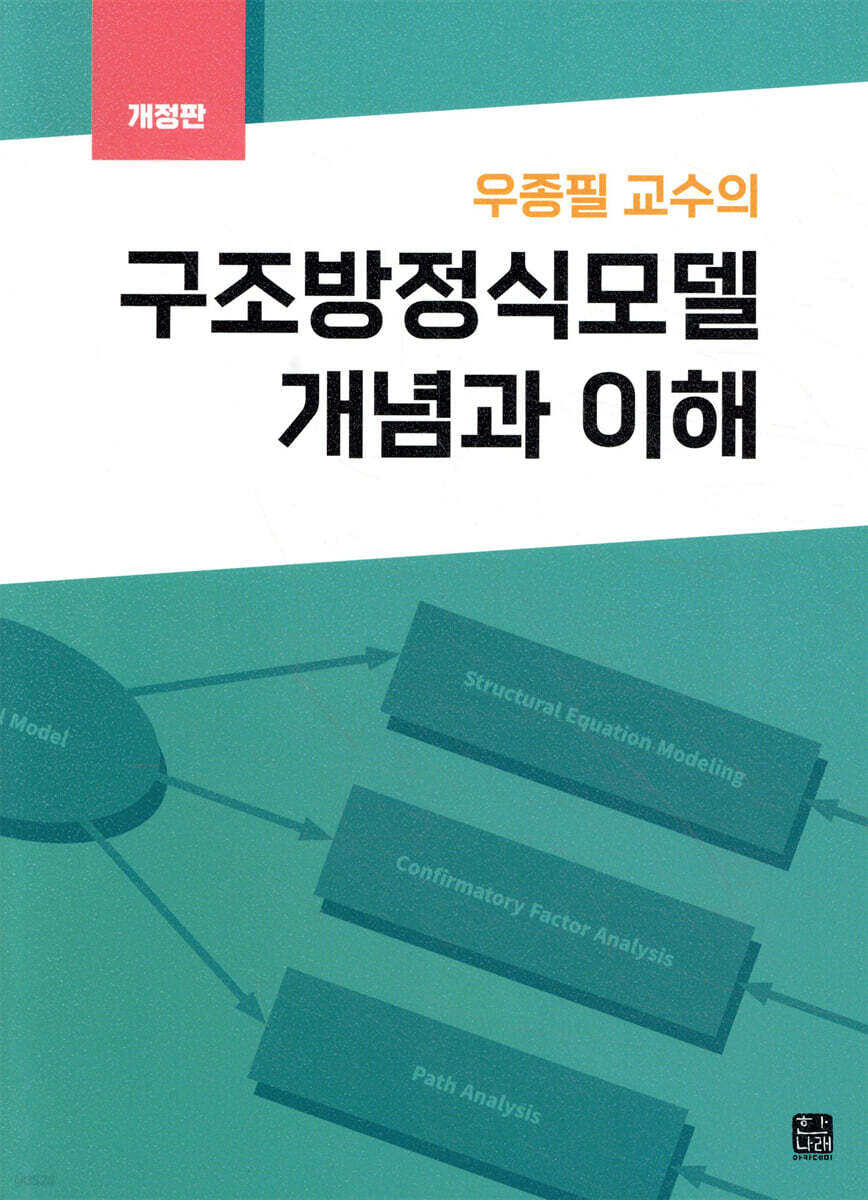
Professor Woo Jong-pil's Concept and Understanding of Structural Equation Models
 |
Description
Book Introduction
A to Z of structural equation models
A concept book systematically explained at a beginner's level
Since its publication in 2012, Professor Woo Jong-pil's "Concepts and Understanding of Structural Equation Models," which has been greatly loved by readers as a basic statistics textbook with "friendly concept explanations and various analysis cases," has released a revised edition.
In the revised edition, the strengths of the first edition were preserved while the content was refined and supplemented overall.
Specifically, we added content on the use of mediated moderation models, moderated mediation models, and control variables that were not included in the first edition (Chapter 12).
In addition, we added content that allows you to obtain the size of the indirect effect and the significance probability of each mediation path when there are two or more parameters using phantom variables (Chapter 14).
In addition, we added information on various types of latent growth curve models (broken latent growth curve, mediation effect, multi-group analysis, higher-order latent growth, higher-order growth mixture, etc.) to enable readers to understand structural equation models more deeply and perform analyses.
In short, 『Professor Woo Jong-pil's Concept and Understanding of Structural Equation Models』 is a 'concept book that systematically explains structural equation models from A to Z', and is not only suitable as a basic statistics textbook for social science departments, but it will also be very useful as a guidebook that guides beginners in statistics to gradually build their skills while studying on their own.
A concept book systematically explained at a beginner's level
Since its publication in 2012, Professor Woo Jong-pil's "Concepts and Understanding of Structural Equation Models," which has been greatly loved by readers as a basic statistics textbook with "friendly concept explanations and various analysis cases," has released a revised edition.
In the revised edition, the strengths of the first edition were preserved while the content was refined and supplemented overall.
Specifically, we added content on the use of mediated moderation models, moderated mediation models, and control variables that were not included in the first edition (Chapter 12).
In addition, we added content that allows you to obtain the size of the indirect effect and the significance probability of each mediation path when there are two or more parameters using phantom variables (Chapter 14).
In addition, we added information on various types of latent growth curve models (broken latent growth curve, mediation effect, multi-group analysis, higher-order latent growth, higher-order growth mixture, etc.) to enable readers to understand structural equation models more deeply and perform analyses.
In short, 『Professor Woo Jong-pil's Concept and Understanding of Structural Equation Models』 is a 'concept book that systematically explains structural equation models from A to Z', and is not only suitable as a basic statistics textbook for social science departments, but it will also be very useful as a guidebook that guides beginners in statistics to gradually build their skills while studying on their own.
index
ch.
1. Overview of structural equation models
1 What is a structural equation model?
2 Structural equation model program
3 Structural equation model variables
4 Examples of foreign car models
ch.
2. Characteristics of structural equation models
1. Use of latent variables and estimation of measurement error
2 Simultaneous estimation
3 Direct effect, indirect effect, total effect
4 Various statistical techniques
5 Various expressive techniques
ch.
3 Uses of Amos
1 Amos Start
2 Amos screen composition
3 Amos Practice
4 Amos Results Interpretation
ch.
4 Confirmatory factor analysis
1 Factor analysis
2 Confirmatory factor analysis and validity
3 Validation
ch.
5 Path Analysis
1 What is path analysis?
2 Verification of mediating effects
3 Decomposition of correlations
ch.
6 Structural equation model
1. Origin of structural equation models
2 Covariance matrix and correlation matrix
3 Reflection indicators and formative indicators
4. Model using reflection indicators and formative indicators
5 Two-Step Approach
ch.
7 Structural Equation Model Research Stage Ⅰ:
Hypothesis setting and questionnaire development
1 Hypothesis
2. Questionnaire Development
ch.
8 Structural Equation Model Research Stage II:
Data collection and inspection
1 Sample and test statistics
2 Appropriate sample size
3 missing values
4 outliers
5 Regularity
6 Input data
ch.
9 Structural Equation Model Research Stage Ⅲ:
concretization of the research model
1. Sum of items of the construct concept
2 Model Settings
3. Identification of models and parameters
Estimation of 4 models
ch.10 Structural Equation Model Research Stage IV:
Interpretation and fit verification of the model
Interpretation of Model 1
2 Model fit
ch.11 Structural Equation Model Research Stage V:
Modifying the model and determining the final model
1 Model Modification
2 Final model decision
ch.
12 Moderating and Interaction Effects
1 Moderating effect
2 Interaction effects
3-mediated moderation model
4. Moderated mediation model
5 Mediated moderation model with moderator variables
ch.
13 Multi-group analysis
1 Understanding Multi-Group Analysis
2 Multigroup confirmatory factor analysis
3 Multi-group path analysis
4 Multi-group structural equation model
5. Examples of multi-group analysis used in actual papers
ch.
14 Individual path indirect effects
1. Individual path indirect effects using phantom variables
2 Individual path indirect effects in structural equation models
3 Multiple independent variable model Individual path indirect effects
4 Complex model individual path indirect effects
ch.
15 Latent Mean Analysis
1 Morphological identity, matrix identity, and intercept identity
2 Latent Mean Analysis
ch.
16 Potential Growth Curve Model
1 Potential growth curve model
2 Potential growth curve model that is difficult to predict growth
3 Covariate Latent Growth Curve Model
4 Multivariate latent growth curve model
5 Nonlinear Growth Curve Model
6. The potential growth curve model with a curved shape
7. Mediating Effect of the Potential Growth Curve Model
8. Multi-group analysis of the latent growth curve model
9 Higher-order potential growth curve model
10 Higher-Order Growth Mixed Models
ch.
17 Other Analysis Techniques
1 Bayesian estimation
2 Model Setting Exploration
3. Comparison of coefficients between paths
ch.
18 Error Messages and Solutions
1. Overview of structural equation models
1 What is a structural equation model?
2 Structural equation model program
3 Structural equation model variables
4 Examples of foreign car models
ch.
2. Characteristics of structural equation models
1. Use of latent variables and estimation of measurement error
2 Simultaneous estimation
3 Direct effect, indirect effect, total effect
4 Various statistical techniques
5 Various expressive techniques
ch.
3 Uses of Amos
1 Amos Start
2 Amos screen composition
3 Amos Practice
4 Amos Results Interpretation
ch.
4 Confirmatory factor analysis
1 Factor analysis
2 Confirmatory factor analysis and validity
3 Validation
ch.
5 Path Analysis
1 What is path analysis?
2 Verification of mediating effects
3 Decomposition of correlations
ch.
6 Structural equation model
1. Origin of structural equation models
2 Covariance matrix and correlation matrix
3 Reflection indicators and formative indicators
4. Model using reflection indicators and formative indicators
5 Two-Step Approach
ch.
7 Structural Equation Model Research Stage Ⅰ:
Hypothesis setting and questionnaire development
1 Hypothesis
2. Questionnaire Development
ch.
8 Structural Equation Model Research Stage II:
Data collection and inspection
1 Sample and test statistics
2 Appropriate sample size
3 missing values
4 outliers
5 Regularity
6 Input data
ch.
9 Structural Equation Model Research Stage Ⅲ:
concretization of the research model
1. Sum of items of the construct concept
2 Model Settings
3. Identification of models and parameters
Estimation of 4 models
ch.10 Structural Equation Model Research Stage IV:
Interpretation and fit verification of the model
Interpretation of Model 1
2 Model fit
ch.11 Structural Equation Model Research Stage V:
Modifying the model and determining the final model
1 Model Modification
2 Final model decision
ch.
12 Moderating and Interaction Effects
1 Moderating effect
2 Interaction effects
3-mediated moderation model
4. Moderated mediation model
5 Mediated moderation model with moderator variables
ch.
13 Multi-group analysis
1 Understanding Multi-Group Analysis
2 Multigroup confirmatory factor analysis
3 Multi-group path analysis
4 Multi-group structural equation model
5. Examples of multi-group analysis used in actual papers
ch.
14 Individual path indirect effects
1. Individual path indirect effects using phantom variables
2 Individual path indirect effects in structural equation models
3 Multiple independent variable model Individual path indirect effects
4 Complex model individual path indirect effects
ch.
15 Latent Mean Analysis
1 Morphological identity, matrix identity, and intercept identity
2 Latent Mean Analysis
ch.
16 Potential Growth Curve Model
1 Potential growth curve model
2 Potential growth curve model that is difficult to predict growth
3 Covariate Latent Growth Curve Model
4 Multivariate latent growth curve model
5 Nonlinear Growth Curve Model
6. The potential growth curve model with a curved shape
7. Mediating Effect of the Potential Growth Curve Model
8. Multi-group analysis of the latent growth curve model
9 Higher-order potential growth curve model
10 Higher-Order Growth Mixed Models
ch.
17 Other Analysis Techniques
1 Bayesian estimation
2 Model Setting Exploration
3. Comparison of coefficients between paths
ch.
18 Error Messages and Solutions
Publisher's Review
▶ Build basic skills with clear concept explanations
By reducing complex formulas and difficult terms and focusing on clear explanations of structural equation modeling concepts, we aim to help beginners in statistics approach structural equation modeling with interest and build a solid foundation of basic skills.
At the end of each chapter, we have included a Q&A section with frequently asked questions and answers from Amos users.
▶ One model - solidifying analytical capabilities by applying various analysis methods.
The 'foreign car model' was used as a consistent example so that beginners could solidify their analytical skills by repeating a series of processes from 'data collection to analysis of the research model'.
This allows readers to understand the contents of the book with continuity.
▶ Revised edition with even richer content
The revised edition includes additional content on the use of mediated moderation models, moderated mediation models, and control variables, as well as the use of phantom variables and the analysis of various types of latent growth curve models.
This was intended to broaden readers' understanding of structural equation models and strengthen their analytical capabilities.
By reducing complex formulas and difficult terms and focusing on clear explanations of structural equation modeling concepts, we aim to help beginners in statistics approach structural equation modeling with interest and build a solid foundation of basic skills.
At the end of each chapter, we have included a Q&A section with frequently asked questions and answers from Amos users.
▶ One model - solidifying analytical capabilities by applying various analysis methods.
The 'foreign car model' was used as a consistent example so that beginners could solidify their analytical skills by repeating a series of processes from 'data collection to analysis of the research model'.
This allows readers to understand the contents of the book with continuity.
▶ Revised edition with even richer content
The revised edition includes additional content on the use of mediated moderation models, moderated mediation models, and control variables, as well as the use of phantom variables and the analysis of various types of latent growth curve models.
This was intended to broaden readers' understanding of structural equation models and strengthen their analytical capabilities.
GOODS SPECIFICS
- Date of issue: January 10, 2022
- Page count, weight, size: 656 pages | 188*257*35mm
- ISBN13: 9788955662573
- ISBN10: 8955662572
You may also like
카테고리
korean


korean

![GQ KOREA Mark (Monthly): December [2025]](http://librairie.coreenne.fr/cdn/shop/files/8ef265dbbfbf186523ed75ba7319009d.jpg?v=1765340328&width=3840)


