

School garden maintenance
 |
Description
Book Introduction
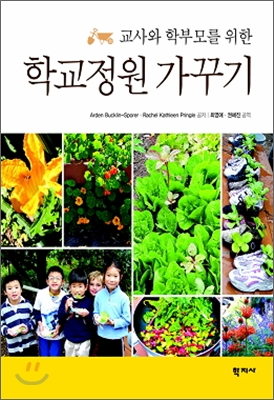
The school garden is a vibrant educational environment where students, teachers, and parents work together.
This book presents a concrete integrated education strategy using school gardening.
We've included tips and a list of activities for tasks and challenges that students can do in their school gardens to help them experience the wonder and joy that comes from working in the garden.
Parents and teachers will gain practical guidance by incorporating gardening into the curriculum.
This book presents a concrete integrated education strategy using school gardening.
We've included tips and a list of activities for tasks and challenges that students can do in their school gardens to help them experience the wonder and joy that comes from working in the garden.
Parents and teachers will gain practical guidance by incorporating gardening into the curriculum.
- You can preview some of the book's contents.
Preview
index
Translator's Preface
Author's Preface
introduction
1.
Why a school garden?
2.
Planning your preparations
3.
Get the most out of the land
4.
Digging the ground, budgeting, and fundraising
5.
Development of a school garden program
6.
Healthy Outdoor Classroom
7.
School Garden Management Guidelines
8.
Planting, harvesting, and cooking in the garden
9.
Year-round garden classes and activities
10.
10 Years in the School Garden
School Garden Recipes
California State Standards Education Content Examples
Related materials
References
Author's Preface
introduction
1.
Why a school garden?
2.
Planning your preparations
3.
Get the most out of the land
4.
Digging the ground, budgeting, and fundraising
5.
Development of a school garden program
6.
Healthy Outdoor Classroom
7.
School Garden Management Guidelines
8.
Planting, harvesting, and cooking in the garden
9.
Year-round garden classes and activities
10.
10 Years in the School Garden
School Garden Recipes
California State Standards Education Content Examples
Related materials
References
Into the book
The most important group that needs to gather opinions is, of course, students.
As with all aspects of the outdoor classroom, surveying student opinions is directly linked to the curriculum.
Encourage teachers to solicit feedback from students.
Teachers might ask students to draw what a perfect school garden would look like for an art assignment or write about it for a writing assignment.
Students will come up with brilliant ideas.
In addition to a frog pond or butterfly garden, they'll want a rocket launch pad, pastures for goats or horses (or unicorns, you never know), and most commonly, a swimming pool.
Involving students in this process will add enthusiasm and interest to the project.
We've seen outdoor seating where entire classes can gather together transform a garden into an outdoor classroom.
It provides a basic teaching space where the teacher stands in front of the students and explains the class activities or writes the lecture contents on an outdoor chalkboard.
Some gardens have auditorium-style seating, while others have students sit on cheap straw bales.
Whatever the material, make sure everyone is looking forward and focused on the lecture.
Additionally, shade or rain shelters are needed to protect students from the sun and rain.
Students have a hard time concentrating if they are not comfortable, so make sure to create a space where they can sit comfortably.
Another material from which inexpensive seats can be made is circular wooden boards.
You should look for something that doesn't leak sap.
As with all aspects of the outdoor classroom, surveying student opinions is directly linked to the curriculum.
Encourage teachers to solicit feedback from students.
Teachers might ask students to draw what a perfect school garden would look like for an art assignment or write about it for a writing assignment.
Students will come up with brilliant ideas.
In addition to a frog pond or butterfly garden, they'll want a rocket launch pad, pastures for goats or horses (or unicorns, you never know), and most commonly, a swimming pool.
Involving students in this process will add enthusiasm and interest to the project.
We've seen outdoor seating where entire classes can gather together transform a garden into an outdoor classroom.
It provides a basic teaching space where the teacher stands in front of the students and explains the class activities or writes the lecture contents on an outdoor chalkboard.
Some gardens have auditorium-style seating, while others have students sit on cheap straw bales.
Whatever the material, make sure everyone is looking forward and focused on the lecture.
Additionally, shade or rain shelters are needed to protect students from the sun and rain.
Students have a hard time concentrating if they are not comfortable, so make sure to create a space where they can sit comfortably.
Another material from which inexpensive seats can be made is circular wooden boards.
You should look for something that doesn't leak sap.
--- From the text
Publisher's Review
School gardens are part of an ecosystem that includes students and the school community.
Teachers, parents, students, soil microbes, plant material, spores, maggots, crickets, snails, and weather systems are all main actors on the stage of the school garden, influencing each other and even competing for space.
Of course, every garden is different and grows from the roots of the school community's efforts.
This book is directly aimed at parents, as they are the driving force behind change in the school playground.
Teachers are also crucial to the success of this project, and we hope this book will inspire educators to incorporate school gardens into their lessons and encourage parents to participate meaningfully in school garden projects, leading to better school communities.
School gardens are maintained through intensive efforts by many people.
"School Gardening" is a future-oriented teaching strategy that fosters truly integrated education, a process-oriented attitude, and comprehensive understanding, fostering creative thinking and fostering new Renaissance people.
I sincerely recommend this book, hoping that "School Garden," which "naturally" connects nature and scholarship, life and knowledge, will serve as a valuable clue to restoring our identity and fostering great figures like Dasan Jeong Yak-yong, who created countless creative works with an integrated perspective.
Teachers, parents, students, soil microbes, plant material, spores, maggots, crickets, snails, and weather systems are all main actors on the stage of the school garden, influencing each other and even competing for space.
Of course, every garden is different and grows from the roots of the school community's efforts.
This book is directly aimed at parents, as they are the driving force behind change in the school playground.
Teachers are also crucial to the success of this project, and we hope this book will inspire educators to incorporate school gardens into their lessons and encourage parents to participate meaningfully in school garden projects, leading to better school communities.
School gardens are maintained through intensive efforts by many people.
"School Gardening" is a future-oriented teaching strategy that fosters truly integrated education, a process-oriented attitude, and comprehensive understanding, fostering creative thinking and fostering new Renaissance people.
I sincerely recommend this book, hoping that "School Garden," which "naturally" connects nature and scholarship, life and knowledge, will serve as a valuable clue to restoring our identity and fostering great figures like Dasan Jeong Yak-yong, who created countless creative works with an integrated perspective.
GOODS SPECIFICS
- Date of issue: July 30, 2011
- Pages, weight, size: 239 pages | 672g | 210*297*20mm
- ISBN13: 9788963307121
- ISBN10: 8963307123
You may also like
카테고리
korean


korean

![ELLE 엘르 스페셜 에디션 A형 : 12월 [2025]](http://librairie.coreenne.fr/cdn/shop/files/b8e27a3de6c9538896439686c6b0e8fb.jpg?v=1766436872&width=3840)


