

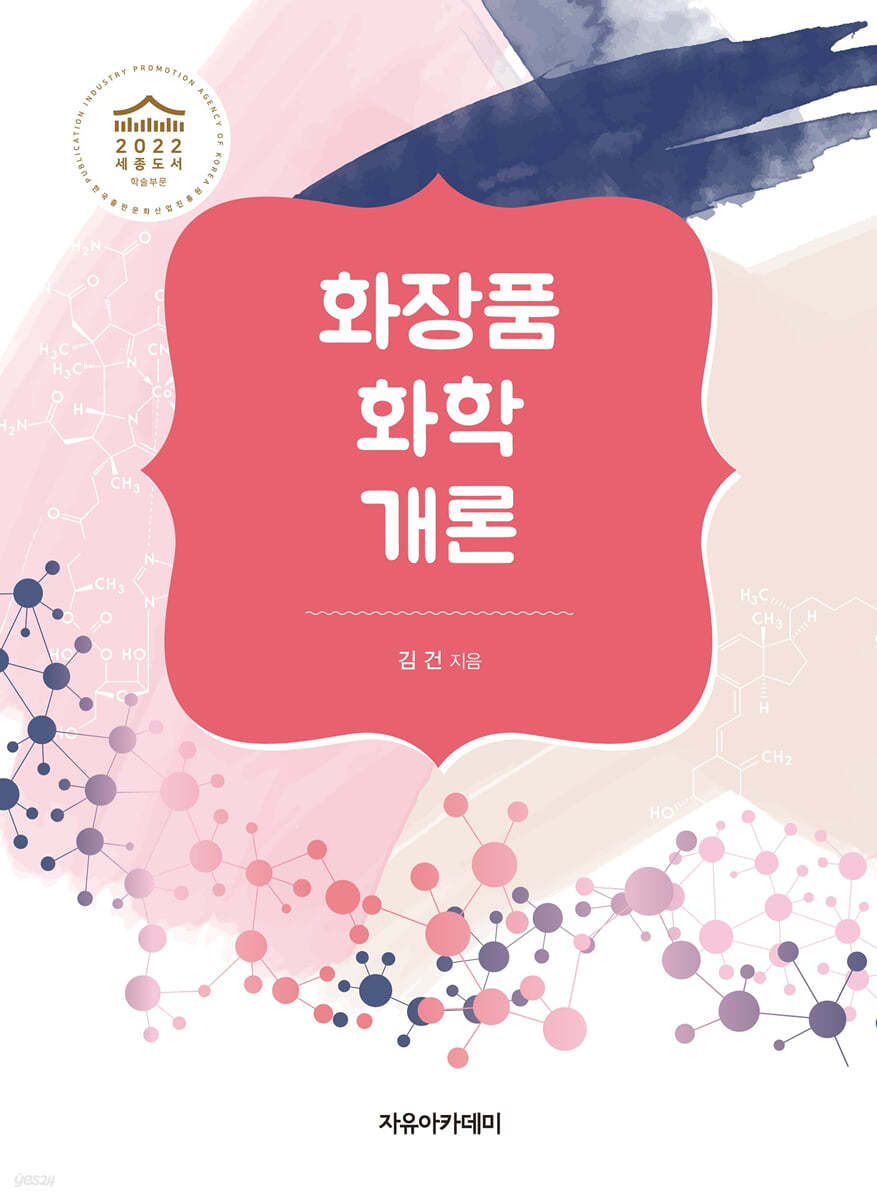
Introduction to Cosmetic Chemistry
 |
Description
Book Introduction
Cosmetics are finished products made by mixing various raw materials, and the functions required for the product must be maintained from the time of production until the consumer uses it.
Amidst the flood of information about the functions and ingredients of cosmetics, choosing the right one for you can be quite a challenge. To do this, it is necessary to properly understand the ingredients, formulation, amount, and purpose of use of the cosmetics.
This textbook attempts to interpret the raw materials, ingredients, formulations, and functions required for cosmetics from a chemical perspective.
Additionally, the topic of cosmetic waste, including cosmetic raw materials and containers, was covered to raise environmental awareness in terms of human sustainability.
Amidst the flood of information about the functions and ingredients of cosmetics, choosing the right one for you can be quite a challenge. To do this, it is necessary to properly understand the ingredients, formulation, amount, and purpose of use of the cosmetics.
This textbook attempts to interpret the raw materials, ingredients, formulations, and functions required for cosmetics from a chemical perspective.
Additionally, the topic of cosmetic waste, including cosmetic raw materials and containers, was covered to raise environmental awareness in terms of human sustainability.
- You can preview some of the book's contents.
Preview
index
Chapter 1 Cosmetic Chemistry
01 Definition of Cosmetics
02 Requirements for cosmetics
03 Classification of cosmetics
04 Composition of cosmetics
05 Cosmetic Raw Material Ingredients Nomenclature
Chapter 2: The History of Makeup
01 History of Makeup and Cosmetics
02 Humans and Makeup
03 History of Makeup on the Korean Peninsula
04 History of Western Makeup
Chapter 3: Structure of the Skin and Physiology of Hair
01 Skin composition
02 Skin Function
03 Skin and Sunlight
04 Skin aging
05 Skin Type
06 Skin Hydration
07 Hair Physiology
Chapter 4 Physical Chemistry of Cosmetics I: Interface Chemistry
01 Basics of Interface Chemistry
02 Characteristics of surfactants
03 Classification of surfactants
04 HLB of surfactant
05 Solubility of surfactants
06 Characteristics of surfactant solutions
Chapter 5 Physical Chemistry of Cosmetics I: Colloids
01 Availability
02 Solubilizer
03 Dispersion
04 Emulsion
Chapter 6 Cosmetic Gels
01 Fluidics
02 Types of forces acting on fluids
03 Types of fluids
04 Rheology modifier for cosmetics
Chapter 7 Water in Cosmetics
01 Water
02 Chemical properties of water
03 Amount and concentration of compounds in water
04 Solubility of ionic compounds
05 Gases dissolved in water
06 Properties of water
07 Types of water
08 Water Purification Method
09 Purified water in the Cosmetics Act
Chapter 8 Oil-Based Ingredients in Cosmetics
01 Lipophilic ingredients
02 Chemical characteristics of lipophilic components
03 Characteristics of lipophilic ingredients in cosmetic ingredients
04 Types of lipophilic ingredients
05 Classification of oil components
06 Representative cosmetic oil-based raw materials
07 Silicone Oil
08 Ceramide
09 Fatty Acid Esters
Chapter 9 Water-Based Ingredients in Cosmetics
01 Conditions of moisturizing ingredients
02 Main moisturizing ingredients used as cosmetic raw materials
Chapter 10 Color and Fragrance of Cosmetics
01 Color
02 Fragrance
References
Search
01 Definition of Cosmetics
02 Requirements for cosmetics
03 Classification of cosmetics
04 Composition of cosmetics
05 Cosmetic Raw Material Ingredients Nomenclature
Chapter 2: The History of Makeup
01 History of Makeup and Cosmetics
02 Humans and Makeup
03 History of Makeup on the Korean Peninsula
04 History of Western Makeup
Chapter 3: Structure of the Skin and Physiology of Hair
01 Skin composition
02 Skin Function
03 Skin and Sunlight
04 Skin aging
05 Skin Type
06 Skin Hydration
07 Hair Physiology
Chapter 4 Physical Chemistry of Cosmetics I: Interface Chemistry
01 Basics of Interface Chemistry
02 Characteristics of surfactants
03 Classification of surfactants
04 HLB of surfactant
05 Solubility of surfactants
06 Characteristics of surfactant solutions
Chapter 5 Physical Chemistry of Cosmetics I: Colloids
01 Availability
02 Solubilizer
03 Dispersion
04 Emulsion
Chapter 6 Cosmetic Gels
01 Fluidics
02 Types of forces acting on fluids
03 Types of fluids
04 Rheology modifier for cosmetics
Chapter 7 Water in Cosmetics
01 Water
02 Chemical properties of water
03 Amount and concentration of compounds in water
04 Solubility of ionic compounds
05 Gases dissolved in water
06 Properties of water
07 Types of water
08 Water Purification Method
09 Purified water in the Cosmetics Act
Chapter 8 Oil-Based Ingredients in Cosmetics
01 Lipophilic ingredients
02 Chemical characteristics of lipophilic components
03 Characteristics of lipophilic ingredients in cosmetic ingredients
04 Types of lipophilic ingredients
05 Classification of oil components
06 Representative cosmetic oil-based raw materials
07 Silicone Oil
08 Ceramide
09 Fatty Acid Esters
Chapter 9 Water-Based Ingredients in Cosmetics
01 Conditions of moisturizing ingredients
02 Main moisturizing ingredients used as cosmetic raw materials
Chapter 10 Color and Fragrance of Cosmetics
01 Color
02 Fragrance
References
Search
Detailed image

Publisher's Review
Makeup contributes greatly to improving the quality of our daily lives.
Recently, the Korean cosmetics industry has grown so much that the term K-beauty has become common.
Going forward, Korea's cosmetics industry will continue to evolve through convergence with beauty, chemistry, life sciences, medicine, engineering, and AI.
Makeup reflects new cultural trends that emerge with the times.
By comparing the magical makeup of ancient times, the ascetic makeup of the Middle Ages, and the extravagant makeup of the Renaissance, we can understand how makeup has changed according to the flow of cultural trends of the times.
This textbook also covers the history of cosmetics, allowing students interested in cosmetology to examine the direction of change in cosmetics based on an understanding of cultural change.
Cosmetics are finished products made by mixing various raw materials, and the functions required for the product must be maintained from the time of production until the consumer uses it.
Amidst the flood of information about the functions and ingredients of cosmetics, choosing the right one for you can be quite a challenge. To do this, it is necessary to properly understand the ingredients, formulation, amount, and purpose of use of the cosmetics.
This textbook attempts to interpret the raw materials, ingredients, formulations, and functions required for cosmetics from a chemical perspective.
Additionally, the topic of cosmetic waste, including cosmetic raw materials and containers, was covered to raise environmental awareness in terms of human sustainability.
We have tried to create a good textbook, but there may be some shortcomings.
We ask for the readers' understanding on this point. Even if you have not majored in chemistry, you should not worry too much as the content is written in a way that you can fully understand it if you read the textbook carefully.
Please note that any future revisions or supplements will be posted on the Free Academy website's data room (www.freeaca.com).
Recently, the Korean cosmetics industry has grown so much that the term K-beauty has become common.
Going forward, Korea's cosmetics industry will continue to evolve through convergence with beauty, chemistry, life sciences, medicine, engineering, and AI.
Makeup reflects new cultural trends that emerge with the times.
By comparing the magical makeup of ancient times, the ascetic makeup of the Middle Ages, and the extravagant makeup of the Renaissance, we can understand how makeup has changed according to the flow of cultural trends of the times.
This textbook also covers the history of cosmetics, allowing students interested in cosmetology to examine the direction of change in cosmetics based on an understanding of cultural change.
Cosmetics are finished products made by mixing various raw materials, and the functions required for the product must be maintained from the time of production until the consumer uses it.
Amidst the flood of information about the functions and ingredients of cosmetics, choosing the right one for you can be quite a challenge. To do this, it is necessary to properly understand the ingredients, formulation, amount, and purpose of use of the cosmetics.
This textbook attempts to interpret the raw materials, ingredients, formulations, and functions required for cosmetics from a chemical perspective.
Additionally, the topic of cosmetic waste, including cosmetic raw materials and containers, was covered to raise environmental awareness in terms of human sustainability.
We have tried to create a good textbook, but there may be some shortcomings.
We ask for the readers' understanding on this point. Even if you have not majored in chemistry, you should not worry too much as the content is written in a way that you can fully understand it if you read the textbook carefully.
Please note that any future revisions or supplements will be posted on the Free Academy website's data room (www.freeaca.com).
GOODS SPECIFICS
- Date of issue: January 5, 2022
- Page count, weight, size: 216 pages | 188*257*20mm
- ISBN13: 9791158083281
- ISBN10: 1158083289
You may also like
카테고리
korean


korean

![ELLE 엘르 스페셜 에디션 A형 : 12월 [2025]](http://librairie.coreenne.fr/cdn/shop/files/b8e27a3de6c9538896439686c6b0e8fb.jpg?v=1766436872&width=3840)


