

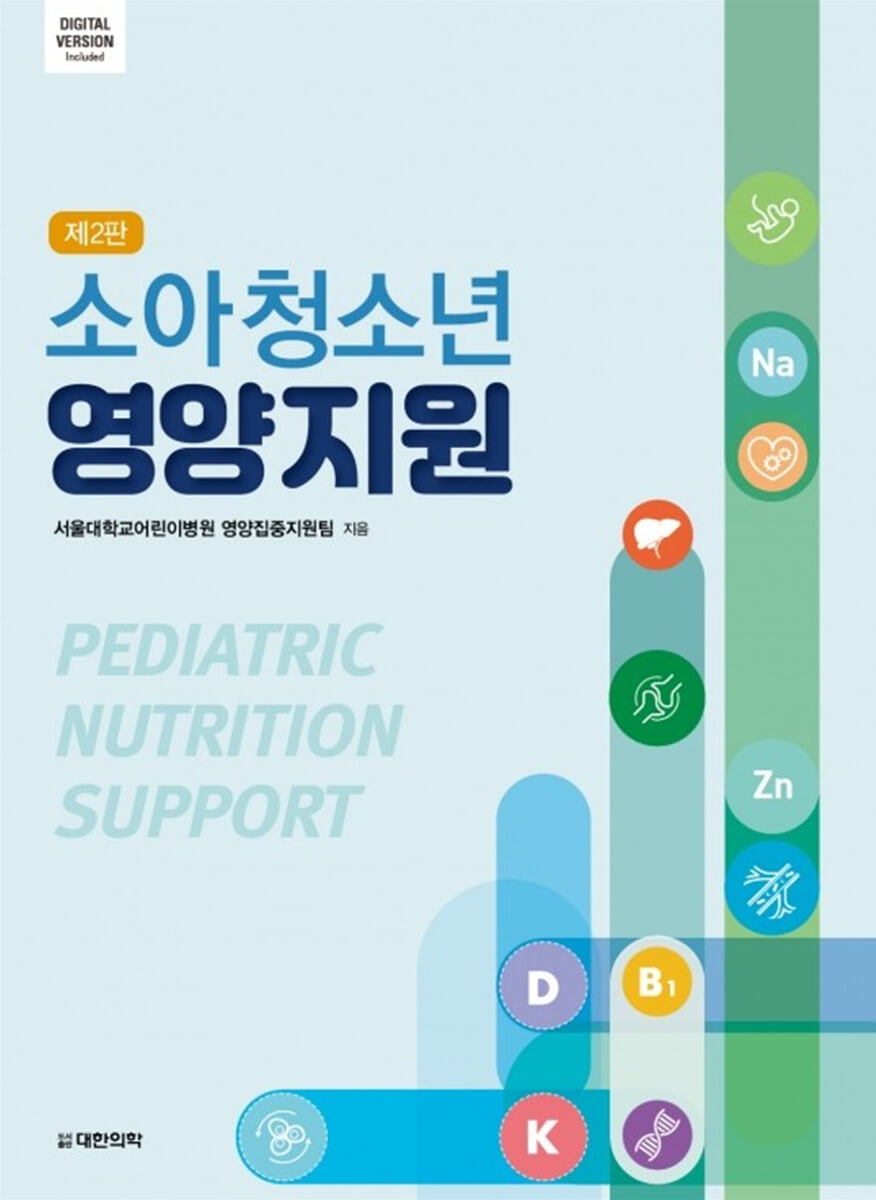
Nutrition support for children and adolescents
 |
Description
Book Introduction
NST Children's Hospital felt the need for a booklet that systematically guides nutritional support for newborns, children, and adolescents while studying together, and published "Nutritional Support for Children and Adolescents" in 2012.
It has been nine years since the guidelines were published, and in that time, new parenteral nutrition products have been developed and new research on nutritional support has been published.
In addition, new nutritional support guidelines have been published by the Nutrition Societies of North America and Europe, the nutritional support content of Seoul National University Hospital NST is also changing, and the number of patients receiving parenteral nutrition (home PN) at home is increasing.
Therefore, the need to issue a revised edition of the guidelines has arisen based on new information and guidelines.
Part 1 of 『Nutritional Support for Children and Adolescents』 introduces the composition and work of the NST, and Parts 2 and 3 separately organize nutritional assessment, nutritional requirements, enteral nutrition, and parenteral nutrition for newborns and children and adolescents, including examples. Part 4 describes the specifics of nutritional support for individual diseases in children and adolescents.
It has been nine years since the guidelines were published, and in that time, new parenteral nutrition products have been developed and new research on nutritional support has been published.
In addition, new nutritional support guidelines have been published by the Nutrition Societies of North America and Europe, the nutritional support content of Seoul National University Hospital NST is also changing, and the number of patients receiving parenteral nutrition (home PN) at home is increasing.
Therefore, the need to issue a revised edition of the guidelines has arisen based on new information and guidelines.
Part 1 of 『Nutritional Support for Children and Adolescents』 introduces the composition and work of the NST, and Parts 2 and 3 separately organize nutritional assessment, nutritional requirements, enteral nutrition, and parenteral nutrition for newborns and children and adolescents, including examples. Part 4 describes the specifics of nutritional support for individual diseases in children and adolescents.
index
index
1 Introduction to NST
1.
definition
2.
composition
3.
Division of work
4.
Workflow
5.
Main activities
2 newborns
2-1.
Nutritional assessment
1.
Weight changes during early postnatal life
2.
Growth after birth weight recovery
3.
growth retardation
2-2.
Nutritional requirements
1.
energy
2.
moisture
3.
carbohydrate
4.
protein
5.
province
6.
vitamin
7.
minerals
8.
Nutritional Considerations in Neonatal Intensive Care
2-3.
Enteral nutrition
1.
Enteral nutrition
2.
Minimal enteral nutrition
3.
Enteral nutrition prescription
4.
Monitoring
5.
Enteral feeding tube management
6.
Enteral nutrition management
7.
Prevention of complications
2-4.
intravenous nutrition
1.
Intravenous nutrition
2.
Intravenous nutrition prescription
3.
Monitoring
4.
Parenteral feeding tube management
5.
Intravenous nutrition infusion set management
6.
Prevention of complications
3 Children and adolescents
3-1.
Nutritional assessment
1.
Initial nutritional assessment
2.
In-depth nutritional assessment
3.
Evaluation of growth retardation and developmental disorders
3-2.
Nutritional requirements
1.
energy
2.
Water and basic electrolytes
3.
carbohydrate
4.
protein, amino acids
5.
province
6.
Vitamins and minerals
3-3.
Enteral nutrition
1.
Enteral nutrition
2.
Indications for enteral nutrition
3.
Enteral nutrition route selection
4.
Enteral nutrition injection method
5.
Enteral nutrition prescription
6.
Monitoring
7.
Enteral feeding tube management
8.
Prevention of complications
9.
Home EN
3-4.
parenteral nutrition
1.
Intravenous nutrition
2.
Indications for parenteral nutrition
3.
Choosing a parenteral nutrition route
4.
Intravenous nutrition infusion method
5.
Intravenous nutrition prescription
6.
Periodic parenteral nutrition
7.
Monitoring
8.
Parenteral feeding tube management
9.
Prevention of complications
10.
Home PN
4 Nutritional support for children and adolescents by disease
1.
bronchopulmonary dysplasia
2.
short bowel syndrome
3.
inflammatory bowel disease
4.
chronic diarrhea
5.
liver disease
6.
congenital heart disease
7.
chronic kidney disease
8.
Oncological diseases
9.
congenital metabolic diseases
10.
severe illness
11.
neurological disorders
Appendix 1.
Composition of breast milk and formula milk
Appendix 2.
Children and Adolescent Physical Development Standards (2017)
Appendix 3.
Nutritional Intake Standards for Koreans Under 18 Years of Age (2020)
Appendix 4.
Triceps skinfold thickness measurements in children and adolescents
Appendix 5.
Pediatric Nutrition Questionnaire Form Example
Search
1 Introduction to NST
1.
definition
2.
composition
3.
Division of work
4.
Workflow
5.
Main activities
2 newborns
2-1.
Nutritional assessment
1.
Weight changes during early postnatal life
2.
Growth after birth weight recovery
3.
growth retardation
2-2.
Nutritional requirements
1.
energy
2.
moisture
3.
carbohydrate
4.
protein
5.
province
6.
vitamin
7.
minerals
8.
Nutritional Considerations in Neonatal Intensive Care
2-3.
Enteral nutrition
1.
Enteral nutrition
2.
Minimal enteral nutrition
3.
Enteral nutrition prescription
4.
Monitoring
5.
Enteral feeding tube management
6.
Enteral nutrition management
7.
Prevention of complications
2-4.
intravenous nutrition
1.
Intravenous nutrition
2.
Intravenous nutrition prescription
3.
Monitoring
4.
Parenteral feeding tube management
5.
Intravenous nutrition infusion set management
6.
Prevention of complications
3 Children and adolescents
3-1.
Nutritional assessment
1.
Initial nutritional assessment
2.
In-depth nutritional assessment
3.
Evaluation of growth retardation and developmental disorders
3-2.
Nutritional requirements
1.
energy
2.
Water and basic electrolytes
3.
carbohydrate
4.
protein, amino acids
5.
province
6.
Vitamins and minerals
3-3.
Enteral nutrition
1.
Enteral nutrition
2.
Indications for enteral nutrition
3.
Enteral nutrition route selection
4.
Enteral nutrition injection method
5.
Enteral nutrition prescription
6.
Monitoring
7.
Enteral feeding tube management
8.
Prevention of complications
9.
Home EN
3-4.
parenteral nutrition
1.
Intravenous nutrition
2.
Indications for parenteral nutrition
3.
Choosing a parenteral nutrition route
4.
Intravenous nutrition infusion method
5.
Intravenous nutrition prescription
6.
Periodic parenteral nutrition
7.
Monitoring
8.
Parenteral feeding tube management
9.
Prevention of complications
10.
Home PN
4 Nutritional support for children and adolescents by disease
1.
bronchopulmonary dysplasia
2.
short bowel syndrome
3.
inflammatory bowel disease
4.
chronic diarrhea
5.
liver disease
6.
congenital heart disease
7.
chronic kidney disease
8.
Oncological diseases
9.
congenital metabolic diseases
10.
severe illness
11.
neurological disorders
Appendix 1.
Composition of breast milk and formula milk
Appendix 2.
Children and Adolescent Physical Development Standards (2017)
Appendix 3.
Nutritional Intake Standards for Koreans Under 18 Years of Age (2020)
Appendix 4.
Triceps skinfold thickness measurements in children and adolescents
Appendix 5.
Pediatric Nutrition Questionnaire Form Example
Search
Publisher's Review
It is very important to provide adequate nutrition to children and adolescents who are growing and developing, but many pediatric patients hospitalized suffer from malnutrition and obesity (malnutrition).
This malnutrition not only increases morbidity and mortality, but also prolongs hospital stays.
To assess patients' nutritional status and ensure appropriate nutrition, a multidisciplinary nutritional support team (NST) consisting of physicians, nutritionists, pharmacists, and nurses is essential. NSTs effectively provide nutrition to patients requiring enteral or parenteral nutrition, promoting rapid recovery and preventing and monitoring complications.
At Seoul National University Children's Hospital, since 1996, physicians, nutritionists, and pharmacists from the Pediatric Gastroenterology and Nutrition Division have come together to present cases, provide nutritional support, and review journal articles. In September 2010, the Children's Hospital NST was newly established, bringing together the various sub-branches of the Department of Pediatrics and Adolescent Medicine, the Department of Pediatric Surgery, the Neonatal Intensive Care Unit, the Pediatric Intensive Care Unit, the Department of Pharmacy, the Department of Food and Nutrition, and the Nursing Department. The NST establishes effective nutritional support plans for individual patients, promotes collaboration among departments through rounds, acquires the latest information through conferences and workshops, and conducts team-level nutrition-related research, resulting in the publication of papers.
Since the introduction of NST fees under the National Health Insurance Service in 2014, many hospitals have established NSTs.
The number of teachers completing training programs on nutritional support knowledge and the specific tasks of NST is increasing, and accurate information on nutritional support for children and adolescents is needed.
NST Children's Hospital felt the need for a booklet that systematically guides nutritional support for newborns, children, and adolescents while studying together, and published "Nutritional Support for Children and Adolescents" in 2012.
It has been nine years since the guidelines were published, and in that time, new parenteral nutrition products have been developed and new research on nutritional support has been published.
In addition, new nutritional support guidelines have been published by the Nutrition Societies of North America and Europe, the nutritional support content of Seoul National University Hospital NST is also changing, and the number of patients receiving parenteral nutrition (home PN) at home is increasing.
Therefore, the need to issue a revised edition of the guidelines has arisen based on new information and guidelines.
Part 1 of this book introduces the structure and work of the NST, and Parts 2 and 3 separately organize nutritional assessment, nutritional requirements, enteral nutrition, and parenteral nutrition for newborns and adolescents, including case studies. Part 4 describes the specifics of nutritional support for individual diseases in children and adolescents.
We hope that this revised edition will be of practical help to those interested in nutritional support for children and adolescents.
We would like to express our deepest gratitude to the NST team members who took time out of their busy schedules to write this manuscript.
August 2021
Go Jae-seong, NST Team Leader, Seoul National University Children's Hospital
This malnutrition not only increases morbidity and mortality, but also prolongs hospital stays.
To assess patients' nutritional status and ensure appropriate nutrition, a multidisciplinary nutritional support team (NST) consisting of physicians, nutritionists, pharmacists, and nurses is essential. NSTs effectively provide nutrition to patients requiring enteral or parenteral nutrition, promoting rapid recovery and preventing and monitoring complications.
At Seoul National University Children's Hospital, since 1996, physicians, nutritionists, and pharmacists from the Pediatric Gastroenterology and Nutrition Division have come together to present cases, provide nutritional support, and review journal articles. In September 2010, the Children's Hospital NST was newly established, bringing together the various sub-branches of the Department of Pediatrics and Adolescent Medicine, the Department of Pediatric Surgery, the Neonatal Intensive Care Unit, the Pediatric Intensive Care Unit, the Department of Pharmacy, the Department of Food and Nutrition, and the Nursing Department. The NST establishes effective nutritional support plans for individual patients, promotes collaboration among departments through rounds, acquires the latest information through conferences and workshops, and conducts team-level nutrition-related research, resulting in the publication of papers.
Since the introduction of NST fees under the National Health Insurance Service in 2014, many hospitals have established NSTs.
The number of teachers completing training programs on nutritional support knowledge and the specific tasks of NST is increasing, and accurate information on nutritional support for children and adolescents is needed.
NST Children's Hospital felt the need for a booklet that systematically guides nutritional support for newborns, children, and adolescents while studying together, and published "Nutritional Support for Children and Adolescents" in 2012.
It has been nine years since the guidelines were published, and in that time, new parenteral nutrition products have been developed and new research on nutritional support has been published.
In addition, new nutritional support guidelines have been published by the Nutrition Societies of North America and Europe, the nutritional support content of Seoul National University Hospital NST is also changing, and the number of patients receiving parenteral nutrition (home PN) at home is increasing.
Therefore, the need to issue a revised edition of the guidelines has arisen based on new information and guidelines.
Part 1 of this book introduces the structure and work of the NST, and Parts 2 and 3 separately organize nutritional assessment, nutritional requirements, enteral nutrition, and parenteral nutrition for newborns and adolescents, including case studies. Part 4 describes the specifics of nutritional support for individual diseases in children and adolescents.
We hope that this revised edition will be of practical help to those interested in nutritional support for children and adolescents.
We would like to express our deepest gratitude to the NST team members who took time out of their busy schedules to write this manuscript.
August 2021
Go Jae-seong, NST Team Leader, Seoul National University Children's Hospital
GOODS SPECIFICS
- Date of issue: August 25, 2021
- Format: Hardcover book binding method guide
- Page count, weight, size: 260 pages | 188*257*20mm
- ISBN13: 9791155901984
- ISBN10: 1155901983
You may also like
카테고리
korean


korean

![ELLE 엘르 스페셜 에디션 A형 : 12월 [2025]](http://librairie.coreenne.fr/cdn/shop/files/b8e27a3de6c9538896439686c6b0e8fb.jpg?v=1766436872&width=3840)


