

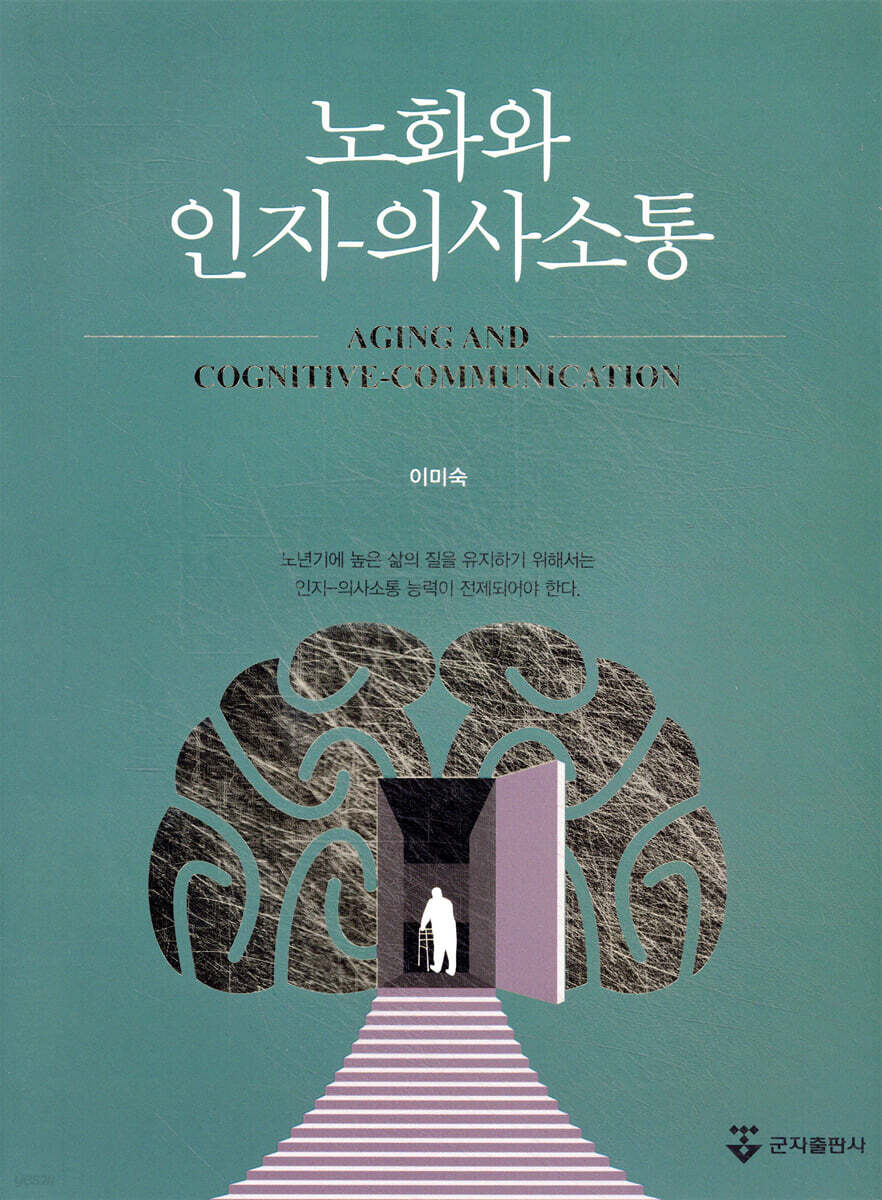
Aging and Cognitive-Communication
 |
Description
Book Introduction
This book started from the current state of the aging population and the various demands that come with it.
Above all, we aimed to provide theoretical and clinical foundational data for addressing cognitive-communication problems caused by aging in speech-language pathology.
It can also be used as a reference material for experts in related fields such as rehabilitation, psychology, gerontology, and social welfare.
It can also be helpful for older adults and their families who are facing or preparing for cognitive and communication changes due to aging, as well as for the general public interested in cognition and language in older adults.
Above all, we aimed to provide theoretical and clinical foundational data for addressing cognitive-communication problems caused by aging in speech-language pathology.
It can also be used as a reference material for experts in related fields such as rehabilitation, psychology, gerontology, and social welfare.
It can also be helpful for older adults and their families who are facing or preparing for cognitive and communication changes due to aging, as well as for the general public interested in cognition and language in older adults.
index
Chapter 01 The Basics of Aging
1.
Demographic Basis of Aging
2.
Definition and Neurological Basis of Aging
3.
Research methods for aging
4.
Aging and Cognitive-Linguistic Theories
1) Changes in intellectual structure
2) Frontal lobe hypothesis
3) Overall speed reduction hypothesis
4) Sensory defect hypothesis
5) Cognitive preservation ability
References
Chapter 02 Aging and Cognition
1.
Aging and Attention
2.
Aging and Memory
3.
Aging and Higher-Order Cognition
4.
Changes in cognition and daily functioning
5.
Factors influencing cognitive decline
References
Chapter 03 Aging and Communication
1.
Aging and Vocabulary-Meaning
2.
Aging and morpho-syntax
3.
Aging and Phoneme-Articulation
4.
Aging and Pragmatics
5.
Aging and Reading and Writing
6.
Correlation between cognition and communication
References
Chapter 04 Aging and Cognitive-Communicative Disorders
1.
subjective appeal
2.
mild cognitive impairment
3.
dementia
4.
Other disabilities
References
Chapter 05 Aging and Cognitive-Communicative Assessment
1.
Cognitive assessment
2.
Communication Assessment
3.
Subjective Cognitive-Communicative Assessment
4.
Other evaluations
References
Chapter 06 Cognitive-Communication Interventions for the Elderly
1.
The Need for Cognitive-Communicative Mediation
2.
Cognitive-Communicative Mediation Methods
1) Arbitration method
2) Mediation task
3.
The effectiveness of cognitive-communication interventions
References
Chapter 07 Quality of Life and Cognitive-Communicative Abilities in Old Age
1.
Aging and Quality of Life
2.
Correlation between quality of life and cognitive-communication
3.
Communication-related quality of life
1) Concept
2) Influencing factors
References
Search
1.
Demographic Basis of Aging
2.
Definition and Neurological Basis of Aging
3.
Research methods for aging
4.
Aging and Cognitive-Linguistic Theories
1) Changes in intellectual structure
2) Frontal lobe hypothesis
3) Overall speed reduction hypothesis
4) Sensory defect hypothesis
5) Cognitive preservation ability
References
Chapter 02 Aging and Cognition
1.
Aging and Attention
2.
Aging and Memory
3.
Aging and Higher-Order Cognition
4.
Changes in cognition and daily functioning
5.
Factors influencing cognitive decline
References
Chapter 03 Aging and Communication
1.
Aging and Vocabulary-Meaning
2.
Aging and morpho-syntax
3.
Aging and Phoneme-Articulation
4.
Aging and Pragmatics
5.
Aging and Reading and Writing
6.
Correlation between cognition and communication
References
Chapter 04 Aging and Cognitive-Communicative Disorders
1.
subjective appeal
2.
mild cognitive impairment
3.
dementia
4.
Other disabilities
References
Chapter 05 Aging and Cognitive-Communicative Assessment
1.
Cognitive assessment
2.
Communication Assessment
3.
Subjective Cognitive-Communicative Assessment
4.
Other evaluations
References
Chapter 06 Cognitive-Communication Interventions for the Elderly
1.
The Need for Cognitive-Communicative Mediation
2.
Cognitive-Communicative Mediation Methods
1) Arbitration method
2) Mediation task
3.
The effectiveness of cognitive-communication interventions
References
Chapter 07 Quality of Life and Cognitive-Communicative Abilities in Old Age
1.
Aging and Quality of Life
2.
Correlation between quality of life and cognitive-communication
3.
Communication-related quality of life
1) Concept
2) Influencing factors
References
Search
Publisher's Review
Aging is a natural process of life and a major transition in life.
As we enter an aging society, its importance is being highlighted at a societal level, but the ultimate goal is an old age in which a high quality of life is guaranteed.
To maintain a high quality of life in old age, various factors must be considered.
For example, physical and psychological health, a certain level of financial stability, and social support and assistance contribute to maintaining a basic quality of life.
The desire to fulfill self-esteem, identity, self-actualization, and social achievement also persists into old age.
The increasing number of older people who wish to switch to a new career or extend their working life after retirement is in the same context.
In short, maintaining a high quality of life requires not only basic needs but also psychosocial satisfaction.
Cognitive-communication skills are essential prerequisites for achieving this.
This book started from the current state of the aging population and the various demands that come with it.
Above all, we aimed to provide theoretical and clinical foundational data for addressing cognitive-communication problems caused by aging in speech-language pathology.
It can also be used as a reference material for experts in related fields such as rehabilitation, psychology, gerontology, and social welfare.
It can also be helpful for older adults and their families who are facing or preparing for cognitive and communication changes due to aging, as well as for the general public interested in cognition and language in older adults.
This book consists of a total of seven chapters.
Chapter 1 examines basic concepts and theories for understanding aging.
This includes the current status and demographic basis of aging, the definition and neurological basis of aging, methodologies for aging research, and various theories on aging and cognitive-linguistics.
Chapter 2 introduces the cognitive effects of aging, including changes in attention, memory, higher-order cognition, daily function, and influencing factors.
Chapter 3 examines the aspects of communication in aging, dividing them into the areas of vocabulary-semantics, morphology-syntax, phonology-articulation, pragmatics, and reading and writing, and illuminates the correlation between cognition and communication based on various previous studies.
Chapter 4 introduces cognitive-communication disorders that can appear in old age, such as subjective complaints, mild cognitive impairment, dementia, and other disorders.
Chapter 5 focuses on methods for assessing cognitive-communicative aspects of older adults.
This is presented in detail, divided into cognitive, communication, subjective cognitive-communication, and other areas.
Chapter 6 examines approaches to cognitive-communication interventions for older adults in terms of necessity, methods, challenges, and effectiveness.
Finally, Chapter 7 examines the issue of quality of life in old age from a cognitive-communication perspective.
We further discuss the quality of life related to communication in terms of concepts and influencing factors.
We hope that this book will be widely used by clinicians, specialists in speech-language pathology and related disciplines, and the general public in the cognitive-communication field of the elderly.
As we enter an aging society, its importance is being highlighted at a societal level, but the ultimate goal is an old age in which a high quality of life is guaranteed.
To maintain a high quality of life in old age, various factors must be considered.
For example, physical and psychological health, a certain level of financial stability, and social support and assistance contribute to maintaining a basic quality of life.
The desire to fulfill self-esteem, identity, self-actualization, and social achievement also persists into old age.
The increasing number of older people who wish to switch to a new career or extend their working life after retirement is in the same context.
In short, maintaining a high quality of life requires not only basic needs but also psychosocial satisfaction.
Cognitive-communication skills are essential prerequisites for achieving this.
This book started from the current state of the aging population and the various demands that come with it.
Above all, we aimed to provide theoretical and clinical foundational data for addressing cognitive-communication problems caused by aging in speech-language pathology.
It can also be used as a reference material for experts in related fields such as rehabilitation, psychology, gerontology, and social welfare.
It can also be helpful for older adults and their families who are facing or preparing for cognitive and communication changes due to aging, as well as for the general public interested in cognition and language in older adults.
This book consists of a total of seven chapters.
Chapter 1 examines basic concepts and theories for understanding aging.
This includes the current status and demographic basis of aging, the definition and neurological basis of aging, methodologies for aging research, and various theories on aging and cognitive-linguistics.
Chapter 2 introduces the cognitive effects of aging, including changes in attention, memory, higher-order cognition, daily function, and influencing factors.
Chapter 3 examines the aspects of communication in aging, dividing them into the areas of vocabulary-semantics, morphology-syntax, phonology-articulation, pragmatics, and reading and writing, and illuminates the correlation between cognition and communication based on various previous studies.
Chapter 4 introduces cognitive-communication disorders that can appear in old age, such as subjective complaints, mild cognitive impairment, dementia, and other disorders.
Chapter 5 focuses on methods for assessing cognitive-communicative aspects of older adults.
This is presented in detail, divided into cognitive, communication, subjective cognitive-communication, and other areas.
Chapter 6 examines approaches to cognitive-communication interventions for older adults in terms of necessity, methods, challenges, and effectiveness.
Finally, Chapter 7 examines the issue of quality of life in old age from a cognitive-communication perspective.
We further discuss the quality of life related to communication in terms of concepts and influencing factors.
We hope that this book will be widely used by clinicians, specialists in speech-language pathology and related disciplines, and the general public in the cognitive-communication field of the elderly.
GOODS SPECIFICS
- Date of issue: January 29, 2021
- Page count, weight, size: 172 pages | 188*257*20mm
- ISBN13: 9791159556449
- ISBN10: 115955644X
You may also like
카테고리
korean


korean

![ELLE 엘르 스페셜 에디션 A형 : 12월 [2025]](http://librairie.coreenne.fr/cdn/shop/files/b8e27a3de6c9538896439686c6b0e8fb.jpg?v=1766436872&width=3840)


