

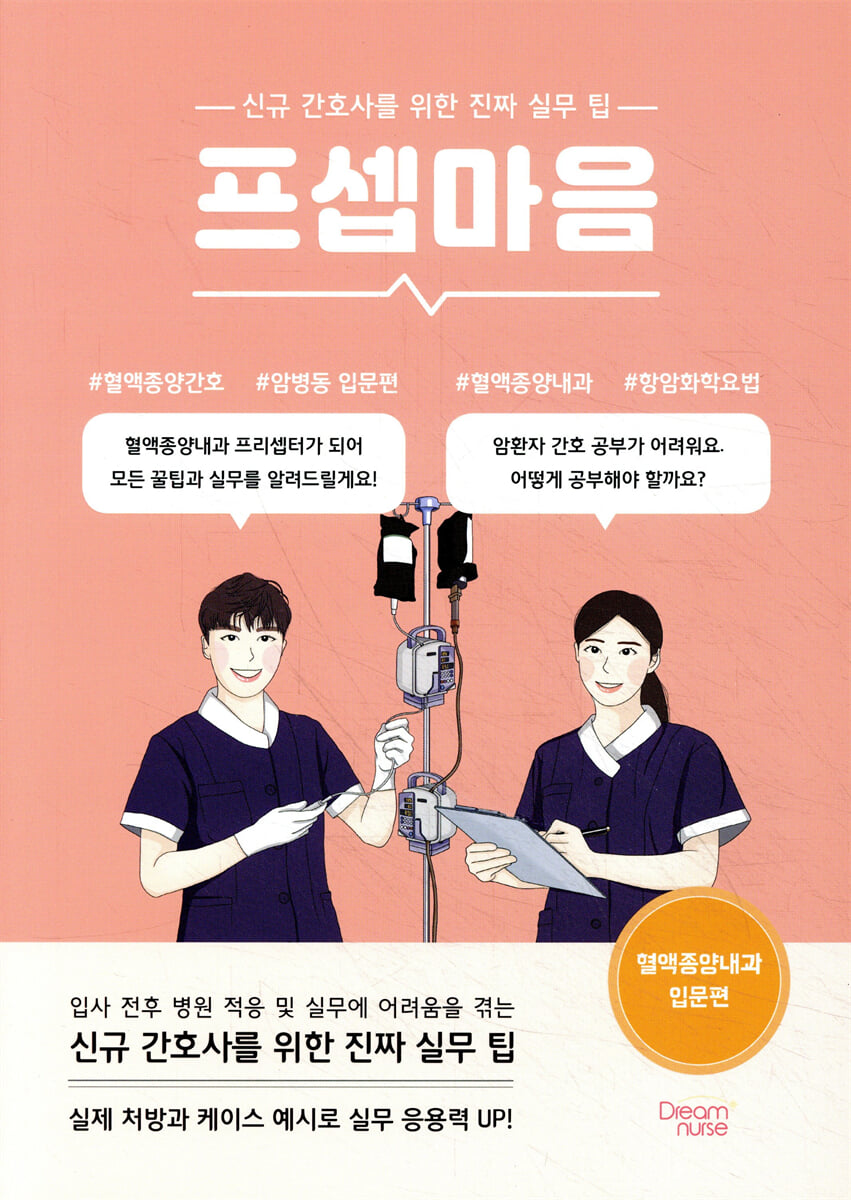
Psepmaum: Introduction to Hematology and Oncology
 |
Description
Book Introduction
This book contains practical terminology and basic medical terms used in hematology and oncology.
It contains practical information that would be useful to know in a ward that actually handles anticancer drugs, and includes nursing notes, cases, and nursing records that can be used in practice.
It contains practical information that would be useful to know in a ward that actually handles anticancer drugs, and includes nursing notes, cases, and nursing records that can be used in practice.
index
Part 1.
Cancer Diagnostic Tests & Practice Tips for Common Tests Seen in Cancer Patients
0.
What is cancer? (Cancer can develop anywhere in the body! Who are you?)
1.
What is a cancer diagnostic test?
2.
Health and physical examination
3.
Blood test (basic blood test for cancer patients)
4.
Tumor Marker Testing (Which tumor markers should we pay close attention to when looking at which cancers?)
5.
Imaging tests, nuclear medicine tests (what are the imaging tests and characteristics for cancer diagnosis?)
6.
Endoscopy (Learn about frequently performed endoscopy)
7.
Pathological examination (the most accurate way to confirm cancer)
8.
Bone Marrow Aspiration & Lumbar Puncture (What kind of nursing care should I provide before and after a bone marrow aspiration or lumbar puncture?)
Part 2.
Understanding Chemotherapy
1.
Understanding Anticancer Drugs (What Are Anticancer Drugs?)
2.
Anticancer Regimen (How should I study anticancer therapy?)
3. BSA (How is the dose of anticancer drugs determined?)
4.
Central Venous Catheters (Understanding and Patient Education on Central Venous Catheters, Commonly Used in Hematology and Oncology)
5.
Nursing Practice Tips for Anticancer Drug Administration (What Precautions Should I Take When Administering Medications?)
6.
Responding to emergencies during anticancer drug administration (hypersensitivity, extravasation, and venous irritant nursing)
7.
Anticancer drug safety and precautions (different standards apply to each anticancer drug, so it may be difficult, but just remember this!)
8.
Key points to consider when planning your anticancer regimen (Why are the chemotherapy cycles different? What should I be aware of when discharged?)
Part 3.
Understanding Cancer Side Effects and Tips for Caring for Cancer Patients
1.
bone marrow suppression
2.
pain
3.
Nausea, vomiting, loss of appetite
4.
having fever
5.
Skin side effects, peripheral neuropathy
6.
Mucositis (stomatitis)
7.
Gastrointestinal side effects (indigestion, diarrhea, constipation)
8.
hair loss
9.
Hypogonadism, infertility
10.
Major organ toxicity
11.
Emergency management situation for cancer patients
Part 4.
Nursing Care for Cancer! (Remember This!)
1.
stomach cancer, esophageal cancer
2.
colon cancer
3.
Liver cancer, bile duct cancer, pancreatic cancer
4.
lung cancer
5.
breast cancer, thyroid cancer
6.
female reproductive system cancer
7.
Genitourinary cancer
8.
Central nervous system cancer, head and neck cancer
9.
leukemia, blood cancer
10.
lymphoma, multiple myeloma
11.
Bone and soft tissue cancer
Part 5 Understanding Cancer Patient Care
1.
ethical issues
2.
emotional support
3.
hospice care
4.
End-of-life care
Cancer Diagnostic Tests & Practice Tips for Common Tests Seen in Cancer Patients
0.
What is cancer? (Cancer can develop anywhere in the body! Who are you?)
1.
What is a cancer diagnostic test?
2.
Health and physical examination
3.
Blood test (basic blood test for cancer patients)
4.
Tumor Marker Testing (Which tumor markers should we pay close attention to when looking at which cancers?)
5.
Imaging tests, nuclear medicine tests (what are the imaging tests and characteristics for cancer diagnosis?)
6.
Endoscopy (Learn about frequently performed endoscopy)
7.
Pathological examination (the most accurate way to confirm cancer)
8.
Bone Marrow Aspiration & Lumbar Puncture (What kind of nursing care should I provide before and after a bone marrow aspiration or lumbar puncture?)
Part 2.
Understanding Chemotherapy
1.
Understanding Anticancer Drugs (What Are Anticancer Drugs?)
2.
Anticancer Regimen (How should I study anticancer therapy?)
3. BSA (How is the dose of anticancer drugs determined?)
4.
Central Venous Catheters (Understanding and Patient Education on Central Venous Catheters, Commonly Used in Hematology and Oncology)
5.
Nursing Practice Tips for Anticancer Drug Administration (What Precautions Should I Take When Administering Medications?)
6.
Responding to emergencies during anticancer drug administration (hypersensitivity, extravasation, and venous irritant nursing)
7.
Anticancer drug safety and precautions (different standards apply to each anticancer drug, so it may be difficult, but just remember this!)
8.
Key points to consider when planning your anticancer regimen (Why are the chemotherapy cycles different? What should I be aware of when discharged?)
Part 3.
Understanding Cancer Side Effects and Tips for Caring for Cancer Patients
1.
bone marrow suppression
2.
pain
3.
Nausea, vomiting, loss of appetite
4.
having fever
5.
Skin side effects, peripheral neuropathy
6.
Mucositis (stomatitis)
7.
Gastrointestinal side effects (indigestion, diarrhea, constipation)
8.
hair loss
9.
Hypogonadism, infertility
10.
Major organ toxicity
11.
Emergency management situation for cancer patients
Part 4.
Nursing Care for Cancer! (Remember This!)
1.
stomach cancer, esophageal cancer
2.
colon cancer
3.
Liver cancer, bile duct cancer, pancreatic cancer
4.
lung cancer
5.
breast cancer, thyroid cancer
6.
female reproductive system cancer
7.
Genitourinary cancer
8.
Central nervous system cancer, head and neck cancer
9.
leukemia, blood cancer
10.
lymphoma, multiple myeloma
11.
Bone and soft tissue cancer
Part 5 Understanding Cancer Patient Care
1.
ethical issues
2.
emotional support
3.
hospice care
4.
End-of-life care
Detailed image

Publisher's Review
In the hematology and oncology ward, I meet patients who are fiercely fighting cancer, hear their diverse life stories, and even become their companions at the end of their lives.
The path may be rewarding, but it will be challenging.
I hope this helps you a little bit so that your first time isn't as difficult or tiring as mine, and I've tried to make it as simple as possible.
Everyone has a hard time at first.
We support your first time.
* Book Features
This is the 2021 revised edition of the existing Psepmaum - Introduction to Hematology and Oncology book, which upgrades the practical knowledge required to work as a nurse in the hematology and oncology ward.
Discover real clinical tips from a current nurse working in the cancer ward.
1.
Contains practical terminology and basic medical terms used in hematology and oncology.
2.
It actually contains practical information that would be useful to know in a ward that handles anticancer drugs.
3.
It helped me understand the nursing notes, cases, and nursing records that can be used in practice.
Part 1.
It covers the basics of cancer, cancer diagnostic testing, and practical tips.
Part 2.
It contains information on frequently used anticancer drugs and anticancer chemotherapy.
Part 3.
Contains side effects of chemotherapy and nursing tips for cancer patients based on their symptoms.
Part 4.
It contains essential nursing knowledge by type of cancer that occurs in each major organ.
Part 5.
It covers everything from emotional support to end-of-life care for cancer patients.
* Recommended Readers
A prospective nurse about to join the cancer ward
A new nurse who is overwhelmed by studying cancer patients
A 2nd or 3rd year nurse who is not new but feels that more study is needed
A nurse who wants to provide easy and clear information to new nurses
* Recommendation
The sense of disconnect I felt when I first encountered clinical practice after graduating from school was truly enormous.
Moreover, for new nurses, learning and mastering the job in an urgent clinical setting can easily lead to a great deal of pressure and strain.
However, I am confident that the moment new nurses come across this book, they will feel that nursing practice and knowledge, which had previously seemed vague and difficult, can now be approached with ease.
In fact, as I have over 15 years of clinical experience, I have been transferred to various departments.
I have also served as a preceptor for many new employees.
However, just because one has a brilliant clinical career does not mean that one has abundant knowledge and clinical experience in each department.
Rather, there were many times when I was at a loss as to what to teach and how to teach it.
In that sense, I think this book will be a great guide for preceptors as well.
I believe this book is a must-read for preceptors as it covers nursing practice in a more practical and systematic way by applying medical knowledge that is easily understandable and cases encountered in actual clinical practice.
Kang Eo-jin, a 16-year veteran nurse at Seoul National University Hospital
When a new nurse first joins the cancer ward, it is quite a daunting task to handle not only anticancer drugs that she has never properly learned about, but also cancer-related tests and procedures.
Hospital life is unfamiliar and you might feel awkward asking questions...
As if seeing through this new mind, Preceptor Psepmaum becomes another preceptor and explains it step by step in a friendly manner, even showing actual prescription examples.
I just wish it had been published a little sooner.
New nurses who are unsure of where to start and how to approach cancer wards should definitely read this book.
It will definitely help a lot.
Yu Ha-na, a new nurse at Seoul National University Hospital, has been working independently for six months.
The path may be rewarding, but it will be challenging.
I hope this helps you a little bit so that your first time isn't as difficult or tiring as mine, and I've tried to make it as simple as possible.
Everyone has a hard time at first.
We support your first time.
* Book Features
This is the 2021 revised edition of the existing Psepmaum - Introduction to Hematology and Oncology book, which upgrades the practical knowledge required to work as a nurse in the hematology and oncology ward.
Discover real clinical tips from a current nurse working in the cancer ward.
1.
Contains practical terminology and basic medical terms used in hematology and oncology.
2.
It actually contains practical information that would be useful to know in a ward that handles anticancer drugs.
3.
It helped me understand the nursing notes, cases, and nursing records that can be used in practice.
Part 1.
It covers the basics of cancer, cancer diagnostic testing, and practical tips.
Part 2.
It contains information on frequently used anticancer drugs and anticancer chemotherapy.
Part 3.
Contains side effects of chemotherapy and nursing tips for cancer patients based on their symptoms.
Part 4.
It contains essential nursing knowledge by type of cancer that occurs in each major organ.
Part 5.
It covers everything from emotional support to end-of-life care for cancer patients.
* Recommended Readers
A prospective nurse about to join the cancer ward
A new nurse who is overwhelmed by studying cancer patients
A 2nd or 3rd year nurse who is not new but feels that more study is needed
A nurse who wants to provide easy and clear information to new nurses
* Recommendation
The sense of disconnect I felt when I first encountered clinical practice after graduating from school was truly enormous.
Moreover, for new nurses, learning and mastering the job in an urgent clinical setting can easily lead to a great deal of pressure and strain.
However, I am confident that the moment new nurses come across this book, they will feel that nursing practice and knowledge, which had previously seemed vague and difficult, can now be approached with ease.
In fact, as I have over 15 years of clinical experience, I have been transferred to various departments.
I have also served as a preceptor for many new employees.
However, just because one has a brilliant clinical career does not mean that one has abundant knowledge and clinical experience in each department.
Rather, there were many times when I was at a loss as to what to teach and how to teach it.
In that sense, I think this book will be a great guide for preceptors as well.
I believe this book is a must-read for preceptors as it covers nursing practice in a more practical and systematic way by applying medical knowledge that is easily understandable and cases encountered in actual clinical practice.
Kang Eo-jin, a 16-year veteran nurse at Seoul National University Hospital
When a new nurse first joins the cancer ward, it is quite a daunting task to handle not only anticancer drugs that she has never properly learned about, but also cancer-related tests and procedures.
Hospital life is unfamiliar and you might feel awkward asking questions...
As if seeing through this new mind, Preceptor Psepmaum becomes another preceptor and explains it step by step in a friendly manner, even showing actual prescription examples.
I just wish it had been published a little sooner.
New nurses who are unsure of where to start and how to approach cancer wards should definitely read this book.
It will definitely help a lot.
Yu Ha-na, a new nurse at Seoul National University Hospital, has been working independently for six months.
GOODS SPECIFICS
- Date of issue: January 6, 2021
- Page count, weight, size: 324 pages | 182*257*30mm
- ISBN13: 9791190939133
- ISBN10: 1190939134
You may also like
카테고리
korean


korean

![GQ KOREA Mark (Monthly): December [2025]](http://librairie.coreenne.fr/cdn/shop/files/8ef265dbbfbf186523ed75ba7319009d.jpg?v=1765340328&width=3840)


