

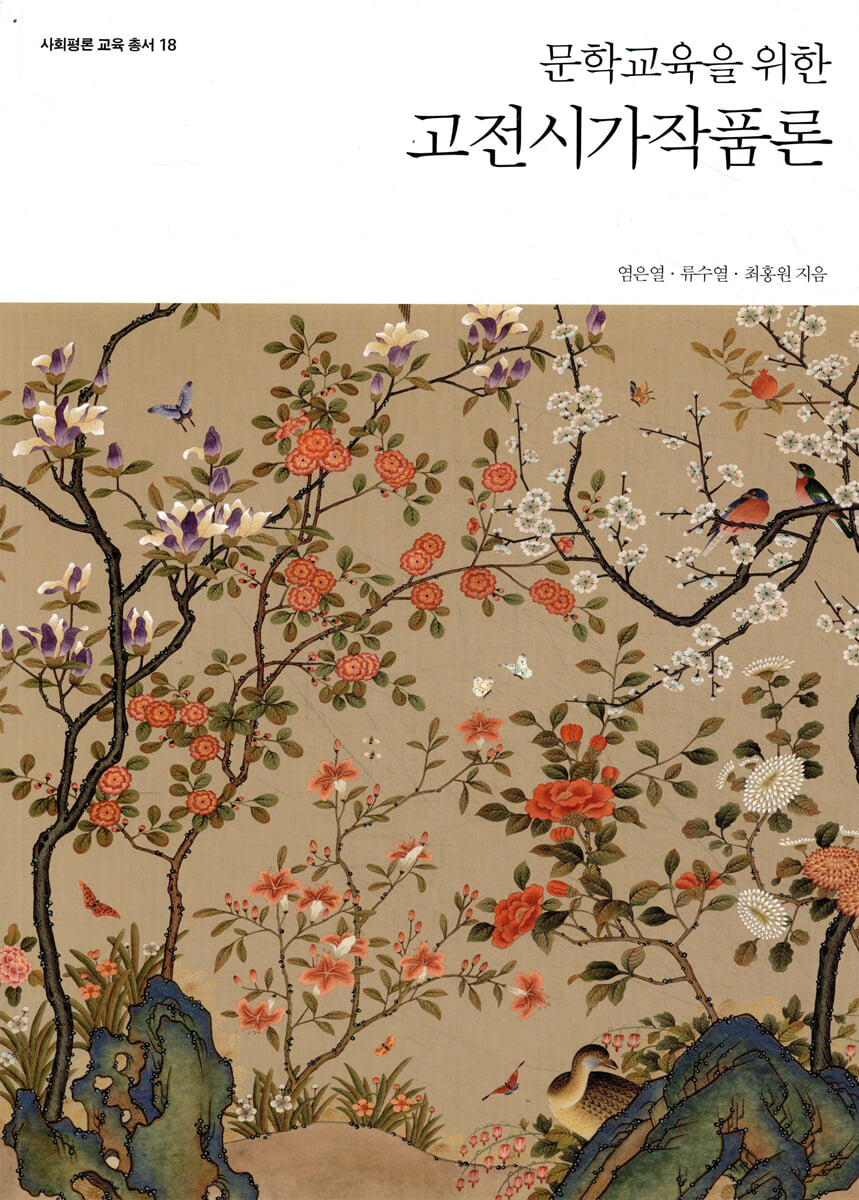
A Study of Classical Poetry for Literature Education
 |
Description
Book Introduction
『Classical Poetry Studies for Literature Education』 is an introductory book on classical poetry education that covers both understanding and education of the works.
This book guides readers to recognize and experience the unique value of classical poetry, and furthermore, helps them find answers to the questions of what classical poetry should be learned and why it should be taught.
This book contains 57 classical poems, organized by genre, from ancient songs to hyangga, Goryeo songs, akjang, sijo, gasa, and japga.
After presenting the original text for each work, the book is organized into sections such as ‘Context,’ ‘Issues,’ ‘Careful Reading,’ and ‘Reading Together,’ to enable a systematic understanding of each work.
First, in 'Context', we attempted to increase the factual understanding of individual classical poems by directly showing records or references to the context in which the works were produced and enjoyed.
Next, in 'Issues', we covered the controversial issues related to the understanding of the work, allowing us to examine the history of interpretation surrounding the work.
In 'Reading Carefully', we attempted to present the educational content of classical poetry by revealing the meaning of the works that should be experienced while reading classical poetry.
Lastly, in ‘Reading Together,’ we introduce other works that can be read in connection with the work to deepen your understanding of it.
This book guides readers to recognize and experience the unique value of classical poetry, and furthermore, helps them find answers to the questions of what classical poetry should be learned and why it should be taught.
This book contains 57 classical poems, organized by genre, from ancient songs to hyangga, Goryeo songs, akjang, sijo, gasa, and japga.
After presenting the original text for each work, the book is organized into sections such as ‘Context,’ ‘Issues,’ ‘Careful Reading,’ and ‘Reading Together,’ to enable a systematic understanding of each work.
First, in 'Context', we attempted to increase the factual understanding of individual classical poems by directly showing records or references to the context in which the works were produced and enjoyed.
Next, in 'Issues', we covered the controversial issues related to the understanding of the work, allowing us to examine the history of interpretation surrounding the work.
In 'Reading Carefully', we attempted to present the educational content of classical poetry by revealing the meaning of the works that should be experienced while reading classical poetry.
Lastly, in ‘Reading Together,’ we introduce other works that can be read in connection with the work to deepen your understanding of it.
- You can preview some of the book's contents.
Preview
index
Preface 5
Ⅰ.
ancient songs
01 Public service 16
02 Hwangjoga 25
03 Gujiga 32
Ⅱ.
Hyangga
01 Seodongyo 44
02 Hyeseongga 51
03 Mojukjiranga 59
04 Donation 68
05 Dosolga 75
06 My sister-in-law is 84
07 An Min-ga 93
08 Chankiparangga 103
09 Cheoyongga 111
Ⅲ.
Goryeo songs
01 Jeongeupsa Temple 124
02 Jeong Gwa-jeong 132
03 Dongdong 139
04 Jeongseokga 149
05 Cheongsanbyeolgok 156
06 Seogyeongbyeolgok 164
07 Samogok 173
08 Ssanghwajeom 180
09 Gasiri 189
10 Manjeonchunbyeolsa 198
11. Hanrimbyeolgok 208
Ⅳ.
movement
01 Yongbieocheonga 222
V.
Pyeongsijo
01 Hold the stick in one hand 232
02 Ewha and Wolbaek 238
03 The rise and fall of the world are constant 245
04 Ganghosasiga 252
05 The crow is black and 261
06 Winter Solstice Long Night 268
07 Dosan Sibigok 275
08 Gosan Gugokga 286
09 Hunmin-ga 295
10 The Bukcheon River is clear / Hey, it's freezing, 306
11 Manheung 313
12 Fisherman's Tale 322
13 Unable to lift the sword 333
Ⅵ.
private sijo
01 I want to open the window I want to open the window 342
02 If you want to raise a dog, raise 351
03 Namodo Bahidoldo 358
04 Duterbi biting a fly 362
05 The Great General Gong Seong-shin Retires 366
Ⅶ.
lyrics
01 Seowangga 376
02 Sangchungok 384
03 Myeonangjeongga 392
04 Gwandongbyeolgok 402
05 The Beauty Song 415
06 Gyuwon-ga 424
07 Nuhangsa 433
08 Manwonsa 444
09 Farmer's Monthly Price List 454
10 Ubuga 462
11 Yongbuga 473
12th Performance Song 482
13. Dendong-eo-mi Hwajeonga 492
Ⅷ.
Miscellaneous
01 Legacy 506
List of titled works 516
List of Cited Works 517
Ⅰ.
ancient songs
01 Public service 16
02 Hwangjoga 25
03 Gujiga 32
Ⅱ.
Hyangga
01 Seodongyo 44
02 Hyeseongga 51
03 Mojukjiranga 59
04 Donation 68
05 Dosolga 75
06 My sister-in-law is 84
07 An Min-ga 93
08 Chankiparangga 103
09 Cheoyongga 111
Ⅲ.
Goryeo songs
01 Jeongeupsa Temple 124
02 Jeong Gwa-jeong 132
03 Dongdong 139
04 Jeongseokga 149
05 Cheongsanbyeolgok 156
06 Seogyeongbyeolgok 164
07 Samogok 173
08 Ssanghwajeom 180
09 Gasiri 189
10 Manjeonchunbyeolsa 198
11. Hanrimbyeolgok 208
Ⅳ.
movement
01 Yongbieocheonga 222
V.
Pyeongsijo
01 Hold the stick in one hand 232
02 Ewha and Wolbaek 238
03 The rise and fall of the world are constant 245
04 Ganghosasiga 252
05 The crow is black and 261
06 Winter Solstice Long Night 268
07 Dosan Sibigok 275
08 Gosan Gugokga 286
09 Hunmin-ga 295
10 The Bukcheon River is clear / Hey, it's freezing, 306
11 Manheung 313
12 Fisherman's Tale 322
13 Unable to lift the sword 333
Ⅵ.
private sijo
01 I want to open the window I want to open the window 342
02 If you want to raise a dog, raise 351
03 Namodo Bahidoldo 358
04 Duterbi biting a fly 362
05 The Great General Gong Seong-shin Retires 366
Ⅶ.
lyrics
01 Seowangga 376
02 Sangchungok 384
03 Myeonangjeongga 392
04 Gwandongbyeolgok 402
05 The Beauty Song 415
06 Gyuwon-ga 424
07 Nuhangsa 433
08 Manwonsa 444
09 Farmer's Monthly Price List 454
10 Ubuga 462
11 Yongbuga 473
12th Performance Song 482
13. Dendong-eo-mi Hwajeonga 492
Ⅷ.
Miscellaneous
01 Legacy 506
List of titled works 516
List of Cited Works 517
Detailed image

Publisher's Review
Classical Poetry: What Should We Learn and Why?
An introductory book on classical poetry education that encompasses both understanding and education of the works.
In the field of literature education, classical poetry is becoming a class for memorizing modern language interpretation and related knowledge.
However, each piece of classical poetry has its own unique value.
You can experience the beauty of linguistic expression, savor the background and meaning behind the creation and singing of the work, examine what kind of reality this song portrays and what kind of power it exerts within it, and understand the essence of language and literature by connecting it to today's linguistic phenomena.
When classical poetry is properly appreciated, it becomes a living educational resource rather than a 'dead language' separated from the present.
This book guides you to recognize and experience the unique value of classical poetry.
Furthermore, it has helped us find answers to the questions of what classical poetry should be learned and why it should be taught.
A total of 57 classical poems are included.
This book contains 57 classical poems, organized by genre, from ancient songs to hyangga, Goryeo songs, akjang, sijo, gasa, and japga.
After presenting the original text for each work, the book is organized into sections such as ‘Context,’ ‘Issues,’ ‘Careful Reading,’ and ‘Reading Together,’ to enable a systematic understanding of each work.
First, in 'Context', we attempted to increase the factual understanding of individual classical poems by directly showing records or references to the context in which the works were produced and enjoyed.
Next, in 'Issues', we covered the controversial issues related to the understanding of the work, allowing us to examine the history of interpretation surrounding the work.
In 'Reading Carefully', we attempted to present the educational content of classical poetry by revealing the meaning of the works that should be experienced while reading classical poetry.
Lastly, in ‘Reading Together,’ we introduce other works that can be read in connection with the work to deepen your understanding of it.
This book was designed to be a useful and reliable textbook for Korean language education and Korean literature departments.
However, since it covers both the content needed to understand the work itself and the content needed to teach it, it will also be helpful to those preparing to take the Korean language teacher certification exam, students studying Korean studies, including Korean poetry and linguistic and cultural heritage, and the general public interested in classical poetry.
An introductory book on classical poetry education that encompasses both understanding and education of the works.
In the field of literature education, classical poetry is becoming a class for memorizing modern language interpretation and related knowledge.
However, each piece of classical poetry has its own unique value.
You can experience the beauty of linguistic expression, savor the background and meaning behind the creation and singing of the work, examine what kind of reality this song portrays and what kind of power it exerts within it, and understand the essence of language and literature by connecting it to today's linguistic phenomena.
When classical poetry is properly appreciated, it becomes a living educational resource rather than a 'dead language' separated from the present.
This book guides you to recognize and experience the unique value of classical poetry.
Furthermore, it has helped us find answers to the questions of what classical poetry should be learned and why it should be taught.
A total of 57 classical poems are included.
This book contains 57 classical poems, organized by genre, from ancient songs to hyangga, Goryeo songs, akjang, sijo, gasa, and japga.
After presenting the original text for each work, the book is organized into sections such as ‘Context,’ ‘Issues,’ ‘Careful Reading,’ and ‘Reading Together,’ to enable a systematic understanding of each work.
First, in 'Context', we attempted to increase the factual understanding of individual classical poems by directly showing records or references to the context in which the works were produced and enjoyed.
Next, in 'Issues', we covered the controversial issues related to the understanding of the work, allowing us to examine the history of interpretation surrounding the work.
In 'Reading Carefully', we attempted to present the educational content of classical poetry by revealing the meaning of the works that should be experienced while reading classical poetry.
Lastly, in ‘Reading Together,’ we introduce other works that can be read in connection with the work to deepen your understanding of it.
This book was designed to be a useful and reliable textbook for Korean language education and Korean literature departments.
However, since it covers both the content needed to understand the work itself and the content needed to teach it, it will also be helpful to those preparing to take the Korean language teacher certification exam, students studying Korean studies, including Korean poetry and linguistic and cultural heritage, and the general public interested in classical poetry.
GOODS SPECIFICS
- Date of publication: September 16, 2019
- Page count, weight, size: 520 pages | 988g | 180*248*35mm
- ISBN13: 9791189946258
- ISBN10: 1189946254
You may also like
카테고리
korean


korean

![GQ KOREA Mark (Monthly): December [2025]](http://librairie.coreenne.fr/cdn/shop/files/8ef265dbbfbf186523ed75ba7319009d.jpg?v=1765340328&width=3840)


