

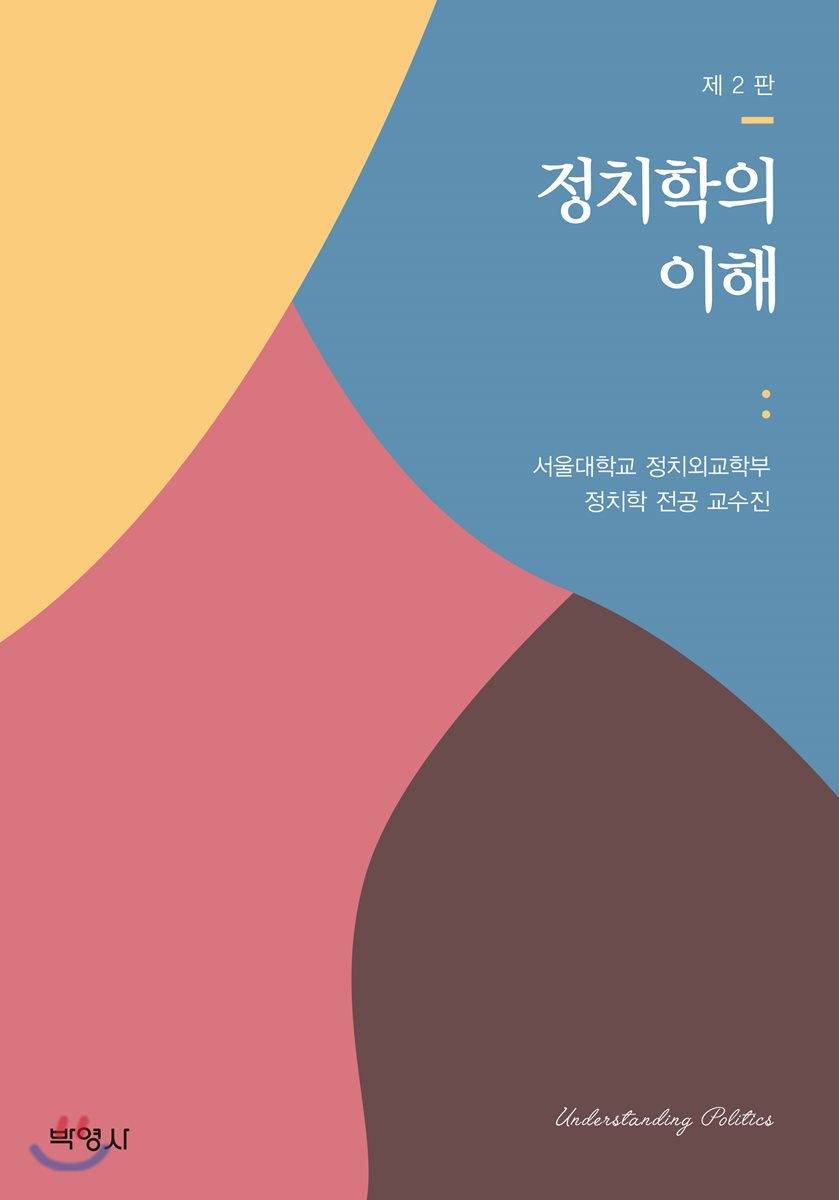
Understanding Political Science
 |
Description
Book Introduction
"Understanding Political Science" is an introductory book on political science, newly revised and written by political science professors from the Department of Political Science and Diplomacy at Seoul National University.
The origins of this book date back to 1975.
At that time, Seoul National University Press published 『Introduction to Political Science』, the first book jointly created by political science professors.
Several revised editions have been published since then.
『Understanding Political Science』 is a revised edition that includes new topics and revises and supplements the original 『Understanding Political Science』 published in 2002.
Compared to the previous revisions that took 8-9 years, this revision took a whopping 17 years.
During that long period of time, the nature of our politics and the internal and external environment surrounding our politics have changed significantly.
In addition, significant changes have occurred in politically important issues and concerns in the meantime.
The political science professors at Seoul National University's Department of Political Science and International Relations, who wrote "Understanding Political Science," sought to reflect as many changes surrounding our politics as possible in this book while maintaining the fundamentals of political science research.
This book will serve as a good introductory text for students who wish to study political science in earnest.
The origins of this book date back to 1975.
At that time, Seoul National University Press published 『Introduction to Political Science』, the first book jointly created by political science professors.
Several revised editions have been published since then.
『Understanding Political Science』 is a revised edition that includes new topics and revises and supplements the original 『Understanding Political Science』 published in 2002.
Compared to the previous revisions that took 8-9 years, this revision took a whopping 17 years.
During that long period of time, the nature of our politics and the internal and external environment surrounding our politics have changed significantly.
In addition, significant changes have occurred in politically important issues and concerns in the meantime.
The political science professors at Seoul National University's Department of Political Science and International Relations, who wrote "Understanding Political Science," sought to reflect as many changes surrounding our politics as possible in this book while maintaining the fundamentals of political science research.
This book will serve as a good introductory text for students who wish to study political science in earnest.
- You can preview some of the book's contents.
Preview
index
1 Democracy Kim Joo-hyung 1
Section 1 Introduction _2
Section 2: The History of Democracy _6
Section 3: Issues in Modern Democratic Theory _19
Section 4 Conclusion _33
2 Western Political Thought by Yu Hong-rim, 37
Section 1 Classical Political Philosophy _39 Section 2 Medieval Political Thought _46 Section 3 Modern Political Thought _50
Section 4: Currents in Modern Political Thought _66
3 Introduction to Korean Political Thought by Kim Young-min, 81
Section 1 Introduction _82
Section 2: The Identity of Korean Political Thought _84 Section 3: The Historicity of Korean Thought _91 Section 4: The Modernity of Korean Thought _94 Section 5: Conclusion _98
4. National Theory Kwon Hyung-gi 103
Section 1: Why is National Research Important? _104
Section 2: What is a State? _105
Section 3: State Studies in Political Science _113
Section 4: National Transformation in the Age of Globalization and Related Debates _127
Section 5 Conclusion _132
5. Government Forms Kang Won-taek 141
Section 1 Introduction _142 Section 2 Presidential System _144 Section 3 Cabinet System _152
Section 4: The Dual Government System _163
Section 5 Conclusion _170
6 Political Parties, Elections, and Parliament Kang Won-taek 175
Section 1 Political Parties _177
Section 2 Election _184
Section 3 Proportional Representation System _192
Section 4: Mixed Electoral System _196
Section 5 Parliament _198
Section 6 Conclusion _204
7 Bureaucracy and Public Administration, Ahn Do-kyung 209
Section 1: Inputs and Outputs of Democratic Politics _210
Section 2: Bureaucracy Theory _214
Section 3: Problems of Public Bureaucracy _228
Section 4: Alternatives to Bureaucracy _234
8 Political Economy Lim Hye-ran 241
Section 1 Introduction _242
Section 2: Concepts and Theoretical Perspectives on Political Economy _245
Section 3: Changes in the Political and Economic Order Since the 20th Century _255
Section 4: New Challenges of the 21st Century _265
9 Political Change: Donghak of Democratization and Social Movements, Lim Kyung-hoon, 275
Section 1: The Development of Democracy _277
Section 2 Social Movements _292
10 Authoritarianism Theory Son In-ju 309
Section 1 Introduction _310
Section 2: Definition and Origins of Authoritarianism _312
Section 3: Types of Authoritarianism and Regime Change _316
Section 4: Authoritarian Survival Strategies _322
Section 5: The Evolution of Authoritarianism and the Future of World Politics _326
11 Law and Politics Song Ji-woo 335
Section 1: The Realm of Law and Politics _336
Section 2 Key Issues by Sector _337
Section 3: Law and Democracy _346
12 International Relations Baek Chang-jae 355
Section 1: International Relations and International Relations Studies _356
Section 2: Vision and Theory _360
Section 3 Research Methods _373
Section 4: Changes in the International Environment and International Relations _377
Search for: Biographical Index 383
Item Index 384
Section 1 Introduction _2
Section 2: The History of Democracy _6
Section 3: Issues in Modern Democratic Theory _19
Section 4 Conclusion _33
2 Western Political Thought by Yu Hong-rim, 37
Section 1 Classical Political Philosophy _39 Section 2 Medieval Political Thought _46 Section 3 Modern Political Thought _50
Section 4: Currents in Modern Political Thought _66
3 Introduction to Korean Political Thought by Kim Young-min, 81
Section 1 Introduction _82
Section 2: The Identity of Korean Political Thought _84 Section 3: The Historicity of Korean Thought _91 Section 4: The Modernity of Korean Thought _94 Section 5: Conclusion _98
4. National Theory Kwon Hyung-gi 103
Section 1: Why is National Research Important? _104
Section 2: What is a State? _105
Section 3: State Studies in Political Science _113
Section 4: National Transformation in the Age of Globalization and Related Debates _127
Section 5 Conclusion _132
5. Government Forms Kang Won-taek 141
Section 1 Introduction _142 Section 2 Presidential System _144 Section 3 Cabinet System _152
Section 4: The Dual Government System _163
Section 5 Conclusion _170
6 Political Parties, Elections, and Parliament Kang Won-taek 175
Section 1 Political Parties _177
Section 2 Election _184
Section 3 Proportional Representation System _192
Section 4: Mixed Electoral System _196
Section 5 Parliament _198
Section 6 Conclusion _204
7 Bureaucracy and Public Administration, Ahn Do-kyung 209
Section 1: Inputs and Outputs of Democratic Politics _210
Section 2: Bureaucracy Theory _214
Section 3: Problems of Public Bureaucracy _228
Section 4: Alternatives to Bureaucracy _234
8 Political Economy Lim Hye-ran 241
Section 1 Introduction _242
Section 2: Concepts and Theoretical Perspectives on Political Economy _245
Section 3: Changes in the Political and Economic Order Since the 20th Century _255
Section 4: New Challenges of the 21st Century _265
9 Political Change: Donghak of Democratization and Social Movements, Lim Kyung-hoon, 275
Section 1: The Development of Democracy _277
Section 2 Social Movements _292
10 Authoritarianism Theory Son In-ju 309
Section 1 Introduction _310
Section 2: Definition and Origins of Authoritarianism _312
Section 3: Types of Authoritarianism and Regime Change _316
Section 4: Authoritarian Survival Strategies _322
Section 5: The Evolution of Authoritarianism and the Future of World Politics _326
11 Law and Politics Song Ji-woo 335
Section 1: The Realm of Law and Politics _336
Section 2 Key Issues by Sector _337
Section 3: Law and Democracy _346
12 International Relations Baek Chang-jae 355
Section 1: International Relations and International Relations Studies _356
Section 2: Vision and Theory _360
Section 3 Research Methods _373
Section 4: Changes in the International Environment and International Relations _377
Search for: Biographical Index 383
Item Index 384
Detailed image

Publisher's Review
This book is an introductory book on political science, newly revised and written by political science professors from the Department of Political Science and Diplomacy at Seoul National University.
The origins of this book date back to 1975.
At that time, Seoul National University Press published 『Introduction to Political Science』, the first book jointly created by political science professors.
Several revised editions have been published since then.
In 1978, three years after the publication of the first book, a significantly revised first edition of 『Introduction to New Political Studies』 was published.
And in 1986, Park Young-sa published 『Introduction to Political Science』, which completely revised the existing content to reflect new research trends in political science.
And nine years later, in 1995, a revised version of the book, Introduction to Political Science, was published.
In 2002, a book was published with the new name, Understanding Political Science, which revised and supplemented the contents of the 1995 revised edition of Introduction to Political Science and added new content.
We have now published a revised edition of 『Understanding Political Science』, which was published in 2002, with revisions and additions, and new topics included.
Compared to the previous revisions which took 8-9 years, this revision took a whopping 17 years.
We feel sorry for our students for not being able to publish the revised edition on time.
During that long period of time, the characteristics of our politics and the internal and external environments surrounding our politics have changed significantly.
In addition, significant changes have occurred in politically important issues and concerns in the meantime.
We have tried to reflect in this book as many changes surrounding our politics as possible while maintaining the fundamentals of political science research.
As with all of our previous books, we hope that this book will serve as a good introductory text for students who wish to study political science in earnest.
Although we have tried to revise existing content and include a lot of new content, there may still be areas that have not been covered.
We will continue to strive to make the contents of this introductory book more comprehensive.
Lastly, I would like to express my gratitude to all the staff at Park Young-sa, especially Deputy Director Lee Young-jo and Manager Jeon Chae-rin, who have worked tirelessly to create this excellent book.
February 2019
All professors of political science at the Department of Political Science and International Relations, Seoul National University
Author's biography
Faculty of Political Science, Department of Political Science and International Relations, Seoul National University
1 Kim Joo-hyung's Democracy
- Education: Bachelor's and Master's degrees in Political Science from Seoul National University, Ph.D. in Political Science from Indiana University
- Major publications and papers: Civil Politics and Democracy (2016), Deliberation and Democracy: The Public Opinion Committee from the Perspective of Deliberative Democracy (2018)
2. Yu Hong-rim's Western Political Thought
- Education: Bachelor's and Master's degrees in Political Science from Seoul National University, Ph.D. in Political Science from Rutgers University
- Major publications and papers: Studies in Modern Political Thought, Modern Politics and Thought (translation), etc.
3. Kim Young-min's Introduction to Korean Political Thought
- Education: Bachelor's and Master's degrees in Philosophy from Korea University, PhD in East Asian History of Thought from Harvard University
- Major books and papers: A History of Chinese Political Thought (2018), It is good to think about death in the morning, etc.
4. Kwon Hyung-ki's State Theory
- Education: Bachelor's and Master's degrees in Political Science from Seoul National University, Ph.D. in Political Science from the University of Chicago.
Major publications and papers: A Retrograde in the Age of Globalization? From Liberalism to the Politics of Social Pact (2014)
Fairness and Division of Labor in Market Societies (New York: Berghahn Books, 2004).
“The State's Role in Globalization: Korea's Experience from a Comparative Perspective.” Politics and Society, 2017 and many more
5-6 Kang Won-taek Government type Political parties, elections, parliament
- Education: Bachelor's degree in Geography from Seoul National University, Master's degree in Political Science from Seoul National University, PhD in Political Science from the London School of Economics and Political Science (LSE)
- Major publications and papers: Korean Political Theory (2018), How to Change (2016), Korean Democracy after Unification (2011), etc.
7. Ando-kyung's Bureaucracy and Public Administration
- Education: Bachelor's and Master's degrees in Political Science from Seoul National University, Ph.D. in Political Science from Indiana University
- Major publications and papers: Ahn, TK, Robert Huckfeldt, and John B.
Ryan.
2014.
Experts, Activists, and Democratic Politics: Are Electorates Self-Educating? Cambridge University Press.
Ostrom, Elinor, and TK
Ahn.
(eds.) 2003.
Foundations of Social Capital.
London: Edward Elgar.
8 Lim Hye-ran, Political Economy
- Education: Bachelor's and Master's degrees in Political Science and Diplomacy from Ewha Womans University, Ph.D. from University of California, Davis
- Major publications and papers: Reconstructing the East Asian Developmental State Model (2018)
Haeran Lim.
1998.
Korea's Growth and Industrial Transformation.
London: Macmillan Press.
9. Lim Kyung-hoon's Political Change: The Dynamics of Democratization and Social Movements
- Education: Bachelor's and Master's degrees in Political Science from Seoul National University, Ph.D. in Political Science from the University of Chicago
- Major publications and papers: “Reconstruction of Russian Political Traditions in the Post-Soviet Period: Focusing on the Factors Consolidating the Putin Regime as Authoritarian”
“Labor Strike in Communist Society: A Comparison between the Soviet Union and Poland”
10 Son In-ju's authoritarianism theory
- Education: Seoul National University, Bachelor's degree in Oriental History; George Washington University, Elliott School of International Affairs, Master's degree and Ph.D. in Political Science
- Major books and papers: “Toward Normative Fragmentation: An East Asian Financial Architecture in the Post-Global Crisis World,” Review of International Political Economy 19-4.
“After Renaissance: China's Multilateral Offensive in the Developing World,” European Journal of International Relations 18-1.
11 Song Ji-woo Law and Politics
- Education: Bachelor's degree in Sociology from Seoul National University, JD in Law from Harvard Law School, PhD in Philosophy from Harvard University
- Major publications and papers: “Sovereignty and Subsidiarity: The Necessity of a Normative Theory of International Law through a Conceptual Review,” Journal of Legal Philosophy, Vol. 21, No. 2, pp. 21-22.
383-416
“Pirates and Torturers: Universal Jurisdiction as Enforcement Gap-Filling,” Journal of Political Philosophy 23:4 (2015), pp.
471-90 and others
12 Baek Chang-jae International Relations
- Education: Bachelor's and Master's degrees in Political Science from Seoul National University, Ph.D. in Political Science from the University of California, Berkeley
- Major publications and papers: Politics of Super 301, Studies on American Hegemony, Studies on American Trade Policy, etc.
The origins of this book date back to 1975.
At that time, Seoul National University Press published 『Introduction to Political Science』, the first book jointly created by political science professors.
Several revised editions have been published since then.
In 1978, three years after the publication of the first book, a significantly revised first edition of 『Introduction to New Political Studies』 was published.
And in 1986, Park Young-sa published 『Introduction to Political Science』, which completely revised the existing content to reflect new research trends in political science.
And nine years later, in 1995, a revised version of the book, Introduction to Political Science, was published.
In 2002, a book was published with the new name, Understanding Political Science, which revised and supplemented the contents of the 1995 revised edition of Introduction to Political Science and added new content.
We have now published a revised edition of 『Understanding Political Science』, which was published in 2002, with revisions and additions, and new topics included.
Compared to the previous revisions which took 8-9 years, this revision took a whopping 17 years.
We feel sorry for our students for not being able to publish the revised edition on time.
During that long period of time, the characteristics of our politics and the internal and external environments surrounding our politics have changed significantly.
In addition, significant changes have occurred in politically important issues and concerns in the meantime.
We have tried to reflect in this book as many changes surrounding our politics as possible while maintaining the fundamentals of political science research.
As with all of our previous books, we hope that this book will serve as a good introductory text for students who wish to study political science in earnest.
Although we have tried to revise existing content and include a lot of new content, there may still be areas that have not been covered.
We will continue to strive to make the contents of this introductory book more comprehensive.
Lastly, I would like to express my gratitude to all the staff at Park Young-sa, especially Deputy Director Lee Young-jo and Manager Jeon Chae-rin, who have worked tirelessly to create this excellent book.
February 2019
All professors of political science at the Department of Political Science and International Relations, Seoul National University
Author's biography
Faculty of Political Science, Department of Political Science and International Relations, Seoul National University
1 Kim Joo-hyung's Democracy
- Education: Bachelor's and Master's degrees in Political Science from Seoul National University, Ph.D. in Political Science from Indiana University
- Major publications and papers: Civil Politics and Democracy (2016), Deliberation and Democracy: The Public Opinion Committee from the Perspective of Deliberative Democracy (2018)
2. Yu Hong-rim's Western Political Thought
- Education: Bachelor's and Master's degrees in Political Science from Seoul National University, Ph.D. in Political Science from Rutgers University
- Major publications and papers: Studies in Modern Political Thought, Modern Politics and Thought (translation), etc.
3. Kim Young-min's Introduction to Korean Political Thought
- Education: Bachelor's and Master's degrees in Philosophy from Korea University, PhD in East Asian History of Thought from Harvard University
- Major books and papers: A History of Chinese Political Thought (2018), It is good to think about death in the morning, etc.
4. Kwon Hyung-ki's State Theory
- Education: Bachelor's and Master's degrees in Political Science from Seoul National University, Ph.D. in Political Science from the University of Chicago.
Major publications and papers: A Retrograde in the Age of Globalization? From Liberalism to the Politics of Social Pact (2014)
Fairness and Division of Labor in Market Societies (New York: Berghahn Books, 2004).
“The State's Role in Globalization: Korea's Experience from a Comparative Perspective.” Politics and Society, 2017 and many more
5-6 Kang Won-taek Government type Political parties, elections, parliament
- Education: Bachelor's degree in Geography from Seoul National University, Master's degree in Political Science from Seoul National University, PhD in Political Science from the London School of Economics and Political Science (LSE)
- Major publications and papers: Korean Political Theory (2018), How to Change (2016), Korean Democracy after Unification (2011), etc.
7. Ando-kyung's Bureaucracy and Public Administration
- Education: Bachelor's and Master's degrees in Political Science from Seoul National University, Ph.D. in Political Science from Indiana University
- Major publications and papers: Ahn, TK, Robert Huckfeldt, and John B.
Ryan.
2014.
Experts, Activists, and Democratic Politics: Are Electorates Self-Educating? Cambridge University Press.
Ostrom, Elinor, and TK
Ahn.
(eds.) 2003.
Foundations of Social Capital.
London: Edward Elgar.
8 Lim Hye-ran, Political Economy
- Education: Bachelor's and Master's degrees in Political Science and Diplomacy from Ewha Womans University, Ph.D. from University of California, Davis
- Major publications and papers: Reconstructing the East Asian Developmental State Model (2018)
Haeran Lim.
1998.
Korea's Growth and Industrial Transformation.
London: Macmillan Press.
9. Lim Kyung-hoon's Political Change: The Dynamics of Democratization and Social Movements
- Education: Bachelor's and Master's degrees in Political Science from Seoul National University, Ph.D. in Political Science from the University of Chicago
- Major publications and papers: “Reconstruction of Russian Political Traditions in the Post-Soviet Period: Focusing on the Factors Consolidating the Putin Regime as Authoritarian”
“Labor Strike in Communist Society: A Comparison between the Soviet Union and Poland”
10 Son In-ju's authoritarianism theory
- Education: Seoul National University, Bachelor's degree in Oriental History; George Washington University, Elliott School of International Affairs, Master's degree and Ph.D. in Political Science
- Major books and papers: “Toward Normative Fragmentation: An East Asian Financial Architecture in the Post-Global Crisis World,” Review of International Political Economy 19-4.
“After Renaissance: China's Multilateral Offensive in the Developing World,” European Journal of International Relations 18-1.
11 Song Ji-woo Law and Politics
- Education: Bachelor's degree in Sociology from Seoul National University, JD in Law from Harvard Law School, PhD in Philosophy from Harvard University
- Major publications and papers: “Sovereignty and Subsidiarity: The Necessity of a Normative Theory of International Law through a Conceptual Review,” Journal of Legal Philosophy, Vol. 21, No. 2, pp. 21-22.
383-416
“Pirates and Torturers: Universal Jurisdiction as Enforcement Gap-Filling,” Journal of Political Philosophy 23:4 (2015), pp.
471-90 and others
12 Baek Chang-jae International Relations
- Education: Bachelor's and Master's degrees in Political Science from Seoul National University, Ph.D. in Political Science from the University of California, Berkeley
- Major publications and papers: Politics of Super 301, Studies on American Hegemony, Studies on American Trade Policy, etc.
GOODS SPECIFICS
- Date of issue: March 10, 2019
- Page count, weight, size: 400 pages | 706g | 176*248*30mm
- ISBN13: 9791130307190
- ISBN10: 1130307190
You may also like
카테고리
korean


korean

![GQ KOREA Mark (Monthly): December [2025]](http://librairie.coreenne.fr/cdn/shop/files/8ef265dbbfbf186523ed75ba7319009d.jpg?v=1765340328&width=3840)


