

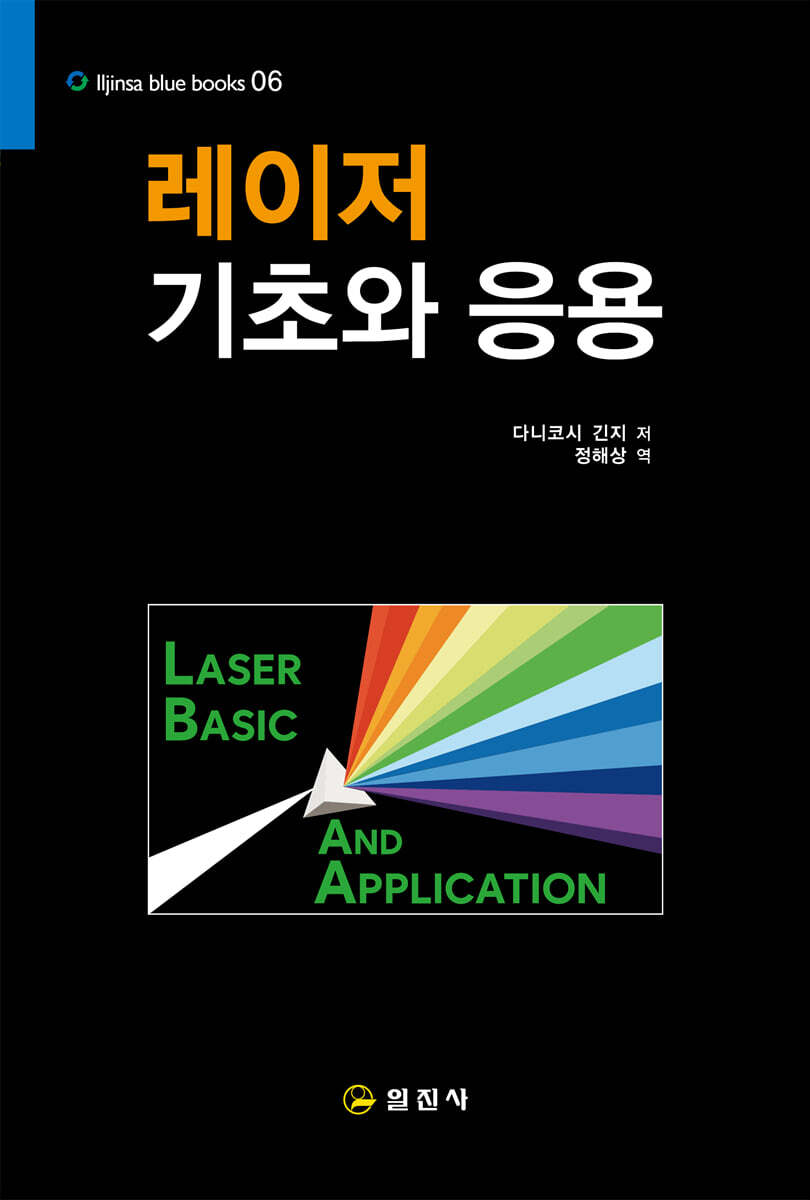
Fundamentals and Applications of Lasers
 |
Description
Book Introduction
We have attempted to explain the various elements of lasers in an easy-to-understand manner.
The complex reality of lasers is explained with illustrations and photographs, focusing on relatively well-known products and phenomena. Formulas are avoided as much as possible, and difficult terms are explained, allowing for a comprehensive understanding of the characteristics and usage of lasers.
The complex reality of lasers is explained with illustrations and photographs, focusing on relatively well-known products and phenomena. Formulas are avoided as much as possible, and difficult terms are explained, allowing for a comprehensive understanding of the characteristics and usage of lasers.
- You can preview some of the book's contents.
Preview
index
Chapter 1.
What is light
1.1 Laser lines are the light of civilization.
1.2 Natural light contains seven colors of light.
1.3 Color temperature of light
1.4 Diffraction of light
1.5 Light is a type of electromagnetic wave
1.6 Electromagnetic waves essential to life
1.7 The identity of electromagnetic waves
1.8 What is the difference between electromagnetic waves, radio waves, and sound waves?
1.9 Light generation mechanism seen in fluorescent lamps
1.10 Generation of laser light
1.11 The mechanism here
1.12 What is a reversal distribution?
1.13 Laser beams are also fired from Mars.
Chapter 2.
Laser Features
2.1 Natural light and laser light
2.2 Strong directionality and straight forward
2.3 If we look at the laser's directivity in numbers,
2.4 Coherent
2.5 Continuous range of coherence
2.6 Indirect stripes
2.7 Realizing high energy of heat source director
2.8 The energy of light is proportional to its frequency.
2.9 Classification by laser emission wavelength
2.10 Is the laser beam visible?
2.11 Why is the ruby laser red?
2.12 The speed of the laser light is the same as the wave speed.
2.13 Laser light reflects off a mirror
2.14 Are laser beams dangerous?
2.15 Why are human eyes sensitive to laser light?
2.16 Laser Safety Standards
2.17 Laser-related units and terms
Chapter 3.
The Footsteps of the Laser Invention
3.1 Seven Pioneers in Lasers
3.2 Predicting stimulated emission and optical amplification
3.3 Major is a relative of laser
3.4 Origin of the name laser
3.5 First laser light generation
3.6 Lasers and the Nobel Prize
Chapter 4.
Laser application technology
4.1 Whoever masters the laser, rules the world.
4.2 Laser Communication via Optical Fiber
4.3 Total internal reflection of light
4.4 Near-infrared lasers are used in optical fibers.
4.5 Laser light is also used for secret communications.
4.6 The laser point is bright green
4.7 Laser display and the three primary colors of light
4.8 CD player that drove out records
4.10 Why are CD-R and CD-RW recordable?
4.9 CD-ROM and optical pickup
4.11 New DVD format
4.12 Barcode Reader
4.13 Laser Printer
4.14 Laser Holography
4.15 Applications of Holography (Vibration Analysis)
Chapter 5.
Laser-based temperature sensor
5.1 Temperature sensor using laser light
5.2 Distance to the moon also measured with laser beam
5.3 Structure of laser distance measurement
5.4 Measuring the World of Microns Using Interference Patterns
5.5 Sky Guardian Laser Radar
5.6 Tunnel construction using laser light
5.7 Laser Gyro and Sagnac Effect
Chapter 6.
Application technology using high-power lasers
6.1 Laser Mass
6.2 Laser-assisted retinal detachment surgery
6.3 Laser engraving
6.4 Laser processing
6.5 Drill a hole in a diamond
6.6 The intensity of the laser is indicated by the Gillette on the razor blade.
Chapter 7.
Cutting-edge laser technology
7.1 Shoot down thunder with a laser
7.2 Virus attack by laser
7.3 Lasers save the Earth's environment
7.4 Safe and Infinite Laser Fusion
7.5 'Water bomb' car running
7.6 Power transmission plan using laser light
7.7 Laser-guided bomb
7.8 Is the Razer a Letal Wearable?
7.9 Growing rice with lasers
Chapter 8.
Types of lasers
8.1 There are more than 40 types of lasers.
8.2 Solid-state lasers
8.3 Gas laser
8.4 Liquid laser (dye laser)
8.5 Semiconductor Lasers
8.6 Free-electron laser
8.7 X-ray laser
8.8 Laser medium conditions
8.9 Pulsed lasers and continuous wave lasers
Chapter 9.
To better understand lasers
9.1 Quantum Mechanics and Wona
9.2 Photons
9.3 Types of Light Sensors
9.4 Photodiode
9.5 Controlling laser output
9.6 Differences between plasma and laser light
9.7 Q-switched laser
What is light
1.1 Laser lines are the light of civilization.
1.2 Natural light contains seven colors of light.
1.3 Color temperature of light
1.4 Diffraction of light
1.5 Light is a type of electromagnetic wave
1.6 Electromagnetic waves essential to life
1.7 The identity of electromagnetic waves
1.8 What is the difference between electromagnetic waves, radio waves, and sound waves?
1.9 Light generation mechanism seen in fluorescent lamps
1.10 Generation of laser light
1.11 The mechanism here
1.12 What is a reversal distribution?
1.13 Laser beams are also fired from Mars.
Chapter 2.
Laser Features
2.1 Natural light and laser light
2.2 Strong directionality and straight forward
2.3 If we look at the laser's directivity in numbers,
2.4 Coherent
2.5 Continuous range of coherence
2.6 Indirect stripes
2.7 Realizing high energy of heat source director
2.8 The energy of light is proportional to its frequency.
2.9 Classification by laser emission wavelength
2.10 Is the laser beam visible?
2.11 Why is the ruby laser red?
2.12 The speed of the laser light is the same as the wave speed.
2.13 Laser light reflects off a mirror
2.14 Are laser beams dangerous?
2.15 Why are human eyes sensitive to laser light?
2.16 Laser Safety Standards
2.17 Laser-related units and terms
Chapter 3.
The Footsteps of the Laser Invention
3.1 Seven Pioneers in Lasers
3.2 Predicting stimulated emission and optical amplification
3.3 Major is a relative of laser
3.4 Origin of the name laser
3.5 First laser light generation
3.6 Lasers and the Nobel Prize
Chapter 4.
Laser application technology
4.1 Whoever masters the laser, rules the world.
4.2 Laser Communication via Optical Fiber
4.3 Total internal reflection of light
4.4 Near-infrared lasers are used in optical fibers.
4.5 Laser light is also used for secret communications.
4.6 The laser point is bright green
4.7 Laser display and the three primary colors of light
4.8 CD player that drove out records
4.10 Why are CD-R and CD-RW recordable?
4.9 CD-ROM and optical pickup
4.11 New DVD format
4.12 Barcode Reader
4.13 Laser Printer
4.14 Laser Holography
4.15 Applications of Holography (Vibration Analysis)
Chapter 5.
Laser-based temperature sensor
5.1 Temperature sensor using laser light
5.2 Distance to the moon also measured with laser beam
5.3 Structure of laser distance measurement
5.4 Measuring the World of Microns Using Interference Patterns
5.5 Sky Guardian Laser Radar
5.6 Tunnel construction using laser light
5.7 Laser Gyro and Sagnac Effect
Chapter 6.
Application technology using high-power lasers
6.1 Laser Mass
6.2 Laser-assisted retinal detachment surgery
6.3 Laser engraving
6.4 Laser processing
6.5 Drill a hole in a diamond
6.6 The intensity of the laser is indicated by the Gillette on the razor blade.
Chapter 7.
Cutting-edge laser technology
7.1 Shoot down thunder with a laser
7.2 Virus attack by laser
7.3 Lasers save the Earth's environment
7.4 Safe and Infinite Laser Fusion
7.5 'Water bomb' car running
7.6 Power transmission plan using laser light
7.7 Laser-guided bomb
7.8 Is the Razer a Letal Wearable?
7.9 Growing rice with lasers
Chapter 8.
Types of lasers
8.1 There are more than 40 types of lasers.
8.2 Solid-state lasers
8.3 Gas laser
8.4 Liquid laser (dye laser)
8.5 Semiconductor Lasers
8.6 Free-electron laser
8.7 X-ray laser
8.8 Laser medium conditions
8.9 Pulsed lasers and continuous wave lasers
Chapter 9.
To better understand lasers
9.1 Quantum Mechanics and Wona
9.2 Photons
9.3 Types of Light Sensors
9.4 Photodiode
9.5 Controlling laser output
9.6 Differences between plasma and laser light
9.7 Q-switched laser
GOODS SPECIFICS
- Date of issue: January 20, 2026
- Page count, weight, size: 208 pages | 322g | 152*225*105mm
- ISBN13: 9788942920587
You may also like
카테고리
korean


korean

![GQ KOREA Mark (Monthly): December [2025]](http://librairie.coreenne.fr/cdn/shop/files/8ef265dbbfbf186523ed75ba7319009d.jpg?v=1765340328&width=3840)


