

Environment, Disaster, and Inequality
 |
Description
Book Introduction
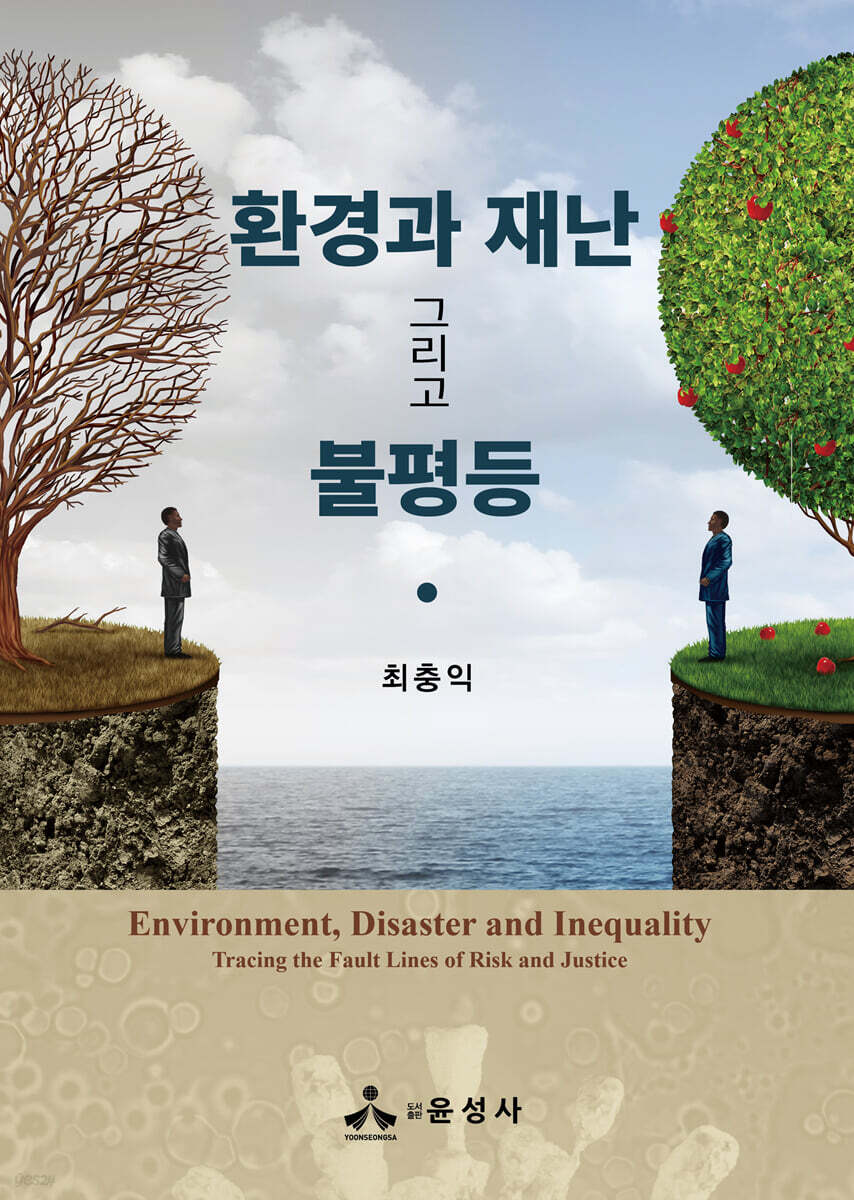
This book sheds new light on the environment and disasters that emerged from the global pandemic, a historic event, from the perspective of inequality.
This book brings together three fundamental themes—environment, disaster, and inequality—into a single, fundamental question. It seeks to draw lessons from the past to prepare for future crises, particularly those related to climate change. In the process, it also offers suggestions for empowering the vulnerable and marginalized, and for building a more equitable and resilient society.
This book brings together three fundamental themes—environment, disaster, and inequality—into a single, fundamental question. It seeks to draw lessons from the past to prepare for future crises, particularly those related to climate change. In the process, it also offers suggestions for empowering the vulnerable and marginalized, and for building a more equitable and resilient society.
index
Part 1: Pandemic
Chapter 1: The Genealogy of Pandemics and Inequality: Survival and Social Order Shaken by Epidemics
1.
Epidemics and the historical conditions of survival
2.
The paradox of equality operating within a structure of inequality
1) Moments of Equality Created by Violence and Viruses
2) Who Creates Equality?: Pandemics and the Rediscovery of Equalization Mechanisms
3.
The Plague, the End of Equality that Denounced Inequality
1) The outbreak and impact of the plague
2) The equality mechanism of the plague
4.
The World After the Plague: Reconstructed Order and Cracks
5.
Does the pandemic bring equality?: Between myth and reality
Chapter 2: COVID-19 and the Cracks in Society: Inequality, Cities, and the Future of Society Revealed by the Pandemic
1.
The Prelude to a Global Shock: The COVID-19 Outbreak and Its Socioeconomic Impact
1) Macroeconomic impact
2) Microscopic influences
2.
The Uneven Face of Crisis: The Intersection of Pandemics and Social Inequality
1) A Distance Deeper Than Infection: The Line of Inequality Created by Space and Class
2) The shadow of society revealed by the pandemic
3. The Cracks Exposed by COVID-19: Equality, Inequality, and the Conditions of Resilience
4.
A Turning Point in Urban Space: The Pandemic and the Reshaping of Urban Development
1) Infectious diseases and residential environment
2) COVID-19 response and new city development
3) The Paradox of Overcrowding: The Vulnerability to Infectious Diseases Revealed by Compressed Cities
5. Beyond COVID-19 Inequality: From a Risk Society to an Inclusive Society
Chapter 3: Empirical Analysis of COVID-19 and Inequality
1. COVID-19 Issue Analysis Overview
2.
The Prelude to Crisis: The Early Days of the Pandemic and the Visibility of Structural Inequality (2020)
3.
The Concentration of Public Resources and the Emergence of New Gaps (2021)
4.
Institutionalizing Inequality: Bringing Policy Debate to the Front Line (2022)
5.
Quality of Life Crisis: The Rise of Psychological and Emotional Inequality (2023)
6.
Growing Global Inequality and the Need for Restructuring (2024)
7.
Summary: The Multilayered Intersection of Pandemic and Inequality and Future Challenges
Chapter 4: Building Back Better: Urban Resilience After the Pandemic
1.
Health-Centric Urban Resilience: Rethinking Public Health and Urban Design
2.
Flexibility in Urban Space: Adaptable Urban Design and Spatial Transition Strategies
3.
Social Inclusion and Equity: Designing Resilience for Vulnerable Populations
4.
Digital Transformation and Smart City Experiments for Pandemic Response
Part 2: Disaster
Chapter 5: The Age of Unequal Disaster: Risk, Institutions, and Urban Survival Strategies
1.
Risk Society and the Conditions of Survival: The Evolution of Safety Needs
2.
The Disaster Spectrum: From Concept to Category
3.
Whom Does the System Protect?: The Structure and Limitations of Disaster and Safety Legislation
1) Types of disasters as viewed by law
2) Disaster and safety management as specified in the Urban Space Act
3) National disaster management system and urban disaster management system
4.
The Risk of Cities: Urban Disaster Mechanisms as Complex Systems
1) Heinrich's Law and Safety Management
2) Disaster cultivation theory
3) 4 stages of disaster management
4) High-trust theory
5) Peltzman effect
6) Pressure-release model
7) Swiss cheese model
Chapter 6: The Dynamics of Disaster: The Flow of Time and Space and the Cracks in Social Structure
1.
How Disasters Happen: The Intersection of Environmental Shocks and Social Conditions
2.
Cyclical Crises: The Periodicity of Disasters and Cumulative Inequality
3.
How Cities Change: Reconfiguring Space and Function After Shock
4.
Risks Across Time and Space: The Distribution and Mobility of Disaster Risk
Chapter 7: Reconstructing Risk Society and Responsibility: The Prospects and Limitations of the Serious Disaster Punishment Act
1.
The Normalization of Endless Disaster: The Structuring of Social Pain
2.
Who Kills at Work?: Industrial Accidents and Layered Risk
3.
Diverging Voices for a Safe Society: Expectations and Concerns Regarding the Implementation of the Serious Disaster Punishment Act
4.
Coexistence of Risk and Technology: How to Manage an Out-of-Control Society?
Chapter 8: Towards a Resilient Society: Transformation and Imagination in Disaster Management
1.
The Paradox of Complexity: The Paradox of Normal Thinking in Connected Societies
1) Complexity, Connectivity, and Disaster
2) Risk of risk assessment
3) The trap of expertise and social rationality
4) The politics of risk
2.
Disaster Management for Resilient Lands and Cities in the Age of Risk Society
3.
Recommendations for a Safe City: Urban Disaster Management Checklist
4.
Living Together is Safe: Community-Based Resilience and Inclusive Disaster Management
5.
Neurath's Ship and Disaster Management: A Metaphor for a Society Repaired During a Seafaring Trip
6.
Contact Comfort Theory: What Monkey Experiments Reveal About Psychological Resilience
7.
How Leadership Drives Survival: Organizational Insights from Geese and Buffaloes
Part 3 Environment
Chapter 9: Looking Back at Medieval Plagues
1.
City of Infection, City of Memory: What Medieval Plagues Left Behind
2.
Life-Changing Life Brought About by a Deadly Disease: How the Medieval Plague Upended Power, Cities, and Labor
3.
An Age of Cracks, a Moment of Opportunity: The Plague-Shaken Centers of Power and a Warning for the Modern City
4.
The Political Economy of Epidemics: Power and Inequality Revealed Under the Shadow of Death
5.
Disease, the City, and Culture: The Landscape of Urban Life in the Wake of Syphilis and the Plague
1) Syphilis and plague
2) Covert infection, a public issue
3) Sexually transmitted diseases and urban environmental changes in Korean society
6.
Infectious Diseases and the Fate of Populations: Mass Extinction and Social Restructuring
Chapter 10: Cities in the Climate Crisis, the Age of Risk: The Politics of Uncertainty and Disaster
1.
The Paradox of Urbanization: Urban Sprawl and Environmental Vulnerability in the Age of Climate Crisis
2.
The Collapsing Boundaries Between City and Nature: Infrastructure Vulnerability and the Urbanization of Natural Disasters
3.
Climate Discourse in Risk Society: The Intersection of Science, Politics, and Inequality
4.
The Age of Uncertainty: Uncontrollable Crises and Failures of Detection
5.
Decision-making under deep uncertainty: The dilemma of policy choice amid unpredictable risks.
6.
Types of Risk and the Hierarchy of Uncertainty: Who is at Risk More?
Chapter 11: Environment, Disasters, and Science and Technology
1.
Healing Times: Epidemics and the Epic of Human Recovery
1) Constant Threats and Survival: Demographic Responses to Epidemics
2) Population and economic levels, and infectious diseases
3) Implications of Malthus's population theory for modern society
4) A History of Violent Leveling: Epidemics, War, and the Lessons of Augsburg
2.
Technology-Driven Crisis Response: The Intersection of COVID-19 and Environmental Policy
3.
Imagining Civilization After the Pandemic: Epidemics and the Transformation of the Human Condition in the New World
1) The Great Onslaught of Pandemic and Response in the Post-COVID Era: Lessons Learned from the Pandemic
2) The connection between the common mechanisms of pandemics and the climate crisis.
3) Advanced medicine, vaccines, and human resilience
4.
Contagion and Transition: COVID-19 and the Plague: How Two Disasters Shaped the Future of Society
1) Population maps changed by epidemics: death rates and social survival
2) When the economy falters: Wage hikes during the plague, layoffs and remote work during COVID-19
3) When society and power are shaken: Dissolution of feudalism vs.
A test of public trust
4) Fear without understanding and scientific progress
5) Post-Disaster Society: The Renaissance and the Crossroads of Digital Transformation
5.
Reshaping Cities, Industry, and Safety: How Technology Changes the Disaster Landscape
1) Safety, Science and Technology in Future Society, and the Reconstruction of the Urban Environment: From the Lessons of the Industrial Revolution to the Serious Disaster Punishment Act
2) The Return of the Uninvited Guest and the Leap Forward to a Safe Society: The Future of Cities Intertwined by Infectious Diseases, Environmental Change, and Science and Technology
6.
Beyond Risk to Coexistence: A Coexistence Strategy in an Era of Intersections of Technology, Environment, and Disaster
1) Developmental discourse on environmental policy and technological innovation: From the perspective of balanced development
2) Harmony among risk society, science and technology, and the environment
Chapter 1: The Genealogy of Pandemics and Inequality: Survival and Social Order Shaken by Epidemics
1.
Epidemics and the historical conditions of survival
2.
The paradox of equality operating within a structure of inequality
1) Moments of Equality Created by Violence and Viruses
2) Who Creates Equality?: Pandemics and the Rediscovery of Equalization Mechanisms
3.
The Plague, the End of Equality that Denounced Inequality
1) The outbreak and impact of the plague
2) The equality mechanism of the plague
4.
The World After the Plague: Reconstructed Order and Cracks
5.
Does the pandemic bring equality?: Between myth and reality
Chapter 2: COVID-19 and the Cracks in Society: Inequality, Cities, and the Future of Society Revealed by the Pandemic
1.
The Prelude to a Global Shock: The COVID-19 Outbreak and Its Socioeconomic Impact
1) Macroeconomic impact
2) Microscopic influences
2.
The Uneven Face of Crisis: The Intersection of Pandemics and Social Inequality
1) A Distance Deeper Than Infection: The Line of Inequality Created by Space and Class
2) The shadow of society revealed by the pandemic
3. The Cracks Exposed by COVID-19: Equality, Inequality, and the Conditions of Resilience
4.
A Turning Point in Urban Space: The Pandemic and the Reshaping of Urban Development
1) Infectious diseases and residential environment
2) COVID-19 response and new city development
3) The Paradox of Overcrowding: The Vulnerability to Infectious Diseases Revealed by Compressed Cities
5. Beyond COVID-19 Inequality: From a Risk Society to an Inclusive Society
Chapter 3: Empirical Analysis of COVID-19 and Inequality
1. COVID-19 Issue Analysis Overview
2.
The Prelude to Crisis: The Early Days of the Pandemic and the Visibility of Structural Inequality (2020)
3.
The Concentration of Public Resources and the Emergence of New Gaps (2021)
4.
Institutionalizing Inequality: Bringing Policy Debate to the Front Line (2022)
5.
Quality of Life Crisis: The Rise of Psychological and Emotional Inequality (2023)
6.
Growing Global Inequality and the Need for Restructuring (2024)
7.
Summary: The Multilayered Intersection of Pandemic and Inequality and Future Challenges
Chapter 4: Building Back Better: Urban Resilience After the Pandemic
1.
Health-Centric Urban Resilience: Rethinking Public Health and Urban Design
2.
Flexibility in Urban Space: Adaptable Urban Design and Spatial Transition Strategies
3.
Social Inclusion and Equity: Designing Resilience for Vulnerable Populations
4.
Digital Transformation and Smart City Experiments for Pandemic Response
Part 2: Disaster
Chapter 5: The Age of Unequal Disaster: Risk, Institutions, and Urban Survival Strategies
1.
Risk Society and the Conditions of Survival: The Evolution of Safety Needs
2.
The Disaster Spectrum: From Concept to Category
3.
Whom Does the System Protect?: The Structure and Limitations of Disaster and Safety Legislation
1) Types of disasters as viewed by law
2) Disaster and safety management as specified in the Urban Space Act
3) National disaster management system and urban disaster management system
4.
The Risk of Cities: Urban Disaster Mechanisms as Complex Systems
1) Heinrich's Law and Safety Management
2) Disaster cultivation theory
3) 4 stages of disaster management
4) High-trust theory
5) Peltzman effect
6) Pressure-release model
7) Swiss cheese model
Chapter 6: The Dynamics of Disaster: The Flow of Time and Space and the Cracks in Social Structure
1.
How Disasters Happen: The Intersection of Environmental Shocks and Social Conditions
2.
Cyclical Crises: The Periodicity of Disasters and Cumulative Inequality
3.
How Cities Change: Reconfiguring Space and Function After Shock
4.
Risks Across Time and Space: The Distribution and Mobility of Disaster Risk
Chapter 7: Reconstructing Risk Society and Responsibility: The Prospects and Limitations of the Serious Disaster Punishment Act
1.
The Normalization of Endless Disaster: The Structuring of Social Pain
2.
Who Kills at Work?: Industrial Accidents and Layered Risk
3.
Diverging Voices for a Safe Society: Expectations and Concerns Regarding the Implementation of the Serious Disaster Punishment Act
4.
Coexistence of Risk and Technology: How to Manage an Out-of-Control Society?
Chapter 8: Towards a Resilient Society: Transformation and Imagination in Disaster Management
1.
The Paradox of Complexity: The Paradox of Normal Thinking in Connected Societies
1) Complexity, Connectivity, and Disaster
2) Risk of risk assessment
3) The trap of expertise and social rationality
4) The politics of risk
2.
Disaster Management for Resilient Lands and Cities in the Age of Risk Society
3.
Recommendations for a Safe City: Urban Disaster Management Checklist
4.
Living Together is Safe: Community-Based Resilience and Inclusive Disaster Management
5.
Neurath's Ship and Disaster Management: A Metaphor for a Society Repaired During a Seafaring Trip
6.
Contact Comfort Theory: What Monkey Experiments Reveal About Psychological Resilience
7.
How Leadership Drives Survival: Organizational Insights from Geese and Buffaloes
Part 3 Environment
Chapter 9: Looking Back at Medieval Plagues
1.
City of Infection, City of Memory: What Medieval Plagues Left Behind
2.
Life-Changing Life Brought About by a Deadly Disease: How the Medieval Plague Upended Power, Cities, and Labor
3.
An Age of Cracks, a Moment of Opportunity: The Plague-Shaken Centers of Power and a Warning for the Modern City
4.
The Political Economy of Epidemics: Power and Inequality Revealed Under the Shadow of Death
5.
Disease, the City, and Culture: The Landscape of Urban Life in the Wake of Syphilis and the Plague
1) Syphilis and plague
2) Covert infection, a public issue
3) Sexually transmitted diseases and urban environmental changes in Korean society
6.
Infectious Diseases and the Fate of Populations: Mass Extinction and Social Restructuring
Chapter 10: Cities in the Climate Crisis, the Age of Risk: The Politics of Uncertainty and Disaster
1.
The Paradox of Urbanization: Urban Sprawl and Environmental Vulnerability in the Age of Climate Crisis
2.
The Collapsing Boundaries Between City and Nature: Infrastructure Vulnerability and the Urbanization of Natural Disasters
3.
Climate Discourse in Risk Society: The Intersection of Science, Politics, and Inequality
4.
The Age of Uncertainty: Uncontrollable Crises and Failures of Detection
5.
Decision-making under deep uncertainty: The dilemma of policy choice amid unpredictable risks.
6.
Types of Risk and the Hierarchy of Uncertainty: Who is at Risk More?
Chapter 11: Environment, Disasters, and Science and Technology
1.
Healing Times: Epidemics and the Epic of Human Recovery
1) Constant Threats and Survival: Demographic Responses to Epidemics
2) Population and economic levels, and infectious diseases
3) Implications of Malthus's population theory for modern society
4) A History of Violent Leveling: Epidemics, War, and the Lessons of Augsburg
2.
Technology-Driven Crisis Response: The Intersection of COVID-19 and Environmental Policy
3.
Imagining Civilization After the Pandemic: Epidemics and the Transformation of the Human Condition in the New World
1) The Great Onslaught of Pandemic and Response in the Post-COVID Era: Lessons Learned from the Pandemic
2) The connection between the common mechanisms of pandemics and the climate crisis.
3) Advanced medicine, vaccines, and human resilience
4.
Contagion and Transition: COVID-19 and the Plague: How Two Disasters Shaped the Future of Society
1) Population maps changed by epidemics: death rates and social survival
2) When the economy falters: Wage hikes during the plague, layoffs and remote work during COVID-19
3) When society and power are shaken: Dissolution of feudalism vs.
A test of public trust
4) Fear without understanding and scientific progress
5) Post-Disaster Society: The Renaissance and the Crossroads of Digital Transformation
5.
Reshaping Cities, Industry, and Safety: How Technology Changes the Disaster Landscape
1) Safety, Science and Technology in Future Society, and the Reconstruction of the Urban Environment: From the Lessons of the Industrial Revolution to the Serious Disaster Punishment Act
2) The Return of the Uninvited Guest and the Leap Forward to a Safe Society: The Future of Cities Intertwined by Infectious Diseases, Environmental Change, and Science and Technology
6.
Beyond Risk to Coexistence: A Coexistence Strategy in an Era of Intersections of Technology, Environment, and Disaster
1) Developmental discourse on environmental policy and technological innovation: From the perspective of balanced development
2) Harmony among risk society, science and technology, and the environment
Publisher's Review
Preface: Passing through an era of unequal survival
We live in the same era on planet Earth, yet we face vastly different risks and survival conditions. The COVID-19 pandemic has been a global infectious disease crisis, but the suffering and damage has not been equal.
The virus spread without regard for social class, race, or national boundaries, yet resources for response and recovery were extremely unevenly distributed.
The gap in survival between developed and developing countries, between large cities and rural areas, between regular and non-regular workers, between men and women, and between people with and without disabilities has widened.
The pandemic was not just a health issue; it was a mirror that exposed the structural inequalities and environmental vulnerabilities of our society.
Building on this critical awareness, this book explores the intersection of inequality, environmental crisis, and disaster management, focusing on the global disaster of the pandemic.
Disasters are not simply random events, but are also social constructs.
Phenomena like natural disasters, pandemics, and climate crises threaten human life in their own right, but how they are actually experienced and responded to varies depending on each society's institutions, policies, history, and, above all, class structure.
In other words, disasters are a field where the ‘politics of distribution’ operates, which further weakens the weak within society and amplifies existing inequalities.
Human disaster management has focused on ‘technical control of risk’ and ‘efficient response.’
But now is the time for a paradigm shift.
As Ulrich Beck's concept of 'risk society (Risikogesellschaft)' suggests, the damage from modern disasters is complex and extensive, just as technology and industry have developed, and the damage is often unevenly distributed, focusing on the socially vulnerable.
During the pandemic, irregular workers and vulnerable public service users were unable to practice social distancing or work from home, and discrimination also occurred in access to vaccines.
This was a structural complex disaster of a level that was difficult for the existing disaster management system to handle.
What the pandemic highlighted was not the "equal distribution of risk," but the "inequality of recovery."
The pandemic also served as an important warning to us from the perspective of environmental policy and the climate crisis.
Human encroachment on wildlife ecosystems and the resulting decline in biodiversity due to urbanization and climate change are increasing the risk of new zoonotic infectious diseases.
The pandemic has been a symbolic event that shows how fragile the boundary between ecosystems and humans is.
This was not just a disaster of an era, but a precursor to a 'multicrisis' in which the climate crisis, biodiversity crisis, and resource imbalance occurred simultaneously.
We are no longer living in an age of isolated crises, but rather an age of intertwined disasters.
Another point that this book focuses on is the perspective of environmental justice.
The perception that environmental damage affects everyone equally is a misconception.
Air pollution is concentrated in low-income areas, and climate disasters such as heat waves and floods disproportionately impact socioeconomically vulnerable groups.
The pandemic has also structuralized inequalities in healthcare access, housing conditions, information gaps, and the burden of care.
In other words, the environment is politics, and disasters are mechanisms that reproduce inequality.
This book views disaster as a social construct, focusing on who suffers more and who recovers less.
These problems cannot be solved with just statistical data or policy explanations.
We often use the word 'resilience', but we must ask who truly has it.
Recovery is a matter of power, not policy, and of conditions, not capabilities.
Because survival is determined by the structure of society, not by individual choice.
The author does not simply offer a manual for disaster preparedness and recovery, but rather questions the unequal social structures that existed before the disaster occurred.
The pandemic didn't change everything, but it did expose what we had been ignoring.
Today's climate crisis, biodiversity loss, pandemics, wars, and technological inequality are not isolated events.
These crises influence each other, creating complex chain effects.
The disaster we face is not caused by a single factor, nor can it be solved by a single solution.
Disasters are complex events that intertwine nature and humanity, science and politics, structures and experiences.
In it, inequality is not just a problem, but a core concept that constitutes the essence of the disaster itself.
This book offers a fresh perspective on the environmental disasters that emerged during the global pandemic, a historic event, from the perspective of inequality.
This is not a simple retrospective.
To prepare for future crises, especially those related to climate change, we must learn from past disasters.
Will we continue to sacrifice the vulnerable and marginalized in the same way in the next disaster? Will we use this crisis as an opportunity to build a more equitable and resilient society?
“Environment, Disaster, and Inequality” are not separate topics.
It is the complex face of the reality we face, and at the same time, the possibility of new solidarity and justice.
The question this book poses is clear.
In what world, with whom, and in what way should we survive?
In this risk society, where conditions for survival operate differently even in the face of the same disaster, this is precisely why we must take a deep look into the era of unequal survival.
This book is organized into three major sections.
First, in Part 1, we examine historically how the global disaster of the COVID-19 pandemic has starkly exposed the inequalities in our society, comparing it to the plague of the Middle Ages.
For some, social distancing was a personal safety net, but for others, it was a disruption to their livelihoods and survival.
Even in the same disaster, the impact was never equal.
This section focuses on how infectious diseases are not just a medical crisis, but also a magnifying glass for a social crisis.
In Part 2, the unequal disasters facing modern society are examined through the concept of ‘risk society.’
Rather than a simple natural disaster or accident, we examine the complex crisis and the dynamics of disasters as byproducts of industrialization and technology from the perspective of a paradigm shift in disaster management.
It asks who the disaster management system is truly working for, and seeks to highlight the gap between technical management and structural inequality.
Part 3 focuses on the geoeconomics of inequality and the politics of environmental disaster through climate change and environmental issues.
The climate crisis is not a natural problem, but an 'unequal environmental disaster' that poses a greater threat to the socially vulnerable.
This part concludes by exploring the direction of new environmental policies centered on a just transition and the right to survival.
The three narratives this book unfolds converge on one fundamental question.
In what world, with whom, and how should we live?
There is a sentence that comes to mind at the end of this question: “In necessariis unitas, in non-necessariis libertas, in utrisque caritas.” This is an attitude and direction in life that requires coexistence over differences, understanding over arguments, and love as the basis of all human relationships.
What we need to walk through this process together is, in the end, love.
Embracing differences, bridging the gaps, and reaching out to one another.
Isn't that the most humane answer for us to live together in this complex world?
September 2025
At the Chuncheon laboratory
Hyunam Choi Chung-ik
We live in the same era on planet Earth, yet we face vastly different risks and survival conditions. The COVID-19 pandemic has been a global infectious disease crisis, but the suffering and damage has not been equal.
The virus spread without regard for social class, race, or national boundaries, yet resources for response and recovery were extremely unevenly distributed.
The gap in survival between developed and developing countries, between large cities and rural areas, between regular and non-regular workers, between men and women, and between people with and without disabilities has widened.
The pandemic was not just a health issue; it was a mirror that exposed the structural inequalities and environmental vulnerabilities of our society.
Building on this critical awareness, this book explores the intersection of inequality, environmental crisis, and disaster management, focusing on the global disaster of the pandemic.
Disasters are not simply random events, but are also social constructs.
Phenomena like natural disasters, pandemics, and climate crises threaten human life in their own right, but how they are actually experienced and responded to varies depending on each society's institutions, policies, history, and, above all, class structure.
In other words, disasters are a field where the ‘politics of distribution’ operates, which further weakens the weak within society and amplifies existing inequalities.
Human disaster management has focused on ‘technical control of risk’ and ‘efficient response.’
But now is the time for a paradigm shift.
As Ulrich Beck's concept of 'risk society (Risikogesellschaft)' suggests, the damage from modern disasters is complex and extensive, just as technology and industry have developed, and the damage is often unevenly distributed, focusing on the socially vulnerable.
During the pandemic, irregular workers and vulnerable public service users were unable to practice social distancing or work from home, and discrimination also occurred in access to vaccines.
This was a structural complex disaster of a level that was difficult for the existing disaster management system to handle.
What the pandemic highlighted was not the "equal distribution of risk," but the "inequality of recovery."
The pandemic also served as an important warning to us from the perspective of environmental policy and the climate crisis.
Human encroachment on wildlife ecosystems and the resulting decline in biodiversity due to urbanization and climate change are increasing the risk of new zoonotic infectious diseases.
The pandemic has been a symbolic event that shows how fragile the boundary between ecosystems and humans is.
This was not just a disaster of an era, but a precursor to a 'multicrisis' in which the climate crisis, biodiversity crisis, and resource imbalance occurred simultaneously.
We are no longer living in an age of isolated crises, but rather an age of intertwined disasters.
Another point that this book focuses on is the perspective of environmental justice.
The perception that environmental damage affects everyone equally is a misconception.
Air pollution is concentrated in low-income areas, and climate disasters such as heat waves and floods disproportionately impact socioeconomically vulnerable groups.
The pandemic has also structuralized inequalities in healthcare access, housing conditions, information gaps, and the burden of care.
In other words, the environment is politics, and disasters are mechanisms that reproduce inequality.
This book views disaster as a social construct, focusing on who suffers more and who recovers less.
These problems cannot be solved with just statistical data or policy explanations.
We often use the word 'resilience', but we must ask who truly has it.
Recovery is a matter of power, not policy, and of conditions, not capabilities.
Because survival is determined by the structure of society, not by individual choice.
The author does not simply offer a manual for disaster preparedness and recovery, but rather questions the unequal social structures that existed before the disaster occurred.
The pandemic didn't change everything, but it did expose what we had been ignoring.
Today's climate crisis, biodiversity loss, pandemics, wars, and technological inequality are not isolated events.
These crises influence each other, creating complex chain effects.
The disaster we face is not caused by a single factor, nor can it be solved by a single solution.
Disasters are complex events that intertwine nature and humanity, science and politics, structures and experiences.
In it, inequality is not just a problem, but a core concept that constitutes the essence of the disaster itself.
This book offers a fresh perspective on the environmental disasters that emerged during the global pandemic, a historic event, from the perspective of inequality.
This is not a simple retrospective.
To prepare for future crises, especially those related to climate change, we must learn from past disasters.
Will we continue to sacrifice the vulnerable and marginalized in the same way in the next disaster? Will we use this crisis as an opportunity to build a more equitable and resilient society?
“Environment, Disaster, and Inequality” are not separate topics.
It is the complex face of the reality we face, and at the same time, the possibility of new solidarity and justice.
The question this book poses is clear.
In what world, with whom, and in what way should we survive?
In this risk society, where conditions for survival operate differently even in the face of the same disaster, this is precisely why we must take a deep look into the era of unequal survival.
This book is organized into three major sections.
First, in Part 1, we examine historically how the global disaster of the COVID-19 pandemic has starkly exposed the inequalities in our society, comparing it to the plague of the Middle Ages.
For some, social distancing was a personal safety net, but for others, it was a disruption to their livelihoods and survival.
Even in the same disaster, the impact was never equal.
This section focuses on how infectious diseases are not just a medical crisis, but also a magnifying glass for a social crisis.
In Part 2, the unequal disasters facing modern society are examined through the concept of ‘risk society.’
Rather than a simple natural disaster or accident, we examine the complex crisis and the dynamics of disasters as byproducts of industrialization and technology from the perspective of a paradigm shift in disaster management.
It asks who the disaster management system is truly working for, and seeks to highlight the gap between technical management and structural inequality.
Part 3 focuses on the geoeconomics of inequality and the politics of environmental disaster through climate change and environmental issues.
The climate crisis is not a natural problem, but an 'unequal environmental disaster' that poses a greater threat to the socially vulnerable.
This part concludes by exploring the direction of new environmental policies centered on a just transition and the right to survival.
The three narratives this book unfolds converge on one fundamental question.
In what world, with whom, and how should we live?
There is a sentence that comes to mind at the end of this question: “In necessariis unitas, in non-necessariis libertas, in utrisque caritas.” This is an attitude and direction in life that requires coexistence over differences, understanding over arguments, and love as the basis of all human relationships.
What we need to walk through this process together is, in the end, love.
Embracing differences, bridging the gaps, and reaching out to one another.
Isn't that the most humane answer for us to live together in this complex world?
September 2025
At the Chuncheon laboratory
Hyunam Choi Chung-ik
GOODS SPECIFICS
- Date of issue: October 31, 2025
- Format: Paperback book binding method guide
- Page count, weight, size: 384 pages | 173*243*30mm
- ISBN13: 9791199390232
- ISBN10: 1199390232
You may also like
카테고리
korean


korean

![ELLE 엘르 스페셜 에디션 A형 : 12월 [2025]](http://librairie.coreenne.fr/cdn/shop/files/b8e27a3de6c9538896439686c6b0e8fb.jpg?v=1766436872&width=3840)


